
This itinerary is installable. One tap puts all 3 days on your calendar, each linking back to this guide.
Install this week →The soy milk is still steaming when you sit down at 6:15am on the second floor of Huashan Market, chopsticks in one hand, flaky shaobing in the other, and through the window you can see the line for Fuhang Soy Milk already stretching down the stairs. You got here early. Smart. That line will be 30 minutes long by seven.
This is the version of Taipei most visitors never quite reach. Not because the city is hard to navigate. It's one of the easiest cities in Asia, honestly. But because the standard itinerary, the one every travel blog copies from every other travel blog, sends you to the same five places in the same order and calls it a day. Taipei 101, Shilin Night Market, Chiang Kai-shek Memorial Hall, Jiufen, repeat. Fine places, sure. But Taipei is better than fine.
What follows is a three-day route that includes some of those hits (you really should see 101, just not the way most guides suggest) and a lot of what sits between them. Real timing. Real prices. Honest opinions about what's worth your limited hours and what you can skip without regret.
One note before we start: this itinerary assumes you're staying somewhere central, ideally near Zhongshan or Zhongxiao Dunhua MRT. Both areas put you within 15 minutes of everything on this list.
Day 1: Old Taipei
Morning: Dadaocheng and Dihua Street
Start on Dihua Street, the oldest commercial street in Taipei. It's been here since the 1850s, when it was the center of the tea and fabric trade, and you can still feel that history in the brick facades and the dried goods shops that line both sides. Get there by 9am, before the tour groups arrive. The URS galleries and independent shops along the street open around ten, but the traditional dried goods stores, the ones selling Chinese herbs, dried mushrooms, and camphor, are already bustling.
Stop at Xiahai City God Temple (霞海城隍廟), a tiny temple tucked into the street that's been here since 1859. It's famous for love prayers. Even if that's not your thing, the incense smoke curling through the narrow doorway and the ornate altar crammed into a space smaller than most living rooms is worth two minutes of your morning.
Walk south along Dihua toward the Dadaocheng Wharf area. Sin Hong Choon (新芳春茶行), a tea merchant house founded in 1934, has been restored and is open to visitors. The architecture alone is worth the detour. Budget about 90 minutes for this whole stretch.
!Taipei street scene with traditional shophouses and morning light Dihua Street in the morning, before the crowds. The dried goods shops have been here for generations.
Lunch: Yongkang Street
Take the MRT from Daqiaotou to Dongmen (about 15 minutes, one transfer at Zhongshan). Yongkang Street is one of those rare places that's both extremely touristed and genuinely excellent. The original Din Tai Fung is here, though it's now takeout only at this location. The line is still absurd. Skip it. There are Din Tai Fungs all over the city with shorter waits.
What you should do instead: grab mango shaved ice at Smoothie House (思慕昔), NT$250 for a mountain of fresh mango over shaved milk ice. It's seasonal, available roughly April through October. If you're here outside mango season, get the strawberry or taro versions. Then wander. Yongkang has excellent coffee shops, a few good dumpling places that aren't Din Tai Fung, and the kind of quiet side-alley energy that rewards aimless walking.
Afternoon: Zhongshan and Chifeng Street
MRT back to Zhongshan (one stop from Dongmen on the green line, or walk it in about 20 minutes if the weather cooperates). The area between Zhongshan and Shuanglian stations is Taipei's most interesting neighborhood for design, independent shops, and coffee. Chifeng Street (赤峰街) is the spine of it. The street is narrow, the buildings are old, and every other doorway leads to a ceramics studio, a vintage clothing shop, or a coffee roaster operating out of someone's former living room.
No specific route needed here. Just walk. This neighborhood rewards getting lost more than following a plan. Budget two to three hours.
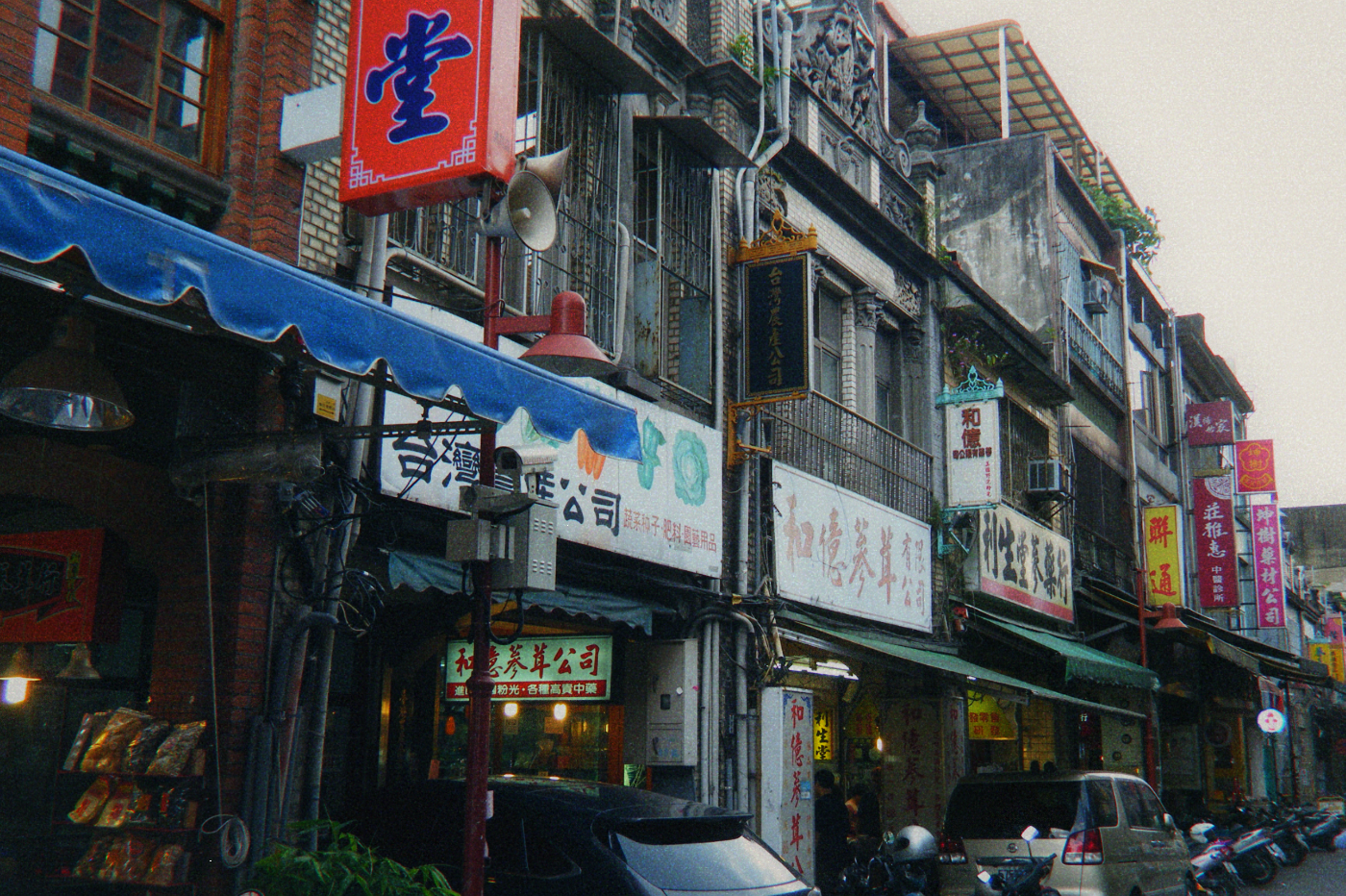
 FIRST SIGHTWEBGLDihua Street shophouses in Taipei, photographed in June 2010. Archival image. · Color and grain by First Sight · Superia. · First Sight 色彩與顆粒調校 · Superiatomscoffin · CC BY 2.0 · Color and grain adjusted. · 已調整色彩與顆粒。
Evening: Ningxia Night Market
Walk south from Zhongshan MRT for about ten minutes and you'll hit Ningxia Night Market. This is the night market we recommend over Shilin for first-timers. It's smaller, less overwhelming, and the food quality is consistently higher because it's mostly locals eating here, not tourists.
The star: 劉芋仔 (Liu Yu Zai), a stall selling fried taro balls with salted egg yolk filling. The line is long. It's worth it. Get two orders because you'll regret getting one. Beyond that, the oyster omelettes and braised pork rice here are solid across multiple stalls. Budget NT$300-400 for a full dinner of grazing.
Day 2: Modern Taipei + Nature
Morning: Fuhang Soy Milk
This is the early alarm you won't regret. Fuhang Soy Milk (阜杭豆漿) is at 2F, No. 108, Section 1, Zhongxiao East Road, inside Huashan Market above善導寺 (Shandao Temple) MRT station. Open 5:30am to 12:30pm, closed Mondays.
The line: it's real, and it's long. Go between 6 and 7am, or after 11am when it dies down. Between 8 and 10am you're looking at 30+ minutes of standing in a stairwell. Order the thick soy milk (鹹豆漿, savory, with vinegar, dried shrimp, and youtiao pieces) and a shaobing with egg (燒餅夾蛋). Total cost is around NT$85. It's the best breakfast in Taipei and the reason you set that alarm.
Midday: Songshan Cultural Creative Park
A 10-minute walk from Fuhang or one MRT stop to Sun Yat-sen Memorial Hall. Songshan Cultural Creative Park is a former tobacco factory from the Japanese colonial era, converted into exhibition spaces, design shops, and cafes. Entry to the grounds is free. The Taiwan Design Museum inside has rotating exhibitions, usually NT$150-250. The courtyards have old-growth trees and reflecting pools. It's a good place to slow down after the intensity of the morning.
!Taipei cityscape with temple and traditional architecture in foreground Taipei layers old and new without apology. A temple courtyard, a glass tower, all in the same frame.
Afternoon: Taipei 101
Yes, you should go. No, you don't need to spend three hours there.
The Taipei 101 Observatory is on the 88th and 89th floors. Standard ticket is NT$600. The view is genuinely spectacular, especially on a clear day when you can see all the way to the mountains ringing the Taipei Basin. Go between 2 and 4pm on a weekday if you can. The light is good and the crowds are thinner than morning or sunset hours.
Skip the shopping mall at the base unless you specifically need luxury brands. The food court in the basement (B1) is actually decent and has a good Din Tai Fung with shorter lines than most locations.
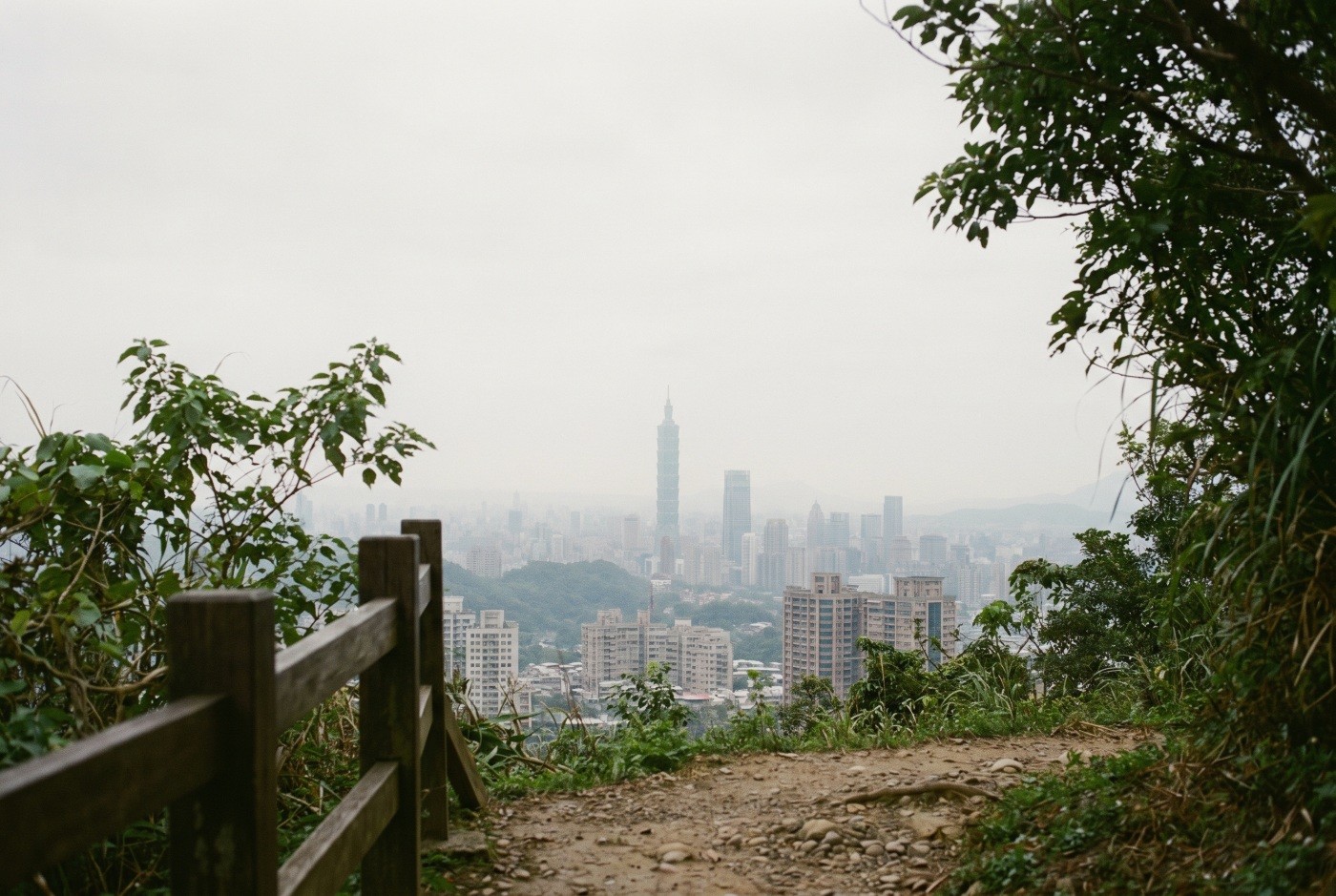
What most guides won't tell you: the free alternative is Elephant Mountain, and the view from there is arguably better because you get 101 in the frame. That's where you're headed next.
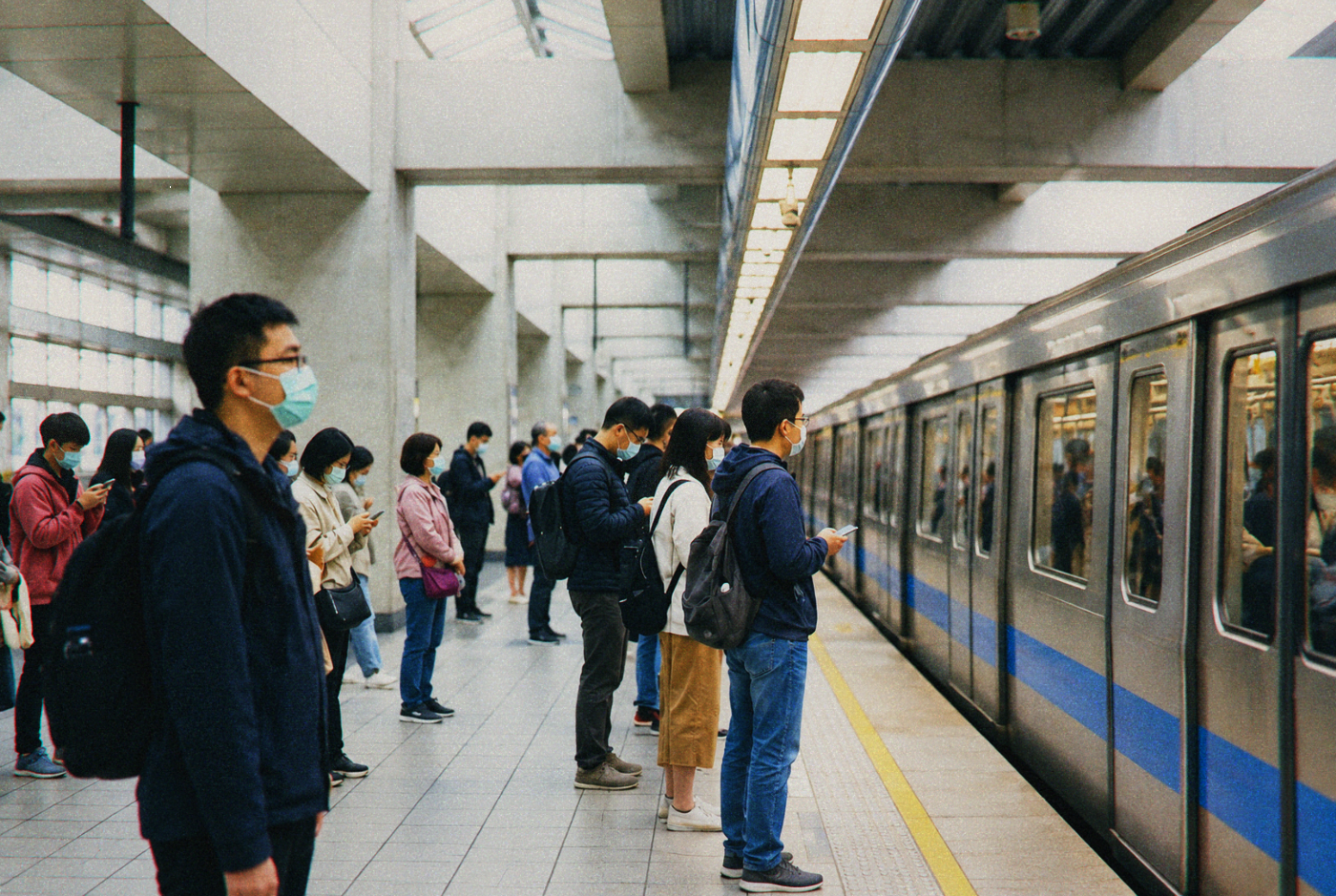 FIRST SIGHTWEBGLTaipei MRT station platform with commuters waiting. modern clean design · Color and grain by First Sight · Superia. · First Sight 色彩與顆粒調校 · Superia
Late afternoon: Elephant Mountain
From Taipei 101, take the MRT one stop to Xiangshan Station (exit 2). The trailhead is a 5-minute walk from the exit. The hike to the main viewpoint takes 20 to 30 minutes, mostly stairs. It's steep but short. Bring water.
The payoff: a panoramic view of the Taipei skyline with 101 front and center. Go for sunset if the weather is clear. The best photos happen in the 20 minutes after the sun drops below the mountains, when the sky goes orange and 101 starts to light up. It's free, open 24 hours, and the most memorable view you'll get in the city.
Evening: Raohe Night Market
Take the MRT from Xiangshan to Songshan (green line, about 15 minutes). Raohe Street Night Market is right at the station exit. It's longer and more chaotic than Ningxia, but the anchor items are legendary.
First stop, immediately at the entrance: the pepper bun stall (胡椒餅). NT$60. The bun is baked in a clay oven, crispy on the outside, filled with pork and black pepper and enough juice to burn your chin if you bite too eagerly. There's always a line. It moves fast. Get one immediately, then circle back for a second later if you want.
Beyond the pepper bun: the medicinal herb ribs soup, the stinky tofu (get the fried version if you're a first-timer), and the peanut ice cream wrap with cilantro. That last one sounds wrong. Trust it.
Day 3: Choose Your Own
Three days isn't enough for Taipei. (Nothing ever is. You'll be back.) Day 3 gives you options depending on what you're craving.
Option A: Beitou Hot Springs + Tianmu
Take the red MRT line north to Xinbeitou (about 30 minutes from Taipei Main Station). Beitou is Taipei's hot spring district, built around natural sulfur springs that the Japanese developed during the colonial period. The public outdoor hot spring at Millennium Hot Spring (千禧湯) costs NT$40. Forty dollars. For a real hot spring experience. The water is between 38 and 42 degrees Celsius depending on which pool you pick.
Soak for an hour, then walk the thermal valley area and grab lunch at one of the small restaurants along Zhongshan Road in Beitou. In the afternoon, take the MRT one stop to Shipai and bus to Tianmu, an older residential neighborhood with a strong Japanese and American expat influence, good bakeries, and a quieter pace than central Taipei.
Option B: Yangmingshan Day Hike
Bus from Jiantan or Shipai MRT to Yangmingshan National Park. The Qingtiangang grasslands trail is the easiest and most scenic: flat, wide, and you'll share it with water buffalo. Seriously. The Xiaoyoukeng trail is more dramatic, with sulfur vents and volcanic landscape. Budget a full morning and early afternoon. Pack lunch or eat at the small restaurants near the park entrance.
Option C: Jiufen + Pingxi Day Trip
The classic day trip. Take a bus from Zhongxiao Fuxing MRT (1062 bus, about 90 minutes) or train to Ruifang and transfer. Jiufen is crowded and touristy, and the old street is shoulder-to-shoulder on weekends. But the view of the Pacific from the teahouses is real, and the taro balls at the bottom of the old street are worth the trip. Go on a weekday if possible.
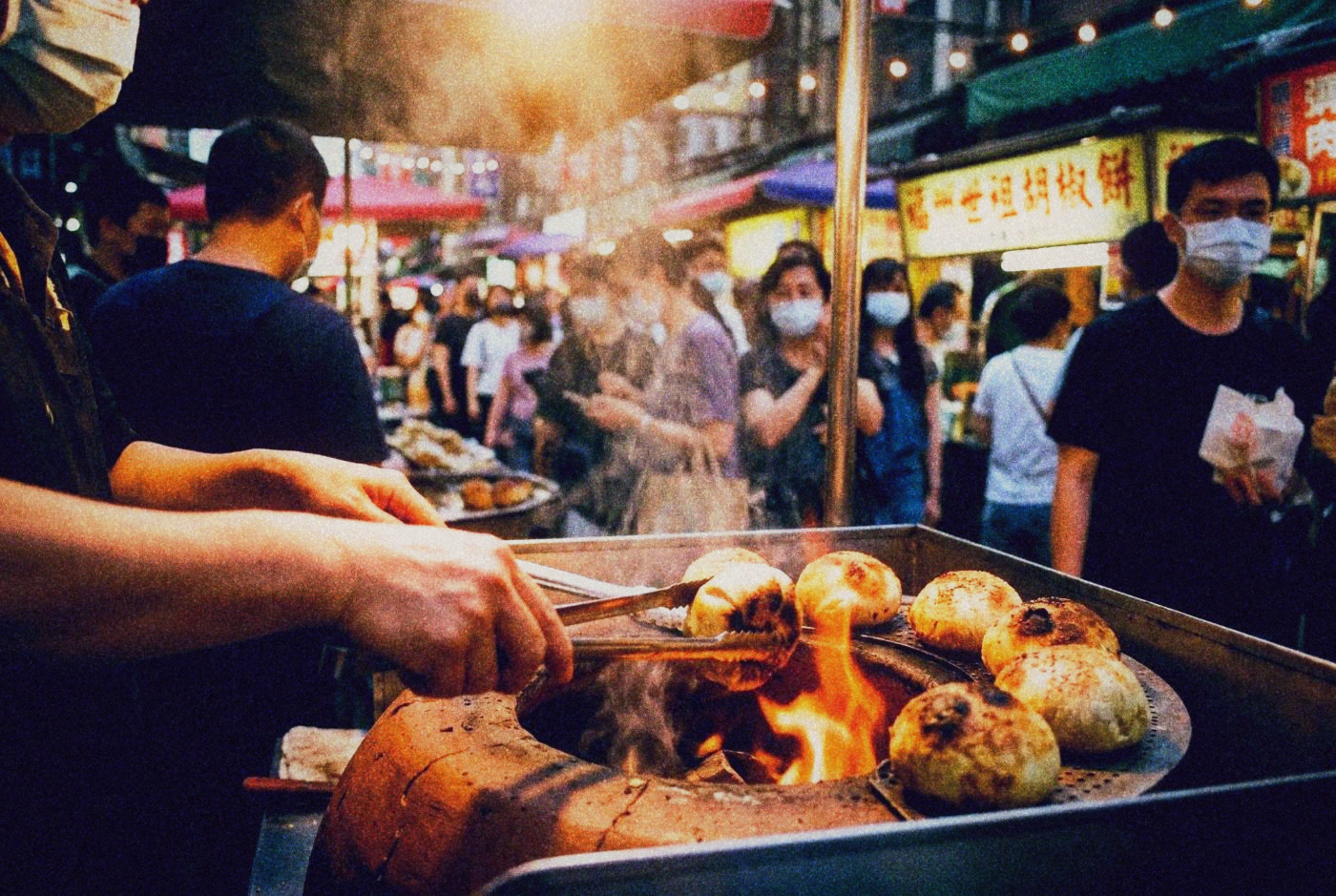 FIRST SIGHTWEBGLRaohe Night Market food stall close-up. pepper buns being grilled with flames visible · Color and grain by First Sight · Gold 200. · First Sight 色彩與顆粒調校 · Gold 200
If you pair it with Pingxi (sky lantern town), take the Pingxi branch rail line from Ruifang. The whole line takes about 40 minutes end to end, stopping at tiny mountain villages. It's one of the most scenic short rail journeys in northern Taiwan.
!Night market scene with food stalls and warm lighting Night markets are best between 6 and 9pm. After that, stalls start closing and the crowds thin out.
The Practical Stuff
Getting around. Taipei's MRT is clean, fast, cheap, and runs from 6am to midnight. Get an EasyCard (悠遊卡) at any MRT station or convenience store. NT$100 for the card itself (refundable deposit), then load it with credit. It works on MRT, buses, YouBike, convenience stores, and most taxis. A single MRT ride is NT$20-65 depending on distance. You'll spend roughly NT$100-150 per day on transit.
Money. Taiwan is still largely a cash economy for small vendors, night markets, and traditional restaurants. ATMs are everywhere (7-Eleven, FamilyMart, post offices). International cards work fine. Bring some cash for night markets and smaller shops.
Weather. Taipei is subtropical. April through June is warm and occasionally rainy. July through September is hot, humid, and typhoon season. October through December is the best weather. January through March is cool and often overcast. Always carry a small umbrella.
What to skip. Shilin Night Market has become more tourist-oriented and less interesting than Ningxia or Raohe. Ximending is fine for a quick walk but doesn't need a whole afternoon. The Chiang Kai-shek Memorial Hall is worth seeing from the outside for the architecture, but the interior museum is skippable unless you're specifically interested in the political history.
[taiwan-card] MRT | EasyCard | NT$100 deposit + top up. Works on trains, buses, bikes, and convenience stores Fuhang Soy Milk | Breakfast | 2F, No. 108, Sec 1, Zhongxiao E Rd. 5:30am-12:30pm, closed Mon Taipei 101 | Observatory | NT$600 standard ticket, 88F-89F. Go 2-4pm weekdays Elephant Mountain | Free hike | 20-30 min from Xiangshan MRT Exit 2. Best at sunset Ningxia Night Market | Dinner | 劉芋仔 taro balls, oyster omelette. Budget NT$300-400 Raohe Night Market | Dinner | Pepper bun NT$60 at entrance. Stinky tofu, herb ribs soup
FAQ
What's the best time of year to visit Taipei? October and November. Warm days, cool evenings, almost no rain. Spring (March-April) is also good but wetter. Summer is brutally hot and humid. Avoid Chinese New Year (late January/early February) when half the city shuts down.
Should I get a Taipei Fun Pass or just use EasyCard? EasyCard. The Fun Pass bundles aren't worth it unless you're visiting multiple paid attractions in one day, which this itinerary doesn't really require. The EasyCard is simpler and more flexible.
Do I need to tip in Taiwan? No. Tipping is not expected anywhere. Not restaurants, not taxis, not hotels. Some higher-end restaurants add a 10% service charge automatically, but that's it.
Is Taipei safe? Extremely. It consistently ranks among the safest cities in Asia. Walking alone at night is normal. Petty theft exists but is rare. The biggest actual danger is scooters running red lights at intersections. Look both ways, even on green.
How much should I budget per day? For a comfortable mid-range trip: NT$2,500-3,500 per day (roughly US$80-110) covering food, transit, and activities, not including accommodation. You can do it cheaper. Night market meals, free hikes, and the MRT keep costs low if you want them low.
Comments (0)
Loading comments...