
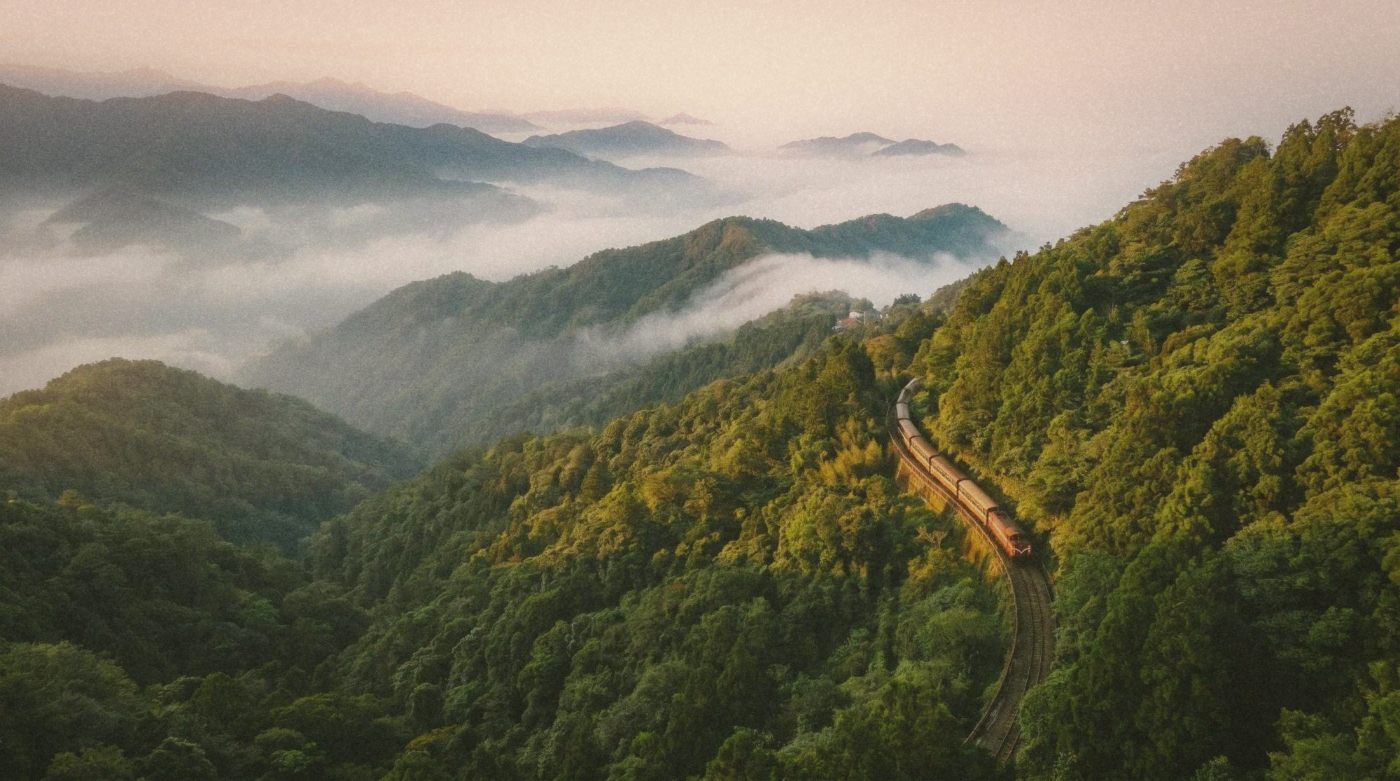
The train pulls out of Chiayi Station at 9am, and within twenty minutes the city is gone. Rice paddies flatten out on both sides of the track, then tilt. The gradient steepens. Betel nut palms give way to bamboo, bamboo gives way to cedar, and the temperature drops one degree for every few hundred meters of elevation gained. By the time you reach Fenqihu, roughly two and a half hours in, you're wearing the jacket you swore you wouldn't need, eating a railway bento on a wooden bench while clouds drift through the old street below you like slow traffic.
The Alishan Forest Railway is the slowest way to get anywhere in Taiwan. That's the whole point. Built by the Japanese in 1912 to haul cypress logs down from the mountains, it climbs from sea level to 2,216 meters across 71.4 kilometers of narrow-gauge track, through 49 tunnels and over 77 bridges. The logging stopped decades ago. The train kept going. Now it carries tourists and hikers and tea obsessives up into the kind of mountain landscape that makes you wonder why you spent three days in Taipei arguing about which coffee shop had the best pour-over.
I took the railway for the first time expecting scenery. I got that. What I didn't expect was Chiayi itself, the city at the bottom of the mountain, which turned out to be one of those underrated Taiwanese cities that nobody makes a special trip for but everybody who visits talks about afterwards. The turkey rice alone is worth the HSR ticket.
This guide covers both. The mountain and the city. The forest and the night market. If you have three days, you can do all of it comfortably. If you have two, you'll need to choose, and I'll help you decide what to cut.
Getting there from Taipei
The fastest route is HSR from Taipei Main Station to Chiayi HSR Station. The ride takes about 1 hour and 25 minutes. A standard reserved seat costs NT$1,080; non-reserved is NT$1,045. Trains run roughly every 30 minutes during peak hours.
Chiayi HSR Station is in Taibao, about 20 minutes by bus or taxi from Chiayi city center and the TRA station. A free shuttle bus (BRT) connects the two. If you're heading straight to Alishan, skip the city transfer entirely. The Taiwan Tourist Shuttle Bus (Route 7329) departs from HSR Chiayi Station Exit 2, Platform 7, and goes directly to Alishan. Four daily departures between 9:30am and 1:10pm. The ride takes 2.5 to 3 hours and costs NT$278 one way. Book seats in advance through FamilyMart's FamiPort machines or the FamiTicket website.
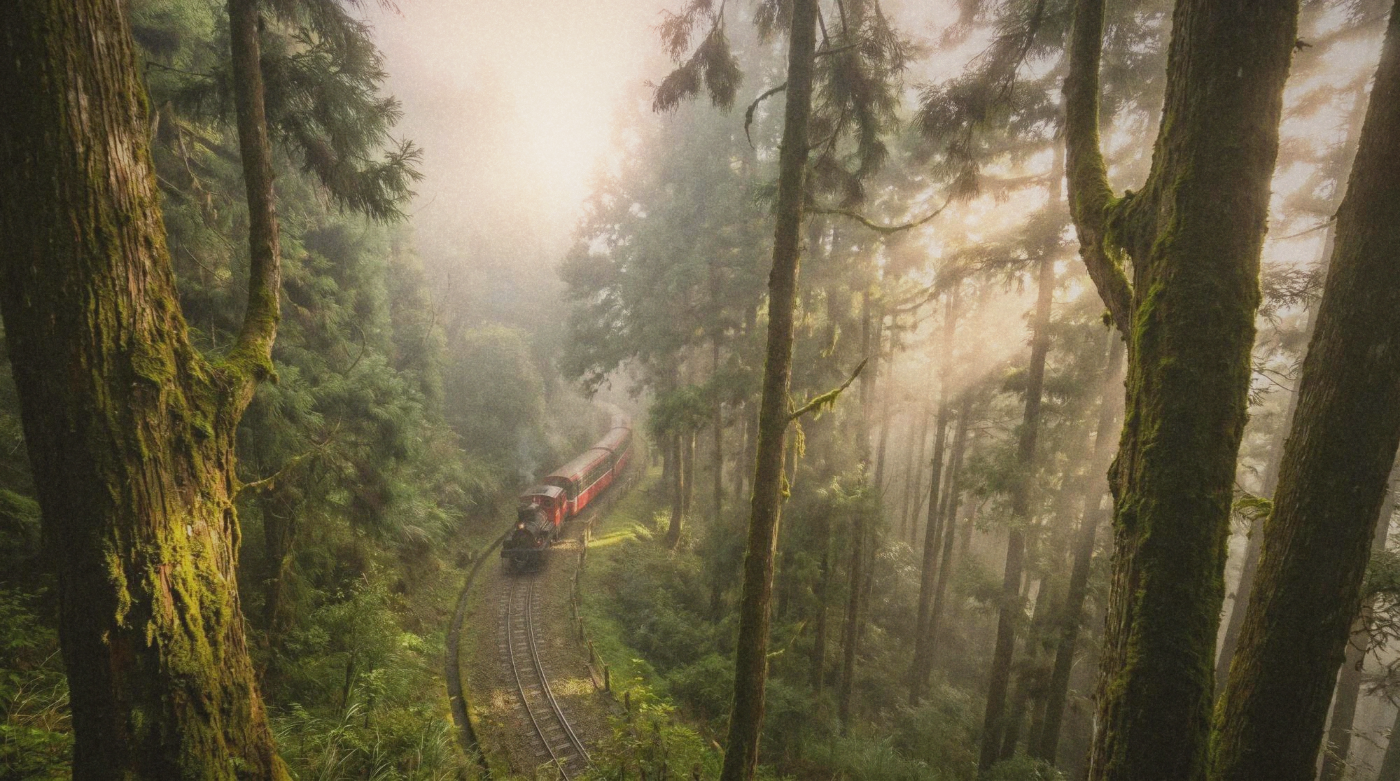
 FIRST SIGHTWEBGLThe Alishan Forest Railway climbs 2,216 meters over 71 kilometers. The math works out to roughly 30 meters of elevation per kilometer, which sounds gentle until you feel the engine straining through the switchbacks above Fenqihu. · Color and grain by First Sight · Portra 400. · First Sight 色彩與顆粒調校 · Portra 400
The forest railway
If you have time for only one thing in this region, take the main line of the Alishan Forest Railway from Chiayi to Alishan. Two departures daily: 9:00am and 10:00am from Chiayi Station. Full fare is approximately NT$600 one way. The journey takes about 5 hours, with a stop at Fenqihu where you'll have time to stretch your legs, buy a bento, and look out over the valley.
Online booking opens 14 days in advance at the official Alishan Forest Railway website (afrts.forest.gov.tw). Important change for 2026: as of March 2, payment must be completed immediately after booking. No more grace period. Tickets sell out fast on weekends and holidays, especially during cherry blossom season (mid-March to mid-April). Book the moment the window opens.
The return trains depart Alishan at 11:50am and Shizilu at 1:21pm heading downhill.
Once you're in the Alishan Forest Recreation Area, three branch lines fan out from the main station. The Zhushan Line (NT$150) takes you to the sunrise viewing platform. The Sacred Tree Line (NT$100) drops you among ancient Formosan red cypress trees, some over a thousand years old. The Zhaoping Line (NT$100) connects to the cherry blossom viewing areas and the start of several hiking trails. Buy branch line tickets at Alishan Station's second floor ticket office.
Sunrise at Zhushan
This is the thing everyone comes for, and it earns its reputation. The sunrise viewing platform at Zhushan sits at 2,489 meters. On a clear morning, you watch the sun break over Yushan (Taiwan's highest peak at 3,952 meters) while a sea of clouds fills the valley below. When conditions are right, the clouds turn pink and gold and the mountains emerge like islands. When conditions aren't right, you stand in fog and cold and see approximately nothing, which is a real possibility from October through February.
The Zhushan Line train departs early, timed to arrive about 30 to 40 minutes before sunrise. Exact departure varies by season since sunrise times shift. Buy your ticket the day before at Alishan Station's second floor office, between 1:00pm and 4:30pm. They sell out, especially on weekends.
If the train is full or you prefer walking, the Zhushan Sunrise Trail takes about an hour on foot. Bring a headlamp. The trail is well-maintained but completely dark at 4am. Once at the top, you can choose between two platforms: the Zhushan Observation Deck (right next to the station) or the Xiaoliyuanshan Lookout, about a 10-minute walk further. The second is less crowded and arguably better.
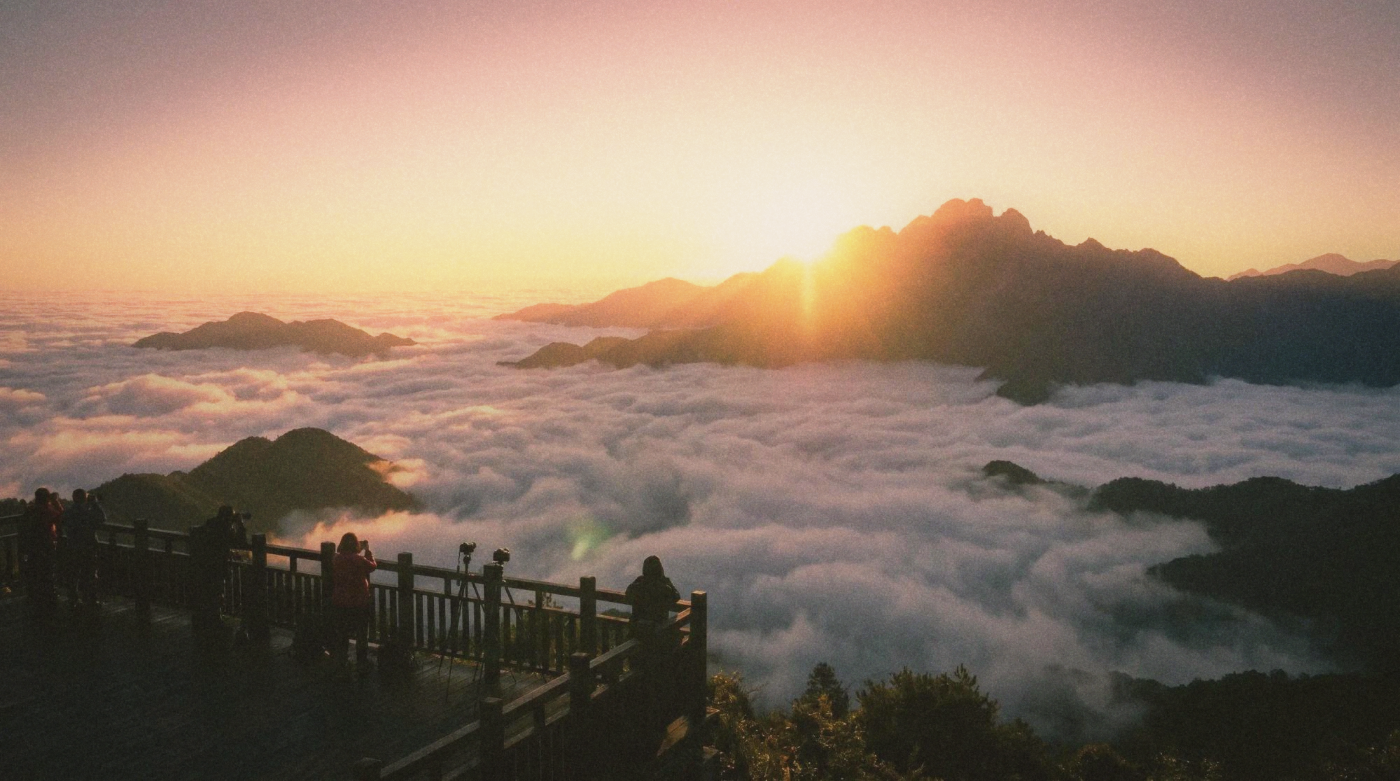 FIRST SIGHTWEBGLThe view from Zhushan at dawn. When the clouds cooperate, it looks like this. When they don't, you stand in cold fog drinking borrowed ginger tea. · Color and grain by First Sight · Portra 400. · First Sight 色彩與顆粒調校 · Portra 400
Walking the ancient trees
The Giant Tree Boardwalk Trails are the best hiking in the recreation area and require zero fitness. Two connected sections, split at Shenyi Bridge, loop through forest that's been growing since before the Song Dynasty. Trail 1 runs about 600 meters past the Thousand-Year Cypress, the Tree of Three Generations, and the Xianglin Sacred Tree. Trail 2 continues deeper. The whole loop takes roughly 90 minutes at a slow pace, which is the correct pace here.
The original Alishan Sacred Tree, a 3,000-year-old red cypress that had been the park's most famous landmark, fell naturally in 1998. Its remains are still visible along the trail. The boardwalk was built afterward to give visitors access to the surrounding grove of ancient trees without damaging root systems. About 40 giant trees are marked and labeled along the route.
Take the Sacred Tree Line train from Alishan Station (NT$100) to get to the trailhead, or walk from the main visitor area in about 20 minutes.
Alishan tea country
The tea farms sit below the recreation area, along the mountain roads between 1,000 and 1,600 meters elevation. This is where Alishan High Mountain Oolong comes from, one of Taiwan's most prized teas, grown in cool temperatures and frequent fog that slows leaf growth and concentrates flavor. A 150-gram bag of good Alishan oolong runs NT$600 to NT$1,500 depending on the season and grade. Spring harvest (April to May) is considered the best.
You can visit tea farms independently in the Shizhuo area, where several farms welcome drop-in visitors for tastings. Most will let you sit, try four or five varieties, and explain the differences between spring and winter harvests without any obligation to buy. Though you'll want to buy.
For a more structured experience, guided tea tours run about NT$2,500 to NT$3,000 per person and include farm visits, tea ceremony, and lunch. The Alishan Easy Go booking platform (alishan.welcometw.com) lists several options.
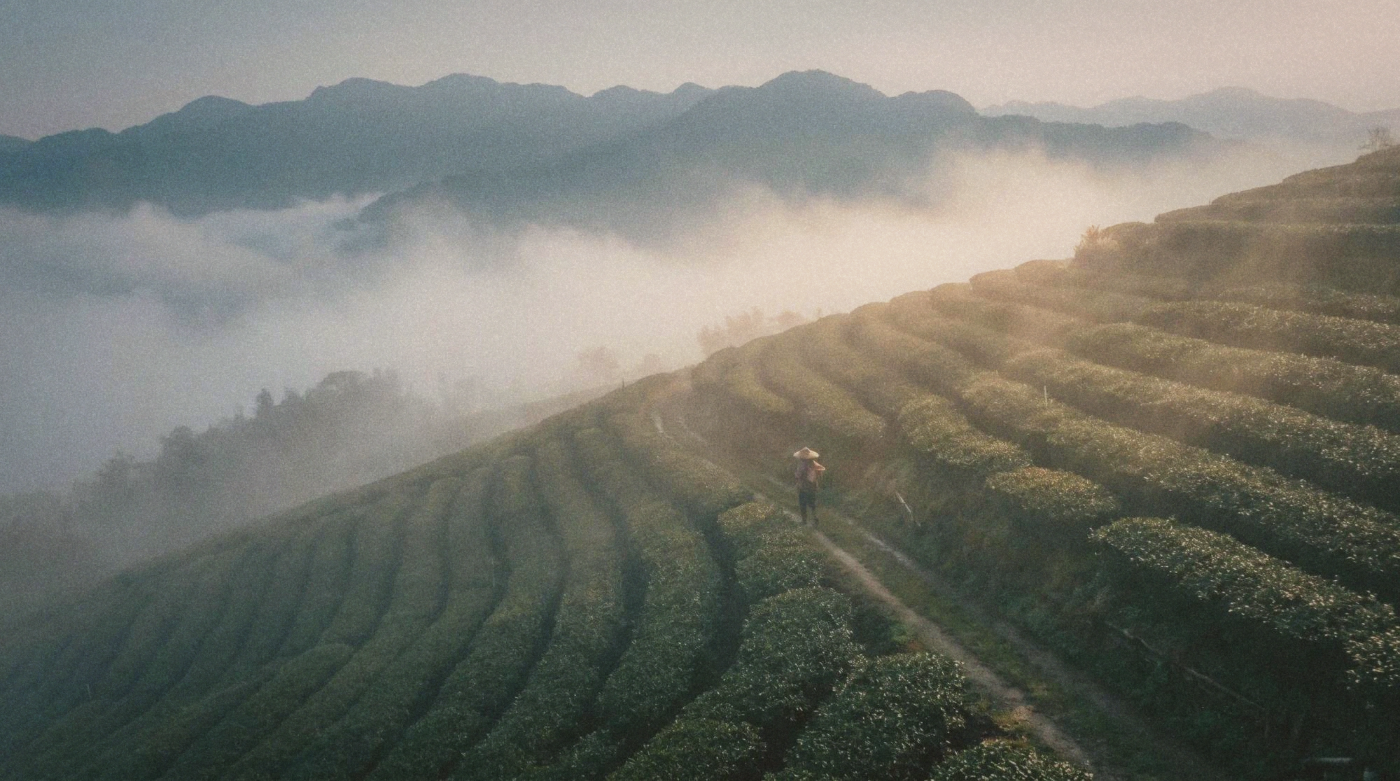 FIRST SIGHTWEBGLTea farms in the Shizhuo area of Alishan. The fog isn't a weather event here. It's an ingredient. · Color and grain by First Sight · Portra 400. · First Sight 色彩與顆粒調校 · Portra 400
Fenqihu: the halfway stop
Fenqihu Old Street sits at 1,403 meters, roughly the midpoint of the forest railway. The train stops here for about 30 minutes. The old street has been a rest point for mountain travelers since the Japanese era, and the main draw hasn't changed much: hot food at altitude.
The Fenqihu railway bento is famous across Taiwan. A wooden box packed with rice, braised pork, pickled vegetables, and mountain greens, sold from shops right on the platform and along the old street. NT$80 to 120 for a box. Eat it on a bench overlooking the valley. This is one of those meals that tastes better than it should because of where you are when you eat it.
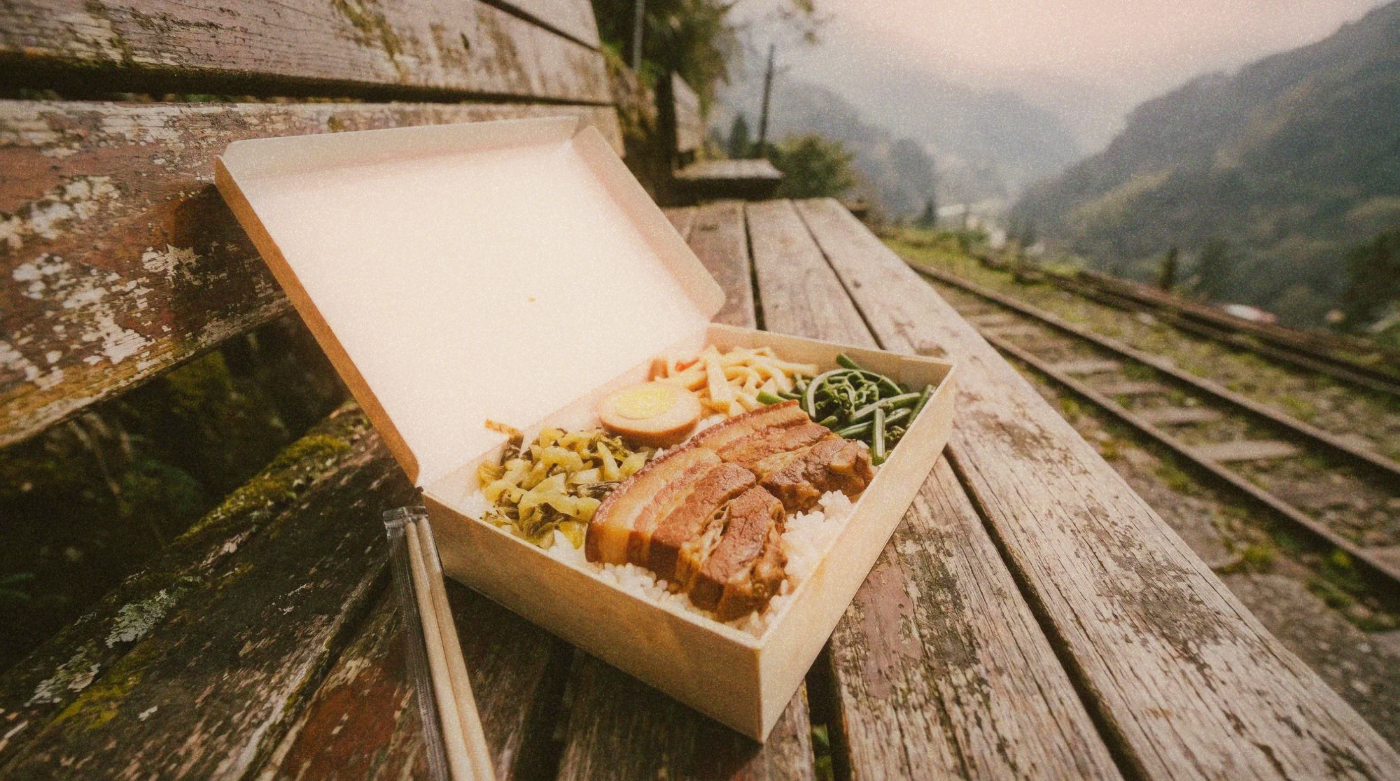 FIRST SIGHTWEBGLThe Fenqihu railway bento. Wooden box, mountain greens, braised pork, and a bench with a view. · Color and grain by First Sight · Gold 200. · First Sight 色彩與顆粒調校 · Gold 200
Beyond the bento, Fenqihu has a small collection of tea shops, a few short hiking trails through bamboo forest, and a general atmosphere of mountain village quiet that feels like it belongs to an earlier version of Taiwan.
Chiayi city: don't skip it
Most people treat Chiayi as a bus transfer point. Get off the HSR, get on the bus, get to the mountain. This is a mistake.
Chiayi is a small, walkable city with possibly the best single regional dish in Taiwan (turkey rice), a perfectly sized night market, and a Japanese-era cultural village worth a full morning. It's not trying to be Taipei or Tainan. That's exactly what makes it good.
Hinoki Village. Twenty-eight restored Japanese-era wooden dormitories, originally built for forestry workers during the colonial period, now converted into shops, cafes, and exhibition spaces. The buildings are made from hinoki cypress, the same wood the forest railway was built to transport. Free admission. The outdoor areas are open 24 hours; indoor shops run 10am to 6pm. Plan for 2 to 3 hours of wandering. There's a Ghibli store with Totoro figures out front, which tells you roughly what kind of vibe the place has.
Turkey rice (火雞肉飯). Chiayi's signature dish and the reason some people come here without ever going to Alishan. Shredded turkey over rice, doused in a gravy made from turkey drippings and fried shallots, usually with a side of pickled daikon. It costs NT$40 to 60 per bowl. Every local has a favorite shop and will tell you the others are wrong.
Three worth trying: Guo's Chicken Rice (郭家雞肉飯) on Wenhua Road, one of the oldest in the city, dating to 1945. Ah Xi Turkey Rice (阿溪火雞肉飯), where the sliced turkey version is legendary but limited daily. And A Lou Shi Turkey Rice (阿樓師火雞肉飯), which opens only for dinner starting at 4pm and serves incredibly tender dark meat that locals swear by.
Eat at all three. A bowl is NT$55. Three bowls is NT$165. That's the cost of one mediocre Taipei lunch.
Wenhua Road Night Market (文化路夜市). Stretches about half a kilometer along Wenhua Road. Not as sprawling as Taipei's night markets, which is actually better: you can walk the whole thing in 30 minutes and eat everything that matters. Beyond turkey rice, look for fish head stew, fresh fried eel, and tofu pudding. The market has roots going back to 1945. Cash only at most stalls.
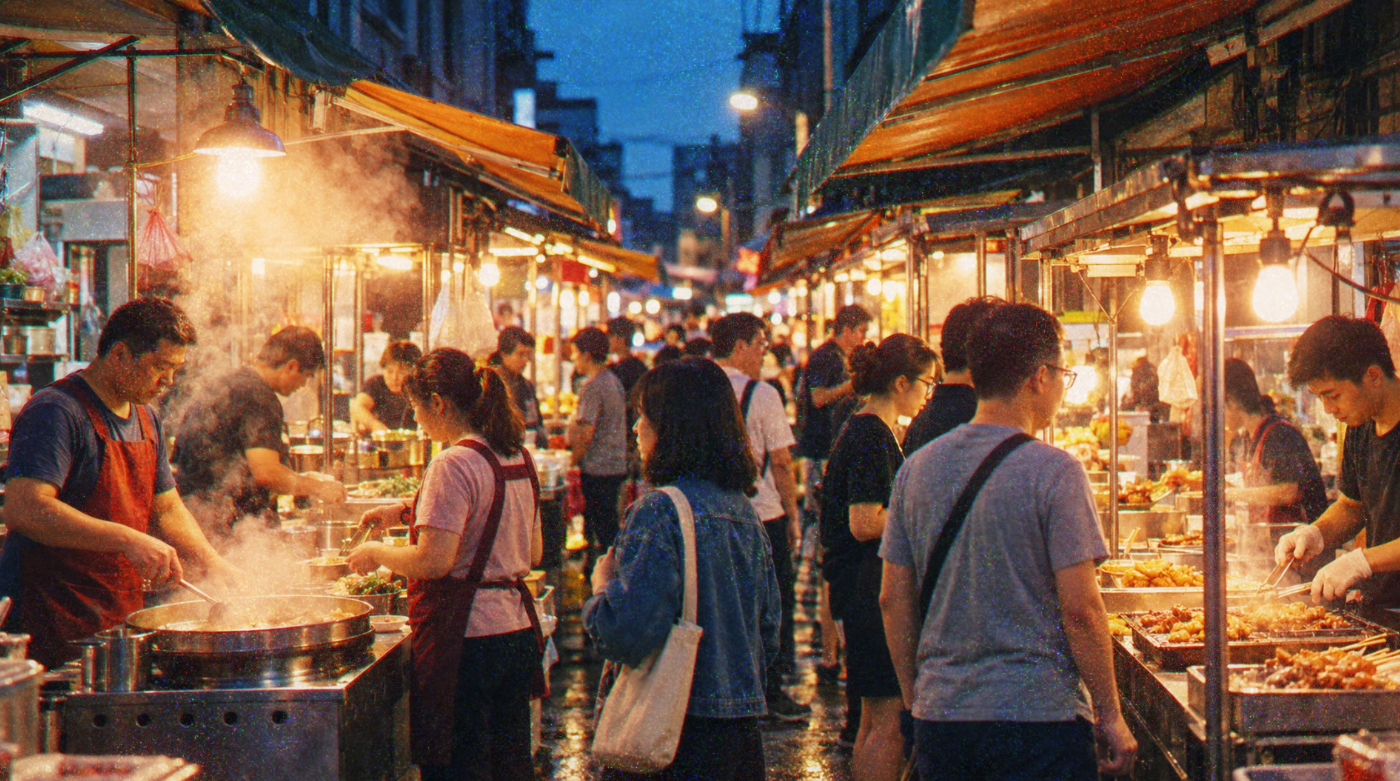 FIRST SIGHTWEBGLAfter a day in the hills, an evening meal at the market brings the pace back down. · Color and grain by First Sight · Cinestill 800T. · First Sight 色彩與顆粒調校 · Cinestill 800T
The 2026 Lantern Festival connection
The 2026 Taiwan Lantern Festival was held in Chiayi County from March 3 to 15, centered around the HSR Chiayi Station area in Taibao, near the Southern Branch of the National Palace Museum. No admission fee. Free shuttle buses ran from both HSR and TRA stations. If you're reading this after March 2026, the festival is annual and rotates cities, but Chiayi made a strong case for itself. Sixteen themed zones, and the kind of scale that justified the trip on its own.
Where to stay
In Alishan. Hotels in the recreation area range from about NT$2,000 for basic guesthouses to NT$6,000 or more for the Alishan Hotel (the grand old property inside the park) and the newer Hotel Indigo, which has mountain views and a rooftop pool. Staying at least one night in the park is the only way to do both the sunrise train and the hiking trails without rushing. Book well ahead for weekends and cherry blossom season.
In Chiayi city. Budget hotels and hostels near TRA Chiayi Station run NT$800 to 1,500 per night. Mid-range options are NT$1,500 to 3,000. The area around the train station puts you within walking distance of Wenhua Road Night Market and Hinoki Village. If you're arriving late from Alishan or departing early by HSR, one night in the city makes the logistics much easier.
Suggested three-day itinerary
Cherry blossom season (mid-March to mid-April)
If you time your visit for cherry blossom season, the Alishan Forest Recreation Area fills with Yoshino cherries, Taiwan mountain cherries, and several other varieties that bloom in succession from early March through mid-April. The peak for Yoshino cherries is typically mid-March. During 2026, traffic restrictions applied on specific weekends (March 14-15, 21-22, 28-29, and April 3-6), with private cars banned from 6:00am to 11:00am. The forest railway and buses are unaffected by these restrictions, which is another reason to take public transit.
The Zhaoping Line branch train (NT$100) deposits you right in the main blossom viewing area. The combination of narrow-gauge train, cherry blossoms, and mountain fog is peak Taiwan tourism cliche, and also genuinely beautiful. Bring a warm layer. Even in March, Alishan mornings sit around 5 to 10 degrees Celsius.
Alishan Forest Recreation Area: practical details
Admission to the recreation area is NT$200 on holidays, NT$150 on weekdays. If you arrive by public transport and show your bus ticket, you may get the weekday rate. About 30 kilometers of maintained trails range from flat boardwalks to moderate mountain paths. The visitor center near the main station has maps and current trail conditions. Give yourself at least a full day inside the park, two if you want to hike without rushing.
FAQ
How far in advance should I book the forest railway?
Fourteen days is the maximum. For weekends and holidays, book the moment the window opens. Weekday seats are easier but still sell out during cherry blossom season (mid-March to mid-April) and autumn foliage (October to November).
Can I do Alishan as a day trip from Taipei?
Technically, yes, but it would be miserable. The bus alone takes 2.5 to 3 hours each way from Chiayi, plus you need to get to Chiayi first. An overnight in the park or in Chiayi is strongly recommended. Two nights is ideal.
What should I wear?
Layers. Chiayi city is subtropical and warm. Alishan at 2,200 meters can be 15 to 20 degrees cooler. In winter, temperatures near the summit drop to 0 to 5 degrees Celsius at dawn. A packable down jacket and a rain shell cover most situations.
Is the sunrise worth waking up at 4am for?
On a clear day, absolutely. On a cloudy day, you're standing in cold fog. March through May has the best odds for clear skies. Check the Alishan Hotel's sunrise information page (alishanhotel.com.tw) for next-day forecasts. If it's forecast as cloudy, sleep in and hike the Giant Tree trails instead.
How much should I budget for tea?
A 150-gram bag of Alishan High Mountain Oolong costs NT$600 to NT$1,500 at the farms. Prices in Taipei tea shops for the same tea run 30 to 50% higher. If you drink oolong, buy it at the source. A free tasting at most farms runs four to five varieties.
Is the Lantern Festival worth planning around?
If it aligns with your dates, absolutely. It's free, massive, and the shuttle logistics from HSR are seamless. But don't reschedule a trip specifically for it unless you're a lantern enthusiast. The mountains and the food are the draw year-round.
Comments (0)
Loading comments...