
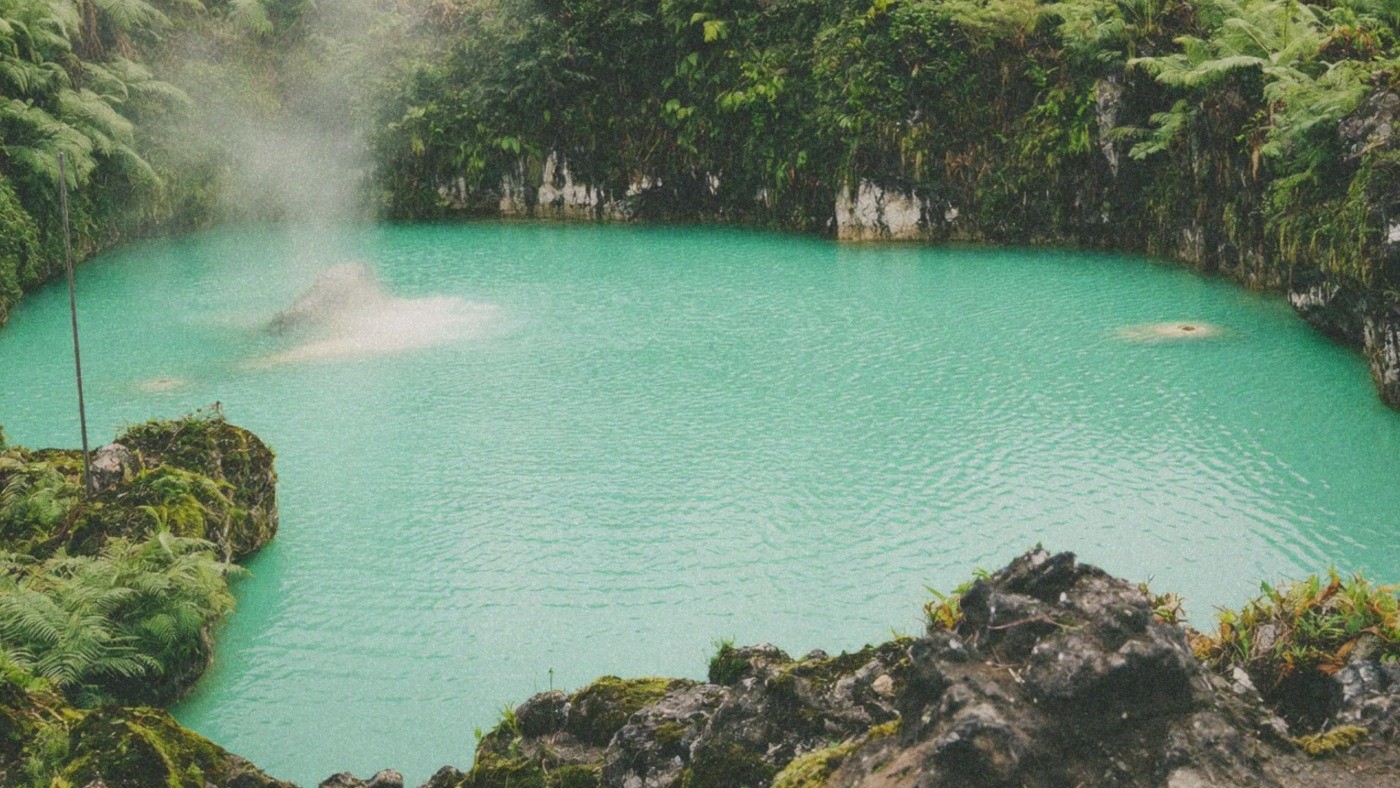
At the northern edge of Taipei, steam rises between wooded slopes and ordinary city streets. Walk uphill from Xinbeitou and Beitou Stream leads toward Thermal Valley, one of its hot-water sources. The blue-green water is striking, but this is a place to observe from the path, never a pool to enter. The district's bathhouses bring the experience into managed bathing facilities, with different rules, temperatures and prices.
The useful question is which kind of visit you want: a traditional communal bath, a private soaking room, or a walk through the park with no bath at all. Choose around the facilities that are actually operating. Beitou's famous Millennium outdoor public bath is under renovation; an old guide promising a cheap swim there is not a reliable itinerary for September 2026.
Getting there: the little pink branch line
Take the Red Line toward Tamsui and get off at Beitou, then change to the short Xinbeitou branch, a single stop on a slow, often playfully decorated little train that trundles along a green corridor. It is the rare piece of a metro system that feels like the start of a holiday. Step out at Xinbeitou and the whole hot-spring district is on foot from there, gathered along a gentle uphill stream valley you can walk end to end in twenty minutes.
That valley is Beitou Park, and it follows the warm stream uphill past a string of landmarks: the striking timber Beitou Library, one of the greenest buildings in Taiwan; the old public bathhouse that is now a museum; and, at the top, the steaming lake itself. You can smell the sulphur before you see anything, a faint eggy warmth in the air that tells you the ground here is alive.
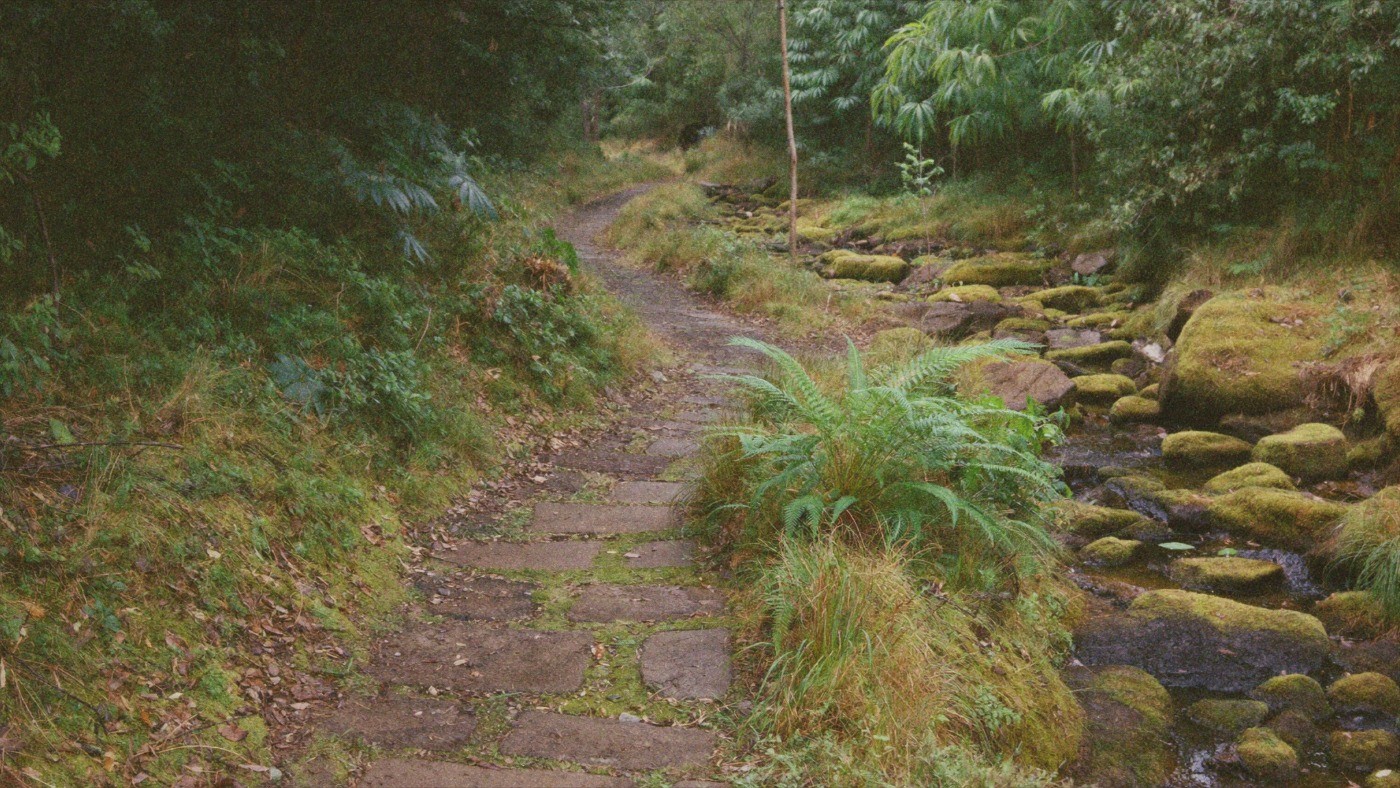
 FIRST SIGHTWEBGLA quiet woodland walk, illustrated with Higgsfield and developed in First Sight Portra 160. Generated image, not a record of a specific trail. · Color and grain by First Sight. · First Sight 色彩與顆粒調校
Three kinds of water
Beitou's spring waters are commonly described as green sulfur, white sulfur and iron sulfur. Thermal Valley supplies strongly acidic green-sulfur water; describing the source as merely mildly acidic is misleading. The temperature and treatment of water in an individual bathing facility are separate matters, so read that facility's notices. Mineral names are not evidence that a bath will treat skin conditions or joint pain. Remove jewelry as the operator advises, and never drink spring water.
The area is associated with hokutolite, the mineral named for Beitou. That geological interest does not make the source water suitable for bathing. Stay on the designated visitor paths and keep clear of the water; the heat and acidity are sufficient reasons to respect the barriers. Use an operating, managed bathing facility for a soak.
Public pools, private rooms, and hotel spas
Millennium Hot Spring, the outdoor public bath in Beitou Park, suspended operations on January 24, 2025 for renovation. Before building your trip around it, check Taipei's official project and reopening notices. Construction completion is not confirmation that visitors can enter. The old NT$60 ticket and former session timetable should not be treated as current opening information.
Private soaking rooms, or tang wu, offer an alternative to sharing a pool. Compare the specific room and package: some bookings include only bathing time, while others may include somewhere to rest. Traditional communal baths are a different experience, with shared water and facility-specific clothing rules. Choose the format that makes everyone in your party comfortable, then confirm its current availability directly with the operator.
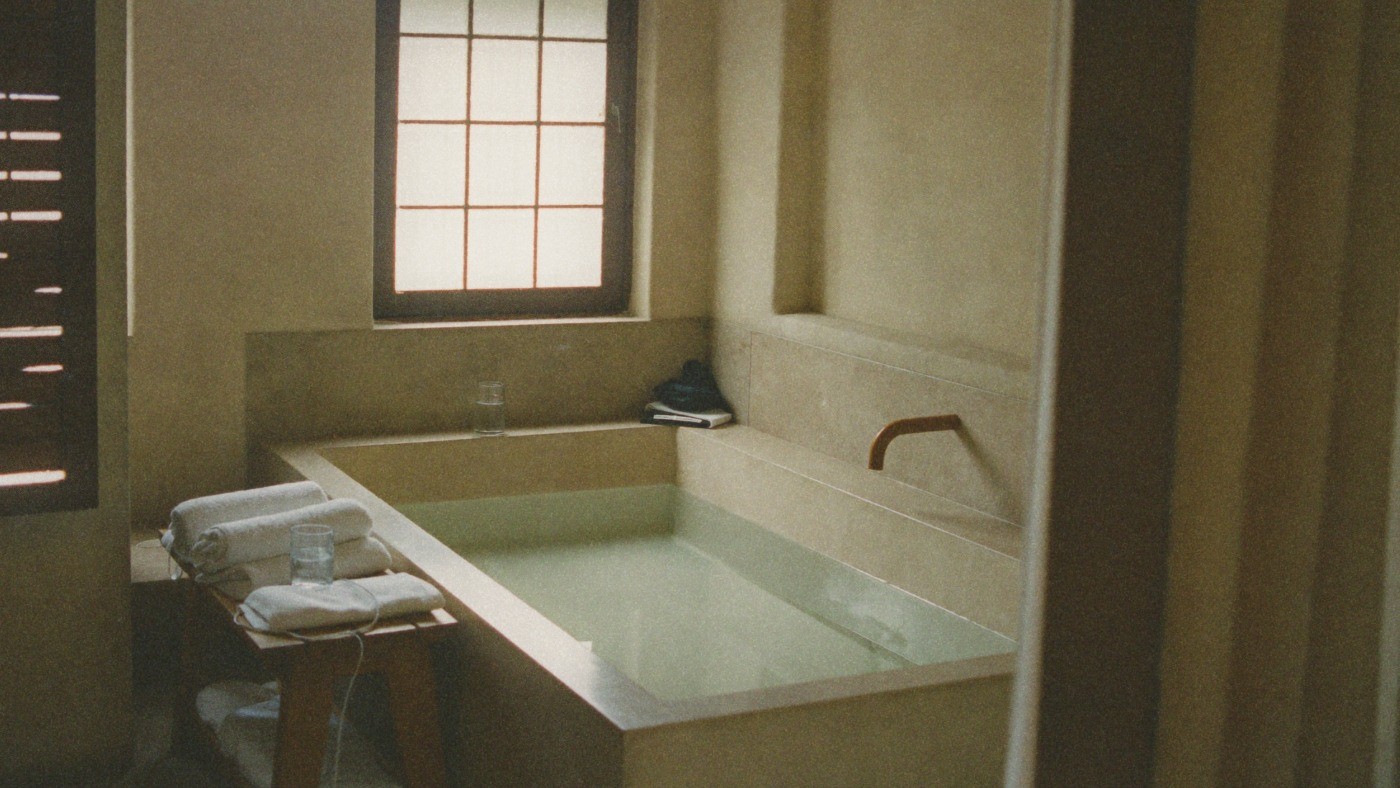 FIRST SIGHTWEBGLA private soaking-room illustration, developed with First Sight Portra 160. Generated image; facilities vary by operator. · Color and grain by First Sight. · First Sight 色彩與顆粒調校
The valley, the museum, and the temple
Thermal Valley is for a walk and a view, not for bathing or cooking food. Follow the designated paths, stay behind barriers and do not put hands or feet into the water. Check the official opening information before visiting: the Beitou District Office lists Tuesday to Sunday, 09:00–17:00, subject to closure notices. A Monday itinerary needs an alternative.
Downhill, the Beitou Hot Spring Museum occupies a gorgeous 1913 Japanese-era public bathhouse, free to enter, with a grand tiled soaking hall and tatami rooms upstairs where bathers once rested. Add the timber-and-glass Beitou Library next door and Puji Temple, a quiet Japanese-style Buddhist temple up the slope, and you have a gentle cultural loop to fill the time between one bath and the next.
How to actually do it: etiquette and care
Read the rules before changing. Ask whether the bath is nude or swimsuit-only, whether a swimming cap is required, and what the policy is on tattoos, children and accompanying carers. Wash before entering shared water and follow the operator's instructions about towels and jewellery. Put the phone away in changing and bathing areas; other guests' privacy is part of a considerate visit. If the rules do not suit your group, choose another facility.
Keep individual dips short, with a break between them. Taiwan's Tourism Administration advises no more than 15 minutes at a time. Check the temperature before entering, drink water, and leave immediately if you feel unwell. Do not bathe after drinking alcohol or when unwell. If you are pregnant or have a medical condition, ask your clinician whether hot-spring bathing is appropriate for you; a travel article cannot provide personal clearance.
When to go
You can soak any time of year, but a hot spring makes the most sense from late autumn through winter and into early spring, roughly November to March, when Taipei turns cool and damp and the steam feels like a reward rather than a dare. Weekday mornings and early afternoons are the quietest; weekend nights in winter are the busiest. Bring a small towel, a change of clothes, water to drink, and enough time to do nothing in particular afterwards.
Book the bath, then build the day
Start with the people coming with you. A shared pool can be appealing if everyone is comfortable with its clothing rules and pace. A private room gives a group more control over its time together, but privacy alone does not tell you whether the room is accessible or suitable for children. Write down the needs that matter before comparing photographs: steps, a handrail, a place to sit, a separate shower, and help nearby. Ask the operator about those details, rather than assuming that a more expensive room solves them.
Then compare the complete booking. How many people does the quoted rate cover? Does the timer start at check-in or when you enter the room? Are towels, lockers and drinking water included? Is there a surcharge for the day you plan to visit, and what happens if your train journey takes longer than expected? Save the confirmation and the cancellation conditions. These questions are more useful than chasing a single headline price, because they tell you what the afternoon will actually cost and how rushed it might feel.
Keep the booking window distinct from your time in the water. Renting a room for an hour does not mean soaking for an hour: changing, washing, filling a tub where required, resting and dressing all take time. Leave a margin between the bath and your next commitment. If a companion wants to stop early, the plan should make that easy. A pleasant visit is one that can adapt to how you feel, without pressure to get your money's worth by staying in hot water.
A half-day plan with room to change your mind
For a first visit, choose one bath and one cultural stop. Begin with a walk from Xinbeitou so you can orient yourself before the reservation. Pick the museum or Thermal Valley according to the opening information for that day; adding both is optional. Keep the bath as the only fixed appointment. This makes it easier to pause for a drink, take the uphill section slowly, or shorten the walk if the weather is uncomfortable. There is no need to collect every landmark to have spent the afternoon well.
Build a version of the outing that works without bathing. A companion may change their mind about a communal pool, or a facility may be full when you arrive. Decide in advance that a park walk and an open cultural attraction are an acceptable finish. Check each attraction's own notice rather than assuming every place follows the same weekly schedule. If you are visiting on a Monday, do that check before travelling. On any day, keep enough time to return to the station without hurrying along wet paths.
Pack for the journey home
Bring the things that make leaving as easy as arriving: dry clothes, a small bag for damp items, drinking water and whatever bathing clothing your chosen facility requires. Confirm towel provision before deciding whether to carry your own. Keep your reservation details available on your phone, but put it away where people are changing or bathing. Decide what you need to keep with you and ask how valuables are stored. Travelling light helps; arriving without an essential item simply turns a relaxing plan into another errand.
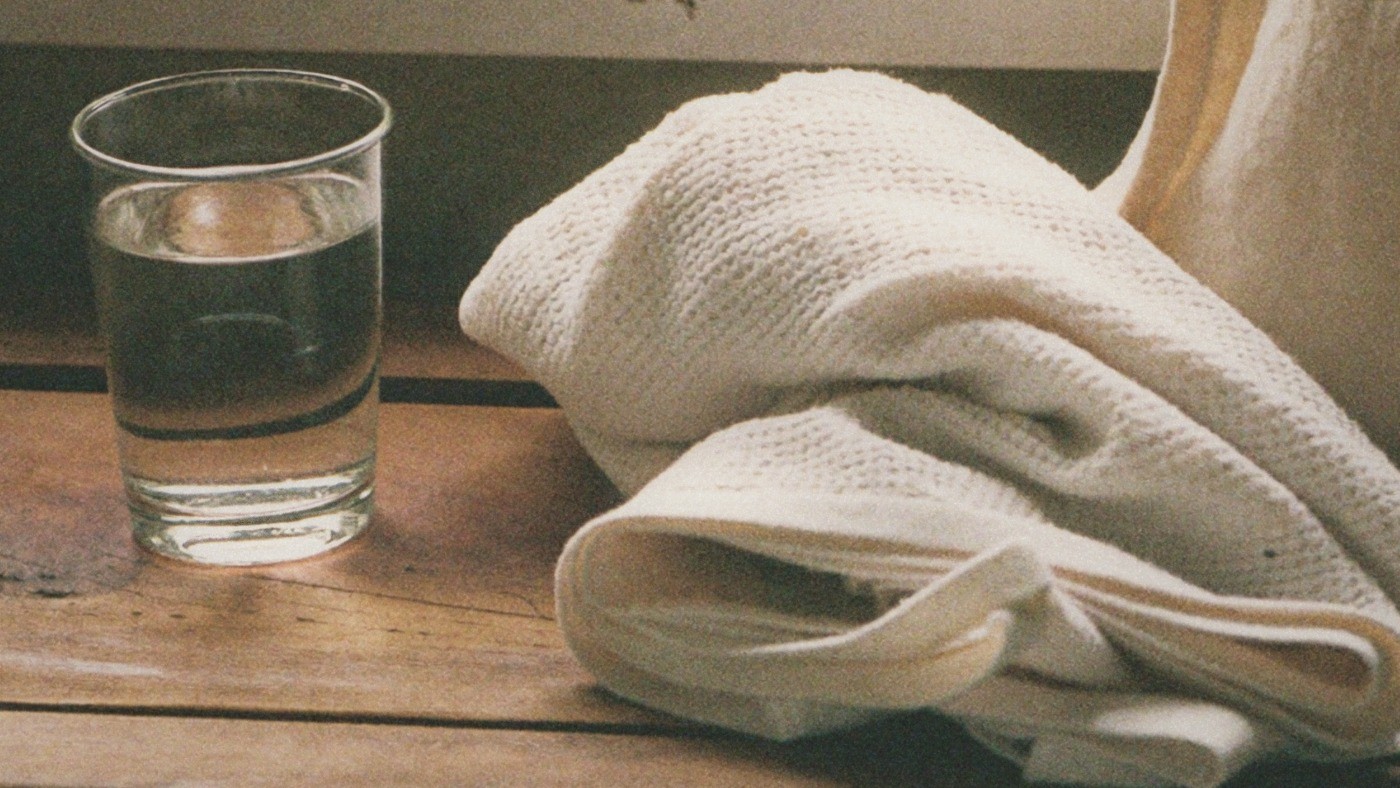 FIRST SIGHTWEBGLA towel and drinking water for a slower outing. Generated illustration, developed in First Sight Portra 160. · Color and grain by First Sight. · First Sight 色彩與顆粒調校
The pleasure of Beitou is having room to slow down without turning the day into an expedition. Book the bath that suits you, leave space around it, and return through the park when you feel ready. If you decide to skip the water, the walk still counts. Before you leave home, confirm the opening notice and your reservation; the rest of the afternoon can stay pleasantly unplanned.
Frequently Asked
Planning sources (checked September 12, 2026): Taipei public-bath renovation notice · Beitou District Office: Thermal Valley · Tourism Administration: hot-spring bathing guidance · Taipei Department of Cultural Affairs: Hot Spring Museum.
Comments (0)
Loading comments...