
6:50 on a Tuesday morning. The courtyard at Nung Chan Monastery in Beitou is still damp from overnight rain. A few people sit on stone benches near the reflecting pool, not talking. The Water-Moon Dharma Hall, all glass and concrete and water, catches the earliest light and holds it. A pigeon lands on the railing. Somewhere behind the main building, someone is sweeping.
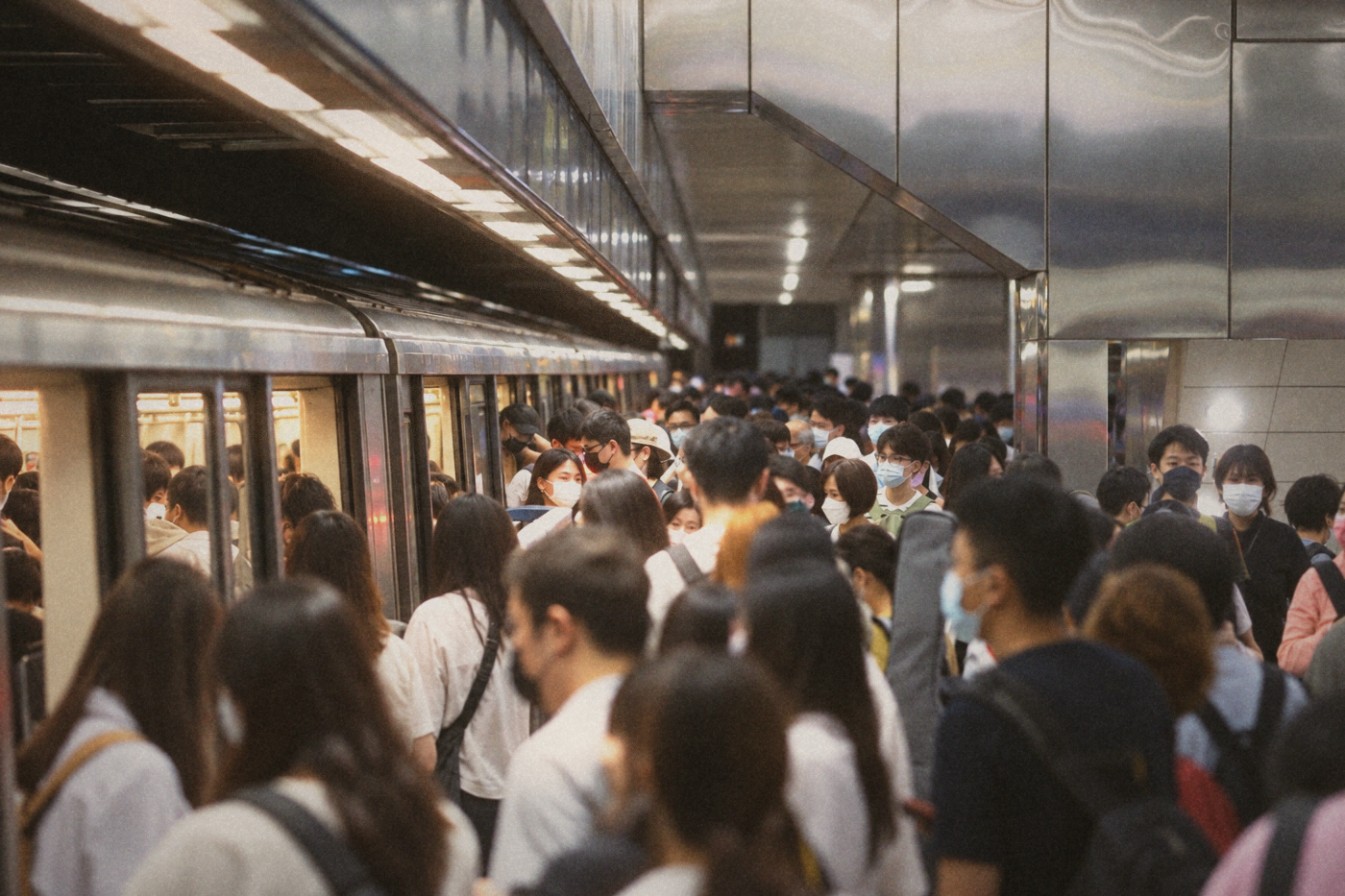
Seventy minutes later, you're wedged into an MRT car at Zhongxiao Fuxing, your bag pressed against someone's elbow, your phone buzzing with a LINE message from your boss, the recorded announcement reminding you to hold the handrail. Your jaw is tight. You didn't notice when that started.
The distance between those two scenes is about 14 kilometers and an entire nervous system state. And the thing that connects them, the practice that could make the MRT version of you a little more like the temple courtyard version, takes about three minutes. Not thirty. Not an hour on a cushion in a silent room. Three.
I resisted meditation for a long time. I thought you had to be good at sitting still, which I'm not. I thought it required a quiet mind, which mine has never been. Turns out both assumptions were wrong, and the research on what meditation actually does to your brain is less mystical and more mechanical than I expected.
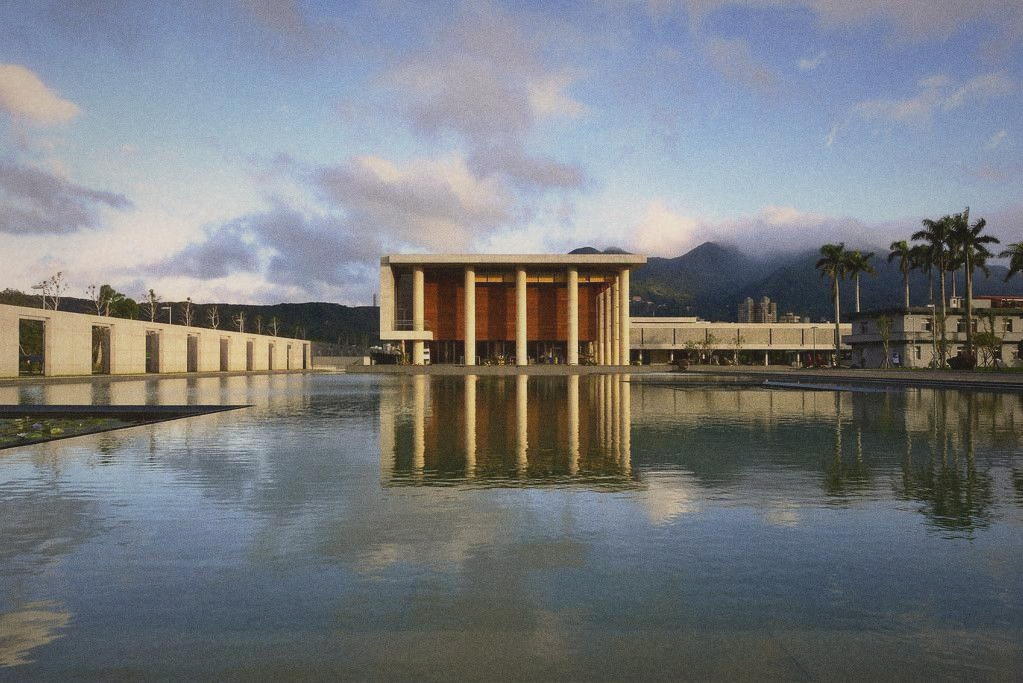
 FIRST SIGHTWEBGLNung Chan Monastery's Water-Moon Dharma Hall, Beitou. Free beginner sessions run on Sundays. The architecture alone is worth the trip. · Color and grain by First Sight · Portra 400. · First Sight 色彩與顆粒調校 · Portra 400
What the research actually says
Meditation has a reputation problem. Too much incense, too many promises about enlightenment, not enough plain talk about what it does and doesn't do. So here's the plain talk.
A 2014 meta-analysis in JAMA (47 trials, 3,515 participants) found that meditation programs reduced anxiety with an effect size of 0.38 and depression at 0.30, measured at eight weeks. Those numbers might sound small. They're comparable to the effect size of antidepressants, without the side effects or the prescription.
Sleep improves too. A 2019 review in the Annals of the New York Academy of Sciences found an effect size of 0.33 for sleep quality post-intervention. If you've read our piece on sleep optimization, you know how hard it is to move that needle. Meditation moves it.
And the brain changes are physical, not just subjective. A 2011 Harvard study found that participants who meditated an average of 27 minutes per day for eight weeks showed measurable increases in grey matter density in the hippocampus (learning and memory) and decreases in the amygdala (fear and stress). Your brain literally reshapes itself around the practice.
But here's the part that matters most if you're just starting: you don't need eight weeks to feel something. Researchers at Binghamton University found that brainwave patterns shift after just two to three minutes of focused attention, with effects peaking around seven minutes. Three minutes is not a warmup. Three minutes is a dose.
The three-minute version (start here)
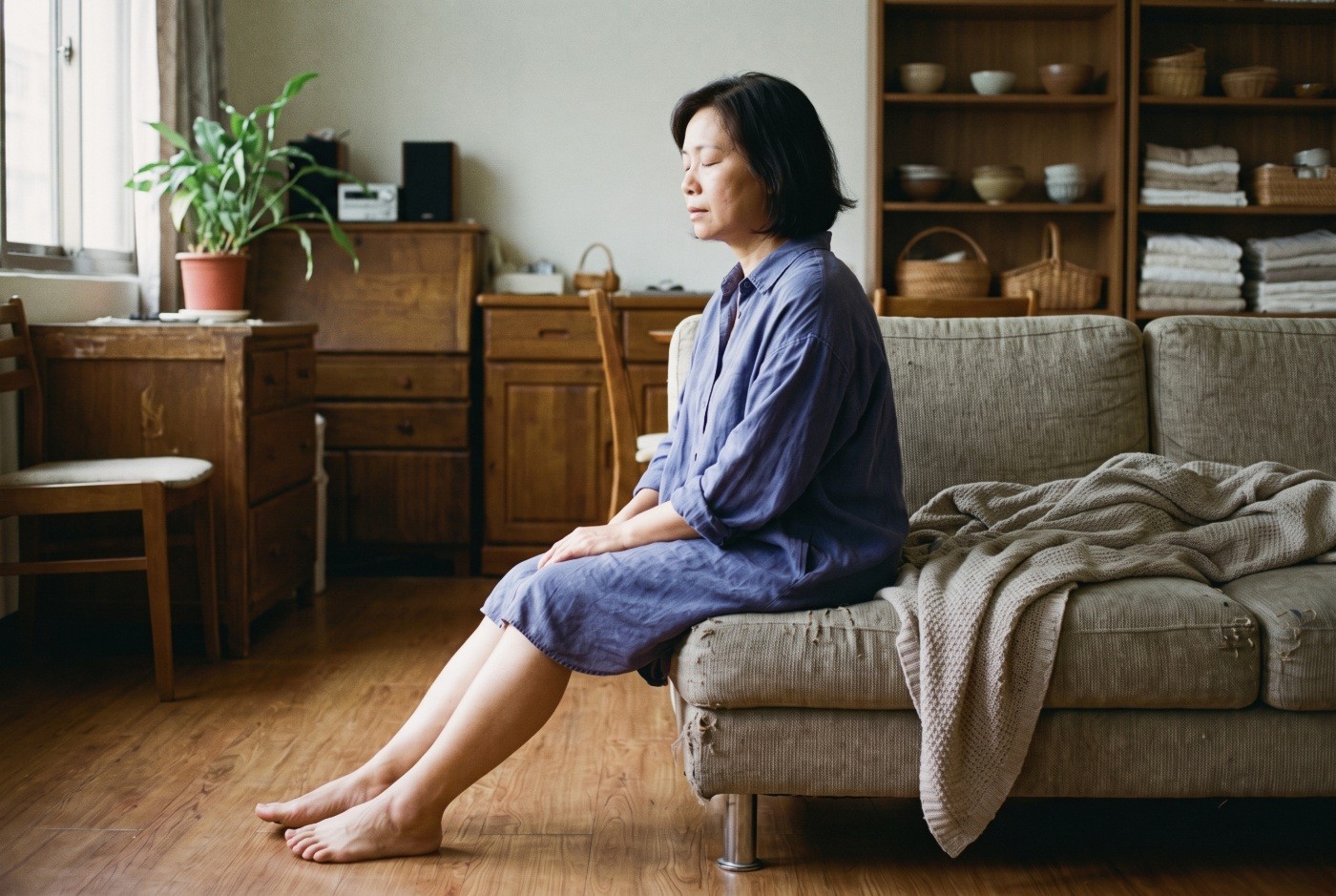 FIRST SIGHTWEBGLIllustration: A quiet pause on the sofa. · Color and grain by First Sight · Portra 400. · First Sight 色彩與顆粒調校 · Portra 400
Forget everything you think meditation looks like. You don't need a cushion, a timer app, incense, or silence. You need a chair and three minutes.
Sit down. Feet on the floor. Close your eyes or look at a fixed point about two meters ahead. Breathe normally. Don't try to breathe slowly or deeply. Just notice the breath going in and out. When your mind wanders (it will, within seconds, every single time), notice that it wandered, and come back to the breath. That's it. That's the whole practice.
The noticing-and-returning is the exercise. Not the stillness. Not the empty mind. The moment you realize you've drifted and bring your attention back is the rep. Everything in between is just waiting for the next rep.
I mention this because the biggest reason people quit meditation is they think they're doing it wrong. Their mind won't stop. They keep thinking about lunch or that email or whether the laundry is done. That's not failure. That's the practice working exactly as designed. A meditation session where your mind wanders forty times and you bring it back forty times is a better session than one where you somehow stayed perfectly focused. You just did forty reps. The person who sat in perfect stillness did zero.
Three minutes, once a day, for a week. That's the entry point. If you can brush your teeth, you can do this.
Building up (without building a burden)
The progression matters because too much too soon is how most meditation habits die. You sit for twenty minutes on day one, feel bored and restless, decide this isn't for you, and never come back. I did this twice before I figured out that the duration needed to grow slowly, like any other training.
A practical schedule:
Week one: 3 to 5 minutes daily. Just the breath. Sit in whatever chair you normally sit in. Don't make it special. The less ceremony, the better.
Week two: 5 minutes. Same thing. You might start noticing that the quality of your attention shifts partway through. Around minute three or four, there's often a subtle settling. Not peace, exactly. More like your brain stops fighting the exercise and just does it.
Week three: 7 to 8 minutes. At this point you can experiment with where you sit. A bench at Da'an Forest Park before 7am, when the lotus pond is still and the bamboo forest filters the light into green columns. A quiet corner at a coffee shop before it gets crowded. Your office chair with the door closed for five minutes after lunch.
Week four: 10 minutes. This is where most research benchmarks start. Ten minutes daily is enough to produce measurable changes in stress biomarkers within two weeks.
Weeks five through eight: build to 15 or 20 minutes if you want to, but honestly, 10 is plenty. The research shows diminishing returns after about 20 minutes for beginners. More is not always more.
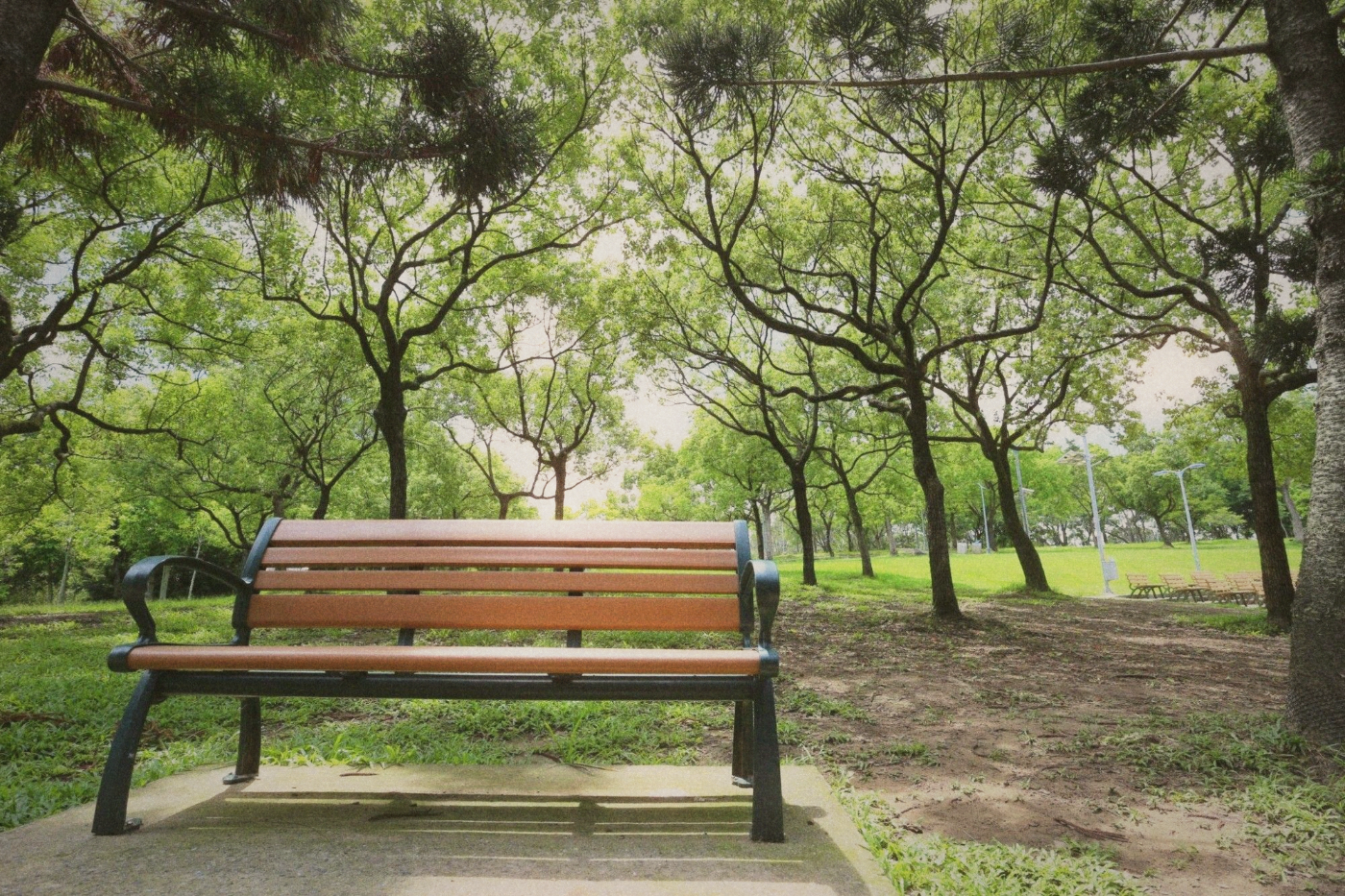 FIRST SIGHTWEBGLDa'an Forest Park, before 7am. The benches near the bamboo forest are the quietest spots in central Taipei. Bring a tea, skip the phone. · Color and grain by First Sight · Portra 400. · First Sight 色彩與顆粒調校 · Portra 400
The obstacles everyone hits (and why they're not problems)
 FIRST SIGHTWEBGLColor and grain by First Sight · Portra 400.First Sight 色彩與顆粒調校 · Portra 400
"My mind won't stop." Right. That's the point. See above. Your mind is supposed to wander. The practice is the returning, not the stillness. If this still bothers you after a week, try counting breaths from one to ten. When you lose count (you will), start over. The counting gives your mind something to hold onto, like training wheels.
"I can't sit still." Then don't. Walk. Walking meditation is a legitimate and ancient form of the practice. Slow steps, attention on the sensation of your feet touching the ground. We wrote a whole guide on this: walking meditation for daily practice. You can also try standing meditation, which is common in qigong traditions. Or lie down, though you'll probably fall asleep, which is fine if you need the sleep.
"I don't have time." You have three minutes. You spent longer than that choosing what to watch on Netflix last night. This isn't a time problem. It's a priority problem dressed up as a time problem. Stick it to an existing habit: meditate right after you brush your teeth in the morning. The anchor makes it automatic.
"Nothing is happening." Something is happening. You just can't feel it yet. The Binghamton research showed brainwave shifts within two to three minutes. The subjective feeling of calm or clarity usually lags behind the neurological changes by a week or two. Keep going. The results show up like compound interest: invisible for a while, then suddenly obvious.
"I feel more anxious when I sit still." This is more common than people admit, and it's worth taking seriously. For some people, especially those with trauma histories, sitting in silence amplifies difficult feelings. If this is you, try open-eye meditation (gaze softly at a fixed point), or guided sessions where a voice keeps you company. The Tide app (潮汐) has good guided sessions in Traditional Chinese. You can also start with just one minute. There's no minimum threshold for the practice to count.
Where to practice in Taipei
You can meditate anywhere. A park bench, your living room floor, the backseat of a taxi if you're stuck in Xinyi traffic. But if you want community or instruction, Taipei has surprisingly good options, most of them free.
農禪寺 (Nung Chan Monastery) 台北市北投區大業路65巷89號. Free beginner meditation classes. Sunday group sitting runs 14:00 to 16:30. The Water-Moon Dharma Hall, designed by architect Yao Ren-xi, is one of the most beautiful buildings in Taipei. The reflecting pool alone resets something in your head. Take the MRT to Qilian, then walk about 15 minutes. Worth the trip even if you don't meditate.
安和分院 (Dharma Drum Anhe Branch) 台北市大安區安和路一段29號10樓. MRT: Zhongxiao Dunhua. Free beginner classes in a more urban, accessible setting. Tenth floor of an office building, which sounds strange until you're up there and the city noise drops away. Good for people who want instruction without the full temple experience.
無有禪社 (None Zen Center) No. 241-2, 2F, Jinhua Street, Da'an District. MRT: Dongmen Exit 5. Completely free, no donations required. English classes available on Saturdays, 9:00 to 11:30 AM. This is the most approachable option for English speakers and for people who don't come from a Buddhist background. Small space, welcoming vibe.
台灣噶當巴禪修中心 (Kadampa Meditation Center) No. 178, 2F, Section 3, Tingzhou Rd, near NTU. Suggested donation NT$150 per class. Tibetan Buddhist tradition. Good if you want a more structured, teaching-heavy approach. Near the NTU campus, easy to combine with a walk through the university grounds afterward.
台灣正念工坊 (Taiwan Mindfulness Center) 台北市松江路63巷7-1號2樓. If you want the clinical approach: an 8-week MBSR (Mindfulness-Based Stress Reduction) course, the same program developed at UMass Medical School that generated most of the research cited in this article. Runs about NT$13,000 for the full course. Not cheap, but it's the most evidence-backed structured program available.
Outdoor sitting spots
Some mornings you just want to sit outside and not talk to anyone. Taipei is good for this if you know where to go and when.
Da'an Forest Park. Best before 7am, when the tai chi groups are still warming up and the joggers haven't arrived yet. The benches near the lotus pond and the bamboo forest section are the quietest. After 8am it gets busy.
Xiangshan (Elephant Mountain). Not the summit. The bamboo forest near the trail entrance, about 20 to 30 minutes up. There are flat rocks and clearings where you can sit with a view of the canopy. Early morning is best. By 9am the Instagram crowds arrive and the peace evaporates.
龍山寺 (Longshan Temple). Morning chanting runs 6:00 to 6:45 AM. You don't have to be Buddhist to sit in the courtyard and let the sound wash over you. The incense, the chanting, the worn stone under your feet. It's a different kind of meditation, more sensory, less internal. Wanhua has a specific kind of morning energy that you can't get anywhere else in Taipei.
行天宮 (Xingtian Temple). No incense burning here (they stopped in 2014), which makes it unusually peaceful for a major temple. Weekday mornings are the sweet spot. The courtyard is spacious enough that you can find a corner to yourself. MRT: Xingtian Temple station, obviously.
Making it stick
The research on habit formation says the same thing over and over: consistency beats duration. Five minutes every day is worth more than forty minutes on Saturday. Tying the new habit to an existing one (brushing your teeth, making coffee, sitting down at your desk) makes it dramatically more likely to stick. The technical term is "habit stacking," but it's really just putting one thing next to another thing you already do.
I meditate right after my morning coffee is made, before I drink it. The coffee is the cue. I sit down with the cup in front of me, close my eyes for seven minutes, then drink the coffee. The coffee is a little cooler by then, which I've come to prefer. The ritual has its own momentum now. I don't have to decide to do it. It's just the thing that happens between making coffee and drinking coffee.
If you miss a day, that's fine. Miss two, also fine. The only version of this that fails is the one where you miss a day, feel guilty, and decide the whole thing is ruined. It's not. Sit down tomorrow. Three minutes. Start again.
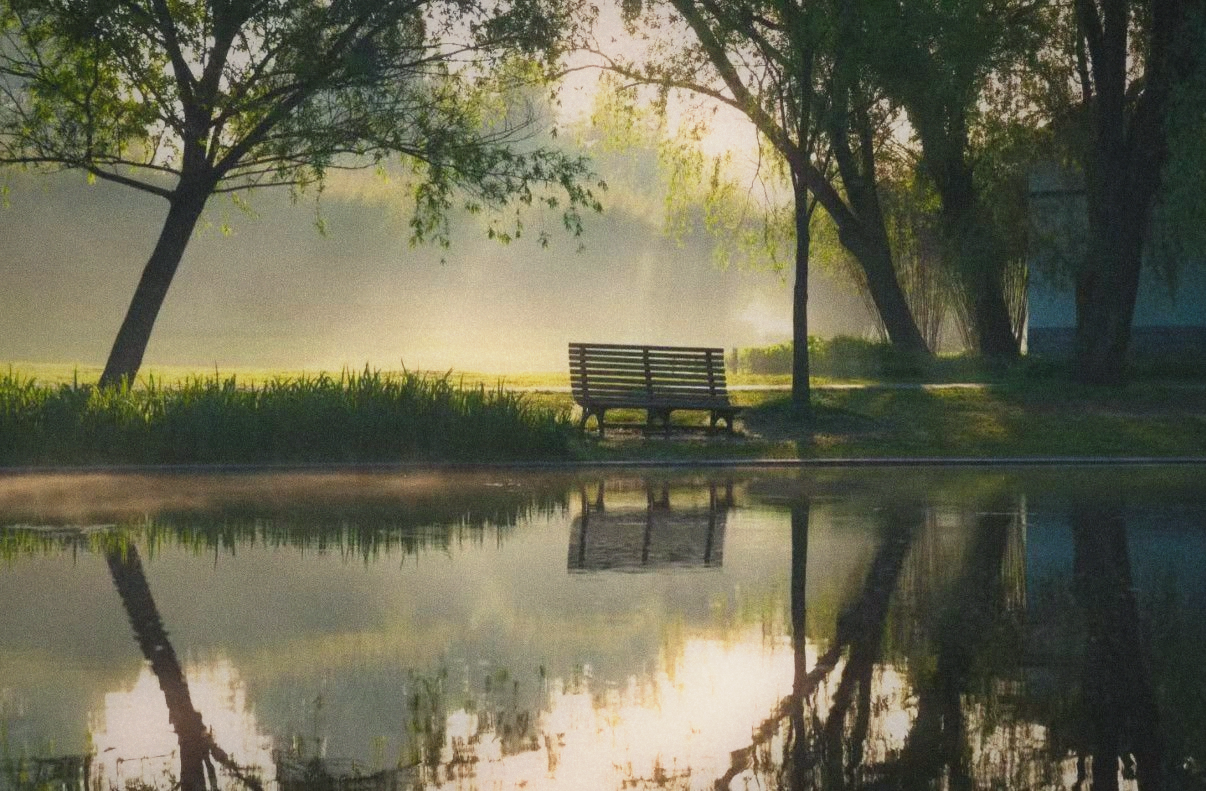 FIRST SIGHTWEBGLAny bench will do. The practice doesn't need a special location, just a few minutes where you're not reaching for your phone. · Color and grain by First Sight · Portra 400. · First Sight 色彩與顆粒調校 · Portra 400
What meditation doesn't do
It won't make you calm all the time. It won't stop bad thoughts. It won't fix your relationship or your job or your insomnia (though it helps with that last one, per the research on sleep quality we mentioned above).
What it does, gradually, is create a small gap between a stimulus and your response. Someone cuts you off in traffic. Your phone buzzes during dinner. Your boss sends a vague email at 9pm. The gap doesn't prevent the reaction. It gives you a half-second to choose what to do with it. Over weeks, that half-second becomes the most useful thing you own.
I've been practicing for about two years now. I still can't sit still. My mind still wanders constantly. I still sometimes open one eye to check how much time is left. But the 8am MRT version of me handles things a little differently than he used to. Not dramatically. Just a little. And a little is enough.
Frequently Asked
Some links in this article are affiliate links. If you purchase through them,OQUA may earn a small commission at no extra cost to you. This helps support our editorial work. We only link to products and services we genuinely reference in our writing.
Comments (0)
Loading comments...