
That shirt cost NT$3,200. It's a grey linen button-down from a Taiwanese maker whose name I can't even remember anymore, bought at a pop-up in Songshan Cultural Park three summers ago. The collar has softened into something no iron could replicate. The cuffs have taken the shape of my wrists. It smells faintly of the cedar blocks I keep in the closet, which is a habit I stole from my grandmother.
I've worn it roughly 200 times. That works out to about NT$16 per wear, and the number keeps dropping.
In the same period, I bought and discarded four fast-fashion shirts. Two from a Zhongxiao East Road chain that started pilling within weeks. One that bled dye onto a white undershirt the first time I got caught in a summer rain near Taipei 101. One that simply fell apart at the shoulder seam during a work meeting, which is the kind of thing that makes you rethink your entire approach to getting dressed.
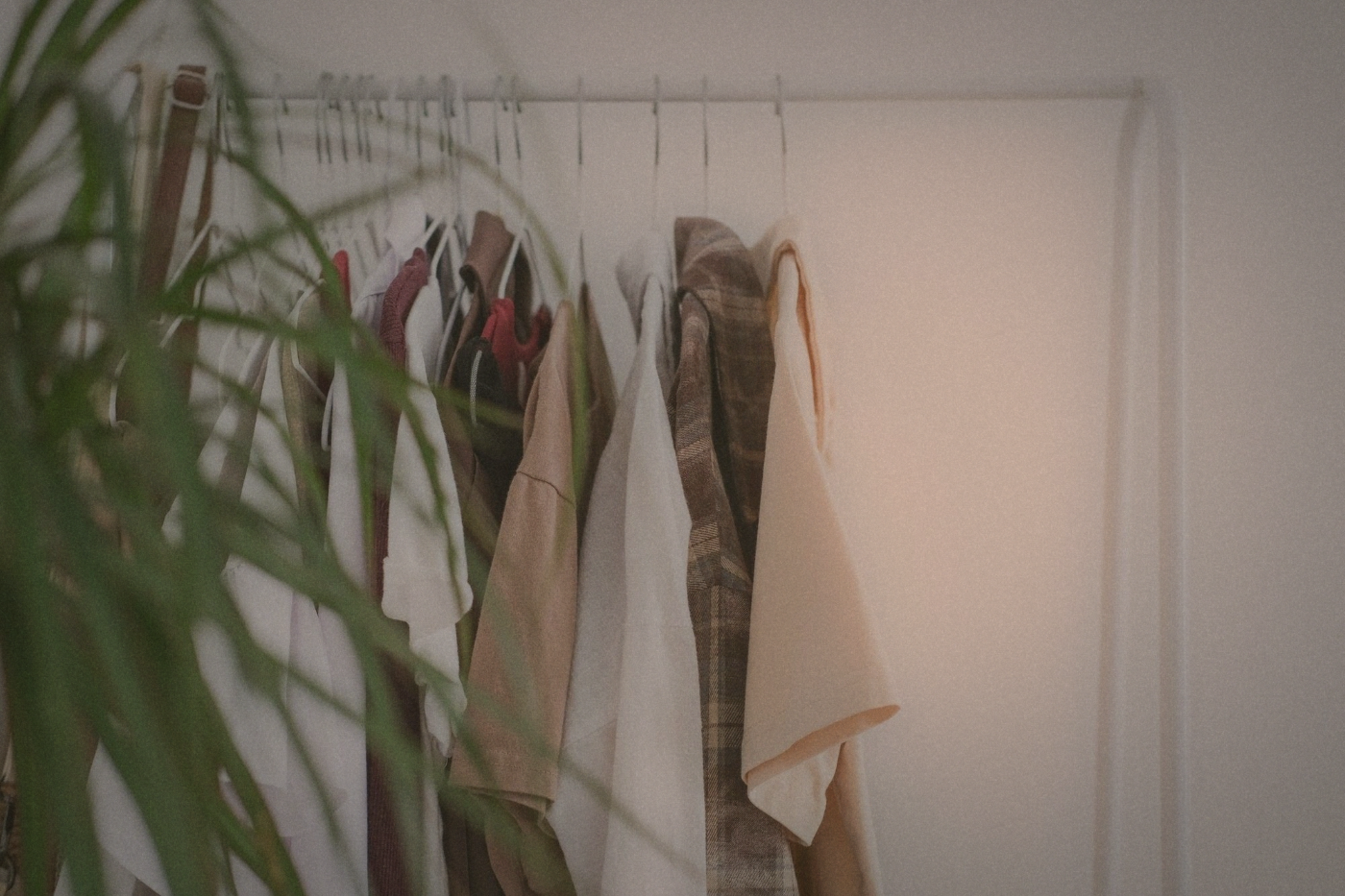
 FIRST SIGHTWEBGLThe wardrobe you actually reach for is smaller than you think. Most of us wear the same 15-20 pieces on repeat. · Color and grain by First Sight · Portra 400. · First Sight 色彩與顆粒調校 · Portra 400
The environmental argument for buying fewer, better clothes is well documented. But that's not what convinced me. What convinced me, and what I think will convince most people living in Taiwan, is something simpler and more selfish: the weather here destroys cheap clothing, and it rewards good clothing. Once you understand that, the whole calculus changes.
The humidity test
Forget the sustainability pitch for a minute. Taiwan's climate is doing the argument for you.
Polyester-blend shirts from the big chains trap moisture against your skin. By mid-afternoon in July, they smell. Poorly set dyes bleed or fade after a few washes in the subtropical cycle of sweat, hang-dry in damp air, sweat again. Loose stitching pulls apart because the fabric underneath is constantly swelling and contracting with humidity and the temperature gap between street and office.
Walk from a 34°C sidewalk into a 22°C office. Do it fifteen times a day. That's a 12-degree swing every time, and weak seams absorb the stress. I've lost two pairs of trousers to this exact phenomenon, both times in front of other people, both times in meetings.
Natural fibers handle it differently. Linen breathes, dries quickly, and actually improves with age. The wrinkles become part of the texture, not something you fight. High-density cotton resists the pilling that humidity accelerates in cheaper weaves. Even wool blends, counterintuitive as they sound for a subtropical island, regulate that indoor-outdoor temperature gap better than almost anything synthetic.
A NT$500 shirt from a Zhongxiao East Road fast-fashion chain is engineered to look good on the rack. A NT$2,500 linen shirt from a maker who understands this climate is engineered to look good on you, in August, after your third outdoor coffee. That distinction matters more here than it does in Tokyo or Seoul, where the humidity is seasonal. Here it's permanent.
The math that converts people
NT$3,500 for a pair of trousers sounds like a lot. NT$11.67 per wear does not. That's the number that changed how I buy clothes.
Take that same budget and buy a NT$700 pair from a fast-fashion outlet. The stitching pulls after a month. The dye fades unevenly. Maybe 15 wears before they look worn out rather than worn in. Cost per wear: NT$46.67.
The "expensive" trousers cost one quarter of the "cheap" ones, measured in the only unit that matters: how much value you extract from each wear.
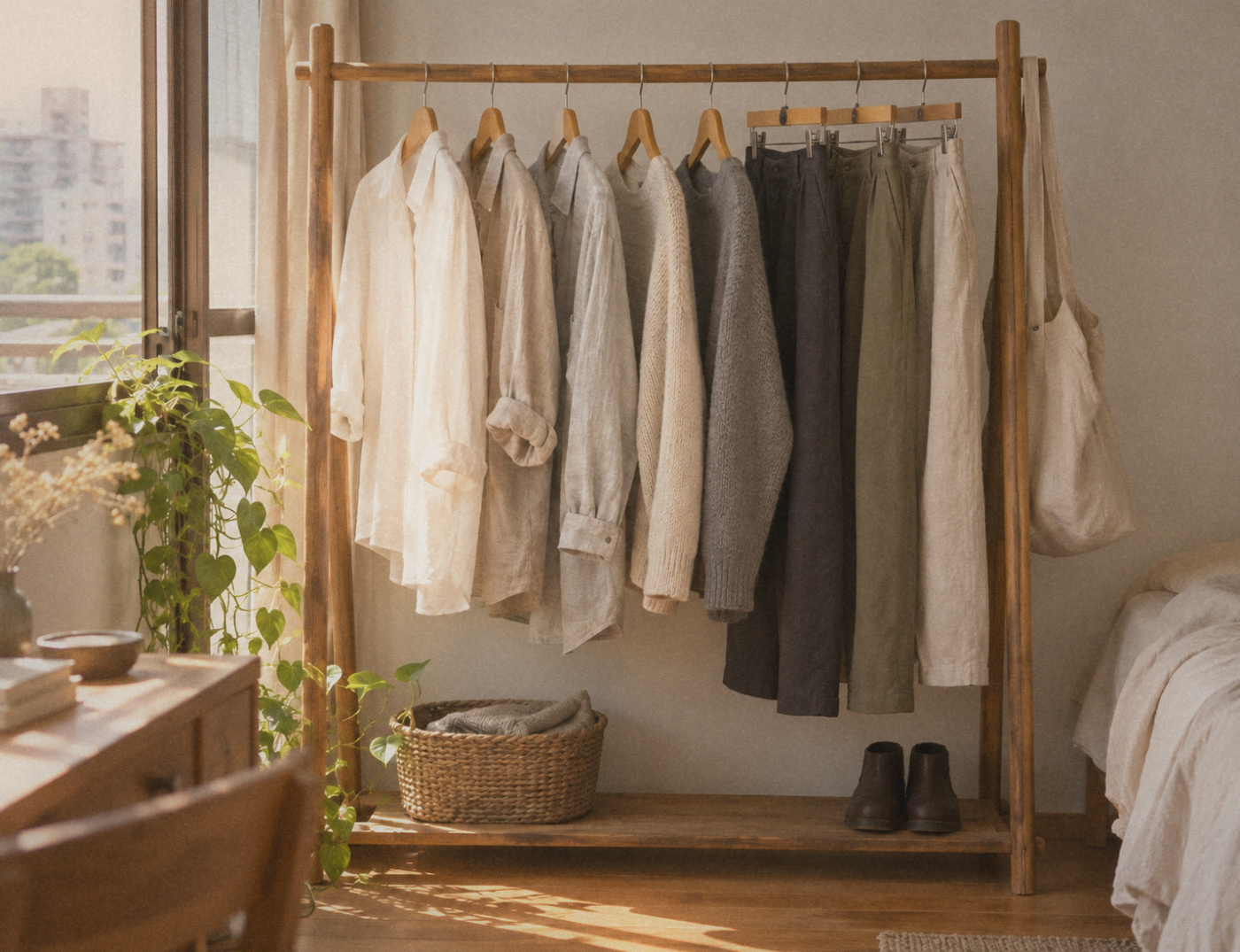
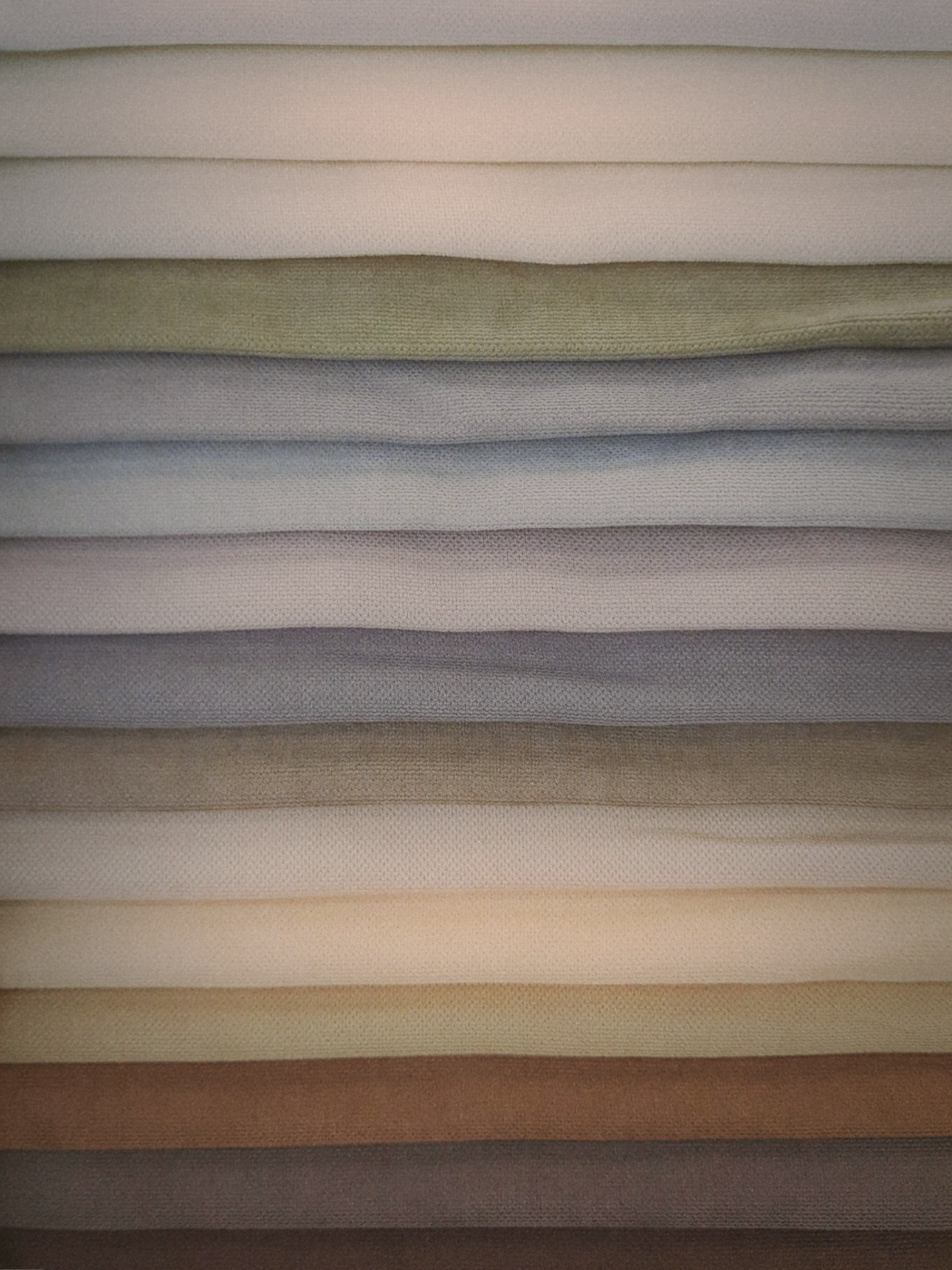 FIRST SIGHTWEBGLLinen after six months of regular wear. The texture deepens, the hand softens. Good fabric doesn't deteriorate. It matures. · Color and grain by First Sight · Portra 400. · First Sight 色彩與顆粒調校 · Portra 400
I spent years ignoring this math. I grew up in a household where clothes were disposable, where the response to a stain or a loose button was "just buy a new one." Moving to Taiwan is what forced the recalculation. The humidity killed cheap clothes so fast that I was replacing things every few months. My annual clothing spend was higher buying cheap than it would have been buying well. That realization felt almost embarrassing, like I'd been making the wrong choice for years and everyone around me already knew.
Where to go (verified, visited)
These are real places. I've been to each one. Addresses and hours have been web-searched and confirmed as of early 2026.
Story Wear and the Dadaocheng argument
The building at 65-67 Xining North Road used to be a textile factory. Now it's the House of Story Wear, a two-floor retail space where every piece of clothing is made from fabric someone else discarded. Kuan Chen founded the company in 2018, and the Dadaocheng location opened in late 2024. The address isn't random. This neighborhood was the center of Taipei's textile trade for a century. The teahouses are gone. The fabric merchants are mostly gone. But the bones of the industry are still in the architecture, in the ceiling heights built for looms, in the wide corridors designed for bolts of cloth.
Story Wear employs seamstresses from disadvantaged backgrounds, including women from the Awakening Foundation and mothers of children with cerebral palsy. They'll tell you exactly what fabric a piece is made from, who sewed it, and what it cost to produce. Because the deadstock sourcing varies, no two pieces are identical. You won't see yours on someone else.
I went expecting to feel good about myself. I left with a jacket I genuinely like wearing, which is a more important outcome. Sustainable fashion that sits in your closet because the fit is wrong or the style isn't you is just waste with better marketing.
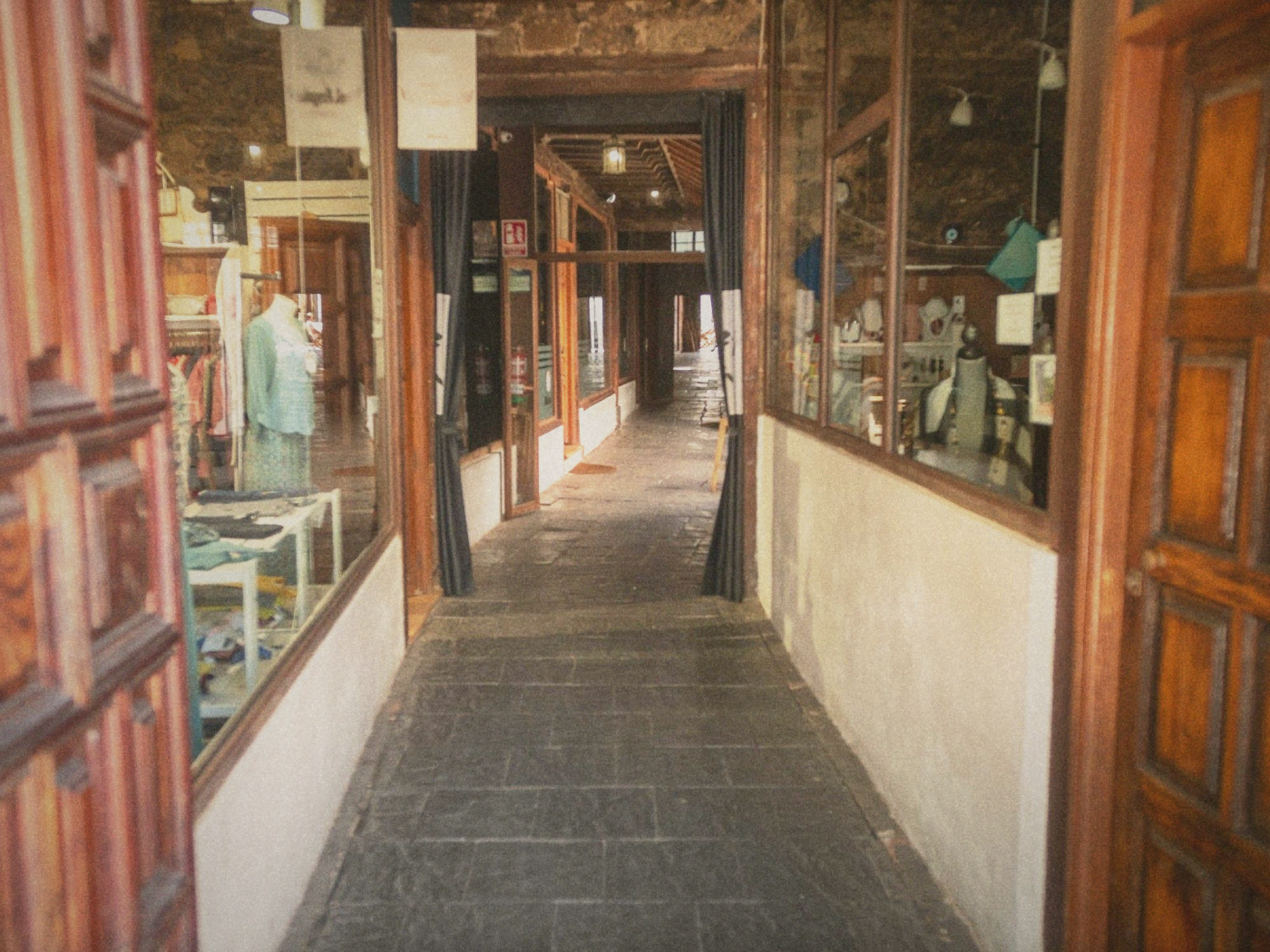 FIRST SIGHTWEBGLTaipei's best clothing shops are rarely on main roads. They're tucked into lanes and alleys, easy to miss if you're not looking. · Color and grain by First Sight · Portra 400. · First Sight 色彩與顆粒調校 · Portra 400
plain-me and the discovery problem
Most people who move to Taipei end up shopping at the same five places, all on Zhongxiao East Road, all carrying the same international brands they could find in any Asian city. plain-me exists to solve this.
It's a select shop, not a single brand. They curate from dozens of labels with a consistent eye for clean lines and quality fabric. The Dunhua South Road flagship has the feel of a very organized friend's apartment, where everything has been chosen for a reason and nothing is there just to fill space.
Their in-house basics (tees, simple knits, NT$1,200-1,800) are genuinely good wardrobe foundations. But the real value is discovery. You'll find smaller Taiwanese and Japanese labels here that don't show up in department stores or online algorithms. I found a Tainan-based linen brand through plain-me that I now buy from directly. That's the whole point of a good select shop: it's a doorway, not a destination.
Building a wardrobe for this island
Taiwan doesn't have four seasons. It has one long humid season with a brief cooler window from December through February, and twelve months of air conditioning strong enough to make you reach for a layer in the middle of summer.
Your wardrobe should reflect this reality, not the four-season template that most fashion advice assumes. Here's what actually works.
Layering pieces for the AC-to-street transition. A lightweight linen overshirt or a thin cardigan. You'll put it on and take it off fifteen times a day, so the fabric needs to handle constant folding without losing shape. This single category of garment is more useful in Taipei than any jacket, coat, or heavy knit.
Three breathable basics in neutral tones. High-density cotton or cotton-linen blend. Wash cold, hang-dry in shade. If a tee feels thin and slippery in the shop, walk away. It won't survive the cycle. I buy mine in charcoal, navy, and an off-white that hides less than I'd like but goes with everything.
Two pairs of versatile trousers. One for warm months (linen, drawstring waist, the kind of thing that works at both a cafe and a casual meeting) and one for cooler months (navy or charcoal, slightly more structured). These two pairs handle 90% of the year.
Shoes you can walk in all day. Taipei sidewalks are uneven, often wet, and you'll cover more ground on foot than you expect. Comfort and grip over looks. I learned this the hard way on a rainy afternoon in Wanhua, in leather-soled shoes that turned every tile into a skating rink.
The test before buying anything new: does it work with at least five things already in your closet? If you need to buy something else to make it work, it isn't earning its place.
Care in this climate
Wash less often than you think you need to. This sounds counterintuitive in a place where you sweat every day, but most garments don't need a full wash after every wear. Spot-clean stains. Hang shirts outside (in shade) for an hour between wears. The air here is warm enough to refresh fabric without water.
Hang-dry in shade, never direct sun. Taiwan's UV index is brutal and will bleach fabric faster than any detergent. I ruined a beautiful navy shirt by leaving it on the balcony in direct afternoon light for a single week.
During wet season, roughly May through September, put bamboo charcoal packets in your closet. They absorb moisture and prevent the mildew smell that can ruin otherwise clean clothes stored in still, damp air. You can find them at any Daiso or 小北百貨 for under NT$100. Replace them every few months.
Never use a dryer if you can avoid it. Heat accelerates fiber breakdown, and hang-drying works fine here most of the year. Most Taiwanese households have always known this. The dryer is a Western import that solves a problem this climate doesn't have.
Don't throw anything away
The worst advice in slow fashion is "purge your closet." Please don't throw anything away. The most sustainable garment is the one you already own, even if it came from a fast-fashion chain, even if it cost NT$300. Wear it until it's done. When it's done, replace it with something better. One piece at a time.
Over the past two years, my wardrobe has shrunk from something like 60 pieces to about 25. I didn't plan this. It happened naturally, one good replacement at a time, as cheap things wore out and I stopped replacing quantity with quantity. My mornings are faster. My suitcase is lighter. And the strange thing is, I feel better dressed now than I did when I had twice as many options. Less noise, clearer signal.
That's not a philosophy. It's just what happens when you start paying attention.
Frequently Asked
Some links in this article are affiliate links. If you purchase through them,OQUA may earn a small commission at no extra cost to you. This helps support our editorial work. We only link to products and services we genuinely reference in our writing.
Comments (0)
Loading comments...