
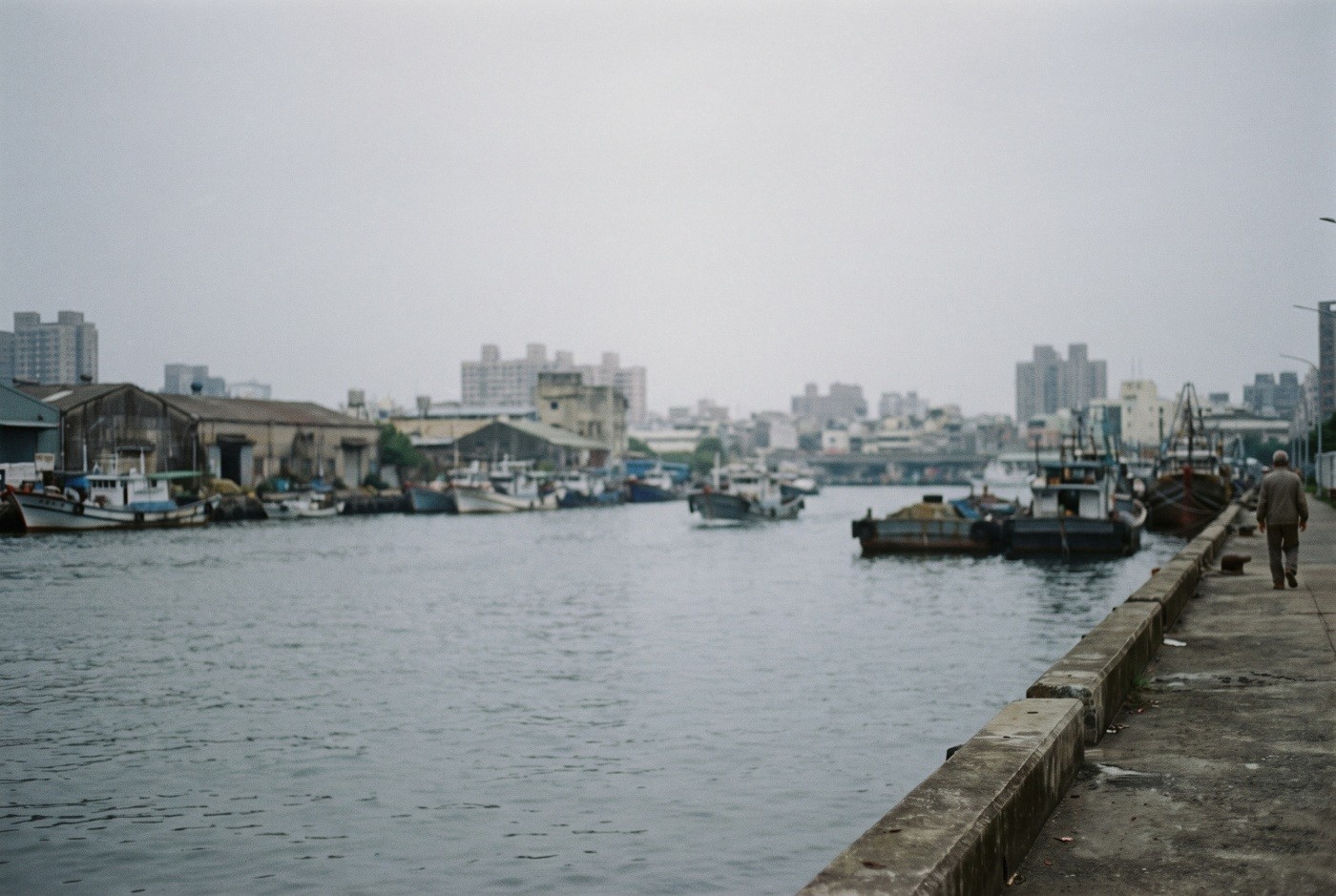
The first time I went to Kaohsiung, I treated it like a pit stop. I was headed to Kenting, and the high-speed rail dropped me at Zuoying Station, and I got on a bus and left. Didn't even walk outside the station. I did this twice before a friend from Kaohsiung told me, with the particular patience locals reserve for people who are wrong about their city, that I was making a mistake.
She was right. I went back for a weekend with no bus to catch, and within about four hours I was texting people to say I'd been sleeping on this place for years.
Kaohsiung is the second-largest city in Taiwan, and most Taipei people treat it the way New Yorkers treat Philadelphia. They know it exists. They acknowledge it has good food. They never go. The city has a working harbor, a light rail that loops through old warehouses and waterfront parks, temples the size of small shopping malls, and a seafood scene that makes Taipei's look like it's trying too hard. Two days is enough to understand why people who live there don't want to leave.
Getting there
Taiwan High Speed Rail from Taipei to Zuoying Station: 1 hour 34 minutes, NT$1,490 for a reserved seat. Non-reserved seats are NT$1,445, and if you book through Klook or KKday you can get discounted fares around NT$1,264. Trains run roughly every 15 to 30 minutes throughout the day. From Zuoying, the MRT Red Line connects directly to the city center in about 20 minutes.
If you fly, Kaohsiung International Airport is on the MRT Red Line itself. Domestic flights from Taipei Songshan take about an hour, but by the time you factor in check-in and security, the HSR is faster and cheaper.
Day one: the harbor side
Start at Pier-2 Art District, because it sets the tone for what Kaohsiung does well. This is a cluster of converted warehouses along the old harbor, filled with galleries, studios, outdoor sculptures, and enough murals to keep you wandering for a couple of hours. The outdoor areas are free. Indoor exhibitions vary, but most cost under NT$200. Hours are 10am to 6pm weekdays, 10am to 8pm on weekends.
What I like about Pier-2 is that it doesn't feel curated in the way that bothers me about some art districts. There are kids on scooters weaving between sculptures. An old man was fishing off the pier when I was there, about fifteen meters from a large steel installation piece, completely unbothered. The light rail runs right through the middle of it, which sounds disruptive but actually looks great. You can hop the light rail from Pier-2 all the way along the waterfront.
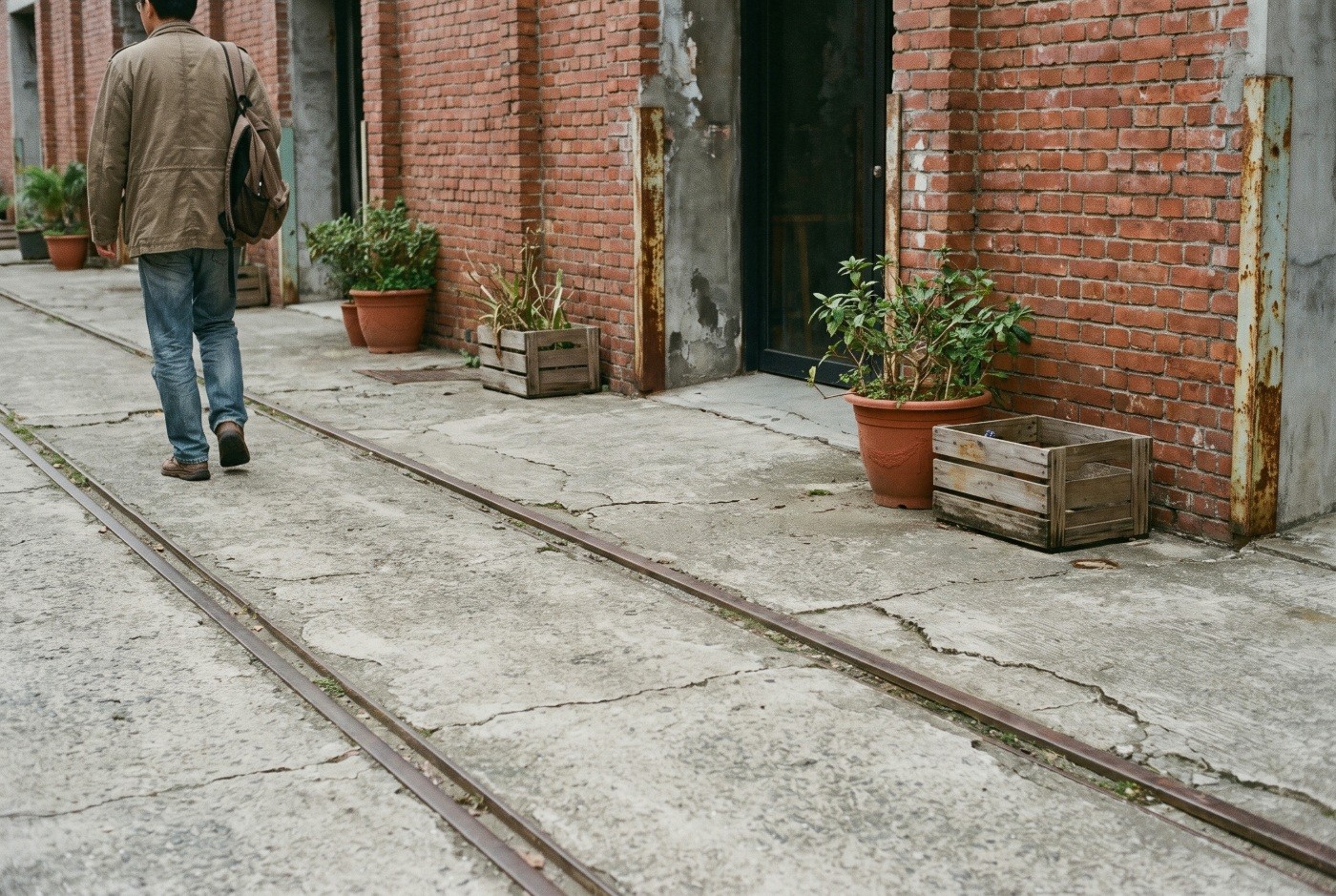
 FIRST SIGHTWEBGLIllustration: A walk past brick buildings and old rails. · Color and grain by First Sight · Superia. · First Sight 色彩與顆粒調校 · Superia
Walk south along the harbor from Pier-2 and you'll hit the Gushan Ferry Pier in about 20 minutes, or take the light rail two stops. The ferry to Cijin Island costs NT$40, takes five minutes, and runs every 10 to 20 minutes from 5am to 2am.
Cijin is a narrow sandbar island that guards the entrance to Kaohsiung Harbor. It has a 400-meter-long old street lined with seafood stalls, a black-sand beach, a lighthouse built in 1883 on top of a hill, and a Qing Dynasty fort from 1720. The best way to see it is to rent an electric bike at the ferry terminal. NT$400 for two hours, and the island is small enough that two hours is plenty.
The seafood on Cijin is the reason people come. Not fancy restaurants. Street stalls and open-air places where the fish was swimming a few hours ago. Grilled squid, fried swordfish balls, oyster omelets, seafood porridge loaded with shrimp and octopus. Most plates run NT$50 to NT$200. I had a plate of salt-grilled prawns at one of the stalls near Cijin Tianhou Temple that cost NT$150 and was better than anything I've eaten at a proper seafood restaurant in Taipei.
Don't skip the Star Tunnel, a short passageway through the hill with glow-in-the-dark murals on the ceiling. It connects the ferry side to the lighthouse trail. Slightly cheesy, genuinely fun.
Day one evening: the river and the night market
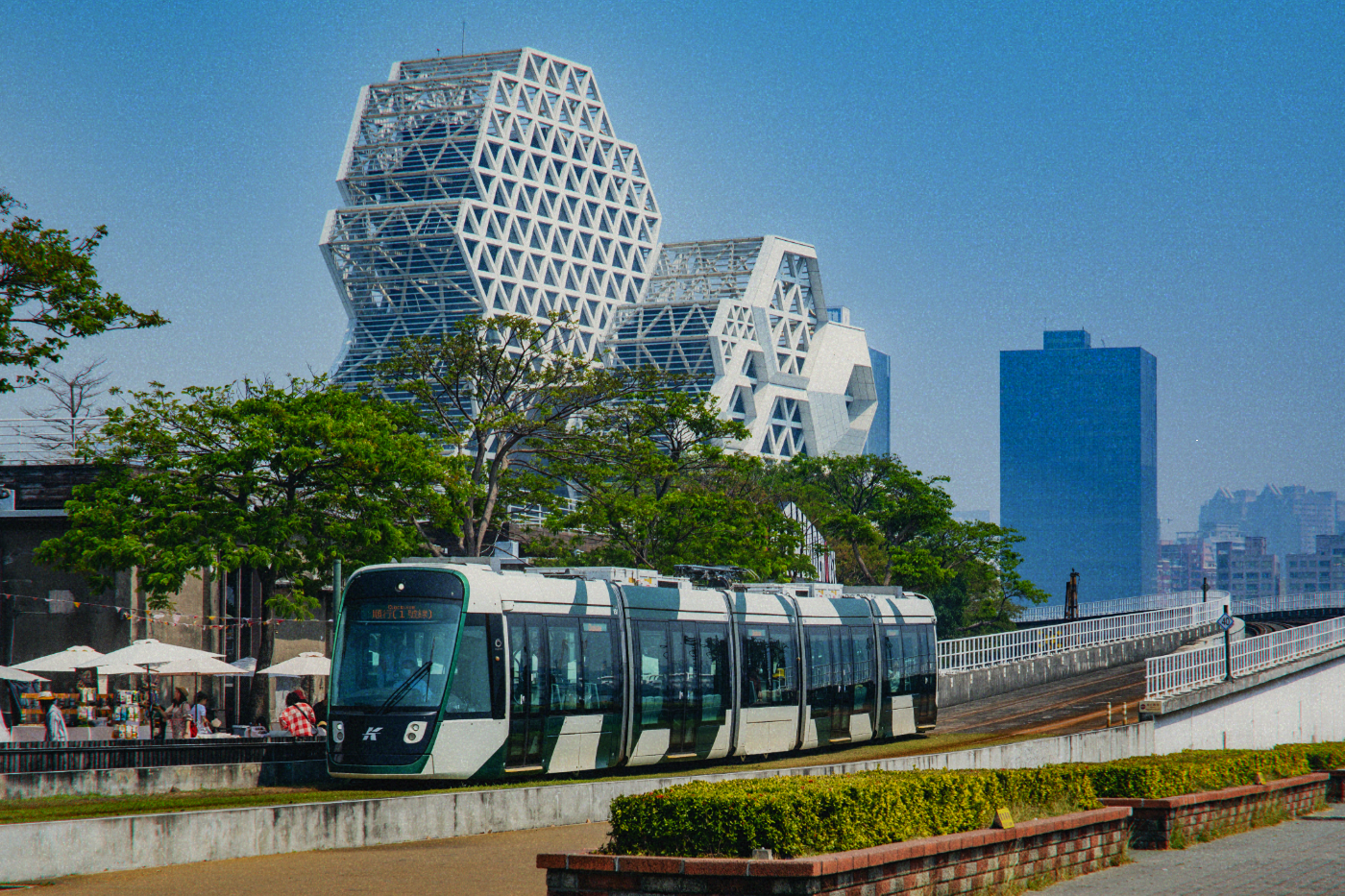 FIRST SIGHTWEBGLKaohsiung light rail beside the Music Center, photographed in March 2024. · Color and grain by First Sight · Superia. · First Sight 色彩與顆粒調校 · SuperiaTakeshi Aida · CC BY-SA 2.0 · Color and grain adjusted. · 已調整色彩與顆粒。
Back on the mainland, head to Love River for sunset. The river runs through central Kaohsiung, and the banks have been turned into a long linear park with walking paths, cafes, and decent lighting. You can take a 20-minute Love Boat ride for around NT$150. Glass-roofed electric boats that cruise under the bridges toward the Kaohsiung Music Center. It's better at dusk than in daylight, when the bridge lights reflect off the water.
For dinner, you have a choice. Liuhe Night Market is the tourist-friendly option: about four blocks of stalls near Formosa Boulevard MRT (exit 11), open from around 5pm to midnight. The papaya milk at Zheng Lao Pai has been there since 1965. The barbecue skewers at 烤肉之家 are probably the most crowded stall. Seafood porridge, Taiwanese sausage wrapped in sticky rice sausage, and those sizzling iron-plate steaks with a raw egg on top. Most things cost NT$35 to NT$150.
But if you want to eat where Kaohsiung people actually eat, go to Ruifeng Night Market instead. It's in Zuoying District, one block from Kaohsiung Arena MRT (exit 1). Open Tuesday through Sunday, closed Mondays and Wednesdays. Over a thousand stalls, which sounds overwhelming but the grid layout makes it navigable. This is where the creative stalls test new ideas. The fried chicken cutlets here have a local reputation. Go on a weekend for the full experience.
Day two: temples and a mountain of Buddha
The morning of day two, take the MRT Red Line to Ecological District Station (R15) and catch the Red 35 bus to Lotus Pond. Or grab a YouBike. It's about a 15-minute ride from the station.
Lotus Pond is a cluster of temples along an artificial lake in Zuoying District, and the scale of it caught me off guard. The Dragon and Tiger Pagodas are the landmark. Two seven-story towers with yellow walls and red pillars, built in 1976, fully reopened after renovation in April 2025. The rule is: enter through the dragon's mouth, exit through the tiger's. Doing it the other way is considered bad luck. Inside, the walls are painted with scenes from Chinese mythology and depictions of heaven and hell that are vivid enough to make you reconsider some life choices.
The pagodas are free. Open until 6pm. But don't stop there. Walk along the pond to the Spring and Autumn Pavilions, dedicated to Kuan Kung, the God of War. A statue of Guanyin riding a dragon rises out of the water in front. Further along, there's a Confucius Temple at the northern edge and a sprawling Xuantian Shang Di temple complex. Allow two hours to see it properly. The light in the late afternoon, when the sun hits the water and the pagoda reflections stretch out, is genuinely beautiful. I won't oversell it. But bring a camera.
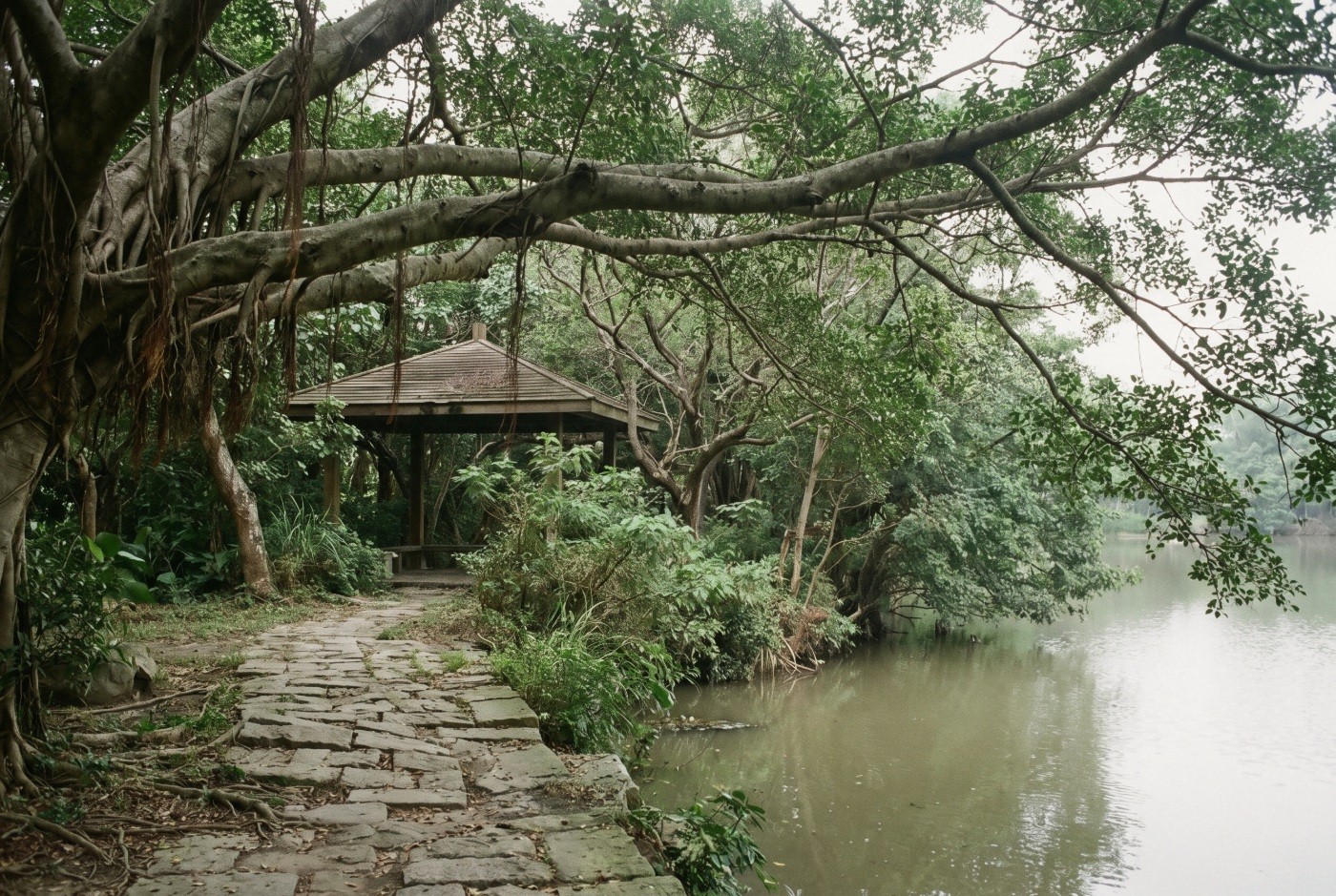 FIRST SIGHTWEBGLIllustration: A shaded riverside path beneath spreading branches. · Color and grain by First Sight · Superia. · First Sight 色彩與顆粒調校 · Superia
If you have the afternoon free and want something bigger, Fo Guang Shan Buddha Museum is about 45 minutes northeast of central Kaohsiung by bus or taxi. This is one of the largest Buddhist complexes in the world. The main Buddha statue is 108 meters tall. The grounds span over 100 hectares. There's a museum with rotating exhibitions on Buddhist art and culture, meditation halls, and gardens that go on longer than you'd expect. Free admission. I'd only recommend it if you have at least three hours to spend, because rushing it defeats the purpose.
Where to stay
Kaohsiung hotels are noticeably cheaper than Taipei for equivalent quality. Budget business hotels start around NT$1,200 to NT$2,000 per night. Kindness Hotel near Kaohsiung Main Station gets consistently good reviews and includes free WiFi, laundry, and oddly, free ice cream. Mid-range hotels run NT$2,500 to NT$4,500. Harbour 10 faces the Love River and is a solid mid-range pick. The Airline Inn has better design than most hotels in its price range, with a breakfast buffet and Japanese-style toilets. Just Sleep is reliable if you've stayed at their Taipei branches.
For location, stay near Yancheng or Formosa Boulevard if you want walkable access to Pier-2, the ferry, and night markets. Stay near Zuoying HSR station if you want easy access to Lotus Pond and don't mind taking the MRT everywhere.
Getting around
The MRT has two lines: Red (north-south) and Orange (east-west). They cross at Formosa Boulevard, which has a massive stained-glass dome installation called the Dome of Light that's worth a stop just to look up. Single rides cost NT$20 to NT$65 depending on distance. An iPass card works on MRT, buses, light rail, ferries, and YouBike.
The Circular Light Rail is the newer system and the more interesting one for tourists. It loops through the waterfront, Pier-2, and the harbor area. Runs roughly every 8 to 15 minutes. It's elevated in some sections, giving you a view of the harbor and the old industrial waterfront that you can't get any other way.
YouBike stations are everywhere. The first 30 minutes are free with an iPass card. For Cijin and Lotus Pond, bikes are genuinely the best way to explore.
Kaohsiung food worth knowing
Duck rice is the Kaohsiung specialty that Taipei doesn't do well. Tender sliced duck over rice with a savory sauce. Simple, satisfying, and available at local shops all over the city. Milkfish congee is another southern Taiwan staple. Swordfish balls show up in soups and fried as snacks. And the seafood, particularly at Cijin and at Keziliao Harbor Fish Market near Sizihwan, is a different league from what you get in northern Taiwan. At Keziliao, you pick live seafood from the market stalls and take it across the street to be cooked however you want.
FAQ
You can see the highlights in a long day trip from Taipei if you take an early HSR, but you'll be rushing. Two days lets you actually enjoy Cijin, Lotus Pond, and a night market without checking your watch. If you only have one day, focus on Pier-2, Cijin, and one night market.
Hotter and sunnier for most of the year. Kaohsiung gets significantly less rain than Taipei, especially in winter. Summer is intense. If you're visiting between May and September, sunscreen and water are non-negotiable. The upside is that winter in Kaohsiung is genuinely pleasant, around 20 to 25 degrees, while Taipei is grey and damp.
For the main attractions, yes. MRT plus light rail covers Pier-2, Formosa Boulevard, Kaohsiung Main Station, and Zuoying. You'll need a bus or taxi for Fo Guang Shan and some parts of Lotus Pond. For Cijin, the ferry from Gushan is the only way.
Liuhe is smaller, more tourist-oriented, and easier to navigate. Ruifeng is bigger, cheaper, more local, and more interesting. If you've been to a lot of Taiwan night markets and want something that feels different, Ruifeng. If it's your first time and you want the classic experience, Liuhe is fine.
Easily. Kenting is about two hours south by bus from Zuoying Station. Tainan is 30 minutes north by HSR or about 45 minutes by local train. A common route is Taipei to Tainan (one night), Tainan to Kaohsiung (one to two nights), Kaohsiung to Kenting (one to two nights), then HSR back to Taipei.
Comments (0)
Loading comments...