
This protocol is installable. One tap puts all 4 weeks on your calendar, each linking back to this guide.
Install this week →The science hasn't changed much. Your habits have. A field guide to sleeping well in a subtropical city that never quite turns off.*
2:47am. You've been awake for twenty-three minutes. Your phone says last night's sleep score was 62. You know you should get up and read a book in dim light, because you've read that advice in four different articles. But you also know you have an alarm at seven and a presentation at nine, and your brain keeps running the math: if I fall asleep right now, that's four hours and thirteen minutes. Four hours and twelve. Four hours and eleven.
This is not insomnia. Sleep researchers have a more precise name for it: sleep anxiety. The fear of not sleeping that prevents sleep itself. It is the most common sleep complaint in industrialized countries, and it responds poorly to supplements, apps, and expensive mattresses. It responds well to about a dozen behavioural changes that cost nothing.
What follows are those changes. Not in the order you'd expect (we're not starting with "go to bed earlier"), but in the order that the evidence says matters most, adapted for what it actually means to sleep well in Taiwan.
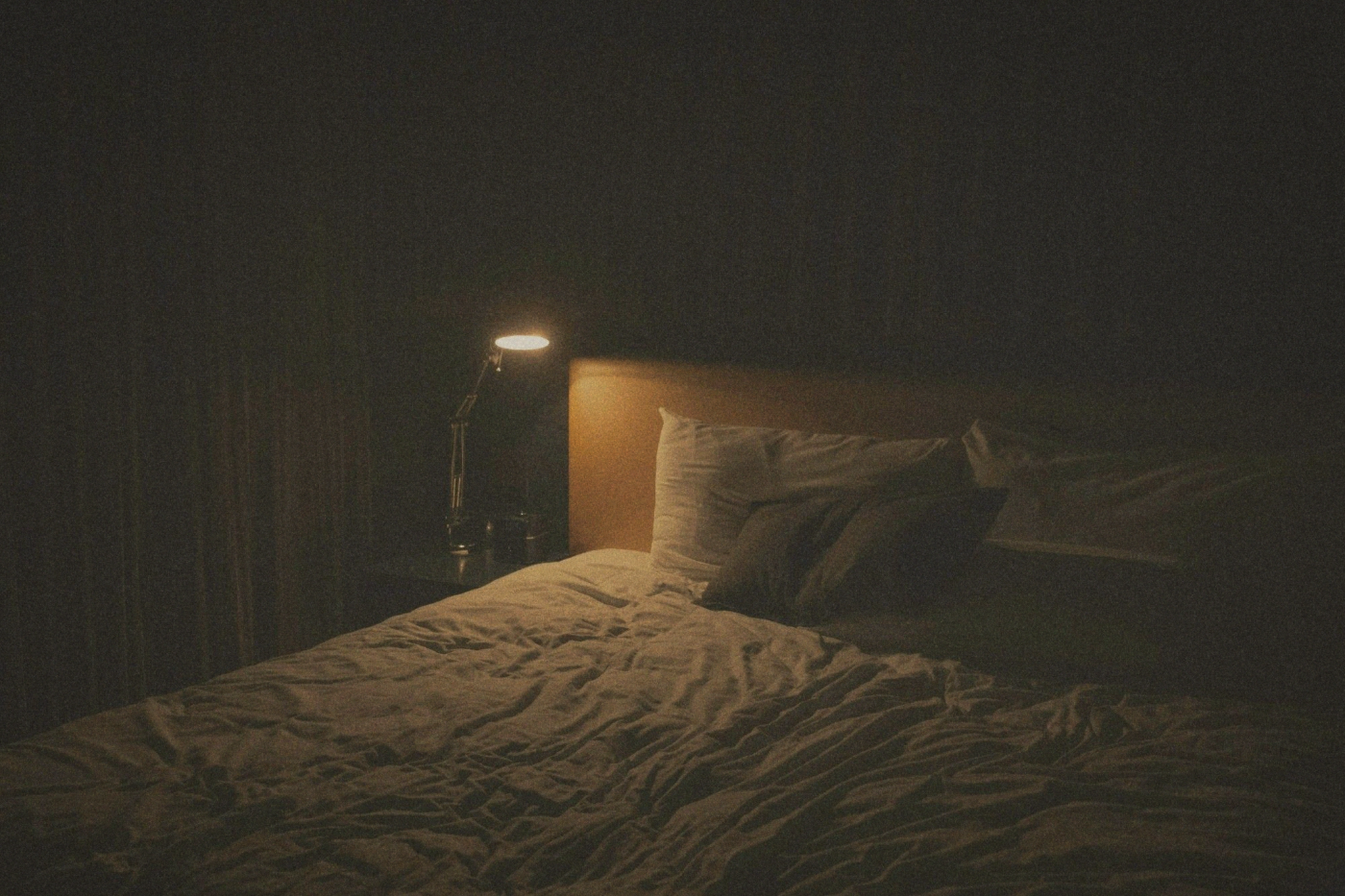
 FIRST SIGHTWEBGLThe bedroom as infrastructure. Temperature, darkness, and sound are engineering problems, not luxury problems. · Color and grain by First Sight · Portra 400. · First Sight 色彩與顆粒調校 · Portra 400
Your alarm clock matters more than your bedtime
The single most powerful lever in sleep science is not when you go to bed. It is when you wake up.
Your circadian rhythm, the internal clock that governs sleepiness and alertness across a 24-hour cycle, is anchored primarily by two signals: light exposure and wake time. Bedtime is secondary. If you set a consistent wake time, within about 30 minutes, every single day including weekends, your body will begin to calibrate everything else around it. Melatonin release, cortisol peaks, core temperature drops. The whole system organizes itself.
Pick a wake time. Set it for every day. The adjustment period is about two weeks of mild discomfort, followed by noticeably better sleep for as long as you maintain it.
The ten minutes after waking that set up the entire night
Within 30 minutes of waking, get outside. Ten minutes of natural light, not through a window, not from a lamp, sets your circadian clock for the day and advances your evening melatonin release by one to two hours. On overcast days (common in Taipei from October through March), you need 20 to 30 minutes, because cloud cover reduces lux significantly.
Do it before coffee. If you live near a park, walk there. If you're in a Taipei apartment with no balcony, walk to the nearest 7-Eleven and back. The errand doesn't matter. The light does.
The caffeine question
The standard advice is "no coffee after lunch." The research says something more specific.
Caffeine has a half-life of roughly five to six hours, meaning half of what you consumed is still active in your system after that period. It has a quarter-life of 10 to 12 hours. The coffee you drank at 2pm still has about 25% of its stimulant effect at midnight.
The practical cutoff for most people: 8 to 10 hours before your typical bedtime. If you sleep at 11pm, your last caffeine should be between 1pm and 3pm.
This matters more in Taiwan than in most places. Tea culture helps: green tea has 25 to 50mg of caffeine versus 95 to 200mg for coffee, and it contains L-theanine, which promotes relaxation. If you're struggling with sleep and drinking three coffees a day, switching to tea after noon is probably the single easiest adjustment you can make.
What your evening is doing to your night
Most sleep problems are created between 7pm and midnight, not during the night itself. Four culprits.
Screens. Blue-spectrum light from phones and tablets suppresses melatonin production. Taiwan has one of the highest smartphone usage rates in the world: the average adult spends over four hours a day on their phone, much of it in the evening. The practical fix isn't dramatic. Dim your environment starting about two hours before bed. Ceiling lights off, warm-toned lamps on. Phone in another room if you can manage it. If you must use a screen, night mode at minimum brightness.
Alcohol. A 2018 Finnish study of over 4,000 participants found that even low alcohol consumption (one to two drinks) reduced sleep quality by roughly 9%. Moderate consumption brought that to about 24%. Alcohol is a sedative, which is not the same thing as a sleep aid. It helps you lose consciousness faster but fragments your sleep architecture, delays REM onset, and reduces REM duration. There is no amount of alcohol that improves sleep. If you're going to drink, earlier is better than later. Lunch or happy hour, not dinner.
Late eating. Night market culture is one of the best things about living in Taiwan. But eating a heavy meal at 10pm and sleeping at midnight puts your digestive system and your circadian system in direct conflict. Research on meal timing and sleep consistently shows that a 2-to-3 hour gap between your last substantial meal and bedtime improves both sleep onset and sleep quality. If you're doing a night market run, try to eat by 9pm.
Exercise. Regular aerobic exercise is one of the most effective non-pharmacological sleep interventions available. It increases slow-wave (deep) sleep, reduces the time it takes to fall asleep, and improves overall quality. The caveat: intense exercise within two to three hours of bedtime raises core temperature and adrenaline, which can delay sleep onset by 30 to 60 minutes. Morning or midday exercise is optimal. An evening walk is fine. An evening HIIT class is not.
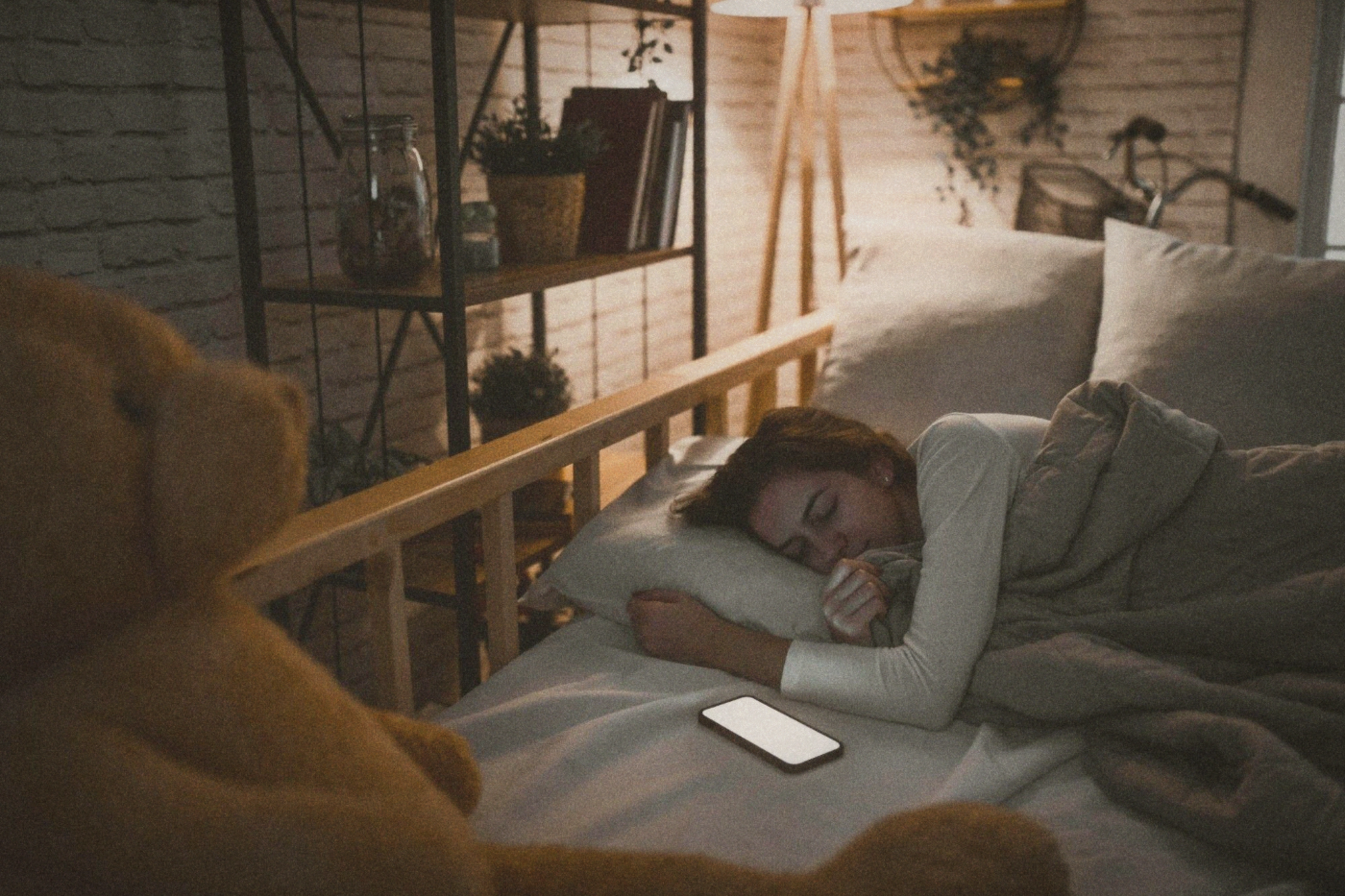 FIRST SIGHTWEBGLTwo hours before bed, the transition begins. Ceiling lights off. Warm lamps on. Phone in another room. · Color and grain by First Sight · Portra 400. · First Sight 色彩與顆粒調校 · Portra 400
Engineering the room
Three variables matter in your physical sleep environment, and all three are more complicated in Taiwan than in most countries.
Temperature. Your core body temperature needs to drop by about 1 to 2°C for sleep onset to occur. The commonly recommended range is 15 to 19°C, though recent research on older adults found 20 to 25°C was actually optimal for sleep efficiency, suggesting the ideal varies more than previously thought. In Taiwan's summer (May through October), bedroom temperature is the number one sleep variable. Running the AC at 25 to 26°C with a fan is the practical sweet spot for most people. Cool enough for sleep onset, efficient enough for your electricity bill. Treat air conditioning as a health expense, like a gym membership, not as a luxury.
Darkness. Even small amounts of light during sleep (phone notifications, streetlight through curtains, standby LEDs) suppress melatonin and increase cortisol. A sleep mask costs NT$200 to 500 and is one of the highest-return sleep investments you can make. Complete darkness is the goal.
Sound. Complete silence is actually more disruptive than consistent low-level sound for most people, because any sudden noise against silence is more jarring. A fan, white noise machine, or brown noise app provides acoustic buffering. This is especially relevant in Taiwan's urban environments, where scooter traffic, construction, and building ventilation create unpredictable nighttime noise.
The bed rule
Simple and hard: your bed is for sleep and rest only. Working in bed, watching shows in bed, scrolling in bed, each one trains your brain to associate the bed with wakefulness.
If your apartment is small (10 ping, the Taipei reality for many), you don't need a separate room. You need a separation of cue. Face a different direction than you do when you're at your desk. Change the lighting. Create any visual or spatial signal that tells your body: this is a different mode now.
When you can't sleep
If you've been lying in bed for 20 minutes and you're still awake, get up. Go to another part of the room or apartment. Read a physical book in dim light. Return to bed only when you feel genuinely sleepy.
This comes from CBT-I (Cognitive Behavioural Therapy for Insomnia), now the first-line treatment recommended by the American Academy of Sleep Medicine, the American College of Physicians, and the European Sleep Research Society.
The core principle is straightforward: lying awake in bed trains your brain to associate bed with wakefulness. Getting up breaks that association. It feels counterintuitive, especially at 3am. It works.
Sleep anxiety is the actual problem
For most chronic poor sleepers, the barrier is not physiological. It's the arousal created by worrying about not sleeping. The clock-watching. The mental math. The meta-fear: "I'm going to be exhausted tomorrow, and that's going to ruin everything."
The evidence-based fix is a consistent wind-down routine. Same sequence of low-stimulation activities, same time, every night. The routine itself becomes the sleep cue.
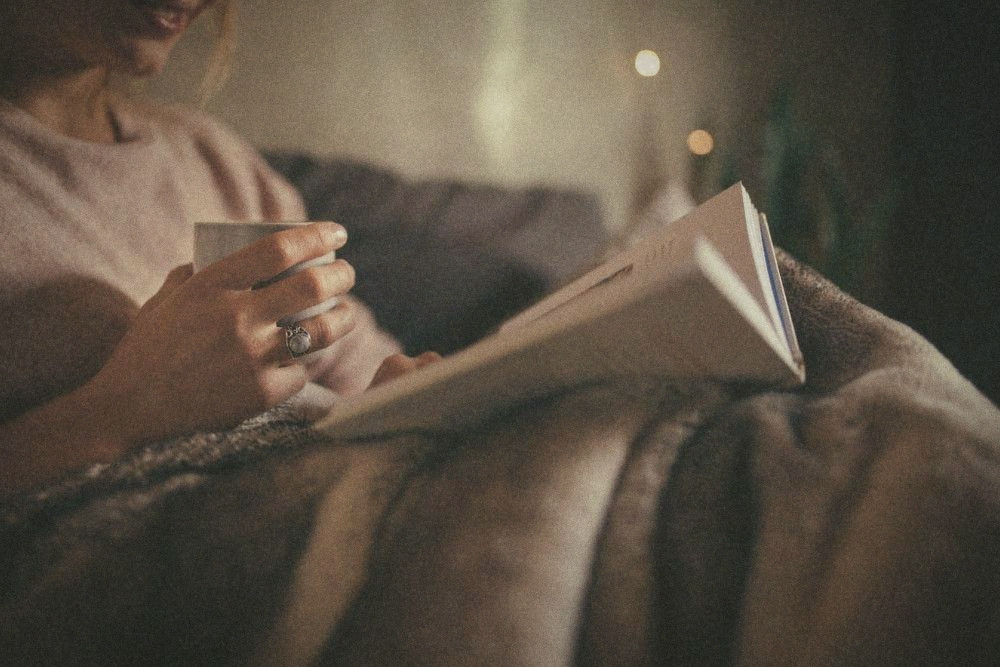 FIRST SIGHTWEBGLThe wind-down is not a ritual. It's a cue. Same steps, same order, same time. Your body learns to read the sequence as permission to shut down. · Color and grain by First Sight · Portra 400. · First Sight 色彩與顆粒調校 · Portra 400
The honest take on supplements
Melatonin is the most popular sleep supplement and the most misunderstood. Over-the-counter doses (3 to 10mg) are 10 to 100 times what your body naturally produces (0.1 to 0.3mg). At physiological doses (0.1 to 0.3mg), melatonin helps you fall asleep roughly 3 to 9 minutes faster. It does not improve sleep quality or duration. It is a timing signal, not a sleeping pill. If you use it, the smallest dose you can find is the right one.
Magnesium (threonate or glycinate, specifically) has the most evidence behind it as a sleep supplement. About 200 to 400mg before bed can help with sleep onset and relaxation, particularly if you're deficient. The effect is modest, roughly 10 to 15% improvement for those who are low.
Everything else (valerian root, GABA, L-theanine, CBD) has weak or inconsistent evidence. The honest position: fix the behavioural fundamentals first. Most people who do never need a supplement.
The OQUA Sleep Protocol
Everything above, reduced to the order you actually do it in. None of it is exotic. The sequence is the point.
Fix the wake time first. Same time seven days a week, weekends included. Your wake time anchors the whole rhythm and bedtime follows from it, not the other way round. It is the highest-leverage item on this list and the one most people skip.
Get outside within an hour of waking. Ten minutes on the street beats an hour under office lighting. Even an overcast Taipei morning delivers far more light than any indoor room, and that signal is what sets tonight's melatonin timing.
Last coffee eight hours before bed. Caffeine's half-life runs five to six hours, so a 4pm cup still has a quarter of its dose working at midnight. If you sleep badly and drink coffee after lunch, test this before anything else.
Stop eating about three hours before bed. A late night-market run is the most common reason a Taipei evening runs hot straight into bedtime. Digestion raises core temperature at exactly the point it needs to be falling.
Cool the room, then dim it for the last hour. 26 to 27 degrees with a fan is both the cheaper setting and the better one for sleep. Core temperature has to fall for sleep to begin, and bright overhead light in the last hour works directly against that.
Still awake after twenty minutes? Get up. Dim light, a physical book, back to bed only when you are genuinely sleepy. Lying there negotiating with yourself is the one thing guaranteed to make tomorrow night harder.
What Taiwan gets right
Two things the local culture already nails, long before the research caught up.
午睡. The post-lunch nap is built into Taiwanese schools and plenty of offices, and it lands exactly on the circadian dip that hits most people between 1pm and 3pm. Kept to twenty or thirty minutes it takes the edge off the afternoon without eating into the sleep pressure you need that night. Go past forty and you wake groggy out of deep sleep, which is where the practice picked up a bad reputation it does not deserve.
Washing at night. Showering in the evening rather than the morning, and at the far end of it a soak at Beitou or Jiaoxi, does something more useful than getting you clean. Warming the body an hour or two before bed pushes blood to the skin, and the rebound fall in core temperature afterwards is one of the strongest sleep-onset signals there is. A 2019 review in Sleep Medicine Reviews found warm bathing one to two hours before bed cut the time people took to fall asleep by around ten minutes.
Neither is a biohack. Both were ordinary here long before anyone thought to measure them.
Frequently Asked
Some links in this article are affiliate links. If you purchase through them,OQUA may earn a small commission at no extra cost to you. This helps support our editorial work. We only link to products and services we genuinely reference in our writing.
Comments (0)
Loading comments...