
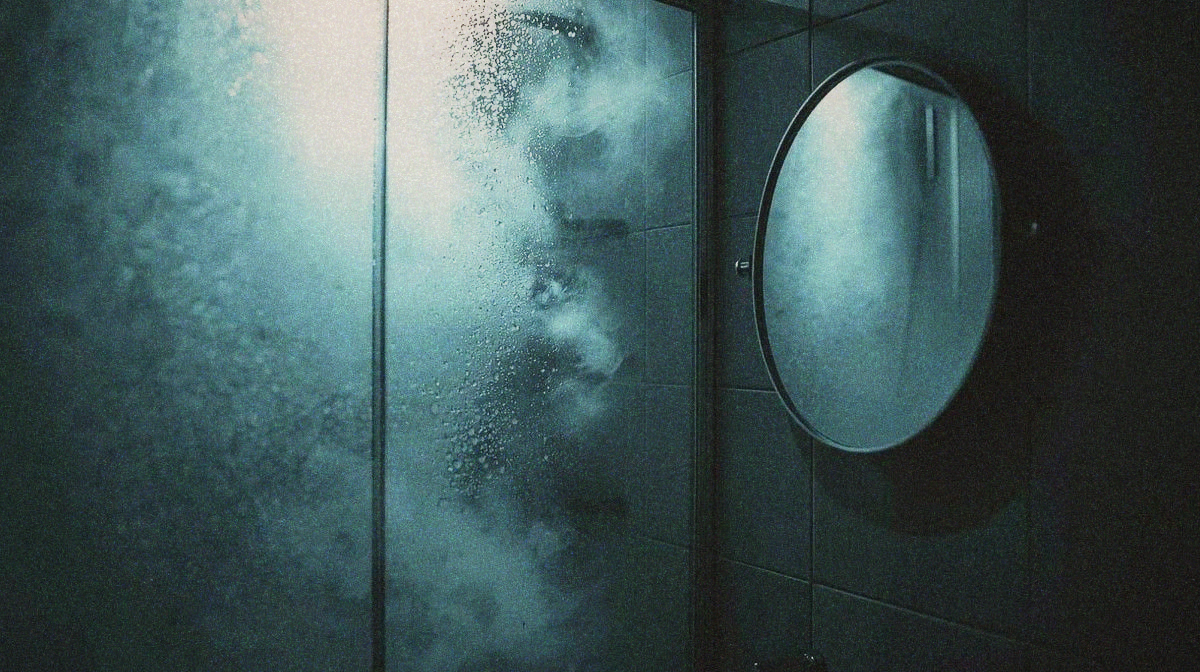
The showerhead hits the toilet tank. Not metaphorically. In a 0.8坪 bathroom inside a 30-year-old apartment in Zhongshan, the shower spray literally bounces off the toilet when you turn around. The floor is wet from wall to wall because there's no separation between shower and everything else. The mirror fogs within thirty seconds. Three bottles of shampoo sit on the floor next to the toilet because there is no shelf, no niche, no ledge. Somewhere under the sink, a colony of mold has been quietly establishing itself since the Ma Ying-jeou administration.
This is not a design failure. This is the standard Taipei bathroom. Millions of people use one every day.
The apartments built in the 1980s and 1990s, which make up most of Taipei's rental stock, were designed when bathrooms were an afterthought. They got whatever square footage was left over. The result: roughly 0.8 to 1.5坪 (2.6 to 5 square meters), no wet-dry separation, no window, humidity sitting between 75 and 85 percent year-round, and storage that amounts to "the top of the toilet tank."
You can't move the walls. You probably can't touch the plumbing. If you're renting, you definitely can't renovate. But you can make the room feel meaningfully different for under NT$3,000, in a weekend, without drilling a single hole. That's what this is about: working within the constraints of a bathroom that was designed for a different era, using products you can buy at stores within MRT distance.
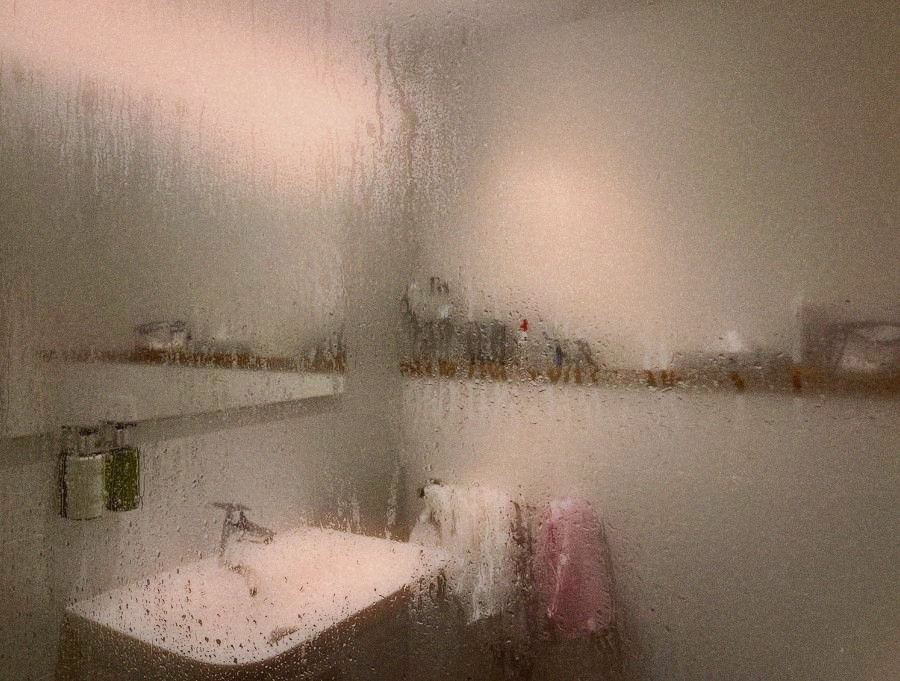
 FIRST SIGHTWEBGLThe 0.8坪 reality. When the shower spray reaches the toilet and the mirror fogs in thirty seconds, the problem isn't cleanliness. It's infrastructure. · Color and grain by First Sight · Gold 200. · First Sight 色彩與顆粒調校 · Gold 200
The wet floor problem (and a NT$350 fix)
If you only do one thing from this article, do this one.
乾濕分離, wet-dry separation, is the feature that divides modern Taiwanese bathrooms from older ones. Walk into any newly built apartment and you'll see a glass partition or a raised threshold separating the shower zone from the rest of the room. Walk into a 30-year-old apartment and you'll see... a floor drain. One continuous wet floor, wall to wall, toilet to door.
The standard renovation for this costs NT$15,000 to NT$40,000 and requires a contractor. The DIY version costs NT$350 to NT$600 and requires an afternoon.
擋水條 (water barrier strips) are flexible rubber or silicone strips, about 5cm high, that you stick to the floor with waterproof adhesive sealant. They create a low dam that keeps shower water on the shower side. Combined with a tension-rod shower curtain (no drilling required), you get functional wet-dry separation for the price of a decent lunch.
The installation is simple but requires patience. Clean the floor thoroughly. Dry it completely. Mark your line with painter's tape. Peel the adhesive backing, press the strip down firmly along the line, then run a bead of silicone sealant along both edges. Wait 48 hours before using the shower. That's the hard part: leaving it alone for two days.
You can find 擋水條 on basically every major online platform. Search "浴室擋水條" on 蝦皮 and you'll get hundreds of results. Look for ones with built-in adhesive backing and at least 4cm height. The curved corner pieces are worth the extra NT$50 if your bathroom layout needs them.
The shower curtain rod goes between the walls above the 擋水條 line. Tension rods from 特力屋 (內湖店 or 大安安和店) run about NT$150 to 250 and hold without screws. IKEA sells them too. Add a plain white shower curtain, keep it inside the barrier when showering, and suddenly half your bathroom stays dry. The toilet paper doesn't get damp. Your towel doesn't start the day already moist. The floor outside the shower zone actually dries between uses.
It's not the same as a glass partition. Water still splashes over sometimes. But the difference between "entire floor is a puddle" and "most of the floor is dry" is bigger than it sounds.
Everything needs a vertical address
Small bathrooms don't have a floor space problem. They have a wall space problem, in the sense that nobody is using the walls. Every object sitting on the floor or on the toilet tank is stealing visual and physical space from a room that has none to spare.
The principle is boring but it works: move everything off horizontal surfaces and onto vertical ones. Walls, doors, the inside of the cabinet, the side of the washing machine if it's in there. The goal is to see floor. Visible floor makes a room feel larger. This is not interior design theory. This is physics. Your eyes measure space by what they can see of it.
Here's what actually works, organized by what you're trying to solve.
For shampoo bottles, soap, razors (the shower zone stuff): IKEA TISKEN suction cup shelves. NT$79 to 129 per piece, and they come in corner shelf, basket, hook, soap dish, and towel bar versions. They stick to tile with suction cups, no drilling required, and they hold up well in wet conditions. The corner shelf version is particularly good for small showers because it uses space that's otherwise dead. Available at IKEA 台北城市店 (小巨蛋站, MRT Taipei Arena) or IKEA 內湖店.
For over-the-toilet storage (the big opportunity): Most Taipei bathrooms have 120 to 150cm of empty wall above the toilet. That's enough for two to three shelves of towels, backup supplies, and cleaning products. 特力屋 sells a foldable 3-tier over-toilet shelf for NT$600 to 900 that doesn't require wall mounting. The stainless steel version (NT$700 to 1,200) is sturdier and handles humidity better. Both are at 特力屋 內湖店 or 大安安和店.
For small items and daily essentials: 宜得利 (Nitori) stainless adhesive shelves are NT$71 to 161 and stick with 3M-style adhesive strips. Small, clean-looking, and they don't rust. Good for toothbrushes, face wash, cotton pads. Available at 宜得利 台北敦北店 or 微風松高店.
For the budget option: 大創 (Daiso) suction cup hooks at NT$49 each. Simple, cheap, and surprisingly durable. Hang loofahs, razors, small bags of toiletries. They also have magnetic storage items at NT$49 that stick to metal surfaces. Multiple locations across Taipei plus online ordering.
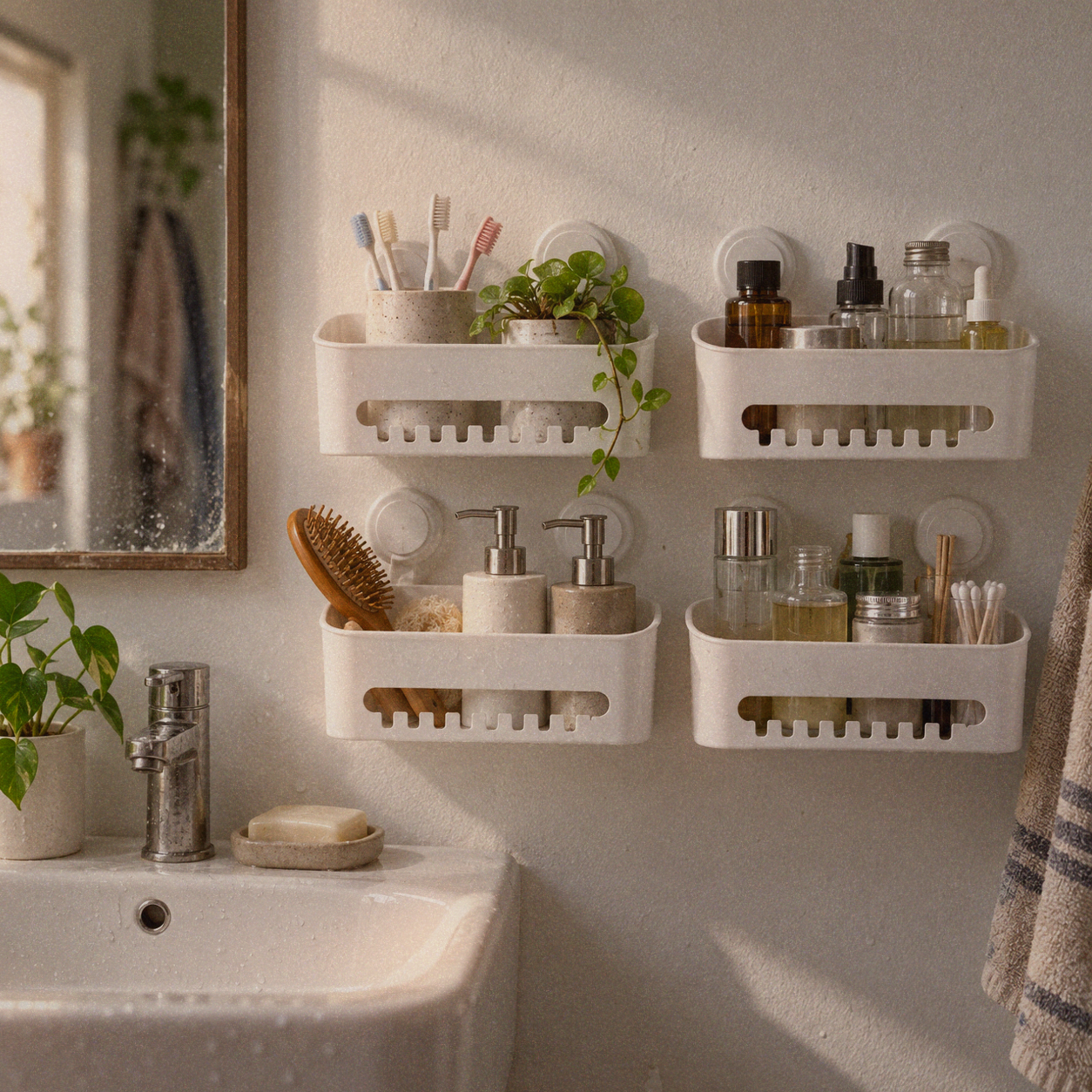 FIRST SIGHTWEBGLVertical storage in action. Every item that moves from the floor to the wall gives back both physical space and the visual impression of space. · Color and grain by First Sight · Gold 200. · First Sight 色彩與顆粒調校 · Gold 200
The narrow-gap solution
Between the toilet and the wall. Between the washing machine and the vanity. Between the door frame and the sink. These gaps, typically 10 to 25cm wide, exist in almost every small Taipei bathroom and are usually filled with nothing, or with a random plastic bag of cleaning supplies sitting on the floor.
The IKEA VESKEN trolley cart (NT$299) is designed exactly for this. It's a slim, wheeled three-tier cart that slides into narrow gaps. Pull it out, grab what you need, push it back. It holds cleaning supplies, extra toilet paper, towels, whatever. The VESKEN shelf unit (NT$249 to 299) is the non-wheeled version for slightly wider spots. Both are at IKEA 台北城市店 or 內湖店.
For even narrower gaps, the 3M waterproof adhesive bathroom shelf (NT$300 to 500, available at 全聯, 家樂福, or online) mounts directly to the wall and holds a few bottles without taking floor space at all.
The point isn't to buy all of these. The point is to identify which gap or wall you're ignoring and put one thing there. Most people are surprised by how much storage already exists in their bathroom, just in the wrong dimension.
Making the room look bigger (without adding anything)
Storage solves the clutter problem. But a small bathroom can still feel claustrophobic even when it's organized, if the visual signals are wrong. A few changes that cost little or nothing.
Replace the mirror. Most older Taipei bathrooms have a small vanity mirror, maybe 40 by 50cm, mounted above the sink. Swapping it for a full-width frameless mirror is the single most effective visual trick for small spaces. A mirror the width of the vanity, or wider, creates the illusion of doubled depth. Frameless looks cleaner because there's no frame edge breaking the reflection. You can find budget frameless mirrors at 特力屋 for NT$500 to 1,500 depending on size.
Fix the lighting. The fluorescent tube bolted to the ceiling of a 1990s bathroom casts flat, unflattering, vaguely depressing light. Switching to a warm white (4000 to 5000K) LED bulb, or adding an LED strip behind the mirror, changes the feel of the room disproportionately to the cost. LED strip lights on 蝦皮 run NT$150 to 400. They create a backlight glow behind the mirror that adds perceived depth. Waterproof versions exist for bathroom use.
Match your containers. This sounds trivial. It isn't. Five different shampoo bottles in five different colors create visual noise that makes a small space feel chaotic. Decanting into matching pump bottles, white or clear, reduces that noise immediately. A set of three matching bottles costs about NT$150 to 250 on 蝦皮. The effect is less about aesthetics and more about how your brain processes the room. Fewer distinct visual objects equals a calmer, more spacious perception.
Reduce what's visible. After you've installed vertical storage, go one step further. Anything that can go inside a cabinet or behind a closed door should. The 特力屋 over-toilet shelf with a fabric curtain front (around NT$800 to 1,000) hides storage while keeping it accessible. Even a simple matching box on each shelf, lids on, transforms open clutter into clean geometry.
The humidity problem that causes everything else
Taipei bathrooms without windows run 75 to 85 percent humidity after a shower. That humidity doesn't just feel unpleasant. It feeds mold on grout, degrades silicone caulking, warps wooden shelves, makes towels smell musty within two days, and creates that faint damp-tile smell that greets you every morning.
The exhaust fan is the first line of defense, and most people underuse it. Run it for 15 to 30 minutes after every shower, not just during. If your fan is weak or broken, tell your landlord. If your landlord is unresponsive (a common Taipei rental experience), a compact dehumidifier in the bathroom makes a real difference. The Roommi portable dehumidifier has a 2L tank, extracts about 750ml per day, and costs NT$2,180 to 2,780. Small enough to sit on the toilet tank or a shelf. It won't turn the bathroom into a desert, but it pulls enough moisture to slow mold growth noticeably.
For mold that's already established: 威猛先生 mold remover spray (NT$99 to 149 at any 全聯) handles surface mold on tile and grout. For the black mold that lives in silicone caulking, the kind that won't come off no matter how hard you scrub, 除霉凝膠 (mold removal gel) is the answer. Apply it to the silicone lines, leave it for 6 to 8 hours, wipe off. Available on 蝦皮 for about NT$100 to 200. It works remarkably well on the stuff that spray can't touch.
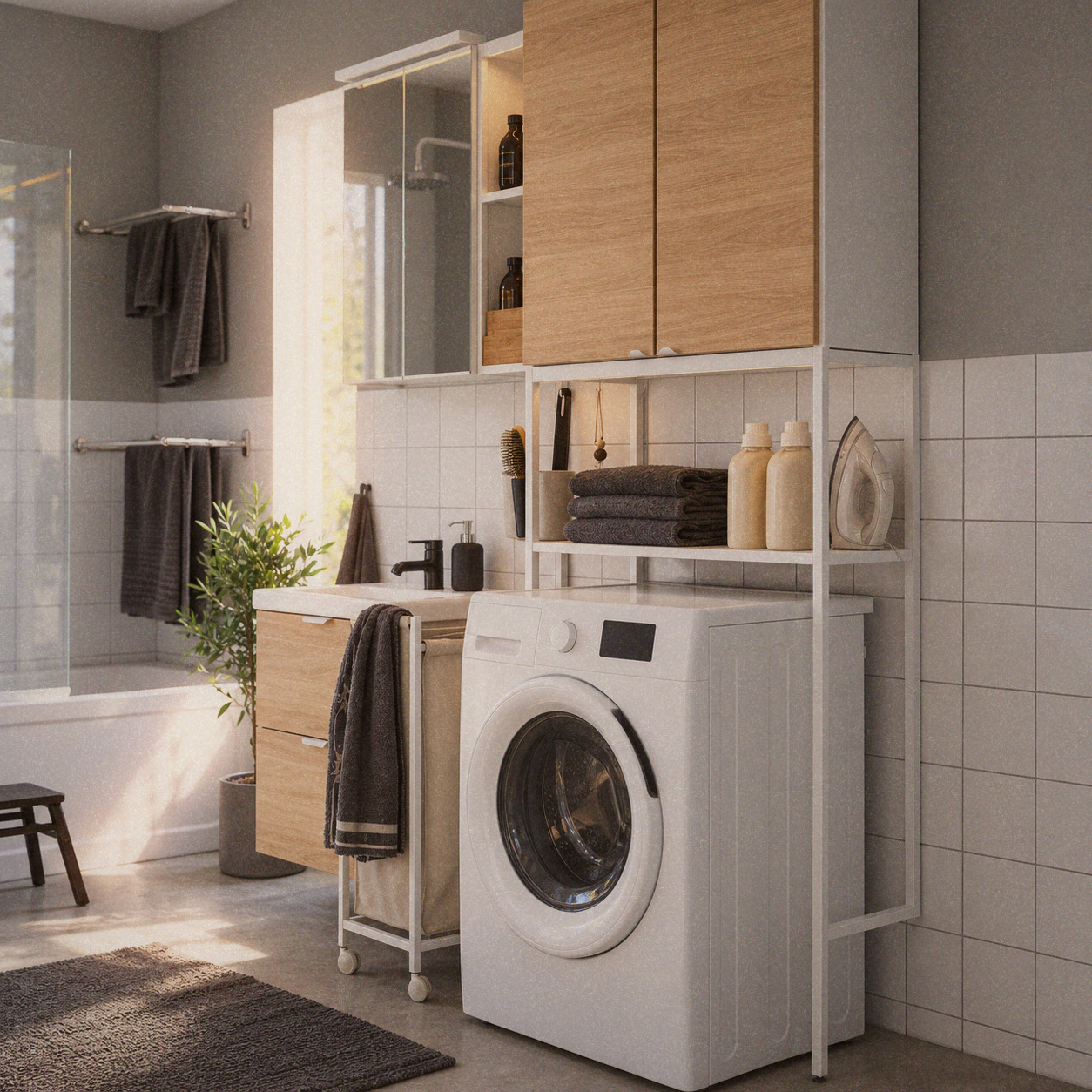 FIRST SIGHTWEBGLAfter the fix. Same 0.8坪 footprint, same tiles, same fixtures. The difference is organization, separation, and airflow. · Color and grain by First Sight · Gold 200. · First Sight 色彩與顆粒調校 · Gold 200
The squeegee thing
This is going to sound obsessive, and maybe it is. But a quick squeegee of the walls and glass (or shower curtain) after every shower reduces moisture by roughly 30 to 40 percent, which means less mold, less mineral buildup on tiles, and a bathroom that dries faster. A silicone squeegee costs NT$50 to 100 at any 大創 or 五金行.
It takes about forty-five seconds. After a week, it becomes automatic. After a month, you stop thinking about it entirely. After two months, you walk into someone else's bathroom and notice the water spots on their tiles and feel a small, unjustifiable sense of superiority. That's how you know the habit has stuck.
What not to bother with
Not everything marketed for small bathrooms actually helps. A few things I'd skip.
Decorative storage baskets. They look nice in photos. In a humid bathroom with no window, they collect moisture, develop mildew, and fall apart within months. Stick with plastic, stainless steel, or coated metal.
Stackable plastic drawer units. They eat floor space, which is the one resource you're trying to protect. Wall-mounted alternatives do the same job without touching the ground.
Over-door hooks, unless your bathroom door opens outward. If it opens inward (most do), over-door hooks interfere with the door closing properly and bang against the frame every time.
Anything that requires drilling into tile. One cracked tile in a rental and you've lost part of your deposit. Suction cups, adhesive strips, and tension rods exist for a reason.
The weekend project
All of this can happen in a Saturday. Morning: measure your bathroom, identify the gap and wall spaces, order the 擋水條 online or pick it up at 特力屋. Afternoon: install the water barrier strip and sealant, mount the suction shelves, set up the over-toilet storage. Sunday: let the sealant cure, reorganize containers, clean the existing mold, set up the dehumidifier if you bought one.
Total budget for the full transformation: NT$1,500 to 3,000 depending on how many storage pieces you need. The 擋水條 and shower curtain rod alone (NT$350 to 600) are probably the single best investment if you're choosing just one thing.
The bathroom is still 0.8坪. The tiles are still the same tiles your landlord installed in 1993. But the floor is half dry, the walls hold your stuff, the air moves, and the room feels like it belongs to someone who thought about it for a weekend. That's enough. In a Taipei apartment, that's actually a lot.
Frequently Asked
Some links in this article are affiliate links. If you purchase through them,OQUA may earn a small commission at no extra cost to you. This helps support our editorial work. We only link to products and services we genuinely reference in our writing.
Comments (0)
Loading comments...