
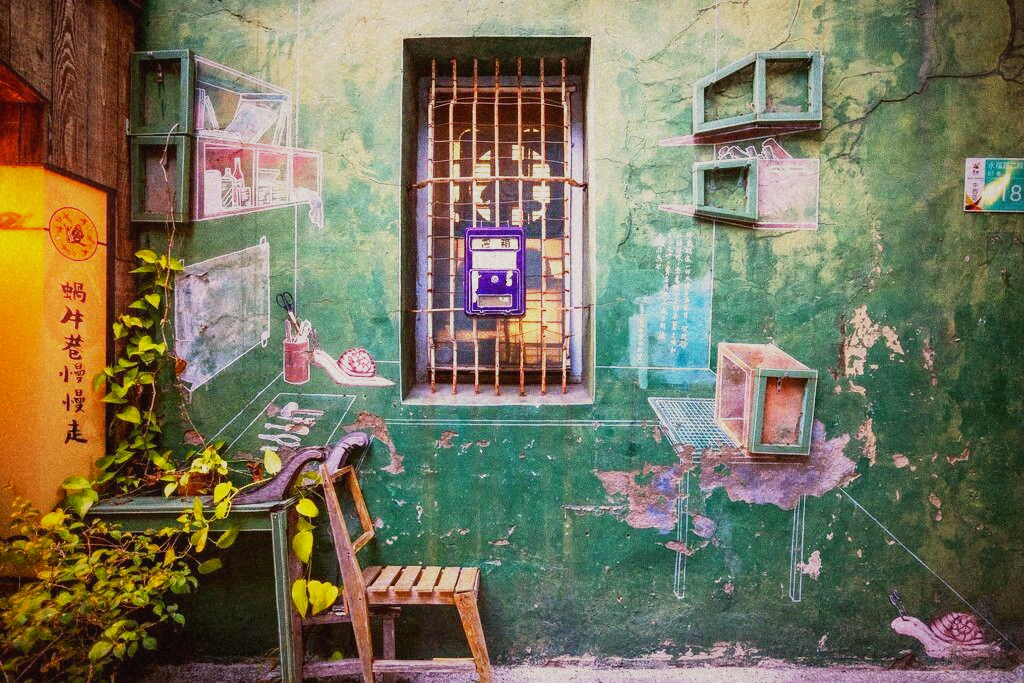
Tainan's coffee scene doesn't announce itself. There are no neon signs or Instagram murals. The best cups in the city are brewed behind unmarked doors, inside converted Japanese-era houses, and on residential streets where the only clue is the smell of freshly roasted beans drifting through a window.
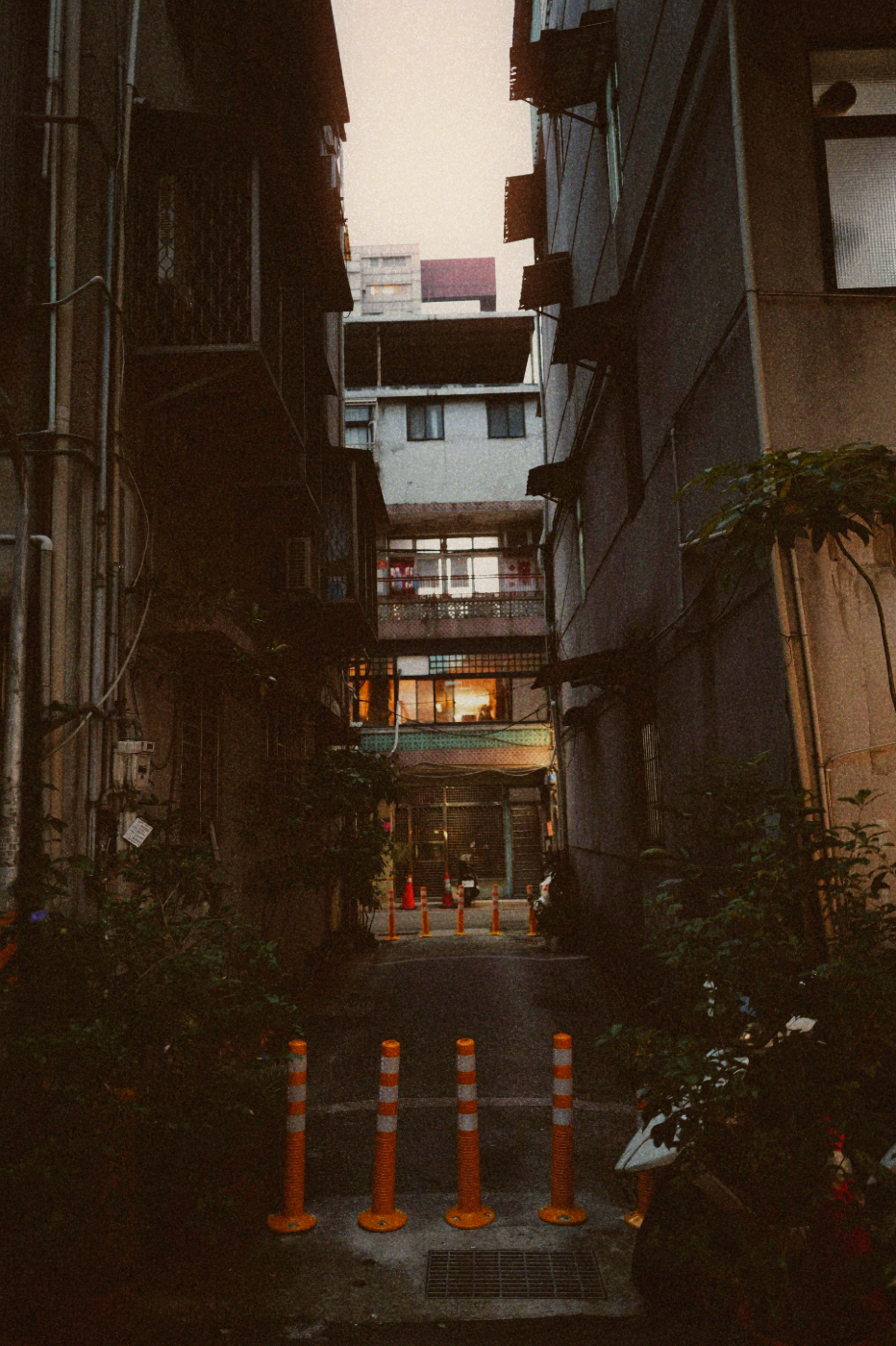
 FIRST SIGHTWEBGLFirst light at a Tainan roastery: where six shops refuse to compete on Instagram. · Color and grain by First Sight · Gold 200. · First Sight 色彩與顆粒調校 · Gold 200
These six shops don't appear in most travel guides. Some don't even have Google listings. All of them are places where the person behind the counter roasts their own beans, knows their regulars by name, and cares more about extraction temperature than follower count.
Tainan has become a quiet epicenter for specialty coffee in Taiwan over the last five years. The city's low rents and slower pace have attracted roasters and baristas who might not survive in Taipei's hypercompetitive market. They've built something deliberately small here: shops with four to eight seats, roasting cycles that take weeks, and a willingness to spend thirty minutes pulling a single espresso if the dose is right. It's the opposite of the convenience-store coffee sprawl that dominates most of the island.
What you need to know
What: Six independent specialty coffee shops across Tainan, all owner-operated with house-roasted beans. Budget: NT$120–200 per drink. Best time: Weekday afternoons (fewer tourists, more peace). Several have limited seating (under 10 seats, first-come, first-served). Getting around: All are bikeable within Tainan's old district. Rent a T-Bike from any station for NT$5. Parking: Street parking is easy; Tainan moves slower than Taipei.
What makes Tainan different: The city has preserved its Japanese colonial architecture and adopted a regional coffee identity around small-batch roasting. Unlike Taipei's coffee culture, which is global and Instagram-driven, Tainan's coffee scene is deeply local. Shops source from each other, share roasting knowledge, and build their reputation through word-of-mouth among regulars. It's a slower, more thoughtful ecosystem.
1. Paripari apt. (巴裡巴裡公寓), Coffee inside a restored 1920s house
A Japanese colonial-era townhouse converted into a multi-floor space,coffee on the ground floor, vintage shop upstairs. When you enter, the first thing you notice is the light. The renovation preserved the original wooden beams and terrazzo floors, and the afternoon sun hits them in a way that makes you want to stay for hours. There's a small courtyard at the back, almost invisible from the street, where the humidity and afternoon warmth make you feel like you've stepped into a different era.
The espresso is pulled with single-origin beans from a local Tainan roaster, but the magic is in the pour-overs. Each coffee is treated as its own problem to solve. The owner spends time on water temperature, grind size, and bloom time, and it shows. The seasonal single-origin is usually an excellent entry point,Ethiopian naturals in winter (blueberry and strawberry notes), Central American microlots in summer.
The sensory experience: the smell of fresh coffee competing with old wood and dust, the hum of the espresso machine, the gentle clink of ceramic cups. By 3pm, you'll have regulars reading or working on laptops, but it never feels crowded. The noise level is low enough to have a conversation.
Address: No. 6, Lane 67, Section 2, Zhongzheng Road, West Central District Price: Espresso NT$130, pour-over NT$180, specialty lattes NT$160 Order: The seasonal single-origin pour-over. Ask which farm it's from,they always have a story. If it's winter, ask about the latest Ethiopian natural process. Best time: 2pm–4pm on weekdays. Mornings fill up with office workers. Hours: 13:00–18:00, closed Tuesdays Tip: The vintage shop upstairs sells Japanese ceramics and small antiques. If you have time, browse there for 10 minutes while your coffee cools slightly.
2. St.1 Cafe (街役場), A former town hall, now a quiet pour-over bar
The building was Tainan's administrative office during the Japanese era. Now it's a minimalist cafe with exactly eight seats and a 24-hour rule: if you come more than eight times in a month, you become a regular and get a small discount. The owner spent two years in Melbourne before returning home, and that's visible in every choice here,the pour-over technique is Japanese-style Hario V60, but the bean selection leans toward fruity Ethiopian naturals and Kenyan single-origins.
The aesthetic is almost austere. White walls, natural wood, no background music. You can hear the water pouring through the grounds, the soft rattle of ceramic. It's the kind of place that makes you slow down whether you want to or not. There's usually a handwritten note on the counter about the current beans,which farm, what altitude, what process, what flavor notes to expect. The owner is quiet but genuinely curious about how you experience the coffee, and he'll ask follow-up questions about whether the acidity was balanced or too sharp.
The seasonal rotation is serious. In winter, Ethiopian Yirgacheffe from a specific washing station. In spring, Kenyan AA lot from a cooperative in the central highlands. In summer, a blend that emphasizes clarity. He sources beans through direct relationships with importers, which means the prices are fair and the freshness is guaranteed.
Address: No. 321, Section 2, Zhongyi Road, West Central District Price: Pour-over NT$160–220 (depending on bean origin), cold brew NT$150, filter bags NT$25 each Order: Ethiopian Yirgacheffe natural process (winter) or Kenyan AA (spring). If you're unsure, tell him your preferences and let him recommend. The blueberry/citrus notes are extraordinary. Best time: 11am–1pm. Quieter than the afternoon. Hours: 10:00–17:00, closed Mondays and Thursdays Bring: Cash (no card reader). Exact change is helpful.
3. Kokoni Coffee (此處咖啡), Tucked behind a temple
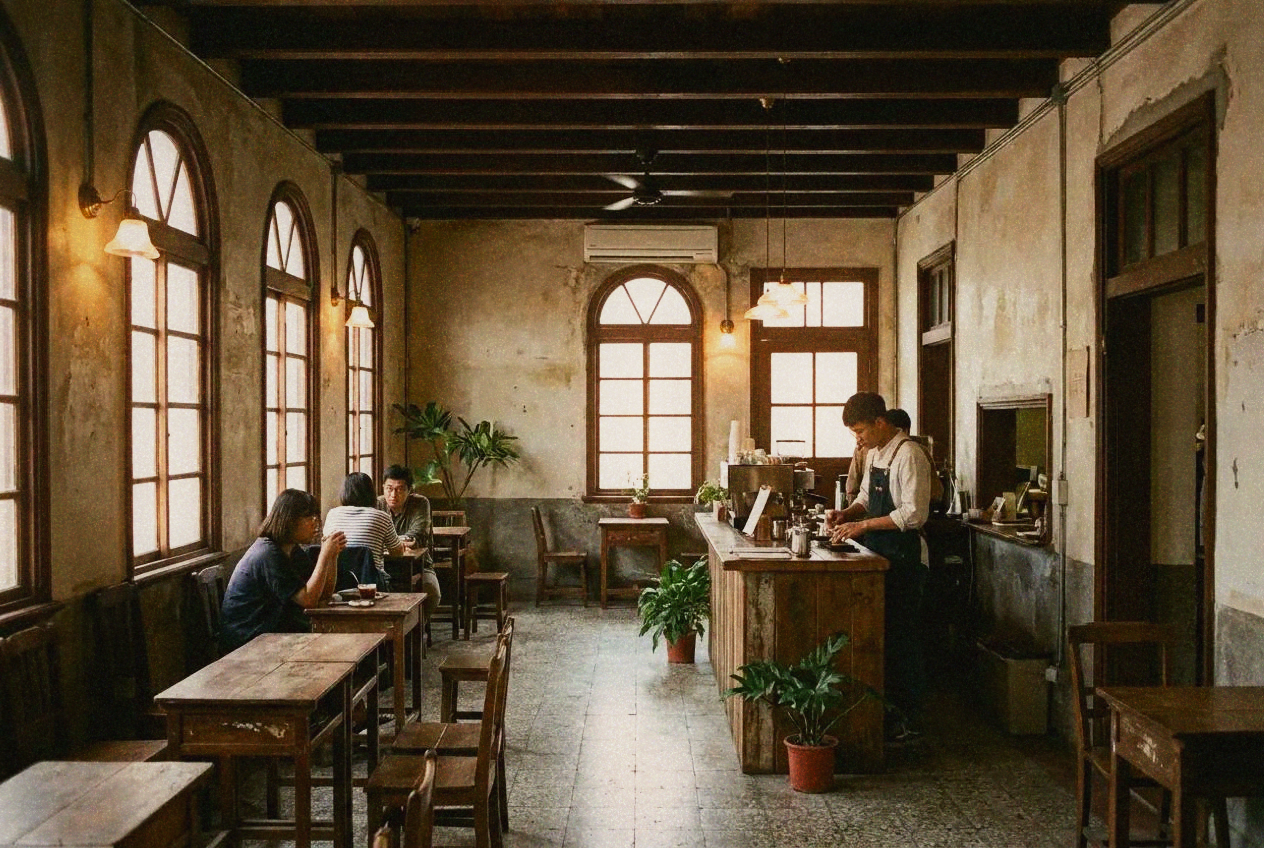 FIRST SIGHTWEBGLA restored 1920s building in Tainan, now serving single-origin coffee where colonial-era merchants once traded. · Color and grain by First Sight · Gold 200. · First Sight 色彩與顆粒調校 · Gold 200
You'll walk past it twice before you find it. It's behind the Koxinga Shrine, down an alley that looks purely residential. There's no signage on the building,just a small wooden door. The owner is a former architect who designed the space himself, which explains why every element is intentional. Concrete walls, natural wood accents, a single large window framing a massive banyan tree outside.
Inside, there are seven seats, and no background music. Just the sound of water through coffee grounds and the occasional footsteps on the street above. The sensory experience is hypnotic,the cool concrete walls, the dappled light from the banyan tree, the smell of beans roasting earlier in the week. He roasts weekly in small batches, never more than a few kilos at a time, which means the coffee is always fresh but the selection is small. Usually three to four options on any given day.
The philosophy here is "fewer is more." He sources high-quality beans from importers and focuses on bringing out their specific characteristics rather than blending. The house blend hand-drip is his signature,a medium roast that works well with his brewing method. He'll tell you exactly how he's brewing it: water temperature, bloom time, pour timing. If you want to understand specialty coffee as a craft, this is the place to come.
The owner is quiet and observant. He's there almost every day, and regulars often sit in silence together, which somehow feels social anyway.
Address: No. 12, Lane 152, Kaishan Road, West Central District (behind Koxinga Shrine) Price: Hand-drip NT$180, matcha NT$160, house-roasted pour-over NT$170 Order: The house blend hand-drip. It's his most refined work. If you want to try something different, ask what single-origin he's roasting this week. Best time: Weekday afternoons, especially Thursday–Friday. Hours: 12:00–18:00, Thursday to Monday only (closed Tues–Wed) Note: This is a true neighborhood spot. The regulars are welcoming but quiet. It's the kind of place where you earn your place through repeat visits.
4. B.B.ART (光之廟宇): Art gallery meets espresso bar
Half art gallery, half coffee shop, in a way that feels natural rather than forced. The space rotates exhibitions every month,usually local Tainan artists working in painting, sculpture, or photography. The espresso machine is a La Marzocca Linea, which tells you the owner takes the coffee as seriously as the art. Beans are sourced from Pingtung County, grown in the foothills near the tea plantations, which means they have a slight mineral character that works beautifully with the espresso.
The sensory environment is rich: white walls, natural light, the hum of the espresso machine, the soft chime when someone enters. By late afternoon, there's usually a mix of art enthusiasts, coffee aficionados, and people who are just killing time between meetings. The milk texture is exceptional,the owner has invested in a milk pitcher and steam wand that are almost professional, and it shows. The flat whites here are among the best you'll find outside of Melbourne-trained cafes.
The connection between art and coffee isn't just aesthetic decoration. The owner hosts small gatherings,art talks, coffee tastings,where local collectors and creators come together. It's the kind of place where you might overhear a conversation about a new artist or a rare bean lot.
Address: No. 18, Xinmei Street, West Central District Price: Espresso NT$120, latte NT$150, flat white NT$160, cappuccino NT$150 Order: Flat white with Pingtung beans. The milk texture is the best in Tainan, and the beans have enough body to stand up to it. If you want filter coffee, they can do a pour-over NT$180. Best time: Late afternoon (3pm–5pm), when the light is best and the space is quieter. Hours: 11:00–19:00, closed Wednesdays Check: What exhibition is up before you go. The art changes monthly, so there's always a reason to return.
5. Maru Coffee (丸咖啡), A living room that sells coffee
Literally a converted living room. The owner lives upstairs. Maximum four guests at a time. You ring a doorbell. She comes down, asks what you like, and makes something. There is no menu. The beans change weekly based on what she's feeling and what's fresh. The experience is closer to visiting a friend's house than going to a cafe, and that's entirely intentional.
The space is intimate in a way that can feel awkward if you're not ready for it, but once you settle in, it becomes one of the most memorable coffee experiences in Tainan. She has strong opinions about how coffee should taste,darker, more generous with the milk, slightly sweet notes,and if you trust her, she'll make you something that surprises you. If you tell her you prefer lighter roasts, she'll respect that. The whole transaction is a conversation.
The sensory experience: a residential living room, wooden furniture, soft natural light. There's often music playing quietly,usually jazz or ambient. By the time your coffee is ready (and she takes her time), you've usually had a five-minute conversation about where the beans came from or what you're doing in Tainan.
This is the hardest shop to plan for because there's no menu and no predictability. That's also what makes it special. You have to trust the process. And almost everyone who does comes back.
Address: No. 88, Lane 45, Fucheng Road, West Central District (ring doorbell) Price: NT$150–200 (she decides based on the bean and the drink) Order: Tell her your mood or your preference. Don't overthink it. "I like it smooth and sweet" or "I want to taste the origin" both work. Trust her judgment. Best time: Afternoon on weekends. Mornings are hit-or-miss. Hours: 14:00–17:00, Saturday and Sunday only (Fri–Mon sometimes, check beforehand) Access: You have to ring the doorbell. This is deliberate. It keeps the space intimate and prevents the casual foot traffic that would overwhelm a four-seat shop.
6. Hayashi Coffee (林咖啡), Roastery in a shipping container
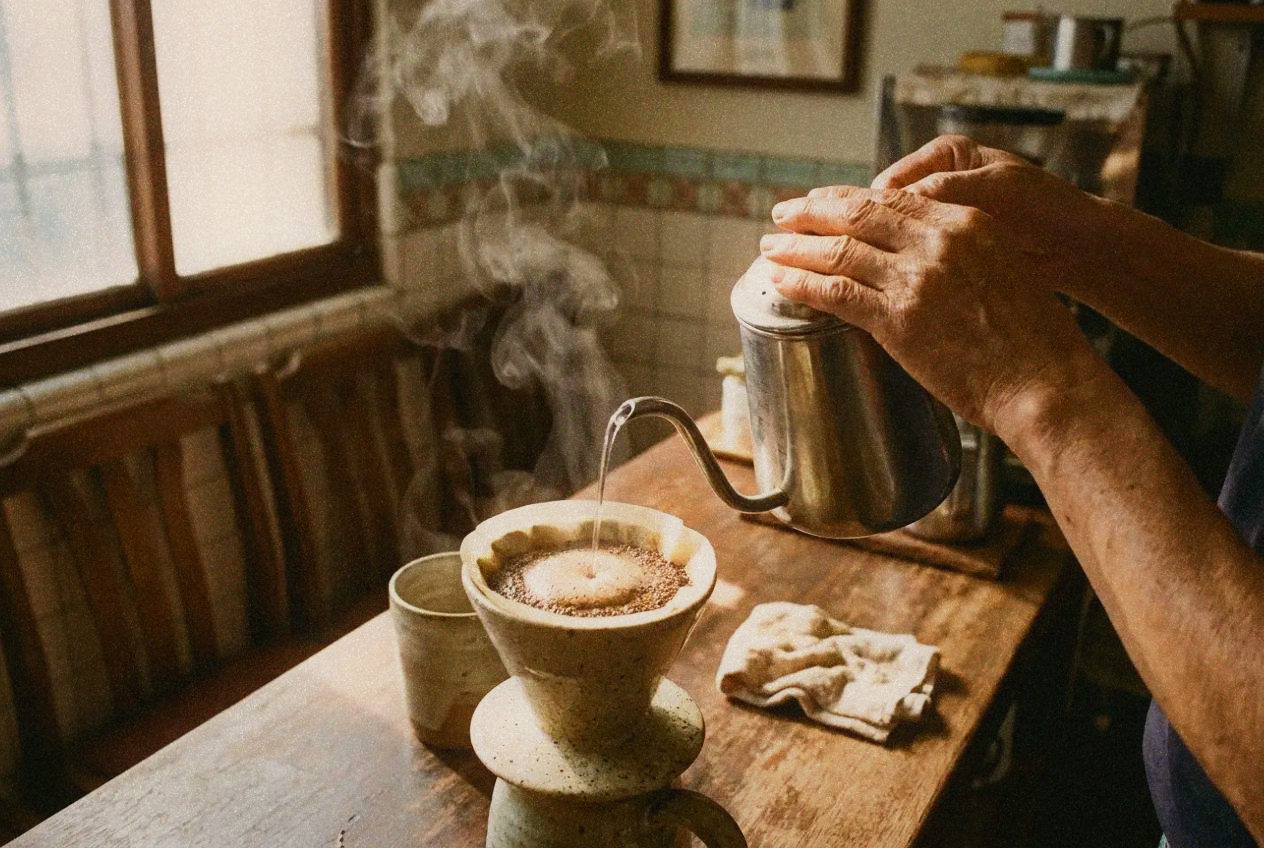 FIRST SIGHTWEBGLThe slow pour: Tainan's best coffee shops treat every cup as a conversation between roaster and drinker. · Color and grain by First Sight · Gold 200. · First Sight 色彩與顆粒調校 · Gold 200
A converted shipping container behind a parking lot in Anping. The owner has been roasting for fifteen years and supplies beans to half the cafes on this list. Coming here is going to the source. The space smells intensely of coffee,not in a pleasant, aromatic way, but in a serious, functional way. This is a working roastery, not a cafe that happens to roast. The espresso is sharper, more acidic, more complex than what most cafes dare to serve.
The sensory experience: industrial, functional, and oddly beautiful in the way all working spaces can be. Bags of green beans stacked on metal shelves, the roaster visible through a window, the sound of the roasting machine during operation. There's a small counter with maybe two seats. The owner is friendly but focused on the coffee itself, not the customer experience. He'll talk about roasting profiles and bean sources if you're interested, but he won't perform for you. The espresso pulls perfectly every time because he's been doing this every day for fifteen years.
If you want to understand how coffee gets from origin to your cup, and you want to taste what happens when a roaster is more interested in the craft than the business, this is the place. Bring cash. Buy a bag of beans. Ask him which farms he's working with this month. Ask him why he chose a lighter roast for the latest Ethiopian. He'll answer every question seriously.
Address: No. 196, Anping Road, Anping District (look for the green container) Price: Espresso NT$100–110, double espresso NT$120, bag of beans NT$400–600 Order: Double espresso, no sugar, no milk. Taste what the roaster intended. Or ask what he's most proud of this month and go with his recommendation. Best time: Morning (9am–11am). After lunch, he's often focused on orders or roasting. Hours: 9:00–16:00, closed Sundays Parking: Street parking. Anping is less chaotic than the old town.
The coffee walk
If you want to visit multiple shops in one day, here's a logical route that respects opening hours and your caffeine tolerance:
Saturday or Sunday morning: Start at Hayashi (9:30am) for an espresso and a bag of beans. Chat with the owner about roasting. The Anping route takes 30 minutes by scooter or T-Bike.
Late morning: Bike to B.B.ART (around 11:30am). Browse the current exhibition while you wait for a flat white. Spend 30 minutes here.
Lunch break: Grab lunch somewhere in the old town (a separate article, but try Auntie Lin's miso-braised pork if you want to keep to a theme). The coffee world of Tainan works best with actual food breaks, not caffeine marathons.
Early afternoon (2pm–3pm): Paripari apt. for a seasonal pour-over. The light will be hitting the courtyard perfectly. Stay for an hour if you can.
Mid-afternoon (3:30pm): Walk to St.1 Cafe for their second pour-over of the afternoon. It's close to Paripari (about a 5-minute bike ride). The owner might discuss roasting philosophy.
Late afternoon (weekend option, 4pm–5pm): If you're visiting on Saturday or Sunday, try Maru Coffee. Ring the doorbell, sit for an hour, let her make you something. This is the capstone,it slows everything down and rounds out the visit philosophically.
Alternative (weekday route): Kokoni Coffee (Thursday–Monday, afternoon) is slightly off the beaten path, but it's worth a solo visit or a second trip.
The golden rule: don't try to hit all six in one day. These are places meant for lingering, not collecting. Pick three, spend time in each, have conversations with the owners. That's the real coffee culture of Tainan.
How Tainan's coffee culture differs from Taipei
Tainan's coffee identity is deliberate. The city has lower rents, slower traffic, less Instagram pressure, and more time. This has attracted roasters and baristas who care deeply about the craft but don't need to perform it. In Taipei, many specialty coffee shops compete on aesthetics and photo-worthiness as much as on the actual coffee. In Tainan, the best shops have almost no visual branding. The coffee stands alone.
The scale is also different. Tainan coffee shops aren't trying to become chains or export brands. They're trying to make the best coffee they can for the people who will come back. This creates a generosity in how the owners engage with customers and each other. They share roasting techniques, recommend each other's shops, and build a community rather than compete. You'll often find bags from other Tainan roasters in each shop,a sign of mutual respect that would be rare in Taipei's more cutthroat market.
The flavor profiles also trend different. Tainan roasters tend toward lighter, more delicate roasts that emphasize origin characteristics. This might be because of the clientele (more adventurous, willing to taste complexity) or because of the roasters' training, but the collective taste leans toward clarity rather than body. If you prefer darker, bolder roasts, you'll find them, but they're not the default aesthetic.
Frequently Asked
Some links in this article are affiliate links. If you purchase through them,OQUA may earn a small commission at no extra cost to you. This helps support our editorial work. We only link to products and services we genuinely reference in our writing.
Comments (0)
Loading comments...