
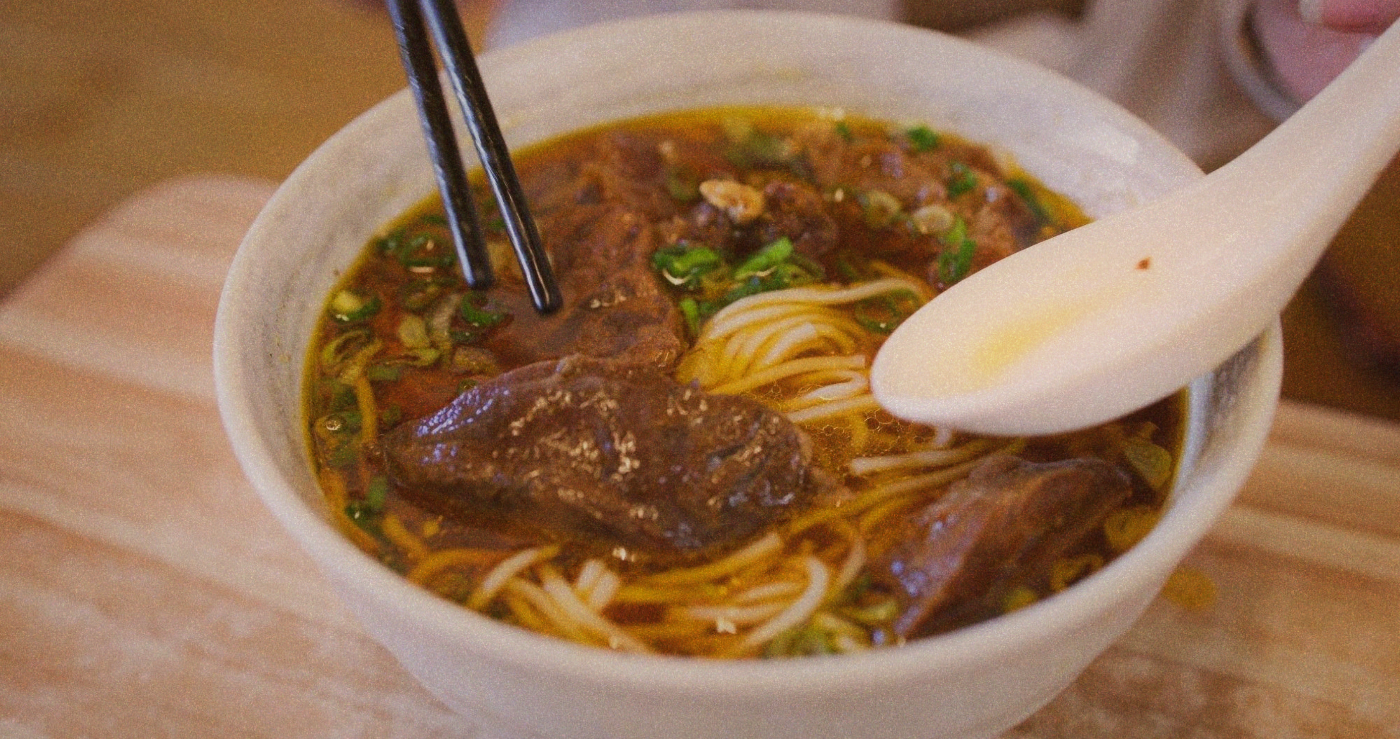
The first time I made beef noodle soup, it tasted like soy sauce water with boiled meat floating in it. Murky, flat, vaguely brown. My wife tried a spoonful, paused, and said "maybe we should just go to Lin Dong Fang." She wasn't being cruel. She was being accurate.
That was four years ago. I've made this soup maybe sixty times since then, and the version I make now is, genuinely, better than most of the NT$200 bowls I've had around Taipei. Not all of them. Not Lin Dong Fang. But most. And the cost works out to about NT$70 a bowl when you're making a pot of eight, which means I eat better beef noodle soup more often, for less money, than I did when I was buying it every time.
The trick is that beef noodle soup isn't actually hard. There's no special skill involved, no wok technique to master, no timing window you'll miss if you blink. It's more like a slow assembly. You do six or seven things in the right order, you let time do the heavy lifting, and three hours later you have a pot of something that makes your entire apartment smell like the reason you moved to Taiwan.
But those six or seven things matter. Skip one and you get soy sauce water. Every single time.
A brief history of how this dish exists at all
Taiwanese beef noodle soup wasn't always Taiwanese. It arrived with the KMT soldiers who came from Sichuan and other mainland provinces in 1949, carrying with them a tradition of red-braised beef that would eventually collide with local ingredients and evolve into something entirely new.
For most of Taiwan's agricultural history, cattle were working animals. You didn't eat the ox that plowed your rice paddy. Beef was culturally off-limits for many families well into the 20th century. The beef noodle shops that started appearing in the 1950s and 60s were almost exclusively run by mainlander veterans, serving other mainlanders. It took until the 1970s for beef to become broadly accepted, and by then the dish had already started its transformation. The heavy Sichuan heat softened. The spice blends shifted. 豆瓣醬 from Kaohsiung's 岡山 district replaced imports from 郫縣. Rock sugar and soy sauce took on larger roles. The soup became, quietly and definitively, Taiwanese.
Now there's a Taipei International Beef Noodle Festival (running since 2005), and the dish is arguably Taiwan's national food. Every neighborhood has at least three shops that claim to make the best version. Everyone has an opinion.
Mine is that the best version is the one you make at home, on a Sunday afternoon, with your windows open so the neighbors know what you're up to.
The cut of beef is the whole game
Two styles exist: 紅燒 (red-braised, the one we're making) and 清燉 (clear-broth, which is lovely but a different project). Within 紅燒, your choice of beef cut determines everything.
牛腱 (beef shank) is the classic. It's full of connective tissue that breaks down over two to three hours of simmering into something silky and almost buttery. The meat itself stays intact, sliceable, with a slight chew that gives way to tenderness. This is what most of the famous shops use, and it's what I use. At 濱江市場, the vendor 盛發賀牛羊肉 (they've been there over twenty years) sells Australian shank for about NT$155 per 斤 and local Taiwanese shank for around NT$190. I usually go Australian. The difference in the final bowl is minimal, and I'd rather spend the savings on better 豆瓣醬.
牛肋條 (short rib strips) give you that QQ texture, bouncier and more gelatinous. Great if you like that mouthfeel. Less forgiving if you undercook.
牛腩 (brisket) falls apart more, which some people love. I find it gets a bit mushy in the broth after reheating, and you will be reheating this. The pot tastes better on day two.
The shop favourite is 半筋半肉, half tendon half meat, and it's fantastic. But tendon requires longer cooking and more attention. Start with shank. Get the broth right first.
The ingredient that makes or breaks it
豆瓣醬 (doubanjiang, fermented chili bean paste) is the soul of the broth. The brand matters enormously. I've tested five or six, and the answer for Taiwanese-style beef noodle soup is 明德辣豆瓣醬 (Mingteh), made in 岡山, Kaohsiung, where the company has been fermenting this stuff in ceramic pots for over sixty years. Their paste ferments for 120-plus days, which gives it a depth that the cheaper supermarket versions simply don't have. It's salty, funky, slightly sweet, with a moderate heat that builds but doesn't overwhelm.
You can find Mingteh at any 全聯 (PX Mart) for around NT$85 a jar. It's also on PChome 24h if you want it delivered. One jar is more than enough for a pot.
The Sichuan alternative is 郫縣豆瓣醬, which is earthier and more intensely fermented. It makes a great bowl too, just a different one. More Chongqing than Taipei. If you're going for the flavour you grew up eating at the corner shop in 永康街, use Mingteh.
Building the broth, step by step
This is where I shift from storytelling to instruction, because the order matters and the details matter, and I'd rather be specific than poetic about it.
Blanch the beef first. Cut about 1.5 kilograms of shank into large chunks, roughly the size of your fist. Put them in a pot of cold water. Bring it to a boil. You'll see a truly disgusting amount of grey scum rise to the surface. That's blood, impurities, and protein foam. Skim it, drain the pot, rinse each piece of beef under cold water. This step is the difference between a clear, rich broth and a murky, livery one. The first time I made beef noodle soup, I skipped this because it seemed fussy. That's why it tasted like dishwater.
Sear the meat. Dry the blanched beef with paper towels. Heat a heavy pot (dutch oven is ideal) with a couple tablespoons of oil until it shimmers. Sear the beef on all sides until deeply browned, working in batches so you don't crowd the pot. This takes about ten minutes total and the kitchen will smell incredible. That Maillard reaction is building the foundation of your broth's flavour. Set the beef aside.
Build the aromatics. In the same pot, with the rendered beef fat, add a thumb of sliced ginger, ten cloves of garlic (smashed, not minced), a bunch of scallions cut into three-inch pieces, and one onion cut into wedges. Stir-fry until fragrant, about two minutes. Then add three tablespoons of Mingteh doubanjiang and stir it into the aromatics until the oil turns red. This is the moment. You can smell the fermentation hitting the heat, and the colour of the oil shifts from golden to a deep, brick red. Don't rush this. Give it a full two minutes of stirring over medium heat. If you don't fry the doubanjiang properly, your broth will taste flat. I learned this the hard way, twice.
Add the spices. Three star anise, two bay leaves, a small piece of cinnamon bark, and about two teaspoons of Sichuan peppercorns. Stir them into the paste for thirty seconds until they're fragrant.
Combine everything. Return the beef to the pot. Add three tablespoons of rice wine (米酒), about 90 to 100 millilitres of soy sauce (use a mix of regular and dark soy, roughly 70/30), and two tablespoons of rock sugar. The rock sugar matters. It rounds the edges of all that salt and fermented heat, giving the broth a subtle sweetness that keeps you reaching for the next spoonful. Skipping it produces a broth that's aggressive and one-dimensional.
Add water to just barely cover the beef. Not more. Too much water is the second most common mistake after skipping the blanch. You want concentrated flavour, and you can always thin it later when you serve.
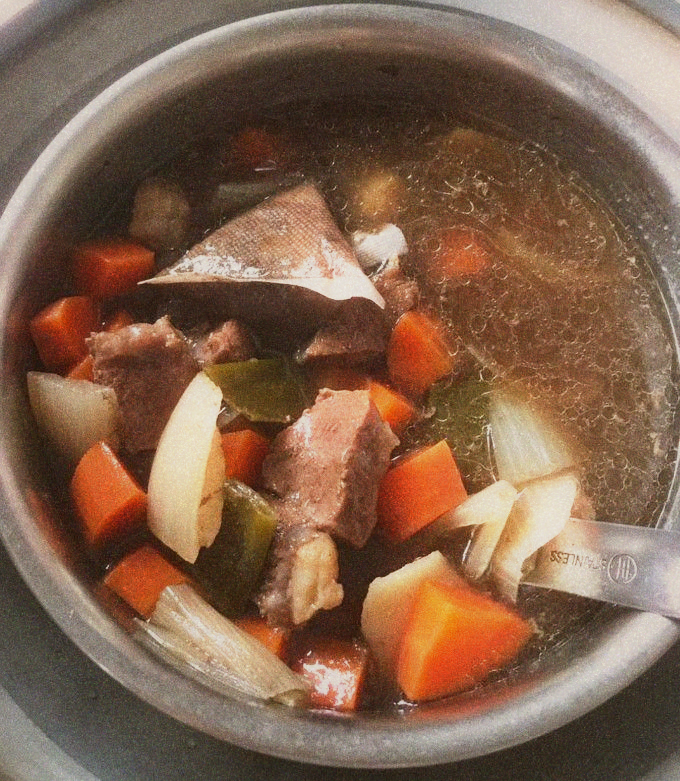
 FIRST SIGHTWEBGLForty minutes in. The broth has gone from reddish-brown to something deeper, almost mahogany. The apartment smells like a reason to stay home. · Color and grain by First Sight · Gold 200. · First Sight 色彩與顆粒調校 · Gold 200
Simmer. Bring to a boil, then drop to the lowest heat your stove will hold. Cover with the lid slightly ajar. Walk away for two and a half to three hours. Check it once an hour to make sure it's barely bubbling, not rolling. You want a lazy simmer, the kind where a single bubble rises every few seconds.
The beef is done when you can push a chopstick through it with almost no resistance. It should hold its shape but yield completely when you bite. If it's still tough after two and a half hours, give it another thirty minutes. Shank is forgiving. It's hard to overcook.
The noodles are a separate operation
Cook your noodles in a different pot of boiling water. Never, never cook them in the broth. The starch clouds the soup and dulls the flavour you spent three hours building. I've watched people dump dry noodles straight into their braising liquid and I have to leave the room.
For noodle choice: 刀削麵 (knife-cut noodles) are thick, chewy, and substantial enough to stand up to the rich broth. They're my favourite. 拉麵 (hand-pulled) are excellent if you can find fresh ones. 陽春麵 (thin wheat noodles) are the default at most shops and work perfectly well. Whatever you use, cook them just until al dente, drain, and portion into bowls immediately. They keep absorbing water as they sit.
Assembly and the things on top
Ladle the hot broth over the noodles. Arrange a few pieces of beef on top. Then: blanched baby bok choy (thirty seconds in the noodle water before you drain it), a scatter of sliced scallions, fresh cilantro if you're in that camp, and a generous spoonful of 酸菜.
The 酸菜 (pickled mustard greens) is not optional. It cuts through the richness of the broth, adds acidity and crunch, and provides the contrast that makes the whole bowl sing. I stir-fry mine briefly with a little chili and sesame oil before serving. It takes two minutes and it's the difference between a good bowl and the bowl that makes your friend put down their phone and ask what you did differently.
The seven mistakes, because I've made all of them
I promised you the mistakes to avoid, and I've personally committed every one:
Using lean cuts like sirloin or tenderloin. They have no connective tissue. After two hours they turn into leather. Shank or go home.
Skipping the blanch. Your broth will be cloudy and taste vaguely of iron. Takes ten minutes. Just do it.
Adding too much water. If the beef is swimming, your broth will taste diluted. The liquid should just barely cover the meat.
Cooking noodles in the broth. I already mentioned this but it deserves its own line. Don't.
Forgetting the rock sugar. Without it, the broth is all soy and spice and salt with nowhere to land. Two tablespoons. That's all.
Not frying the doubanjiang long enough. You need that oil to turn red. Two minutes of active stirring over medium heat. If you just dump it in and move on, the paste hasn't released its flavour compounds into the fat, and your broth will taste like you added chili at the end instead of building it into the foundation.
Overcooking the noodles. They should have bite. In the time it takes you to carry the bowl to the table, they'll keep softening in the hot broth. Cook them a minute less than you think.
What to buy and where
For a full pot (six to eight servings), you'll need roughly NT$800 to NT$1,000 in ingredients if you're starting from nothing:
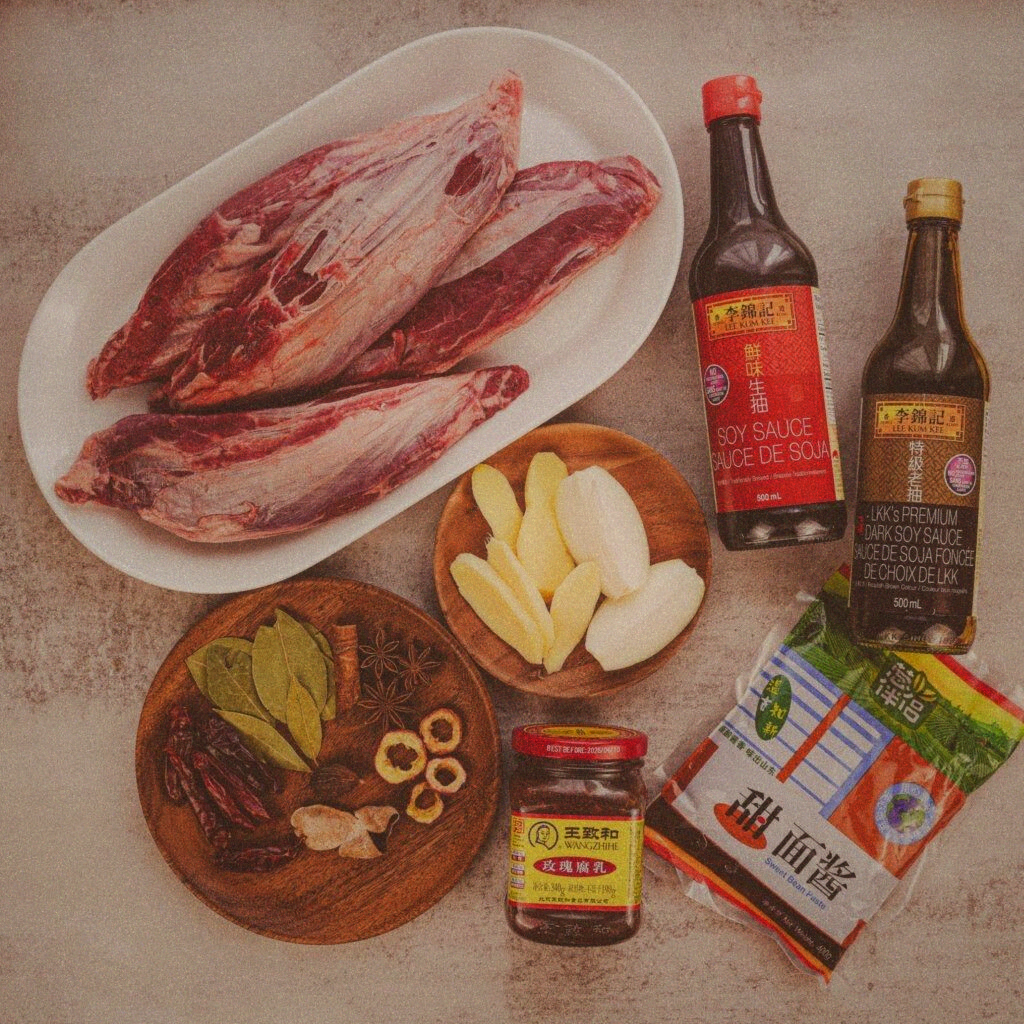 FIRST SIGHTWEBGLThe full spread before cooking. Nothing exotic. Everything available within a 15-minute scooter ride in any Taipei neighbourhood. · Color and grain by First Sight · Gold 200. · First Sight 色彩與顆粒調校 · Gold 200
The day-two bowl
One more thing, and it's the reason I always make a full pot even when I'm cooking for two. Beef noodle soup is better the next day. The spices have had time to fully infuse. The collagen from the shank has thickened the broth slightly. The flavours have settled into each other in a way that three hours of simmering alone can't achieve. Reheat it gently, cook fresh noodles, and the second-day bowl is consistently the best one.
I keep the broth and beef together in the pot in the fridge for up to four days. The noodles, vegetables, and 酸菜 are always fresh per serving. This is how the shops do it, more or less. The broth is a living thing that gets better with time. The toppings are made to order.
On the third or fourth day, if I still have broth left, I'll sometimes thin it slightly, add some curry powder, and use it as a base for curry noodle soup. This is arguably not traditional. It is arguably delicious. Make your own calls.
Frequently Asked
Some links in this article are affiliate links. If you purchase through them,OQUA may earn a small commission at no extra cost to you. This helps support our editorial work. We only link to products and services we genuinely reference in our writing.
Comments (0)
Loading comments...