
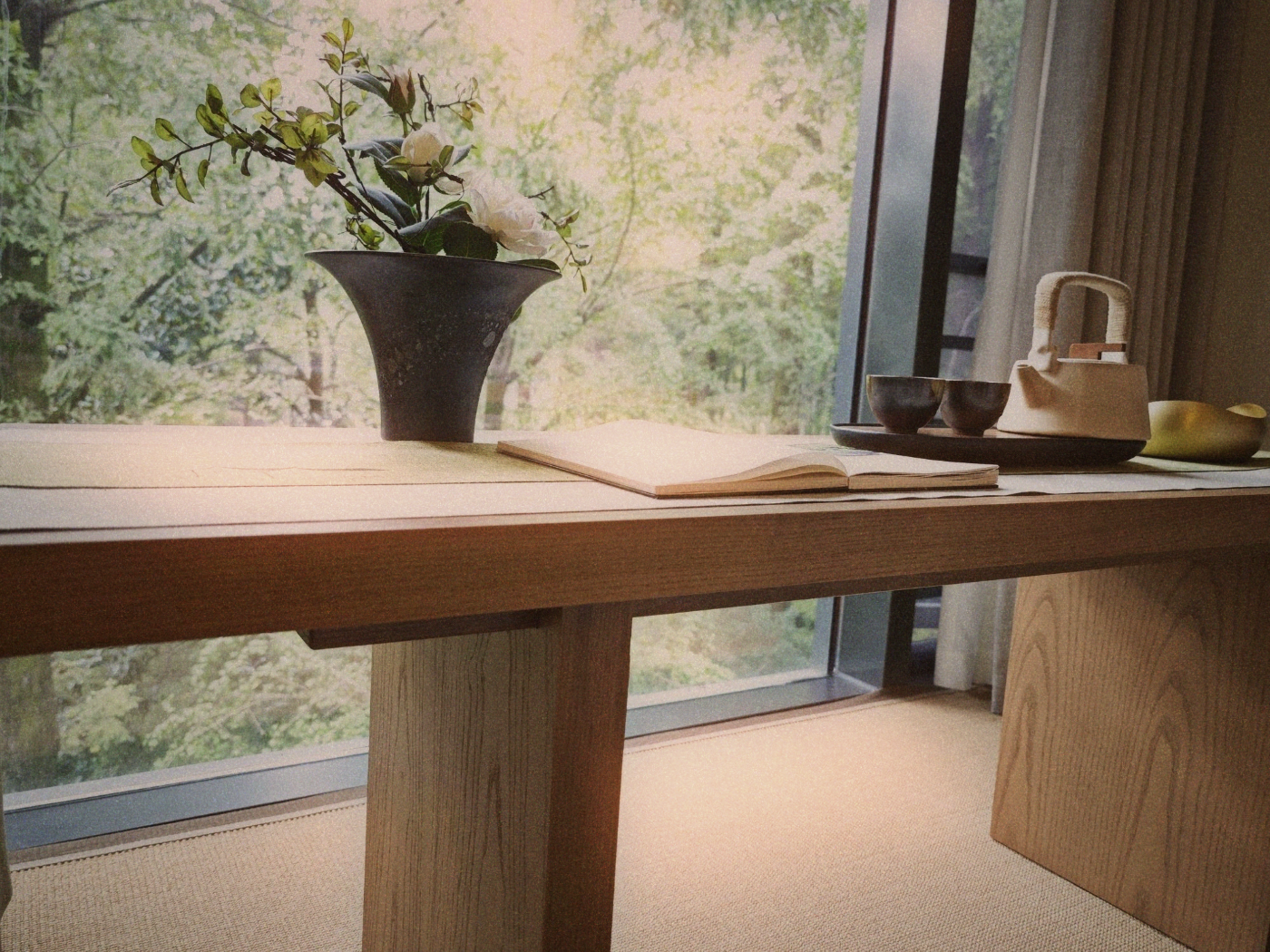
Somewhere in your apartment, probably between the rice cooker and the wall, there's 40 centimeters of counter space that nobody uses. Right now it's holding a stack of receipts, a phone charger, maybe a bag of 旺旺仙貝 you keep forgetting to put away. That space is enough for a gaiwan, a pitcher, two cups, and the ten minutes of quiet that the rest of your day will try to steal from you.
Gongfu tea doesn't require a tea room. It doesn't require ceremony. What it requires is a corner, a kettle, and the willingness to do nothing for a few minutes, which, if you're living in Taiwan and checking your phone seventy times before noon, may be the hardest part.
The first pour will probably go wrong. You'll hold the gaiwan at the wrong angle and scald your thumb. The lid will slip. The fairness pitcher will make a break for the floor. This is normal. Gongfu means "skill through practice," and the practice starts with getting burned. But somewhere around day five, when your hands know the motions and the steam catches the morning light coming through the kitchen window, you'll understand why old men in Dadaocheng have been doing this on the sidewalk every morning for fifty years.
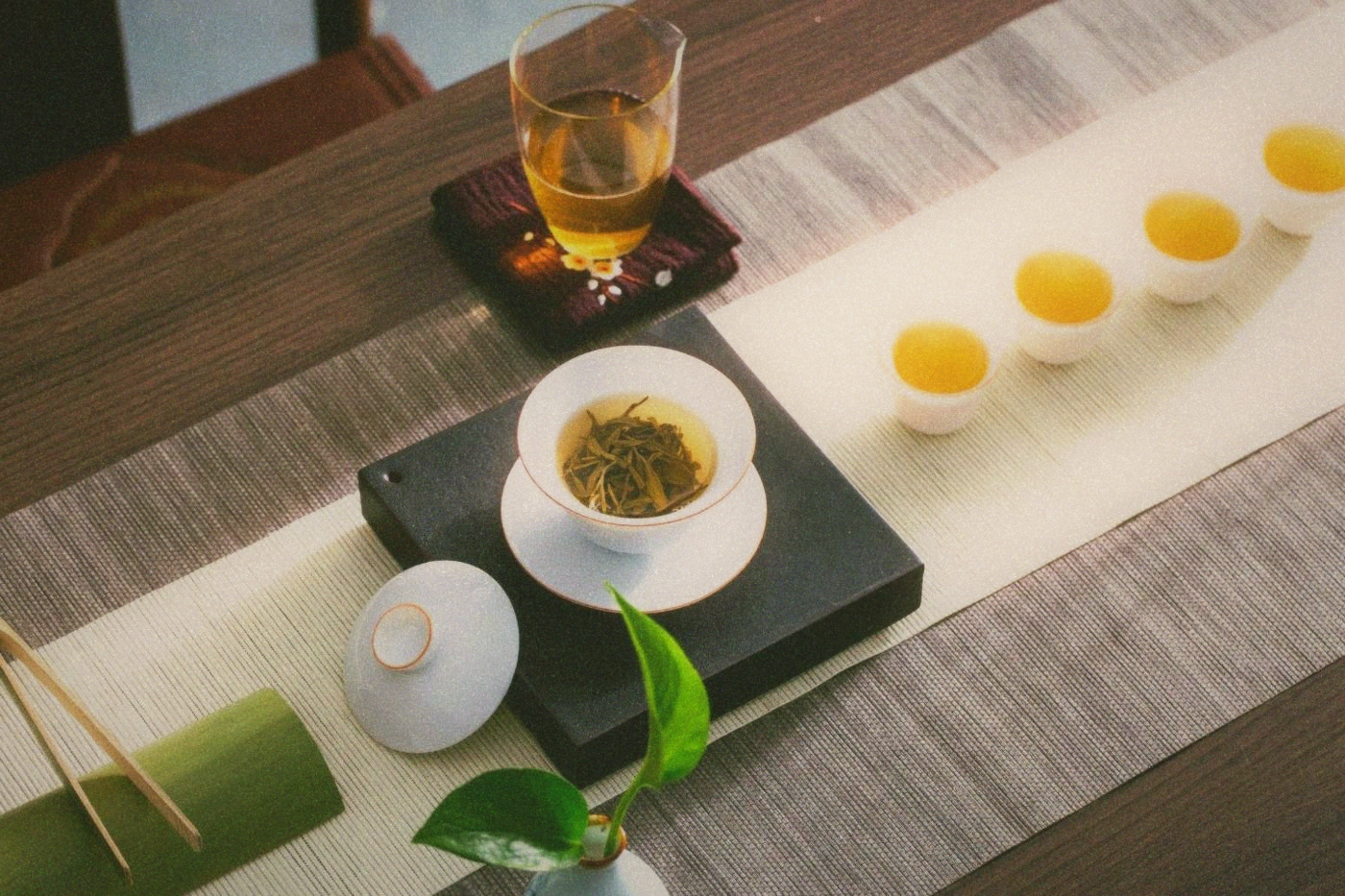
 FIRST SIGHTWEBGLThe setup doesn't need to be beautiful. It needs to be yours. The patina comes from use, not from shopping. · Color and grain by First Sight · Gold 200. · First Sight 色彩與顆粒調校 · Gold 200
What gongfu tea actually is
If you've only had tea from a mug with a teabag, gongfu cha will feel like a different beverage. The word gongfu (功夫) means skill through practice. In tea, it refers to a brewing method that uses small vessels, a high ratio of leaf to water, and multiple short infusions. The same leaves might give you eight or ten steeps, each one tasting slightly different as the heat coaxes out different compounds.
The practical difference from Western-style brewing: you're making small amounts (80-120ml at a time), drinking them immediately, and repeating. A session lasts 15-30 minutes. The repetition is the point. Heat water. Pour. Wait. Pour. Drink. The rhythm becomes automatic after a few days, and that automaticity frees your mind to do nothing, which turns out to be the thing most of us are worst at.
Taiwan is, arguably, the best place in the world to practice this. The island produces some of the finest oolong on earth. The tea culture here isn't ceremonial in the Japanese sense. It's casual, daily, built into the rhythm of homes and offices and parks. Old men brew gongfu tea on sidewalks outside their apartments. Taxi drivers keep thermoses of it on their dashboards. It's not precious. It's just how tea gets made when you care enough to do it well.
What you actually need
Here's where most guides lose people. They list fifteen items and a specific type of bamboo tray and suddenly you're looking at a NT$5,000 shopping list before you've brewed a single cup. Forget that.
A gaiwan (蓋碗). This is a lidded bowl, usually porcelain, roughly 100-120ml. It's the most versatile brewing vessel in Chinese tea. You can brew any tea in it. Porcelain doesn't absorb flavor, so it won't carry yesterday's pu-erh into today's oolong. A basic white porcelain gaiwan costs NT$200-400 at any tea ware shop in Taipei. The expensive ones (handmade ceramic, wood-fired, from specific kilns in Yingge) can cost thousands. Start cheap. Learn the motions. Upgrade when you know what you actually want.
A fairness pitcher (公道杯). This is a small glass or ceramic pitcher where you pour the brewed tea before distributing it to cups. It ensures even concentration. Glass is best for beginners because you can see the color of the liquor, which teaches you about steeping time faster than any timer. NT$150-300.
Two cups. Small ones, 30-50ml. If you're brewing alone, one is enough. Two is nice for when someone joins you, which will happen more often than you expect once people see the setup. NT$100-200 for a pair.
That's it. Total: NT$800-1,200 for everything. You can go to any of the shops I'll mention below and walk out with a complete setup for under a thousand.
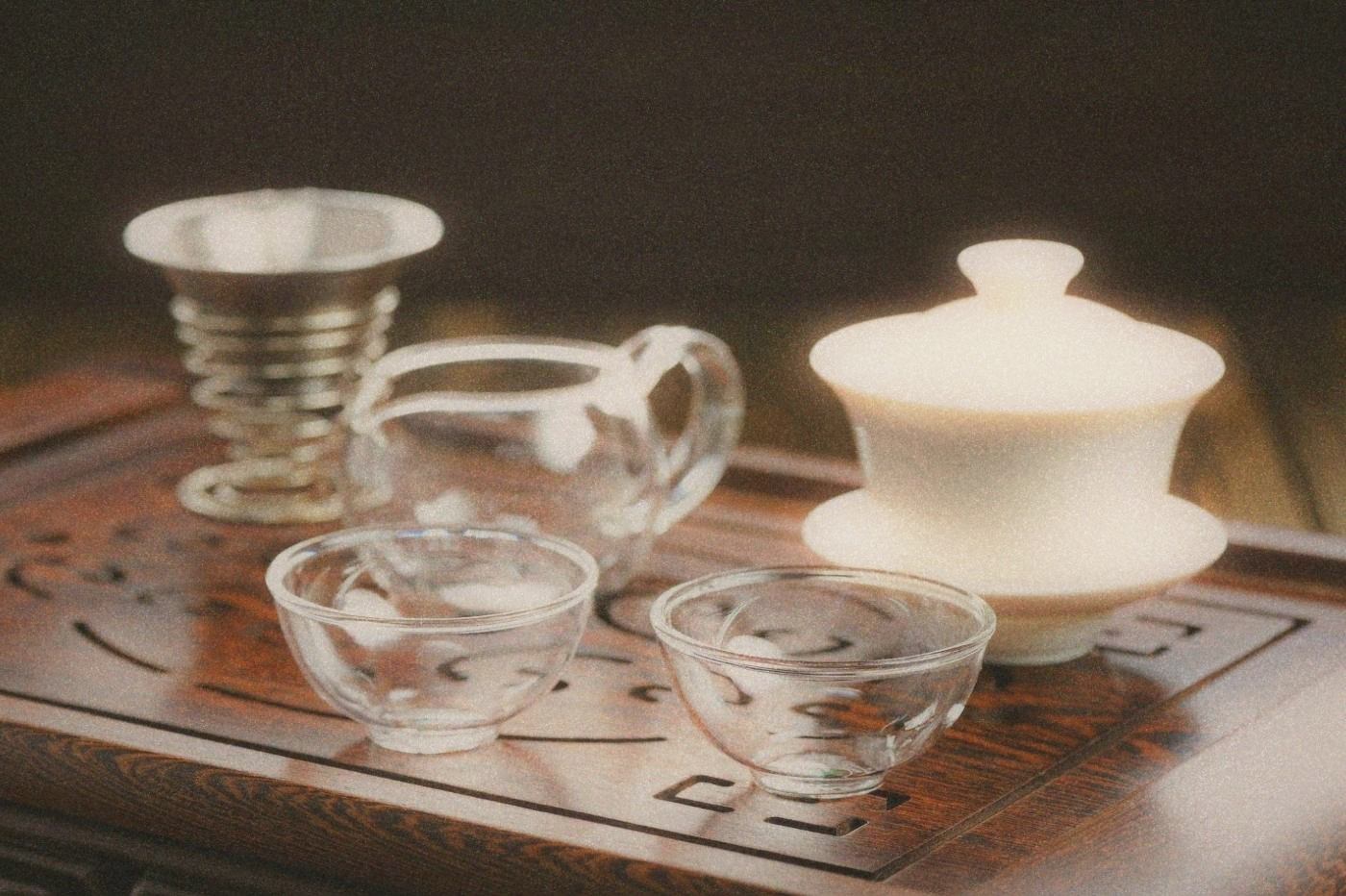 FIRST SIGHTWEBGLWhite porcelain gaiwan, glass pitcher, two cups. The whole setup fits on a book. No special furniture required. · Color and grain by First Sight · Gold 200. · First Sight 色彩與顆粒調校 · Gold 200
What you don't need (yet)
A tea tray (茶盤). The traditional bamboo or stone tray with a drainage system is beautiful but bulky and unnecessary for a home corner. Use a kitchen towel or a small ceramic plate to catch drips. I used a folded dish towel for my first year.
A tea pet (茶寵). Those little clay figurines you pour leftover tea over. Fun, traditional, completely optional. The frog-shaped ones from Yingge are popular. They sit in the corner and silently judge your technique.
Specialized tools (tea pick, tea scoop, tongs). Helpful when you get serious. Not needed at the start. Your fingers work fine for picking up cups and scooping leaves.
An electric kettle with temperature control is the one upgrade worth making early. Different teas want different temperatures. Oolong likes 90-95°C. Green tea wants 75-80°C. A basic temperature-controlled kettle runs NT$800-1,500 and eliminates guesswork. But if you already have a regular kettle, use it. You'll learn to judge temperature by watching the bubbles. Small bubbles rising in strings: about 80°C. Rolling boil: 100°C. It's less precise but more connected to the process.
Finding your corner
The tea corner doesn't need its own room. It doesn't even need its own table. Forty centimeters of kitchen counter, between the rice cooker and the wall, is plenty. The requirements are simple.
A stable, flat surface where you can leave the setup between sessions. Taking it out and putting it away every time adds friction, and friction kills rituals. The setup should be there when you wake up, waiting.
Proximity to a kettle and water. You'll refill the kettle multiple times per session.
No screen in your direct line of sight. If you can see your phone or laptop while brewing, you'll check it. The whole point of the ritual is ten minutes of not checking anything. Face the window if you have one. On good mornings, watch the light change on the building across the alley. On grey mornings, watch the rain. Both are better than whatever's happening on your phone.
Natural light helps but isn't essential. What matters is that the space feels slightly separate from the rest of your daily flow. Even a small distinction, a different surface material, a plant next to the tray, a specific spot on the counter, creates a psychological boundary between "doing things" and "being here."
The daily practice
Here's what a morning session looks like. About ten minutes once the kettle is hot.
Boil water. While it heats, measure out 5-7 grams of oolong (roughly a tablespoon, loosely packed). Place leaves in the gaiwan.
When the water is ready, pour it over the leaves and immediately pour it out. This is the rinse, or "awakening." It opens the leaves and washes off any dust. Don't drink this one. Pour it over your tea pet if you have one, or into the sink.
Pour hot water over the leaves again. Wait 15-20 seconds for the first real steep. Pour into the fairness pitcher, then into your cup. Drink.
Repeat. Each steep gets 5-10 seconds longer than the previous one. The flavor shifts with each infusion. Early steeps are light and floral. Middle steeps develop body and sweetness. Late steeps get earthy and mineral. By the eighth or ninth steep, the tea is telling you it's done, and by then you've been sitting quietly for fifteen minutes and the morning feels different.
Where to buy (Taipei)
The tea itself
You're in Taiwan. Start with Taiwanese oolong. It's what this island does better than anywhere else on earth, and it's the tea that rewards gongfu brewing the most.
For your first purchase, get a high-mountain oolong from Alishan or Lishan. It's forgiving. Oversteep it slightly and it's still good. The flavor is approachable: floral, slightly buttery, with a sweetness that lingers after you swallow. Buy 50-75 grams (NT$300-600 at Lin Hua Tai or Lin Mao Sen). That's enough for two weeks of daily brewing.
Once you're comfortable with the process, try a roasted Dong Ding. The flavor profile is completely different: caramel, toasted grain, stone fruit. It's the oolong that most Taiwanese people grew up drinking, and it teaches you how roast level changes everything about a leaf.
A good rotation: light Alishan for mornings when you want brightness, medium-roast Dong Ding for afternoons, and a small stash of aged oolong for evenings or when something grounding sounds right. Three teas covering all moods, roughly NT$400-500 per month. Less than a weekly coffee shop habit.
Humidity and storage
Taiwan's humidity will ruin tea faster than anything else if you're not careful. Opened tea exposed to 75-80% humidity absorbs moisture and goes flat within weeks.
Keep tea in airtight containers. Not decorative jars with loose lids. Actual airtight seals. The simplest approach: leave tea in its original vacuum-sealed bag until you're ready to use it, then transfer a week's worth to a small container and keep the rest sealed. A NT$100 glass jar with a silicone-seal lid from any Daiso or 小北百貨 works perfectly.
Store away from light, heat, and strong smells. Tea absorbs odor aggressively. Don't put it next to spices, coffee, or cleaning products. A bag of Dong Ding that spends a week next to sesame oil will taste exactly how you'd expect.
Roasted and aged teas are more forgiving. Light, unroasted oolongs are the most sensitive. If you notice your light oolong has lost its floral notes and tastes flat, humidity probably got to it.
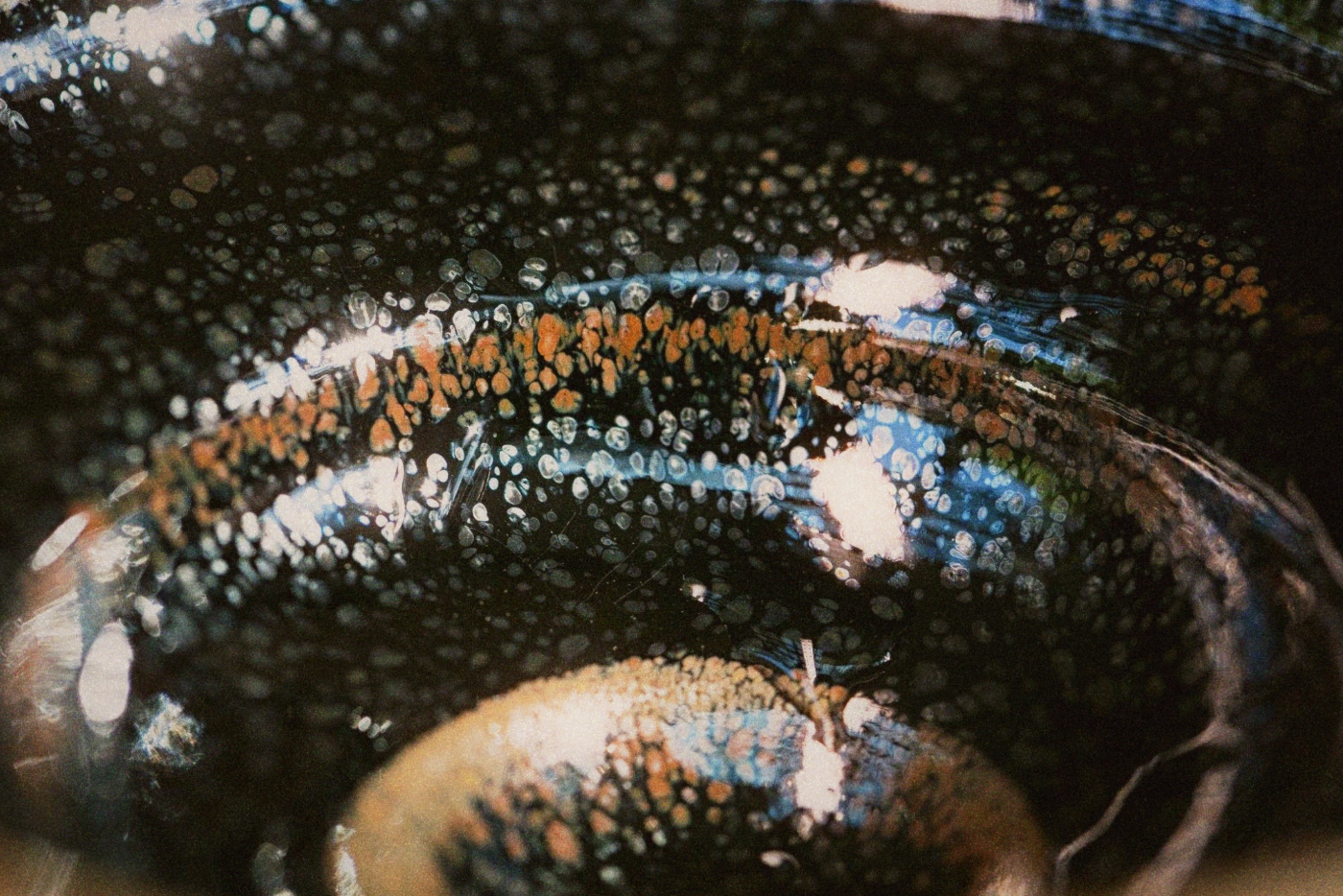 FIRST SIGHTWEBGLEvery session leaves residue on the cups. Don't scrub it off. In gongfu culture, the tea stain is evidence of practice. · Color and grain by First Sight · Gold 200. · First Sight 色彩與顆粒調校 · Gold 200
What this is actually for
There's a version of this article that talks about mindfulness and intentionality and being present. Those articles always feel like they're trying to sell something.
Here's what the tea corner actually does: it creates a gap. Between waking up and being reactive. Between finishing dinner and scrolling your phone. Between one task and the next. The gap is small, ten or fifteen minutes, but it belongs to you. Nobody can email you during it. Nobody can Slack you during it. You're doing something that requires just enough attention to keep your mind from drifting to the to-do list, but not so much that it becomes another task.
Some mornings you'll think about nothing. Some mornings you'll accidentally solve a work problem you've been stuck on. Some mornings you'll just watch steam rise off the cup and catch the light through the kitchen window. None of these outcomes is the point. The gap itself is.
A corner, a kettle, and ten minutes you protect from everything else. That's the whole thing.
Frequently Asked
Some links in this article are affiliate links. If you purchase through them,OQUA may earn a small commission at no extra cost to you. This helps support our editorial work. We only link to products and services we genuinely reference in our writing.
Comments (0)
Loading comments...