
I ruined a pair of white leather sneakers on Zhongxiao East Road in August 2023. I remember the date because I was walking to a job interview, the sky opened up in that sudden way it does in Taipei summers, and within ninety seconds both shoes were soaked through, both socks were brown, and I was standing under a Family Mart awning trying to decide whether to buy NT$49 flip-flops and show up looking like I’d come from the beach.
That was the moment I started paying attention to rain gear. Not in a gearhead way. In a “how do I stop this from happening to me every three days from May to October” way.
 FIRST SIGHTWEBGLColor and grain by First Sight · Cinestill 800T.First Sight 色彩與顆粒調校 · Cinestill 800T
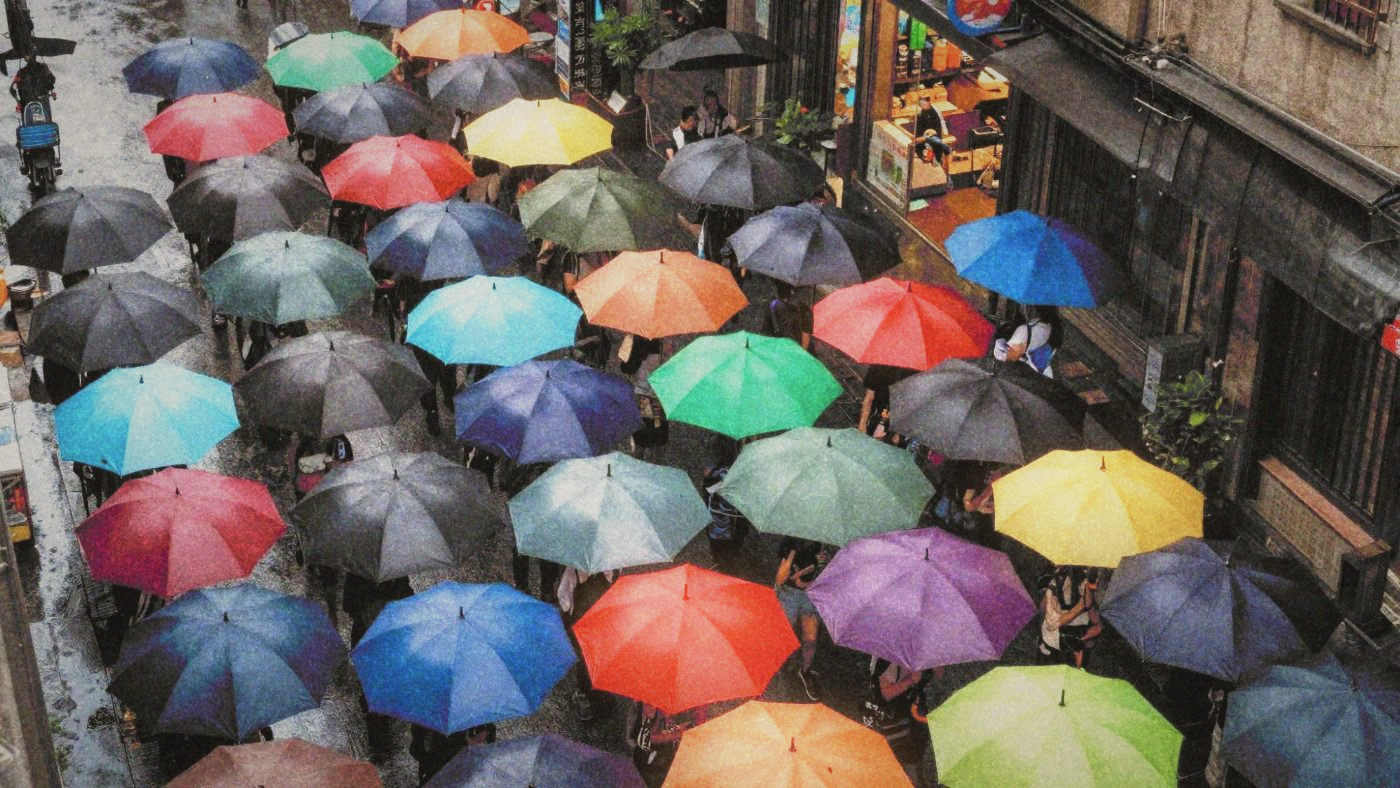
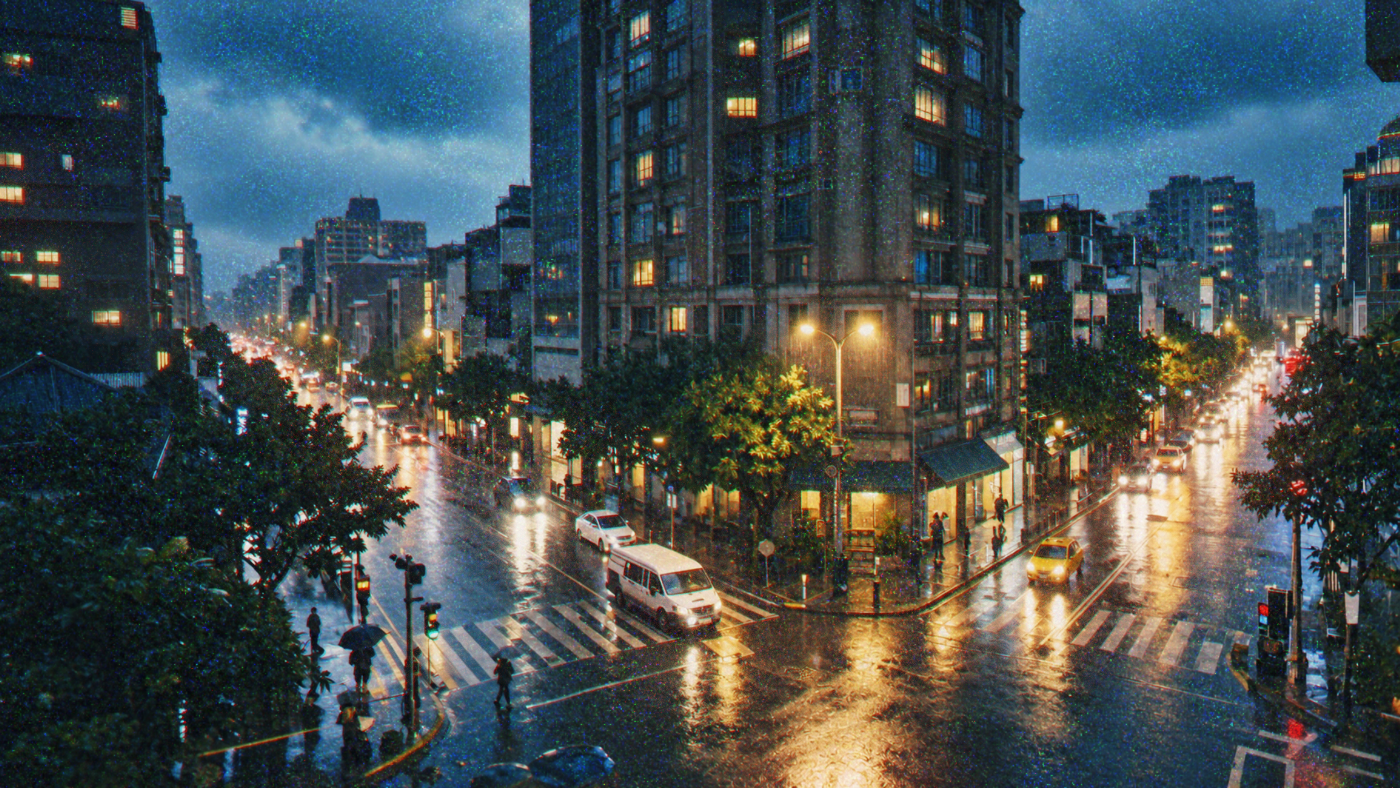
Because that’s the thing about living in Taiwan. It’s not that it rains sometimes. It’s that it rains constantly, unpredictably, and often sideways. Taipei averages roughly 165 to 200 rainy days per year depending on how you count them. The plum rain season runs from May through June, a low grey ceiling of drizzle that lasts for weeks. Then typhoon season takes over from July through October, bringing the kind of downpours where your umbrella becomes a decorative object. And scattered between those two official seasons, there’s just… rain. A lot of rain.
I spent my first two years here doing what everyone does: getting caught, getting soaked, buying cheap umbrellas that broke in the wind, and telling myself I’d figure it out later. Eventually I did figure it out, mostly through trial and expensive error. Here’s what actually works.
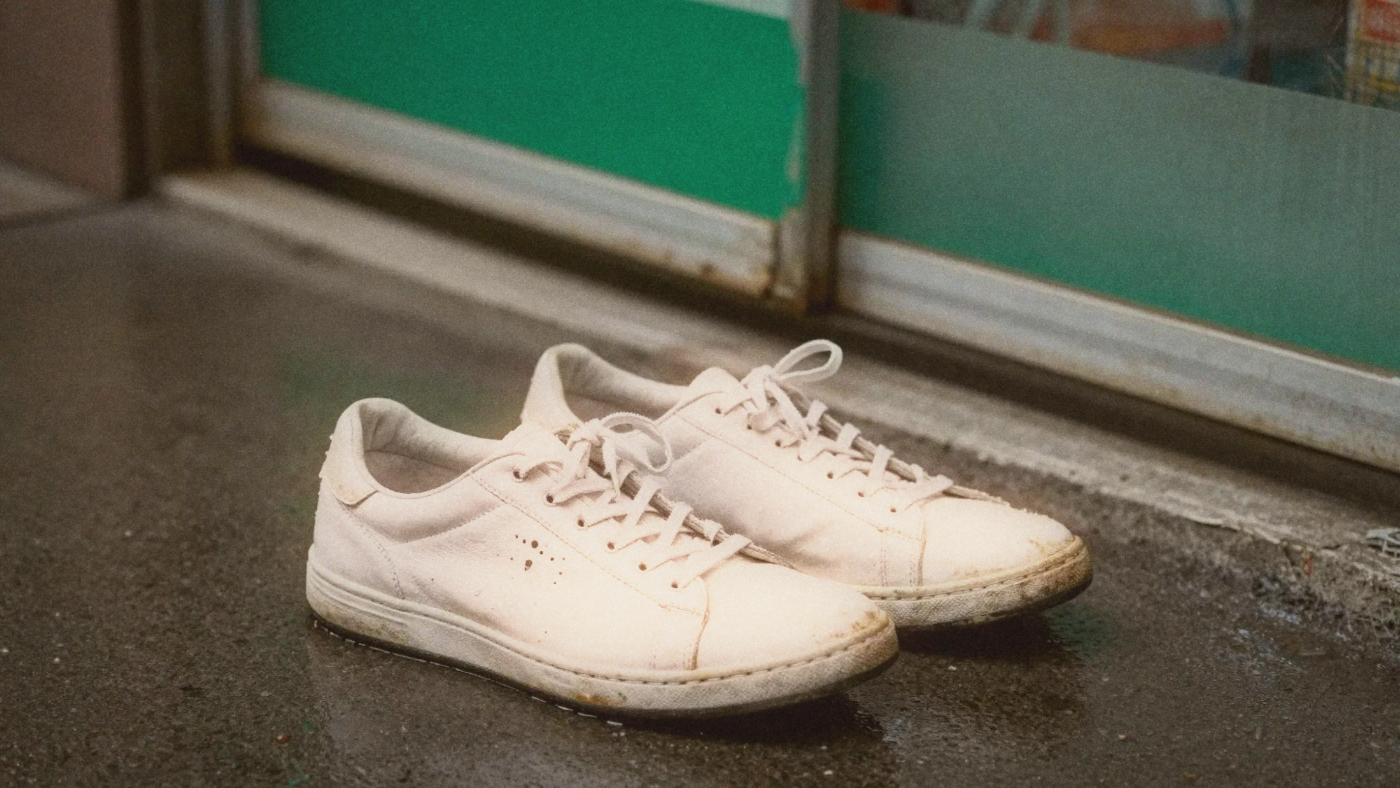 FIRST SIGHTWEBGLRuined white leather sneakers on Zhongxiao East Road: the moment rain gear stopped being optional. · Color and grain by First Sight · Portra 400. · First Sight 色彩與顆粒調校 · Portra 400
The shoe problem (and why it matters most)
Everything starts from the feet. You can wear a waterproof jacket and carry an excellent umbrella, but if your shoes are soaked through you’re miserable for the rest of the day. I’ve tried to solve this problem four different ways over the years, and each taught me something.
Palladium Pampa waterproof boots turned out to be the right answer for daily life. They’re everywhere in Taiwan for a reason. The waterproof versions (look for the “WP” or “WP+” in the name) run about NT$2,300 to NT$3,600 at ABC-Mart, the official Palladium Taiwan site, or on momo. They look like regular boots, not rain boots. You can wear them to the office, to dinner, to a bar. The ankle-height ones handle all but the deepest puddles, and they’re light enough that you don’t feel like you’re hiking to your MRT stop. I own two pairs now: a black pair for work days and a grey pair for weekends. That’s not a flex. That’s admitting I will never trust regular shoes in a Taipei summer again.
Hunter rain boots are the other obvious option, and they’re beautiful, and I bought a pair of the Original Tall boots from the Shin Kong Mitsukoshi counter. They cost around NT$4,500 to NT$6,000 depending on the model. For actual typhoon-day commutes, they’re unbeatable. Nothing gets in. But here’s the honest truth: I wear them maybe ten days a year. They’re too hot for anything above 28 degrees, they’re heavy, and pulling them on and off at the office is a whole production. For serious storm days, great. For the other 155 rainy days, Palladium wins.
Waterproof shoe covers are the budget hack I wish I’d known about sooner. NT$150 to NT$300 on momo or at any Daiso, they’re silicone or PVC sleeves that slip over your regular shoes. They look ridiculous. They work perfectly. I keep a pair folded in my work bag from May through October.
The wrong answer, which I tried first, was “waterproof spray.” I Scotchguarded a pair of canvas sneakers and felt very clever about it until the first real rain, when the spray slowed the soaking by about forty-five seconds. Waterproof spray works on light drizzle. Taiwan doesn’t really do light drizzle.
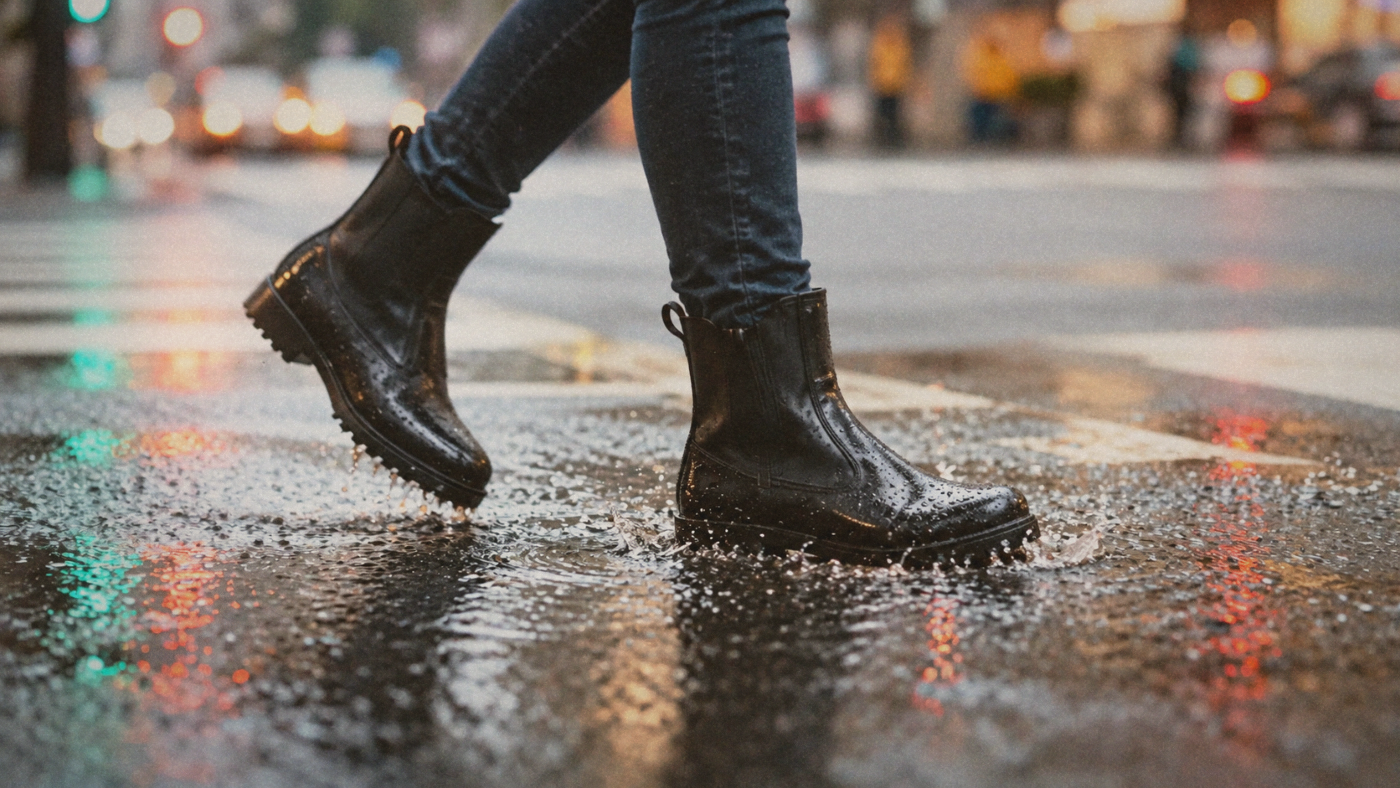 FIRST SIGHTWEBGLAnkle-height waterproof boots are the sweet spot between protection, comfort, and not looking like you’re about to cross a rice field. · Color and grain by First Sight · Portra 400. · First Sight 色彩與顆粒調校 · Portra 400
The jacket question
Jackets in Taiwan rain season aren’t really about keeping warm. They’re about keeping dry while not overheating in 85% humidity. This is the tension that makes the whole problem harder than it sounds.
UNIQLO Blocktech parka: NT$1,990. This is the one I’d buy first if I were starting from zero. Water-resistant (not fully waterproof, an important distinction), windproof, breathable enough for a humid commute. The 3D-cut version fits well without looking boxy. It handles 80% of Taipei rain situations.
The North Face DryVent jacket: NT$3,999 to NT$4,999. The step up. Fully waterproof, taped seams, performs well in serious rain. I’ve worn one through a full typhoon-day commute and arrived dry. The trade-off is breathability.
Arc’teryx Beta series: NT$15,000 to NT$22,000. I’m including this because people ask. Yes, they’re the best waterproof jackets you can buy. But the price gap between a Blocktech and a Beta is roughly NT$15,000, and the performance difference doesn’t match that gap for daily urban use.
Decathlon’s Quechua waterproof jackets: NT$599 to NT$1,999. The sleeper pick. Surprisingly functional rain jackets at prices that feel like a mistake.
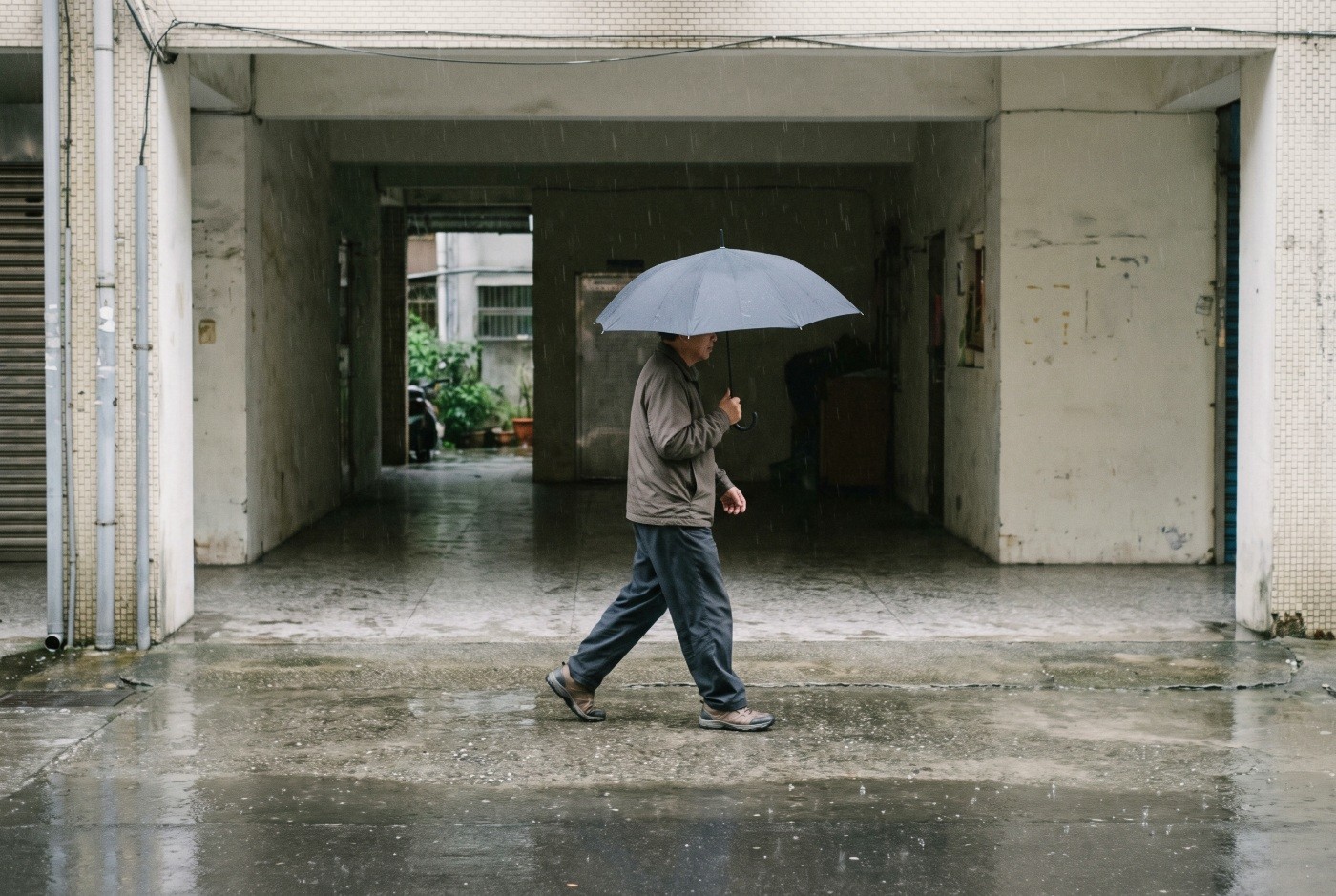 FIRST SIGHTWEBGLIllustration: Walking with an umbrella past a sheltered arcade. · Color and grain by First Sight · Superia. · First Sight 色彩與顆粒調校 · Superia
The scooter problem
This deserves its own section because roughly 14 million scooters are registered in Taiwan, and every single one of their riders needs to deal with rain.
The two-piece rain suit is the standard. A jacket and matching pants, usually stored in the scooter’s underseat compartment. Brands like Outperform and the various options at motorcycle gear shops range from NT$600 to NT$2,500. A proper two-piece suit from one of the motorcycle gear shops is one of those purchases where spending NT$1,500 instead of NT$100 changes the experience completely.
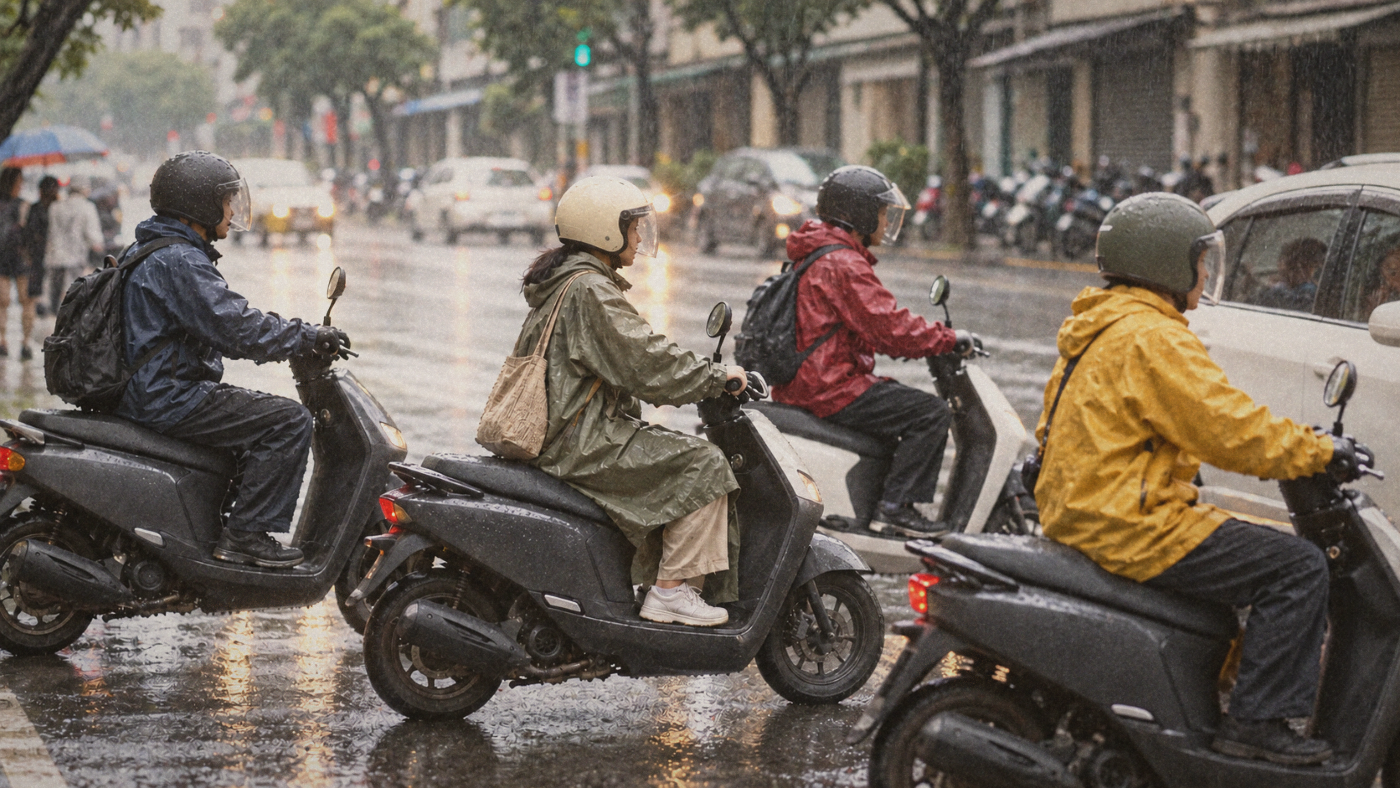 FIRST SIGHTWEBGLRain protection needs to cover the rider while seated, including knees, ankles, and the gap between jacket and trousers. · Color and grain by First Sight · Portra 400. · First Sight 色彩與顆粒調校 · Portra 400
Bags that won’t betray you
I learned this one the hard way too. My laptop died during typhoon season 2022 because I thought my canvas tote bag was “probably fine.” It was not fine. The repair cost me NT$12,000. A waterproof bag would have cost NT$1,500.
A waterproof backpack. The Taiwanese brand bitplay makes waterproof bags with their AquaSeal line that are genuinely well-designed. RAINS is available at select shops in Taipei and online, with backpacks running NT$3,000 to NT$5,500.
A rain cover for your existing bag. Most outdoor brands sell rain covers that fit over backpacks. NT$300 to NT$800 at Decathlon or on momo.
A dry bag for your electronics. Even if your bag gets wet, a NT$200 roll-top dry bag inside it keeps your laptop and phone safe.
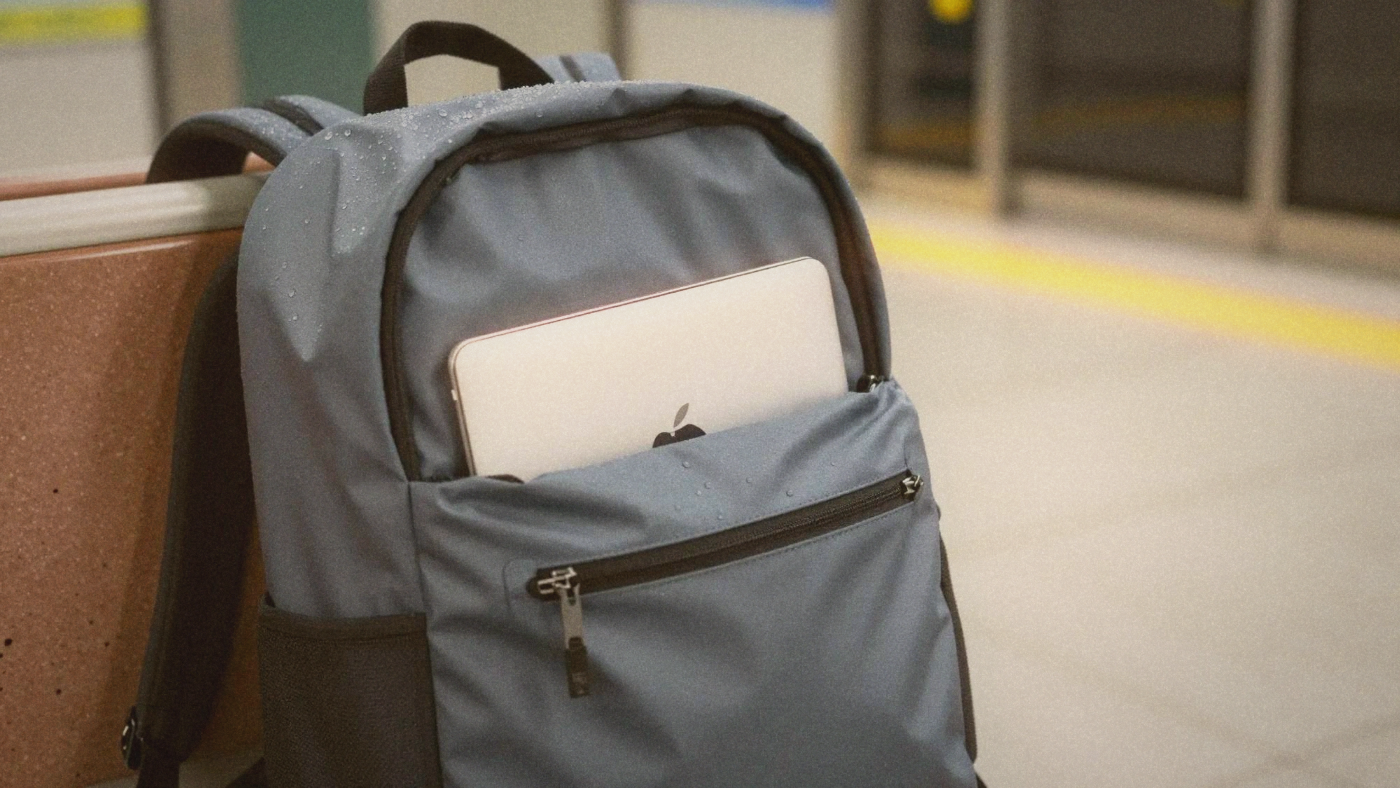 FIRST SIGHTWEBGLIf water beads on the surface instead of soaking in, your laptop has a much better chance of surviving typhoon season. · Color and grain by First Sight · Portra 400. · First Sight 色彩與顆粒調校 · Portra 400
The umbrella truth
Everyone in Taipei owns five umbrellas and can find zero of them when it starts raining. This is a universal experience.
Two things I’ve learned. First, the compact travel umbrellas are fine for drizzle and useless in wind. A proper full-size umbrella with fiberglass ribs survives the gusts that snap cheap umbrellas in half. Umbrella King is a Taiwanese brand with genuinely wind-resistant umbrellas in the NT$500 to NT$800 range.
Second, get a clear umbrella for typhoon-adjacent days. When rain is coming sideways and you need to actually see where you’re walking, a transparent dome umbrella outperforms everything else.
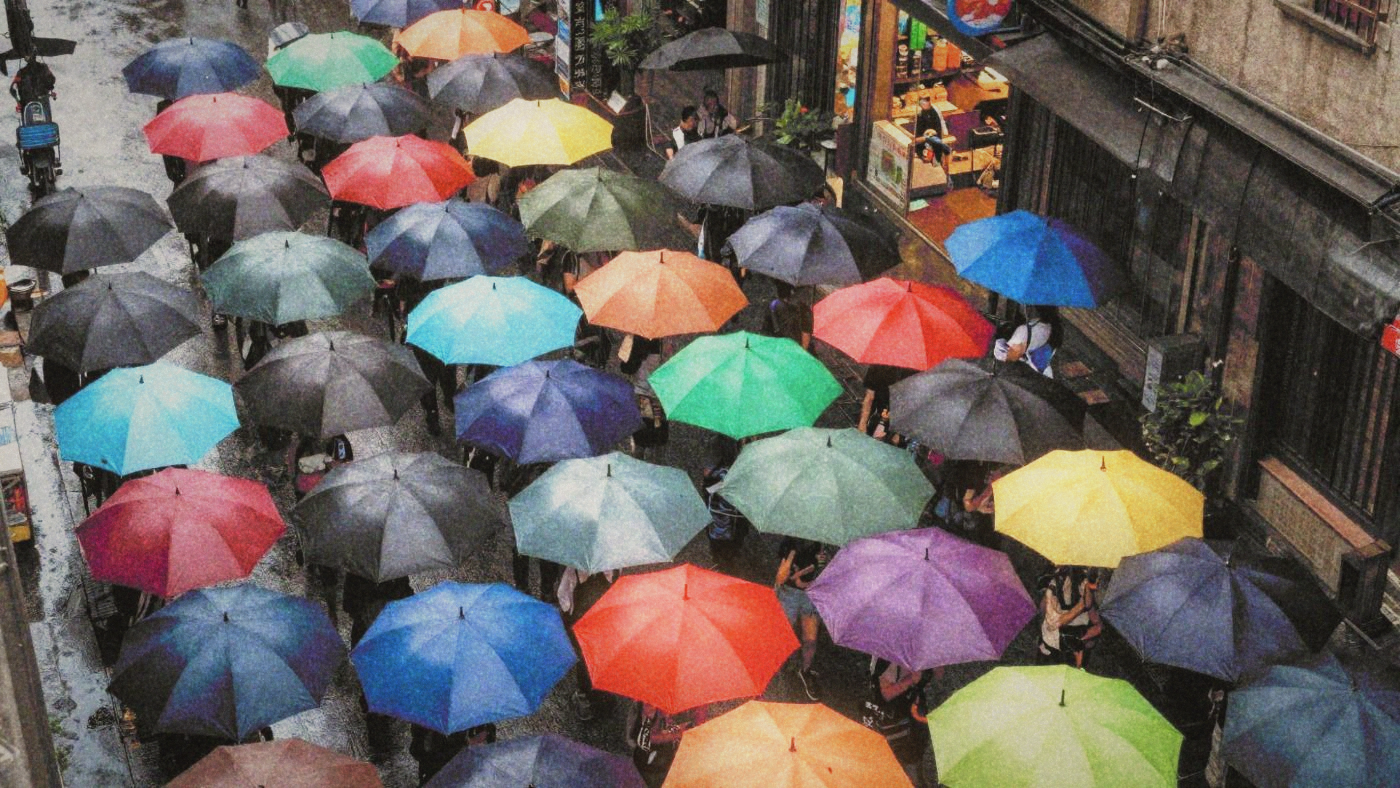 FIRST SIGHTWEBGLIn Taipei, the real umbrella upgrade is wind resistance and visibility, not just how small it folds. · Color and grain by First Sight · Portra 400. · First Sight 色彩與顆粒調校 · Portra 400
Putting it together: the actual system
After four typhoon seasons, here’s what I carry from May through October.
On regular rainy days (most days), I wear Palladium waterproof boots, regular clothes, and the UNIQLO Blocktech in my bag. That handles 80% of situations.
When the forecast says heavy rain or a typhoon is approaching, I swap to the The North Face jacket worn over my clothes, keep the Palladium boots, and throw a dry bag over my laptop inside my backpack.
For scooter commutes, the two-piece rain suit goes on over everything. Boots stay on underneath.
The total investment for this system, excluding the scooter gear: roughly NT$6,000 to NT$8,000. For something you’ll use 150 to 200 days a year, in a climate that will absolutely punish you for not being prepared, it’s the best per-use value of anything in my closet.
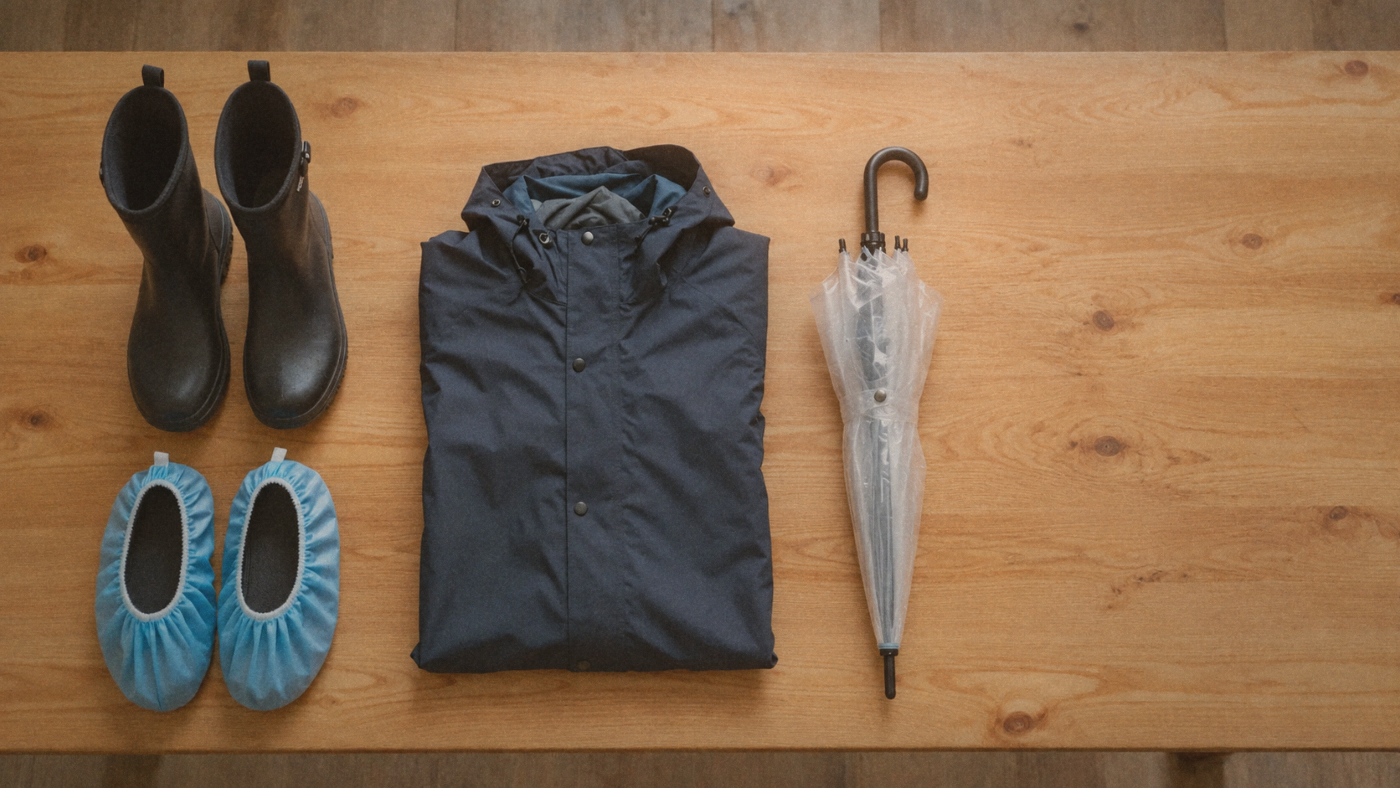 FIRST SIGHTWEBGLA simple, repeatable setup means you don’t have to think about the weather forecast every time you leave the house. · Color and grain by First Sight · Portra 400. · First Sight 色彩與顆粒調校 · Portra 400
Frequently Asked
Some links in this article are affiliate links. If you purchase through them,OQUA may earn a small commission at no extra cost to you. This helps support our editorial work. We only link to products and services we genuinely reference in our writing.
Comments (0)
Loading comments...