
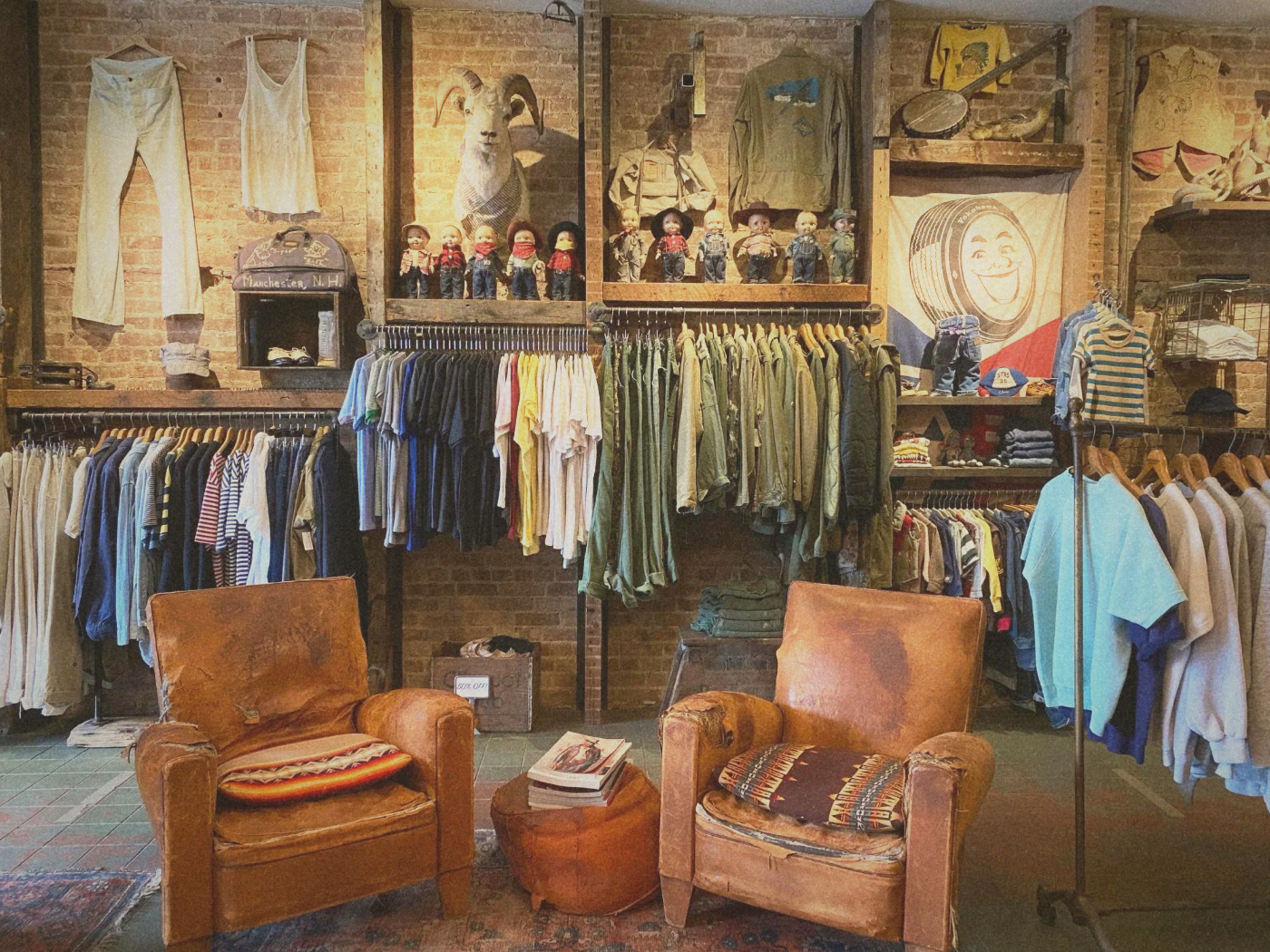
A jacket can look right on the hanger and wrong the moment you sit down. That is a good reason to leave time for trying things on, rather than trying to visit every vintage shop in Taipei before dinner.
For a first afternoon, keep the search around Chifeng Street. Choose one piece you would actually enjoy wearing: a roomy shirt, a skirt with a particular shape, or denim that works with the shoes you already own. Give yourself room to be surprised about the colour. Be less flexible about uncomfortable shoulders.
Two addresses to start with
A Prank Dolly lists its shop at 1F, No. 7, Lane 3, Chifeng Street, Datong District. Its official information gives 14:00–21:00, closed Tuesday and Wednesday, and directs visitors to Zhongshan MRT Exit 5. The shop describes its selection as clothing from the 1940s to the 1990s, for both men and women. Check its latest notice before leaving; these are published hours, not a promise about today's opening.
EWF Vintage's Chifeng district listing gives 1F, No. 3, Lane 49, Chifeng Street and daily hours of 13:00–21:00. Treat that as directory information to reconfirm. Its older online storefront returned an unavailable notice during our October 10 check. That does not establish that the physical shop is closed, but it means this guide cannot verify live stock or online ordering there.
Put both addresses in your map before setting out. Start with the confirmed opening that suits your day, then leave time to browse the streets between stops. If the second shop cannot confirm its hours, keep it optional. A two-shop afternoon that leaves you time to try clothes is more useful than six addresses treated as a race.
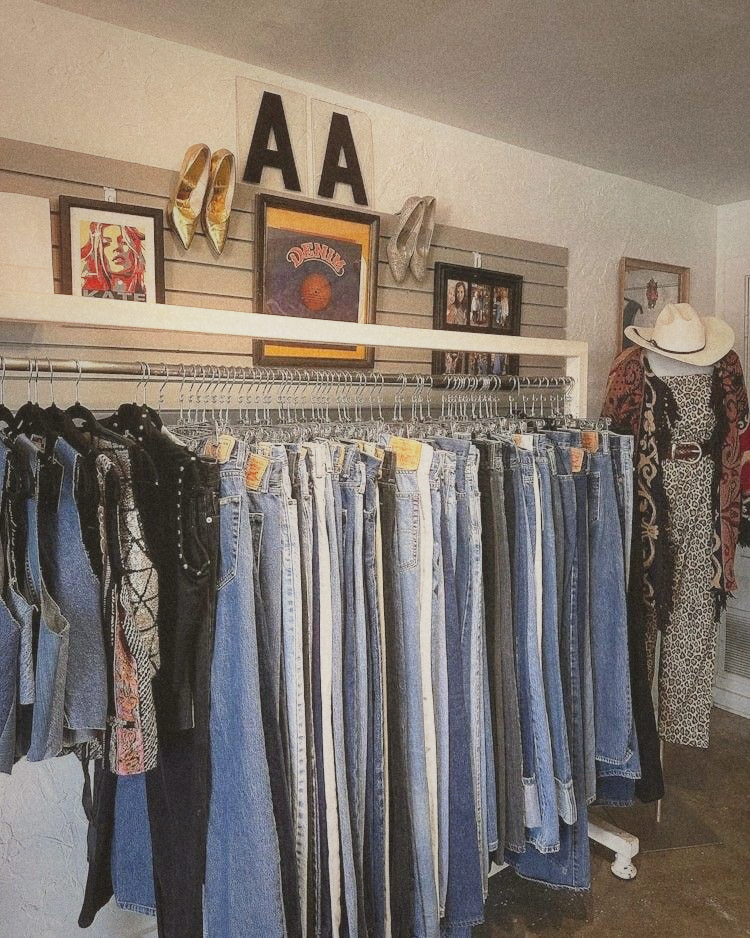
 FIRST SIGHTWEBGLIllustration: denim displayed on a wall. · Color and grain by First Sight · Portra 400. · First Sight 色彩與顆粒調校 · Portra 400
Look inside the garment
Take the piece off the hanger and check the collar, cuffs, underarms, lining and seams. Try the zip and buttons gently. Ask about a repair or mark before deciding that it is harmless. A photograph of the front cannot tell you how the lining feels or whether the waistband digs in when you sit.
Bring the dimensions of a garment that fits you well. Compare shoulder width, chest, waist and length rather than relying on a label size alone. For trousers and skirts, sit down and take a few steps during the fitting. If the shop does not offer fittings, ask for measurements and decide whether that uncertainty is worth the price.
An interesting label is a starting point for a question, not proof of an exact year or authenticity. Ask what the seller knows about the piece and what supports that description. If a designer name is the reason you are paying more, do not substitute an attractive shop display for evidence.
Make the price mean something
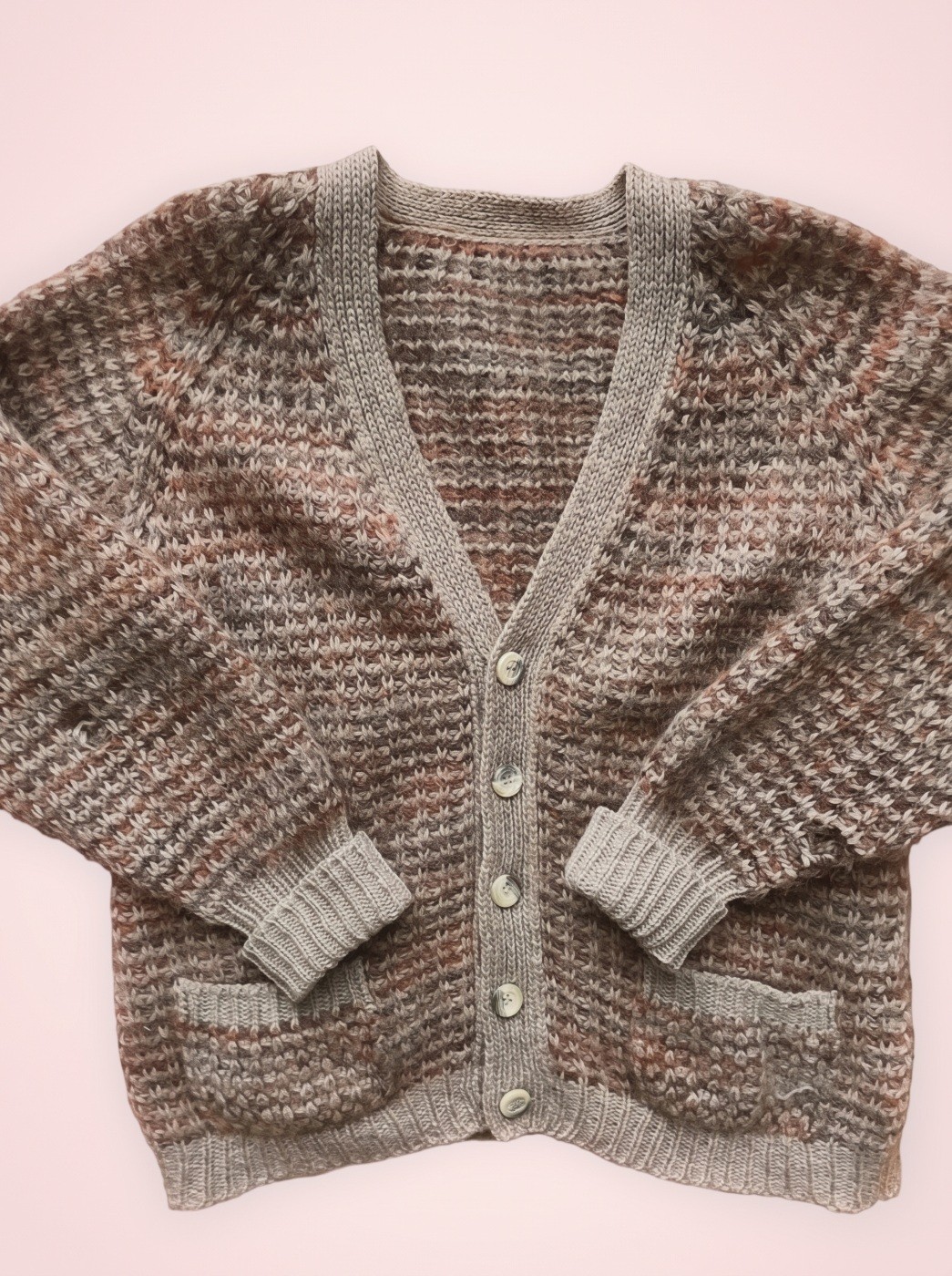 FIRST SIGHTWEBGLIllustration: a knitted cardigan. · Color and grain by First Sight · Portra 400. · First Sight 色彩與顆粒調校 · Portra 400
Set a total budget in NT$, including any cleaning or alteration you would need. For example, NT$2,000 can be your personal ceiling, not a claim about the usual price of Taipei vintage. Ask for an alteration quote before paying if the purchase only works after changing the fit. The cheapest piece becomes expensive when it never leaves the cupboard.
Ask which condition issues have already been disclosed, whether the item has been cleaned, and what the shop's return or exchange process is. Keep the receipt and any written description. In-store and online purchases are different situations; this guide does not assume every secondhand sale follows one blanket no-return rule.
Give the outfit one clear decision
A patterned shirt can work with trousers you already wear. A full skirt might only need a plain, compact top. Try the piece with an ordinary part of your wardrobe in mind, then ask whether the colour or shape still interests you without the shop's styling around it.
For a jacket, bring the layer you expect to wear underneath. For a hemline, wear your usual shoes. There is pleasure in finding something unexpected, but you do not need to invent a different weekly routine to justify taking it home.
 FIRST SIGHTWEBGLIllustration: shirts on a clothing rack. · Color and grain by First Sight · Portra 400. · First Sight 色彩與顆粒調校 · Portra 400
Before the next outing
Read the care label before washing; if it is missing or the fabric is uncertain, ask the seller or a suitable cleaner. Our vintage clothing care guide is the next read, while the repair directory covers shoes, umbrellas and bags. It is not a promise that every listed repairer alters clothing.
Addresses and published hours were checked on October 10, 2026. This is a desk-researched shopping guide, not a report of shop visits or tested purchases. Earlier unsupported market forecasts and reported scenes have been removed. Illustrations do not depict the named shops or their current stock.
Comments (0)
Loading comments...