

This protocol is installable. One tap puts all 3 weeks on your calendar, each linking back to this guide.
Install this week →Why Walk?
Sitting meditation gets all the attention. But for a lot of people, sitting still for twenty minutes feels like punishment. The mind races harder when the body is locked in place.
Walking meditation offers a way in. The body moves, the mind settles. It's not a lesser form of practice. In Theravāda Buddhist traditions, walking meditation (cankama) is considered equal to sitting. Monks alternate between the two throughout intensive retreats, sometimes spending more hours walking than sitting.
The appeal is straightforward: movement gives the mind something to anchor to. Each step becomes the object of attention, the way breath does in seated practice.
What the Research Shows
Neuroscience has taken an interest in walking meditation over the past decade. Studies on mindful walking have shown reductions in cortisol levels and improvements in reported anxiety and mood. Research out of Thai universities, where walking meditation is a cultural practice with deep roots, has found measurable drops in blood pressure and stress markers among regular practitioners.
A growing body of work suggests that combining physical movement with focused attention produces effects that neither exercise nor meditation achieves on its own. The mechanism isn't fully understood, but the overlap between rhythmic movement and attentional focus seems to engage the nervous system differently than sitting still.
None of this should be surprising. Humans evolved walking. We think well on our feet. The philosophical tradition of the peripatetics, the Japanese practice of shinrin-yoku, the long walking traditions of Chan and Zen monasteries: cultures worldwide figured this out long before fMRI machines confirmed it.
The Basic Technique
Walking meditation is simpler than most people expect. Here's the core practice:
Choose a path. You need about ten to twenty meters of unobstructed space. A hallway, a park path, a temple courtyard. You'll walk back and forth, not in circles.
Stand still for a moment. Feel the weight of your body through your feet. Notice the contact points: heel, ball, toes. Take two or three natural breaths.
Begin walking slowly. Much slower than normal. The pace should feel almost absurdly slow at first. Lift one foot, move it forward, place it down. Then the other.
Focus on the sensations in your feet. The lifting, the moving, the placing. That's it. Three phases, repeating. When your mind wanders, notice it wandered, and return attention to the feet.
At the end of your path, stop. Stand for a breath or two. Turn around deliberately. Begin again.
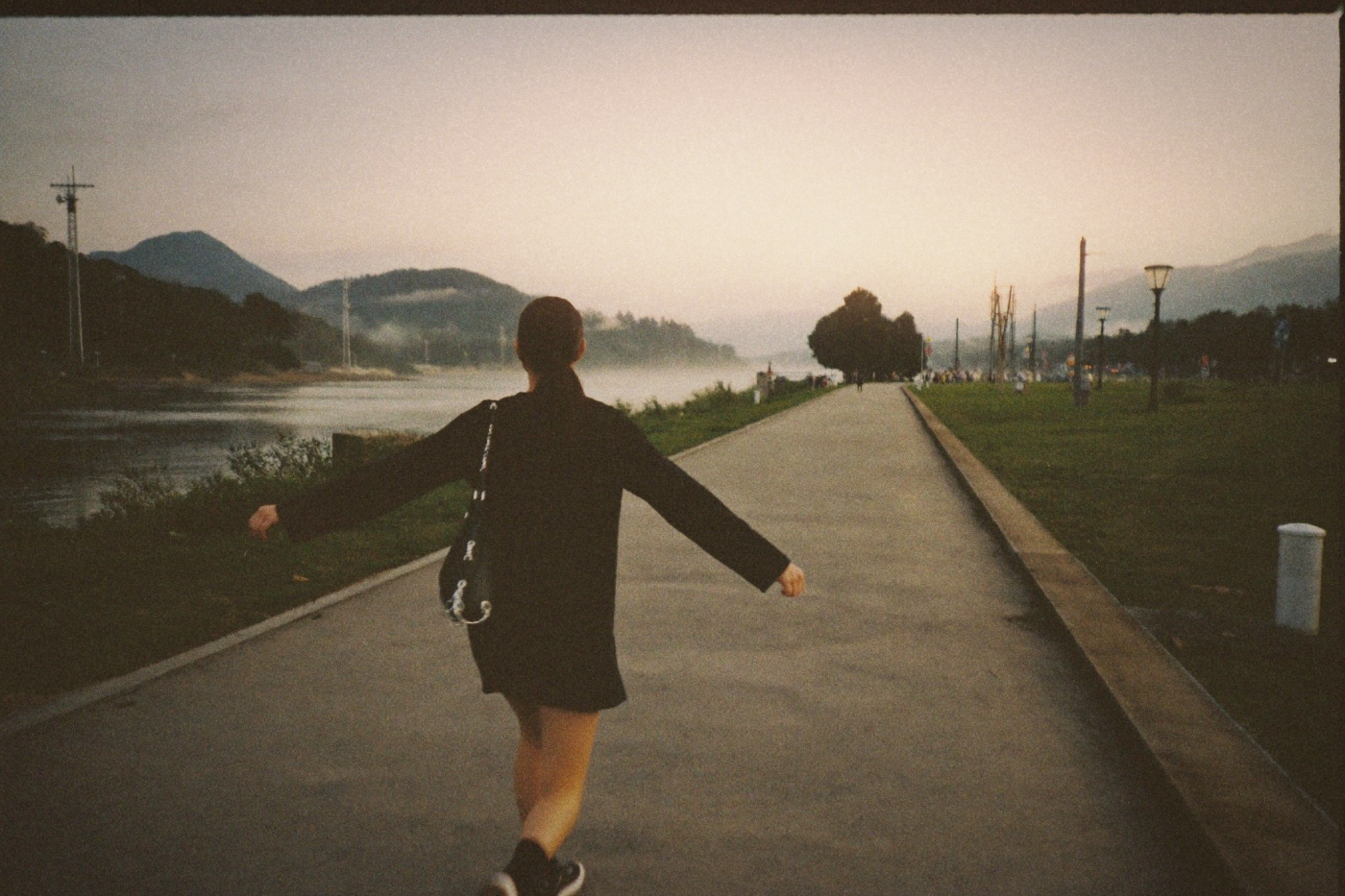
 FIRST SIGHTWEBGLOne slow step at a time, before the city wakes. · Color and grain by First Sight · Portra 400. · First Sight 色彩與顆粒調校 · Portra 400
Start with ten minutes. Work up to twenty or thirty if you want, but ten minutes done with genuine attention is worth more than forty minutes of distracted pacing.
Three Levels of Detail
Traditional walking meditation instruction breaks the practice into levels of attentional detail:
Level one: Simple noting. Just know that you're walking. Left foot, right foot. This is where everyone starts.
Level two: Three-part noting. Lifting, moving, placing. Each foot, each step. This requires slower walking and tighter attention.
Level three: Six-part noting. Intending, lifting, moving, lowering, placing, shifting weight. This is monastery-speed walking. A single step might take five seconds. Most people find this level requires weeks of practice to sustain.
There's no rush to advance. Level one, done consistently, is a complete practice.
Common Mistakes
Walking too fast. If you're moving at anything close to normal walking speed, you're probably too fast. Slow down until it feels weird. That's about right.
Looking around. Keep your gaze soft, directed at the ground a meter or two ahead. You're not sightseeing. You're practicing.
Overthinking the technique. The instructions are simple on purpose. Lift, move, place. You don't need to visualize energy or recite mantras. Just feel your feet.
Treating it as exercise. This isn't a mindful stroll. The slow, deliberate pace serves a purpose: it forces attention. A pleasant walk through the park is wonderful, but it's a different activity.
Giving up because the mind wanders. The mind will wander constantly, especially in the first few weeks. That's the practice. Notice the wandering, return to the feet. Every return is a repetition, like a bicep curl for attention.
Adapting It to Real Life
The formal practice described above is the foundation. But walking meditation also adapts to daily life in ways that sitting meditation doesn't.
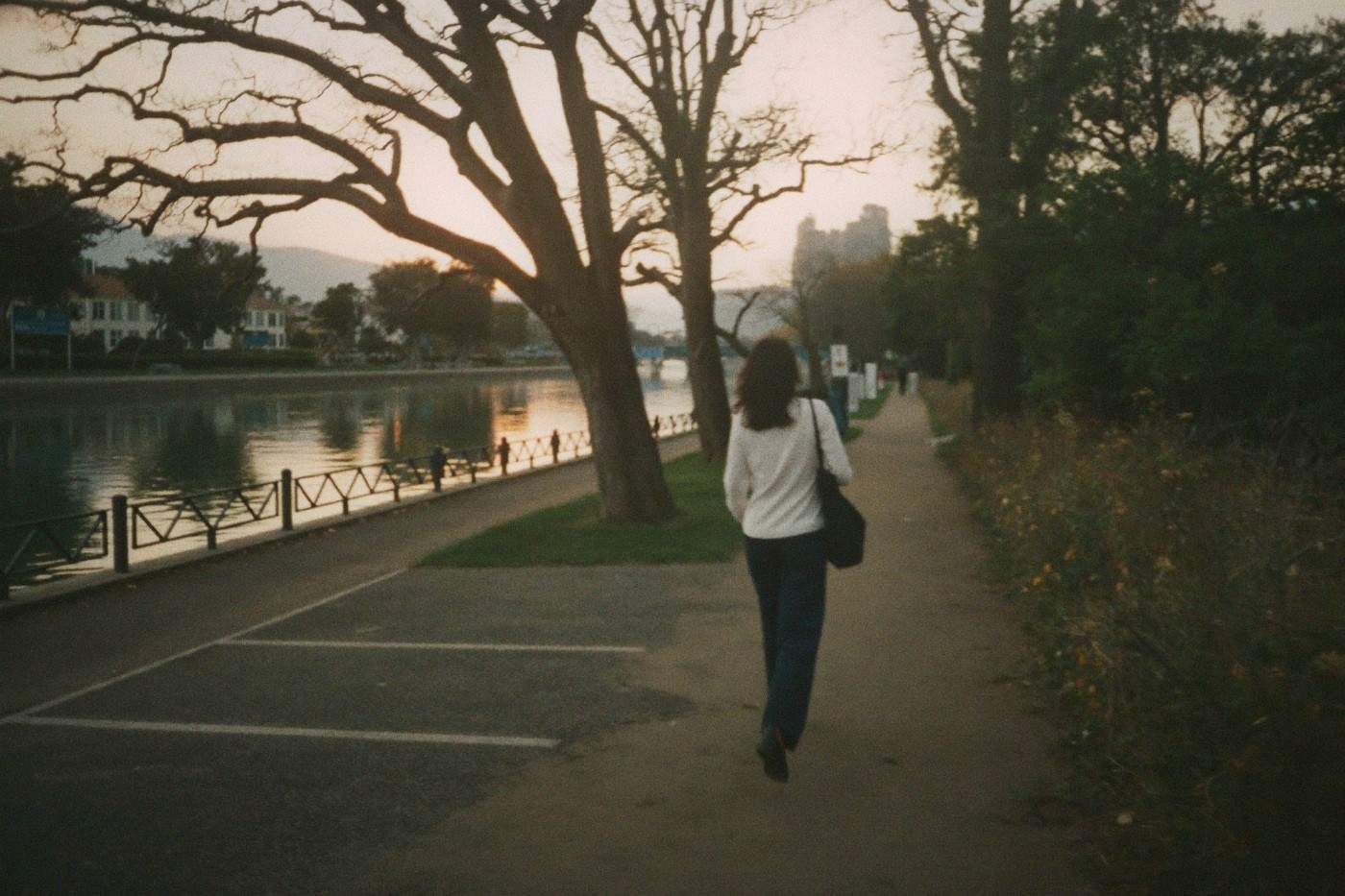 FIRST SIGHTWEBGLOne slow step at a time, before the city wakes. · Color and grain by First Sight · Portra 400. · First Sight 色彩與顆粒調校 · Portra 400
The commute. Pick one block of your daily walk and do it at reduced speed with full attention on your feet. You don't need to crawl. Even a 30% reduction in pace with genuine attention to each step counts.
Waiting. Standing in line at 7-Eleven, waiting for the MRT, queuing at a lunch spot: these are micro-practice opportunities. Feel your feet on the ground. Notice your weight distribution. Ten seconds of grounded attention breaks the cycle of phone-scrolling and mental chatter.
Stairs. Stairwells are underrated meditation spaces. The physical complexity of climbing stairs naturally draws attention to the body. Take the stairs at your office or apartment building and feel each step.
After sitting. If you have a sitting meditation practice, try five minutes of walking meditation immediately after. The transition helps integrate the calm of sitting into movement.
Walking Meditation in Taiwan
Taiwan is unusually well-suited to walking meditation, partly because of climate, partly because of infrastructure, and partly because Buddhist practice is woven into daily life here.
Urban Routes in Taipei
大安森林公園 (Daan Forest Park). The perimeter path is flat, shaded, and long enough for extended practice. Early mornings before seven, the park is quiet enough that slow walking doesn't feel out of place. You'll share the path with tai chi practitioners and elderly walkers doing their own contemplative thing.
河濱公園 (Riverside Parks). The bike and walking paths along the Keelung and Xindian rivers offer long, uninterrupted stretches. The Guting to Gongguan section along the Xindian River is especially calm on weekday mornings. Flat terrain, wide paths, river sounds.
象山步道 (Elephant Mountain Trail). Less obvious for walking meditation because of the crowds and the climb. But early on weekday mornings, the lower sections of the trail are quiet. The stone steps enforce a natural slow pace. The forest canopy overhead helps narrow attention.
陽明山 (Yangmingshan). The 二子坪步道 (Erziping Trail) is barrier-free, flat, and runs through dense forest. It's one of the most naturally meditative paths near Taipei. Cool even in summer, quiet on weekdays.
Temple Walks
Many Buddhist temples in Taiwan have walking meditation paths or gardens designed for contemplative walking. 法鼓山 (Dharma Drum Mountain) in Jinshan has dedicated walking meditation areas and occasionally offers guided walking practice for visitors. 中台禪寺 (Chung Tai Chan Monastery) in Puli incorporates walking meditation into its programs.
Even neighborhood temples (there are thousands) often have courtyards with enough space for a few minutes of slow walking. The incense, the quiet, the sense of being in a designated sacred space: these contextual cues help shift the mind toward practice.
Weather Considerations
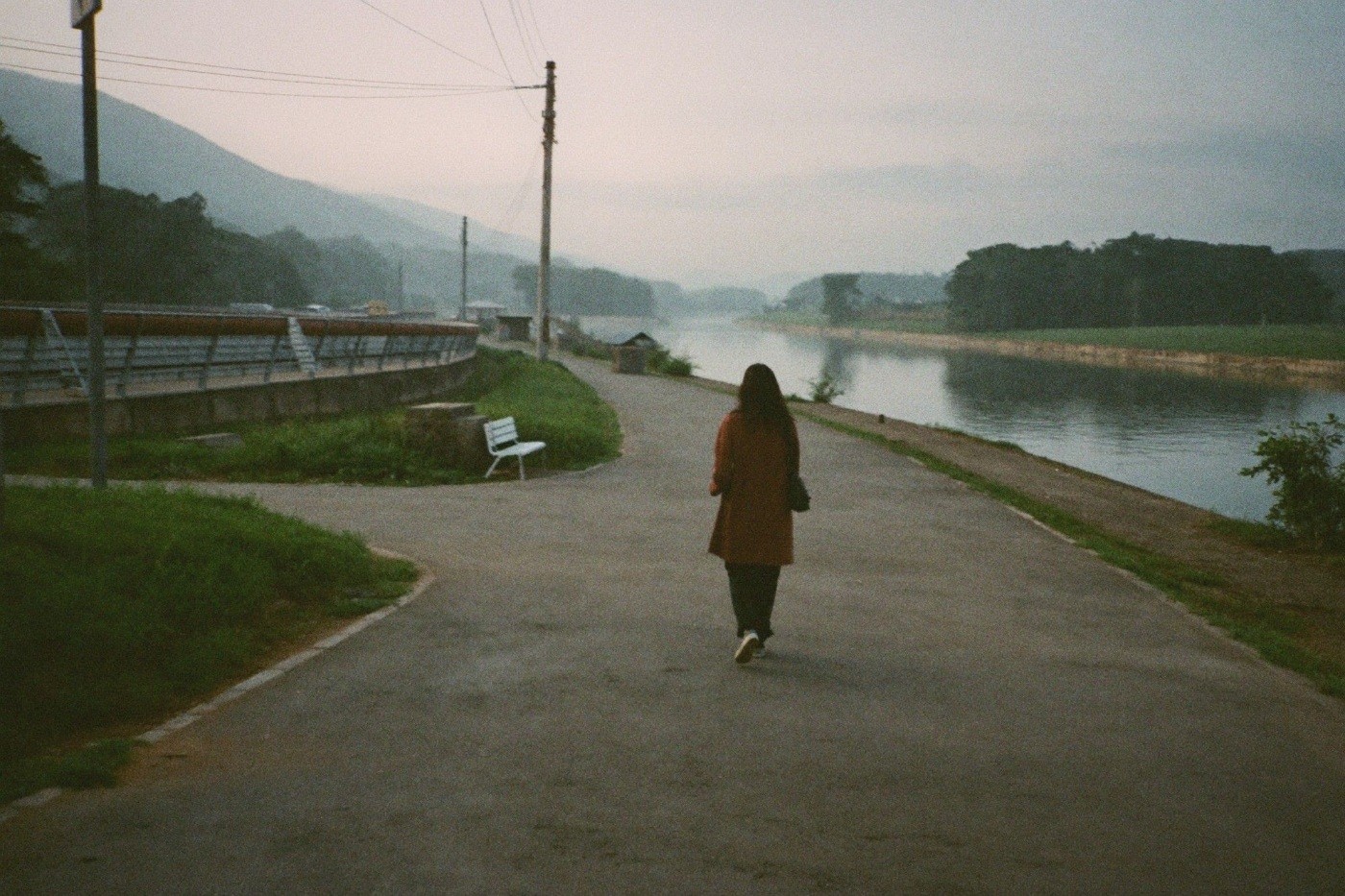 FIRST SIGHTWEBGLOne slow step at a time, before the city wakes. · Color and grain by First Sight · Portra 400. · First Sight 色彩與顆粒調校 · Portra 400
Taipei's humidity is a factor from May through September. Morning practice before nine avoids the worst of it. In the rainy season, covered temple walkways or indoor spaces (a long apartment hallway, an empty office corridor) work fine. Walking meditation doesn't require nature. It requires attention.
Winter in Taipei is mild enough for outdoor practice year-round. The brief cold snaps in January and February actually sharpen attention. Cold feet are very easy to notice.
Building a Consistent Practice
The single most important factor is consistency, not duration. Ten minutes daily beats an hour on weekends. Here's a realistic approach:
Week one. Five minutes of formal walking meditation, once a day. Use a timer. Pick the same location each time if possible.
Weeks two through four. Extend to ten minutes. Add one informal practice moment per day: one block of your commute, one stairwell, one waiting-in-line moment.
Month two onward. Fifteen to twenty minutes of formal practice if it feels natural. Don't force the extension. Some people stay at ten minutes for years and that's fine.
Track what you notice, not what you achieve. There's no goal state. The practice is the noticing. Some days the mind is calm, some days it's chaos. Both are fine. The only failure is not showing up.
The Deeper Practice
Walking meditation, practiced consistently, changes your relationship with movement itself. Ordinary walking starts to feel different. You notice your feet on the ground more often. The shift from sitting to standing becomes a moment of awareness rather than an automatic transition.
This isn't mystical. It's the predictable result of training attention on a specific set of sensations thousands of times. The body learns what the mind practices.
In traditional Buddhist contexts, walking meditation serves as a bridge between formal practice and the rest of life. The goal was never to walk slowly forever. It was to bring the quality of attention cultivated in slow walking into everything: cooking, cleaning, talking, working.
That transfer is the point. Walking meditation is a practice for daily life because it trains you in daily life, using the most fundamental human movement as the vehicle.
Start with your feet. The rest follows.
Comments (0)
Loading comments...