
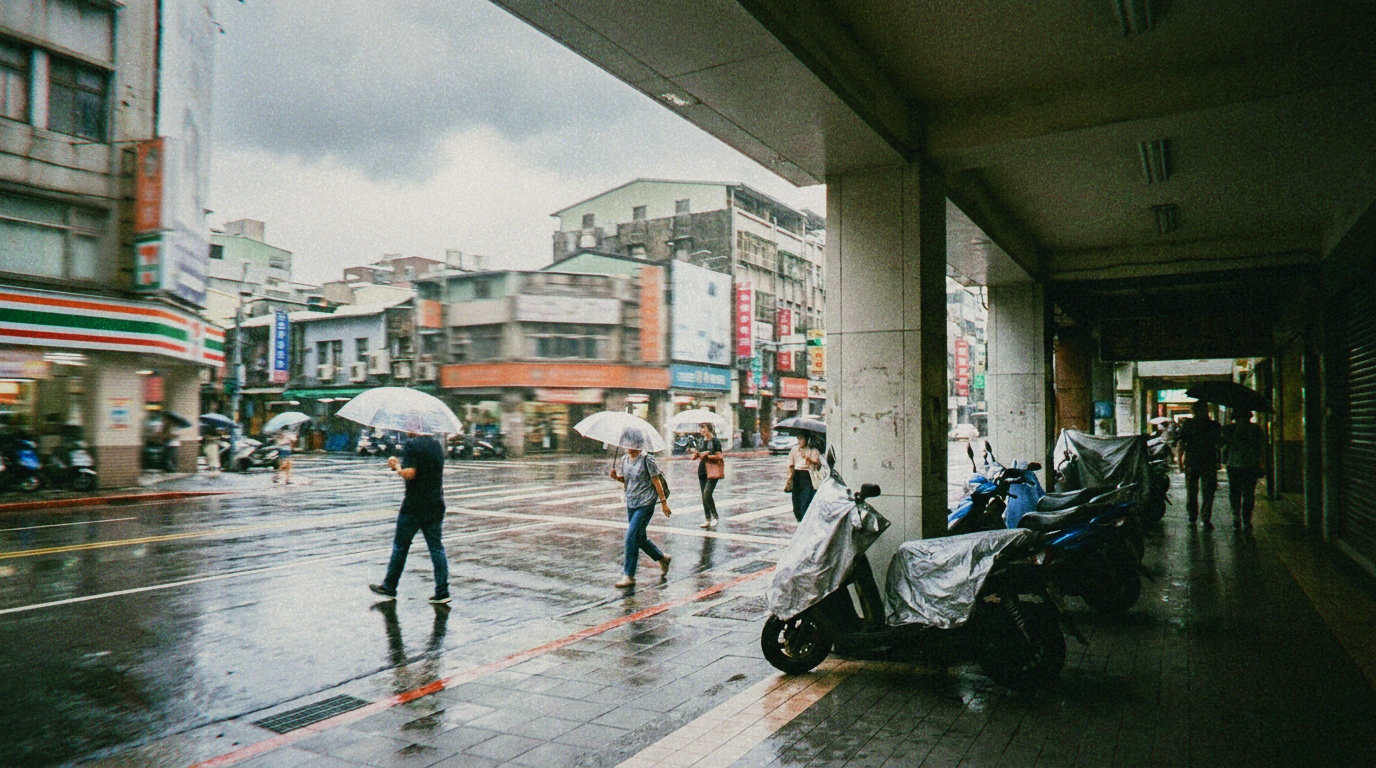
Typhoon season runs roughly July through September, and most visitors handle it in one of two wrong ways: they cancel the whole trip at the first orange blob on a weather map, or they ignore it and end up stranded on an island with no ferry. Neither is necessary. A typhoon is a two or three day event in a two week trip, and Taiwan is unusually good at telling you what is coming and when.
Read the warnings, not the forecast apps
The only source that matters is the Central Weather Administration. It issues two things you care about: a sea warning, which means the storm is affecting the waters around Taiwan, and a land warning, which means it is expected to affect land within about 18 hours. The sea warning is your planning signal. The land warning is your stay put signal. Everything else, including the colourful spaghetti models people share online, is noise until the CWA commits.
The second thing to watch is the daily announcement of suspended work and classes, decided city by city, usually the evening before. When your city announces a day off, expect a quiet, half shuttered version of it: convenience stores open, most restaurants closed, museums closed, public transport running but thinner.
What closes, in the order it closes
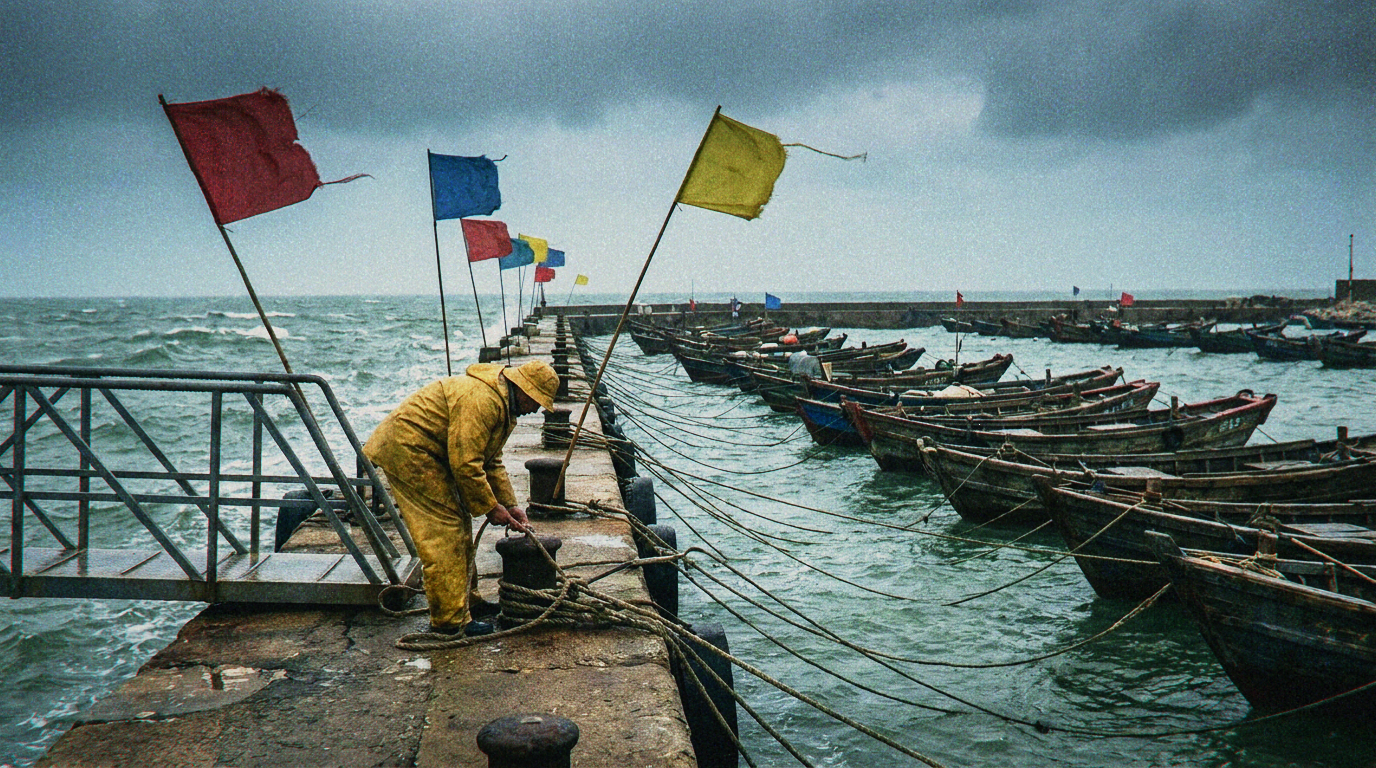
 FIRST SIGHTWEBGLThe ferries stop long before the wind arrives. Islands are the first thing to fall off an itinerary. · Color and grain by First Sight · Superia. · First Sight 色彩與顆粒調校 · Superia
Refunds and rebooking, the honest version
Transport is generous, accommodation is not. Trains and the HSR refund fully when services are suspended, and airlines waive change fees once a warning is issued. Hotels are a different matter: a typhoon is usually not a free cancellation reason, and many properties will simply hold you to the policy you booked. Two habits save money here. Book accommodation with free cancellation up to 24 or 48 hours during these months, even if it costs a little more. And when a storm is named, call the hotel directly rather than the booking site. A date shift is far easier to get than a refund.
The storm day itself
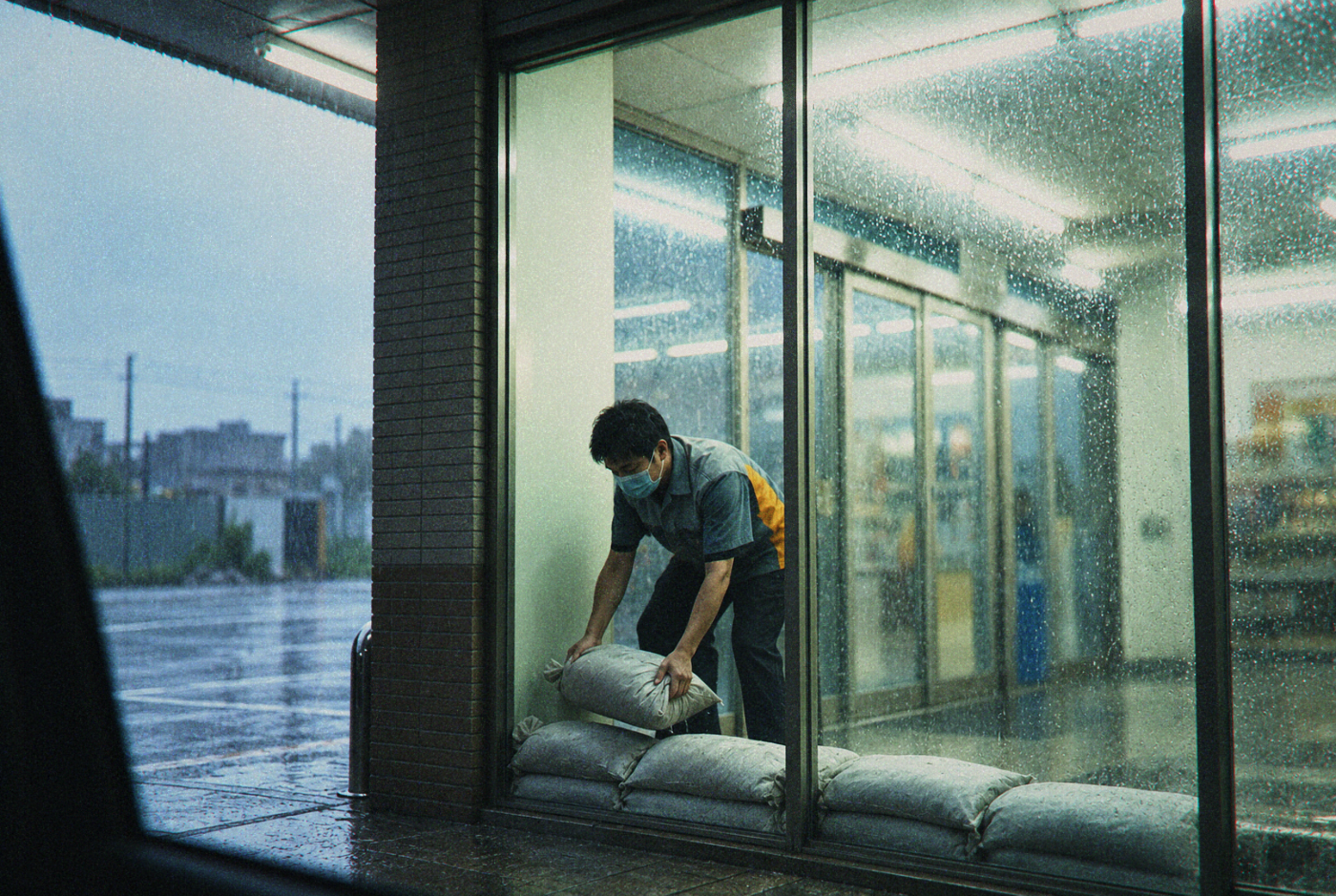 FIRST SIGHTWEBGLA worker stacks sandbags inside a rain-soaked storefront. · Color and grain by First Sight · Superia. · First Sight 色彩與顆粒調校 · Superia
Stock the room the night before, because on the day the shelves thin out and you will not want to be outside. Water, some fruit, instant noodles or a bakery run, a power bank, and something to do. Fill the kettle. Keep your phone charged. If the power goes, it usually returns within hours in cities. Do not go to the coast to look at the waves, which is how most typhoon injuries in Taiwan happen, and do not stand under the scaffolding and loose signage that lines older streets.
Indoor backup plans, by city
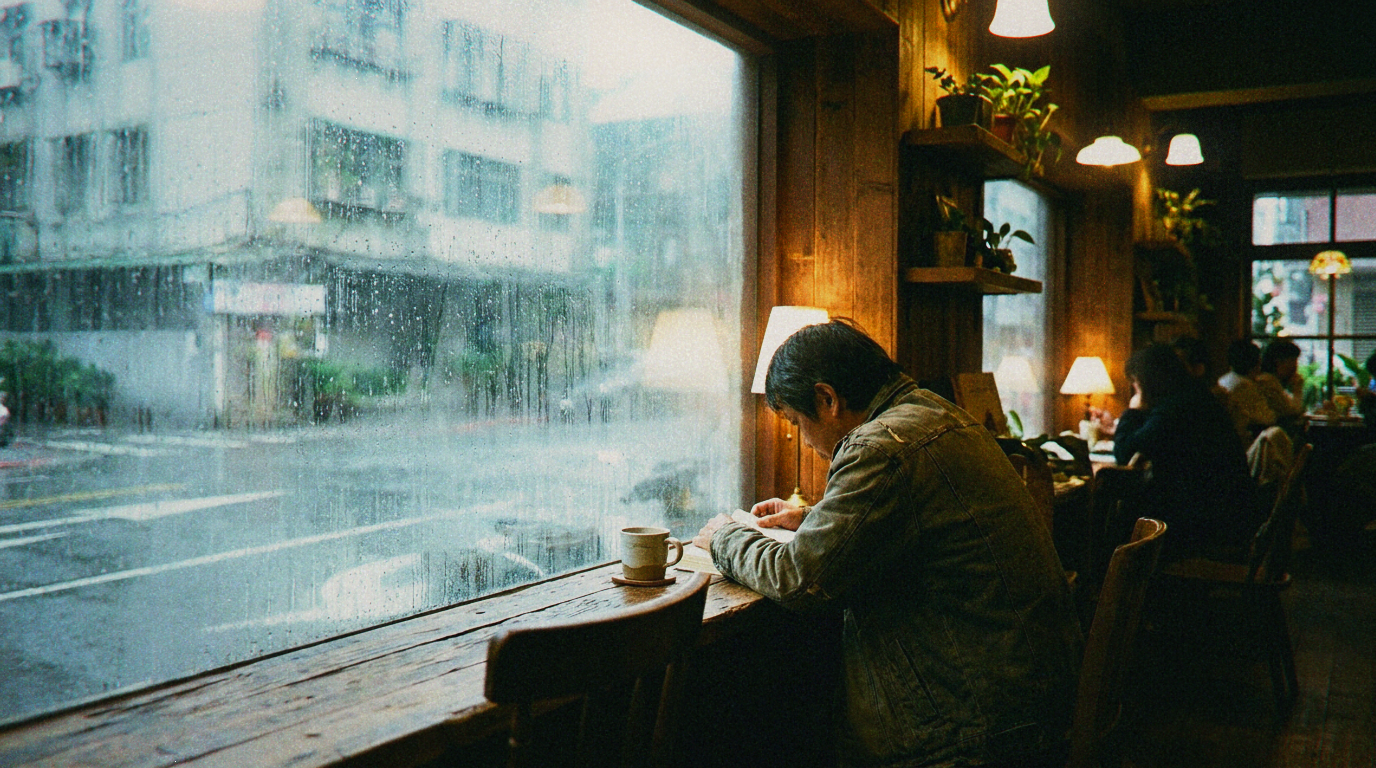 FIRST SIGHTWEBGLA storm day is a reading day. Plan one in advance and it stops being a loss. · Color and grain by First Sight · Superia. · First Sight 色彩與顆粒調校 · Superia
The sweet spots between storms
The day after a typhoon clears is often the best day of the summer. The air is washed clean, the humidity drops for a moment, and the mountains are visible from the city in a way they simply are not in August haze. Waterfalls run hard. The light is sharp. If you have any flexibility left in your itinerary, save the view you most want for the day after, not the day before.
Build the trip so that it bends. Keep the islands early or drop them, keep two indoor days unbooked, book flexible rooms, and let the CWA rather than the internet tell you when to move. Do that and typhoon season is simply the cheaper, emptier, greener version of Taiwan.
Comments (0)
Loading comments...