

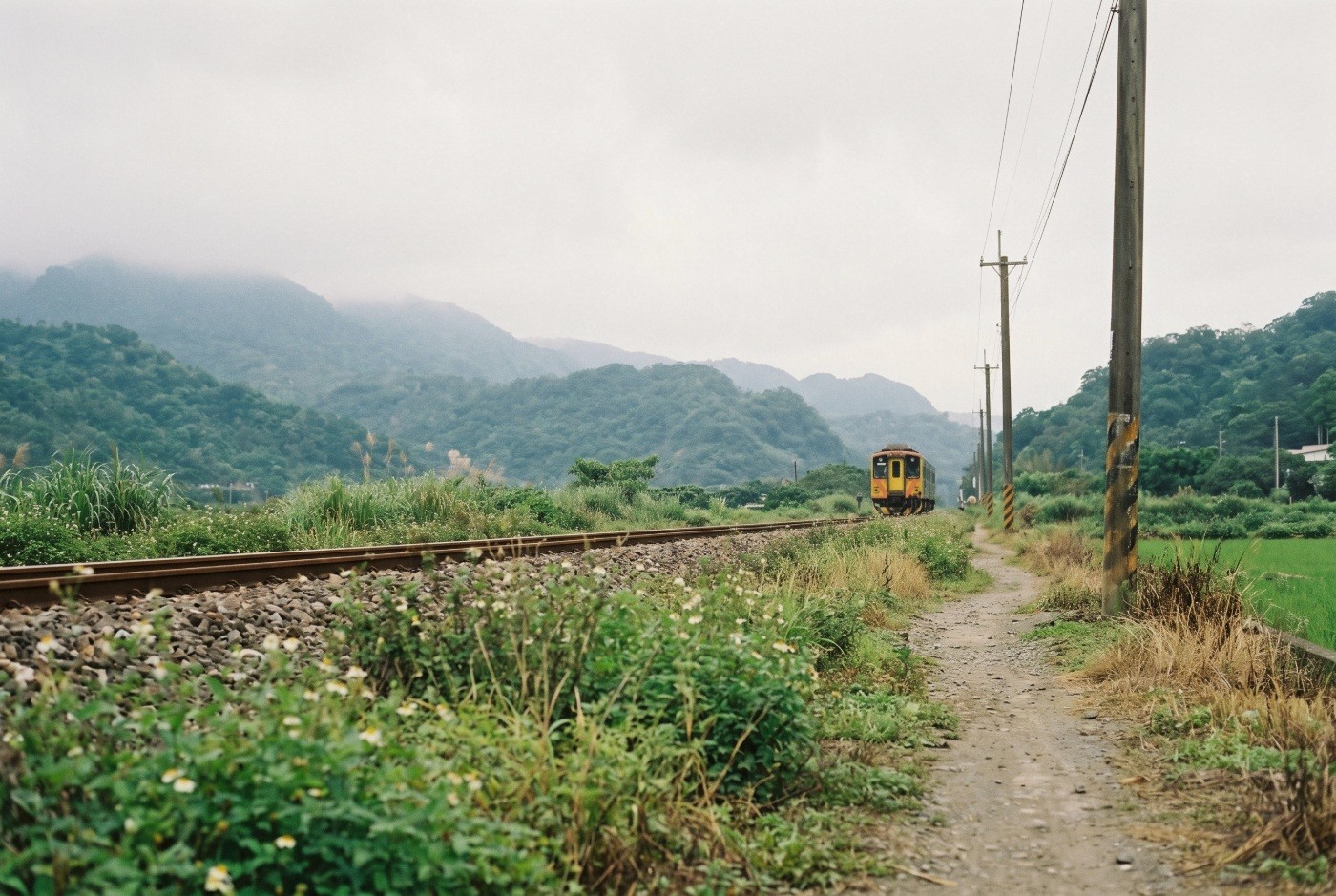
 FIRST SIGHTWEBGLIllustration: A local train approaching through green hills. · Color and grain by First Sight · Superia. · First Sight 色彩與顆粒調校 · Superia
The train from Taipei to Pingxi takes 50 minutes total and costs NT$56. It crosses a mountain, follows a river, and delivers you to a village where the main street is literally the train tracks. For a single-day escape from the city, nothing in northern Taiwan competes. The landscape shifts from urban into something ancient, switchback valleys, narrow river gorges, mountains so close you feel they're leaning in.
But most visitors do Pingxi wrong. They take the tourist bus, get dropped at Shifen (the most crowded stop), release a lantern, take a selfie, and leave by late afternoon. They miss the waterfall's real scale, the abandoned mining trails that ghost through the forest, the tiny village of Jingtong where the train station hasn't changed since 1929, the sound of the train approaching at walking pace, and the best meal of the day at a noodle shop that doesn't appear on Google Maps because it's been run by the same grandmother for 40 years.
This is the full-day route that starts early and ends at golden hour, with the kind of slowness that makes a day feel like you actually lived it.
What You Need to Know
Getting there: TRA local train from Taipei Main Station to Ruifang (40 min, NT$56), then transfer to the Pingxi Line, a tiny single-track branch line (30 min, NT$15–30 depending on final stop). Total time: 90 minutes, total cost: under NT$100.
Budget: NT$500–800 total including train, food, and one lantern release. A proper sit-down meal (not street food) is NT$200-400. When: Weekdays are essential. The Pingxi Line runs once per hour during daytime, and if you miss a train, you wait a full 60 minutes for the next one. Check the TRA website for current schedule before leaving. Weather: Pingxi sits in a mountain valley surrounded by cliffs. It rains significantly more than Taipei, bring a light rain jacket even if the Taipei forecast shows clear skies. The valley collects moisture.
Skip the tour bus: Tourist buses leave from central Taipei and drop you at Shifen, the most crowded stop, where you spend 45 minutes in a sea of people. Taking the train takes longer (90 minutes vs. 50) but costs less (NT$56 vs. NT$150), gives you control over your own timing, and puts you at less crowded stops first.
The Route: Station by Station
8:00am: Taipei Main Station (台北車站)
Take the local TRA train bound for Yilan or Hualien, NOT the express train. The express skips Ruifang. Look for the timetable posted at the station and choose a train marked 區間 (local). Buy an EasyCard if you don't have one (NT$100 deposit + stored value). Tap in at the gate. Find your platform, usually Platform 2 or 3 for the Yilan line. Sit anywhere; the train won't be crowded this early.
The train pulls out around 8:05-8:10 depending on which local you catch. Settle in. You're going to watch the landscape change for 40 minutes.
8:50am: Ruifang Station (瑞芳站)
Transfer to the Pingxi Line. Exit onto the platform and follow signs to the Pingxi branch line, it's usually marked clearly. Platform 1, across a short bridge. The Pingxi train is smaller than the main line train, narrow-gauge, and feels like it belongs in a children's book or a Studio Ghibli film. This is intentional, it was built in 1921 during the Japanese colonial period to haul coal and minerals, and it's barely been modernized since. The cars are compact, the windows open, and at certain points the train is so close to the river that you can hear the water.
Get a window seat on the right side for river views. The 30-minute ride to Jingtong is one of the best train rides in Taiwan.
9:20am: Jingtong Station (菁桐 - the last stop, best to start here)
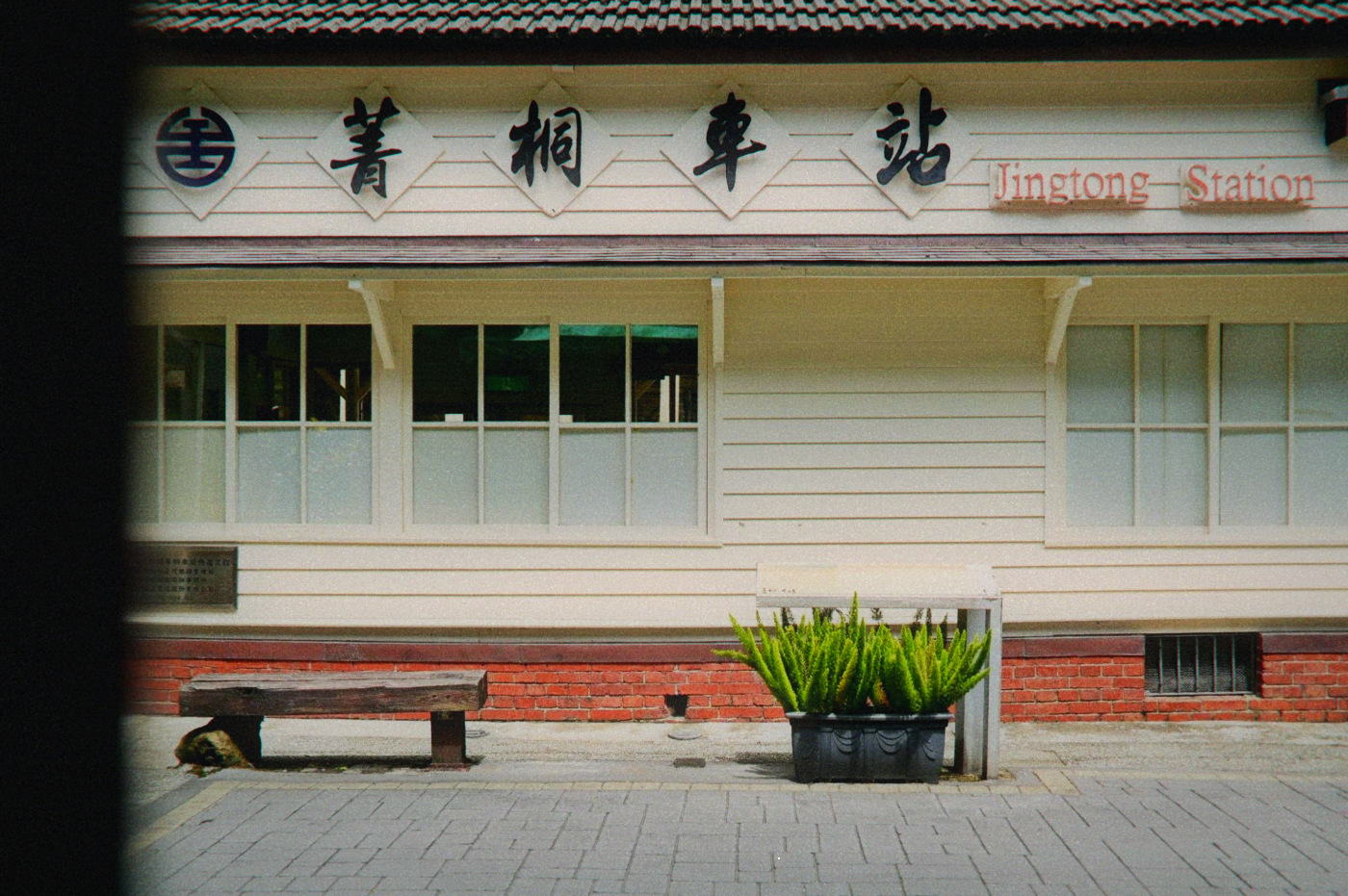 FIRST SIGHTWEBGLThe wooden facade of Jingtong Station. · Color and grain by First Sight · Superia. · First Sight 色彩與顆粒調校 · Superia
Arrive at the terminus. Jingtong is the smallest, quietest, and in many ways most atmospheric station on the Pingxi Line. The wooden station building is the original, built in 1929, wooden platform, hand-carved details. Walk through the tiny village (5 minutes total) to see the coal mining memorial and old miners' cottages. The village feels like it's been gently frozen in time.
Jingtong Ancient Trail (菁桐古道): A 40-minute loop hike through dense bamboo forest leading to a hilltop lookout over the valley. The trail is well-maintained and rarely crowded. You'll be alone most of the way, hearing only wind and bamboo creaking and bird calls. The lookout at the top offers views down to the Pingxi Line, the river, and the surrounding cliffs. On a clear day, you can see all the way to the coast. Take this hike early while the air is cool.
Come back down to the station and catch the next train (check the schedule; trains run roughly hourly).
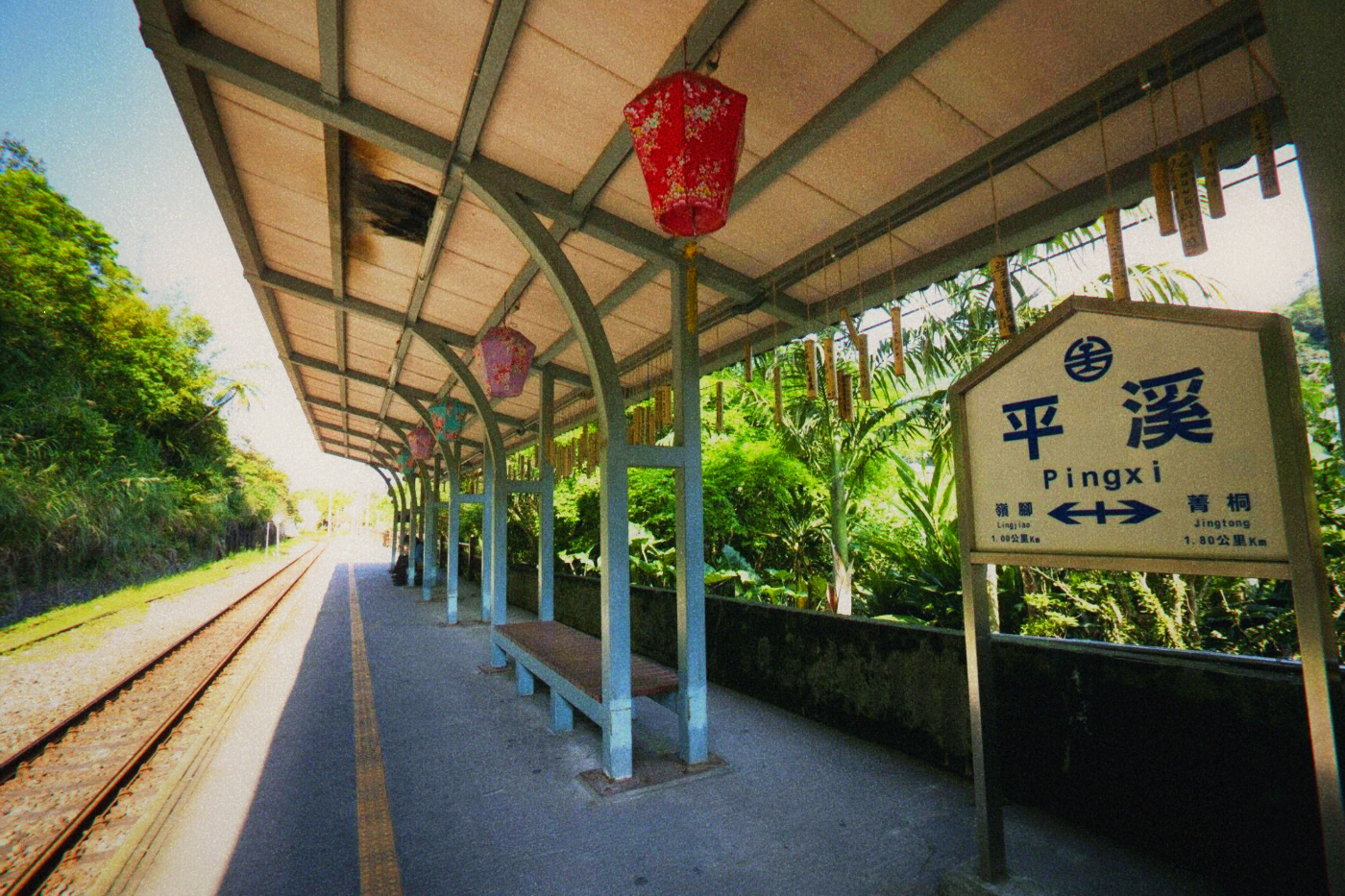 FIRST SIGHTWEBGLRed lanterns hang above the platform at Pingxi Station. · Color and grain by First Sight · Superia. · First Sight 色彩與顆粒調校 · Superia
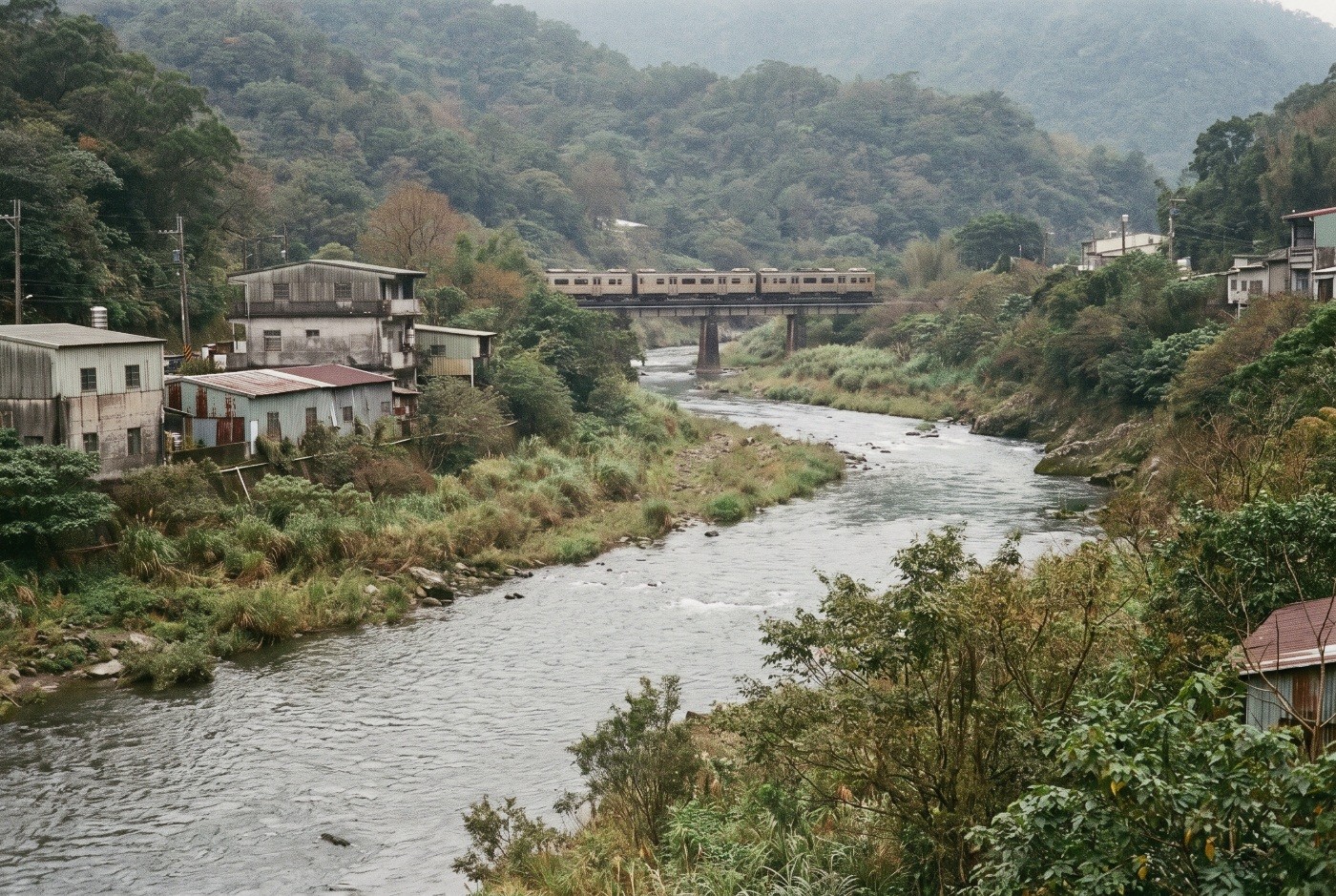 FIRST SIGHTWEBGLIllustration: A railway bridge above a mountain river. · Color and grain by First Sight · Superia. · First Sight 色彩與顆粒調校 · Superia
10:30am Pingxi Village (平溪, one stop back from Jingtong)
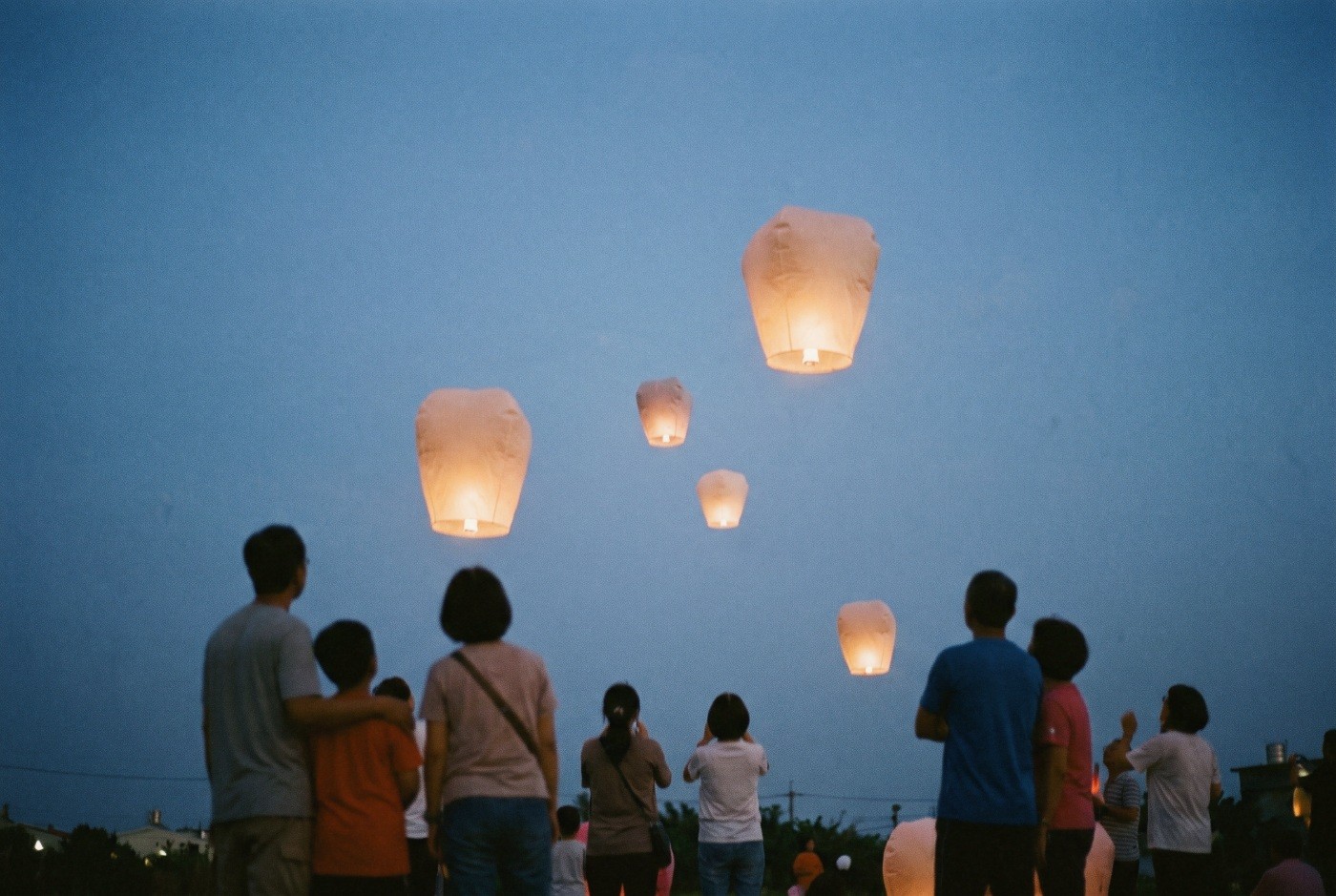
This is the village where sky lanterns are released. Yes, the train tracks literally run down the center of the main street (Pingxi Street), and the train passes through at walking pace while vendors fold back their stalls. This is as close to theatrical as Taiwan tourism gets.
 FIRST SIGHTWEBGLIllustration: A small gathering watching paper lanterns rise. · Color and grain by First Sight · Cinestill 800T. · First Sight 色彩與顆粒調校 · Cinestill 800T
 FIRST SIGHTWEBGLColor and grain by First Sight · Superia.First Sight 色彩與顆粒調校 · Superia
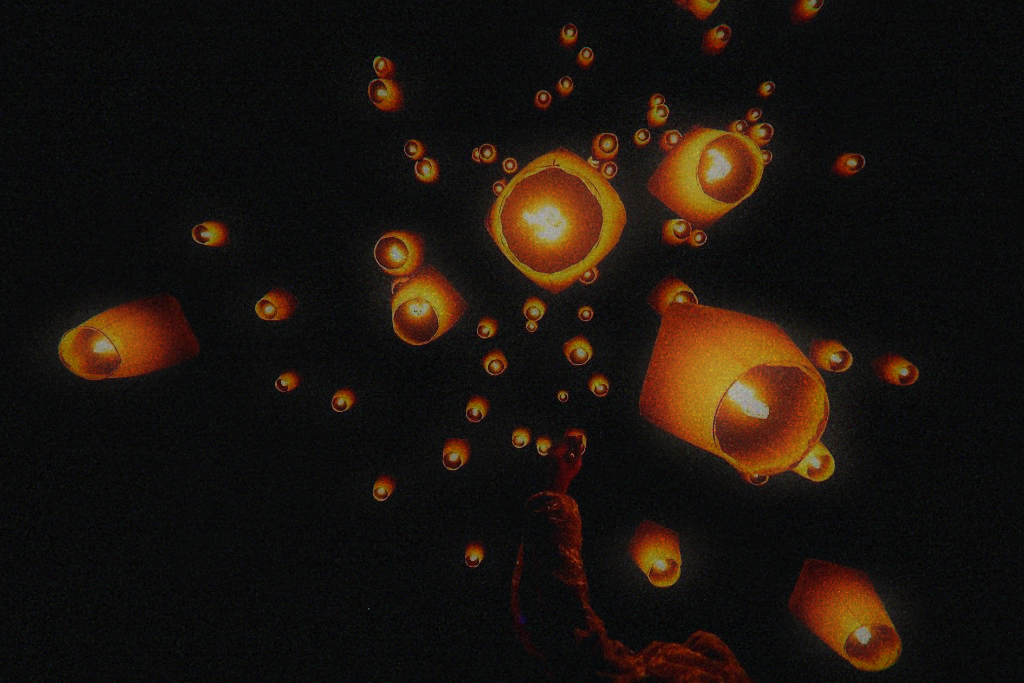
The sky lantern experience: Multiple stalls line both sides of the street, ready to sell you a sky lantern. A 4-color lantern costs NT$150, a single color costs NT$100. Choose a color or buy a 4-color. The vendor will hand you markers to write wishes (in Chinese or English, doesn't matter). Typical wishes: health, prosperity, love, success. Some people write serious wishes, some write jokes. The vendor will help you light the lantern inside the stall where it won't blow away. You'll hold it as it fills with hot air. Then you release it together with dozens of other people. Watch it rise, wobbling, until it becomes a small orange dot and disappears into the sky. It's genuinely moving, even if you thought you'd find it cheesy. The lanterns are made of paper and bamboo, they eventually come down somewhere (hopefully a forest, hopefully not a roof), and local cleanup crews do collect the fallen ones daily.
Lunch before you leave: A-Ma's Noodles (阿嬤麵店), left side of the train tracks, about 30 meters past the post office. There's no English sign, look for the small stall with an older woman selling noodles. She's been there for decades. The menu is written by hand on a small board. Dry noodles with pork sauce (乾麵配肉臊) costs NT$40. The pork sauce is rich and slightly spiced. Add a side of bamboo shoots (竹筍) for NT$30, they're pickled and crispy. No frills. Sit at one of the small tables. Eat. This is the best meal of your day, and it costs NT$70 total. A-Ma speaks minimal English, but she'll understand if you point at the board.
Optional: If you have time before the next train, walk the small Pingxi streets perpendicular to the main drag. They're quiet and filled with old miners' houses, small family restaurants, and no tourists.
12:30pm, Shifen (十分 - the most popular stop, but you're here for the waterfall, not the street)
The train pulls into Shifen and you'll immediately notice it's more crowded than the previous stops, this is the main tourist stop. Ignore the crowds, ignore Shifen Old Street (it's full of souvenir shops and iron eggs), and go directly to the waterfall.
Shifen Waterfall (十分瀑布): Walk from the station, follow signs, 20 minutes along a paved riverside path. The waterfall is 20 meters high and 40 meters wide. They call it Taiwan's Niagara. It's not Niagara, but it's the best waterfall you can reach by public transport in Taiwan. Free entry. Bring a waterproof phone case or leave your phone in your bag, the mist soaks everything within 30 meters. The roar of the water is louder than you expect. The spray is cold and refreshing. Spend 30 minutes here. Sit on the benches and watch the water. This is geology and power, and it's humbling. The water comes from the mountain streams above, flowing down through the narrow valley, and crashes here. If it's been raining (common in this valley), the water is higher and more dramatic.
Walk back to the station for a late lunch or snack if you're hungry. The small shops near the station have decent ramen and dumplings, though nothing beats A-Ma's noodles from Pingxi.
2:00pm: Shifen Old Street (optional browsing before train departure)
Since you're here, walk the old street for 15-20 minutes. It's touristy but there's something interesting in it. The iron egg (鐵蛋), eggs braised for hours with soy, star anise, and spices until they're dark, chewy, and intensely flavored, is worth trying. Buy a bag of 6 (NT$40-60) from any vendor, they're all the same. Eat one on the walk. The flavor is rich and slightly mineral. The texture is unlike anything else. Tea eggs in Taiwan are common; iron eggs are the extreme version.
Optional: There's also a small Shifen Miners Museum (平溪煤礦博物館, free entry), but it's not essential. If you have time and interest in mining history, 30 minutes here provides context for the whole valley.
3:00pm: Train Back to Taipei
Catch a train from Shifen back to Ruifang (30 min), then transfer back to the main line to Taipei Main Station (40 min). You'll be back by 4pm. Total trip from start to finish: 8 hours, NT$500–800, zero stress.
Coal Mining Heritage and the Pingxi Valley's History
The entire Pingxi valley exists because of coal. In the early 1900s, Japanese colonial engineers discovered coal deposits in the mountains and built the Pingxi Line to transport it. For 60 years, this was one of Taiwan's most important industrial areas. Thousands of miners worked the hillside pits. The valley boomed. The villages grew. Small schools, temples, and family shops appeared.
Then in the 1980s and '90s, Taiwan's coal industry collapsed, partly due to environmental regulation, partly because imported coal was cheaper, partly because the easy-to-reach coal was exhausted. The mines closed. The young people left for the cities. The population of the villages dropped from thousands to hundreds. The landscape was left with visible scars, abandoned mineshafts, rusted equipment, empty processing buildings.
In the last 20 years, the Pingxi valley reinvented itself as a cultural heritage site. The Pingxi Line became a tourist attraction. The villages became weekend getaways. The lantern festival became a spectacle. It's a kind of economic resurrection through tourism, and it's not without its complications, the very influx of people trying to preserve the "authentic" village experience sometimes erases what made it authentic in the first place.
But the landscape still tells the story if you look. The switchback valleys are engineered for mining. The river is channeled. The buildings are built with materials intended to last through rough weather. The train itself is a beautiful remnant of an era when this place was essential to the entire island's economy.
Walk the old mining trails. Look at the worker's houses. Imagine what it sounded like when trains ran every hour carrying coal, not tourists. The valley earned its keep once. Now it's earning it differently.
Frequently Asked
Some links in this article are affiliate links. If you purchase through them,OQUA may earn a small commission at no extra cost to you. This helps support our editorial work. We only link to products and services we genuinely reference in our writing.
Comments (0)
Loading comments...