
This itinerary is installable. One tap puts all 3 days on your calendar, each linking back to this guide.
Install this week →
 FIRST SIGHTWEBGLColor and grain by First Sight · Portra 400.First Sight 色彩與顆粒調校 · Portra 400
Hero image of Hualien coastline and mountain landscape.
Everyone who goes to Hualien goes to Taroko Gorge. They take the same photos at the same viewpoints, eat lunch at the same rest stop, and take the train back feeling like they've seen it. They haven't.
Hualien is not Taroko. Taroko is a canyon. Hualien is the culture that grew up around it,indigenous villages, night markets where they grill wild boar, hot springs where the only other visitors are local grandmothers, and a coastline that makes you forget Taiwan is a small island.
This is the three-day route that starts where the tour buses stop.
What you need to know
Getting there: Tze-Chiang express from Taipei Main Station, 2h 10min, NT$440. Book at least 3 days ahead, window seats on the left side for ocean views after Su'ao. The train hugs the coast after Su'ao, and the view is free and extraordinary. Most tourists miss it because they're on their phones.
Budget: NT$3,000–5,000 per person for 3 days (accommodation + food + transport, not including train). This estimate assumes modest guesthouses and eating at local spots, not tourist restaurants.
When: October to March for clear skies and comfortable temperatures. Avoid July–August typhoon season. June is rainy. April–May is warm but unpredictable.
Need a car? Helpful for Day 2's coast drive but not essential. Scooter rental is NT$400/day from shops near the train station. A shared van tour is an option if you don't ride. Most guesthouses can arrange bookings.
Important safety notes: Highway 11 is safe but winding and scenic in a way that demands attention. If renting a scooter, ride conservatively. Hiking trails can be slippery in rain; check weather before setting out. Always bring more water than you think you'll need.
Day 1: Arrive + the real Hualien city
Morning: Take the 7:20am Tze-Chiang from Taipei. Arrive Hualien 9:30am. Drop bags at your guesthouse,stay in the old town, not the tourist strip along Guomin Road. The old town (around Jianguo and Ziyou roads) has the real character.
Guesthouse recommendation: Luz Hostel (日光旅居), a converted Japanese colonial house on Jieshou Road, NT$800–1,200/night for a private room. The owners are knowledgeable about local spots and can book tours or scooter rentals. Alternative budget option: Hualien Backpackers (NT$400–600 for a dorm), also well-located. For something quieter, try Huayang B&B in the old town (NT$1,200/night, small, excellent breakfast).
Lunch: Walk to Jianguo Market (建國市場), Hualien's wet market. Skip the famous scallion pancakes (queue too long, overrated). Instead, find Auntie Lin's braised pork rice stall on the second floor,no English sign, look for the longest local queue. NT$45 for a bowl that rivals anything in Tainan. The broth is brown and rich, the pork is tender, the sauce is slightly sweet. Sit at the counter. Listen to the other customers order. You're in the real Hualien now.
Alternative lunch: Any of the small 便當 (bento) shops in the market,local restaurants selling lunch boxes. Point at what looks good. Prices are NT$60–80.
Afternoon: Rent a bicycle from your guesthouse (NT$50–100/day) and ride along the Meilun River (美崙溪). Follow the path north toward Pine Garden (松園別館), a Japanese military officers' club built in 1943 among massive century-old pine trees. The building is atmospheric,you can feel the weight of its history. Entry is NT$60. Sit on the terrace overlooking the garden. The view across Hualien to the Pacific Ocean is the moment you understand why people move here. The afternoon light is perfect here, especially in autumn. Budget an hour.
Pine Garden (松園別館) overlooking Hualien valley toward the Pacific.
Evening: Dongdamen Night Market (東大門夜市). Don't go to the main tourist section with the food stalls that have English menus. Walk past it to the Indigenous section (原住民一條街), which is about 100 meters east. This is where local Amis (阿美族) and Bunun (布農族) vendors set up shop. Try grilled wild boar sausage (山豬肉香腸, NT$60–80), which has a deeper, richer flavor than pork. Try millet wine (小米酒, NT$40–50), sweet and slightly warming. Try bamboo-tube rice (竹筒飯, NT$40), sticky rice cooked inside a bamboo segment with pork and vegetables. These flavors exist nowhere else on the island because they're rooted in indigenous foodways, not Han Chinese cuisine. Eat standing up. Watch the families shopping for dinner together. This is living culture, not a performance for tourists.
Day 2: Coast drive + Fengbin hot spring
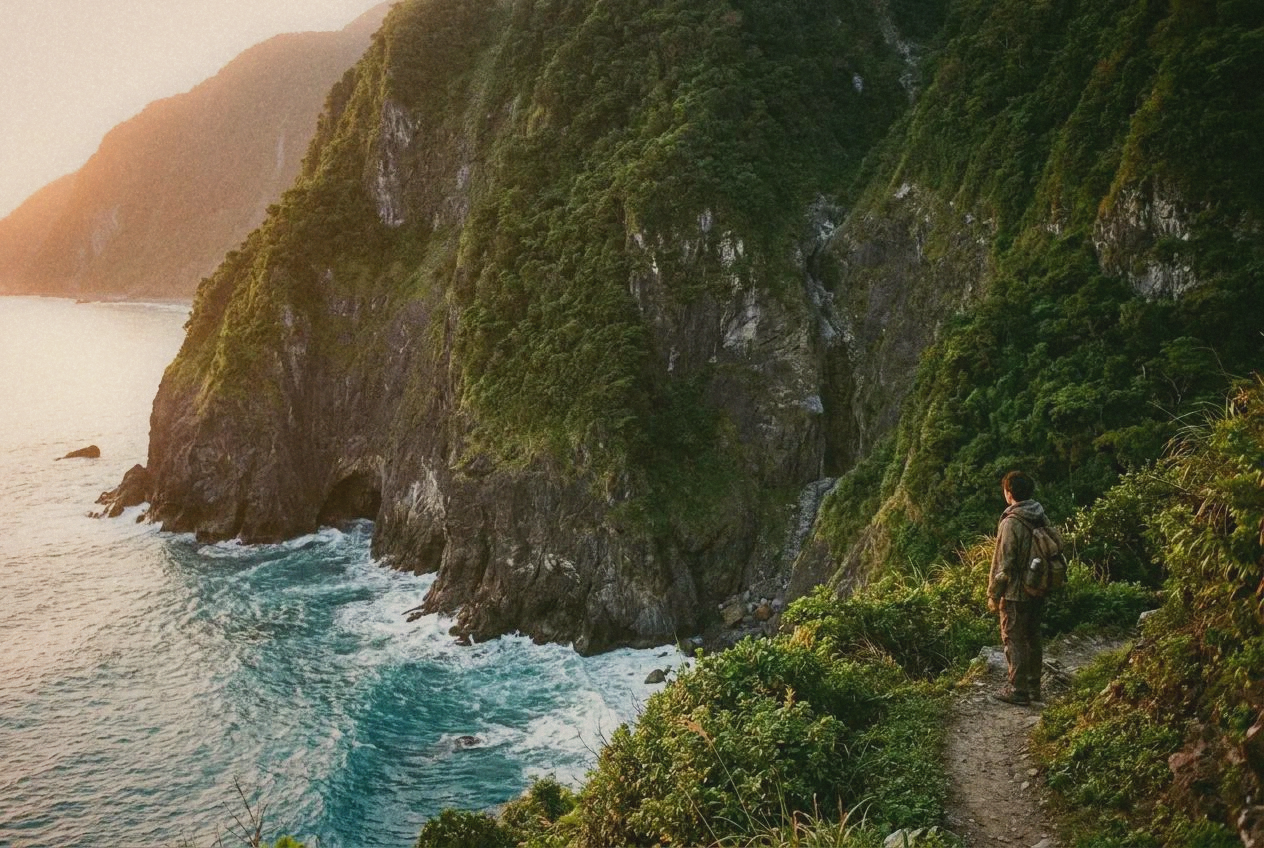 FIRST SIGHTWEBGLThe Qingshui Cliffs along Hualien's coast, where the mountains drop straight into the Pacific. · Color and grain by First Sight · Portra 400. · First Sight 色彩與顆粒調校 · Portra 400
Morning: Pick up a scooter (NT$400/day from any rental shop near the station,look for shops marked 機車出租) or join a shared van tour (guesthouses can arrange; usually NT$1,200–1,500 for a 6–8 person group). Both work. The coast drive on Provincial Highway 11 is the highlight of this route. The road clings to cliffs with the Pacific 200 meters below. Stop frequently. Take photos, but also just stand and look.
Stop 1 (30 minutes south): Niushan Lookout (牛山呼庭). A driftwood art park on a private beach, anchored by a massive installation of smooth gray driftwood pieces arranged as both sculpture and shelter. Entry is NT$50, refundable on drinks. If the waves are small, the beach is swimmable. The whole place has an atmosphere of wild beauty with minimal development. Budget 45 minutes.
Sculptural driftwood installations at Niushan Lookout with private beach access.
Stop 2 (1 hour further south): Shihtiping (石梯坪). Volcanic basalt rock formations that look like another planet,jagged columns and tide pools. Walk the coastal trail (30 minutes, mostly flat) that winds through the rocks. The trail isn't heavily marked, so go slowly and watch your footing. Bring water and sun protection. The rock formations are dramatic in clear light. If it's overcast, the moodiness is even stronger.
Volcanic basalt formations and tide pools at Shihtiping in clear afternoon light.
Lunch (around noon in Fengbin Township, 豐濱鄉): Stop at any roadside Amis restaurant,look for handwritten signs or shops displaying fish. Order the "set meal" (合菜, around NT$200 per person). It typically includes grilled local fish (usually mackerel or mullet), wild vegetables (mountain bamboo shoots, leafy greens), sticky rice wrapped in leaves, and soup. You eat with your hands. This is genuine indigenous cooking, not adapted for tourist palates. The flavors are mineral-forward and tied to the land. It's a meal that connects you to place.
Alternative: Buy grilled fish and rice from a street vendor (NT$80–120). Less atmospheric but faster.
Afternoon (2–3pm): Ruisui Hot Springs (瑞穗溫泉), about 45 minutes inland from the coast. These are not the fancy resort hot springs found elsewhere in Taiwan. The public pool at Ruisui Hot Spring (瑞穗溫泉公共浴池) costs NT$50 and has been largely unchanged since the 1960s. Simple concrete basin, natural hot water, no frills. No chlorine smell. No locker rooms with hair dryers. Just a place to soak. Bring your own towel. Elderly local residents often bathe here in late afternoon. The water is warm enough to dissolve tension, and sitting in a 1960s-style tub surrounded by mountains creates a sense of time travel. Budget an hour.
Ruisui public hot spring pool surrounded by mountain valley, unchanged since 1960s.
Late afternoon: Drive back to Hualien via Highway 9 (which runs through the central valley, a different, greener landscape than the coast). Stop at Tianlu Hot Spring (天鹿溫泉) if you want a second soak at a slightly more developed facility (entry NT$150), but the public pool is the more authentic experience.
Evening: Dinner at your guesthouse (many serve evening meals for NT$300–400 if you arrange ahead) or explore the alleys behind Zhonghua Road for small izakaya-style restaurants. Ask your guesthouse owner for recommendations,they know which places are good and which are tourist traps.
Day 3: Taroko (the right way) + departure
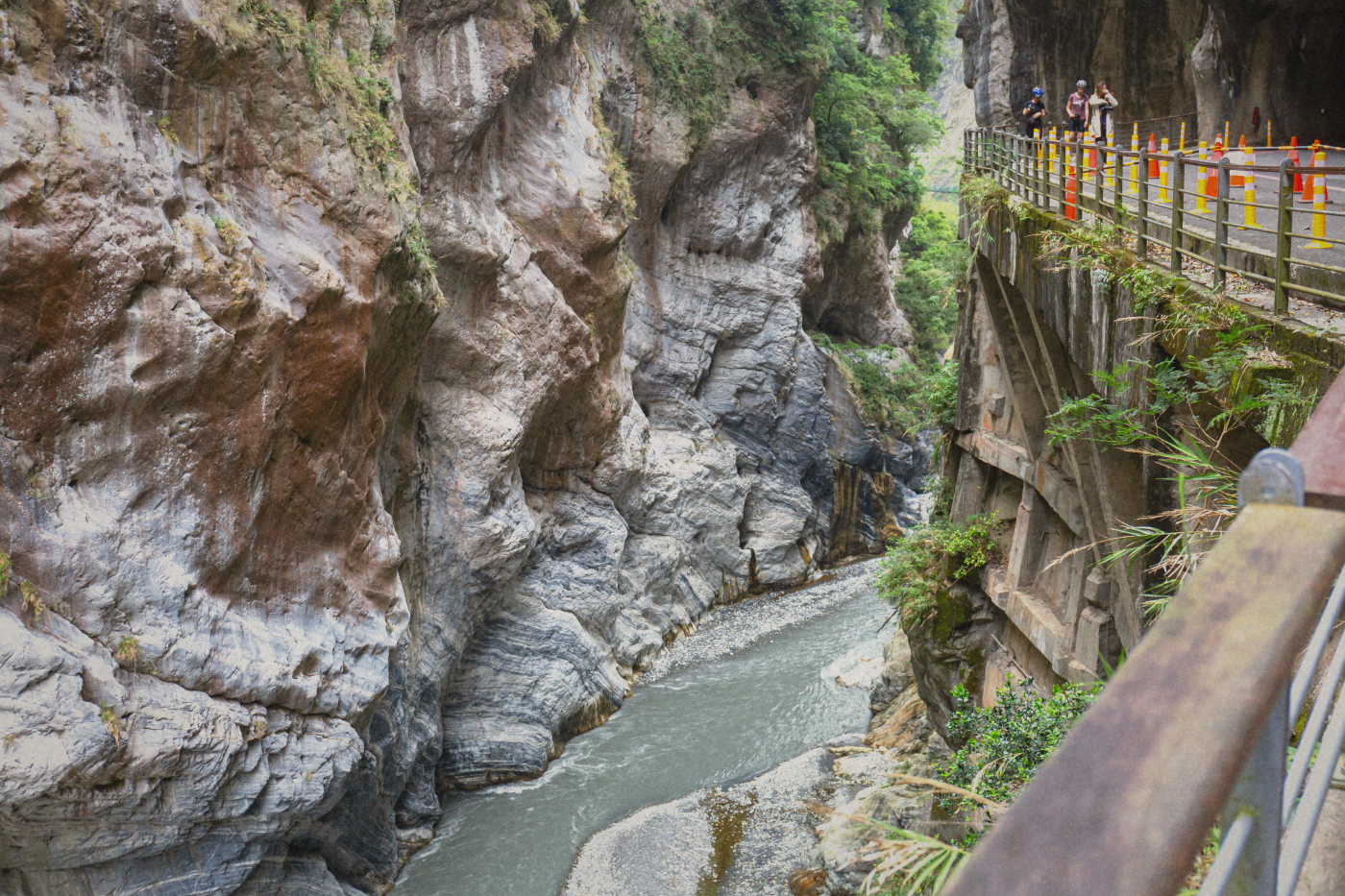 FIRST SIGHTWEBGLTaroko Gorge, photographed in April 2019. Archival image; it does not show current trail access. · Color and grain by First Sight · Portra 400. · First Sight 色彩與顆粒調校 · Portra 400Balon Greyjoy · CC0 · Color and grain adjusted. · 已調整色彩與顆粒。
Early morning (6:00am departure): The key to Taroko is arriving before the tour buses. Leave your guesthouse at 6:00am to arrive at Taroko National Park by 6:45am. Most visitors arrive 9am–11am when the parking is chaotic and the trails are crowded.
Main trail (6:45am–8:30am): Shakadang Trail (砂卡噹步道). Opens at dawn. A 1.5-hour round trip (mostly flat, carved into marble cliffs above a turquoise river). You'll have the trail nearly empty at this hour. The water is an impossible blue. The rock walls are hundreds of meters high. The air is cool and still. By 8am, you'll start to see other early hikers, but it's nothing compared to what arrives later. This is the best way to experience the gorge: undisputed, quiet, intimate.
Shakadang Trail carved into marble cliffs above turquoise river at early morning light.
Mid-morning (8:30am–10:00am): Baiyang Trail (白楊步道) if it's open (check the National Park visitor center or ask your guesthouse,closures happen after heavy rain). The Water Curtain Cave (水簾洞) at the end is extraordinary: a natural shower of mountain spring water cascading from inside a tunnel. The walk is 1.5 hours round trip. Bring a waterproof phone bag. The final approach involves walking through the water, so wear shoes that can get wet or bring sandals.
Water Curtain Cave with mountain spring shower cascading from tunnel entrance.
If Baiyang is closed, the Zhuilu Old Trail (朱紀老步道) is a solid alternative,stunning views of the gorge without the water tunnel.
Lunch (11:00am–12:00pm): Tiansiang (天祥) rest area. A Buddhist monastery here offers a free vegetarian lunch for visitors (donations are welcomed, typically NT$50–100). The food is simple, well-prepared, and clean. Rice, vegetables, tofu dishes, soup. It's humble and peaceful. Eating in the shade of the gorge after a morning of hiking creates a natural pause in the day. This is part of the experience, not just fuel.
Afternoon train: Take the 2:30pm (14:30) Tze-Chiang express back to Taipei from Hualien station. Arrive Taipei 4:40pm (16:40). Sit on the right side of the train on the return trip for ocean views. Use the train ride to process the trip. Many people sleep. The motion is gentle.
What to skip
Qingshui Cliff viewpoint (清水斷崖): Beautiful, but you see it from the train for free as you approach Hualien. The viewpoint is crowded and photo-driven. Save your time.
Farglory Ocean Park: A theme park that has nothing to do with Hualien's actual character. It's there for convenience, not experience.
The famous scallion pancake shops: 45-minute queues for something you can find in any Taipei night market. Skip it.
Liyu Lake (鯉魚潭): A man-made reservoir popular with tourists for paddling and cycling. It's fine but not essential. If you have time, the Meilun River walk is more atmospheric.
Indigenous culture context (important to understand)
Hualien is home to 13 different indigenous groups, the largest being the Amis and Bunun. Tourism in Hualien often appropriates indigenous imagery (dreamcatchers, spirituality language) without depth. Here's what actually matters:
The indigenous peoples of Hualien have lived here for thousands of years and are still very much present. You'll see this in the night markets, in the food, in the place names. Respectful tourism means: eating their food (the indigenous meals are genuine), learning their history (ask your guesthouse owner or a local guide), and not treating culture as a scenic backdrop.
If you want deeper engagement, look for a guide who is indigenous (Hualien Travel Bureau can recommend them) for Day 2 or 3. Their perspective on the coast, the mountains, and the local ecology is different and valuable. Budget NT$2,000–3,000 for a half-day guided experience.
Some links in this article are affiliate links. If you purchase through them,OQUA may earn a small commission at no extra cost to you. This helps support our editorial work. We only link to products and services we genuinely reference in our writing.
Comments (0)
Loading comments...