
My first summer in Taipei, I got a two-month electricity bill for NT$4,300 and genuinely thought there had been a mistake. There had not. I had been running a fifteen-year-old window unit at 20°C, all night, every night, with the door to the rest of the apartment open. The bill was doing exactly what I had told it to do.
Summer electricity in Taiwan feels mysterious because the bill only arrives every two months, long after you have forgotten how much AC you ran. So here is the honest version: how the pricing works, what a normal apartment actually pays, and the small number of things that change the number. Most of the advice floating around does nothing.
How summer pricing actually works
Taipower charges a higher summer rate, 夏月電價, from June 1 to September 30. The rest of the year is cheaper. That is the whole seasonal story, and it is why your June to August bill always looks worse than the one before it.
For a normal home meter, the price is progressive (累進). The first slice of electricity each month is cheap, and each additional slice costs more. It is not about what time of day you use power. A unit used at 3pm and a unit used at 3am cost exactly the same on a standard household meter. What matters is the total you pile up in a month.
One detail trips everyone up: Taipower reads most home meters once every two months, so your bill covers two months at once. The tier allowances double over that period, which is why the number looks alarming even when your monthly usage is ordinary.
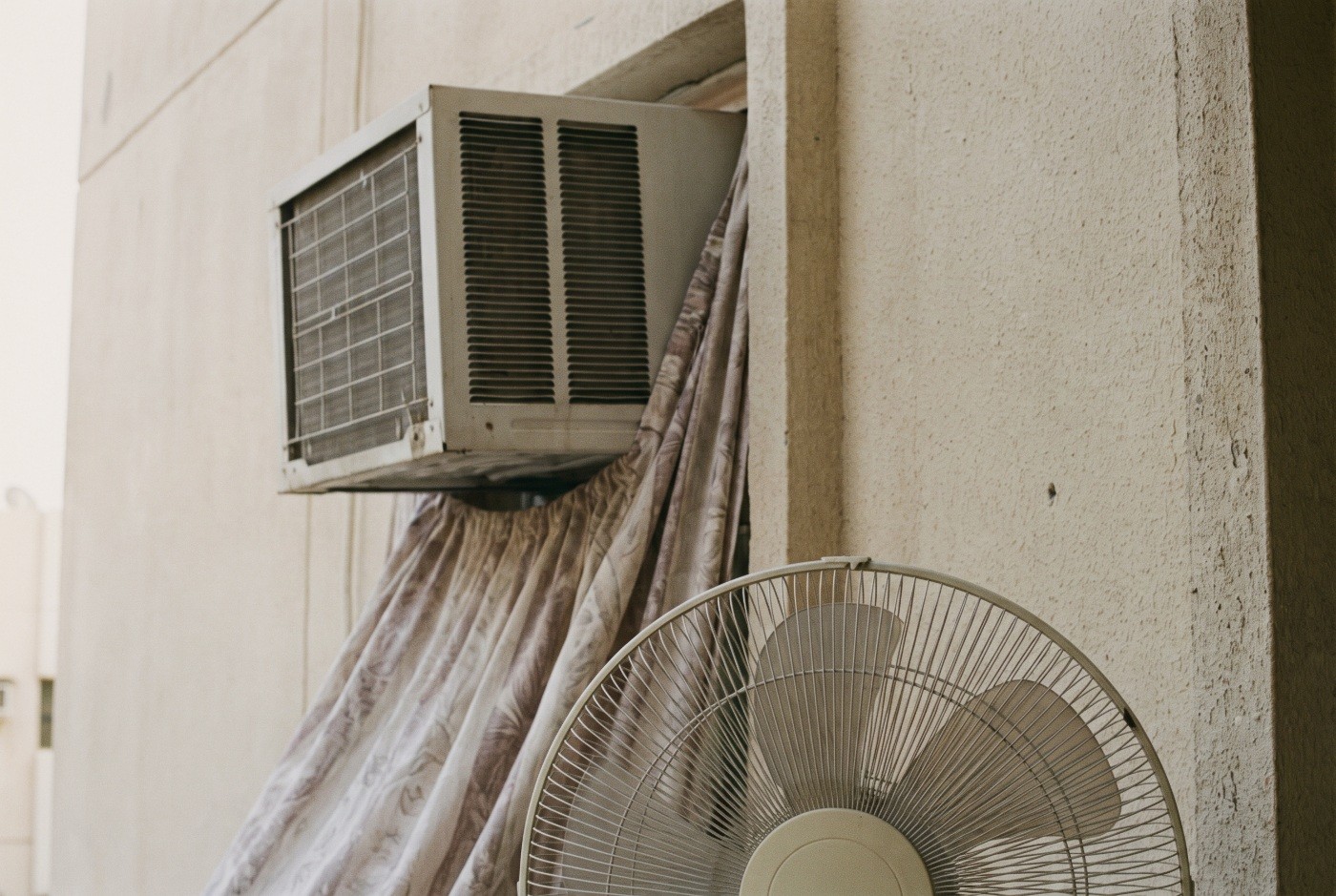
 FIRST SIGHTWEBGLIllustration: An air conditioner and fan in a lived-in room. · Color and grain by First Sight · Portra 400. · First Sight 色彩與顆粒調校 · Portra 400
What a normal Taipei apartment actually pays
A person in a studio running one AC unit at night lands near the bottom of the tiers, maybe 250 to 450 units a month. A family in a two or three bedroom apartment running AC most of the day easily crosses 700 to 1,000 units. Same city, same weather, a threefold difference in the bill, and almost all of it is AC behaviour.
The place it gets expensive fast is the upper tiers. Once your monthly usage climbs past roughly 500 units, every extra unit is charged at NT$3.7 and up, and beyond 700 it climbs again. Heavy all-day AC in a hot apartment is what pushes you over that line. If you never cross it, summer barely stings.
 FIRST SIGHTWEBGLA simple adjustment on the thermostat remote can mean the difference between comfort and a shock on your next electricity bill. · Color and grain by First Sight · Gold 200. · First Sight 色彩與顆粒調校 · Gold 200
The myth that costs you nothing but attention
Every summer a graphic goes around claiming Taiwan has switched to three time-of-day tiers, with electricity supposedly hitting NT$8 a unit at peak hours, so you should run AC only late at night. Fact-checkers (including MyGoPen) have flagged this as false for normal households. Standard home meters are still billed by total usage, not by clock time. Shifting your AC to 2am does not save a cent unless you have specifically signed up for a time-of-use meter, which most homes have not. Cool when you are actually home; that is the only rule that matters.
Five changes that actually move the bill
FIRST SIGHTWEBGLA small circulating fan by the window can help distribute cool air more evenly throughout the room. · Color and grain by First Sight · Gold 200. · First Sight 色彩與顆粒調校 · Gold 200One nuance on 除濕 mode. Dry mode is great for a muggy, rainy day when you want comfort without a big temperature drop. It is not a cheat code for cheaper cooling. If you actually want the room colder, normal cooling mode does that more efficiently. Use 除濕 for humidity, use 冷氣 for heat, and do not expect dry mode to shrink your bill.
What does not move the bill
Switching the AC off for a quick errand. Cooling a room back down from hot costs more than holding it steady, so flicking it off for thirty minutes often loses you money. Leave it, or use the timer.
Running AC only after midnight. Covered above: no benefit on a standard household meter. Ignore it.
The rebate almost nobody claims
Taipower runs an energy-saving reward (節電獎勵) that pays households a small rebate when they use less electricity than the same period a year earlier. It is not automatic in every city, and the amount is modest, but if you are cutting back anyway you may as well register through Taipower and let the reduction pay you a little back. Search 台電 節電獎勵 to see if your account qualifies.
FAQ
Is it cheaper to leave the AC on all day or turn it on and off? For short gaps, leaving it on at a sensible 26–27°C usually wins, because cooling a hot room back down is the expensive part. For long absences, turn it off or use a timer.
Does 除濕 mode use less electricity than cooling? Not as a way to get colder. The compressor still runs. Dry mode is for humidity comfort, not for lowering your bill.
Why is my bill so high when I only run one AC unit? Usually an old fixed-speed unit, a low setpoint, or long hours. Check the unit's age and try 26–27°C with a fan before blaming the meter.
Comments (0)
Loading comments...