
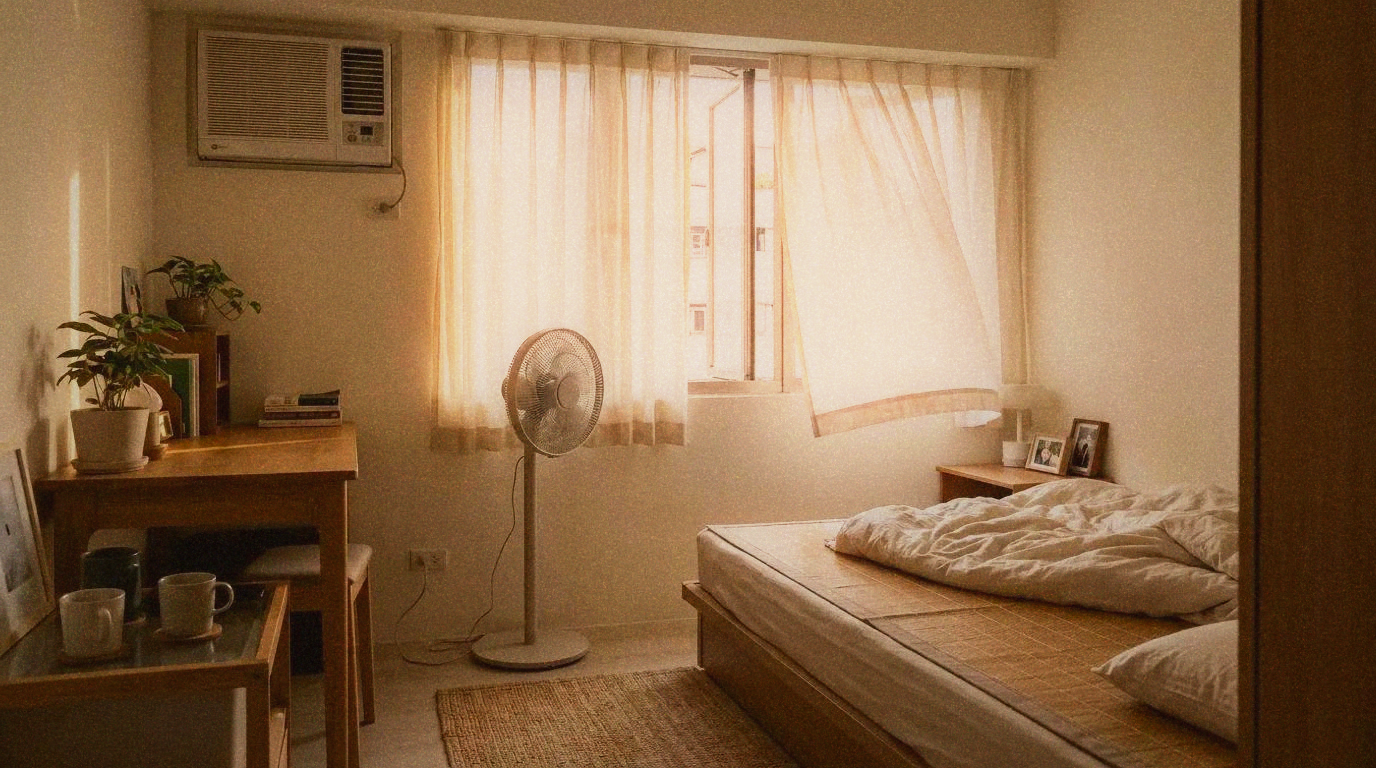
NT$1,084. That's the average monthly electricity bill during Taiwan's summer rate season, which runs June 1 through September 30. It's NT$446 more than the rest of the year. About 70% of that jump comes from running the AC more. The other 30% is the seasonal rate hike itself, when the per-kilowatt cost climbs once you pass certain usage tiers.
The first time I opened a July electricity bill in Taipei, I genuinely thought there was an error. There wasn't. I'd been running the AC at 22 degrees with the windows sealed, the dehumidifier unplugged because I figured the AC handled moisture, and the blackout curtains I'd bought were dark navy, which, as it turns out, absorbs heat instead of reflecting it. I was doing almost everything wrong, and the bill was the proof.
Most of the fixes took a weekend. Some cost nothing. Here's what actually works, organized not as a checklist but as a walk through the apartment, room by room, the way you'd figure it out if you were solving problems as you noticed them.
The AC math
Set it to 26 or 27 degrees. This is the government recommendation, and the reasoning is simple. Every degree below 26 increases energy consumption by about 6%. Running at 22 feels like a luxury for the first hour, then you get the bill.
The real trick is combining AC with a fan. A ceiling fan or even a basic standing fan creates airflow that makes 27 degrees feel like 24. This lets you set the AC 2 to 3 degrees higher than you would otherwise, which compounds over a full summer. The fan uses a fraction of the electricity the AC does, so the net savings are significant.
One thing people get wrong: setting the AC lower doesn't cool the room faster. The compressor works at the same speed regardless. Setting it to 18 just means it runs longer before cycling off. Set it to 26, turn on a fan, and leave it alone.
Taiwan's electricity rate tiers matter here. The first 120 kWh each month costs NT$1.78 per kilowatt-hour. The next 210 kWh jumps to NT$2.55. Everything above that hits NT$3.80 or more. About 3.83 million households in Taiwan use under 120 kWh and aren't affected by the summer rate at all. For the rest of us, every watt-hour counts, and the AC is where most of the money goes.
NT$446
Average monthly increase during summer rate season. About 70% of the jump is from more AC use. The other 30% is the rate hike itself. The biggest lever you have is the thermostat.
The humidity problem
Taipei summer means 33 to 35 degrees outside, 75 to 80% humidity, and a feels-like temperature that regularly crosses 40 degrees. The AC handles the heat. It does not handle the moisture well enough on its own.
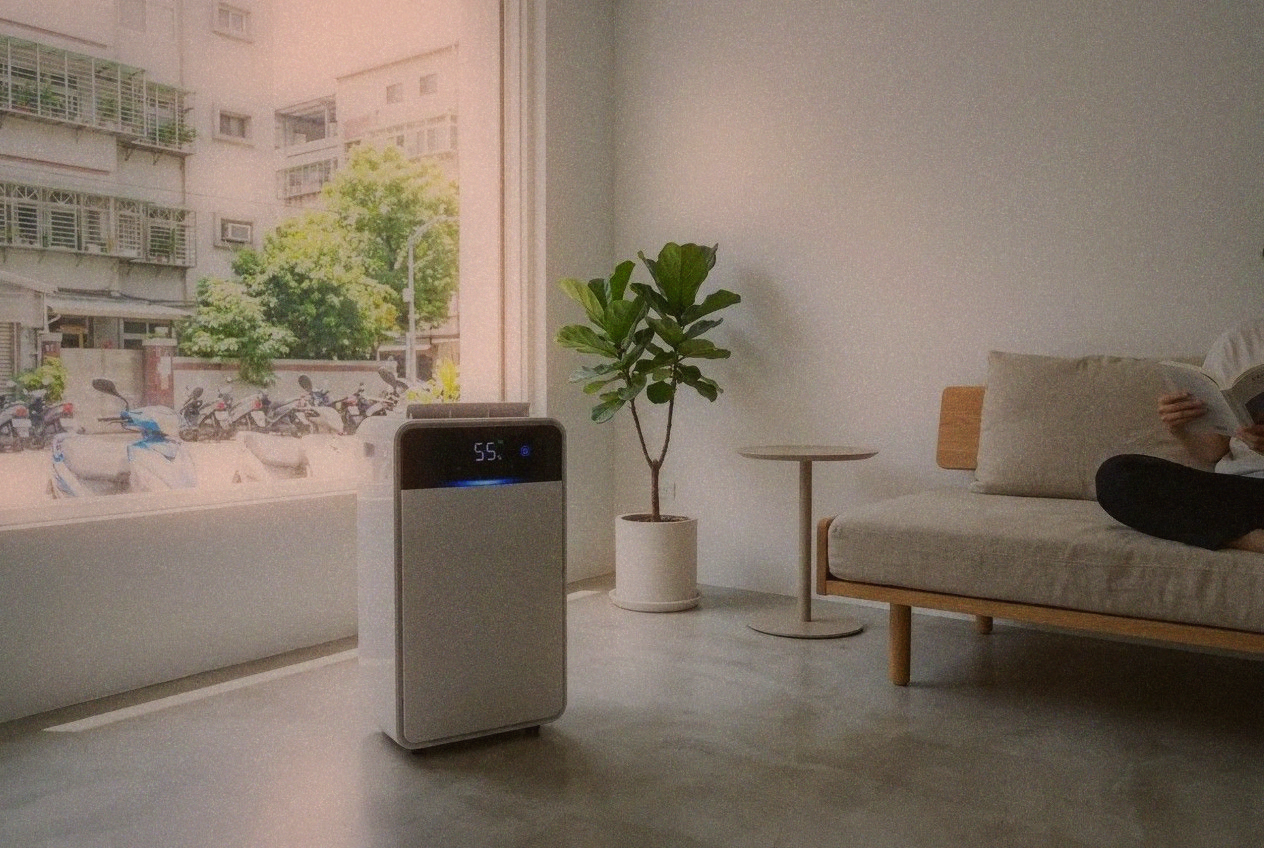
 FIRST SIGHTWEBGLA dehumidifier keeps humidity around 55%, the sweet spot for comfort and mold prevention · Color and grain by First Sight · Gold 200. · First Sight 色彩與顆粒調校 · Gold 200
Humidity above 60% is where mold starts growing. On clothes in the closet, in the bathroom grout, behind furniture pushed against exterior walls. If you've lived in Taipei through even one summer, you know the smell. The target for comfort and mold prevention is 50 to 55% humidity, and getting there usually requires a dehumidifier running alongside the AC.
Sizing matters. One dehumidifier covers about 10 to 15 ping, or 35 to 50 square meters. If your apartment is bigger than that, you need a second unit or you're just dehumidifying one room while the hallway stays damp. And here's the maintenance detail that most people skip: clean the filter every two weeks. A clogged dehumidifier filter doesn't just reduce performance. It spikes the electricity consumption because the motor works harder to pull air through the buildup. Two minutes with a damp cloth saves you money all month.
The combo strategy is the most efficient approach. Run the AC for temperature, run the dehumidifier for moisture. The AC actually works better in lower humidity because it doesn't have to do double duty. On cooler evenings when you can turn the AC off, the dehumidifier alone keeps the apartment from feeling swampy.
The bedroom
This is where comfort matters most, because sleep quality in a hot, humid apartment drops fast.
Bamboo mats, or 竹蓆, are the most underrated summer solution in Taiwan. Lay one over your mattress and the surface feels noticeably cooler. It's not a gadget or a hack. It's what Taiwanese grandparents have been doing for decades, and it works because bamboo doesn't retain body heat the way foam and cotton do. You can find them at any household goods store for a few hundred NT.
Swap your bedsheets to linen. Cotton holds moisture in humidity. Linen breathes, dries faster, and feels cooler against skin. It wrinkles easily, which bothers some people, but in a Taipei summer the temperature difference against your skin is worth the rumpled look.
Fan placement in the bedroom matters more than people realize. Don't point the fan directly at your face all night. Angle it so it creates circulation across the room. If you have windows on opposite walls, position the fan to assist cross-ventilation during the hours you have windows open.
Light-colored curtains or blinds reflect solar heat back outside. Dark curtains absorb it and radiate it into the room. If your bedroom gets direct afternoon sun, switching from dark to light curtains can drop the room temperature by a couple of degrees before you even turn the AC on.
The kitchen
Cooking generates a surprising amount of heat. A gas stove, a rice cooker, and an oven running simultaneously can raise the kitchen temperature by several degrees, and in an open-plan Taipei apartment, that heat spreads everywhere.
The simple fix: shift your cooking to the morning. Batch cook rice, prep soups and braised dishes before 10am when it's still relatively cool. In the evening, assemble cold dishes, reheat things in the microwave rather than on the stovetop, or eat out. Night market culture is actually practical summer strategy. Let someone else generate the cooking heat.
If you do cook in the evening, run the kitchen exhaust fan for at least 15 minutes after you're done. The residual heat lingers longer than you'd think.
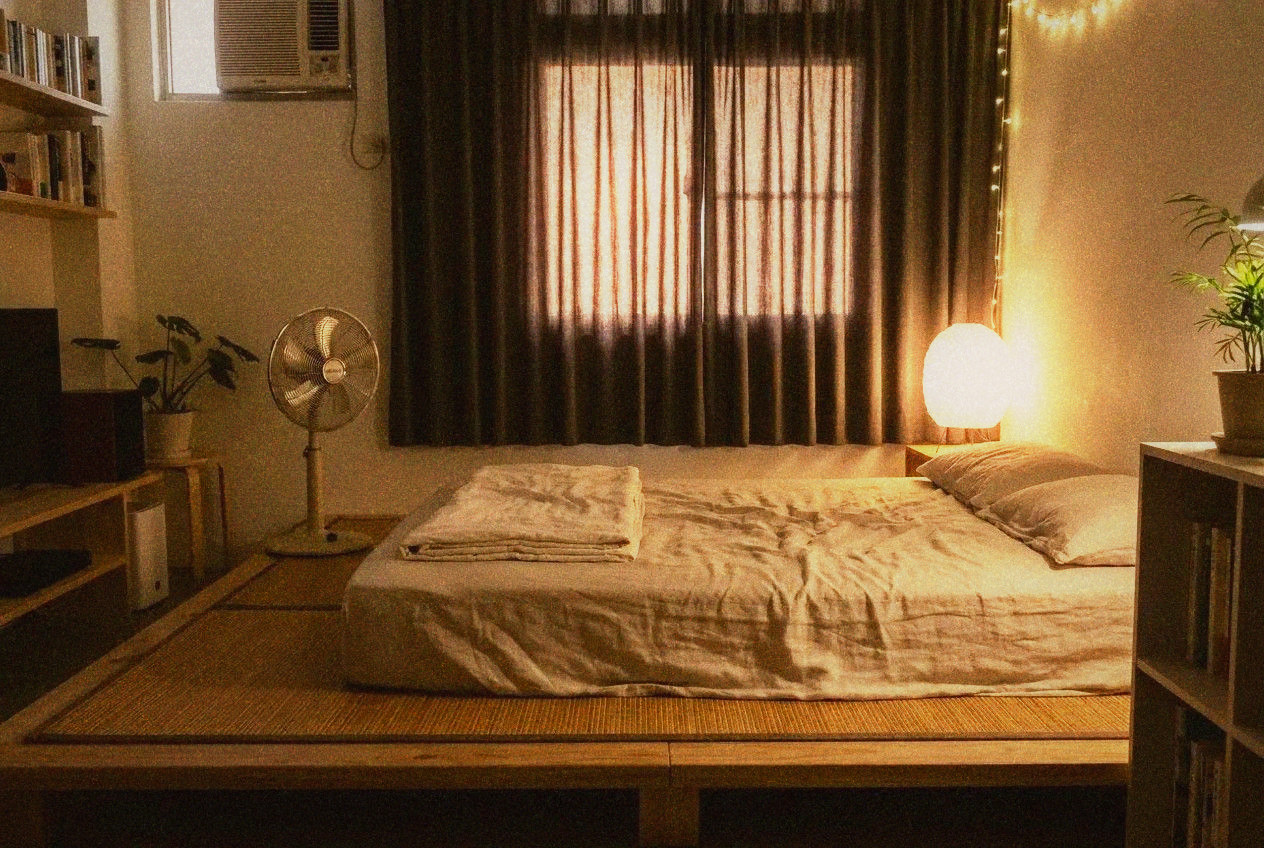 FIRST SIGHTWEBGLA bamboo mat, a standing fan, and blackout curtains: the summer bedroom essentials · Color and grain by First Sight · Gold 200. · First Sight 色彩與顆粒調校 · Gold 200
The balcony and windows
Cross-ventilation is free AC, but timing is everything. During the day, when it's 34 degrees outside and your apartment is 28 degrees inside, opening windows just lets hot air in. Keep windows closed and curtains drawn from about 10am to 5pm.
After 5 or 6pm, when the outside temperature drops below what's inside, open windows on opposite sides of the apartment. Even if you don't have windows on truly opposite walls, opening any two windows creates some air movement. A fan placed near one window, pointing inward, accelerates the effect.
The best free cooling strategy in any Taipei apartment: windows closed and curtains drawn during the day, cross-ventilation in the evening when outdoor temperature drops. It costs nothing and it reduces how many hours you need the AC running.
Late evening and early morning are the windows of opportunity. Taipei's nighttime low in summer is usually 27 to 28 degrees, which isn't exactly cool, but it's enough of a drop to flush the day's accumulated heat out of the apartment. Let the cross-ventilation run while you get ready for bed, then close up and switch to AC for sleeping.
The electricity bill strategy
Understanding the tier system is the difference between a manageable summer bill and a painful one. The tiers reset monthly, so every billing period is a fresh start.
The first 120 kWh at NT$1.78 is cheap. The next 210 kWh at NT$2.55 is reasonable. Once you pass 330 kWh total, you're at NT$3.80 or higher per kilowatt-hour, and that's where the bill starts climbing fast. The goal isn't to avoid AC. It's to stay in the lower tiers as much as possible through efficiency.
Practical moves that keep you in lower tiers: AC at 26 to 27 with a fan instead of 22 to 24 without one. Clean the dehumidifier filter so it runs efficiently. Light-colored window coverings to reduce heat gain. Cross-ventilation in the evening to reduce AC hours. Shift cooking heat to the morning. None of this is dramatic. Together, it adds up.
FAQ
What temperature should I set my AC to?
26 to 27 degrees. Pair it with a fan and it feels 2 to 3 degrees cooler. Every degree below 26 adds roughly 6% to your electricity consumption.
Do I really need a dehumidifier if I have AC?
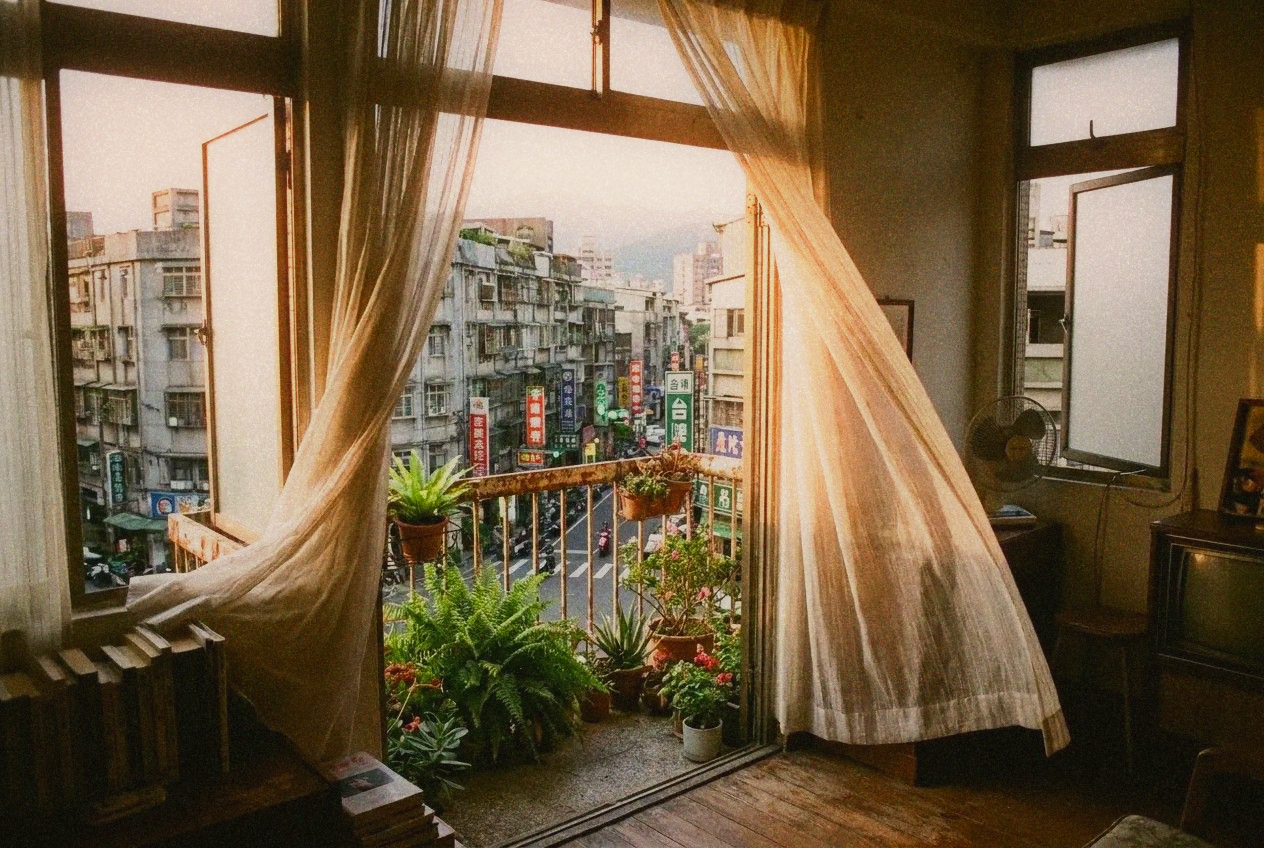 FIRST SIGHTWEBGLCross ventilation through an open window: the cheapest cooling upgrade you can make · Color and grain by First Sight · Gold 200. · First Sight 色彩與顆粒調校 · Gold 200
In Taipei, yes. The AC handles temperature but doesn't pull enough moisture out of the air on its own. Humidity above 60% means mold. A dehumidifier gets you to the 50 to 55% range where both you and your apartment are comfortable.
How often should I clean the dehumidifier filter?
Every two weeks. A clogged filter makes the motor work harder, which uses more electricity and dehumidifies less effectively. It takes two minutes.
Are bamboo mats actually cooler than regular bedsheets?
Yes. Bamboo doesn't retain body heat the way cotton or foam does. It's a noticeable difference on the first night you use one. They're inexpensive and available everywhere.
When should I open windows versus keep them closed?
Closed from roughly 10am to 5pm when outdoor temperature exceeds indoor. Open in the evening when it cools down, especially if you can create cross-ventilation with windows on opposite sides.
How can I keep my electricity bill from spiking in summer?
AC at 26-27 with a fan, clean dehumidifier filters, light-colored curtains, morning batch cooking, and evening cross-ventilation. The average summer bill is NT$1,084, which is NT$446 more than non-summer months. Most of that increase comes from AC, so efficiency there has the biggest impact.
Read next: The Best Dehumidifier for Your Taiwan Apartment | Best Air Purifiers for Taiwan Apartments | Taipei Small Apartment Living Guide | Sleep Optimization 2026
Comments (0)
Loading comments...