
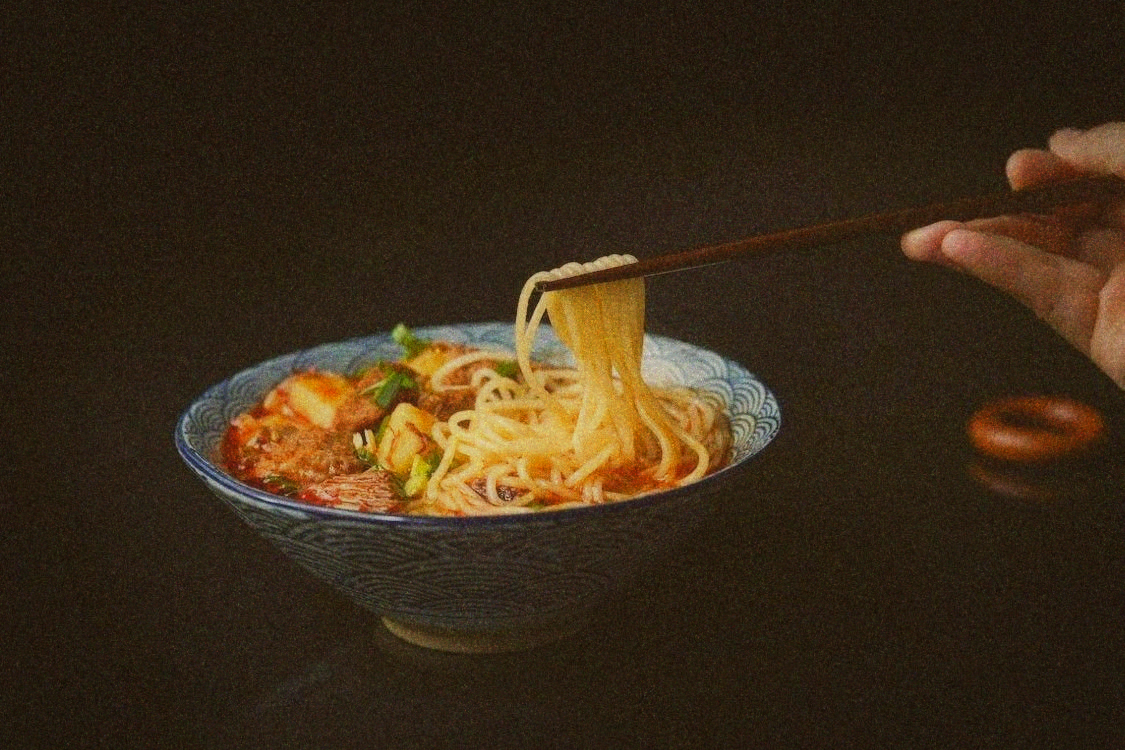
The steam rises from a bowl the size of your fist. The broth is barely amber, shrimp heads simmered for hours, strained until translucent. This is danzai noodles, and in Tainan, it's not a meal. It's a ritual.
But the ritual is disappearing. The masters who have been ladling broth since the 1960s are retiring. Their children became engineers and dentists. The shops that remain are fewer every year.
 FIRST SIGHTWEBGLColor and grain by First Sight · Gold 200.First Sight 色彩與顆粒調校 · Gold 200
Danzai noodles belong only to Tainan. You cannot authentically find them anywhere else. The dish emerged in the late 1800s not in a restaurant but from street vendors carrying a danzai, a shoulder pole with a pot of broth on each end, through Tainan's old streets. These weren't fixed locations. They appeared, served a few bowls, disappeared. The entire tradition is built on impermanence, which makes every bowl feel like the last one.
The history that shaped the bowl
The story of danzai noodles begins with 洪芋頭 (Hong Yu-tou), who established what is now Du Hsiao Yueh in 1895. Hong wasn't the first to carry a danzai, but he was the first to stop moving and set up a fixed location during a time when most vendors were still seasonal. He came from a fishing family; during the off-season when fish stocks depleted, he needed alternative income. Rather than move on like other vendors, he discovered that consistency created loyalty. He built a reputation for a specific quality: the broth. While other vendors relied on quick-cooking methods, Hong spent hours simmering shrimp heads and pork bones until the broth became its own ingredient. That commitment to long cooking is why Du Hsiao Yueh tastes like nothing else.
What Hong understood, and what many restaurateurs since have forgotten, is that danzai noodles thrive on constraint. The bowl is small on purpose, a few mouthfuls, never a full meal. The broth is intensely flavored on purpose, it's meant to coat your entire mouth in a single spoonful. The simplicity is radical. No vegetable garnish. No complicated protein. Just noodles, broth, and the flavors that develop from time and attention.
Each shop that survived the modernization wars did so by protecting this formula. The danger now isn't competition from fancier restaurants. It's elder fatigue. The people keeping these shops alive are in their seventies and eighties. When they retire, the recipes often retire with them.
What differentiates each shop
The broth is where you taste the philosophy of each shop. At Du Hsiao Yueh, the broth is balanced and clean, the baseline. At the unnamed stall in Yonglu Market, the broth is more complex, with notes of flounder that create a subtle umami depth you can't place until you're told what's in it. At Saimen, the broth is lighter, brighter, built for morning clarity rather than evening richness.
Beyond broth, the small details become the whole story. The noodles themselves differ slightly, some shops use slightly thicker noodles that hold broth better. Some use a slightly finer cut. The texture of the noodle determines how long the broth lingers in your mouth after you swallow. The quality indicator is how the broth clings to the noodle; if it sheets away clean, the noodle was cut too thin.
Then there's the side dish question. Some shops offer fishballs handmade that morning. Some offer braised eggs. Some offer nothing but let the broth be the entire story. This is not minimalism for aesthetics. It's a choice about what serves the danzai rather than what supplements it. The best side dishes are those that don't compete with the broth but enhance the ritual of eating, something to do with your hands, a texture that contrasts.
Quality indicators and how to identify authentic danzai
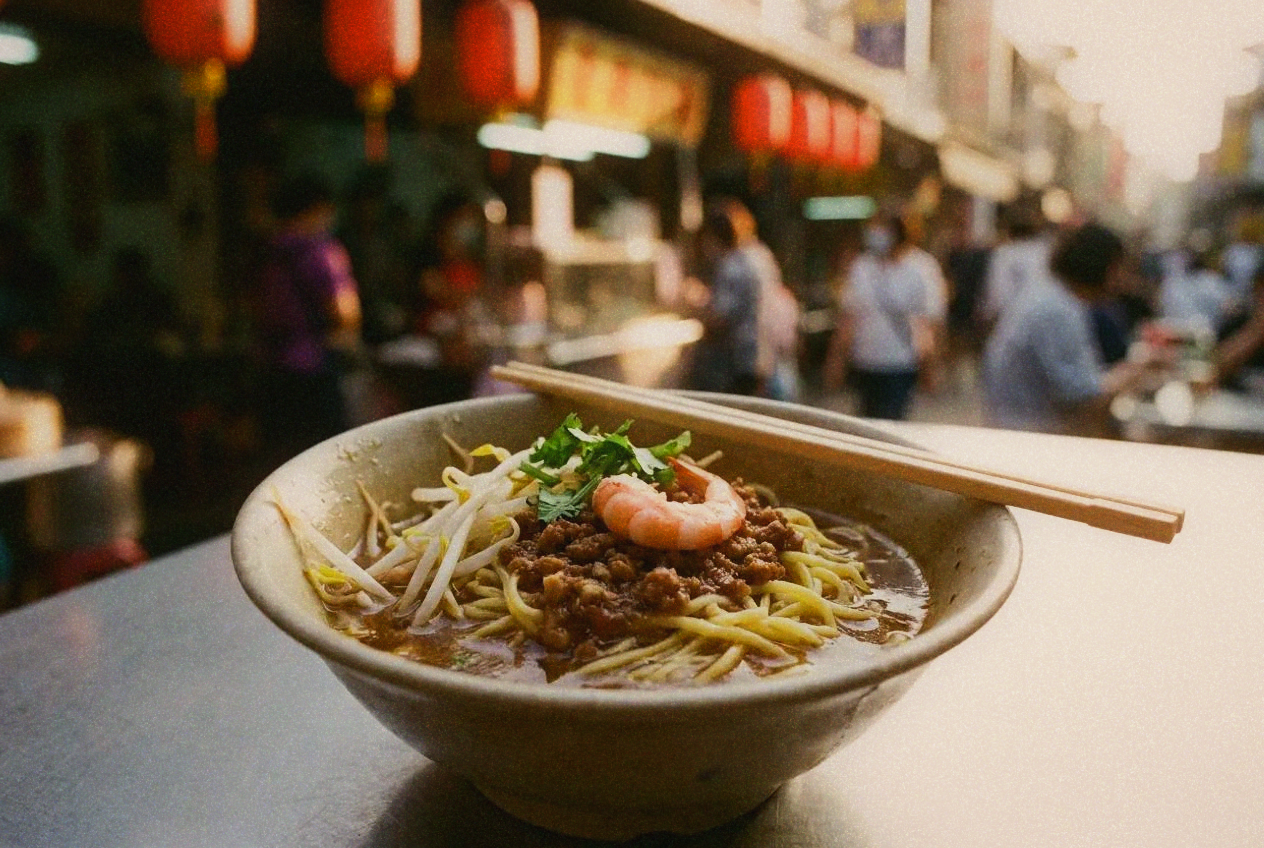 FIRST SIGHTWEBGLThe bowl tells you everything: thin noodles, clear broth with depth, a single shrimp resting on top. Danzai noodles are not meant to fill you up. They're meant to make you come back. · Color and grain by First Sight · Gold 200. · First Sight 色彩與顆粒調校 · Gold 200
Authentic danzai has specific markers that signal whether a shop truly understands the tradition or is just riding the marketing moment. The broth should have a slight opacity, not crystal clear, clear broth suggests it's been over-strained and lost depth. The color should be pale amber, not brown. Brown suggests too much soy sauce or burned aromatics.
Smell the bowl when it arrives. A good danzai broth smells like the sea, not aggressively fishy, but unmistakably oceanic. If the broth smells neutral or vaguely sweet, the shrimp heads weren't the primary ingredient. The noodles should have a slight resistance when you bite; noodles that dissolve instantly are usually from older batches or reheated multiple times.
Watch the owner. Do they taste the broth during service? Do they adjust seasoning? The best shops have an owner who treats each bowl as a small act of craftmanship, not just output.
The best time to visit each shop
Timing matters more than you'd think. Danzai noodles are a breakfast/morning snack item in Tainan's culture, not a lunch or dinner dish. The broth that sits for eight hours tastes different from broth that's been simmering for two hours. Most shops maintain a morning broth (lighter, fresher) and an afternoon broth (deeper, more concentrated).
For clear, bright broth: Visit between 6:00 and 9:00 AM. The broth is fresh off the heat. Saimen Danzai hits its window from 10:30 onwards, and it's best before 11:30.
For deeper broth flavor: Later in the morning (after 11:00) or at the unnamed Yonglu Market stall (6:00–9:00 AM). Long simmering creates complexity.
For the full experience: Go to Yonglu Market first (as early as 6:00 AM, it's already crowded by 7:00). Then walk to the other shops across the morning. By lunchtime you'll have tasted five entirely different interpretations of danzai.
How danzai noodles differ from other Taiwanese noodle soups
 FIRST SIGHTWEBGLColor and grain by First Sight · Gold 200.First Sight 色彩與顆粒調校 · Gold 200
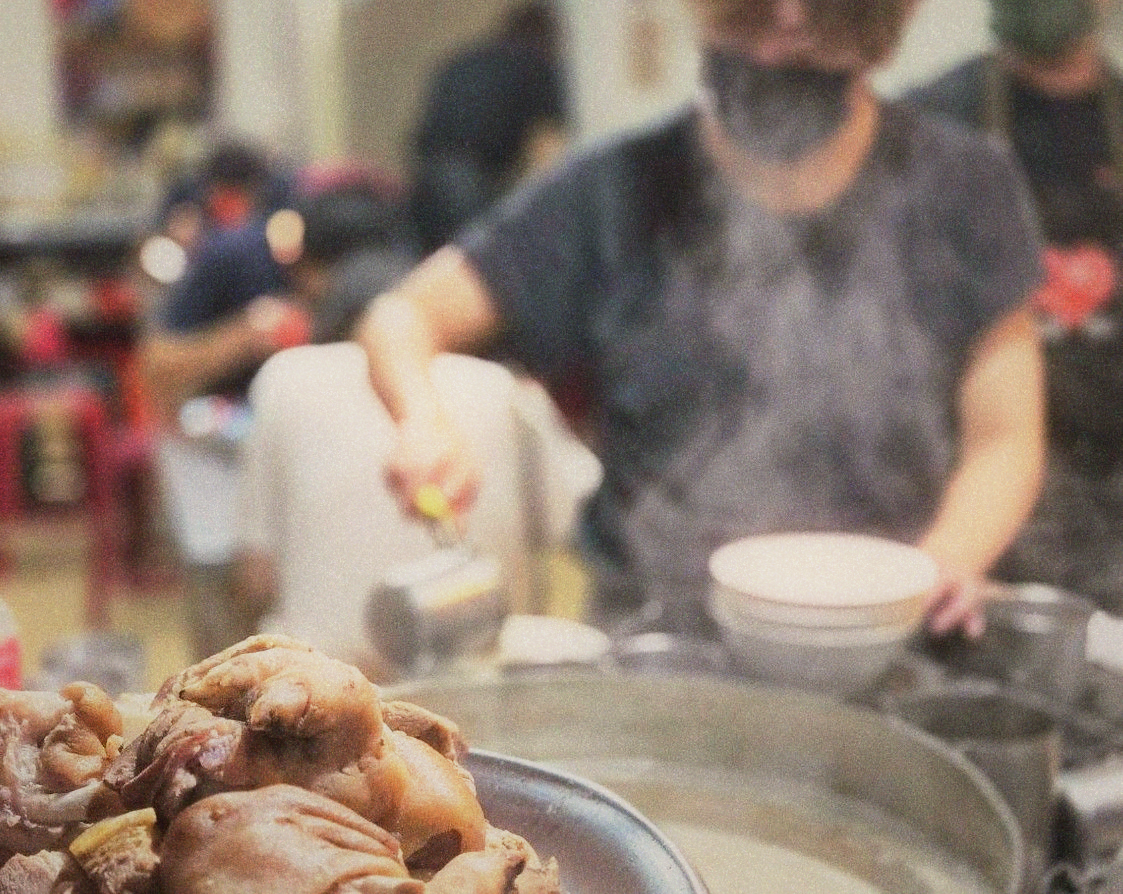
Yonglu Market at 6 AM: the original danzai territory, where the ritual still moves faster than tourism.
Versus beef noodle soup: Beef noodle soup is about the braised meat, the broth is secondary. Danzai is entirely about the broth. The noodles are there to carry it. Beef noodle soup is a full meal. Danzai is an aperitif.
Versus dan dan noodles (擔擔麵): The naming confusion is real. Dan dan noodles are Sichuan, built on chili oil, sesame paste, and Sichuan peppercorns. Danzai noodles are Tainan, seafood broth, no heat, no sesame. It's the opposite direction entirely. The confusion happens because both use the word danzai, dan dan is named after the pole that street vendors carried them on, and danzai is also a pole. But the dishes are unrelated.
Versus shrimp and pork broth noodles elsewhere: Shrimp broth noodles appear in other parts of Taiwan, but the Tainan version is singular. It's about quality of broth, not quantity. You could replicate the ingredients elsewhere, but the water matters. The age of the shop's seasoning base matters. The specific shrimp sources matter in ways that aren't written down. This is why the old shops can't be replicated, the history is embedded in the broth.
Seasonal variations and side dishes
Spring (March–May): Lighter broths come forward. Spring shrimp have a delicate sweetness. This is peak season for trying multiple shops and detecting the difference in their individual approaches.
Summer (June–August): Broth becomes heavier, richer to balance the heat. Some shops add more pork bone to the simmer. Fishball options increase as vendors get access to better fish. The heat makes you crave the cooling effect of slurping hot broth.
Fall (September–November): Return to balance. Temperature permits longer morning practice. More tourists arrive, which can affect wait times and, occasionally, the attention to detail. Still an excellent time to visit.
Winter (December–February): Rich broths that warm from inside. Some shops add warming elements like ginger subtly. This is when the slow-cooked approach really reveals itself. The contrast between cold outside air and hot broth becomes part of the pleasure.
Side dishes to order: Braised eggs (滷蛋) absorb broth beautifully, they're the best accompaniment, as they don't compete with the broth's flavor. Fishballs (魚丸) are worth trying if they're made daily (ask). Some shops offer 豆干 (pressed tofu) which carries salt and umami. Ask what's been prepared that morning. Freshness is everything. The worst mistake is ordering stale side dishes with a perfect bowl of broth.
The danzai walking route
All five shops fit within a 2.5km walk. The ideal sequence lets your palate progress through interpretations:
Start: Yonglu Market, 2F (6:00–7:00 AM arrival for peak freshness). Eat. Note the complex broth. Walk out and south.
Second: A-Xia Danzai (海安路). About 1km south. The dry noodle version here is worth experiencing. You see what the sauce alone can do without broth. About 30 minutes total including walking.
Third: Saimen Danzai (民族路). About 400m east. Lighter broth, morning clarity. The egg drops into the hot broth and poaches slightly. Another 30 minutes.
Fourth: Du Hsiao Yueh (中正路). About 600m north and west. The original. The baseline. Return to first principles. Sit longer here if you can. Notice what you learned from the previous three bowls. This is where you understand what all the others are referencing.
Evening (if energy remains): Fuji Danzai (府城路). Only open 17:00–00:00. Different crowd, different energy. The fishball soup alongside is worth the extra dishes. Evening service means the broth has been simmering all day, it's a different experience entirely.
Total time with eating: four to five hours. You'll understand Tainan's entire danzai philosophy in a morning and evening.
The debate about authenticity and tradition
In Tainan food circles, there's quiet debate about which shop is "most authentic." This is the wrong question. Authenticity in danzai terms means: do they make their own broth, have they been consistent for decades, do they protect the simplicity? By that measure, all five shops are authentic. They just express it differently. Think of them as variations on a theme rather than a hierarchy.
Du Hsiao Yueh is authentic because it's the longest running and the template everyone learned from. The unnamed Yonglu Market stall is authentic because it's doing the practice with zero ego or marketing. Saimen is authentic in a different way, it's learned the tradition, adapted it to its location, and maintained it across a generation.
The real question isn't which is most authentic, but which speaks to your palate. Each shop is a different answer to the same question: what is the essence of danzai?
Frequently Asked
Some links in this article are affiliate links. If you purchase through them,OQUA may earn a small commission at no extra cost to you. This helps support our editorial work. We only link to products and services we genuinely reference in our writing.
Comments (0)
Loading comments...