
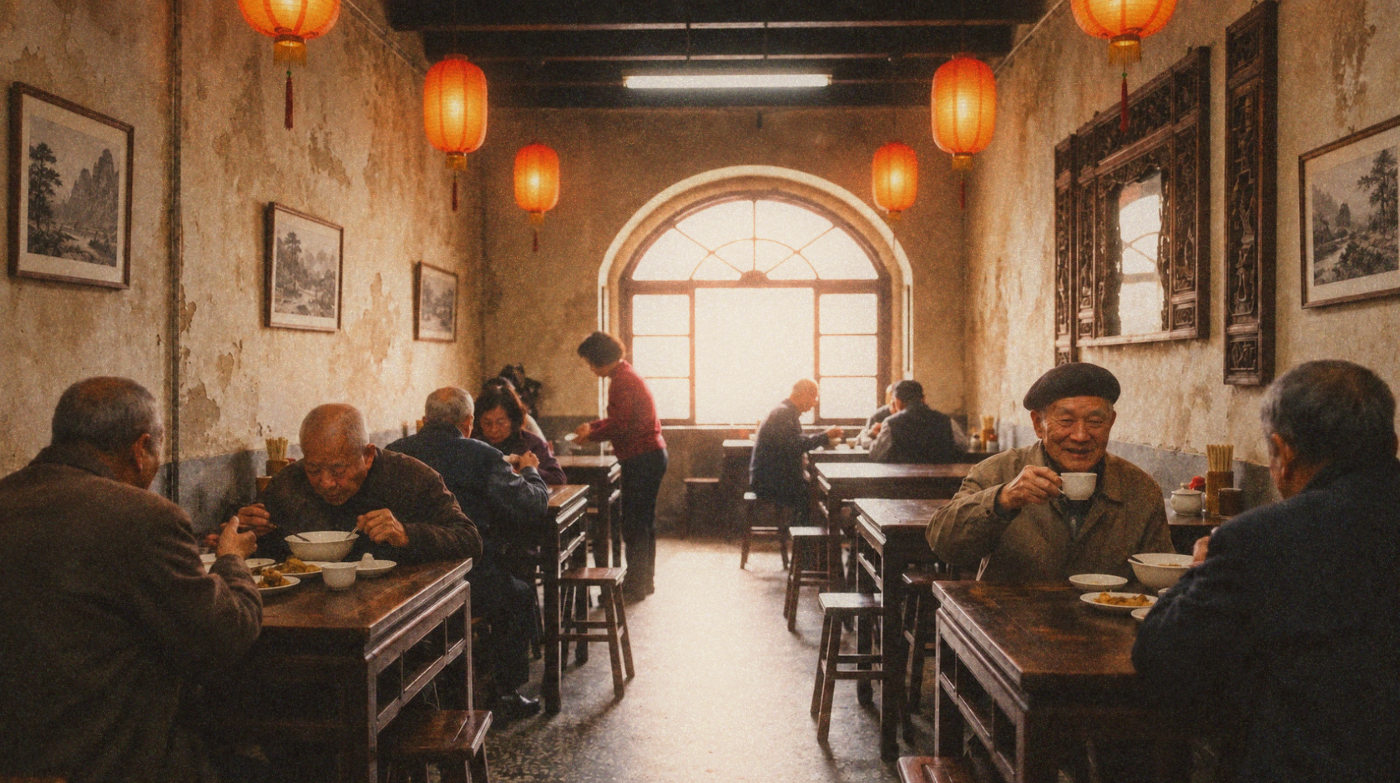
The woman at the counter of 矮仔成蝦仁飯 has been peeling fire shrimp since 6am. Her hands move without hesitation, separating shell from flesh in a motion so practiced it looks like a card trick. Behind her, a pot of rice steams with the faint sweetness of shrimp stock. The dining room is already half-full at 8:45 on a Wednesday morning. Nobody here is a tourist. The couple by the window orders in Tainan Hokkien. A man in a mechanic's shirt eats alone, hunched over his bowl with the focused posture of someone who has done this a thousand times.
This restaurant has been serving shrimp rice since 1922. Over a hundred years. The founder, Ye Cheng, learned his craft at a Japanese restaurant during the colonial era, then started his own stall at the old West Gate Market. People called him "矮仔成" because he was short. The name stuck. Four generations later, his great-granddaughter and her husband run the place, and the fire shrimp still arrive fresh every morning.
Tainan has dozens of heritage restaurants like this. Not the trendy coffee shops or the Instagrammed brunch spots, but the old places where families have been repeating the same recipes for half a century or longer. Some are famous. Some you walk past without noticing. All of them represent a particular kind of stubbornness: the refusal to stop doing something well simply because the world has moved on.
Here are five worth knowing.
矮仔成蝦仁飯 (Ai Zai Cheng Shrimp Rice)
Founded: 1922 | Address: No. 66, Section 1, Hai'an Road, West Central District | Hours: 8:30am to 7:30pm, closed Tuesdays
The signature dish was once served at a presidential banquet. That sounds like marketing, but it tells you something about how seriously Tainan takes this bowl. The shrimp rice uses 火燒蝦, a local species with vivid red-purple markings that intensify when cooked. The shrimp are hand-peeled daily, then layered over rice that's been cooked in a light shrimp stock. The rice absorbs just enough flavor to taste like the sea without overwhelming you.
Order a large shrimp rice (NT$110), add a pan-fried duck egg on top (NT$20), and pair it with duck egg soup (NT$35). This is the local move. The cold sliced pork liver (NT$40) is also quietly excellent. The whole meal costs less than a mediocre sandwich in Taipei, and it will be one of the best things you eat in Taiwan.
The space was renovated a few years ago, so the air conditioning works and the menus come in Chinese, Japanese, and English. But the cooking hasn't changed.
再發號肉粽 (Zai Fa Hao Meat Zongzi)
Founded: 1872 | Address: No. 71, Section 2, Minquan Road, West Central District | Hours: 10:00am to 8:00pm (irregular rest days)
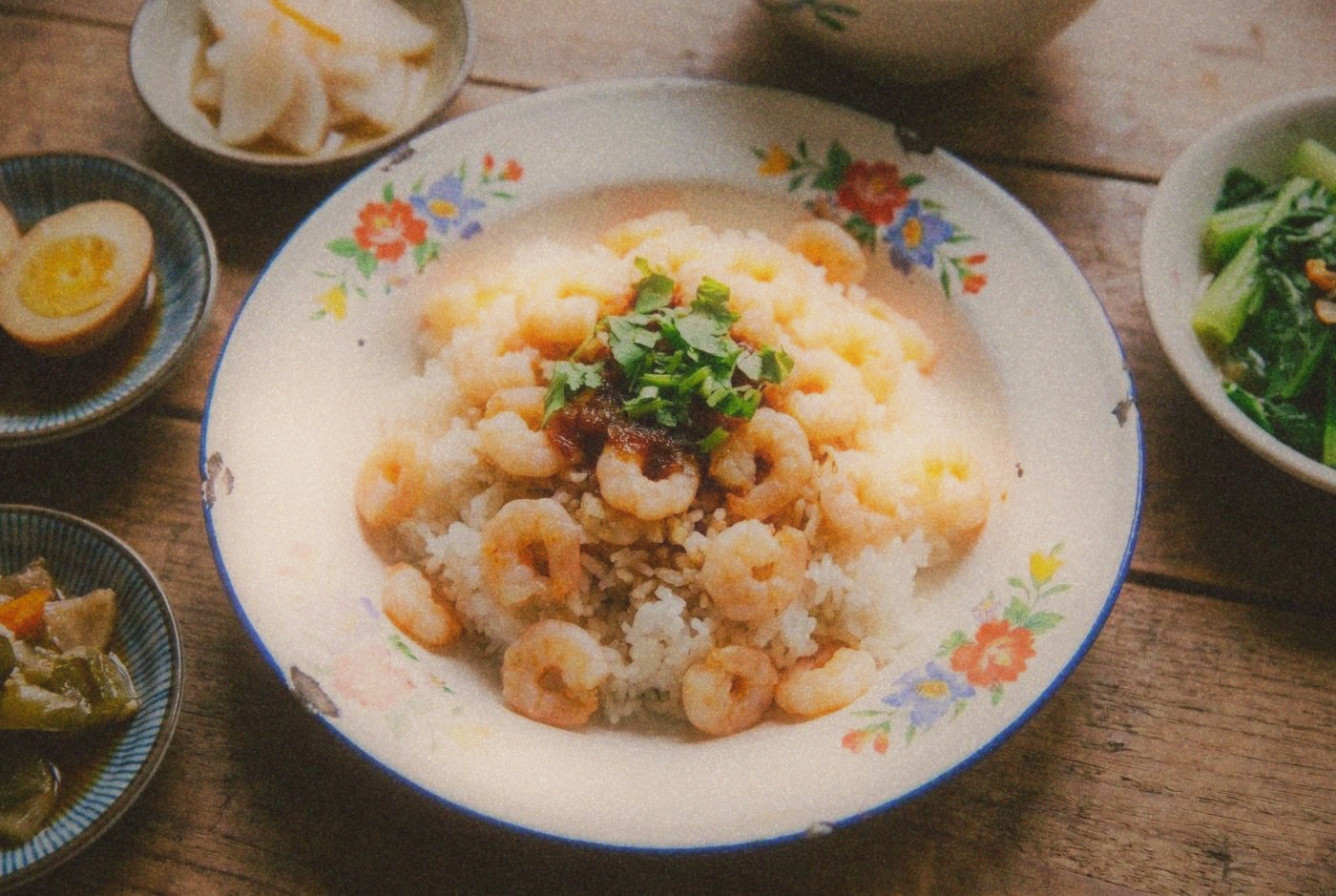
 FIRST SIGHTWEBGLClose-up of a plate of Tainan shrimp rice. peeled shrimp glistening on white rice · Color and grain by First Sight · Gold 200. · First Sight 色彩與顆粒調校 · Gold 200
One hundred and fifty-four years. That number needs a moment to register. This zongzi shop opened during the Qing Dynasty, when the first-generation founder carried his rice dumplings on a shoulder pole through Tainan's streets, setting up near the North Pole Temple on Minquan Road. The shop name combines characters from the grandfather's name and the third generation's name. It's now on its fourth generation.
The basic meat zongzi (NT$50) is solid and honest. But the reason people travel for this is the special seafood eight-treasure zongzi (NT$150). It's enormous. Whole abalone, dried scallops, premium shiitake, squid, sakura shrimp, salted egg yolk, chestnuts, lean pork, and braised meat sauce, all wrapped in long-grain glutinous rice and bamboo leaves. One is a meal. The Michelin Guide has listed them consecutively since 2022, which brought crowds, but the quality hasn't slipped.
The shop also serves a small squid soup and meat thick soup if you want something lighter alongside your zongzi. Don't skip the soup. It cuts through the richness.
度小月擔仔麵 (Du Hsiao Yueh)
Founded: 1895 | Address (Original Store): No. 16, Zhongzheng Road, West Central District | Hours: 11:00am to 8:30pm (last order 8:00pm)
Most people know this name. It's Tainan's most famous noodle brand, with locations across Taiwan. But the original store on Zhongzheng Road is a different experience from the flagship. It seats maybe eighteen people downstairs. A cook sits on a low stool behind a traditional stove setup, blanching noodles in a bamboo basket, spooning out the minced pork sauce that Hong Yu-tou invented 131 years ago.
The backstory is worth knowing. Hong was a fisherman. During typhoon months when the seas were too dangerous, he needed income. Those lean periods were called "小月" (small months), and he began selling noodles to "度" (get through) them. The dish was born from economic necessity, not culinary ambition.
"The bowl is small on purpose. A few mouthfuls, never a full meal. The broth is intense because it's meant to coat your mouth in a single spoonful."
A bowl of dan zai noodles costs NT$50. Pair it with shrimp rolls, oyster omelet, or milkfish belly soup from their menu to make a full meal. The flagship location at No. 101 Zhongzheng Road has 200 seats and a broader menu if you want the sit-down experience. But the original store is where you feel the history. Cash only there.
阿霞飯店 (A-Xia Restaurant)
Founded: 1940 | Address: No. 7, Lane 84, Section 2, Zhongyi Road, West Central District | Hours: 11:00am to 2:00pm, 5:00pm to 9:00pm (closed Mondays)
 FIRST SIGHTWEBGLTime leaves its mark on the brickwork and timber along an old street. · Color and grain by First Sight · Gold 200. · First Sight 色彩與顆粒調校 · Gold 200
This is Tainan's banquet-style dining at its finest. The founder, Wu Jin-Xia, started by helping her father run a food stall at Xingji Temple in the 1940s. She moved, expanded, and eventually built a reputation that drew presidents. Literally. Multiple ROC presidents have eaten here, from Chiang Ching-kuo onward.
The signature dish is the red crab sticky rice cake (紅蟳米糕). Two whole red crabs split open on a bed of glutinous rice steamed with premium shiitake, dried shrimp, pork, and fried shallots. You need to pre-order it. The stir-fried eel (生炒鱔魚) is Tainan cooking at its most precise: hot wok, fast hands, the eel slippery and caramelized in a sweet-sour sauce. The mullet roe is sliced thick and served simply.
A duo set meal runs NT$1,980 for six dishes, which is the most practical way to eat here if there are two of you. A la carte gets expensive quickly. There's a 10% service charge. Reserve ahead. This place fills up, especially on weekends.
When the founder considered retiring in 2006, her nephew and his wife took on NT$10 million in bank loans to keep the restaurant alive rather than let the recipes disappear. That kind of commitment tells you something about what these dishes mean to the people who cook them.
阿美飯店 (A-Mei Restaurant)
Founded: 1962 | Address: No. 98, Section 2, Minquan Road, West Central District | Hours: 11:30am to 2:00pm, 5:30pm to 9:00pm (closed Tuesdays and Wednesdays)
If A-Xia represents Tainan's banquet tradition, A-Mei represents something even rarer: 酒家菜. This style of elaborate cooking was served in the drinking houses of pre-1970s Tainan, a culinary tradition that's nearly extinct. The founder, Tsai Chong-Lian, started learning in professional kitchens at 14 and opened this restaurant when he was old enough to run one. He's preserved dishes from menus dating back to 1902.
The clay pot duck (砂鍋鴨, NT$1,180) is the must-order. Slow-braised over charcoal, the duck falls apart into a broth that tastes like someone condensed three hours of patience into a bowl. During peak periods, the kitchen processes up to 900 ducks a day. The crab balls (蟳丸) and minced pork with shrimp (肉米蝦) are old-school dishes you won't find in modern Tainan restaurants.
This is not cheap food. A meal for five to seven people with the set menu costs about NT$5,000 plus a 10% service charge. But Japanese tourists fly to Tainan specifically for this restaurant. The Michelin Guide has given it a Bib Gourmand for several consecutive years. Both facts tell the same story: the cooking is exceptional.
What these restaurants share
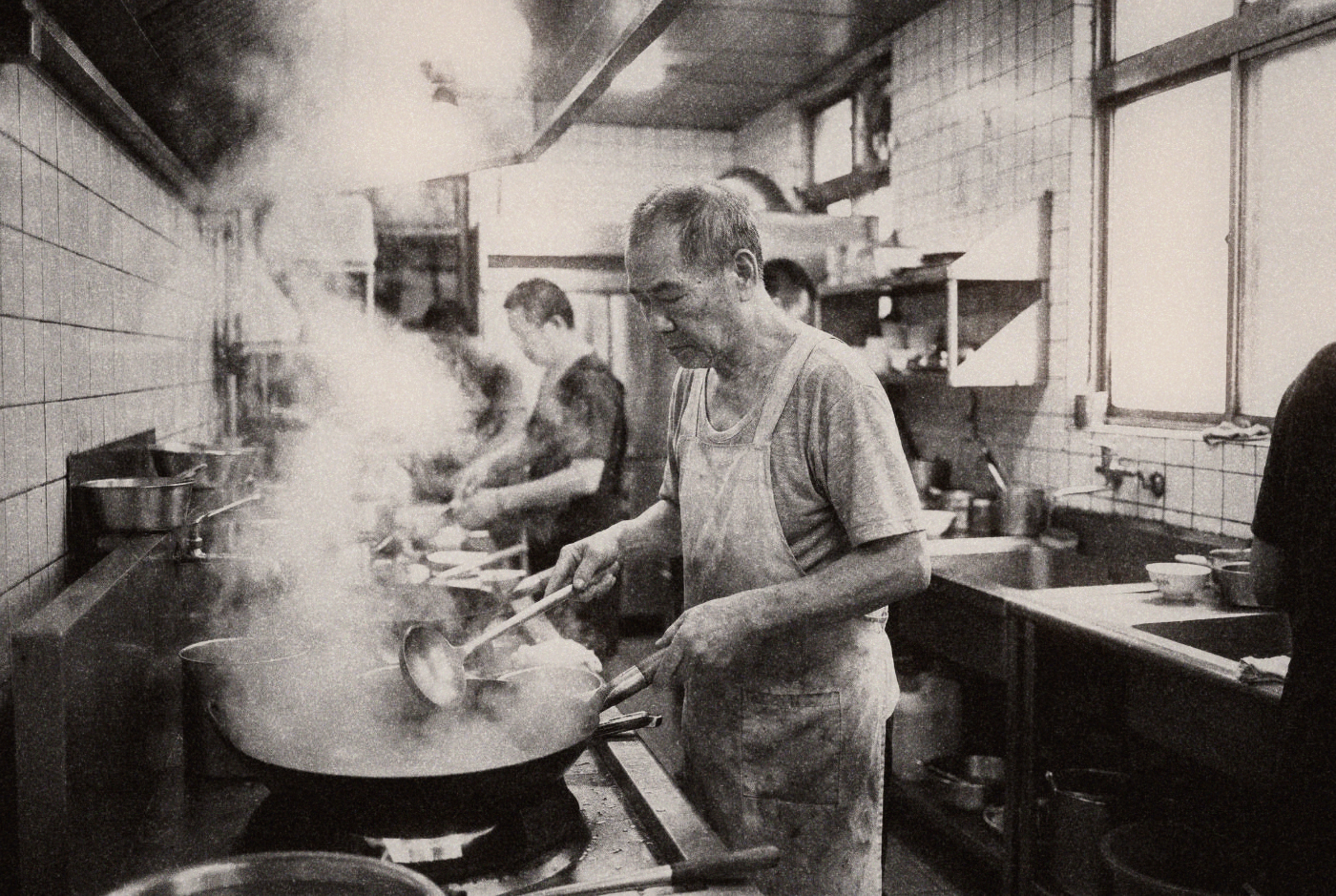 FIRST SIGHTWEBGLElderly Taiwanese cook at a wok station in a traditional restaurant kitchen. steam rising · Color and grain by First Sight · Gold 200. · First Sight 色彩與顆粒調校 · Gold 200
None of these places are trying to be modern. They're not updating their menus for Instagram, launching delivery apps, or hiring brand consultants. What they share is a commitment to doing one thing, or a handful of things, the way they've always done them.
That's harder than it sounds. Ingredients change. Suppliers retire. Young people don't want to peel shrimp at dawn or braise duck over charcoal for three hours. Every generation of these restaurants faces the same question: is it worth continuing? So far, for these five, the answer has been yes. That's not guaranteed for the next generation.
If you're in Tainan for a day, eat at two of these. If you're there for a weekend, try to visit all five. They're all in the West Central District, within walking distance of each other. The neighborhood around Minquan Road, Zhongzheng Road, and Hai'an Road is essentially a living museum of Tainan's food history. Walk it slowly. Eat everything.
FAQ
Do I need reservations? For 阿霞飯店 and 阿美飯店, yes. Book at least a few days ahead, especially for the red crab sticky rice cake at 阿霞, which requires pre-ordering. The other three are walk-in, though expect short waits during peak hours.
Is there an order to visit them? If you're doing a food walk, start with 矮仔成蝦仁飯 for breakfast (opens 8:30am), then 再發號 for a mid-morning zongzi, then 度小月 for lunch. Save 阿霞 or 阿美 for dinner. You can cover all of them in a day if your appetite allows.
Are these tourist traps now? Some have gotten more popular after Michelin recognition, but the cooking hasn't changed to accommodate tourists. You'll still be eating alongside locals at all five. The prices remain reasonable for what you get.
Can I get by with English? 矮仔成 has English menus. 度小月's flagship has English-speaking staff. The others are mostly Chinese-only, but pointing at photos or neighboring tables works fine. Google Translate on your phone handles the rest.
What if I only have time for one? If you want a quick, affordable taste of Tainan heritage: 矮仔成蝦仁飯. If you want a full banquet experience: 阿霞飯店 or 阿美飯店. They're different experiences, so the answer depends on what you're after.
Comments (0)
Loading comments...