
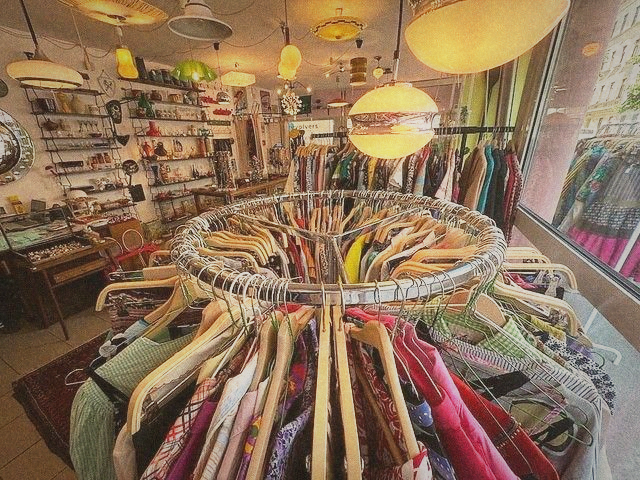
The jacket hanging on the rack at Story Wear in Dadaocheng was made from a pair of jeans someone threw away. Not donated and resold. Headed for incineration, intercepted, deconstructed, reassembled. The seams are visible. The denim weight shifts between panels because no two source garments were identical. It costs NT$3,800. The woman behind the counter can tell you which seamstress made it, what factory the original fabric came from, and what it cost to produce. Most fashion brands can't answer a single one of those questions.
Story Wear is a useful entry point for understanding what's happening in Taiwanese independent fashion right now. Because what's happening is not what the international press tends to assume.
The story, when it gets told abroad, usually goes: "emerging market." Designers struggling for recognition. Labels copying Seoul or Tokyo. The actual picture is different. Taiwan has a textile manufacturing infrastructure that most countries envy. Designers who grew up inside that infrastructure, who understand fabric at a molecular level. And a generation of makers doing genuinely strange, ambitious things with recycled plastic bottles, oyster shells, banana leaves, and reservoir sludge. Not as greenwashing stunts. As serious material science with a fashion output.
Here are the brands I keep coming back to, and the places where you can find them.
The materials innovators
These are the brands pushing Taiwan's textile heritage into territory that doesn't exist anywhere else.
oqLiq Founded in Tainan by Chi Hung and Orbit Lin. Online at oqliq.io.
oqLiq is the most technically ambitious brand on this list. Their clothes are made from recycled PET bottles and oyster shell powder, using a technique that Taiwan's textile industry developed and that few other countries can replicate at scale. The oyster shell component comes from Taiwan's massive aquaculture industry, where shells are typically waste. Ground into powder and blended with recycled plastic, they create fabric that's lightweight, odor-resistant, and temperature-regulating.
I bought a shell jacket from them two years ago. It's thinner than any waterproof layer I've owned but genuinely keeps rain out. The design language is distinctly Taiwanese: functional without being aggressive, architectural without being impractical. Not everyone's aesthetic, but if you care about where fabric technology is actually going, this is the brand to watch.
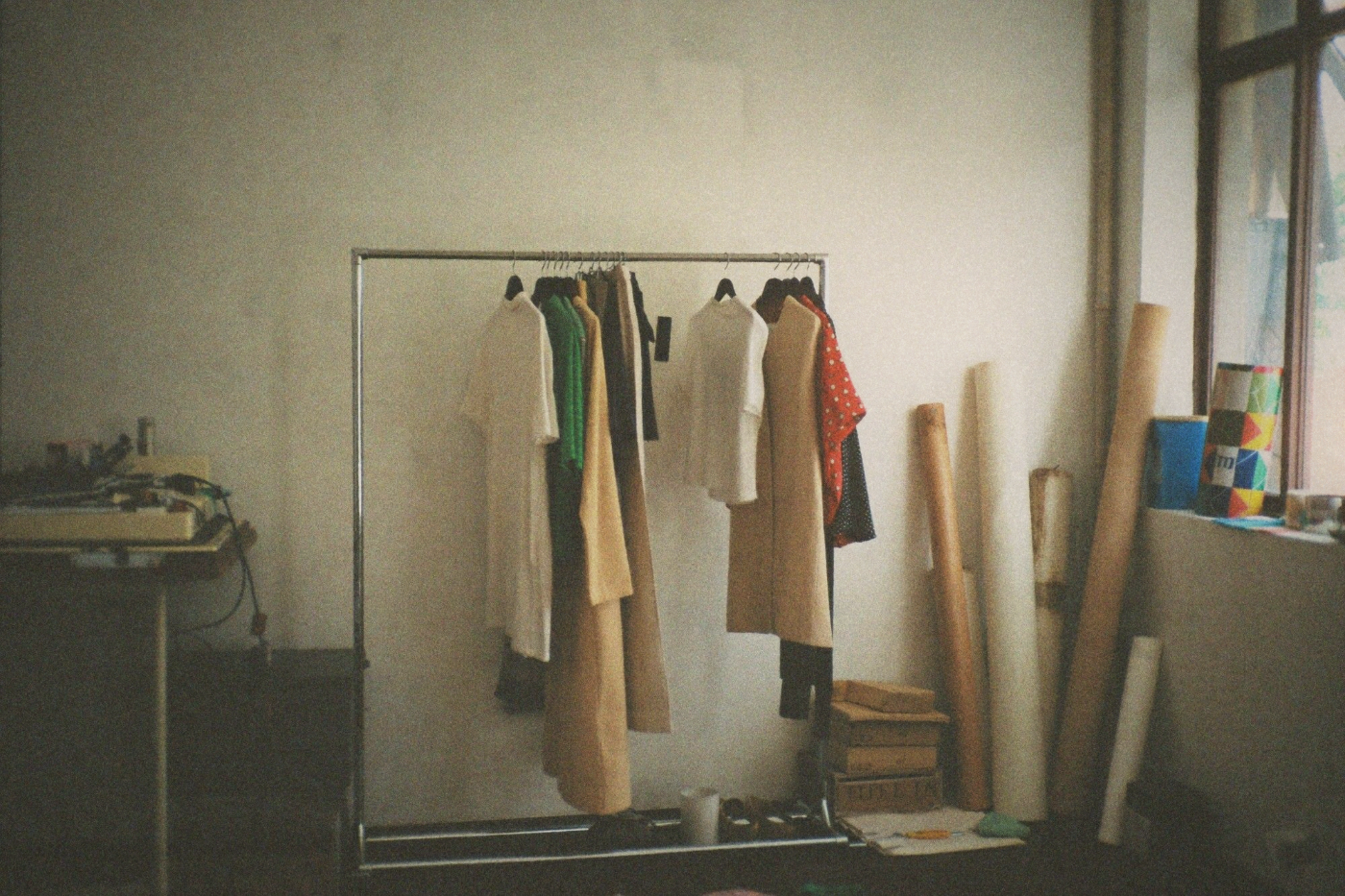
 FIRST SIGHTWEBGLOyster shell powder and recycled PET, spun into fabric within a two-hour drive of the farms. · Color and grain by First Sight · Portra 400. · First Sight 色彩與顆粒調校 · Portra 400
WEAVISM Online at weavism.com.
WEAVISM takes a different approach to the same problem. Where oqLiq works with recycled synthetics, WEAVISM works with unconventional natural materials: beeswax-coated fabrics, banana leaf fibers, materials designed to biodegrade completely when they reach end of life. No microplastics. The idea is that the garment returns to the earth when you're done with it.
In practice, the clothes look more outdoorsy than urban. Think hiking-ready pieces that happen to be made from things that grow in Taiwanese fields. The functional performance is real: water resistance from beeswax coating, breathability from natural fiber construction. Less polished than oqLiq, more experimental.
DYCTEAM Founded in 2008. Online at dycteam.com.
DYCTEAM is a denim brand built around jacquard weaving and recycled materials. The name stands for "Define Your Character," which sounds like marketing until you see the fabric up close. Their custom jacquard denim has texture and depth that mass-produced denim simply can't achieve. They work with Taiwanese textile mills that have been making denim for international brands for decades and redirect that expertise inward.
The brand sits between streetwear and workwear. Structured jackets, tapered trousers, pieces that can handle both a casual office and a weekend without changing. Price range NT$2,000-5,000 for most items.
The cultural translators
These brands take Taiwanese identity, history, and aesthetic traditions and turn them into clothes that work in contemporary life.
NAMESAKE Founded by Michael, Richard, and Steve Hsieh. Available at Ne.Sense (their Taipei concept store) and select international retailers.
Three brothers who grew up as third-culture kids, moving between Taiwan and the United States. NAMESAKE blends basketball culture, family history, and avant-garde construction into pieces that feel both personal and universal. They were LVMH Prize semi-finalists in 2023, which put them on the international map, but the work was interesting long before the recognition.
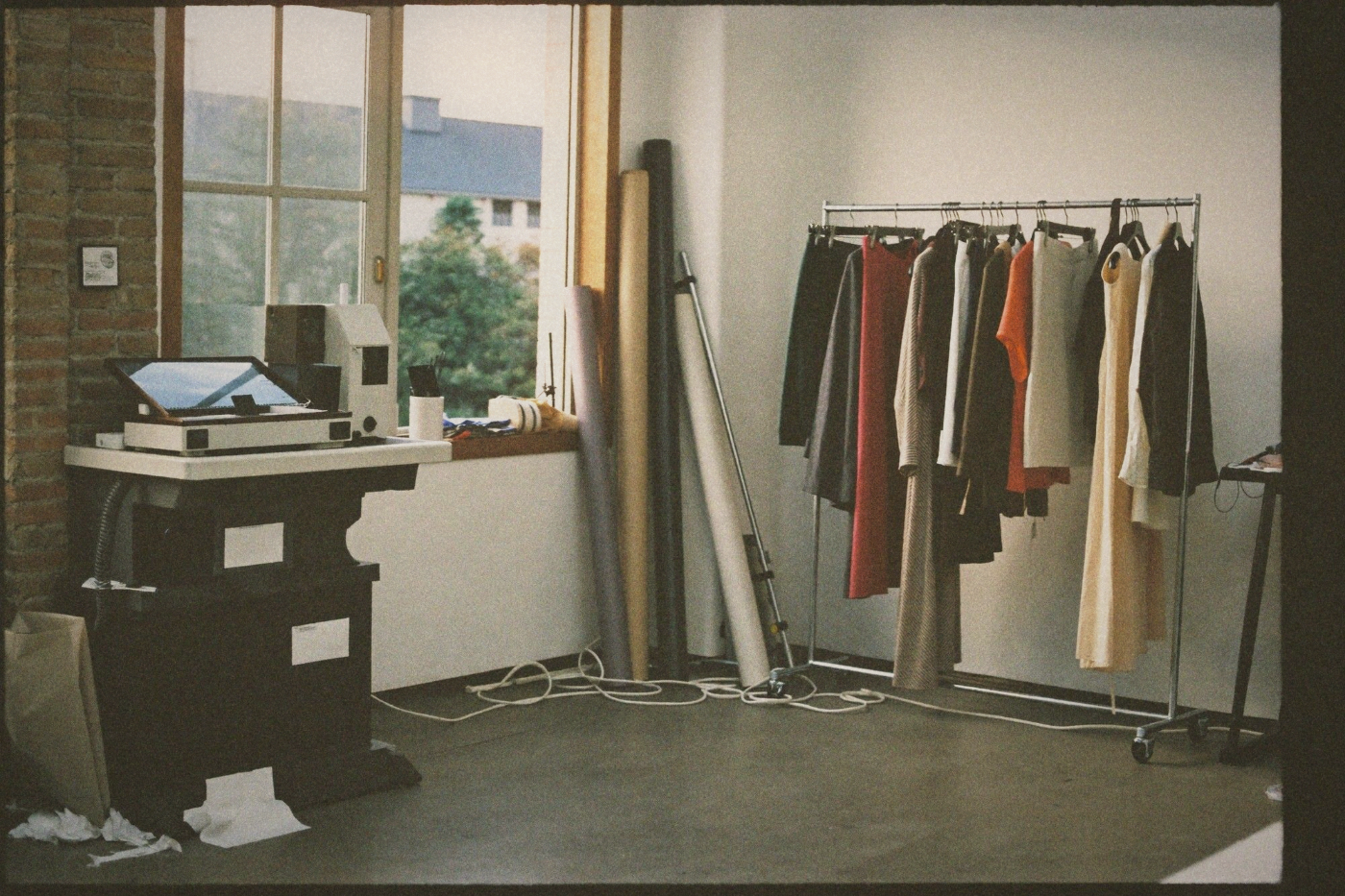 FIRST SIGHTWEBGLThird-culture pattern-making: basketball silhouettes cut with couture construction. · Color and grain by First Sight · Portra 400. · First Sight 色彩與顆粒調校 · Portra 400
Their Taipei concept store, Ne.Sense, is worth visiting even if you don't buy NAMESAKE specifically. It stocks Rick Owens, Wales Bonner, and a carefully chosen rotation of international and local labels. It's one of the few places in Taipei where you can see Taiwanese design in conversation with global fashion at the same level.
Hansen Atelier Founded in 2021 by Hansen Kuo. Available at select Taipei retailers.
Hansen Kuo calls his approach "New Oriental Aesthetic." In practice, this means architectural patternmaking inspired by traditional Chinese tailoring, executed with the kind of refined craftsmanship that usually costs three times what Hansen charges. The clothes have structure without stiffness, formality without stuffiness. If you need something for a meeting that doesn't look like everyone else's meeting clothes, this is where to start.
The slow fashion pioneers
These brands are built around the idea that the best garment is one you keep for years.
Story Wear Founded by Kuan Chen in 2018. Flagship: House of Story Wear, 65-67 Xining North Road, Dadaocheng.
Story Wear showed up in our slow fashion guide too, because the model is different from basically anything else in Taiwan. Every piece is 100% upcycled deadstock and discarded denim. The seamstresses are women from disadvantaged backgrounds, through partnerships with the Awakening Foundation and cerebral palsy family support groups. They'll tell you where the fabric came from, who sewed it, what it cost to make.
The social mission is real, but the clothes have to stand on their own too, and they do. That denim jacket from the top of this article has a better cut than most new denim jackets at twice the price. Being made from waste matters. Fitting well is why it actually gets worn.
plain-me Flagship: No. 18, Lane 161, Sec. 1, Dunhua South Road, Daan District. Daily 13:30-22:00.
plain-me is a select shop, not a single brand, but the in-house basics deserve mention. Tees, knits, simple trousers, NT$1,200-1,800. Made for Taiwan's climate, built to survive hundreds of wears. The fabric holds up in subtropical humidity, and the cuts work for Asian proportions without making a fuss about it.
The bigger contribution is curation. plain-me gives shelf space to small Taiwanese and Japanese labels that can't afford their own store, so the shop ends up being a gateway. A lot of people discover smaller brands there and start buying from them directly. That's what a good select shop does.
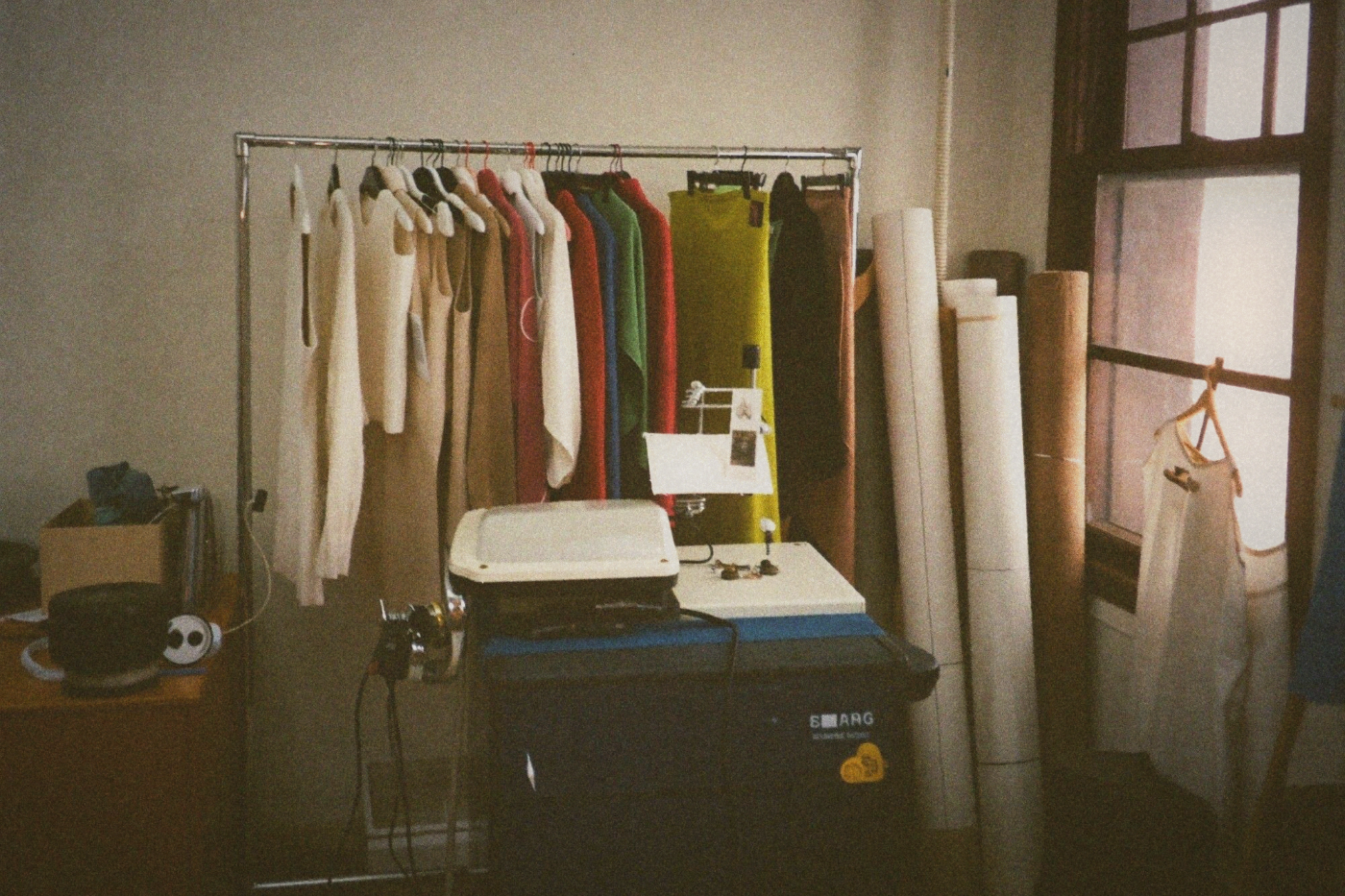 FIRST SIGHTWEBGLEvery panel a different weight of salvaged denim, because no two discarded pairs match. · Color and grain by First Sight · Portra 400. · First Sight 色彩與顆粒調校 · Portra 400
Building your approach
The mistake most people make when they first encounter Taiwan's independent fashion scene is trying to overhaul their wardrobe at once. That's expensive and misses the point. Here's a slower way in.
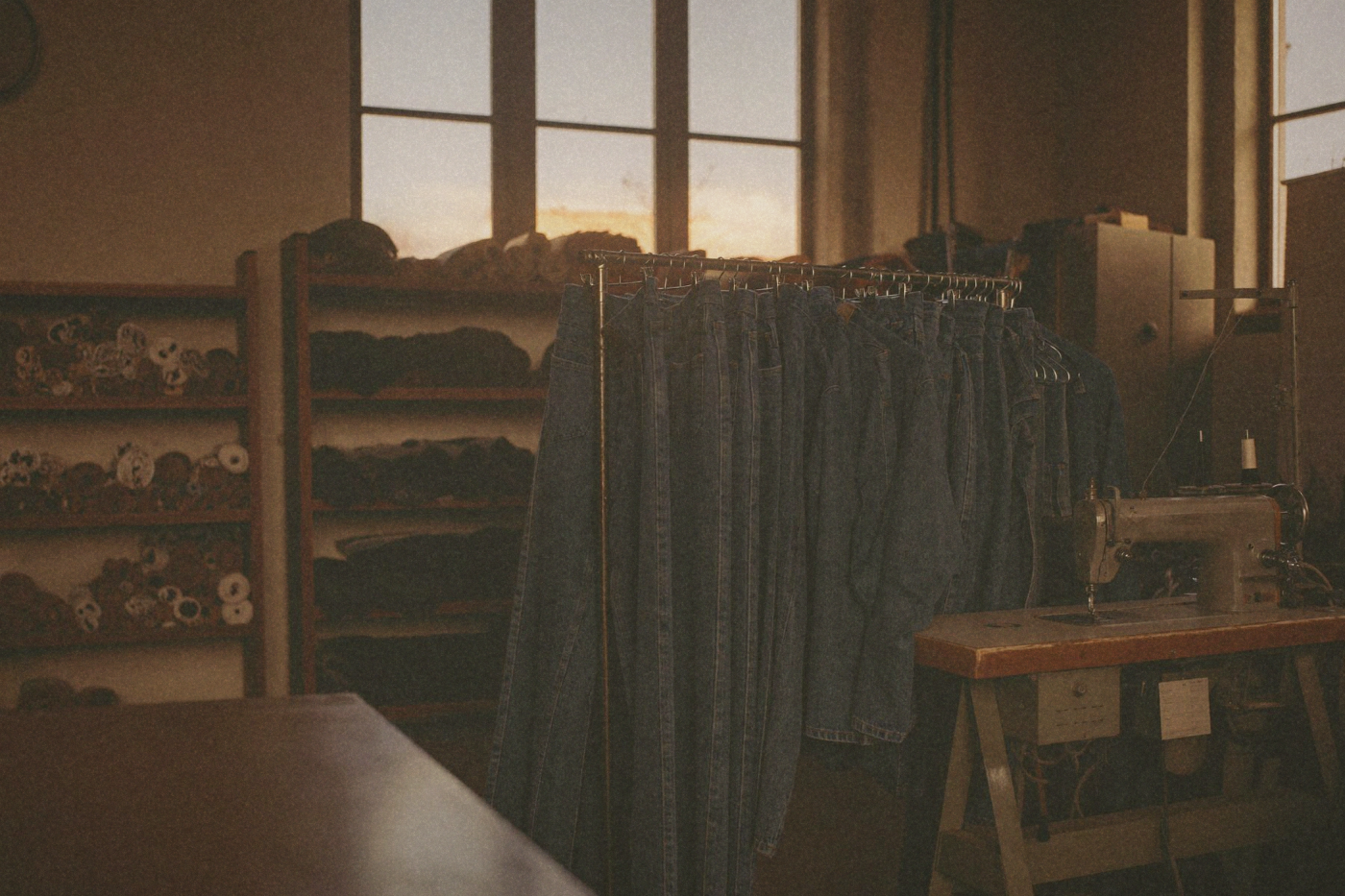 FIRST SIGHTWEBGLDeadstock denim, sorted by weight before it is cut. The seams stay visible because the panels never matched. · Color and grain by First Sight · Portra 400. · First Sight 色彩與顆粒調校 · Portra 400
Where to find them
The bigger picture
Taiwan has something most countries don't: the whole textile supply chain, from fiber to finished garment, within a two-hour drive. Designers can visit the mill that makes their fabric. They can tweak material composition and get a sample back in days. They can do small production runs that would be too expensive anywhere else.
This is why oqLiq can make oyster shell fabric. The oyster farms, recycling plant, textile mill, and design studio are all close enough to drive between. Same for WEAVISM's biodegradable stuff. Everything is local.
What this means for you: the clothes tend to be better-made and more interesting than similarly priced stuff from brands where design happens on one continent and manufacturing on another. When a designer can walk into the factory and watch their fabric being woven, things turn out different.
Some links in this article are affiliate links. If you purchase through them,OQUA may earn a small commission at no extra cost to you. This helps support our editorial work. We only link to products and services we genuinely reference in our writing.
Comments (0)
Loading comments...