
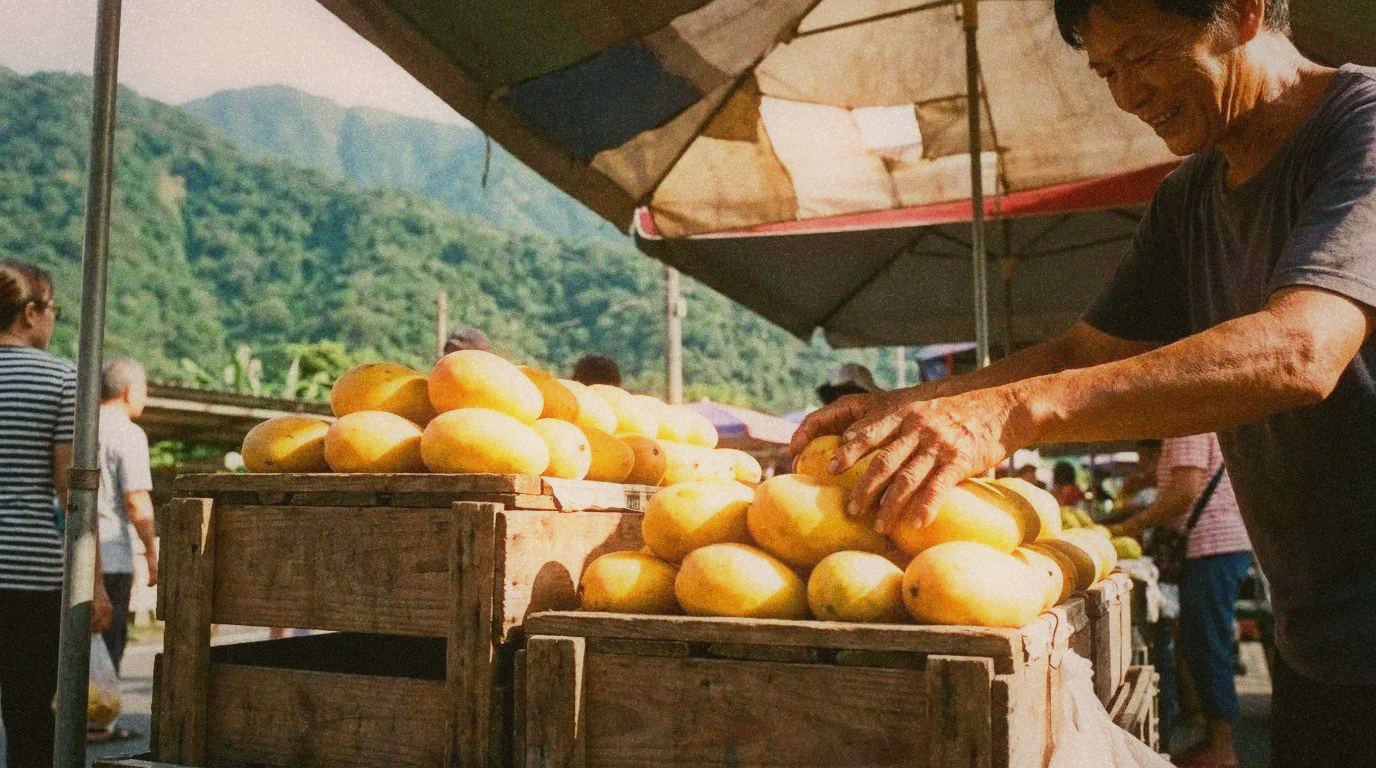
The juice is running down the vendor's forearm. She slices an Irwin mango in three clean strokes, fans the flesh open like a hedgehog, and hands it over on a plastic bag for NT$50. It's 2pm at Yujing Fruit and Vegetable Market in Tainan, 34 degrees in the shade, and the air smells like a fruit that's almost too sweet to be real. The woman behind you in line is already pointing at the next one. Nobody is browsing. Everyone knows what they came for.
Taiwan's mango season runs from roughly May through September. That's the official window. The real window, the one that matters if you care about flavor, is narrower: late June through mid-August is when the Irwin mangoes peak, when the sugar content is highest and the texture is at that specific point between firm and dissolving that makes you close your eyes when you bite down. Miss this window and you'll still find mangoes, but you'll know the difference.
The island cultivates over 50 varieties. You don't need to know all of them. You need to know two, maybe three, and you need to know where to find them at their best.
The mangoes worth knowing
Irwin (愛文芒果). This is the one. When someone says "Taiwanese mango" without specifying, they mean Irwin. Red-skinned, fist-sized, smooth flesh with almost no fiber, and a sweetness that hits both the front and the back of your tongue. Irwin accounts for roughly 45% of the mango orchards in Yujing, Taiwan's mango capital. Season runs April through August, but June and July are the peak months. A good Irwin mango at a market stall costs NT$30 to NT$60 depending on size and the vendor's mood. At a Taipei supermarket, expect NT$50 to NT$80 each. The price difference is a function of distance from the trees.
50+
Mango varieties cultivated in Taiwan. Irwin dominates the market, but the diversity runs deep. From the massive Jinhuang to specialty cultivars that never leave their home county, Taiwan has been breeding mangoes since the Japanese colonial period introduced the Irwin rootstock.
Jinhuang (金煌芒果). Bigger, different animal entirely. A Jinhuang looks like a small papaya, easily twice the size of an Irwin, with golden-yellow skin and dense, rich flesh. The fiber is finer than Irwin, and the sweetness is less bright, more honeyed. Season peaks later, August through October, which means Jinhuang mangoes are the last good ones of the year. Shaved ice shops love them because the flesh cuts cleanly into thick slabs. If you see a mango that seems implausibly large at the market, that's probably a Jinhuang.
Tainung No. 1 (台農一號). The workhorse hybrid. Smaller than Irwin, with a more pronounced tartness that balances the sugar. You'll find these at traditional markets and fruit stands, often cheaper than Irwins because they're less photogenic. Good for eating out of hand when you want something less one-note.
And there are dozens more. Black-skinned mangoes from Fangshan in Pingtung. Keitt mangoes the size of a rugby ball. Specialty varietals that farmers grow in small quantities for local consumption. If you're in mango country during peak season, ask what else they have. The vendor will almost always have a favorite that isn't on display.
Where to eat them fresh
The best mango you'll eat in Taiwan will not come from a shop. It will come from a market stall or a roadside vendor in the south, bought ripe that morning, cut in front of you, and eaten standing in the heat before the juice has time to drip onto the pavement.
Yujing (玉井), Tainan. This is the pilgrimage. Yujing sits in the foothills east of Tainan city, surrounded by over 2,000 hectares of mango orchards that produce upwards of 15,000 tons of fruit per year. It's not a tourist attraction in any conventional sense. It's a farming town that happens to grow some of the best mangoes on the planet. The Yujing Fruit and Vegetable Market is the center of everything. Vendors sell by the box (a flat of Irwins runs NT$200 to NT$500 depending on grade and the day's harvest), and there are smaller stalls cutting fresh mango to order.
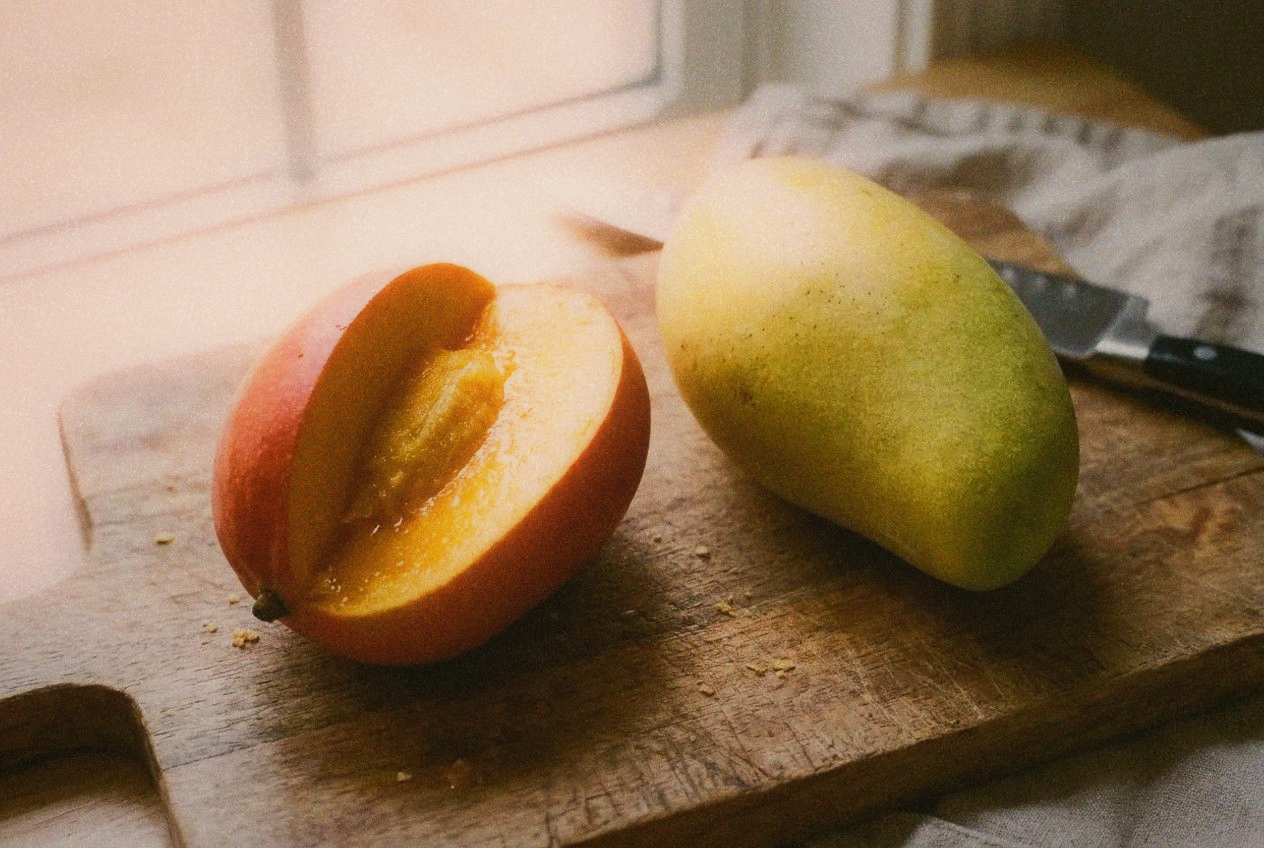
 FIRST SIGHTWEBGLIrwin vs. Jinhuang: the two mangoes you need to know in Taiwan · Color and grain by First Sight · Gold 200. · First Sight 色彩與顆粒調校 · Gold 200
Getting there takes about 90 minutes from Tainan city by bus. You can also drive or ride a scooter, which gives you the flexibility to stop at roadside stands along Provincial Highway 84 where farmers sell directly from the sorting tables in front of their packing sheds. The mangoes are cheaper here and often picked that same morning.
If you're planning a visit, mark your calendar: the 2026 Tainan International Mango Festival is on July 12 at the Yujing Fruit and Vegetable Market (玉井果菜市場). Tastings, farmer stalls, mango cooking demonstrations, and more mango varieties in one place than you'll see anywhere else.
Traditional markets anywhere in the south. Tainan, Kaohsiung, and Pingtung markets all carry excellent local mangoes from June through August. The morning markets are best. Arrive before 9am for the widest selection. The vendors know their product and will tell you which ones to eat today and which to let sit for a day or two.
Taipei supermarkets and fruit shops. The mangoes are good but not as good. They've traveled, which costs them a day or two of freshness. For the best selection in Taipei, try the fruit vendors at Shuanglian Market (雙連市場) near Shuanglian MRT or the fruit stalls in Dongmen Market. Prices will be higher than in the south. That's just how it works.
Mango shaved ice: the Taipei essential
You haven't fully experienced mango season until you've had shaved ice buried under a small mountain of fresh mango. Taipei has been perfecting this for decades. A few shops stand out.
Bingzan (冰讚)
雙連街2號, Datong District. Walk out of Shuanglian MRT and it's right there. Open 11:30am to 11pm during mango season. The mango shaved ice here is the real thing: fresh mango cut to order in thick, generous slices, mango sauce made in-house, condensed milk. The portions are honest. The shaved ice itself is the fluffy, fine-shaved kind, not chunky. Lines form on weekends, but they move. One thing to know: Bingzan flips to a hotpot restaurant from November through March. The mango version only exists when the fruit does.
Chunmei Ice Shop (春美冰菓室)
敦化北路120巷54號, Songshan District, near Nanjing Fuxing MRT Exit 7. A neighborhood ice shop that's been around long enough to have a following. Their mango milk ice (NT$220) uses fresh mango on a milk-flavored shaved ice base. Less theatrical than some of the famous spots, more consistent. The kind of place regulars go back to every summer.
Smoothie House (思慕昔)
永康街15號, Da'an District. Sitting on the same block as the old Ice Monster location on Yongkang Street, Smoothie House inherited both the address and many of the customers. Their mango shaved ice is stacked high, photogenic, and popular with both locals and tourists. The mango bowls are generous but the prices reflect the Yongkang Street premium. On a Saturday afternoon in July, the wait can be 30 minutes or more.
Ice Monster (冰館)
松高路16號, Xinyi District. Ice Monster started on Yongkang Street, became an international name, and relocated to the Xinyi shopping district near Taipei 101. The mango shaved ice that made them famous is still on the menu, but the setting is different now. More polished, higher prices, larger crowds. Worth visiting if you're already in Xinyi, but purists tend to prefer the smaller shops.
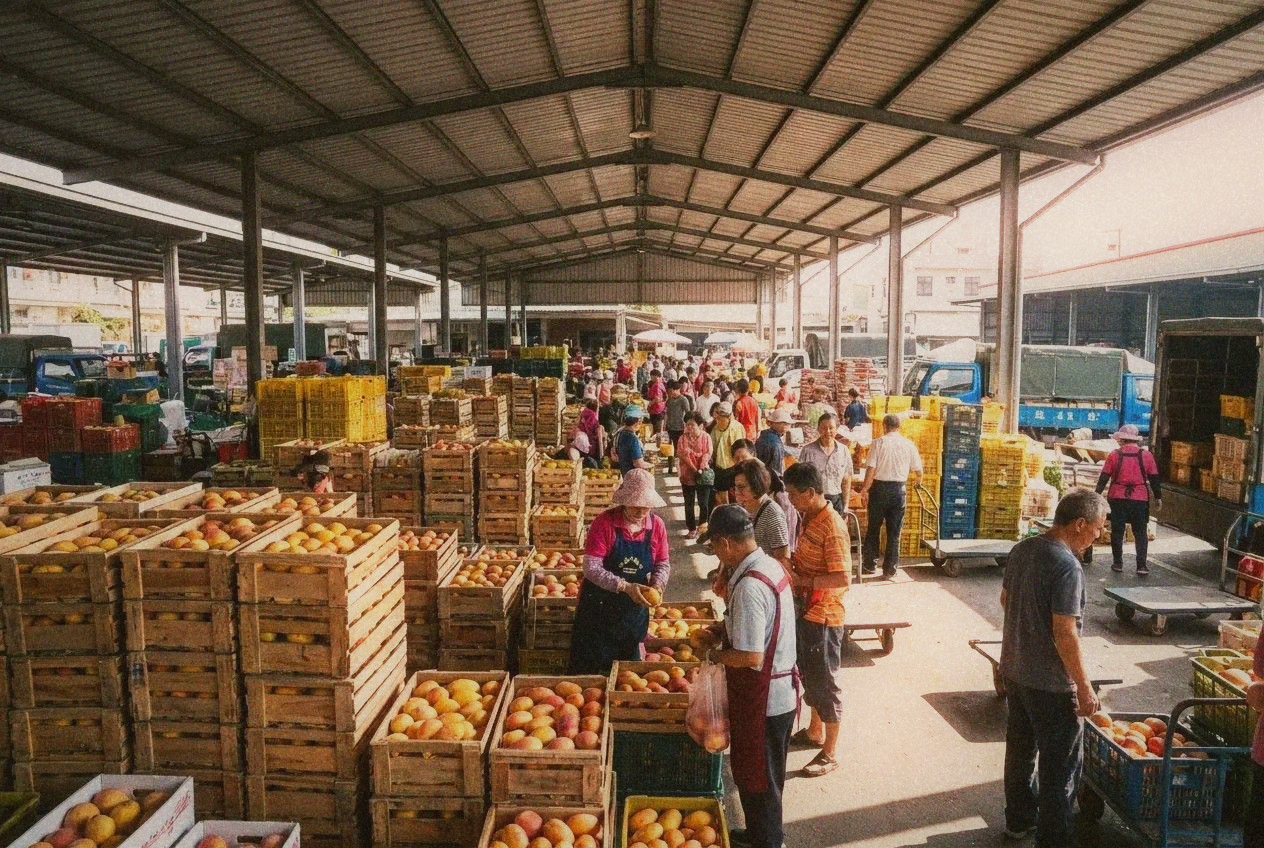 FIRST SIGHTWEBGLYujing mango wholesale market in Tainan: where most of Taiwan's mangoes pass through · Color and grain by First Sight · Gold 200. · First Sight 色彩與顆粒調校 · Gold 200
How to pick a good mango
You're standing at a fruit stand. There are forty mangoes in front of you. Some are perfect. Some look perfect but will be disappointing. Here's what to check.
Smell the stem end. A ripe Irwin mango smells sweet and fragrant at the spot where the stem was. If there's no smell, it's not ready. If it smells fermented or sour, it's past its best.
Press gently. The flesh should give slightly, like a ripe avocado. Rock hard means it needs a few days on the counter. Mushy means you're too late.
Look at the skin. For Irwin mangoes, you want deep red with orange undertones. Green patches mean it was picked early. Some green near the stem is fine, but if half the mango is green, leave it.
Weight matters. Pick it up. A good mango feels heavy for its size because the flesh is dense with juice. If it feels light, the flesh inside might be dry or fibrous.
Ask the vendor. Seriously. The person selling the fruit eats more mangoes in a month than you eat in a year. Ask which ones they'd take home today. They will tell you honestly, and they'll usually pick better than you would.
A few more things worth knowing
Mango season in Taiwan is not a smooth curve. It ramps up fast in May, peaks in July, and winds down through August and September. The Irwin mangoes come first and dominate the market. By late August, they start getting scarce, and the Jinhuang mangoes take over. By October, it's mostly over.
If you want to bring mangoes home as gifts or to eat later, buy them slightly underripe. They'll continue to ripen at room temperature over two to three days. Don't refrigerate them until they're fully ripe. Cold stops the ripening process and can make the texture mealy.
The frozen mango products at supermarkets and convenience stores are fine for smoothies, but they're a different experience from fresh. If you're here during season, eat the fresh ones. This is not the time for frozen.
And if you're visiting Tainan for the mangoes, plan a full day. The mango is the reason for the trip, but Tainan's food scene goes much deeper. You're already in one of the best eating cities in Asia. Use it.
FAQ
When exactly is mango season in Taiwan?
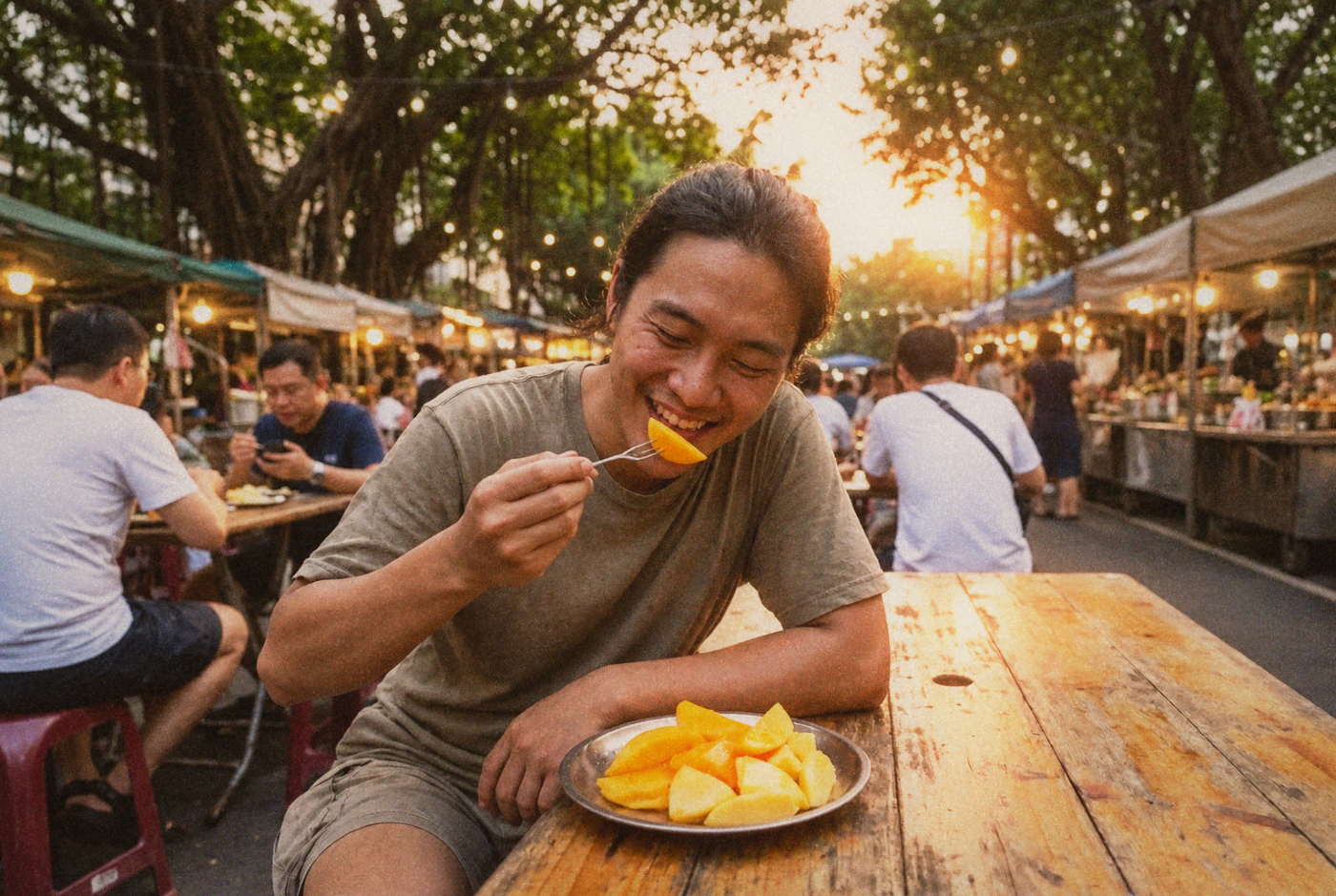 FIRST SIGHTWEBGLFresh mango, cut into slices and eaten slowly at an outdoor table. · Color and grain by First Sight · Gold 200. · First Sight 色彩與顆粒調校 · Gold 200
Broadly, May through September. But if you want the best Irwin mangoes, target late June through mid-August. That's when the fruit is sweetest and most abundant.
How much does mango shaved ice cost?
Most shops charge between NT$150 and NT$280 for a bowl. Bingzan is on the cheaper end, Smoothie House and Ice Monster are at the higher end. Portions are usually big enough for two people to share comfortably.
Can I bring mangoes back to my country?
Check your home country's agricultural import rules. Many countries restrict or prohibit fresh fruit imports. Japan, the US, and EU countries have strict rules. Taiwan does export mangoes commercially to some countries, but carrying them through customs yourself is a gamble.
Is Yujing worth the trip if I'm only in Tainan for a day?
If it's mango season, yes. The 90-minute bus ride each way eats into your day, but seeing (and tasting) the source is a different experience from buying mangoes in a city market. Combine it with a stop at Nanhua or Zuozhen on the way back for a more complete loop.
What if I'm in Taipei and don't want to travel south?
The mango shaved ice shops in Taipei are genuinely excellent. Bingzan alone is worth the trip on a hot afternoon. You can also find good fresh mangoes at Shuanglian Market, Dongmen Market, or any of the major supermarkets. You won't have the full orchard experience, but you'll eat well.
What's the difference between mango shaved ice and mango smoothie?
Shaved ice (芒果冰) is a bowl of finely shaved ice topped with fresh mango, usually with mango sauce and sometimes condensed milk or ice cream. It's a textural experience. A smoothie is blended. Both are good, but the shaved ice is the signature Taiwan thing.
Read next: Taipei Night Market Food: The Best Things to Eat and Where | Bubble Tea in Taiwan: The Only Guide You Actually Need
Comments (0)
Loading comments...