
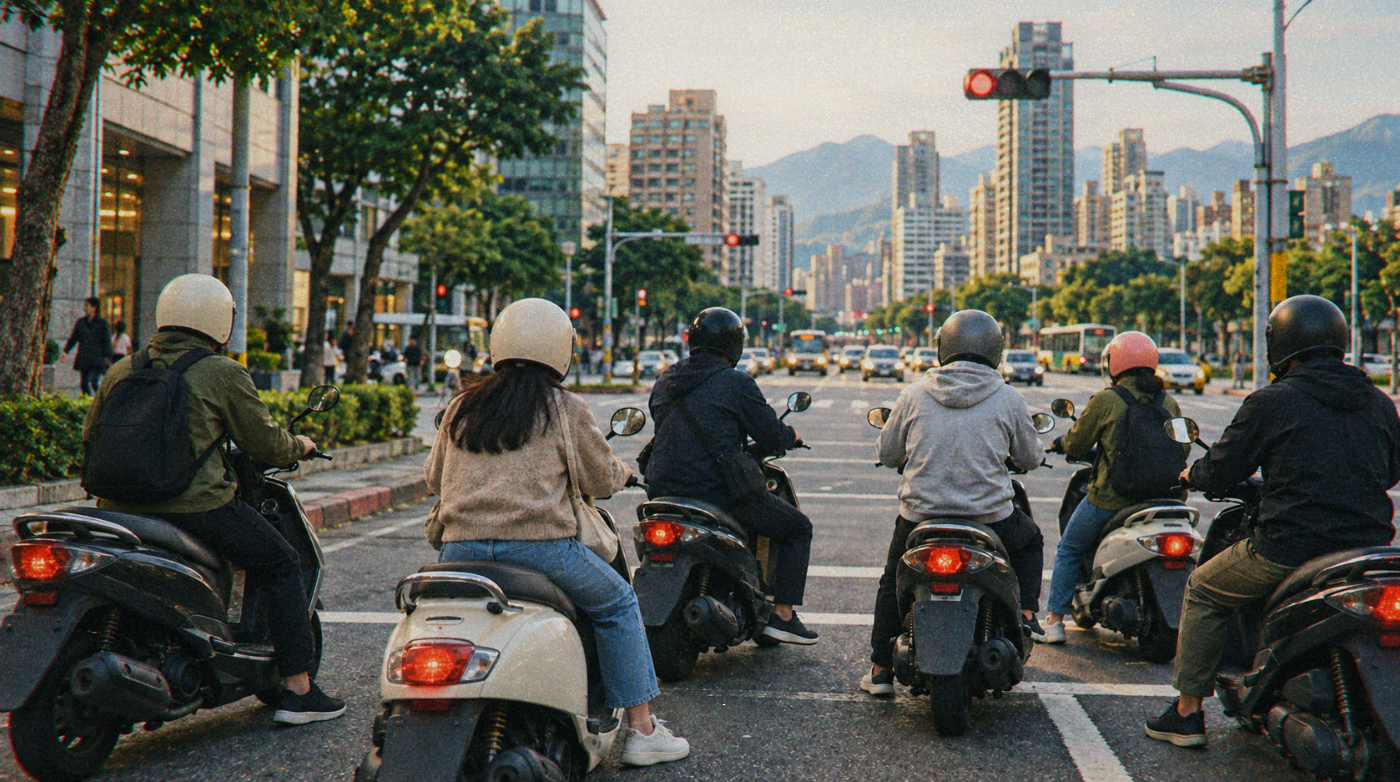
The first thing most visitors notice in Taiwan is the scooters. They gather at every red light in a loose, patient shoal, fifty or a hundred of them, and when the light turns they move off together with a sound like the island exhaling. It looks like chaos and it is actually a system, and once you understand it, getting around Taiwan turns out to be one of the easiest and cheapest things about being here.
For an island of its size, Taiwan is astonishingly well connected. A high-speed train runs the length of the populated west coast. A slower round-island railway hugs the mountains and the sea. Three cities have clean, cheap metros, buses go almost everywhere, and a single stored-value card ties nearly all of it together. You can land at the airport with no local currency, no app, and no Mandarin, and still be across the country by dinner.
The high-speed rail that shrinks the island
The Taiwan High Speed Rail is the spine of the whole system and the single best thing about travelling here. It runs down the west coast from Taipei to Kaohsiung's Zuoying station, stopping at about a dozen stations along the way, at speeds that make the island feel small. The full run takes roughly an hour and a half on the fastest trains. If you are covering any real distance, this is almost always how to do it.
A few things make it painless. You can buy a ticket minutes before departure from a machine and jump on, but booking a day or two ahead through the app can unlock early-bird discounts of up to a third off. Trains have reserved and non-reserved cars; if you have a reservation you are guaranteed a seat, and if you don't, you stand in the non-reserved carriages at the back. Everything runs on time to the minute.
The one catch is that high-speed stations are often built on the edge of the cities they serve, not in the centre. Taipei, Banqiao, Taichung and Zuoying connect well to local metros and trains, but for some stops you will need a short taxi or bus ride to reach downtown. Factor in that last leg and it is still faster than anything else.
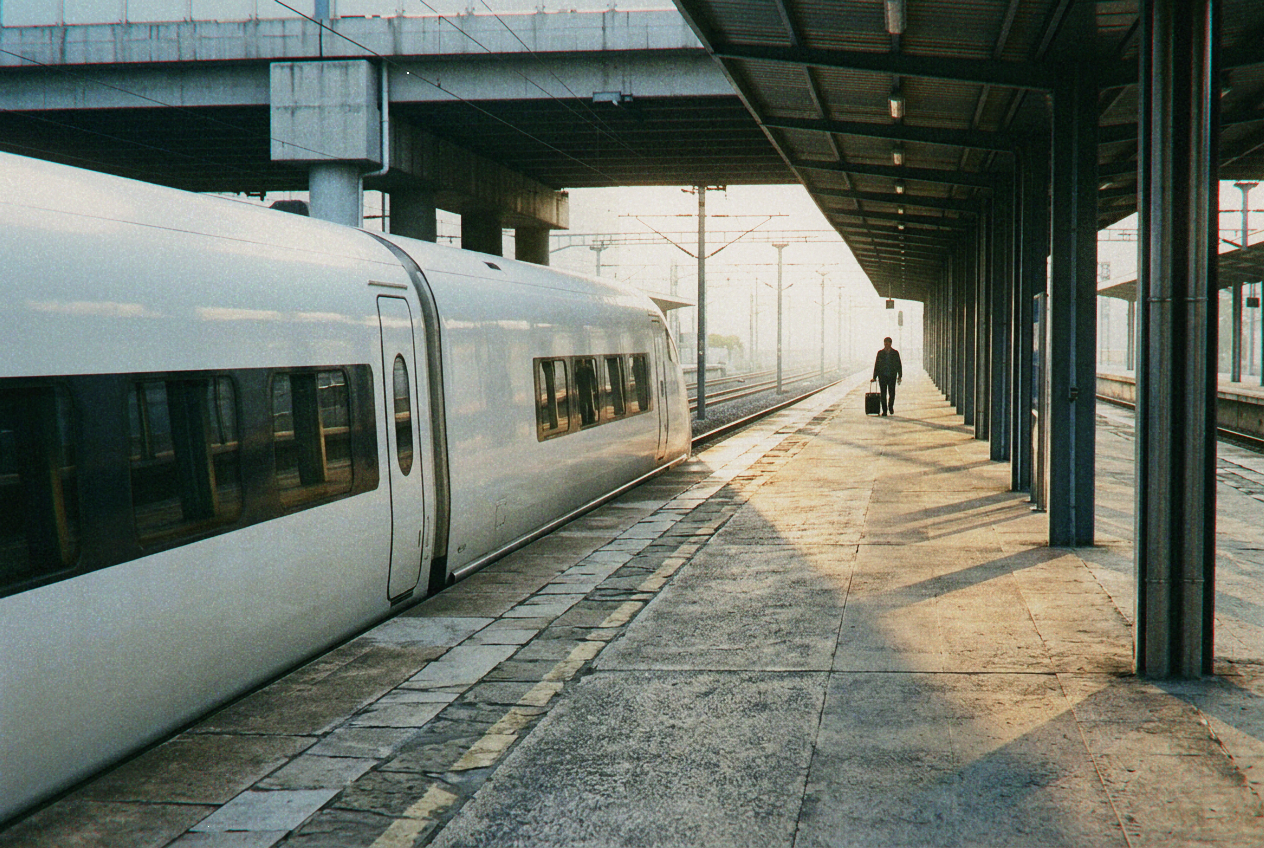
 FIRST SIGHTWEBGLThe high-speed rail runs the length of the west coast at up to 300 km/h, turning a long drive into a lunch-break journey. · Color and grain by First Sight · Superia. · First Sight 色彩與顆粒調校 · Superia
The other train: the round-island railway
Running alongside and underneath the high-speed line is the older Taiwan Railway, and it is a different experience entirely. This is the network that actually circles the whole island, including the wild, beautiful east coast that the high-speed line never reaches. Its trains range from tilting limited expresses like the Puyuma and Taroko, which lean through the mountains, down to slow local trains that stop at every small-town platform.
For scenery, this line is unbeatable. The east-coast run between Hualien and Taitung, with the Pacific on one side and the mountains on the other, is one of the great train journeys in Asia. The catch is that seats on the fast east-coast trains sell out early, especially on weekends and holidays, so book ahead through the app or a convenience-store kiosk. On the west coast, the local commuter trains are a cheap, unreserved way to hop between neighbouring cities.
Then there are the branch lines, small and slow and full of character. The Pingxi line north of Taipei, the Jiji line in the centre, the Alishan forest railway climbing into the tea and cloud, these are less about getting somewhere and more about the ride itself. They are some of the most charming half-days you can spend in Taiwan.
The city metros
Three cities have proper metro systems, and they are a joy. The Taipei MRT is clean, quiet, punctual and cheap, and it will get you to almost anywhere you want to go in the capital. Kaohsiung has a smaller but growing system in the south, Taoyuan has an airport line that runs into Taipei, and Taichung has one line with more coming. Eating and drinking are not allowed on the trains or in the paid areas, a rule locals take seriously, which is part of why the system stays so pleasant.
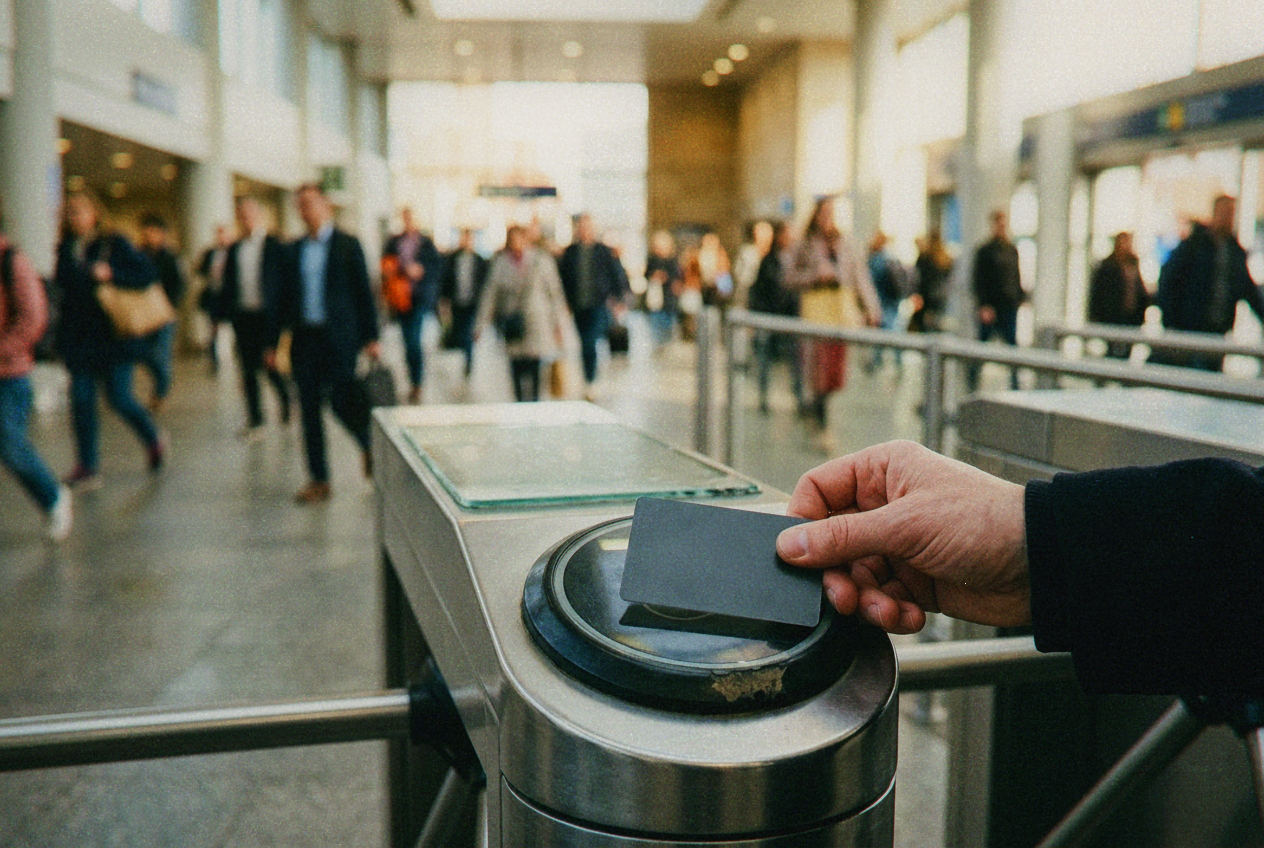 FIRST SIGHTWEBGLOne tap does almost everything: metro, bus, local train, bike share, and the convenience store on the corner. · Color and grain by First Sight · Superia. · First Sight 色彩與顆粒調校 · Superia
EasyCard: the one thing to get first
If you do one thing when you arrive, buy an EasyCard. It is a contactless stored-value card, sold at any convenience store and at metro stations, and it is the key that unlocks nearly the whole transport system. Tap it on the MRT, on city buses, on local trains, on the YouBike bike-share docks, and at the ferry piers. It also works as a wallet at convenience stores, many shops, and vending machines. Its cousin the iPass does the same. Buy one, load it with a few hundred NT dollars in cash, and top it up at any store.
The card quietly solves a dozen small problems. You never fumble for exact change on a bus, you get small fare discounts on transfers, and you stop thinking about money for anything under a couple of hundred dollars. For most visitors it is the single most useful object they carry.
Scooters: the true heartbeat
The scooter is the real engine of daily life here, and understanding it explains a lot about how Taiwan moves. There are millions of them, and at rush hour they flow through the cities in rivers. For residents they are cheap, quick, and endlessly practical, the way most people get to work, to school, to the market. To watch a hundred of them stage up at a red light and then pull away in unison is to watch the city's pulse.
Renting one as a visitor is more complicated than it looks. To legally rent and ride a powered scooter you generally need the right licence, and an ordinary international permit often does not cover the local requirement, so many rental shops will turn tourists away or offer only the smaller electric bikes. In tourist towns like Kenting or on the outer islands the rules are looser and rentals are easy. Wherever you ride, wear the helmet, it is the law and it is enforced.
There is also an etiquette to learn. At many big intersections scooters cannot turn left directly; instead they cross straight, wait in a painted box on the far corner, and go with the next green. It is called a hook turn, and following it, along with staying in the scooter lane and not weaving, is the difference between riding like a local and frightening everyone around you.
Buses, bikes, and taxis
Beyond the trains and scooters, the gaps are filled by an easy web of buses, bikes and cabs. City buses cover the routes the metro misses; you tap your card getting on and sometimes getting off, so keep it handy. Intercity coaches are comfortable and remarkably cheap, and the overnight buses between Taipei and the south are a budget traveller's secret. YouBike, the public bike-share, is everywhere in the cities, unlocked with the same card, and perfect for the last mile. Taxis are plentiful and metered, and apps like Uber and the LINE-based taxi service work in the major cities if you would rather not flag one down.
Getting in from the airport
Most visitors arrive at Taoyuan, and the airport is well connected. The Airport MRT runs straight into Taipei Main Station in around forty minutes, where you can transfer to the metro or the high-speed rail. Frequent, cheaper buses cover the same route and run through the night. If you are heading south, take the airport line one stop to the high-speed rail and be in Taichung or Kaohsiung in a couple of hours. Songshan, Taipei's small city airport, sits right on the metro, and Kaohsiung's airport is on its own metro line.
How to move like a local
The whole system rewards a little planning and almost no stress. Buy an EasyCard before you do anything else. Use the high-speed rail for distance and the round-island railway for scenery, and book the east-coast trains ahead. Lean on the metros in the cities and let YouBike handle the short hops. Admire the scooters, but think twice before renting one unless you have the licence and the nerve. And keep some cash for the smallest buses and the branch-line stations that machines forget.
What makes getting around Taiwan such a pleasure is not any single train or line, it is how completely it all connects. The card in your pocket works on the subway and the bike and the corner store. The bullet train hands you to the metro, which hands you to the bus, which drops you at the night market. For a place that moves as fast as Taiwan does, it is a remarkably calm way to travel, and by your second day it will already feel like second nature.
Comments (0)
Loading comments...