
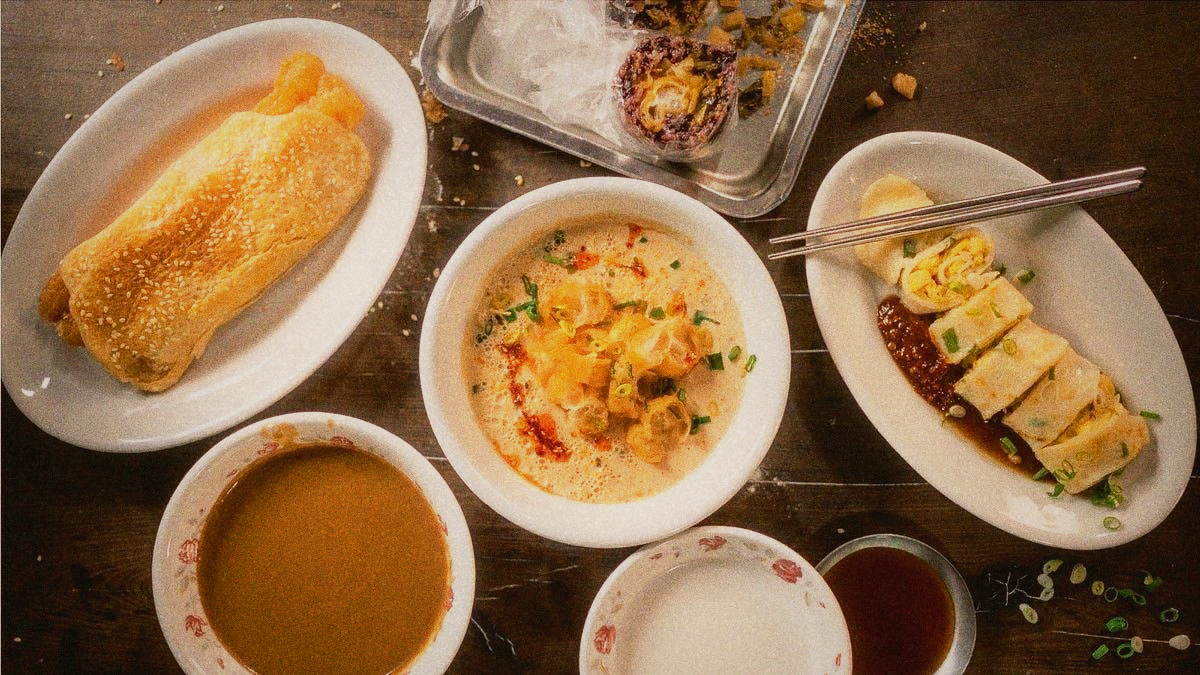
Taiwan's greatest cultural achievement isn't its temples or its tech industry. It's breakfast. Specifically, the fact that an entire civilization decided that the first meal of the day should be hot, savory, freshly made, and available on every street corner for under NT$60.
The traditional Taiwanese breakfast shop is a disappearing institution. The younger generation increasingly grabs convenience store onigiri or skips breakfast entirely. But the shops that remain, the ones with the metal tables, the fluorescent lights, and the owner who's been flipping dan bing since 5am, are serving some of the most satisfying food in Asia. They're also disappearing fast. Many owners are in their 60s, with no heirs interested in running a breakfast stand. In ten years, many of these will be gone.
These ten are the ones worth setting an alarm for. And worth understanding why they've lasted so long.
What you need to know before you go
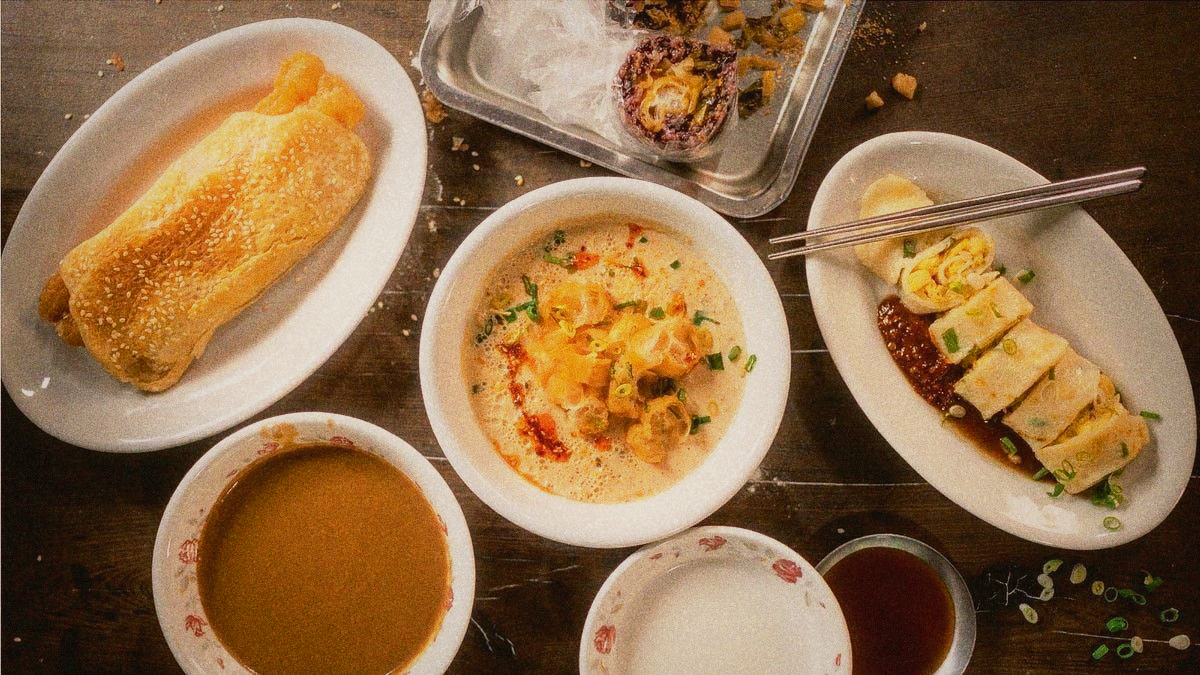
Hours: Most traditional breakfast shops open between 5:00 and 6:30am and close by 11:00am. Some close earlier when they sell out. A 10am arrival at a popular shop means you've already missed the peak. Budget: NT$40-80 per person for a full breakfast. Ordering: Point and gesture works fine. Most shops have picture menus or boards with Chinese characters. Learn: 蛋餅 (dan bing, savory crepe), 豆漿 (soy milk), 燒餅 (shaobing, sesame flatbread), 油條 (youtiao, fried dough stick), 饅頭 (mantou, steamed bun). Payment: Cash only at traditional shops. Small bills preferred. Seating: Expect shared tables and standing-room-only at peak hours. This is part of the experience.
What regulars order: Pay attention to what people who aren't tourists are eating. They've optimized for taste. Follow them.
 FIRST SIGHTWEBGLColor and grain by First Sight · Gold 200.First Sight 色彩與顆粒調校 · Gold 200
Tier 1: Worth crossing the city for
1. Fuhang Soy Milk (阜杭豆漿), Zhongzheng
The most famous breakfast shop in Taiwan, and one of the few famous places that actually deserves it. Inside Huashan Market, second floor. The queue starts at 5am and stretches down the stairs by 6:30. But it moves fast, they've been executing the same routine for 40+ years.
The space is deliberately functional: metal tables, metal chairs, no decoration, optimal workflow. The owner (who still works the line in his 70s) and three staff move in choreographed precision. Watch them: one person takes orders, one preps, one cooks, one wraps. They don't waste motion.
Must order: Thick soy milk (濃豆漿, NT$30), the densest, richest soy milk in Taipei. The secret: they use slightly less water than standard recipes and add a touch of peanut powder. It's almost creamy without being heavy. Shaobing with egg (燒餅夾蛋, NT$40), hand-pulled sesame flatbread with a cooked egg inside, crispy outside, warm inside. The shaobing dough is rested longer than most shops (24 hours, not 2 hours), which explains the texture. The combination is the benchmark Taipei breakfast.
Why it works: Simplicity and consistency. Fuhang does two things and does them perfectly. Every soy milk tastes exactly like the previous one. Every shaobing hits the same crispy-tender ratio. After 40 years, muscle memory has become perfection.
Address: 2F, No. 108, Section 1, Zhongxiao East Road, Zhongzheng District Hours: 5:30–12:00, closed Mondays Getting there: MRT善導寺 (Shandao Temple), Exit 5, walk 1 min
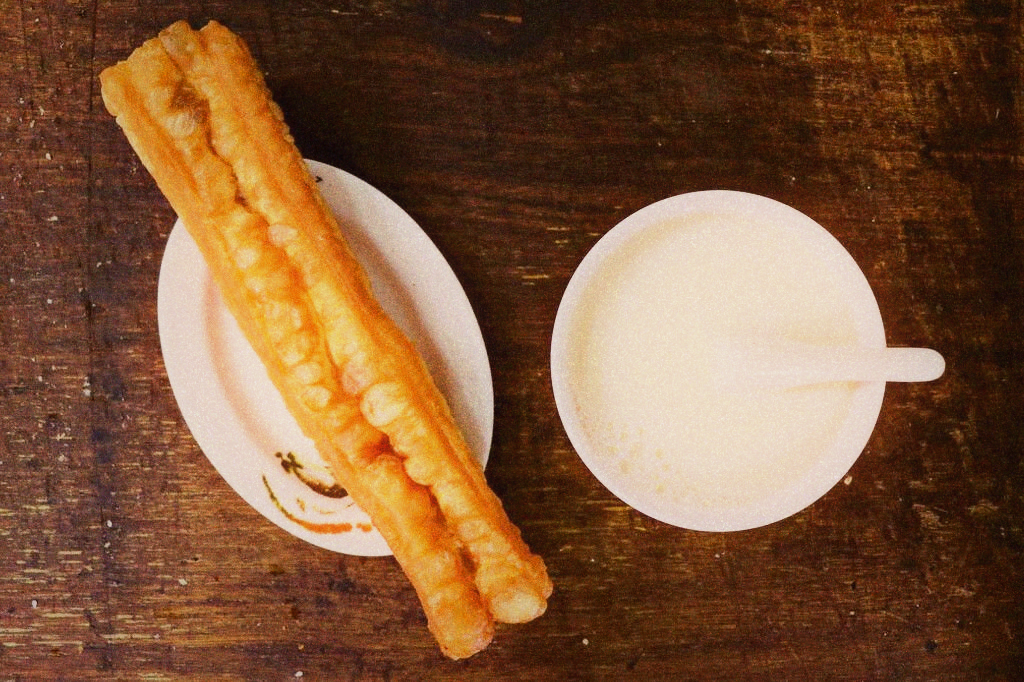 FIRST SIGHTWEBGLThe benchmark: thick soy milk and hand-rested shaobing with egg. Unchanged for four decades. · Color and grain by First Sight · Gold 200. · First Sight 色彩與顆粒調校 · Gold 200
2. Yonghe Soy Milk King (永和豆漿大王), Yonghe
Not the chain, the original. Operating since the 1950s in the same location. The space is cramped and the service is gruff, but the savory soy milk (鹹豆漿, NT$35) is the version all others are measured against. Warm soy milk curdled with vinegar, topped with dried shrimp, scallion, and chili oil. It looks like a mess. It tastes like home.
The science: the vinegar drops the pH just enough to separate the milk proteins, creating the curds. The shrimp provides umami. The scallion adds brightness. The chili oil gives heat and richness. There's nowhere to hide in this dish, if any element is off, the whole thing collapses. The fact that it's been executing this since 1950 means every component is dialed.
Must order: 鹹豆漿 + 油條 (savory soy milk + fried dough stick, total NT$50). Dip the youtiao into the soy milk. The contrast between the warm, silky milk and the crispy exterior of the fried dough is the textural foundation of this meal. This is the ritual.
Why it works: No compromise. No sugar in the soy milk to make it easier to drink. No shortcuts in the preparation. The owner's grandchildren aren't interested in running it, so he's running it exactly as he always has. When this closes (and it will), this exact flavor disappears from the world.
Address: No. 284, Yonghe Road, Yonghe District, New Taipei Hours: 24 hours (yes, really, breakfast served all day) Note: Cash only. Small bills. It's a 20-year-old register and they might not have change for NT$1,000.
 FIRST SIGHTWEBGLColor and grain by First Sight · Gold 200.First Sight 色彩與顆粒調校 · Gold 200
3. Liu Mama Breakfast (劉媽媽早餐), Zhongshan
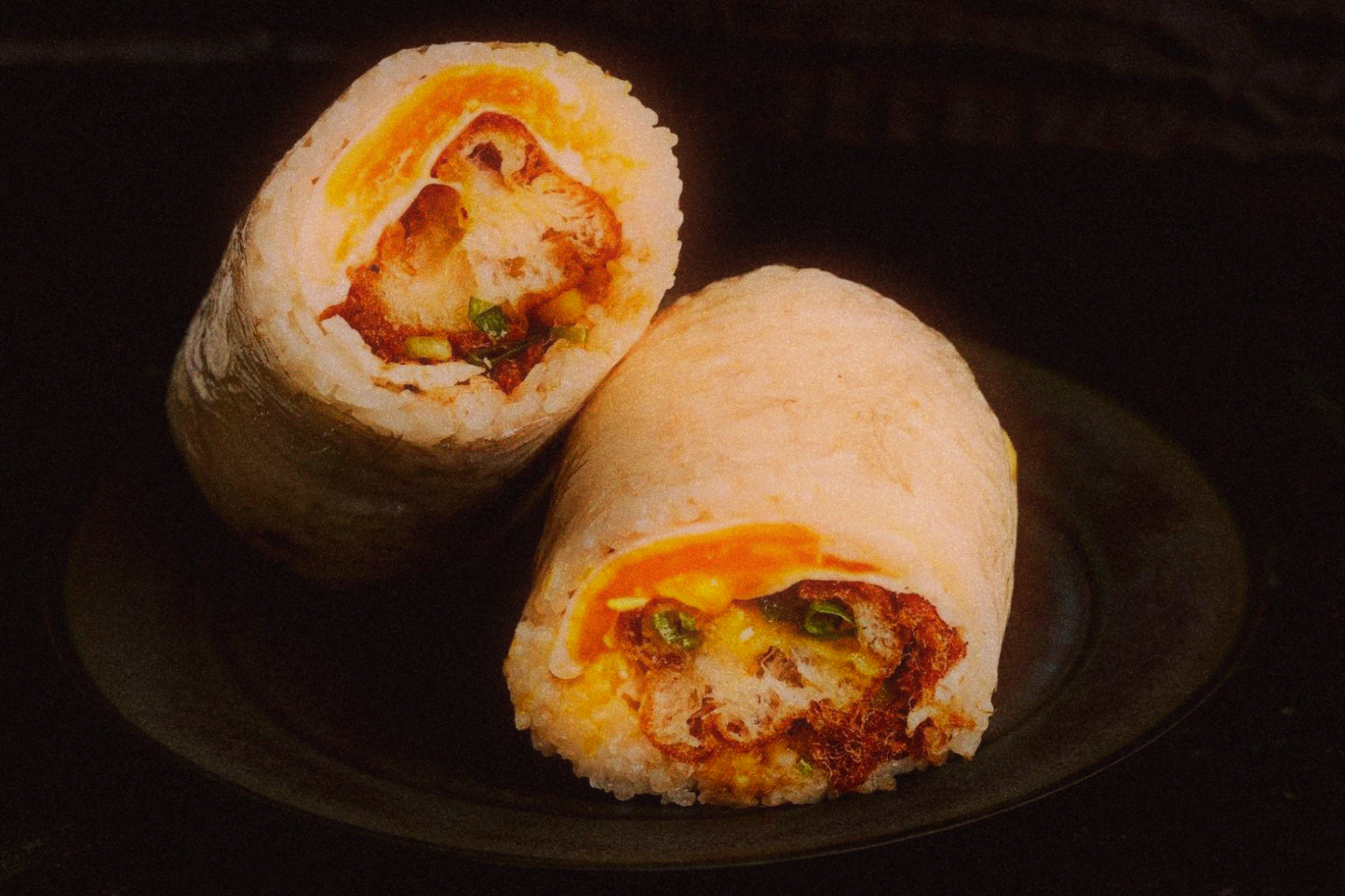
A tiny shop on a residential street in Zhongshan. Liu Mama has been making fan tuan (飯糰, NT$45) here for thirty years. Sticky rice wrapped around a fried dough stick, pickled vegetables (酸菜), and pork floss (肉鬆). The texture is extraordinary: the rice is warm and slightly sweet, the youtiao inside is still crispy after being wrapped, the pickled mustard green cuts through everything with acidity.
The skill: A rice ball sounds simple but it's not. The rice needs to be at the exact right temperature, hot enough to stay pliable, cool enough that you can hold it. The filling ratios matter: too much pork floss and the ball becomes greasy, too little and it's boring. Liu Mama has been perfecting this ratio for 30 years.
Why people come back: Consistency and care. The pork floss is made in-house. The pickled vegetables are made in-house. She could buy pre-made versions and save 2 hours a day. Instead, she makes them fresh because she's known these customers for 20 years and they deserve it.
Address: No. 10, Lane 46, Nanjing West Road, Zhongshan District Hours: 5:30–10:30, closed Sundays Getting there: MRT Zhongshan station is closest, but it's a 10-minute walk. More convenient: if you're already in Zhongshan for another reason, stop by.
Tier 2: Excellent neighborhood spots
4. Jin Feng Braised Pork Rice (金峰滷肉飯), Zhongzheng
Technically a lunch spot, but they open at 8am and braised pork rice for breakfast is a perfectly valid Taipei choice. It's not trendy (young people go to cafés for breakfast now), but it's satisfying in a way that nothing else is.
The pork is hand-chopped, the fat-to-lean ratio is calibrated to the millimeter. A bowl costs NT$30. The toppings are: a soy-braised egg (NT$15), braised bamboo shoots (NT$30 for a side), and possibly a liver or kidney (offal adds complexity and umami). Eat it with the thin soy broth at the bottom. The total comes to about NT$75 for a complete breakfast that's more protein-forward and less carb-heavy than dan bing.
Why this matters: This is real local eating. Tourists don't go here. Office workers in the neighborhood don't go here as much as they used to. But it's still operating because the 60-year-olds and the 70-year-olds remember eating here 30 years ago, and they've never found anything better.
Address: No. 10, Section 2, Roosevelt Road, Zhongzheng District Hours: 8:00–1:00am (lunch and dinner)
5. Chia Te Bakery Morning Counter (佳德糕餅早餐部), Songshan
Famous for pineapple cakes (鳳梨酥), but the morning counter (separate from the bakery) sells fresh-baked shaobing and dan bing starting at 6am. The scallion shaobing (蔥燒餅, NT$25) is paper-thin and shatters when you bite it, this happens because they laminate the dough with lard and oil, creating hundreds of thin layers. Locals queue for this counter, not the pineapple cakes downstairs.
Pro tip: The morning counter closes at 10am. By 8:30am, the best items are sold out. If you go, go early.
Address: No. 88, Section 5, Nanjing East Road, Songshan District Hours: 6:00–10:00 (breakfast counter only) Getting there: MRT Songshan station, but it's a 15-minute walk through residential areas. Consider taking a bus or scooter if you're far away.
6. Shida Night Market Morning Stalls, Daan
The north end of Shida Night Market transforms into a breakfast market before 9am. It's not a formal market; it's just stalls that operate in the early morning, then leave. Three stalls worth finding:
1. The egg crepe lady (蛋餅阿姨), No sign, no name, just look for the queue. She's been at the same spot for 15+ years. The crepe is less sweet than commercial shops, crispy on the edges, tender in the middle.
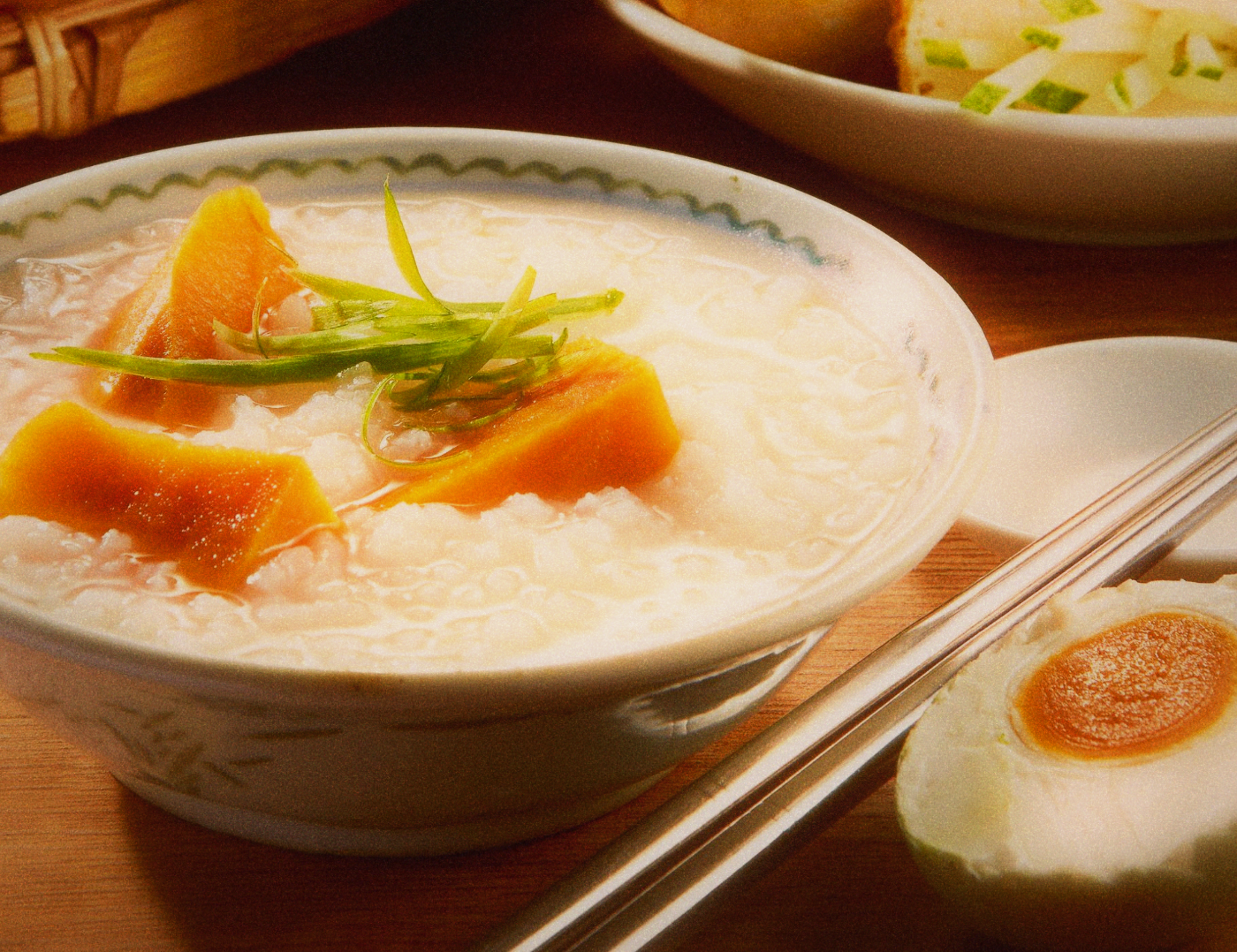
2. The congee cart with salt-cured duck egg (鹹鴨蛋配粥, NT$60). The congee is thick and porridgy, not watery. The duck egg is pungent (if you haven't had salt-cured eggs before, the smell might surprise you, but the flavor is addictive). This is the kind of breakfast that sticks with you for hours.
3. The scallion pancake uncle who uses lard instead of oil (油煎蔥油餅 vs 水煎蔥油餅). The lard version is flakier and richer, but also greasier. If you want to feel full, this is the choice.
Address: Lane 39, Shida Road, Daan District (north end of the market) Hours: 6:00–9:30 (or until stalls sell out) Getting there: MRT Taipower Building station, exit 3, walk into the night market
7. Mister Donut Dan Bing (美而美系列), Everywhere
Let's be honest: the chain breakfast shops (美而美, 美芝城, 早安美芝城) are where most Taipei residents actually eat. They're everywhere (literally every neighborhood has one within 2 minutes), they're consistent, and the corn egg dan bing (玉米蛋餅, NT$35) at any location is a reliable 7/10 breakfast. Not the best, but the most Taipei. They're also evolving, newer locations have better design, faster service, and occasionally better ingredients.
The reason people love chain shops: reliability. You know exactly what you're getting. No surprises. When you're tired and don't want to think, the chain shop is perfect.
Tier 3: Hidden gems for adventurous eaters
8. Auntie's Congee Cart (萬華阿姨粥車), Wanhua
 FIRST SIGHTWEBGLColor and grain by First Sight · Gold 200.First Sight 色彩與顆粒調校 · Gold 200
No name, no sign, just a pushcart on Guangzhou Street near Longshan Temple. Available only from 5:30–7:30am (or until sold out, which is often 6:30am on weekends). She makes one thing: sweet potato congee with three sides (地瓜粥配三菜, NT$60). The sides rotate daily, pickled radish, braised tofu, stir-fried greens, sometimes a small fish. You eat standing at a folding table. Occasionally, it's raining.
This is the most old-school breakfast in the city. Most people discovering this will never find it again, it's too specific, too early, too humble. But when you do, it's perfect.
Why it matters: This is breakfast as it existed before breakfast became trendy. No Instagram, no design, no concept. Just food.
Address: Guangzhou Street, Wanhua District, near Longshan Temple Exit 1 Hours: 5:30–7:30 (or sold out) Getting there: MRT Longshan Temple station, exit 1
9. Shuanglian Market Morning Walk (雙連市場), Zhongshan
Shuanglian Morning Market is the best breakfast walk in Taipei. The entire block between MRT Shuanglian and Minquan West Road is lined with food stalls from 6am. It's not a single breakfast destination; it's a breakfast crawl. You buy from multiple stalls, eat standing, and move on.
Key stops: - Black sesame shaobing (黑芝麻燒餅, NT$20), nutty, slightly sweet, crispy - Grass jelly soy milk (仙草豆漿, NT$30), cooling, light, herbaceous - Steamed bun stall at the east end (小籠包 or 饅頭), comes in sweet or savory - Egg pancake stall (蛋粥, NT$35), creamy, custardy - Youtiao vendor (油條, NT$10–15 per stick), the baseline against which all others are measured
Budget NT$80–100 for the full walk. You'll have eaten 5 different things by 7am.
The experience: This is Taipei breakfast culture in its purest form. You're walking slowly, stopping at stalls, tasting, moving on. You're learning the market. You're becoming a regular in 30 minutes of walking. By the third visit, vendors recognize you and set aside the best items.
Address: Minsheng West Road between MRT Shuanglian and Minquan West Road, Zhongshan District Hours: 6:00–11:00 (most stalls close by 9am)
10. Addiction Aquatic Development (上引水產早餐), Zhongshan
The fancy option. A seafood market with a standing sushi bar that opens at 6am. Yes, sushi for breakfast. The chirashi bowl (散壽司, NT$280) with market-fresh fish is extravagant for breakfast, but you're eating sushi that was caught yesterday and is being served this morning. The quality difference from restaurant sushi (which is often flash-frozen) is noticeable.
This is modern Taipei: not traditional, but reflecting the city's evolution. Breakfast used to mean dan bing. Now it can mean raw fish. Both are valid.
Why it works: Freshness and novelty. The fish changes based on what the boats brought in. You might get toro (fatty tuna), you might get snapper, you might get scallop. There's no menu consistency, which is a feature, not a bug.
Address: No. 18, Alley 2, Lane 410, Minzu East Road, Zhongshan District Hours: 6:00–24:00 (breakfast served all day) Getting there: MRT Zhongshan station is close, but it's still a 10-minute walk into a complex street area. Use Google Maps.
Why these 10 (and not others)
There are literally thousands of breakfast shops in Taipei. These ten were chosen not because they're the "best" (that's subjective), but because they represent something true:
1. Fuhang represents consistency and simplicity 2. Yonghe represents tradition and refusal to compromise 3. Liu Mama represents care and personal skill 4. Jin Feng represents the fact that breakfast doesn't have to be sweet or fast 5. Chia Te represents the evolution from one product (pineapple cakes) to a full operation 6. Shida Night Market represents how breakfast culture works in Taipei, community, informality, speed 7. Mister Donut represents the reality of what most people actually eat 8. Auntie's Congee represents the deepest, oldest layer of Taipei breakfast 9. Shuanglian Market represents the walking, sampling, community aspect 10. Addiction represents the future
Together, they map the entire landscape.
The breakfast crawl (how to do it properly)
If you're doing it right, here's the route: Start at Fuhang (5:30am) for shaobing + soy milk. It takes 30 minutes to queue and eat. Walk to Shuanglian Market (7am) for the morning walk, spending 45 minutes tasting 3–4 different stalls. End at Liu Mama (8am) for a fan tuan to go. Total: three stops, three completely different breakfast experiences, NT$150 spent, done by 9am.
This is a legitimate morning activity. You'll understand Taipei's breakfast culture better than most residents.
Frequently Asked
Some links in this article are affiliate links. If you purchase through them,OQUA may earn a small commission at no extra cost to you. This helps support our editorial work. We only link to products and services we genuinely reference in our writing.
Comments (0)
Loading comments...