
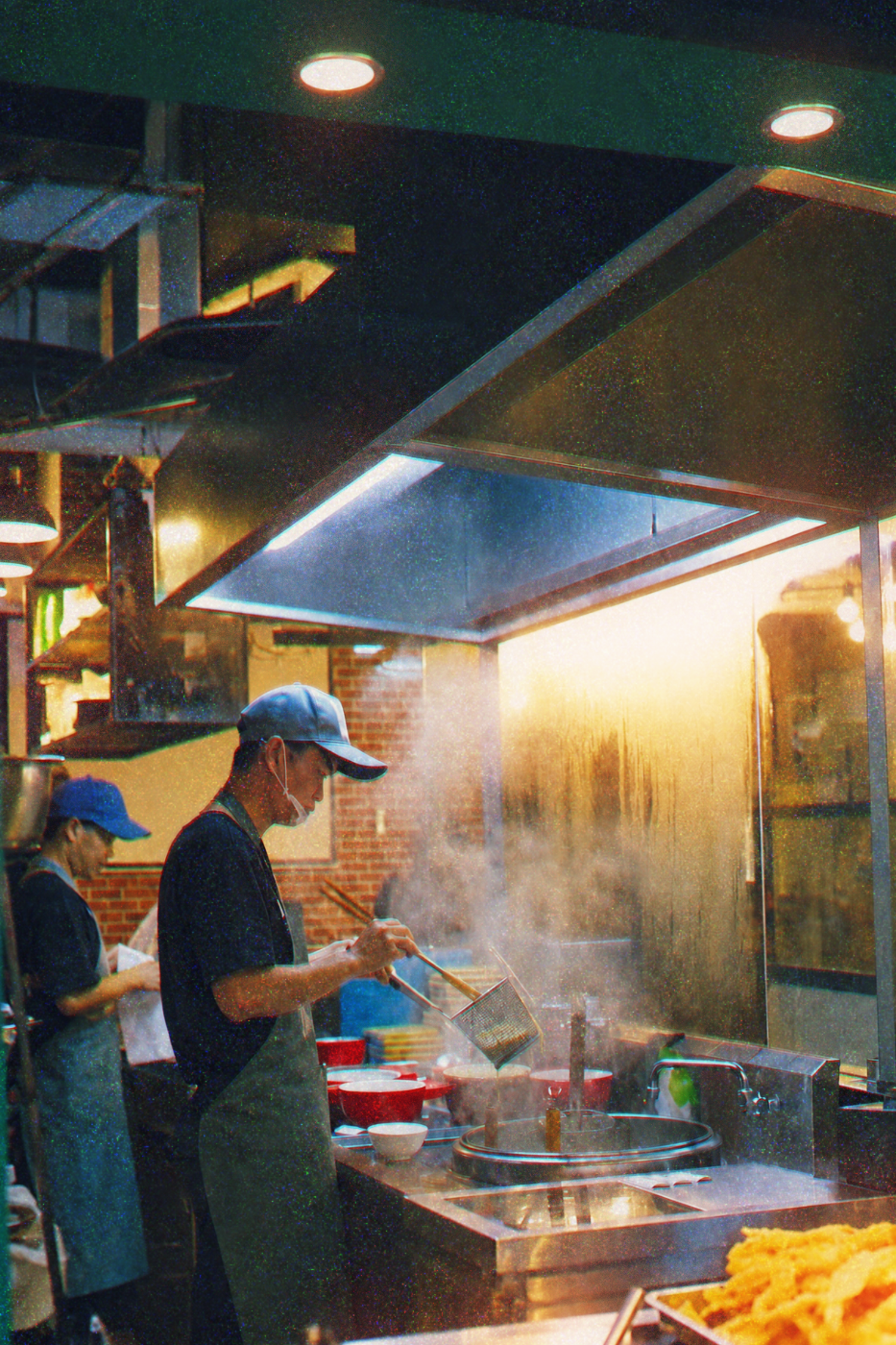
Every travel guide says Shilin. Every local says somewhere else.
Taipei has over thirty night markets. The gap between the best and the worst is enormous. Most visitors land at the famous one, eat adequately, and leave without knowing what they missed.
This guide is the correction.
How Night Markets Actually Work
Night markets are not restaurants. They emerged in postwar Taiwan when families couldn't afford to eat out and hawkers couldn't afford permanent kitchens. The arrangement worked: temporary stalls became permanent fixtures, and an entire dining culture crystallised around them.
Today, they serve as the city's default kitchen. Working parents stop here on the way home. Students eat between cram school sessions. Taxi drivers refuel at 1 AM. The food is fast not because it's careless, but because it has been made the same way for decades, every movement refined down to muscle memory.
The markets you want are the ones that still serve this function. The ones you don't are the ones that have been repackaged for tourism: English menus, QR ordering, Instagram-ready plating. When a night market starts optimising for cameras, the food follows.
Plan to spend: NT$300-500 per person covers 3-4 stalls comfortably. Bring cash. Most vendors don't take cards, and the ones who do prefer you don't use them.
The Ranking
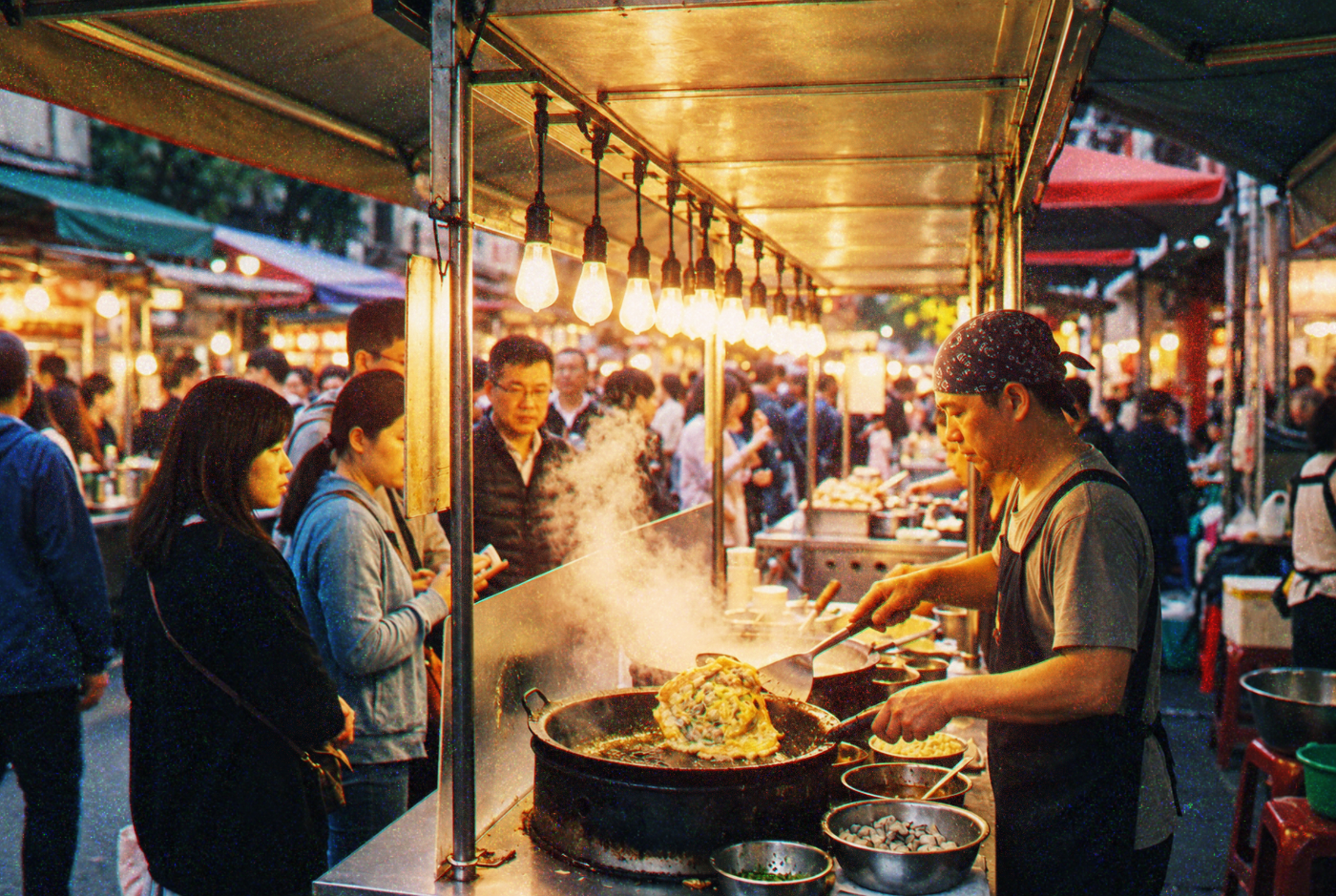
 FIRST SIGHTWEBGLThe best night market stalls have no English menu, no seats, and a line that wraps around the corner. · Color and grain by First Sight · Cinestill 800T. · First Sight 色彩與顆粒調校 · Cinestill 800T
Tier 1: Worth Crossing the City
Nanjichang Night Market (南機場夜市)
The market most food writers consider Taipei's best, and the one most tourists have never heard of. A single L-shaped alley. Ten minutes to walk, two hours to eat.
The crowd here is telling: delivery drivers, nurses between shifts, grandmothers who have been coming for thirty years. The average age skews older than Raohe or Shilin. These are people who know food. They're not documenting it.
Must eat:
Shan Ji Fried Chicken (山記炸雞), Stall 8. Dark meat, marinated in five-spice soy brine, fried until the skin audibly cracks. NT$65 per piece. The window opens around 6 PM, closes when the owner decides, reopens at 10 PM until sold out. Order three. The line exists because he won't serve anything that's been sitting.
Lai Yi Sheng Braised Pork Rice (來一碗滷肉飯). The fat-to-lean ratio is precise. The sauce has been made the same way for thirty years. Large bowl, NT$40. The rice should be glossy with absorbed sauce but not waterlogged. Arrive before 8 PM on weekdays; later than that, you're getting the bottom of the pan.
Wuji Soup Dumplings (無極鮮湯包). Handmade xiaolongbao at NT$80 for eight. Steamed fresh to order, five minutes, no shortcuts. The wrapper is thin enough to see through. Eat immediately; they toughen as they cool.
Stinky Tofu (臭豆腐). Recurring vendor near the entrance. Fried dark, served with spicy soy sauce and fermented pickled cabbage. The smell hits first. Tastes like stinky socks. Get past the first bite; the second will make sense.
Getting there: MRT Longshan Temple Station, 10-minute walk south. Or bus 12 from Ximen to Nanjichang (last bus around 10:30 PM).
Best time to visit: Weekdays after 6 PM for efficiency. Weekends for atmosphere, longer waits but looser energy.
 FIRST SIGHTWEBGLColor and grain by First Sight · Cinestill 800T.First Sight 色彩與顆粒調校 · Cinestill 800T
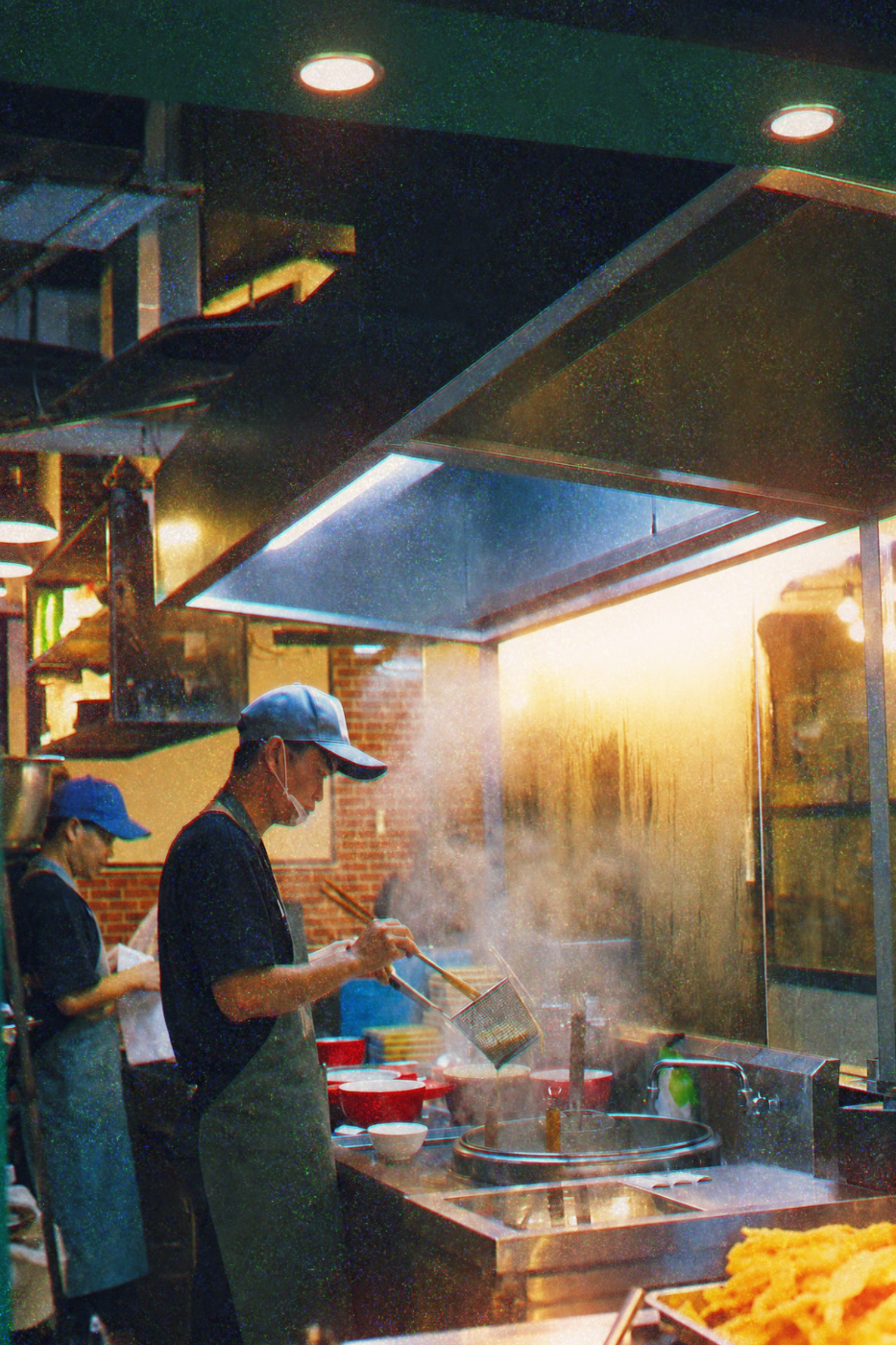
Nanjichang at peak hours. The delivery drivers and nurses are eating here. The tourists are still at Shilin.
Raohe Night Market (饎河夜市)
The best of the tourist-accessible markets, and genuinely good. Not "good for a tourist market." One straight line, entrance to exit, no getting lost. Locals still eat here alongside visitors, which keeps the quality floor higher than Shilin's.
The vibe is young. Couples on dates, groups of friends, office workers in casual clothes. The lighting is better than Nanjichang, the space feels modern without trying. If you're bringing out-of-town friends and don't want to shock them, start here.
Must eat:
Fuzhou Black Pepper Bun (福州世祖胡椒餅), Stall 8, left side. The queue at the entrance is the market's signature. NT$60. You'll watch them fold dough, brush it with lard, press it onto the wall of a clay oven at extreme temperatures. Three minutes later: a bun with a shattering crust and a filling so hot it will burn you if you bite in immediately. Wait sixty seconds. You've already waited fifteen minutes; you can afford sixty more.
Stinky Tofu (臭豆腐), blue awning, right side, midway. Crispy shell, silky interior, traditional pickled cabbage. Same method since 1992. NT$50.
Medicinal Herb Ribs Soup (藥燉排骨). Dark herbal broth with ginseng, goji, ginger, jujube. Ribs braised tender but not falling apart. NT$80. This is the dish that makes you understand why Taiwanese people treat food as medicine.
Oyster Omelette (蚣仔煩). Polarising by design. The starch coating is meant to be soft, not crispy. If it's crispy, it's overdone. The oysters should taste briny. There are two competing stalls at Raohe. Try both. Pick a side.
Getting there: MRT Songshan Station, Exit 5, one-minute walk.
Best time to visit: Weekday evenings after 8 PM, when the initial dinner rush has cleared and vendors are in rhythm.
Yansan Night Market (延三夜市)
The late-shift market. Open until 2 AM. Named for its location on Yanping North Road Section 3. Almost no tourists. Portions are generous, prices are low, food is substantial. This is fuel for people finishing work at midnight.
The atmosphere is utilitarian: fluorescent lights, plastic stools, people eating standing up or squatting against walls. No one is trying to make it charming. That absence of performance is precisely what makes the food honest.
Must eat:
Da Qiao Tou Braised Pork Rice (大橋頭滷肉飯). Operating since 1972. The pork is hand-chopped, not ground, which preserves texture that grinding destroys. NT$30. The sauce is dark, concentrated, complex. The rice beneath has absorbed just enough. This is the braised pork rice other shops are quietly trying to reverse-engineer.
Grilled Squid (烤魷魚). Whole squid, charcoal-grilled, brushed repeatedly with soy-mirin glaze until a thin crust forms. NT$100. The tentacle edges char while the body stays tender.
Rice Noodle Soup (米粉湯). What you eat at 1 AM when you need something light. Clear pork bone broth, delicate rice noodles. NT$35. Simple by design.
Stewed Organs (滷大腸/滷肝). Braised in the same sauce as the pork rice. Intestine with texture, liver soft. NT$35 each. Not for everyone, but if you're open to it, you'll understand why organ meat is non-negotiable to an older Taiwanese generation.
Getting there: MRT Daqiaotou Station, Exit 1.
Best time to visit: After 10 PM, when the late-shift crowd arrives and the conversations get interesting.
Tier 2: Good When You're Nearby
Ningxia Night Market (寧夏夜市). Small, walkable, almost entirely food stalls. The taro balls and oyster omelette are legitimate. Cleaner and more organised than Nanjichang, which some people prefer and others find sterile. Crowded after 8 PM on weekends, clears by 10.
Jingmei Night Market (景美夜市). University-area pricing. Students eating and studying simultaneously. The fried chicken is surprisingly good for the price. Unpretentious, young, cheap.
Gongguan Night Market (公館夜市). Near NTU. The crepe stall and corner Thai restaurant are standouts. More hangout than food destination. Quality varies stall to stall.
Tier 3: Once Is Enough
Shilin Night Market (士林夜市). The biggest and most famous. Also the most optimised for volume over quality. The underground food court is overpriced; the above-ground stalls are better but still playing to tourists. Visit once to understand why it was legendary in the 1980s, then redirect your money to Nanjichang.
Tonghua/Linjiang Night Market (通化/臨江夜市). Perfectly fine. Nothing here justifies crossing the city. These exist for the neighbourhood.
Seasonal Notes
Summer (June-September): Humidity makes standing in lines punishing. Go later, 9 PM onward, when the air cools slightly. Mango shaved ice stalls appear everywhere. Hydrate.
Typhoon season (July-October): Outdoor markets close during typhoon warnings. Check the CWA forecast before heading out. Indoor sections of larger markets (Shilin basement, some Raohe stalls) may stay open.
Winter (December-February): The best season. Hot pot stalls, ginger duck, herbal soups appear. The crowd thins, the air is cool, and standing in line is no longer a feat of endurance.
The Unwritten Rules
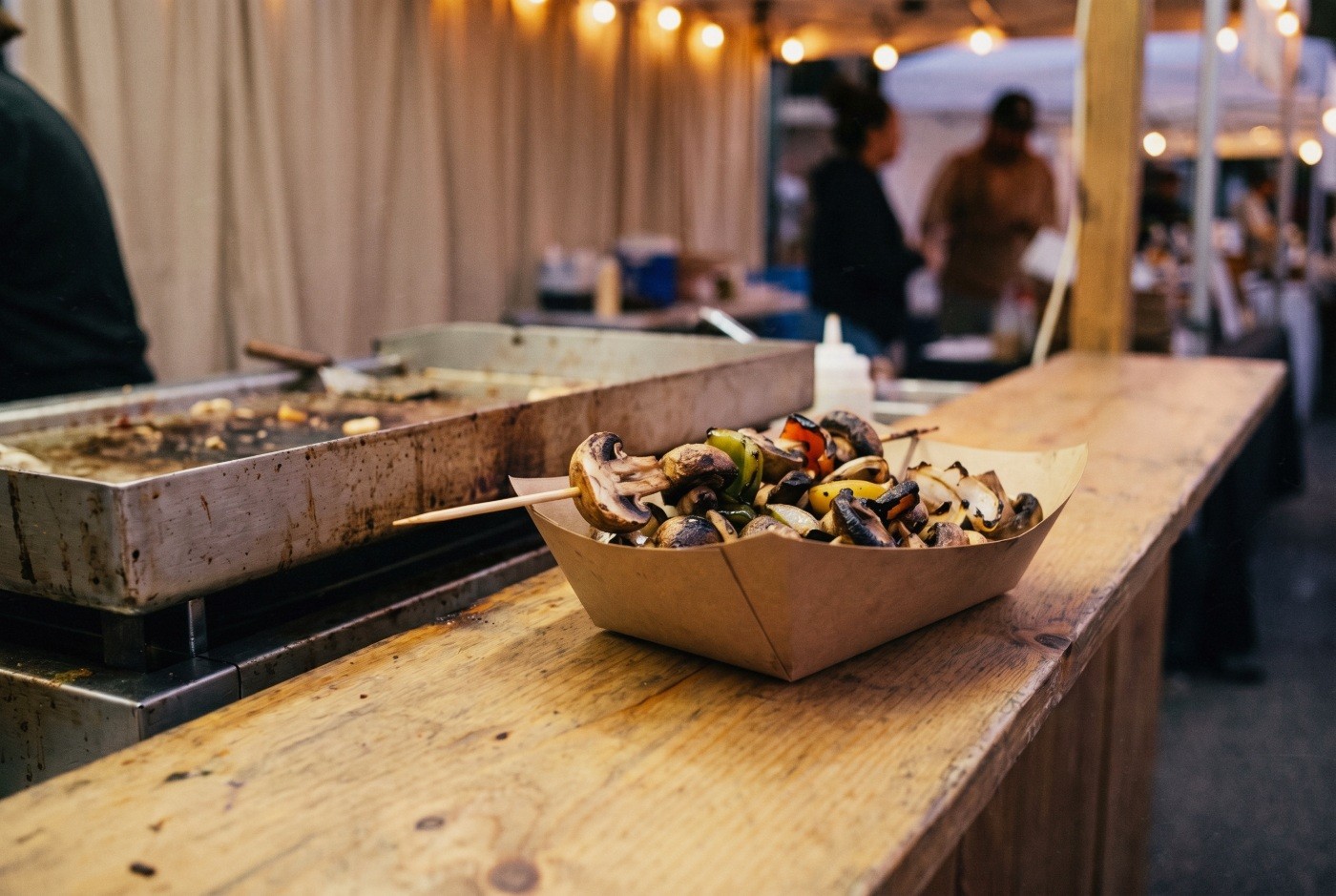 FIRST SIGHTWEBGLIllustration: A tray of grilled vegetables at a food stall. · Color and grain by First Sight · Gold 200. · First Sight 色彩與顆粒調校 · Gold 200
Night markets run on informal agreements. Understanding them makes the experience better.
Eat where you buy. Don't grab food and walk to another stall's seating area. Shared tables belong to the stall they're adjacent to.
Lines are sacred. The person in front of you has been waiting. The whole system operates on this.
Ask before you photograph vendors. They're working. A quick nod or gesture is enough.
Cash is king. NT$500-800 in small bills covers a full evening. Some vendors have mobile payment; most prefer you don't use it.
Don't fight the spice level. The chili oil is calibrated. The braised pork rice is meant to be salty. If a dish doesn't match your tolerance, choose a different dish. Don't ask the vendor to adjust.
Frequently Asked
Some links in this article are affiliate links. If you purchase through them,OQUA may earn a small commission at no extra cost to you. This helps support our editorial work. We only link to products and services we genuinely reference in our writing.
Comments (0)
Loading comments...