
Every second, somewhere in the world, an osteoporotic fracture happens. That statistic sounds distant until you learn where those fractures are concentrating. By 2050, half of all hip fractures worldwide will occur in Asia. Not because Asian populations are inherently fragile, but because bone health screening came late to the region, strength training culture is still young, and the demographics are shifting fast. Taiwan sits right in the center of that trend.
A national nutrition survey conducted between 2005 and 2008 found that 38.3% of Taiwanese women over 50 had osteoporosis. Among men the same age, 23.9%. That means if you lined up ten of your mother's friends, roughly four of them have bones porous enough to fracture from a stumble on a wet sidewalk. Most of them don't know it yet. Osteoporosis doesn't announce itself. It just waits for the fall.
Here's the part that gets overlooked in most conversations about bone health: this is not inevitable. Your bones are living tissue. They respond to mechanical stress the same way muscles do. Load them consistently, and they get denser. Ignore them, and they thin out at a rate of about 0.5 to 1% per year after 40. The trajectory isn't fixed. You get to choose which direction it goes.
How bones actually get stronger
Bones remodel constantly. Old tissue gets broken down by cells called osteoclasts, new tissue gets built by osteoblasts. When you're young, the builders outpace the breakers. After about 35, the balance tips. The breakers start winning by a small margin, and that margin compounds every year.
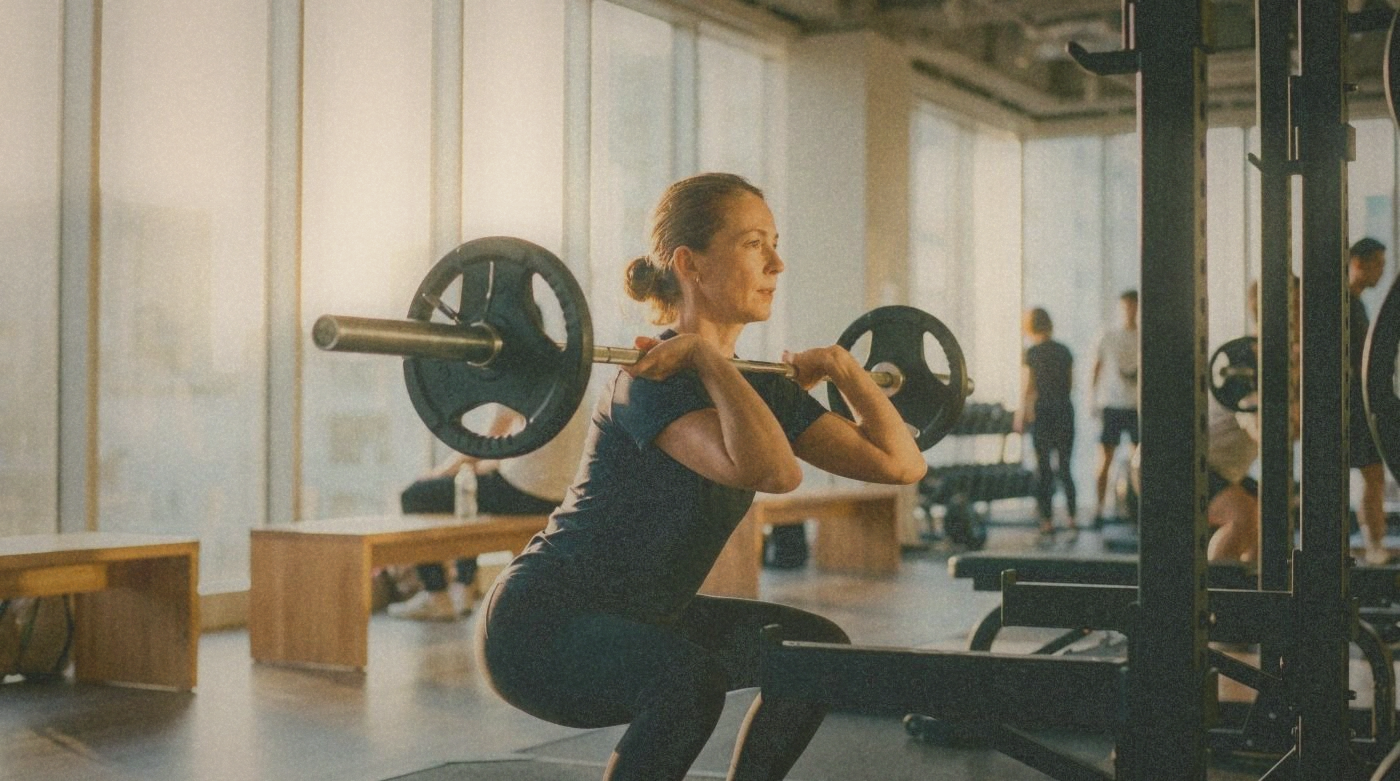
Resistance training reverses that equation. When you squat with a loaded barbell, the mechanical force travels through your femur, your spine, your hip joints. Your bones register that stress and respond by laying down more mineral. A 2025 meta-analysis of resistance training studies found that consistent lifting improved bone mineral density at the femoral neck and lumbar spine by 1 to 3% annually. That might not sound like much, but consider that doing nothing loses 0.5 to 1% per year. The swing between lifting and not lifting is 1.5 to 4 percentage points annually. Over a decade, that's the difference between bones that can absorb a fall and bones that can't.
The key word in that research is "consistent." One intense month doesn't do it. Your bones need repeated, progressive loading over months and years. They're slower to adapt than muscles, but the adaptations last longer too. Think of bone remodeling like a savings account with a slow interest rate. The deposits are small, but they compound, and you can't rush it.
The exercises that matter most
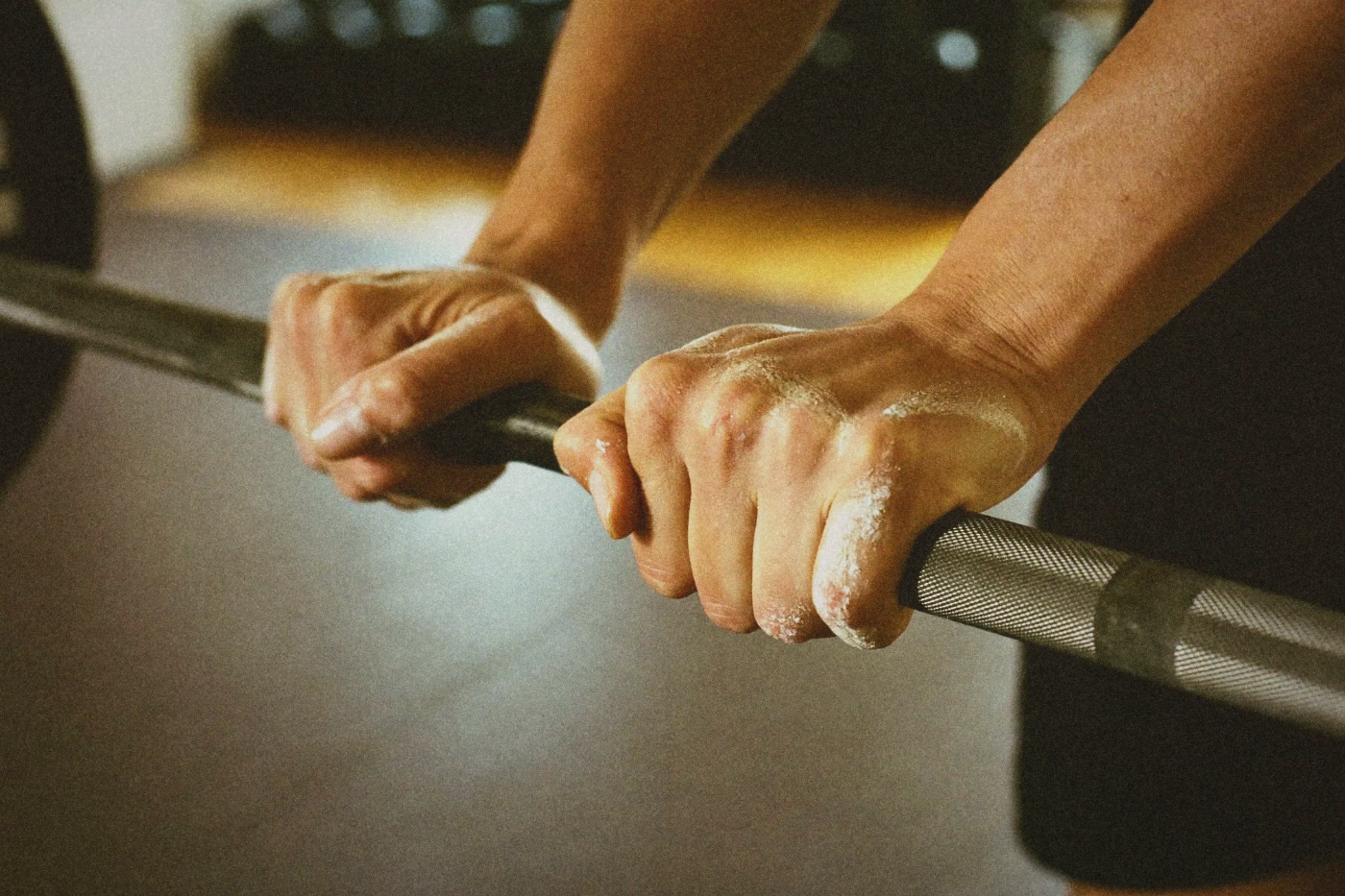
 FIRST SIGHTWEBGLThe grip tells the story. Chalk, calluses, consistency. · Color and grain by First Sight · Portra 400. · First Sight 色彩與顆粒調校 · Portra 400
Not all resistance training is equal when it comes to bone density. The exercises that build bone are the ones that load the skeleton axially, meaning force travels through the long axis of your bones, particularly at the sites most vulnerable to fracture: the spine, the hips, and the wrists.
Squats. Moderate to heavy barbell squats, done two to three times per week, can significantly improve lumbar spine bone density in as little as six months. The load travels down through your spine and into your femurs. If you've never squatted before, start with bodyweight, then goblet squats with a kettlebell, then work toward a barbell. The progression matters more than the starting point.
Deadlifts. This is one of the most effective exercises for spinal bone density, and it's also one of the most feared. The deadlift loads your entire posterior chain: your spine, hips, femoral neck, grip. The axial force is significant. If the idea of deadlifting makes you nervous, that's normal. Start light. A 20kg barbell from the rack is plenty. The technique needs to be right, so if you can afford one or two sessions with a trainer at your local 運動中心, do that first.
Step-ups and lunges. These load one leg at a time, which forces each hip and femur to handle the full weight. Useful for addressing side-to-side imbalances, which become more common as you age.
Overhead press. Standing overhead pressing loads the spine vertically. It's also good for the wrists and forearms, which are a common fracture site in falls.
Farmer's walks. Pick up two heavy dumbbells or kettlebells and walk. Simple. The grip demand is excellent for wrist and forearm bone density, and the loaded walking pattern stresses the hips and spine in a way that mimics real life.
What doesn't help much: swimming, cycling, yoga. All excellent for other reasons, but they don't provide enough mechanical loading to stimulate bone growth. If those are your main activities, consider adding two days of resistance work per week. You don't need to stop what you love. You need to add what your bones need.
Progressive overload: why it has to get harder
Your bones adapt to the load you give them. If you squat the same weight every week for a year, your bones adapted months ago and stopped responding. The stimulus has to increase over time. This is progressive overload, and it's the single most important training concept for bone health.
It doesn't mean adding weight every session. Progression can look like more reps at the same weight, a slightly heavier kettlebell every month, deeper range of motion, or shorter rest periods. The point is that your body encounters a demand slightly beyond what it's accustomed to, and it responds by building to meet that demand.
For someone starting from zero, this is actually encouraging. Your bones are so unaccustomed to loading that almost any weight will produce a stimulus. A 55-year-old who starts squatting with an 8kg kettlebell and progresses to 16kg over three months is getting a bone-building response at every stage. You don't need to lift heavy by anyone else's standards. You need to lift heavier than you did last month by your own.
When to get a DEXA scan
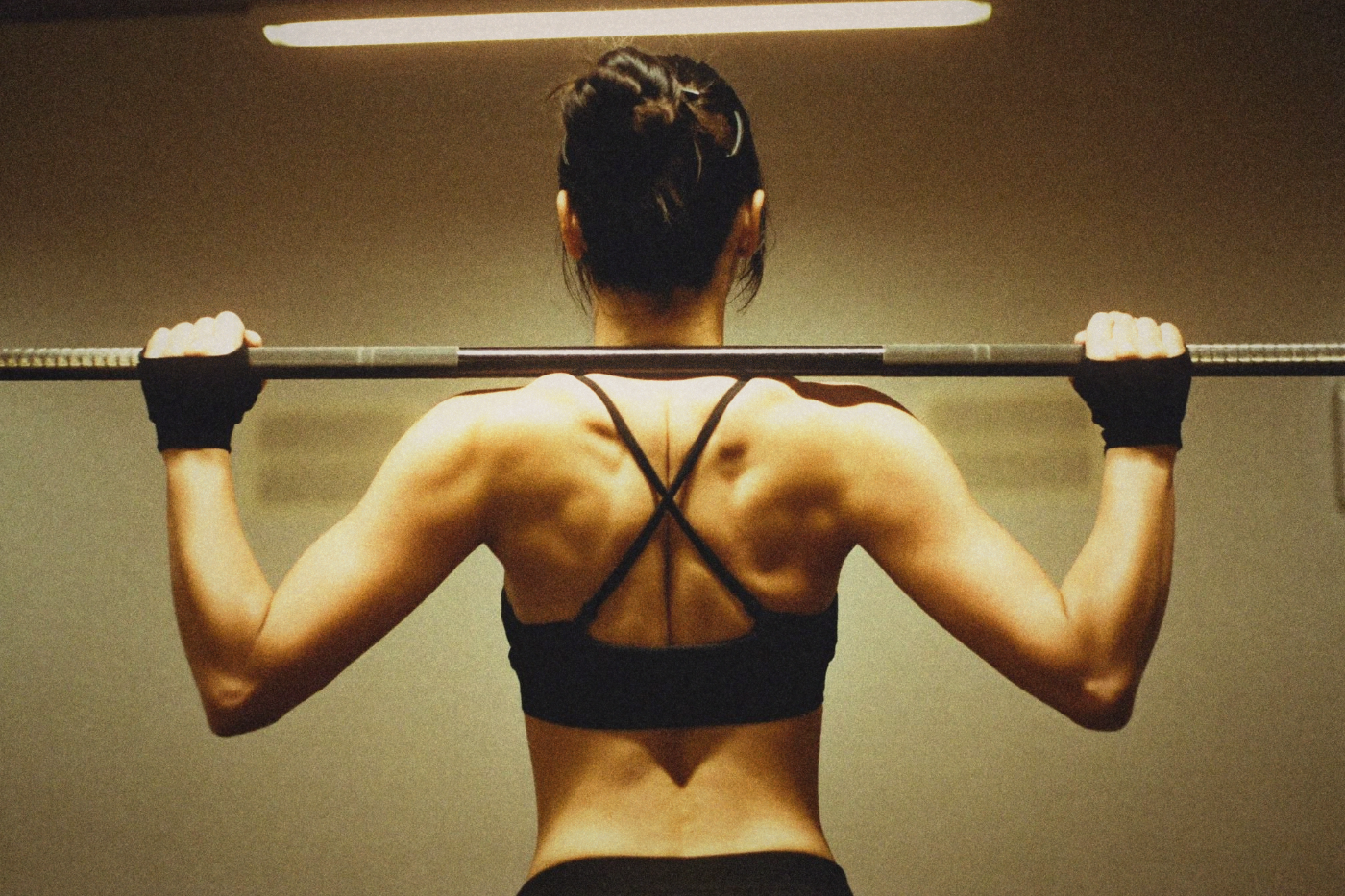 FIRST SIGHTWEBGLThe deadlift loads your entire posterior chain — spine, hips, grip. · Color and grain by First Sight · Portra 400. · First Sight 色彩與顆粒調校 · Portra 400
A DEXA (dual-energy X-ray absorptiometry) scan measures bone mineral density at two key sites: the lumbar spine and the hip. It takes about ten minutes, involves minimal radiation, and gives you a T-score that compares your bones to a healthy 30-year-old. Above -1.0 is normal. Between -1.0 and -2.5 is osteopenia, the precursor stage. Below -2.5 is osteoporosis.
In Taiwan, NHI covers basic bone density screening for eligible patients, typically postmenopausal women and men over 50 with risk factors. If you don't qualify for NHI coverage or want a proactive baseline, standalone DEXA scans at health check centers run NT$1,500 to 3,000. That's roughly the cost of two months at a 運動中心.
If you're over 40 and have never had a scan, get one. It gives you a starting number, and that number becomes meaningful once you start training and can re-test in 12 to 18 months. Without a baseline, you're guessing. With one, you're measuring.
Who should prioritize it: women within five years of menopause or postmenopausal, anyone with a family history of osteoporosis or hip fracture, people who've been sedentary for extended periods, smokers, heavy drinkers, and anyone who's taken corticosteroids long-term. If several of those apply to you, make the appointment this week.
Taiwan gym costs and where to train
You don't need an expensive gym. Taipei's public sports centers, the 運動中心 that most districts have, charge NT$50 per visit or offer monthly plans from NT$799 to NT$1,500. The equipment at most 運動中心 is decent: squat racks, barbells, cable machines, dumbbells up to 30 or 40kg. The Zhongshan and Xinyi locations are particularly well-equipped. It's not a boutique gym, but for bone-building exercises, you don't need a boutique gym. You need a barbell and a rack.
Private gyms in Taipei average around NT$1,388 per month, which gets you cleaner facilities, more equipment variety, and usually better ventilation. Worth considering if the local 運動中心 is too crowded during your preferred hours. Some people train better in a space that feels less institutional.
A few things about training in Taipei's climate. The humidity is real, and it affects grip. Chalk is your friend, even just a small block of gym chalk for your deadlifts and farmer's walks. Most gyms tolerate it if you clean up. Hydration matters more here than in temperate climates. Bring a full bottle, not a 300ml cup. And if you're training at an outdoor park with pull-up bars and dip stations, morning is better than afternoon in summer. By 2pm in July, the metal equipment is genuinely hot enough to burn skin.
The humid-climate factor
Taiwan's humidity doesn't directly affect bone density, but it affects your training in ways worth accounting for. Grip slips earlier. Joints feel stiffer in the morning, particularly if you have any arthritis starting. Dehydration sneaks up faster because you may not realize how much you're sweating in an air-conditioned gym versus outside.
If you're training early morning, spend five extra minutes on a warm-up. Joint mobility work, especially for the hips and thoracic spine, makes a bigger difference here than in drier climates. Your 7am body in a Taipei December feels different from your 7am body in a Taipei July, and the warm-up should adjust accordingly.
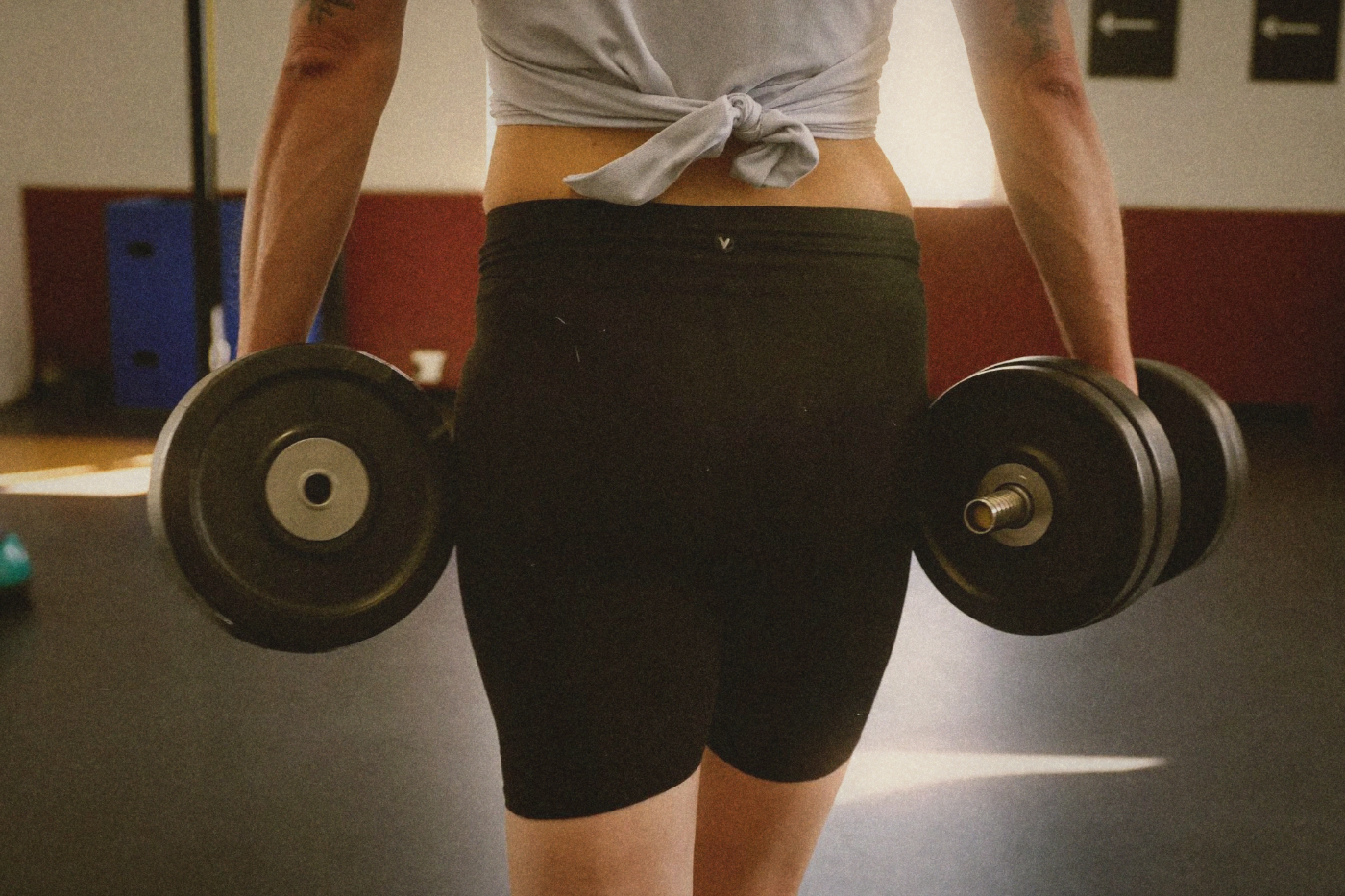 FIRST SIGHTWEBGLFarmer's walks: simple, brutal, effective for bone density. · Color and grain by First Sight · Portra 400. · First Sight 色彩與顆粒調校 · Portra 400
A starting point
If you're over 40 and haven't done resistance training before, here is a reasonable first twelve weeks. None of this requires a personal trainer long-term, though two or three initial sessions to learn the squat and deadlift patterns are a good investment.
Week 1-4: Foundation. Two sessions per week. Goblet squats, Romanian deadlifts with dumbbells, dumbbell overhead press, step-ups, farmer's walks. Light weight, learning the movements. Focus on range of motion and control, not load. Week 5-8: Building. Two to three sessions per week. Progress to barbell squats and conventional deadlifts if form is solid. Add weight in small increments, 2.5kg per side when the current weight feels manageable for all reps. Add lunges and barbell rows. Week 9-12: Loading. Three sessions per week. Working sets at a weight that's challenging for 8 to 12 reps. Progressive overload is the priority now. Track your weights in a notebook or phone app so you know what to beat next session.
After twelve weeks, get a DEXA scan if you haven't already. Then keep going. Bone remodeling operates on longer timescales than muscle growth. The real results show up at the six-month and one-year marks. This is a long game, and it rewards people who keep showing up.
FAQ
How heavy do I need to lift for bone benefits? Heavy enough that the last two reps of a set feel genuinely challenging. Research suggests loads at 60 to 80% of your one-rep max are optimal for bone stimulus. You don't need to know your exact max. If you can do 15 easy reps, it's too light.
Can walking build bone density? Walking helps maintain bone density in the legs and hips to some degree, but it doesn't provide enough stimulus to significantly increase it. It's great for general health, insufficient for reversing bone loss.
I have osteopenia. Is lifting safe? Yes, and it's specifically recommended. The American College of Sports Medicine recommends resistance training for people with low bone density. Start conservatively, use good form, and avoid heavy spinal loading until you've built a base. Talk to your doctor, but "don't lift" is outdated advice.
How long until I see results on a DEXA scan? Bone remodeling is slow. Most studies show measurable density changes at 6 to 12 months of consistent training. Get a baseline scan, train for a year, then re-test. Think of it like a retirement account. The quarterly statements aren't exciting, but the decade view is.
Should I take calcium supplements? Most people get enough calcium from food if they eat dairy, tofu, or leafy greens regularly. Supplementation without deficiency doesn't help and may carry cardiovascular risks. Get your levels checked with bloodwork before supplementing. A better investment: vitamin D, which most Taiwanese office workers are deficient in despite the sunny climate, because they spend most daylight hours indoors.
Is it too late to start at 60? No. Studies show bone density improvements in resistance training participants well into their 70s and 80s. Starting at 60 still gives you decades of benefit. The best time was ten years ago. The second best time is next week.
Comments (0)
Loading comments...