
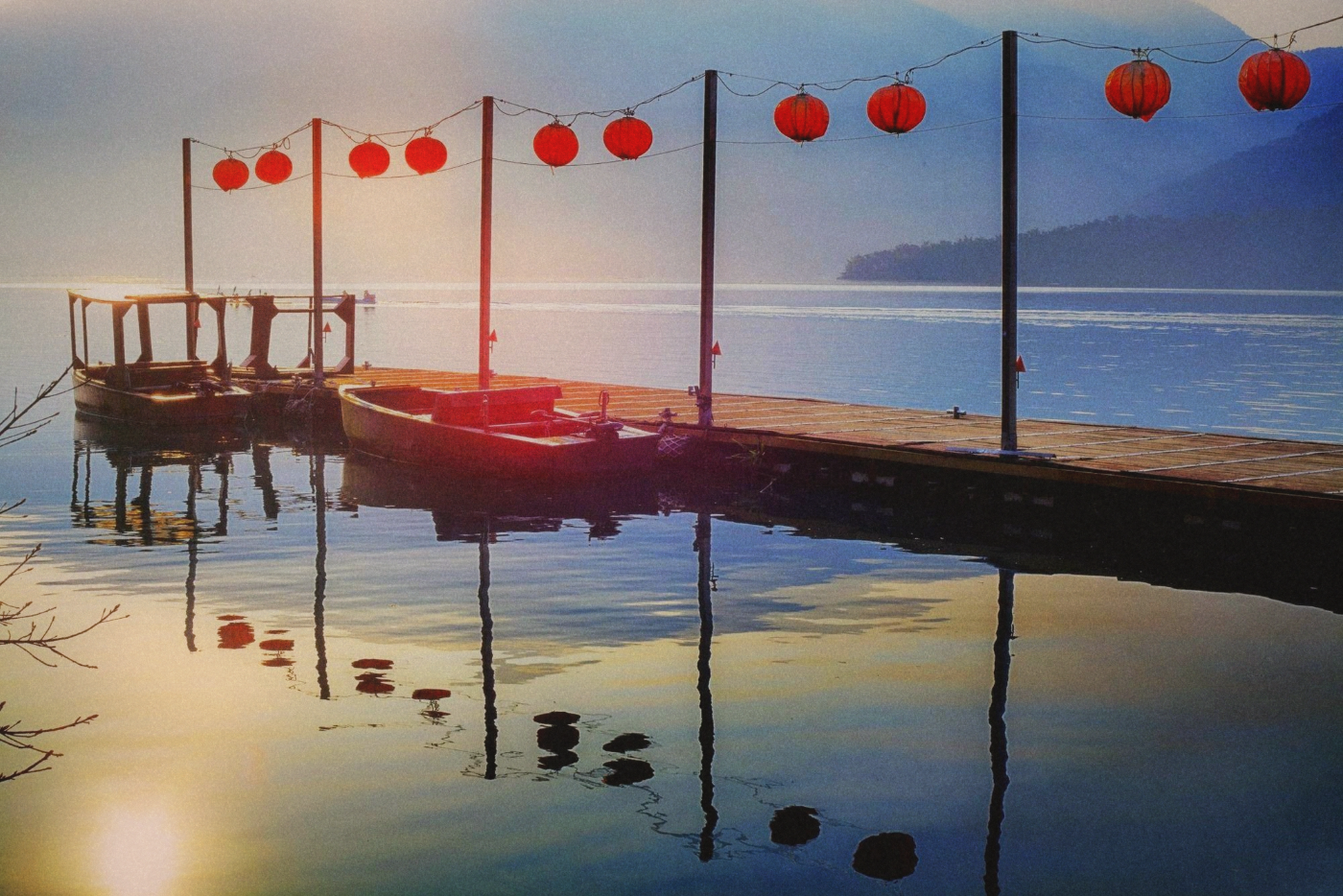
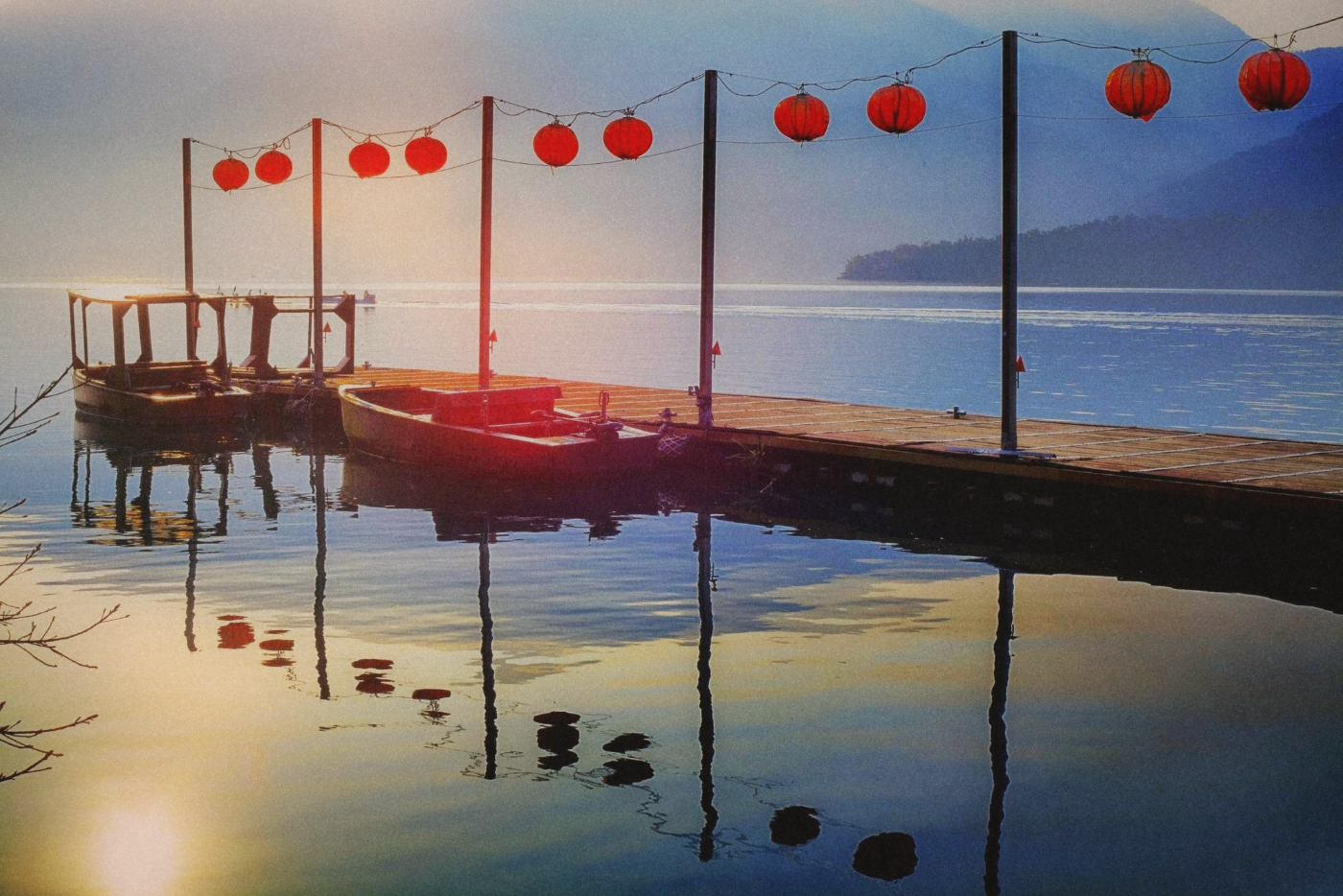
 FIRST SIGHTWEBGLColor and grain by First Sight · Portra 400.First Sight 色彩與顆粒調校 · Portra 400
The tour buses circle Sun Moon Lake in 90 minutes. They stop at a temple, a visitor center, and a tea shop. Everyone takes the same photo from the same dock. Then they leave, and the lake becomes quiet again.
The quiet part is the point. Sun Moon Lake is not a destination for checking boxes. It's a place for slowing down, and Taiwan has few places better suited for it. The forest trails are empty by 7am, the Thao indigenous people have lived here for centuries with a rhythm worth learning from, and the lake itself changes color with the light in a way that photographs never capture. The water shifts from jade green at dawn to steel blue at midday to silver at dusk, each shade tied to a specific quality of air.
This is the two-day version for people who came to rest, not to tour.
What You Need to Know
Getting there: High-speed rail to Taichung (50 min from Taipei, NT$700), then Nantou Bus 6670 to Sun Moon Lake (1h 40min, NT$193). Total: about 2.5 hours door to dock. Alternative: train to Taichung (2hr, NT$700), same connecting bus. The drive takes about 2.5 hours if you have a car.
Budget: NT$4,000–8,000 per person for 2 days, depending on accommodation. A decent room ranges NT$1,200-2,500/night, meals NT$150-300/meal at local spots (tourist restaurants are double this).
Best time: Weekdays, always. Weekends bring 10x the visitors and make the lake feel crowded. November–February for misty mornings and cool, crystal-clear light. April–May for spring wildflowers on the mountain paths. September is the warmest but most crowded.
Skip: The large tour boats that circle the whole lake (impersonal, loud), the cable car to Formosan Aboriginal Culture Village (expensive, crowded, misses the point of being here).
Day 1: Arrive + Forest + Lake
Morning: Take the first or second HSR to Taichung (6:30am or 7am departure from Taipei), connect to the 6670 bus. Arrive at Sun Moon Lake by 10:30am. You'll be slightly tired but your body's energy will peak when you hit the lake path. The bus winds through gentle Nantou countryside, lychee orchards, small villages, terraced tea farms with red soil. The landscape gradually rises as you approach the lake.
Accommodation: Stay at Shuishe Village (水社), the main settlement on the lake's north side. Forget the celebrity hotels. For a wellness-focused stay: The Lalu (涵碧樓, NT$15,000+/night) is famous but overpriced for what you get, too much noise from other guests, inconsistent food, feels like a convention hotel. Better value: Fleur de Chine (雲品溫泉酒店, NT$6,000-10,000/night), clean rooms with a lake-facing balcony, on-site hot springs, quieter than The Lalu, decent breakfast. Or for serious budget: Shuishe Village B&Bs (NT$2,000-3,500/night), ask the visitor center for recommendations; the family-run places often have homemade breakfast and local knowledge. Rock-bottom: Youth Activity Center (日月潭青年活動中心, NT$1,200/night), basic dorm or small rooms, clean facilities, minimal amenities but functional.
Afternoon: Hanbi Trail (涵碧步道): Walk the 1.5km lakeside trail starting behind the Chiang Kai-shek Memorial Pavilion. This is where you get the two-landscape view, the Sun Basin on one side, the Moon Basin on the other. The path winds through a stand of old camphor trees (樟樹) whose smell fills the air, sharp, almost medicinal. The trail takes 45 minutes at a normal pace and almost no tourists know about it because it's not on the bicycle route everyone follows. You'll hear birdsong, water, wind in leaves. That's it. The trail ends at an overlook where you can sit on the benches and just be for as long as you want. Many people sit for 20-30 minutes without moving.
After the trail, head directly to Shuishe Pier (水社碼頭). Don't take a boat. Just sit on the benches at the pier's edge. Watch the water change from green to blue to silver as afternoon clouds move across the sun. This is the most restorative thing you can do at Sun Moon Lake, and it costs nothing. Bring a book if you want one, but you probably won't read. People sit here and cry sometimes, good tears, the kind that come from slowness. Bring a light sweater; the water cools the air.
Evening: Ita Thao Village (伊達邵): Walk 3km along the lake path to this Thao indigenous settlement on the lake's east side. The path is paved, flat, and the light at 5pm hits the water in a particular way that makes you walk slower. The Thao night market here is tiny compared to mainland night markets, maybe 30-40 stalls, all of them family-run. The food is specific to this place and this people.
Try: Millet mochi (小米麻糬, NT$50), warm, slightly chewy, the millet gives it an earthy taste. Smoked wild boar (燻山豬肉, NT$80), ordered as a grilled skewer, the meat has a depth that farm pork doesn't. Assam black tea grown on the lake's hillsides (NT$40 for a small cup), the tea is sweet and slightly fruity, nothing like the refined oolong you can get in Taipei. There's a small stand run by an older woman who's been selling the same tea for 20 years. She'll let you taste before you buy. Sit on the small benches by the water and eat slowly. Watch the light fade. Listen to the Thao language being spoken around you, you won't understand it, but the rhythm is different from Mandarin, more open, more breathing room between words.
Day 2: Dawn + Thao Culture + Cycling + Hot Springs
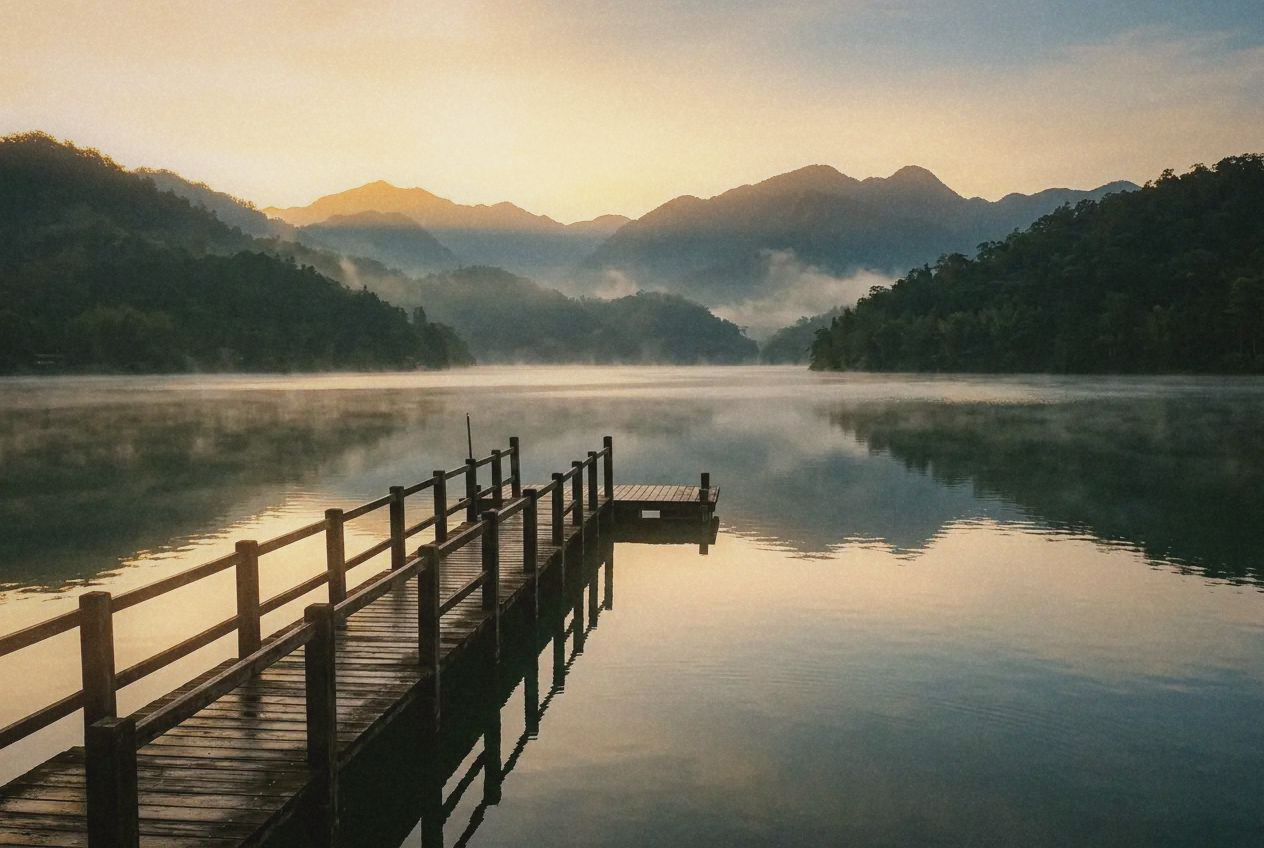 FIRST SIGHTWEBGLSun Moon Lake at dawn, before the tour buses arrive. The mist lifts slowly, like the lake is still deciding whether to wake up. · Color and grain by First Sight · Portra 400. · First Sight 色彩與顆粒調校 · Portra 400
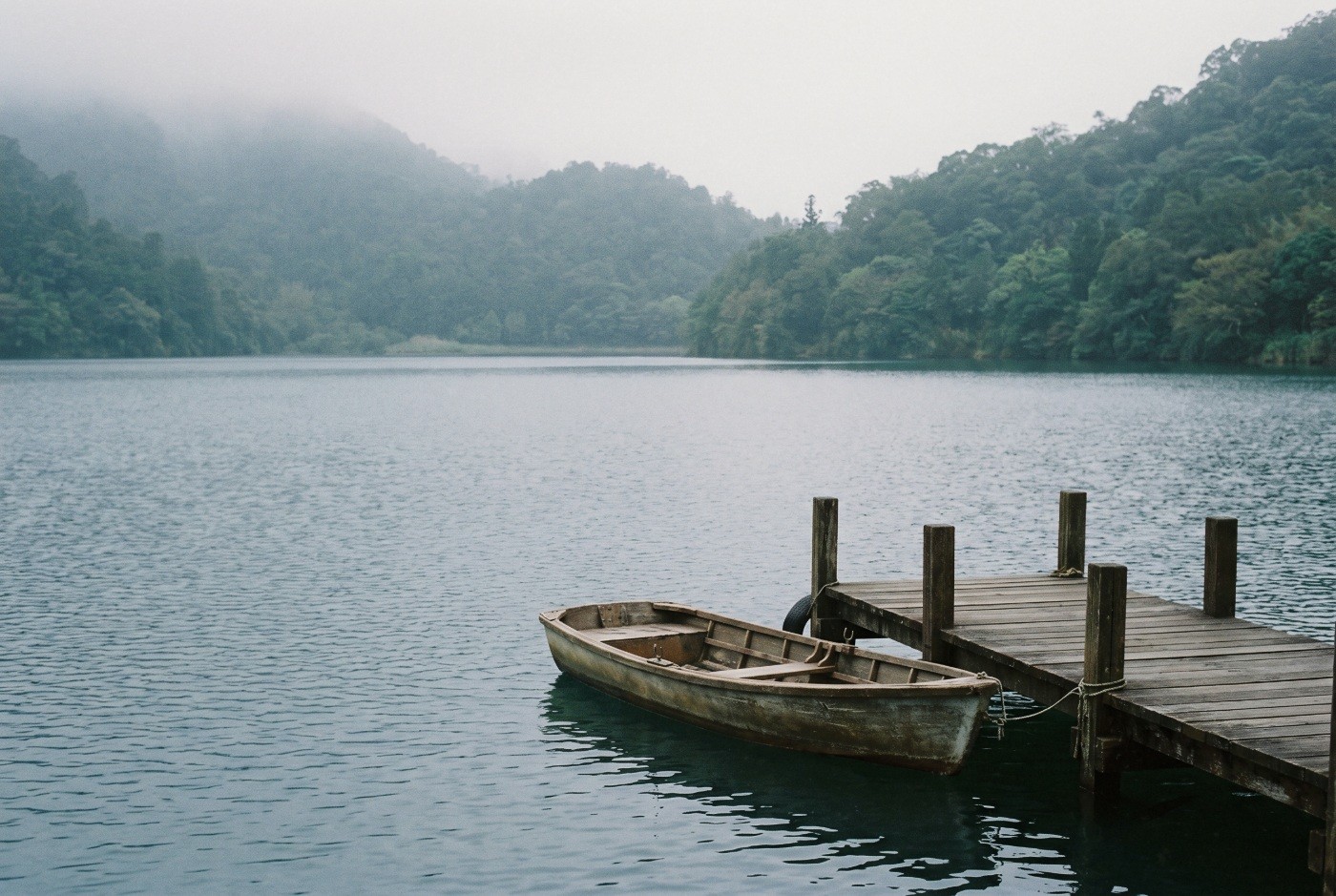 FIRST SIGHTWEBGLIllustration: A small boat tied beside a wooden jetty. · Color and grain by First Sight · Superia. · First Sight 色彩與顆粒調校 · Superia
5:30am: Walk to Shuishe Pier before sunrise. Set an alarm. This is worth losing sleep for. The lake at dawn is the single most beautiful moment in central Taiwan. Mist sits low on the water. The mountains emerge slowly from the darkness, one outline at a time. Almost no one else is here, maybe another person or two, but the place feels private. Bring coffee in a thermos. Bring a light jacket. Sit and watch the light arrive. This takes 30 minutes. You don't need to do anything else that day, but here's how to fill it if you want.
8am: Cycling, Shuishe to Xuanzang Temple (玄奘寺): Rent a bicycle from any shop in Shuishe (NT$300-500/day for a decent bike, e-bikes available for NT$500-800). The 30km full loop around the lake is technically doable but has 1,000+ meters of elevation gain, too much for a restoration day. Instead, ride 7km counter-clockwise (the easier direction) to Xuanzang Temple, which sits halfway around the lake on the eastern shoreline. The temple is a quiet, beautifully maintained Japanese-influenced building that houses relics of the Buddhist monk Xuanzang (who traveled the Silk Road in the 7th century). The temple is peaceful and rarely visited by tour groups. The monks are welcoming but not pushy. The terrace of the temple offers the single best panoramic view of the entire lake, both basins at once, the surrounding mountains, the water stretching away. At 8am on a weekday, the only other visitors are monks. Spend 20 minutes here. Don't pray unless you want to. Just sit.
The hardest section of the full loop is the Xuanzang Temple climb (about 3km of gradual uphill), which you've already done. The southern section past Huayu overlook is steeper, save that for cyclists training, not for wellness visitors. Return to Shuishe by noon.
Late morning: Thao Cultural Exhibition (邵族文化展示中心): Back in Ita Thao. Free entry. The exhibition is small but thoughtfully organized. The Thao are Taiwan's smallest indigenous group, fewer than 800 people, living on the shores of this lake for over 1,000 years. Their relationship with the lake is spiritual and practical, not commercial. The exhibition explains their lunar calendar (different from the Han Chinese calendar), their traditional fishing practices (which are now strictly regulated by the government), and the annual Fishing Celebration Festival (邵族豐年祭) held in September. There are old photographs showing the lake as it was 50 years ago. There are tools, fishing nets, traditional clothing. The exhibition takes 30-40 minutes and makes the rest of your lake experience deeper. You'll understand why the Thao perform their pestle music rituals, the rhythm is connected to harvest cycles, to the lake's breath.
Lunch (noon): Eat at any of the lakeside restaurants in Ita Thao, but specifically order the president fish (總統魚, NT$300–400). This is a freshwater fish found only in Sun Moon Lake, nowhere else. The story is that it was served to a Taiwanese president during an official visit decades ago, and the name stuck. Steamed with ginger and scallion. The flesh is delicate and sweet. Simple and extraordinary. Eat it slowly. Notice the bones, the texture, the way the ginger tastes against the fish. This is what food awareness looks like.
Afternoon: Rest or Extended Cycling: Either rest by the water in Shuishe and watch the light shift, or continue cycling around the lake's quieter eastern and southern sections (the terrain gets hillier but more scenic). The Shuishe-to-Xuanzang section (7km) gives the best scenery-to-effort ratio. Many people return at noon and sit by the water for the rest of the day. This is the right choice for a restoration trip.
Before returning to Taipei: Puli Hot Springs (埔里溫泉): 30 minutes from the lake toward Taichung, the town of Puli sits at the base of the mountains. The public bath at Puli Hot Spring Hotel (埔里溫泉飯店) costs NT$200 for entry. The water is sodium bicarbonate spring water, silky, soft, with a particular slickness that leaves your skin impossibly smooth for hours afterward. Soak for 20-30 minutes. The changing rooms are basic but clean. Wash yourself before entering the bath (there's a shower area). Some soaks are covered, some are open-air. If you can, choose open-air and watch the mountain light fade. This is a perfect ending before the train home. You'll arrive back in Taipei by 7pm, relaxed in a way that normal life doesn't allow.
Return: 3pm bus back to Taichung. High-speed rail back to Taipei by 6:30pm. You'll be tired in a good way, a clean tiredness that comes from walking and slowing down.
Practical Details: Tea Houses & Cycling
Tea: Visit 日月老茶廠 (free entry, located in a restored Japanese-era factory building) for Assam red tea tasting and history. The factory is still operational and the tour is self-guided. Red tea from this lake region is entirely different from Taiwanese oolong, it's what Taiwan was famous for before the oolong boom. Expect to spend NT$500-2000 if you buy.
For coffee and views, 鹿篙莊園 (on a mountainside above the lake) grows single-origin coffee and grows from beans they source and roast themselves. The café has stunning views and the coffee is genuinely good. Plan 90 minutes if you drive up there (it's a 20-minute drive from Shuishe).
Cycling logistics: The 30km loop is best done counter-clockwise starting from Shuishe (flatter in the beginning). E-bikes are available and actually worth the extra money, the terrain has enough climbs that you'll appreciate the assist. The hardest section is indeed the Xuanzang Temple climb; the southern section past Huayu is steeper but shorter. Rental shops cluster around Shuishe Pier. Most rent helmets, but bring your own sunscreen and water bottle.
Some links in this article are affiliate links. If you purchase through them,OQUA may earn a small commission at no extra cost to you. This helps support our editorial work. We only link to products and services we genuinely reference in our writing.
Comments (0)
Loading comments...