
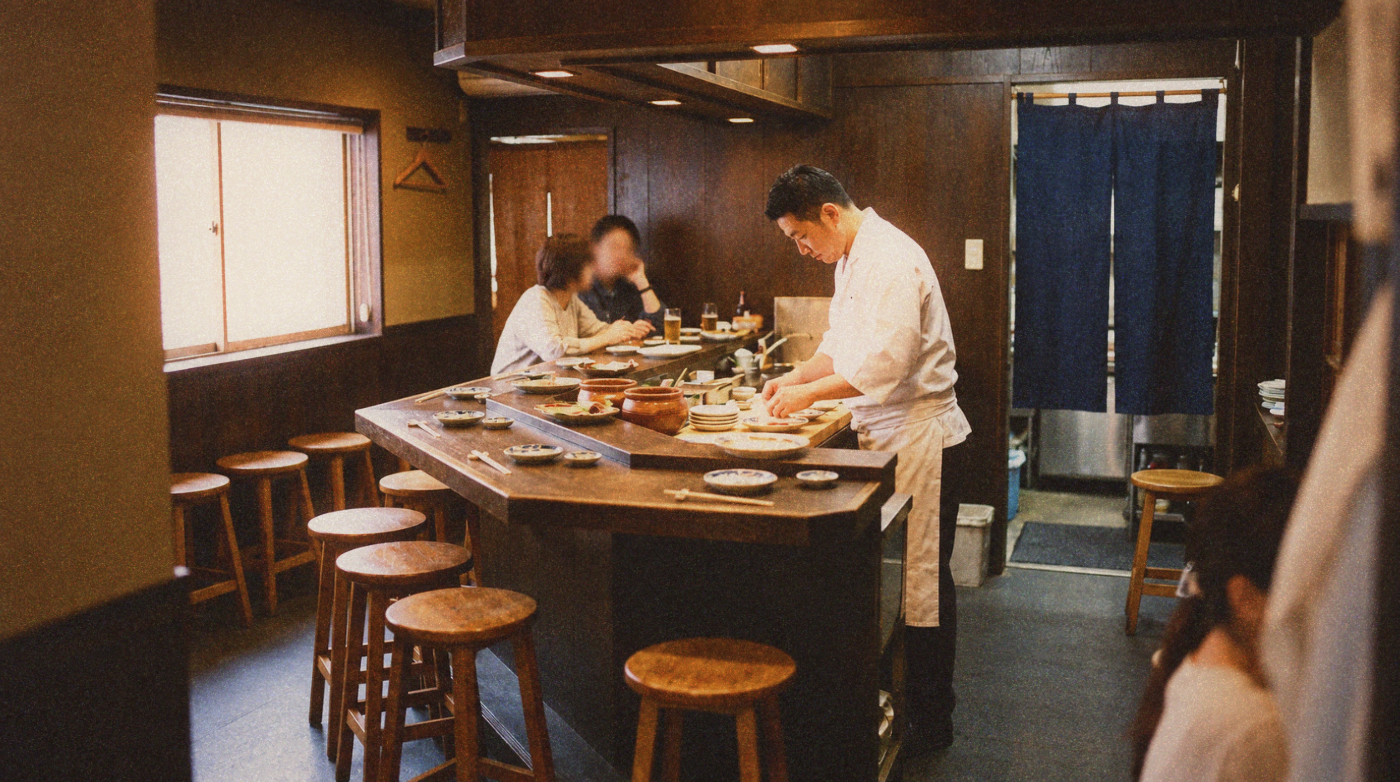
The first time I ate obanzai in Kyoto, I didn't know what obanzai was. A friend had written down an address on a napkin, and I walked through Pontocho's narrow alley until I found a door I wasn't sure was a restaurant. Inside, behind a counter lined with small ceramic dishes, a man in his sixties was arranging simmered vegetables with the focus of someone solving a puzzle. His son stood beside him, working the rice. There was no menu board I could read. The woman next to me pointed at three dishes and nodded, so I pointed at the same ones. Twenty minutes later I was eating the best simmered eggplant I'd ever had, in a room that seated maybe twelve people, on a side street most visitors to Kyoto would walk past without looking twice.
That was eight years ago. I've been back to Kyoto nine times since, and I still eat at that restaurant whenever I can get a seat. But I've also wandered enough to learn that Kyoto's best food isn't in the obvious places. The multi-starred kaiseki restaurants are extraordinary, but they're also NT$15,000 dinners that require reservations weeks in advance. The real texture of eating in Kyoto is in the neighborhood spots: the soba shop by the river, the tofu place hidden behind a temple, the obanzai counter where the owner decides what you're eating based on what looked good at the market that morning.
This is a guide to those places.
Pontocho: Obanzai and the art of simple things
Pontocho is a single alley running parallel to the Kamogawa River, barely wide enough for two people to pass. At night the lanterns come on and it looks like a film set, which means it attracts crowds. But the restaurants tucked into this alley are genuinely good, and two of them have been cooking the same way for decades.
Pontocho Masuda (先斗町ますだ) 200 Shimokorikicho, Nakagyo-ku. Open 5pm to 10pm, Monday through Saturday. Closed Sundays.
This place opened in 1952. A father and son run the kitchen. The counter displays twenty-plus varieties of obanzai each evening, which is Kyoto's tradition of home-style cooking: small dishes of simmered vegetables, braised tofu, pickled things, vinegared fish. You sit at the counter and point at what you want. There's no pressure to order everything, no tasting menu you're locked into. Three or four dishes with rice and soup costs around 4,000 to 5,000 yen (roughly NT$900 to NT$1,100). The Michelin Guide selected it in 2026.
The kizushi (vinegared sushi) is excellent. The hijiki and okara taste like someone's grandmother made them, which is the highest compliment you can pay obanzai. The nishin-nasu, herring with eggplant, is a Kyoto classic that most restaurants get slightly wrong. Masuda gets it right.
Walk-ins are possible at the counter but reservations help.
Pontocho Robin (先斗町ろびん) 137-4 Wakamatsu-cho, Pontocho-dori, Nakagyo-ku. Dinner from 5pm. Lunch weekends only in May and September.
The building is two 150-year-old Kyoto tea houses joined together. From May through September, they open the kawayuka, a riverside dining deck suspended over the Kamogawa, and eating there on a warm evening is one of those experiences that rearranges your expectations of what dinner can be. Courses start at 8,800 yen (around NT$1,950). In summer, order anything with hamo (conger eel). Reservations recommended, especially for the kawayuka.
Gion: Kaiseki without the intimidation
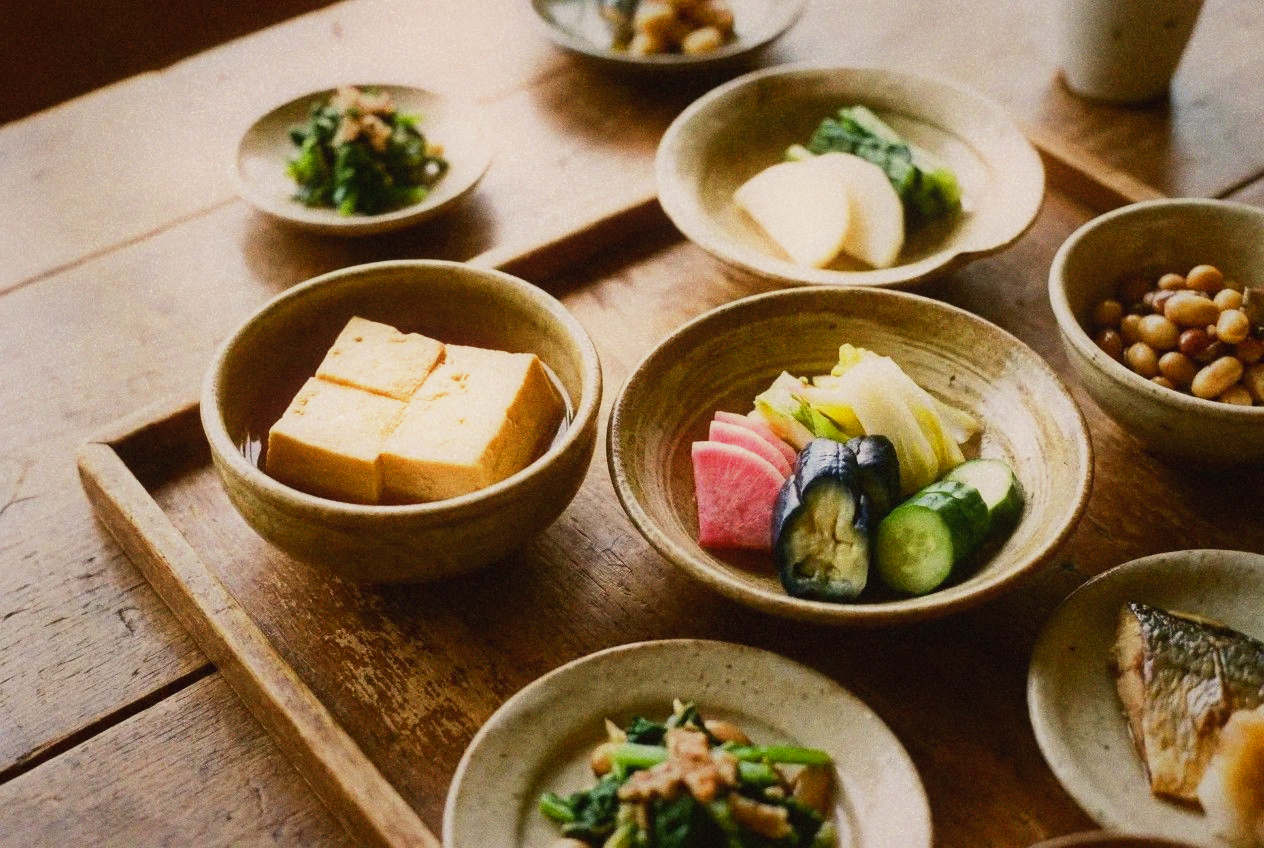
 FIRST SIGHTWEBGLArrangement of obanzai Kyoto home-style dishes in small ceramic bowls on a wooden tray. pickled vegetables and simmered tofu · Color and grain by First Sight · Gold 200. · First Sight 色彩與顆粒調校 · Gold 200
Gion can feel like a velvet rope district for food. But not every kaiseki restaurant here requires a six-figure yen budget or a Japanese-speaking concierge to book.
Gion Karyo (祇園迦陵) 570-235 Gionmachi Minamigawa, Higashiyama-ku. On Hanamikoji street. Lunch 11:30am to 2:30pm, dinner 6pm to 10pm.
This is the kaiseki restaurant I send people to when they've never tried kaiseki and want to understand what the fuss is about without spending a fortune. Lunch courses start around 5,500 yen (about NT$1,220). Dinner runs 16,500 to 19,800 yen. The space is a renovated machiya, and the seasonal ingredients change monthly. You need to reserve at least a day ahead because the kitchen buys ingredients specifically for confirmed reservations. Seven-minute walk from Gion-Shijo Station.
I had a spring lunch here once that included a clear soup with bamboo shoot and kinome leaf that tasted like the season itself had been distilled into a bowl. That sounds like the kind of thing food writers say to sound poetic. I know. But it's what happened.
"Kaiseki isn't about luxury. It's about eating what the calendar says you should eat, prepared with more care than seems reasonable for a single meal."
Nishiki and downtown: The affordable middle
The streets around Nishiki Market are where the practical side of Kyoto's food culture lives. Less ceremony, more lunch.
Oryori Menami (御料理めなみ) 96 Nakashima-cho, Kiyamachi-dori Sanjo-agaru, Nakagyo-ku. Open 3pm to 10pm. Closed Wednesdays.
This seventy-year-old obanzai spot is three minutes from Sanjo Station. The counter display is colorful and inviting, and you point at what you want. An obanzai assortment starts at 1,500 yen. A full meal with a drink runs 3,000 to 4,000 yen (NT$660 to NT$890). It's the kind of place where you go for an early dinner after a long day of walking temples and end up staying longer than planned because the food keeps coming and the atmosphere keeps you in your seat.
Kyotofu Fujino / Konnamonja (京とうふ藤野 こんなもんじゃ) Nishikikoji-dori, Nakagyo-ku. Inside Nishiki Market. Roughly 10am to 6pm.
The parent company has been making tofu near Kitano Tenmangu for about sixty years. This Nishiki outpost does simmered tofu in soymilk broth (1,540 yen), miso-topped baked tofu (660 yen), and soy milk doughnuts that are worth the detour on their own. Casual, walk-in, no reservations needed. Good for a light lunch when you don't want a full sit-down meal.
Arashiyama: Tofu and soba with a view
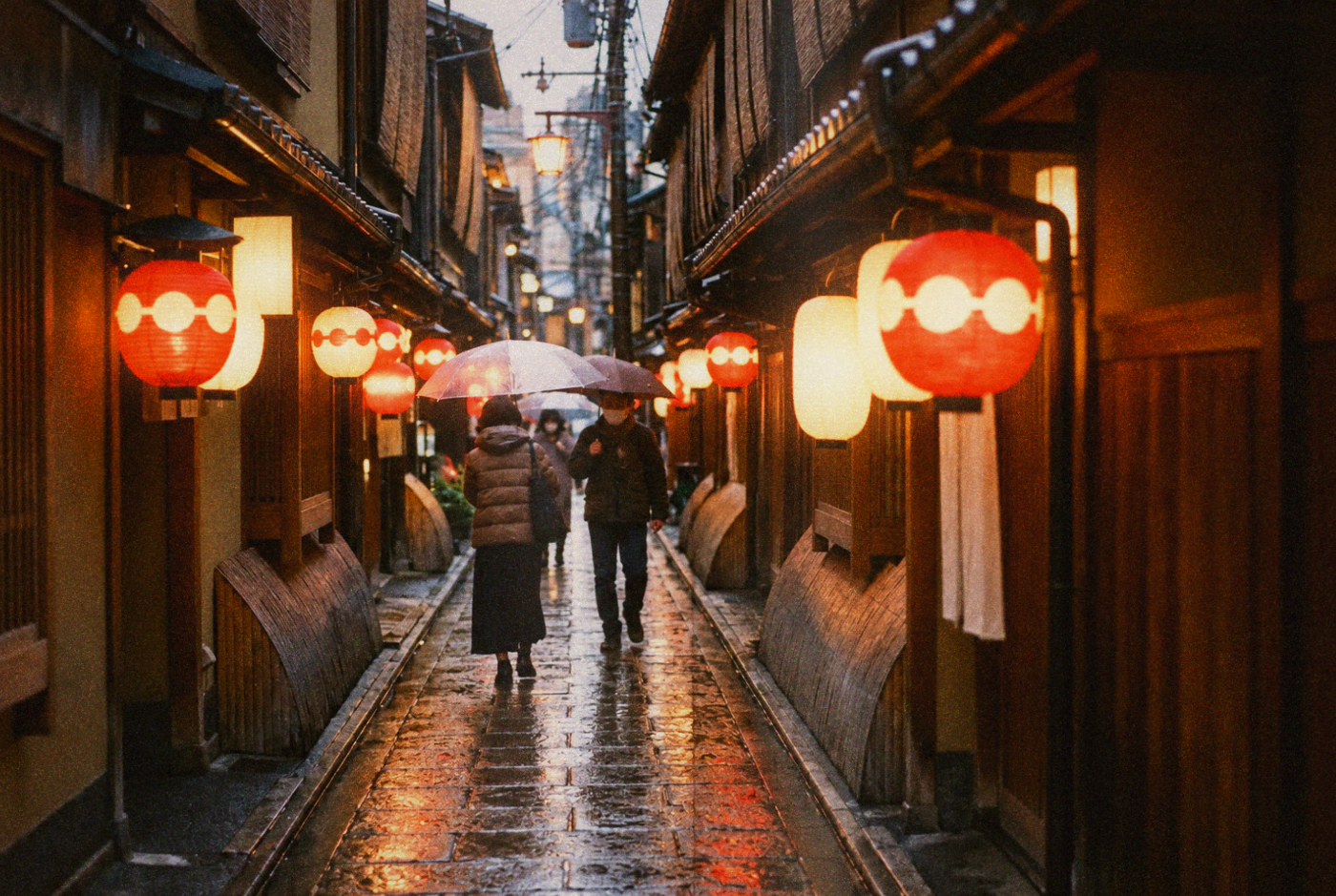 FIRST SIGHTWEBGLA quiet lane at dusk, with warm light spilling from small restaurants. · Color and grain by First Sight · Gold 200. · First Sight 色彩與顆粒調校 · Gold 200
Arashiyama gets crowded, especially around the bamboo grove and Togetsukyo Bridge. But the restaurants here leverage their settings in ways that justify the trip.
Arashiyama Yoshimura (嵐山よしむら) 3 Sagatenryuji Mononobamba-cho, Ukyo-ku. Open 11am to 5pm daily.
Handmade soba in a glass-walled dining room facing Togetsukyo Bridge and the Arashiyama mountains. They grind and cut the noodles in-house. The tenzaru set, tempura with cold soba, runs around 2,000 to 3,000 yen. No formal reservations; you register at the door and come back at the assigned time. The soba tea roll dessert is oddly good.
I ate here on a rainy November afternoon when the maple trees across the river were at full color and the clouds sat low on the mountains, and the soba arrived in a bamboo basket with that clean buckwheat smell that cold rain somehow intensifies. The view from the window was better than any museum I visited that trip.
Shoraian (松籟庵) Sagatenryuji Kameyama-cho, Ukyo-ku. Upstream of Togetsukyo Bridge, inside the bamboo forest.
Hidden. You walk past the main tourist flow, along the river, and find a building tucked into the trees. The owner is a calligrapher whose work hangs throughout the space. The tofu kaiseki uses Saga tofu prepared multiple ways across seven to twelve courses, from 4,600 to 5,800 yen at lunch. River views from every seat. Reserve by 5pm the day before. This is one of those places that feels like a secret even though it's been operating since 2005.
Beyond the center: Two outliers worth the detour
Menbaka Fire Ramen (めん馬鹿一代) 757-2 Minamiiseyacho, Kamigyo-ku. Open from 11:30am. Ten-minute walk from Nijo Castle.
Yes, the gimmick is that they set your ramen on fire. Green onion oil ignited tableside, a column of flame rising from your bowl while you sit at the counter trying to look unfazed. But here's the thing that surprised me: the ramen underneath the theatrics is genuinely good. Rich negi broth, solid noodles. Fire ramen from 1,250 yen. It's been open since 1984, which means the cooking predates the viral videos by decades. English and Chinese menus available.
Nezameya (祢ざめ家) 82 Fukakusa Inari Onmaecho, Fushimi-ku. Right at the entrance to Fushimi Inari Taisha. Open 10am to 4pm (closes when sold out).
Founded in 1540. Toyotomi Hideyoshi named it. The inari sushi, seven pieces for 1,050 yen, uses sweetly simmered tofu skin filled with rice, sesame, and hemp seeds. The nishin soba, herring on buckwheat noodles, is a Kyoto staple done with the authority of nearly five centuries of practice. The building itself uses early Showa-era materials. You'll walk past it heading to the shrine. Don't.
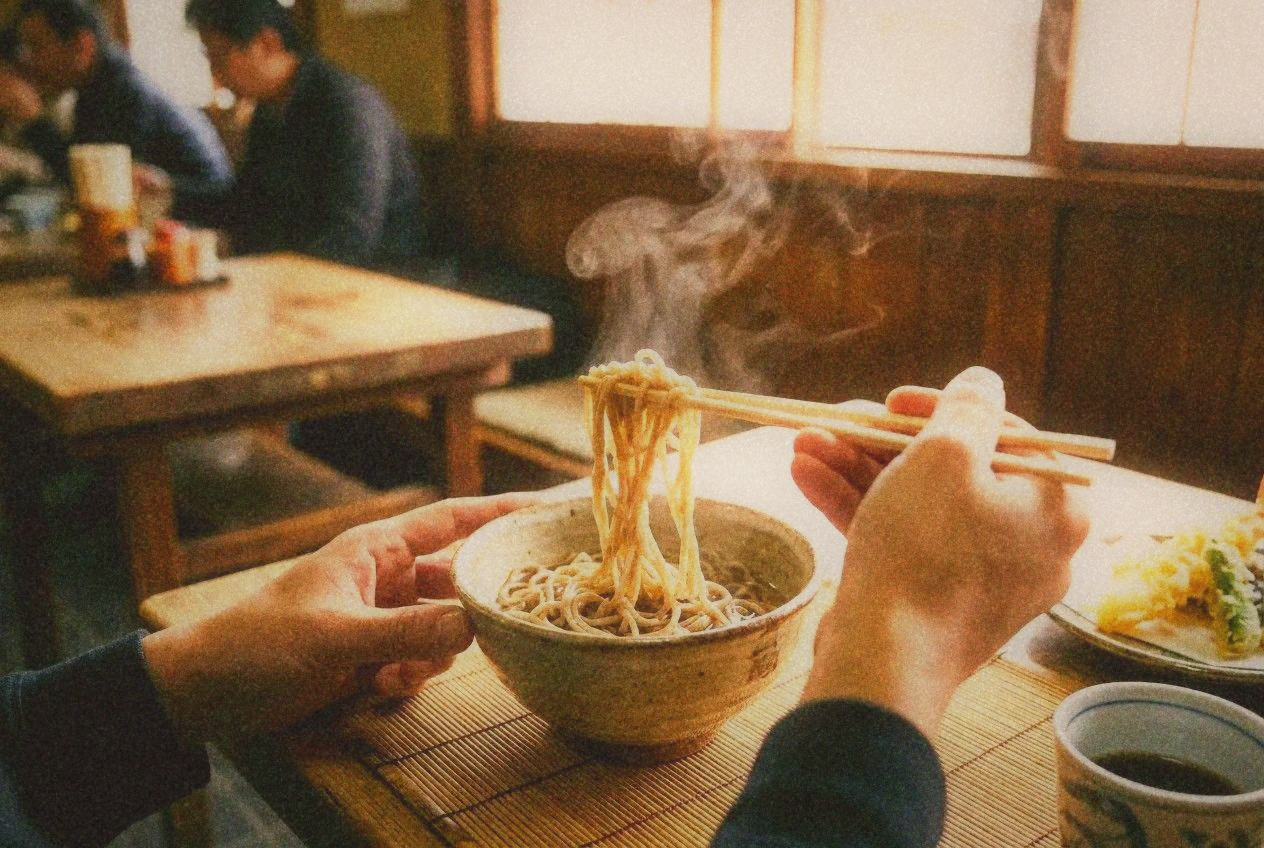 FIRST SIGHTWEBGLHand-cut soba noodles being served at a traditional Kyoto soba shop. bamboo mat · Color and grain by First Sight · Gold 200. · First Sight 色彩與顆粒調校 · Gold 200
Practical notes
Reservations: For kaiseki, always reserve. For obanzai and casual spots, reservations help but walk-ins often work at counter seats. For ramen and market food, just show up.
Seasonal timing: Kyoto's food follows the calendar religiously. Cherry blossom season (late March to mid-April) brings specific ingredients. Summer means hamo and shaved ice. Autumn is matsutake mushroom and chestnut. Winter is kabu (turnip) and hot pot. If you can, time your visit to autumn or early spring. The food is at its most interesting when the seasons are turning.
Language: Most neighborhood restaurants have limited English. Google Translate's camera function handles menus well. Pointing at the counter display is universal. A few useful phrases: "osusume wa?" (what do you recommend?) and "arerugii" (allergies) plus the ingredient name.
Budget: You can eat extremely well in Kyoto for 5,000 to 8,000 yen a day if you mix obanzai lunches (2,000 to 3,000 yen) with one nicer dinner. The gap between a good neighborhood meal and an expensive kaiseki is narrower in Kyoto than in most cities.
FAQ
Is kaiseki worth the money? At Gion Karyo's lunch price (5,500 yen), absolutely. At the 30,000+ yen level, it depends on how much the ritual and precision of the experience matters to you. The food is extraordinary at every level. The question is whether you want an hour-long meal or a three-hour ceremony.
What's the best neighborhood for food overall? Pontocho and the streets immediately around Nishiki Market. High density of good restaurants, walkable, and you can eat three different meals within a five-minute radius.
Can I eat well as a vegetarian? Better than in most of Japan. Kyoto's temple cuisine (shojin ryori) is entirely plant-based, and tofu/yuba-focused restaurants are everywhere. Ask for "niku nashi" (no meat) and "dashi nashi" (no fish stock) if you want to be thorough. Arashiyama's tofu restaurants are your best bet.
When should I avoid going? Golden Week (late April to early May) and the peak of autumn leaf season (mid-November) bring enormous crowds. Restaurants are booked solid, streets are packed, and prices spike. Early spring (March) and early autumn (September to October) give you similar beauty with fewer people.
Comments (0)
Loading comments...