
The Humidity Problem Nobody Warns You About
Every capsule wardrobe guide assumes you live somewhere with four distinct seasons and indoor air that doesn't try to grow things on your clothes. Taiwan has two seasons — hot and slightly less hot — and humidity that treats your closet like a petri dish.
The standard minimalist wardrobe advice (buy quality basics in neutral tones) is half right. The other half needs to account for fabrics that won't hold moisture, colors that survive frequent washing, and the reality that you'll change clothes twice a day from May through October.
The Fabric Hierarchy for Taiwanese Humidity
Not all natural fibers are equal in subtropical conditions. Here's what actually performs:
Tier 1: Buy these
Linen. The undisputed champion of humid climates. Absorbs up to 20% of its weight in moisture before feeling damp, dries faster than any other natural fiber, and gets softer with every wash. The wrinkling isn't a bug — it's the price of admission. Embrace it.
Tencel/Lyocell. The synthetic that behaves like a natural. Moisture-wicking, antimicrobial, drapes beautifully in heat. More expensive than cotton but lasts longer in high-humidity environments because it resists bacterial odor buildup.
Quick-dry synthetics for active use. Polyester-blend workout and underwear fabrics exist for a reason. They're not elegant, but for the gym, commuting, or anything involving sweat, they outperform everything else.
Tier 2: Proceed with caution
Cotton. Everyone's default, but cotton absorbs moisture and holds it. In Taiwan's summer, a cotton t-shirt becomes a wet towel within 30 minutes of walking. Use cotton only for indoor-focused days or in winter.
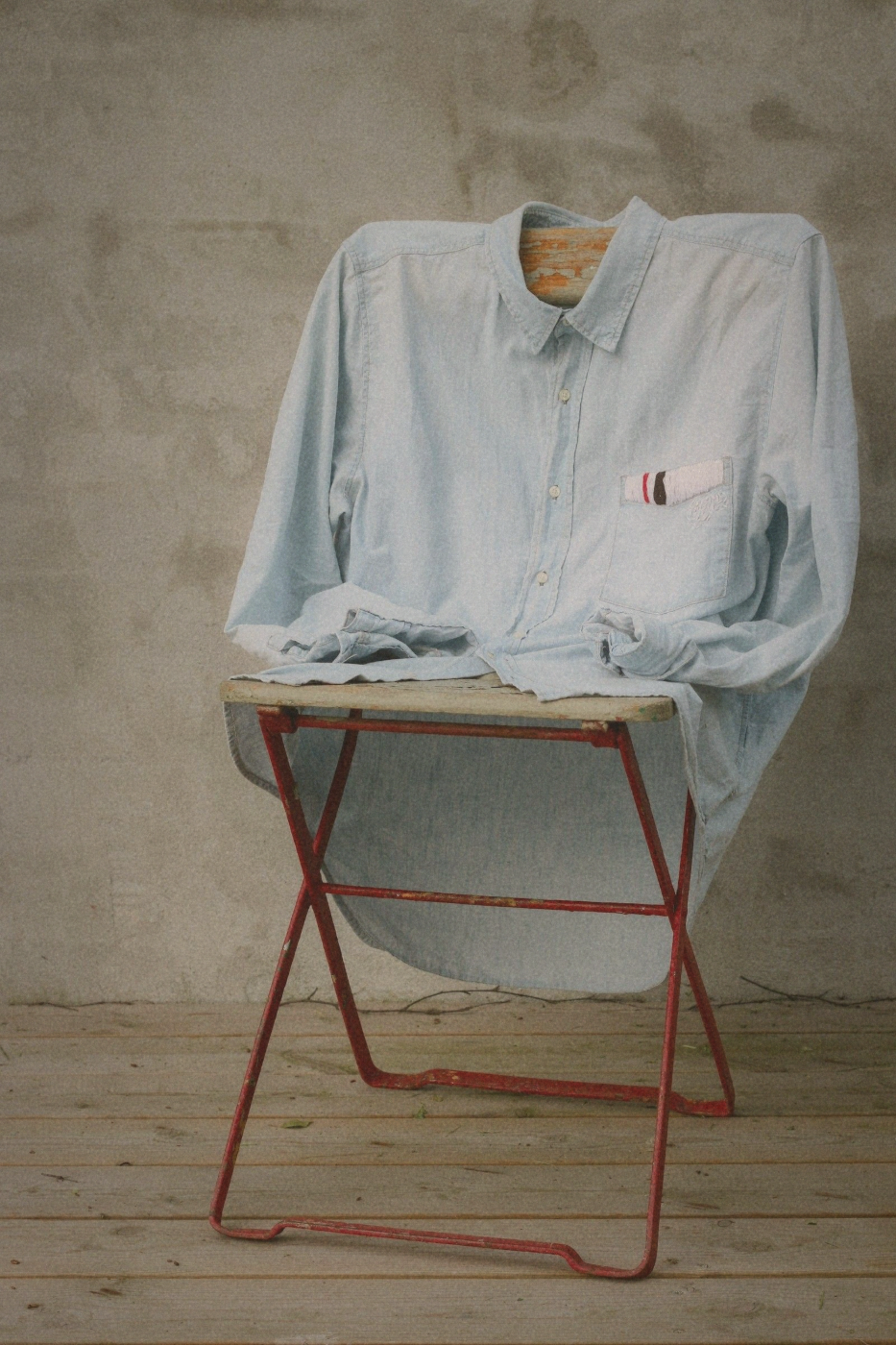
Chambray and light denim. Works October through March. The rest of the year, too heavy. A chambray shirt is a good transitional piece but not a summer staple.
Tier 3: Avoid
Wool. Even merino. The marketing says "all-season" but that assumes seasons that go below 20°C for meaningful stretches. In Taipei, wool is a November-February fabric at best.
Silk. Beautiful but impractical. Sweat stains show immediately, dry cleaning adds up fast, and mold loves silk in storage.
Thick denim. Your raw selvedge denim is gorgeous and irrelevant here. Save it for trips to countries with weather.
The Core Wardrobe: 30 Pieces That Actually Work
Tops (12 pieces)
- 4 linen or linen-blend shirts (2 white, 1 light blue, 1 earth tone)
- 3 Tencel/Lyocell t-shirts (neutral colors — navy, grey, olive)
- 2 quick-dry polos (for slightly dressy but still functional days)
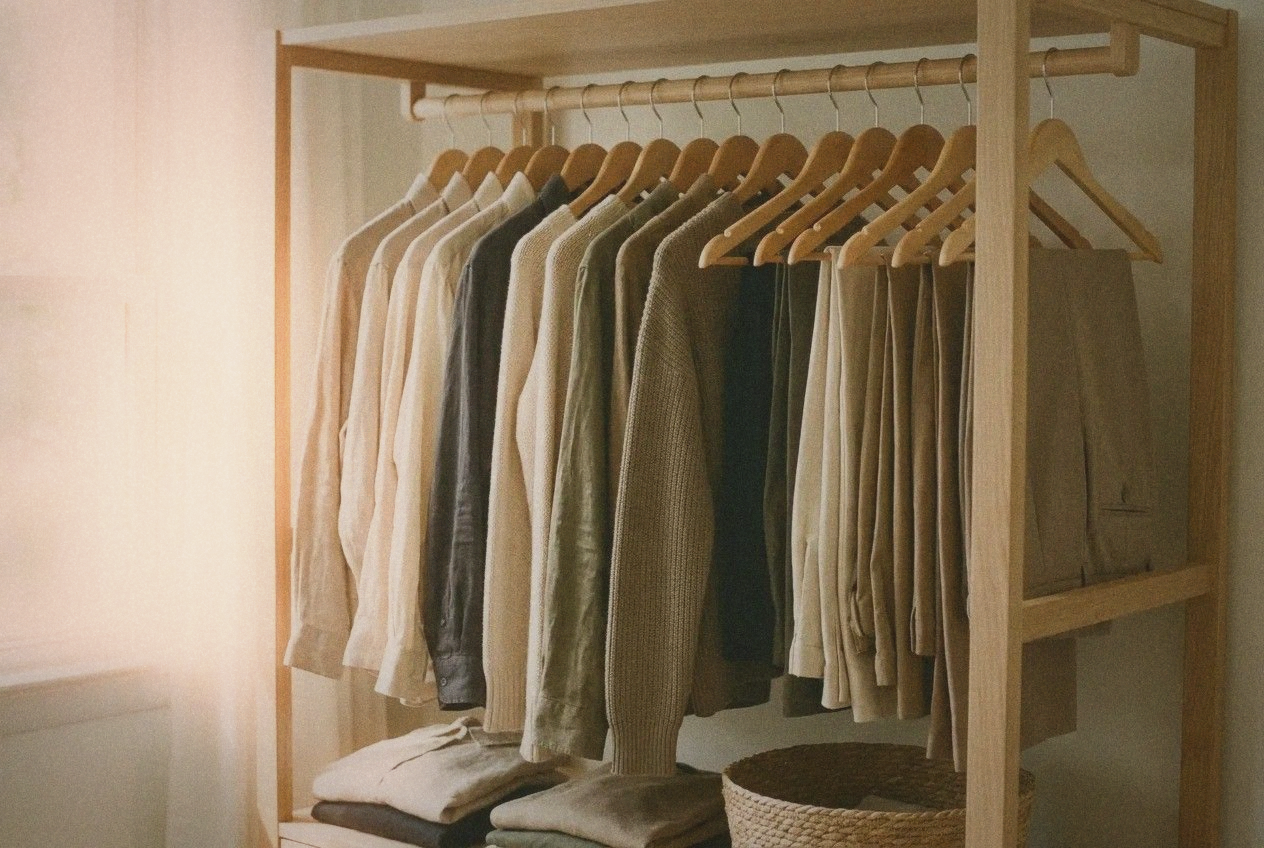
 FIRST SIGHTWEBGLLinen, cotton and knitwear on a single rail: an entire working wardrobe for a Taipei year. · Color and grain by First Sight · Portra 400. · First Sight 色彩與顆粒調校 · Portra 400
- 2 long-sleeve linen shirts (for sun protection, air-conditioned offices, and winter)
- 1 lightweight merino sweater (November-February only)
Bottoms (8 pieces)
- 3 linen or linen-blend trousers (khaki, navy, grey)
- 2 quick-dry shorts (for weekends, hiking, or any temperature above 33°C)
- 2 chinos in Tencel blend (the "meeting" pants)
- 1 pair lightweight denim (October-March)
Outerwear (3 pieces)
- 1 waterproof shell jacket (typhoon season essential — see our typhoon style guide)
- 1 unlined blazer or overshirt (air conditioning defense, casual meetings)
- 1 lightweight down vest (January-February cold snaps)
Shoes (5 pairs)
- 1 pair white leather sneakers (wipe-clean, not canvas — canvas grows mold)
- 1 pair waterproof boots or shoes (rain season)
- 1 pair sandals (Birkenstocks or similar with arch support — you'll wear these 200 days a year)
- 1 pair dress shoes (if work requires them)
- 1 pair hiking shoes (if you use trails)
Accessories (2 pieces)
- 1 packable rain jacket or umbrella (always in your bag)
- 1 crossbody bag with water-resistant lining
The Closet Survival Guide
Your wardrobe is only as good as your storage. In Taiwan, the closet is where clothes go to grow science experiments.
Mold prevention protocol
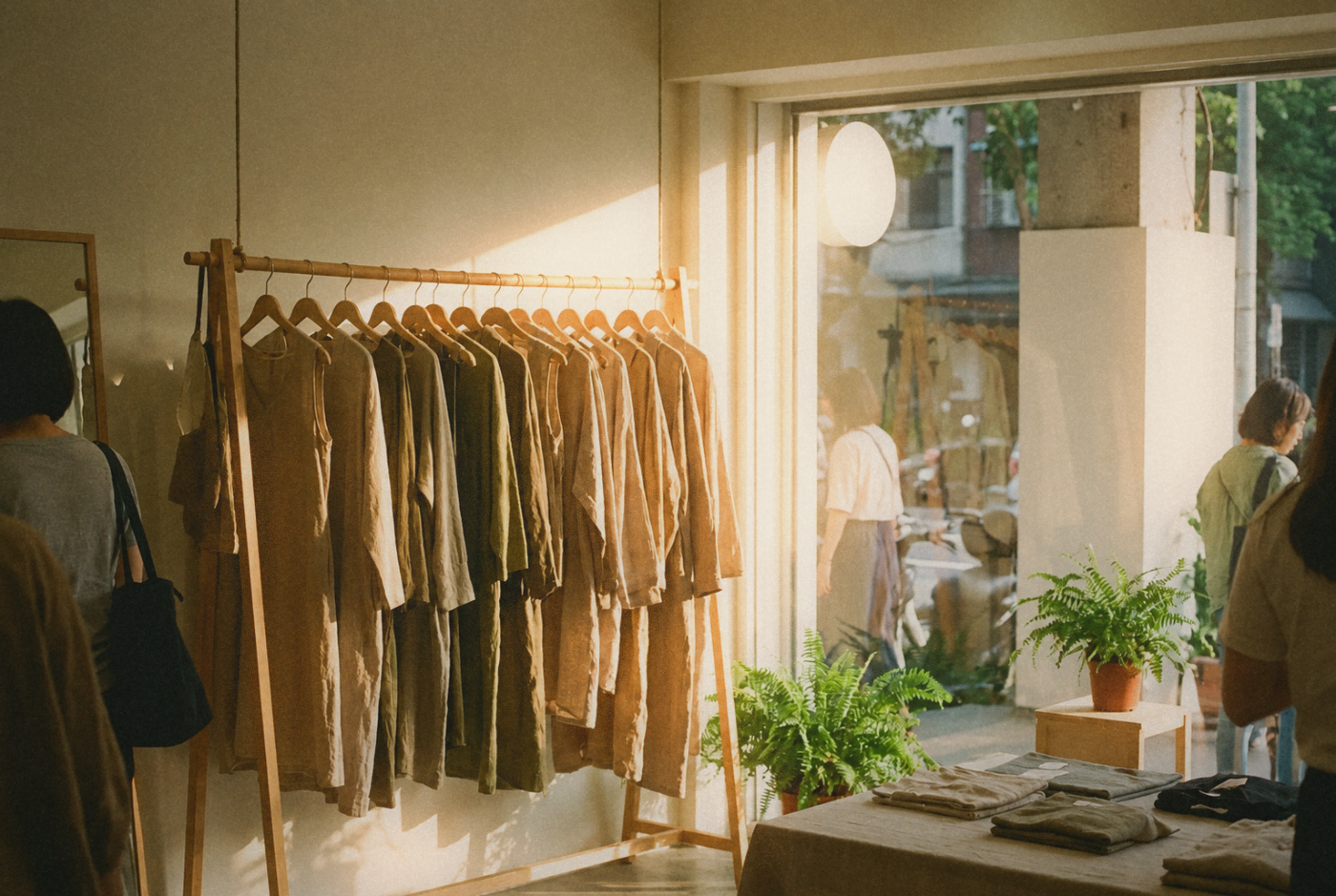 FIRST SIGHTWEBGLA Taipei linen shop in late-afternoon light. Humidity rewards loose weaves and natural fibres. · Color and grain by First Sight · Portra 400. · First Sight 色彩與顆粒調校 · Portra 400
Dehumidifier in the closet room. Run it during rainy season. Set it to maintain 60% humidity or below. Above 70%, mold spores activate within 48 hours.
Air circulation. Don't pack clothes tightly. Leave 2-3 cm between hangers. Mold needs still, damp air — even slight airflow disrupts it.
Cedar or camphor blocks. Traditional Taiwanese camphor (樟腦) is cheap and effective. Replace every 3 months. Don't let it touch fabrics directly — wrap in thin cloth.
Charcoal bags. Place 2-3 bamboo charcoal bags on the closet floor. They absorb moisture and odor. Reactivate by sun-drying monthly.
Washing frequency
In Taiwan, you wash more often than in temperate climates. Sweat, humidity, and environmental dust mean most garments need washing after 1-2 wears, not the 3-4 that minimalist guides suggest. Build your wardrobe size accordingly.
Hang-dry everything. Taiwan's humidity means clothes take longer to dry, but the sun is intense enough that UV exposure handles bacterial odor naturally. Indoor drying racks work, but add a small fan for circulation.
Where to Buy in Taiwan
Budget-friendly basics
- UNIQLO: The default for a reason. Their AIRism line is engineered for exactly this climate. Linen blends are good; avoid heavy cotton.
- GU: UNIQLO's younger sibling. Trend-forward, cheaper, slightly lower quality. Good for pieces you'll replace annually.
- NET: Taiwan's own fast fashion. Hit or miss on quality, but prices are right for testing styles.
Mid-range quality
- MUJI: Excellent linen pieces. Their organic cotton is still cotton (see above), but the linen trousers and shirts are genuinely good.
- Plain-me: Taiwanese brand with a strong minimalist aesthetic. Good fabric choices for the local climate.
- Syndro: Taipei-based, higher-end basics. Understand local fabric needs.
Worth the investment
- WEAVISM: Taiwanese outdoor-lifestyle brand using technical fabrics. Not cheap, but built for this climate.
- oqLiq: Avant-garde Taiwanese brand. Weather-responsive fabrics, innovative construction. Special occasion pieces.
Second-hand
Don't overlook Taipei's vintage scene. Zhongshan Creative Hub weekend markets, Treasure Hunting Map, and Carousell regularly surface quality linen and Tencel pieces at 30-50% of retail.
Seasonal Rotation (There Are Only Two)
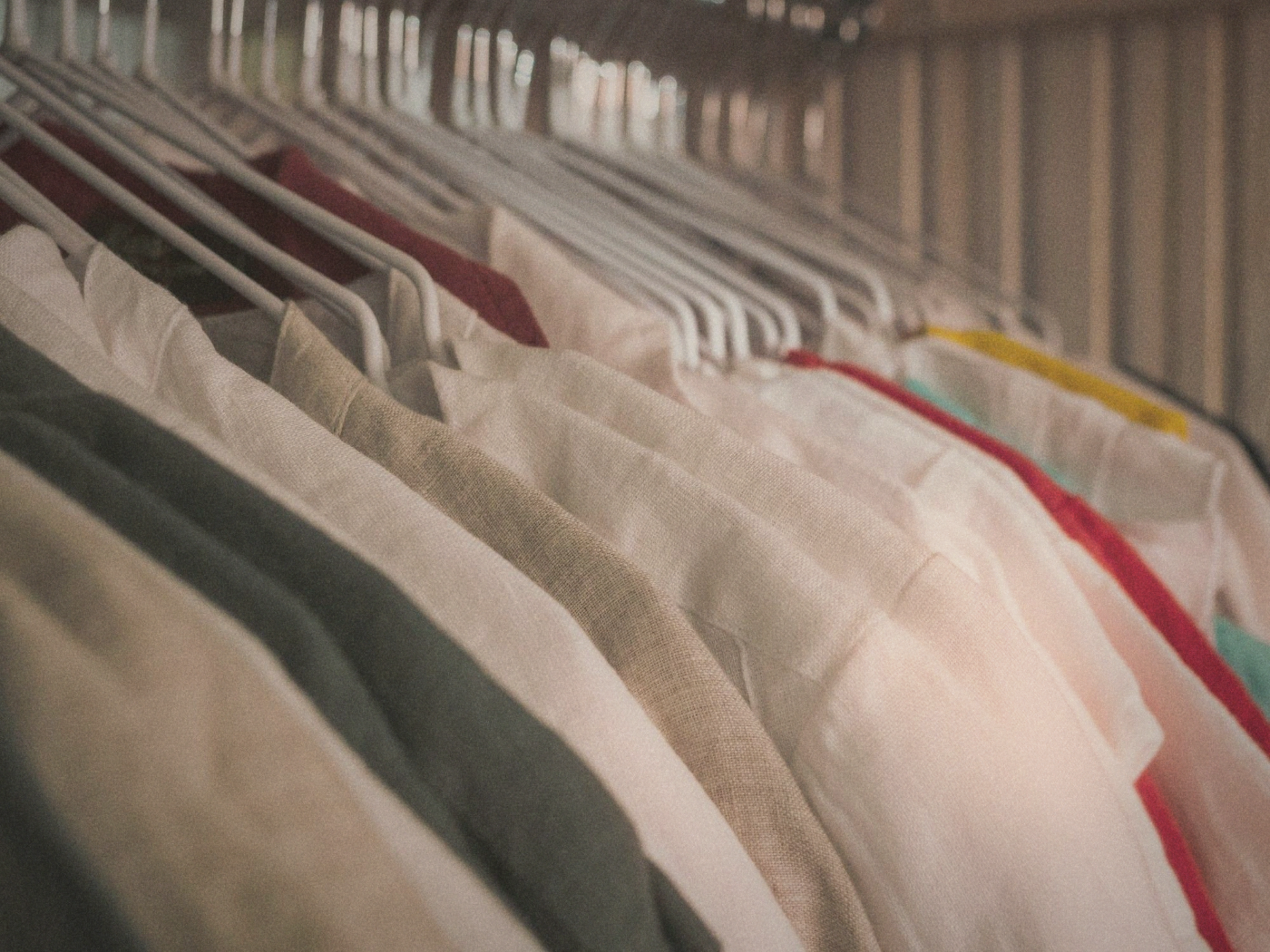 FIRST SIGHTWEBGLCream, olive and faded pink — a palette that hides sweat marks better than either black or white. · Color and grain by First Sight · Portra 400. · First Sight 色彩與顆粒調校 · Portra 400
Hot season (May-October)
Rotate 80% of your wardrobe. Linen, Tencel, quick-dry everything. Pack away the merino sweater, denim, and down vest. Your daily outfit is probably a linen shirt, linen trousers, and sandals — and that's fine.
Not-as-hot season (November-April)
Bring back the layers. The merino sweater, lightweight denim, and down vest earn their keep. Morning temperatures can hit 12°C in January while afternoons reach 20°C — layering isn't optional, it's structural.
The Anti-Rules
Standard minimalist wardrobe rules that don't apply in Taiwan:
- "Invest in one great coat." You'll wear it 20 days a year. A lightweight shell jacket gets 100+ days of use.
- "Build around denim." Denim is a part-time player here, not the foundation.
- "Neutral colors only." Dark colors show sweat stains and absorb heat. Light colors, whites, and pastels are more practical and look better in tropical light.
- "Quality over quantity." In Taiwan, you need more pieces because you wash more often. Moderate quality × more units beats luxury quality × fewer units.
- "One pair of everyday shoes." You need at minimum a dry-weather shoe, a wet-weather shoe, and sandals. One pair doesn't survive this climate.
Start Here
If you're starting from scratch:
- Buy 3 linen shirts and 2 linen trousers. That's your immediate wardrobe foundation.
- Get one pair of wipe-clean sneakers and one pair of good sandals.
- Add a waterproof shell jacket.
- Put charcoal bags and a dehumidifier in your closet.
Total cost: NT$5,000-15,000 depending on brands. That's a wardrobe that works for 80% of Taiwan's year, handles the climate without fighting it, and looks better than the tourist uniform of cargo shorts and graphic tees.
The capsule wardrobe in Taiwan isn't about owning less for philosophy's sake. It's about owning the right things for a climate that actively destroys the wrong ones.
Comments (0)
Loading comments...