
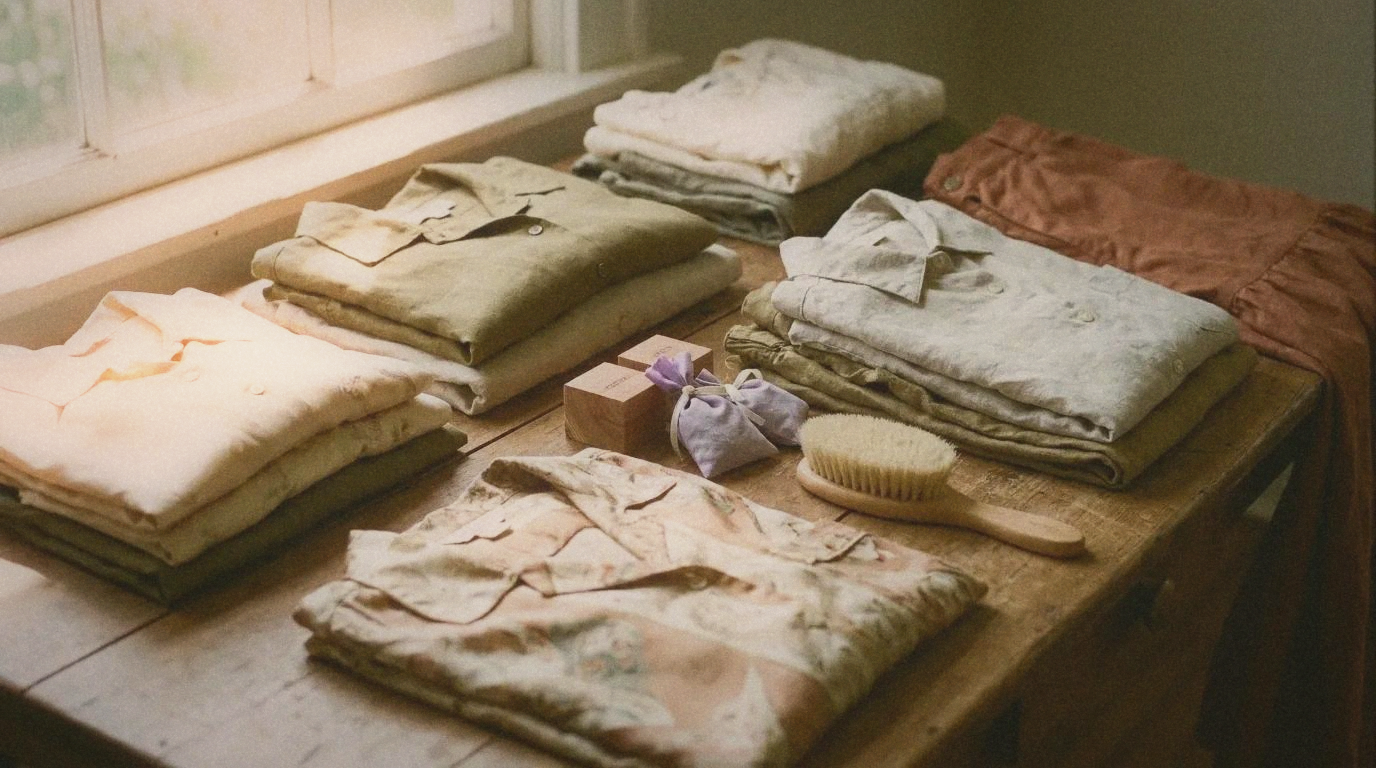
You find a 1970s silk blouse at a weekend market in Yongkang. The print is perfect, the buttons are original, the price is NT$800. You bring it home, hang it in your closet, and two weeks later there's a faint grey-green bloom spreading across the collar. That's mold. In Taiwan, mold isn't a risk. It's a certainty if you're not actively fighting it.
Vintage clothing needs more attention than new clothing in any climate. In a subtropical one where indoor humidity regularly crosses 75% between April and October, it needs a strategy. Not a complicated one. But a deliberate one. Here's what actually works, from someone who has ruined enough pieces to know.
The humidity problem (and why your closet is the front line)
Your closet is probably the most humid room in your apartment, and you don't realize it because you never stand in there long enough to feel it. Closets have poor airflow. They're dark. They're warm. For mold spores, this is paradise.
The single most important thing you can own for vintage clothing care in Taiwan isn't a special detergent or an archival garment bag. It's a dehumidifier. A 除濕機. Run it in or near your closet space, and keep the room below 60% humidity. The EPA recommends 30 to 50% for indoor spaces, and while that's hard to maintain in Taiwan without running the machine constantly, getting below 60% makes a dramatic difference. Most modern dehumidifiers have a humidity sensor and will cycle on and off automatically if you set a target.
For smaller collections or particularly delicate items, a 防潮箱 (dry cabinet) is worth the investment. These are the same moisture-controlled boxes photographers use for camera lenses. They maintain a stable 40 to 50% humidity inside regardless of what's happening in the room. A small one runs about NT$2,000 to NT$4,000. If you have vintage silk, cashmere, or anything irreplaceable, this is where it lives.
Silica gel packs help in enclosed spaces like drawers and storage boxes. Replace or recharge them monthly during the wet season. And one rule that sounds basic but gets broken constantly: never use plastic garment bags for long-term storage. Plastic traps moisture. Use breathable cotton or muslin bags instead. The dry cleaning bag your piece came home in is the worst thing you can store it in.
"The first piece I lost to mold was a wool blazer I'd been looking for all year. I found it at a Zhongshan flea market, hung it in a plastic bag in my closet, and forgot about it for three weeks. When I pulled it out, the lining was covered. I threw it away. That was the last time I used plastic."
Washing vintage without destroying it
The instinct with vintage is to not wash it, because you're afraid of damaging it. But the opposite is more dangerous. Soil, body oils, and food residue attract mold and insects. Clean clothes survive storage. Dirty ones don't.
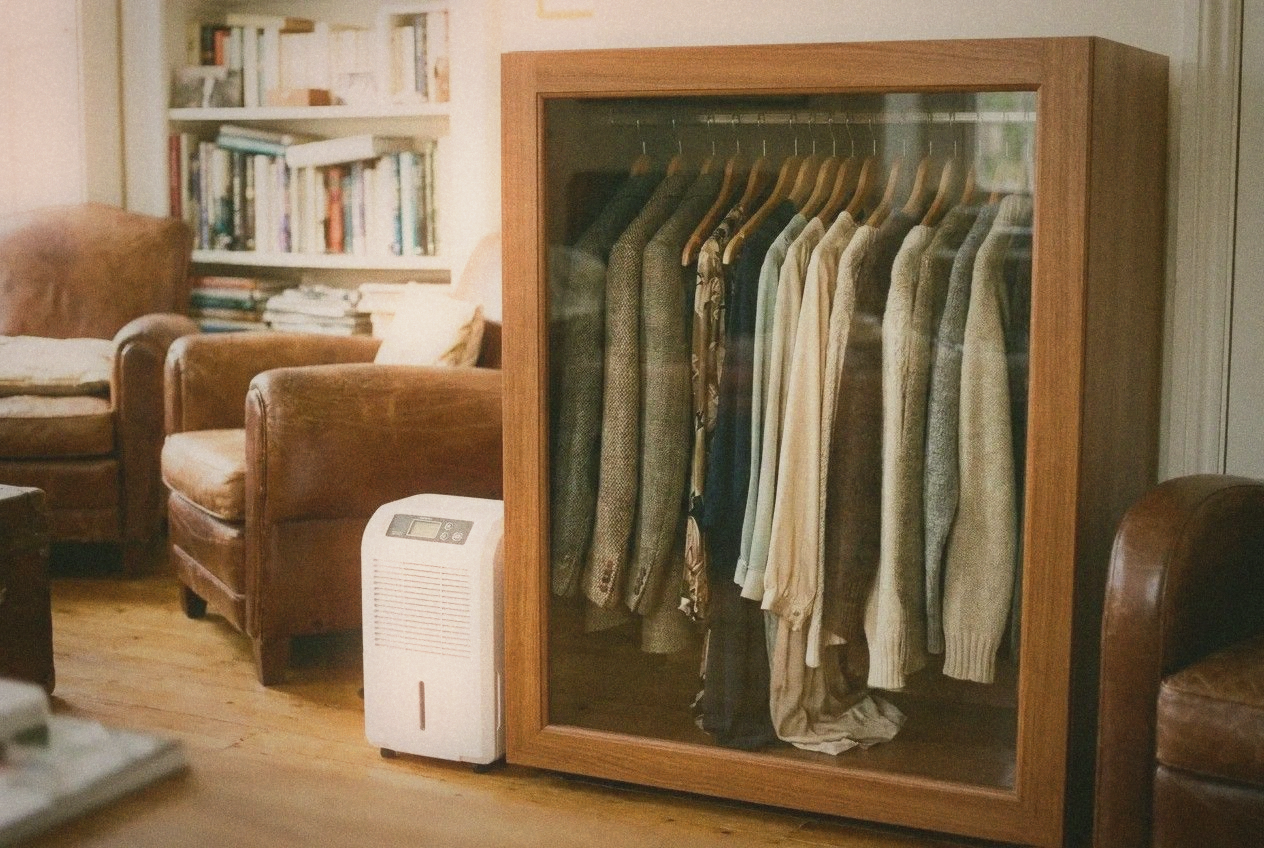
 FIRST SIGHTWEBGLElectronic dry cabinet for clothing storage with glass door showing neatly hung vintage garments inside. small dehumidifier nearby · Color and grain by First Sight · Portra 400. · First Sight 色彩與顆粒調校 · Portra 400
For most vintage cotton and linen, hand-washing in cold water with a gentle detergent is the safest approach. Fill a basin, dissolve the detergent first, submerge the garment, and let it soak for 15 to 20 minutes with occasional gentle agitation. Don't scrub. Don't twist. Rinse in cold water until the soap is gone, then press the water out by rolling the garment in a clean towel. Lay flat to dry.
Vintage silk and wool need extra caution. Never wring silk. The fibers are weakened when wet, and twisting can break them permanently. For silk, use a detergent specifically labeled for delicates (look for 絲質專用 at any supermarket) and handle the wet fabric like it could tear, because it can. Wool felts when exposed to temperature changes and agitation, so cold water and zero rubbing are non-negotiable.
If you must use a machine, use the gentlest cycle available, cold water, and put the garment in a mesh laundry bag. Mesh bags cost NT$50 to 100 at any 大創 or household goods store. They're cheap insurance.
For stains on vintage pieces, spot-clean rather than soaking the whole garment. A paste of baking soda and cold water on a stain, left for 30 minutes, then gently dabbed away, handles most organic spots without risking the whole piece. Test any cleaning method on an inside seam first.
Storing what you want to keep
Different fabrics need different environments, and getting the details right is the difference between a garment lasting another decade or developing damage you can't undo.
Cotton and linen are the most forgiving. Store in breathable bags with cedar blocks (樟腦木) for moth deterrence. Fold rather than hang heavy cotton pieces, because gravity stretches the shoulders over time. Keep away from direct sunlight, which yellows white cotton faster than anything else.
Silk is the most fragile. Wrap in acid-free tissue paper (you can find this at art supply stores or order online) and store in a dark, cool spot. Silk degrades in light, even closet light from an open door. If you're folding, pad the creases with tissue to prevent permanent fold lines. Never store silk in direct contact with wood, which can stain it.
Wool needs air and moth prevention. Cedar blocks work well and smell better than mothballs. Lavender sachets are another option. The key is to always clean wool before storing it, because moths aren't attracted to the wool itself. They're attracted to the human oils and food particles on it. A clean wool garment in a cedar-scented breathable bag is about as moth-proof as you can get without chemicals.
Denim is low-maintenance by comparison. Hang or fold, either works. Avoid direct sunlight, which fades indigo unevenly. If you're storing raw or selvedge denim long-term, fold it loosely to avoid permanent creases.
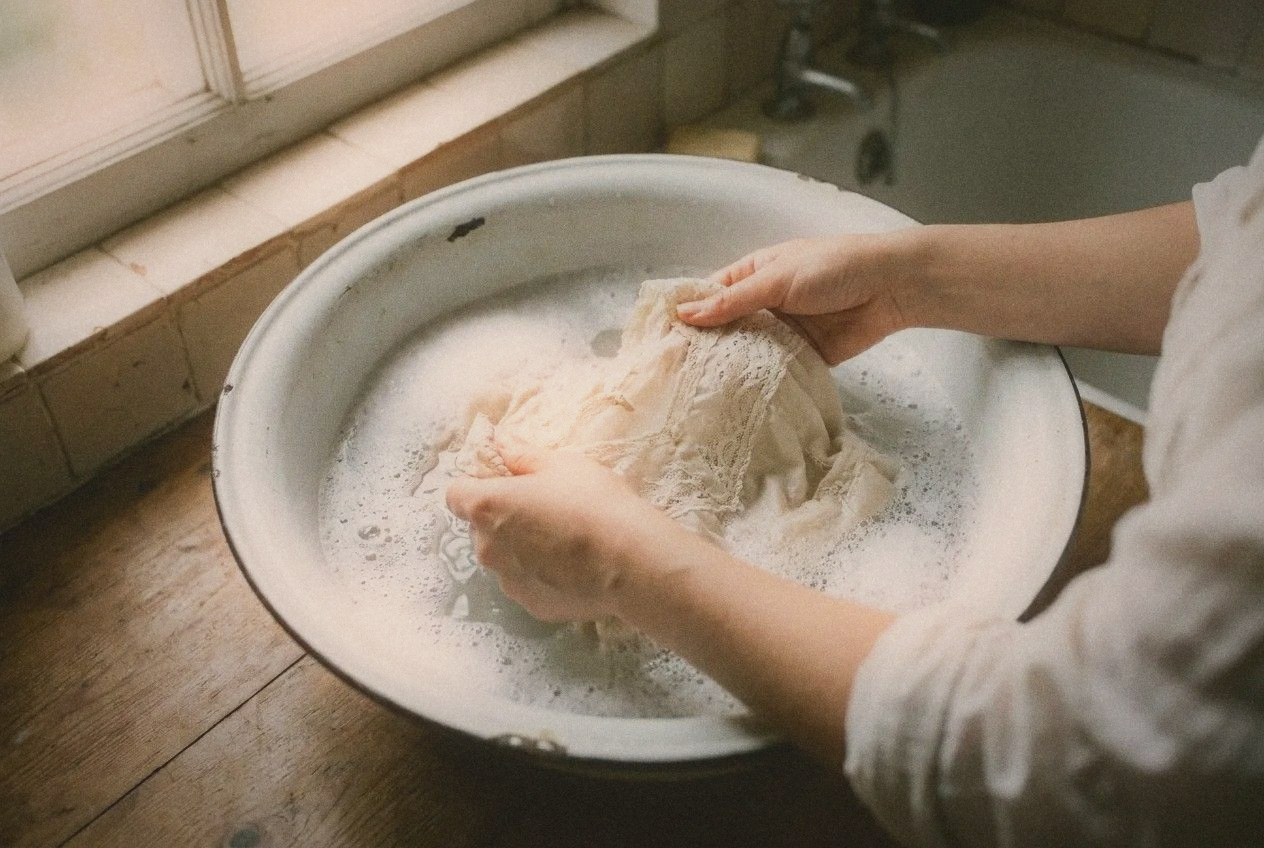 FIRST SIGHTWEBGLHands gently washing a delicate vintage fabric in a white enamel basin with soapy water. bathroom setting · Color and grain by First Sight · Portra 400. · First Sight 色彩與顆粒調校 · Portra 400
Leather needs conditioning every few months in Taiwan's climate. The humidity can cause mildew, but so can over-drying. A leather conditioner applied twice a year keeps the material supple. Store upright if possible, stuffed with tissue to maintain shape, and keep it away from other garments that might transfer dye.
Dealing with moths before they deal with you
Cedar blocks and lavender sachets are preventive, not curative. If you already have moths, you need to wash or dry clean everything in the affected area, vacuum the closet thoroughly including corners and shelf edges, and then introduce cedar or lavender. The lifecycle of a clothes moth is about 65 to 90 days, so you'll need to repeat the process after two to three months to catch any eggs that survived the first round.
The most important prevention step: always clean garments before putting them into seasonal storage. That wool coat you wore all winter has three months of skin cells, food splashes, and sweat embedded in it. To a moth, that's a buffet. Clean it first, then store it.
Taiwan's dry cleaning options
Not every vintage piece can be hand-washed. Heavy wool coats, structured blazers, and anything with lining or interfacing usually need professional cleaning. In Taiwan, dry cleaning costs range widely.
Be upfront with the cleaner about the garment's age and condition. A good dry cleaner will flag potential problems. An indifferent one won't, and you might get your piece back with new damage. If a shop doesn't ask any questions about a visibly old or delicate garment, that's a signal.
When to repair, when to let go
A small tear in a seam is a 10-minute fix for any 修改衣服 shop, and Taiwan has them everywhere. Alterations run NT$100 to 500 depending on complexity. Hemming, taking in a waist, patching a lining. These are straightforward and cheap.
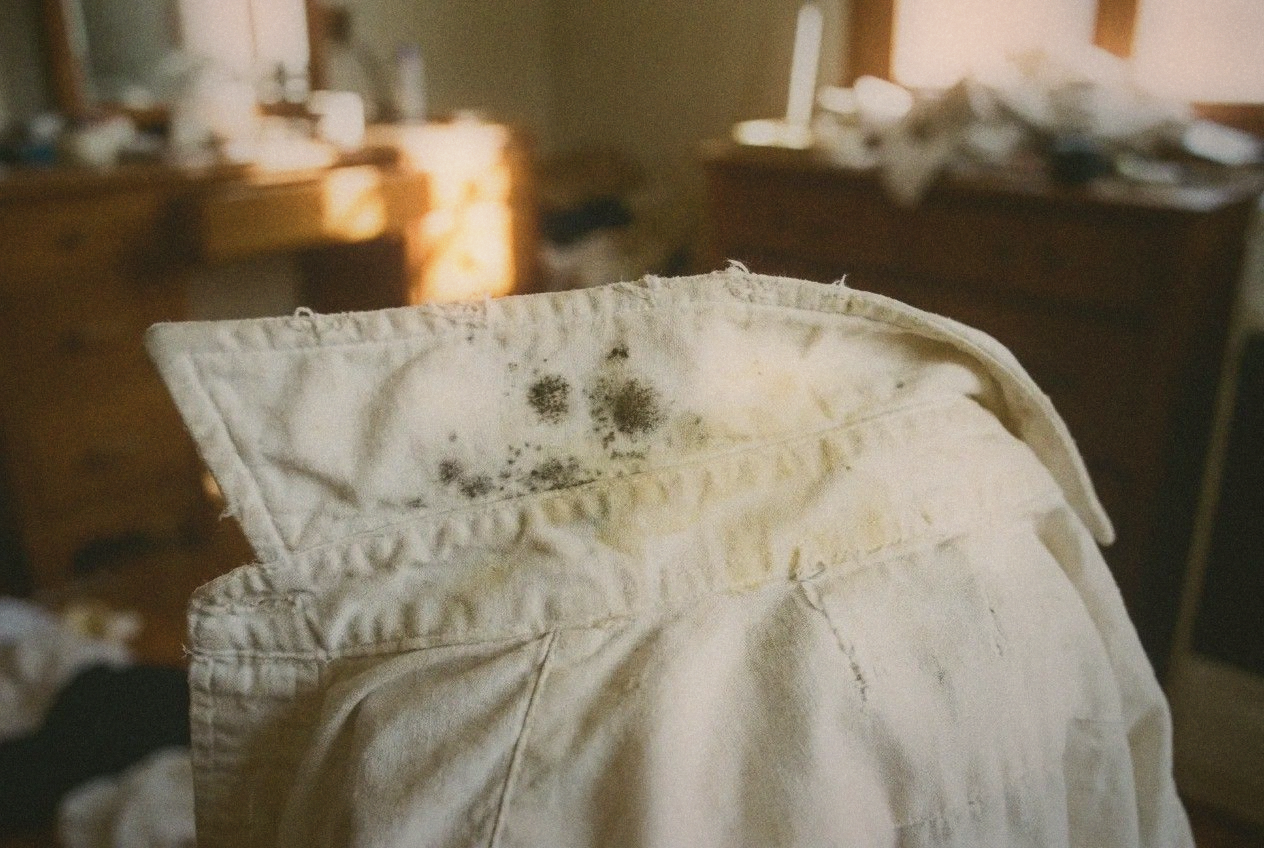 FIRST SIGHTWEBGLClose-up of mold spots on a vintage cotton shirt collar. humid damage visible on fabric · Color and grain by First Sight · Portra 400. · First Sight 色彩與顆粒調校 · Portra 400
Visible mending has become its own aesthetic. A contrasting thread on a repair, a sashiko-style patch on denim, a darned elbow on a wool sweater. There's a growing community of people who see repairs as part of the garment's story, not something to hide.
But some damage is beyond saving. Extensive mold that has penetrated the fibers (not just surface bloom), large moth holes in weakened fabric, dry rot in silk, deep mildew stains that don't respond to cleaning. If the fabric itself has lost structural integrity, no repair will hold. It's frustrating when it's a piece you love, but continuing to store a garment that's actively decomposing puts your other clothes at risk.
The test is simple: can you gently tug the fabric near the damage without it tearing further? If it tears, the fibers are compromised. If it holds, a repair is worth trying.
FAQ
How often should I run the dehumidifier for my closet? During the wet season (roughly April to October), daily. Most units with a humidity sensor can run on auto mode and cycle as needed. During the drier winter months, every few days is usually enough. Check the water tank. If it's filling fast, the humidity is high and the machine is working hard.
Can I machine wash vintage denim? Usually yes, and denim is one of the more resilient vintage fabrics. Turn it inside out, use cold water, gentle cycle, and skip the dryer. Hang dry away from direct sunlight. The main risk with machine washing vintage denim is color loss, not structural damage.
What's the best way to remove musty smell from vintage clothes? Air them outdoors in indirect sunlight for a few hours first. If the smell persists, soak in cold water with a cup of white vinegar for 30 minutes, then wash normally. For dry-clean-only pieces, put them in a sealed bag with baking soda for 24 to 48 hours. The baking soda absorbs odor without touching the fabric.
How do I know if mold damage is permanent? Surface mold (white or grey, powdery, wipes off easily) is usually treatable. If the mold has left a stain after cleaning, or if the fabric feels weakened or brittle where the mold was, the damage has gone deeper. Dark or black mold spots that remain after washing are typically permanent.
Is dry cleaning safe for all vintage fabrics? Mostly, but not always. The solvents used in dry cleaning can be harsh on very old or degraded fabrics. Beaded or sequined pieces can lose adhesive in the process. If you're unsure, ask the cleaner to spot-test first, or find a shop that offers wet cleaning as an alternative for delicate items.
Comments (0)
Loading comments...