
This protocol is installable. One tap puts all 5 weeks on your calendar, each linking back to this guide.
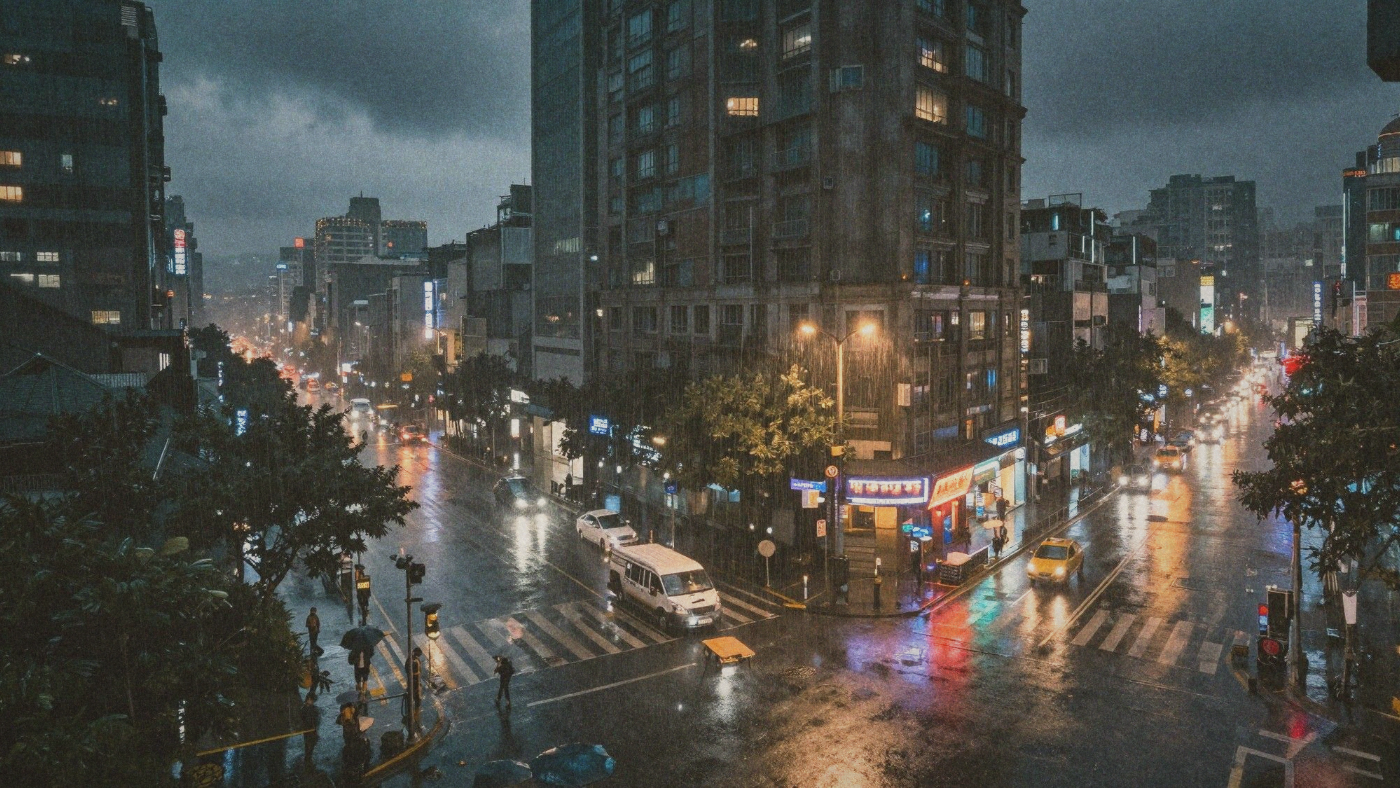
Install this week →The night market closes at midnight, but your evening started going sideways around 9 PM.
You came home from Raohe or Ningxia with a stomach full of pepper buns and grilled corn, kicked off your sandals at the door, and opened your laptop "just to check one thing." That was two hours ago. Now you're deep in YouTube rabbit holes, the AC is set to arctic, your phone is face-up on the nightstand pulsing with LINE notifications, and tomorrow's alarm is six hours away.
You know how this ends. You'll lie in bed for forty minutes, finally fall asleep around 1 AM, and wake up at 7 feeling like you slept in a washing machine.
The thing is, you probably already know what good sleep advice sounds like. Cool room, dark room, no screens. None of it is wrong. But it skips the part that actually matters: the two hours between your front door and your pillow. Those hours are where sleep is won or lost, and in Taiwan — where evenings are long, hot, social, and delicious — they need a protocol that accounts for how life actually works here.
The Two-Hour Window
Sleep researchers call it "sleep onset latency" — the gap between lying down and actually falling asleep. For most adults, that number should be somewhere between 10 and 20 minutes. If you're consistently above 30, you're not sleeping badly. You're preparing badly.
Your nervous system doesn't flip from "on" to "off." It transitions. Cortisol, the alertness hormone that peaks around 8 AM, should be declining steadily through the evening. Melatonin, its nighttime counterpart, rises as ambient light fades. This hormonal handoff evolved over hundreds of thousands of years in environments where sunset meant darkness.
Then we surrounded ourselves with LED screens, convenience store fluorescents at every corner, and the particular blue-white glow of a Taipei apartment at 10 PM.
The handoff gets confused. Cortisol stays elevated. Melatonin waits in the wings. Your body is ready for bed in every way except neurochemically.
An evening protocol isn't a luxury routine. It's giving your biology the transition it was designed to have.
Step One: The Kitchen Closes
In Taiwan, it's culturally normal to eat late. Night market runs, late hotpot with friends, a bowl of mian xian at 10 PM because you walked past it and it smelled incredible. No judgment — eating well is one of the best things about living here.
But your digestive system needs roughly 90 minutes to process a meal before sleep becomes comfortable. Lying down on a full stomach doesn't just feel bad — it elevates core body temperature (digestion is metabolically expensive), increases acid reflux risk, and keeps your autonomic nervous system in "work mode" when it should be powering down.
The practical move: Set a soft kitchen-closes time. If you want to be asleep by 11:30, your last substantial food happens by 10 PM. This doesn't mean you starve — a small handful of nuts, a cup of warm soy milk, or a banana is fine. What you're avoiding is the full plate of lu rou fan at 11.
If you're coming back from a night market dinner, adjust your target sleep time forward by an hour. Better to stay up a bit longer and let digestion settle than to force yourself into bed with a stomach full of stinky tofu.
Step Two: Screens Get a Curfew
This is the hard one. It's also the one with the most evidence.

 FIRST SIGHTWEBGLColor and grain by First Sight · Portra 400.First Sight 色彩與顆粒調校 · Portra 400
Blue-spectrum light from screens suppresses melatonin production by up to 50% compared to dim ambient light. That's not a marginal effect — it's the difference between your brain thinking it's afternoon versus evening. Night mode and blue-light filters help, but research from Brigham and Women's Hospital found they only reduce the suppression by about 12%. The screen itself — the engagement, the scrolling, the dopamine hits from new content — keeps your prefrontal cortex in active processing mode regardless of color temperature.
The practical move: One hour before your target sleep time, screens go away. Not dimmed. Not in a different room where you can still hear them. Away. Phone goes to a charging station outside the bedroom — this single physical change eliminates the reflexive midnight scroll that costs most people 30 to 90 minutes of sleep several times a week.
What fills the gap? In our experience, the best replacements are things that use your hands or your voice:
- A physical book (your local Eslite has a 24-hour branch for a reason — stock up)
- A paper notebook — even doodling counts
- Conversation with whoever shares your space
- Music through a speaker (not headphones — in-ear audio maintains alertness)
- Low-effort tasks like folding laundry, organizing a drawer, wiping down the kitchen
The first week will feel boring. You'll reach for your phone out of muscle memory a dozen times. By week two, you fall asleep faster. By week four, you start looking forward to the quiet.
Step Three: Temperature — Taiwan's Biggest Sleep Variable
Here's something that gets undersold in most sleep advice written for temperate climates: temperature is probably your single biggest sleep lever in a subtropical environment.
 FIRST SIGHTWEBGLA smartphone in hand beside a laptop. · Color and grain by First Sight · Portra 400. · First Sight 色彩與顆粒調校 · Portra 400
Your core body temperature needs to drop by about 1 to 1.5°C to initiate sleep. In Taipei in June, your apartment's ambient temperature might be 30°C or higher at 10 PM. Your body can't shed heat passively the way it would in a 20°C bedroom in Oregon. You have to engineer the drop.
The shower trick: Take a warm (not hot) shower 60 to 90 minutes before bed. This feels counterintuitive — why add heat? Because a warm shower dilates your peripheral blood vessels, especially in your hands and feet. When you step out, that dilated vasculature rapidly radiates heat away from your core. The net effect is a faster and larger core temperature drop than you'd get without the shower. Sleep researchers at the University of Texas meta-analyzed 5,322 studies and found this consistently reduced sleep onset latency by an average of 10 minutes.
The AC setup: Set your air conditioning to 25-26°C with a fan for air circulation. The fan matters — still air at 25°C feels warmer than moving air at 27°C. If you run the AC all night, use a timer to let it cycle off after 3-4 hours and let natural pre-dawn cooling take over. If you're sensitive to dry AC air, a small water basin near the airflow helps.
Bedding matters: In Taiwanese summers, switch to bamboo mat bedding (竹蓆) or cooling sheets. They conduct heat away from your body more efficiently than cotton. A lightweight summer quilt (涼被) instead of a full comforter prevents the midnight kick-off-the-blankets cycle.
Step Four: Light Sculpting
Your apartment at 10 PM shouldn't look like your apartment at 6 PM. If it does, you're sending your brain mixed signals.
 FIRST SIGHTWEBGLColor and grain by First Sight · Portra 400.First Sight 色彩與顆粒調校 · Portra 400
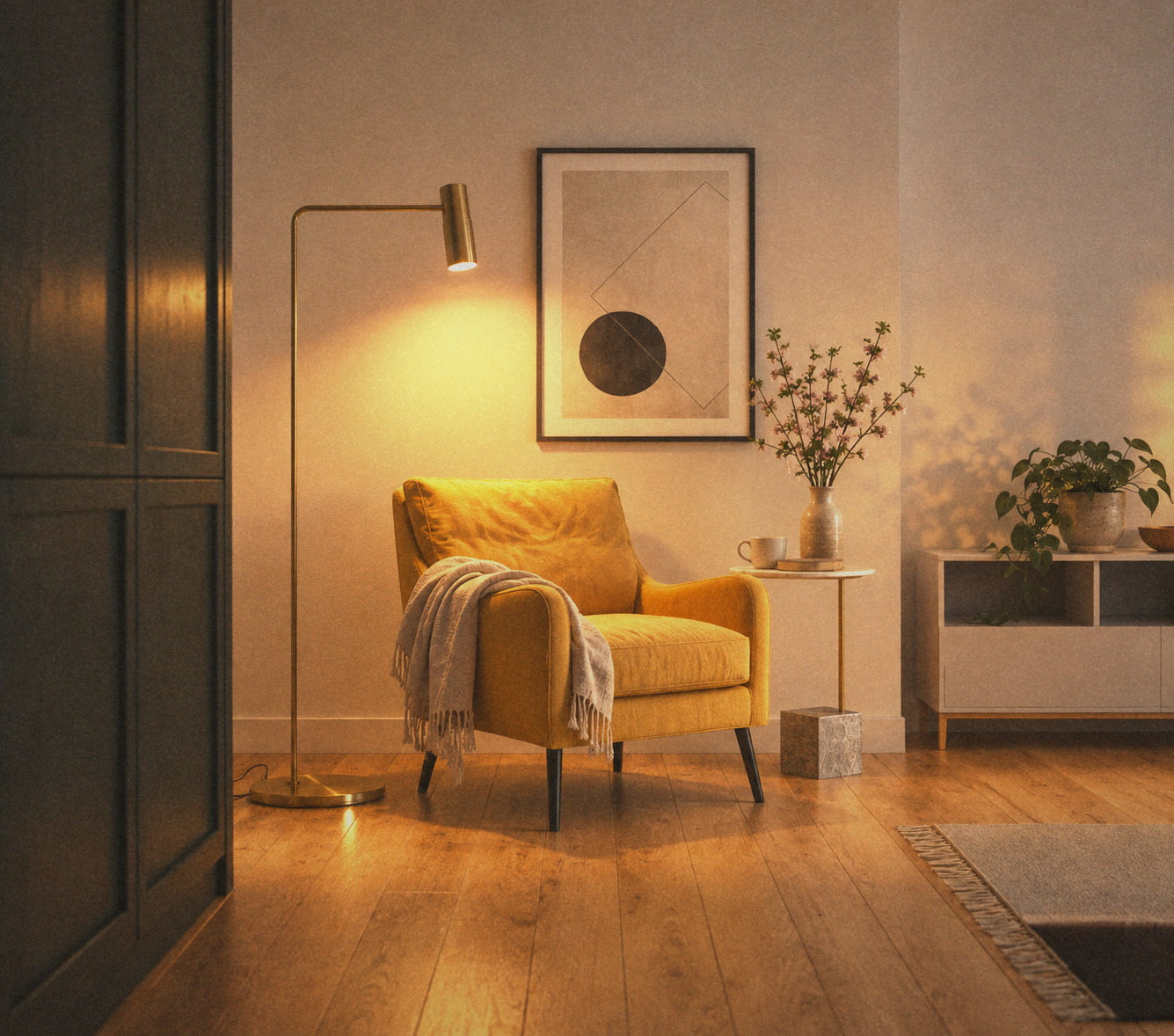
After 8 PM, start transitioning your lighting. The move is from overhead fluorescents (which Taiwanese apartments love) to lower, warmer sources. A table lamp with a warm-toned bulb. A salt lamp. Even a candle, if you're careful.
The specific numbers: Light above 100 lux suppresses melatonin noticeably. Most overhead LED panels in Taiwanese apartments emit 300-500 lux. A bedside table lamp with a warm bulb emits 30-50 lux. That's the range you want in the hour before bed.
If your apartment layout makes this awkward — small spaces, open-plan studios where the living room IS the bedroom — use smart bulbs that can shift to warm tones and dim on a schedule. The Xiaomi ecosystem bulbs available at any 小米 store in Taipei work well and cost under NT$300.
One often-overlooked source: the bathroom. If your nighttime bathroom has bright overhead lighting (most do), you'll spike your alertness right before bed during your hygiene routine. A warm-toned night light or even brushing your teeth in the dim hallway light makes a real difference.
Step Five: The Mind Dump
A racing mind at midnight isn't a sleep problem. It's a timing problem. Those thoughts were always there — you just didn't give them a window during the day.
 FIRST SIGHTWEBGLColor and grain by First Sight · Portra 400.First Sight 色彩與顆粒調校 · Portra 400
The fix is almost embarrassingly simple: before bed, spend five minutes writing down whatever's unresolved. Tomorrow's to-do list. That conversation you need to have. The thing you forgot to buy at PX Mart. Whether you should renew your lease.
Write it on paper, not in an app. The act of physically externalizing your concerns moves them from the "active worry" loop in your prefrontal cortex to what neuroscientists call "external cognitive storage." Your brain can release them because they're captured somewhere that won't forget.
A study in the Journal of Experimental Psychology found that participants who wrote a specific to-do list before bed fell asleep an average of 9 minutes faster than those who wrote about what they'd already accomplished. The key word is "specific" — not "deal with work stuff," but "email Chen about the Q3 report, ask landlord about the water heater, buy mom's birthday present."
If writing isn't your thing, talk it out. Narrate your day to someone — a partner, a roommate, even your cat. The articulation process itself moves thoughts from anxious loop to narrative storage. Some people do this while washing dishes or folding clothes — combining the mind dump with a hands-busy, low-stimulation task.
Step Six: The Evening Tea
This one is specific to living here, and it's one of the nicest parts of the protocol.
 FIRST SIGHTWEBGLIllustration: A warm drink on a worn wooden table. · Color and grain by First Sight · Portra 400. · First Sight 色彩與顆粒調校 · Portra 400
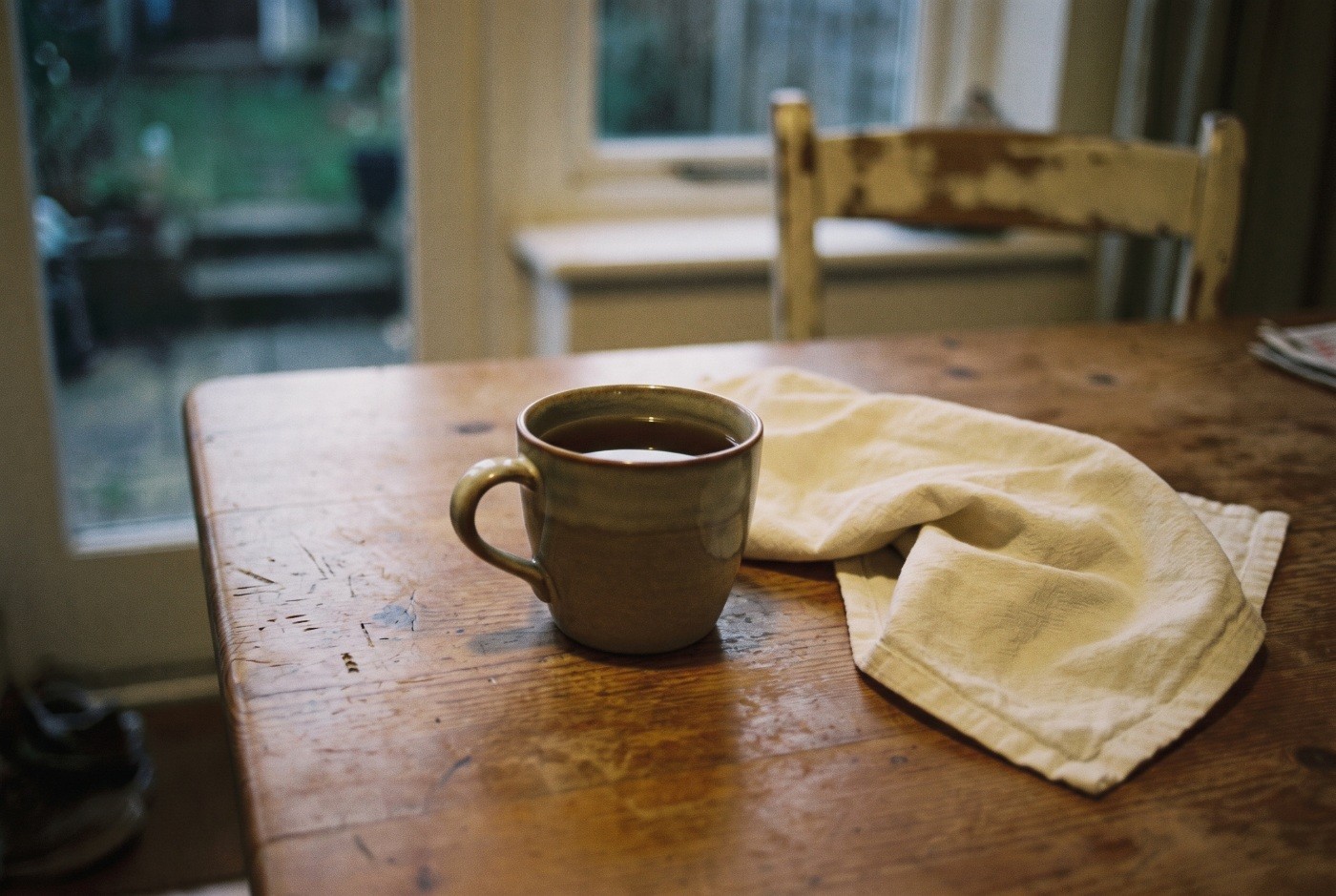
Taiwan has a tea culture that runs deep, and the evening tea ritual is worth adopting even if you didn't grow up with it. Not green tea — that has enough caffeine to interfere. Not bubble tea (sorry). A light oolong, a chrysanthemum tea (菊花茶), or roasted barley tea (麥茶) — something warm, naturally caffeine-free or very low-caffeine, served in a small cup that you hold with both hands.
The warmth helps with the peripheral vasodilation we talked about earlier. The ritual — heating the water, choosing the leaves, pouring deliberately — is a form of moving meditation that transitions your brain from doing-mode to being-mode. The small cup means you're not flooding your bladder before bed (a common mistake with "sleep teas" served in giant mugs).
You can find excellent chrysanthemum at any traditional Chinese medicine shop (中藥行) — the dried flowers from Miaoli or Hualien are particularly good. Roasted barley tea is at every supermarket. If you want something more interesting, a lightly roasted Dong Ding oolong from Lugu has minimal caffeine when brewed light and carries a sweet, toasted grain quality that feels like evening.
Pour it around 9 PM. Drink it slowly. This is the part where your evening shifts from productive to present.
Step Seven: The Body Check-In
The last physical step before bed. Five to ten minutes. No equipment.
This isn't about flexibility or fitness — it's about giving your nervous system an explicit signal that physical exertion is done for the day.
The minimal version (5 minutes):
- Stand and reach overhead, stretch laterally each way, hold each for 20 seconds
- Forward fold, let your head hang heavy for 30 seconds
- Seated spinal twist each direction, 20 seconds per side
- Lying on your back, hug knees to chest, rock gently side to side for 30 seconds
- Stay on your back. 10 breaths: inhale for 4 counts, exhale for 6. The longer exhale activates your vagus nerve and shifts your nervous system toward parasympathetic (rest-and-digest) dominance.
The why behind the breathing: The extended exhale is the single fastest voluntary tool for nervous system downregulation. Four-count inhale, six-count exhale. The ratio matters more than the depth. Ten rounds takes roughly two minutes and measurably reduces heart rate variability toward rest patterns.
Do this on the floor, on your bed, on a yoga mat — wherever. The consistency of the sequence matters more than the setting. After two weeks, your body will start associating these movements with the approach of sleep.
Putting It Together: A Realistic Timeline
Here's what an evening protocol looks like when mapped to actual time. Assume a target sleep time of 11:30 PM.
9:30 PM — Kitchen closes. Last food consumed. Start heating water for tea.
9:45 PM — Tea and transition. Pour your evening tea. This is when the lights shift — overhead off, warm lamp on. If you have things to discuss with your household, this is the window.
10:00 PM — Shower. Warm, not hot. 10-15 minutes. Let your body start its cooling cascade afterward.
10:15 PM — Screens away. Phone goes to the charging station in the hallway or living room. Laptop closed. The apartment should now be noticeably dimmer and quieter than it was an hour ago.
10:20 PM — Mind dump. Five minutes with a notebook. Write tomorrow's concerns, today's unresolved threads. Close the notebook.
10:30 PM — The quiet hour. Read, stretch, talk, fold laundry, sit on the balcony and listen to the neighborhood settle down. This is unstructured time. The only rule is no screens and no overhead lights.
11:15 PM — Body check-in. Five minutes of gentle stretching and breathing.
11:20 PM — Bed. If you're not asleep within 20 minutes, get up. Sit somewhere dim until drowsiness arrives, then return. Never force it — lying awake in bed teaches your brain that bed means frustration.
The First Month
Start with one change. The screen curfew has the highest evidence-to-effort ratio. Do only that for a week. Then add the temperature adjustments. Then the mind dump. Then the tea.
Don't track anything for the first month. No sleep apps, no smart rings, no journaling about how you slept. Just do the protocol and notice — over weeks, not days — whether you're falling asleep faster, waking less in the night, and feeling more alert in the morning.
Consistency beats perfection. Seven nights of a rough version outperforms three perfect nights and four chaotic ones. If you miss a step, skip it and move on. The protocol is a pattern your body learns, not a checklist your brain enforces.
The evening is the part of the day nobody optimizes. We think about morning routines, workout routines, even eating routines. But the hours between dinner and sleep — when you're tired, when your willpower is lowest, when the default is to scroll and snack and stay up too late — those hours determine how the next day begins.
In Taiwan, where the evenings are warm and long and full of temptation, a good wind-down isn't about discipline. It's about building a sequence your body recognizes as the approach of rest. Give it two weeks. Then notice what changes.
Comments (0)
Loading comments...