Seasonal Eating in Taiwan: A Month-by-Month Guide to What's Fresh
table · 7 min read · June 2026

Seasonal Eating in Taiwan: A Month-by-Month Guide to What's Fresh

The mangoes show up in late May like an announcement. One week the fruit stalls along Yongkang Street are all guava and papaya, and the next week the Irwin mangoes are piled high in their wooden crates, red-orange skins almost glowing. A catty (about 600 grams) of Aiwen goes for NT$50 to NT$90 depending on the vendor and the week. The fragrance carries. You can smell the mango stand before you see it.

If you've lived in Taiwan for a while, you start tracking time by what's on the fruit cart. Strawberries in December mean winter is here. Pomelos in September mean mid-autumn. Bamboo shoots after Tomb Sweeping Festival mean spring has actually arrived, regardless of what the calendar says. The island's subtropical climate, with its distinct wet and dry seasons and massive elevation range from sea level to nearly 4,000 meters, produces one of the most diverse seasonal food calendars in Asia. Something is always coming into season. Something is always leaving.

This is a guide to that calendar: what to look for, when to look for it, and where to find the best of it.

Spring: March through May

Spring in Taiwan doesn't announce itself the way it does in temperate climates. There's no dramatic thaw, no sudden bloom. But the markets notice. Bamboo shoots start appearing after Qingming (Tomb Sweeping Festival, early April), and their arrival is the real signal. Arrow shoots come first, then makino bamboo shoots. Green bamboo shoots (綠竹筍) overlap into early summer, from May onward. A catty of green bamboo shoots runs NT$60 to NT$120 at a traditional market.

Loquats (枇杷) are the underrated spring fruit. Golden, soft, slightly tart, they peak in March and April. Most come from Taichung's Xinshe and Taiping areas. You don't see them in convenience stores or chain grocery stores. You find them at traditional markets and roadside stands, which is part of their charm. If the loquat vendor is out, the season is over. There's no cold-storage extension.

#### 櫻花蝦 Sakura shrimp season peaks in spring. Caught off Donggang and Yilan, these tiny pink shrimp are dried and used in everything from fried rice to omelettes. Fresh sakura shrimp, available briefly at coastal markets, are translucent and sweet. Dried ones (NT$400 to NT$800 per pack depending on size) last for months and are worth stocking.

Garlic chives (韭菜) are at their most tender in spring. The old saying "二月韭" (February chives, on the lunar calendar) marks when they're sweetest. And pineapples begin ramping up, building toward their summer peak. Late May brings the first mango varieties, a preview of the season that's about to take over the entire island.

Summer: June through August

Summer is the main event. This is when Taiwan's fruit production explodes, and the markets become overwhelming in the best way.

Mangoes dominate. The Irwin variety (愛文, the one with the red-orange skin) peaks in June and July. Tainan produces roughly 60% of Taiwan's mango crop, and if you visit the area around Yujing during harvest season, you'll see mango orchards stretching to the horizon. Prices: Irwin mangoes run NT$50 to NT$90 per catty at markets; the golden Jinhuang (金煌) variety, which is larger and less sweet, goes for NT$40 to NT$60. Buying from a market vendor who lets you smell the fruit before buying is always better than a supermarket.

Lychee (荔枝) overlaps with early mango season, peaking in June and July. Longan (龍眼) follows in July and August. Watermelon is everywhere. Dragon fruit runs from June through November. Passion fruit starts appearing. The fruit stands are almost competitive in their abundance. You could eat a different fruit at every meal for a month and not repeat.

NT$50–90
Irwin mango per catty. A catty of Aiwen mangoes at a traditional market runs NT$50 to NT$90. Tainan produces roughly 60% of Taiwan's mango crop.
Large pile of ripe Irwin mangoes at a summer fruit stand in southern Taiwan
FIRST SIGHTWEBGLLarge pile of ripe Irwin mangoes at a summer fruit stand in southern Taiwan. handwritten price sign · This photo is developed by FIRST SIGHT film stocks. · 這張照片是使用 FIRST SIGHT 底片配方調校而成的
"In summer, the fruit vendors at Binjiang Market stack their crates three high. Walking through the aisles feels like navigating a fragrant, colorful obstacle course."

The vegetable side of summer is equally distinct. Water spinach (空心菜) is the quintessential summer green, cheap and everywhere, stir-fried with garlic at every 自助餐 and home kitchen on the island. Bitter melon (苦瓜) peaks. Luffa (絲瓜) shows up in soups and clam dishes. Green bamboo shoots continue from spring and are at their best from June through September, tender enough to eat cold with mayonnaise, which is how most Taiwanese families serve them in summer.

For seafood, summer brings the Donggang bluefin tuna festival (May through July) and Keelung's squid season (July through September). Milkfish from Tainan and Kaohsiung aquaculture farms hit peak production. If you've never had 虱目魚肚 (milkfish belly) grilled at a night market in summer, you're missing one of Taiwan's quiet masterpieces.

Autumn: September through November

Autumn is pomelo season, and pomelo season is mid-autumn festival season. The two are inseparable. Wendan pomelos (文旦) from Hualien's Ruishui and Tainan's Madou hit the markets in September, selling for roughly NT$30 to NT$60 per catty. Every family buys them. Kids carve the thick peel into hats and wear them around the house. The fruit is part offering, part dessert, part seasonal marker.

Mid-autumn is also barbecue season. This is uniquely Taiwanese. In most Chinese-speaking cultures, mid-autumn means mooncakes and tea. In Taiwan, it means grilling meat on the sidewalk. The tradition started from a barbecue sauce commercial in the 1980s, and somehow an entire island decided that the proper way to celebrate a harvest moon is with a portable grill, marinated pork, and corn on the cob. Entire neighborhoods smell like charcoal for a week.

Persimmons (柿子) arrive in October and November. Hsinchu County's Xinpu township is famous for persimmon drying, where the autumn wind and sun turn fresh persimmons into sweet, amber-colored 柿餅. Sugar apples (釋迦) come in from Taitung. Water caltrops (菱角) from Tainan's Guantian district are roasted by street vendors and taste like a cross between a chestnut and a potato.

#### 萬里蟹 Wanli crab season runs September through December. Three species of swimming crab come from the north coast harbors around Wanli. Guihou and Yehliu harbors are the best spots to buy them directly from fishermen. Wanli supplies over 80% of Taiwan's crab. Prices fluctuate daily at the harbor but expect roughly NT$300 to NT$800 per catty depending on species and size.

Autumn is also roselle (洛神花) season, October through November. The deep red calyxes are boiled into a tart, ruby-colored tea or made into jam. If you see fresh roselle at a market, buy it. It's one of the easiest things to prepare at home: boil with sugar, strain, refrigerate. The flavor is something between cranberry and hibiscus.

Winter: December through February

Winter in Taiwan is milder than people expect, but the food signals are clear. Strawberry season starts in December, centered on Miaoli's Dahu township, where picking farms line the roads and families make a day trip of it. A box of strawberries runs NT$200 to NT$400 depending on grade and timing. Early season prices are highest. By February, supply catches up and the prices drop.

In summer, the fruit vendors at Binjiang Market stack their crates three high. Walking through the aisles feels like navigating a fragrant, colorful obstacle course.

Enjoying this article? Get stories like this delivered weekly.

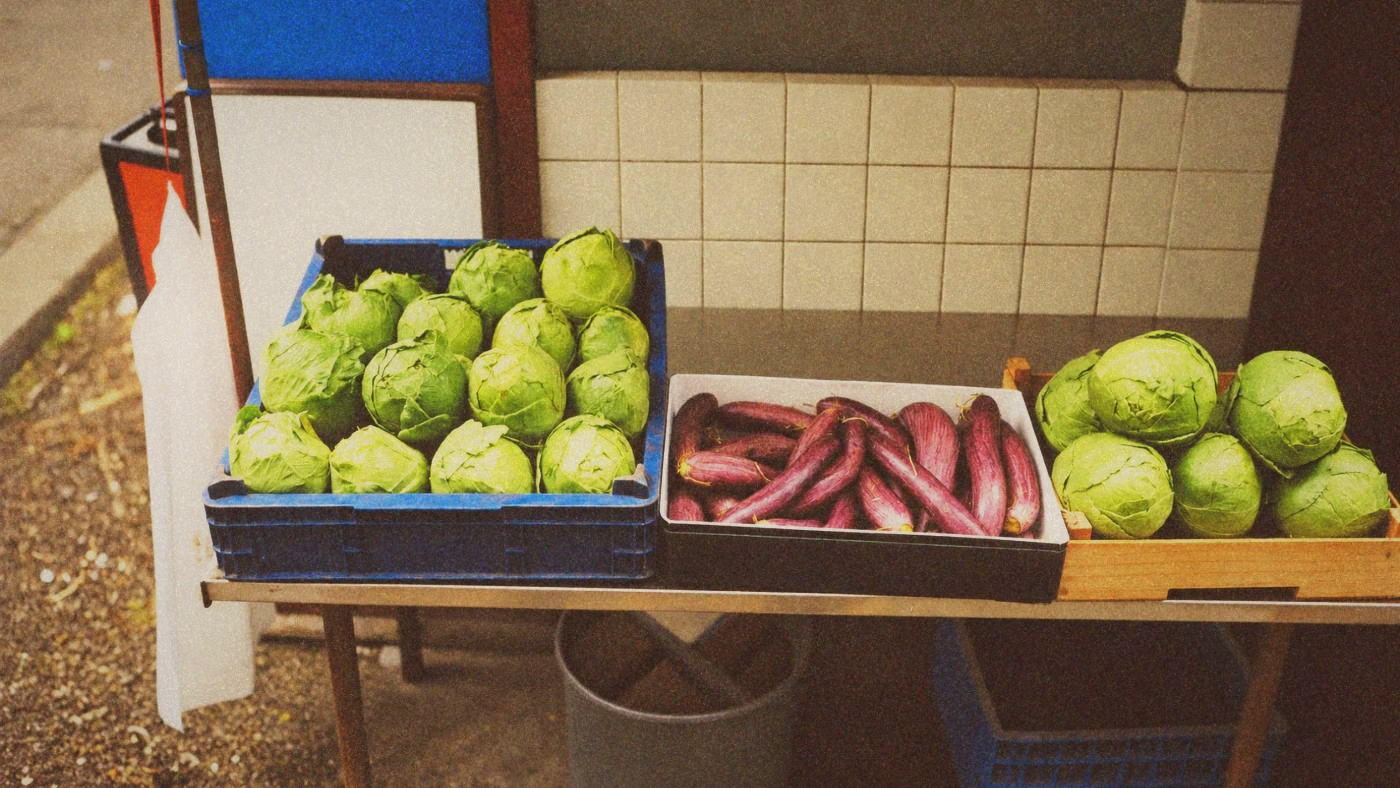
Traditional Taiwan wet market vegetable vendor
FIRST SIGHTWEBGLTraditional Taiwan wet market vegetable vendor. elderly woman arranging leafy greens and bamboo shoots on a metal table · This photo is developed by FIRST SIGHT film stocks. · 這張照片是使用 FIRST SIGHT 底片配方調校而成的

The real winter luxury is mullet roe (烏魚子). Spawning mullet migrate along Taiwan's southwestern coast in December and January, and the roe is harvested, salted, and sun-dried into translucent amber slabs that are sliced thin, grilled briefly, and served with garlic and scallion. A quality pair of mullet roe costs NT$800 to NT$2,000 or more. It's the prestige gift of Lunar New Year, and the flavor justifies the price: rich, briny, concentrated, with a waxy texture that melts on your tongue.

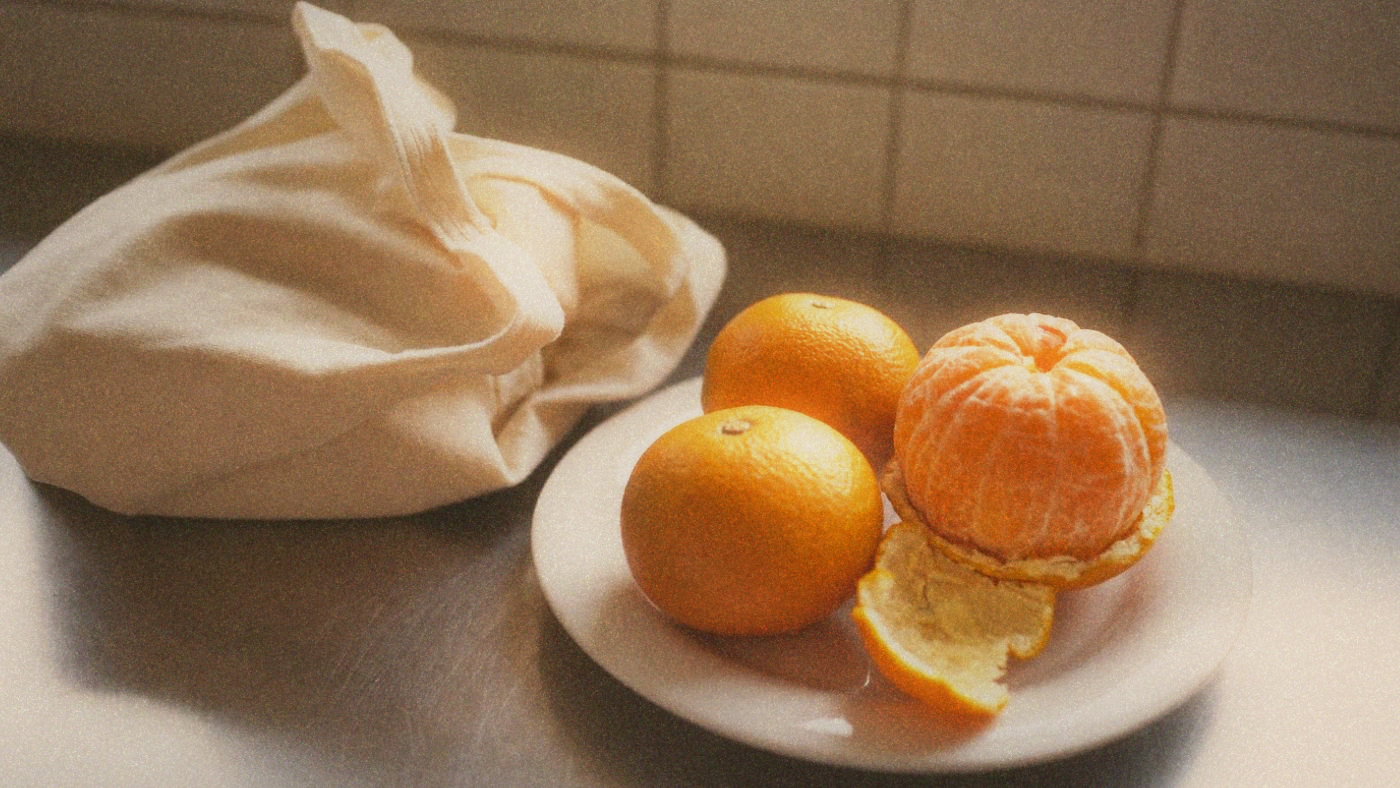
Lunar New Year food ties directly to winter ingredients. Daikon radish (白蘿蔔) is peeled and shredded into radish cake (蘿蔔糕), which is pan-fried for breakfast all winter. The Hokkien word for radish, chhai-thau, sounds like "good fortune" (好彩頭), so it doubles as symbolism. Nian gao (年糕), sticky rice cake, symbolizes rising prosperity. Tangerines and oranges pile up as offerings and gifts, their round shape and golden color representing fullness.

NT$800–2,000+
Mullet roe pair. A quality pair of mullet roe costs NT$800 to NT$2,000. The prestige gift of Lunar New Year, sun-dried into translucent amber slabs.

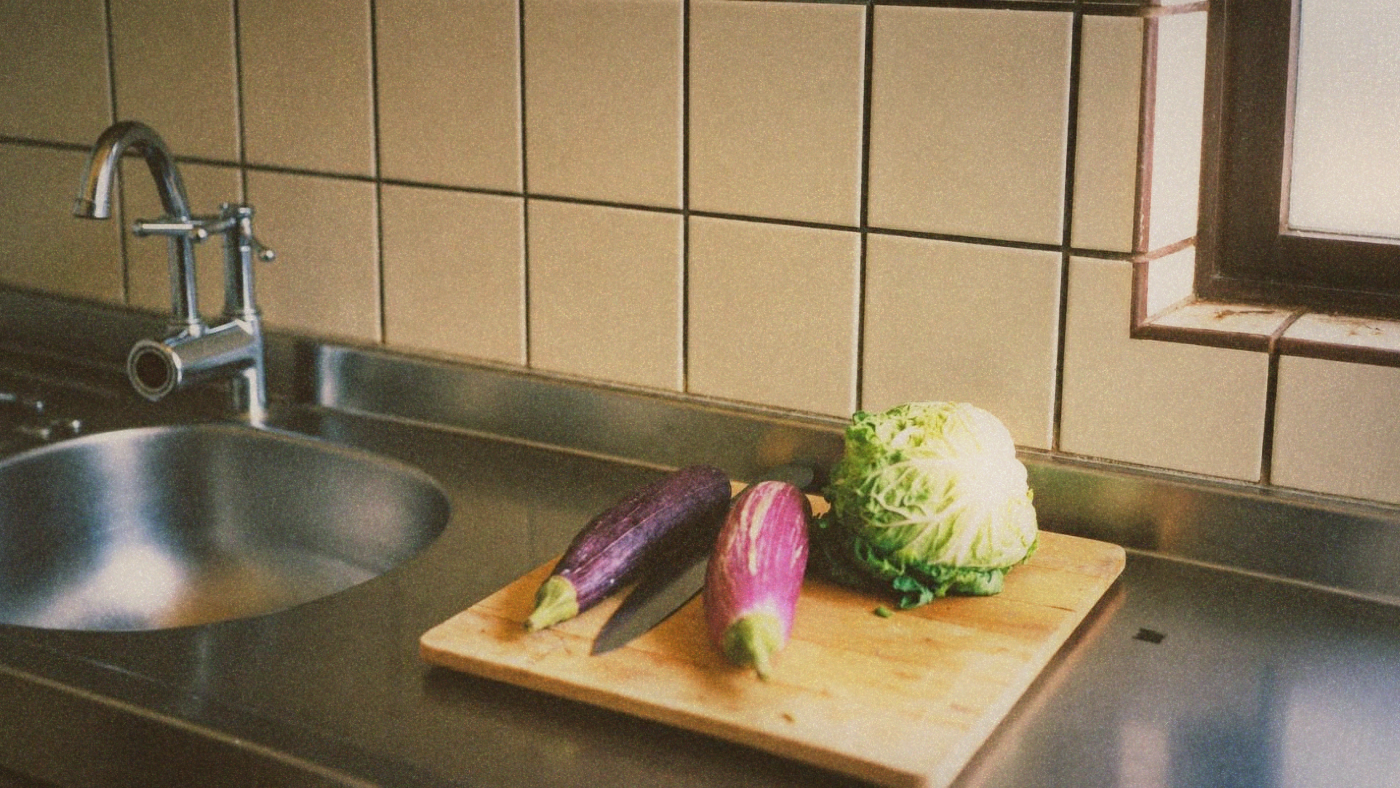
Napa cabbage and mustard greens are the winter vegetables. Hakka communities in Miaoli and Hsinchu pickle mustard greens into 酸菜, 福菜, and 梅干菜, a fermentation tradition that turns a seasonal surplus into something that lasts all year.

"Lunar New Year at Nanmen Market is controlled chaos. Everyone is buying the same things: sausages, roe, rice cakes, dried mushrooms. The vendors have been through this a thousand times and their efficiency is a kind of performance."

Where to shop: Taipei's three essential markets

254
Nanmen Market vendors. After renovation, all 254 original vendors returned to Nanmen Market. Now air-conditioned and connected to the MRT.

濱江市場 (Binjiang Market) Minzu East Road, Zhongshan District. Nearest MRT: Xingtian Temple Station, about 10 minutes' walk from Exit 3. Wholesale section opens around 4am; retail stalls roughly 6am to 3pm.

This is where Taipei's restaurant chefs buy their ingredients. The range is wider than any other market in the city: specialty mushrooms, imported spices, unusual vegetables you won't find at a regular market. The adjacent Taipei Fish Market (上引水產 area) is worth visiting for seafood. Binjiang is overwhelming on your first visit, but it rewards repeat trips. Go early.

南門市場 (Nanmen Market) Roosevelt Road, Zhongzheng District. Nearest MRT: CKS Memorial Hall Station. Reopened in late 2023 after a four-year renovation.

The go-to market for traditional Chinese and Lunar New Year provisions. If you need 湖南臘肉 (Hunan-style cured meats), Shanghai-style pastries, premium zongzi, sesame oil, or XO sauce, this is the place. The renovation made it clean and air-conditioned, and all 254 original vendors returned. The new building connects to the MRT, which makes it the most accessible traditional market in Taipei.

東門市場 (Dongmen Market) Xinyi Road, Zhongzheng District. Nearest MRT: Dongmen Station, Exit 2.

A morning market for daily groceries, with roots going back to the Japanese colonial era. After 1949, it became a hub for mainland Chinese immigrants, earning the nickname "Noble Market" (貴族市場) for its ingredient quality. Famous for stuffed fish balls, douhua, runbing (Taiwanese burrito), and fresh produce straight from farms. It's adjacent to the Yongkang Street food neighborhood, so you can combine a market visit with lunch.

Lunar New Year festival food offerings arranged on a table
FIRST SIGHTWEBGLLunar New Year festival food offerings arranged on a table. tangerines rice cakes nian gao · This photo is developed by FIRST SIGHT film stocks. · 這張照片是使用 FIRST SIGHT 底片配方調校而成的

The festival food calendar

What you eat in Taiwan connects directly to the festival calendar, and the festivals connect to what's in season. This isn't decoration. It's the original logic of the food system.

Lunar New Year (January or February): radish cake, nian gao, mullet roe, tangyuan, sausages. Dragon Boat Festival (June): zongzi, with the north-south divide in styles that Taiwanese people argue about with genuine passion. Mid-Autumn Festival (September or October): pomelos, mooncakes, and sidewalk barbecue. Winter Solstice (December): tangyuan again, marking the shortest day.

Even 拜拜 (temple offerings) follows seasonal logic. Fresh fruit offerings use odd numbers, three or five types, each in odd quantities. Pineapple is popular year-round because the Hokkien word, ong-lai, means "prosperity coming." Apple means peace (蘋安). Oranges and tangerines mean good fortune. The offering table at a neighborhood temple is, in a real sense, a seasonal produce display.

FAQ

How do I know what's in season if I'm new to Taiwan? Walk into any traditional market and look at what's piled highest and priced lowest. That's what's in season. Vendors will also tell you if you ask. "現在什麼比較好?" (What's good right now?) is a perfectly normal question at a market stall.

Are supermarket prices much higher than market prices? Generally yes, 20 to 40% higher for produce. Supermarkets offer convenience and cleanliness, but markets offer freshness and conversation. The mango from a market vendor who picked it yesterday tastes different from the mango that sat in cold storage for a week.

What about typhoon season and prices? Typhoons (July through October) can spike vegetable prices by 30% or more overnight. Leafy greens are hit hardest. Root vegetables and frozen proteins are less affected. After a typhoon, go to the market within two to three days and buy what's available. Prices normalize within a week in most cases.

Is organic produce available at markets? Yes, and growing. Look for vendors with "有機" (organic) or "無毒" (non-toxic) signage. Binjiang Market has several organic stalls. Prices are roughly 30 to 50% higher than conventional.

What's the single best seasonal food experience in Taiwan? Mango season. June and July, a perfectly ripe Irwin mango from a Tainan vendor, eaten over the sink because the juice runs down your arm. Nothing else in Taiwan's food calendar hits quite like that.

One curated read, one protocol, one idea worth holding — every Thursday.

Enjoying this article? Get stories like this delivered weekly.

The look of this story
Every photograph in this story was developed on Portra 400 in the First Sight web darkroom.
Real film stocks, honest grain, free in your browser. Your photos never leave your device.
Develop your own roll → firstsight.to

Comments (0)

Loading comments...