
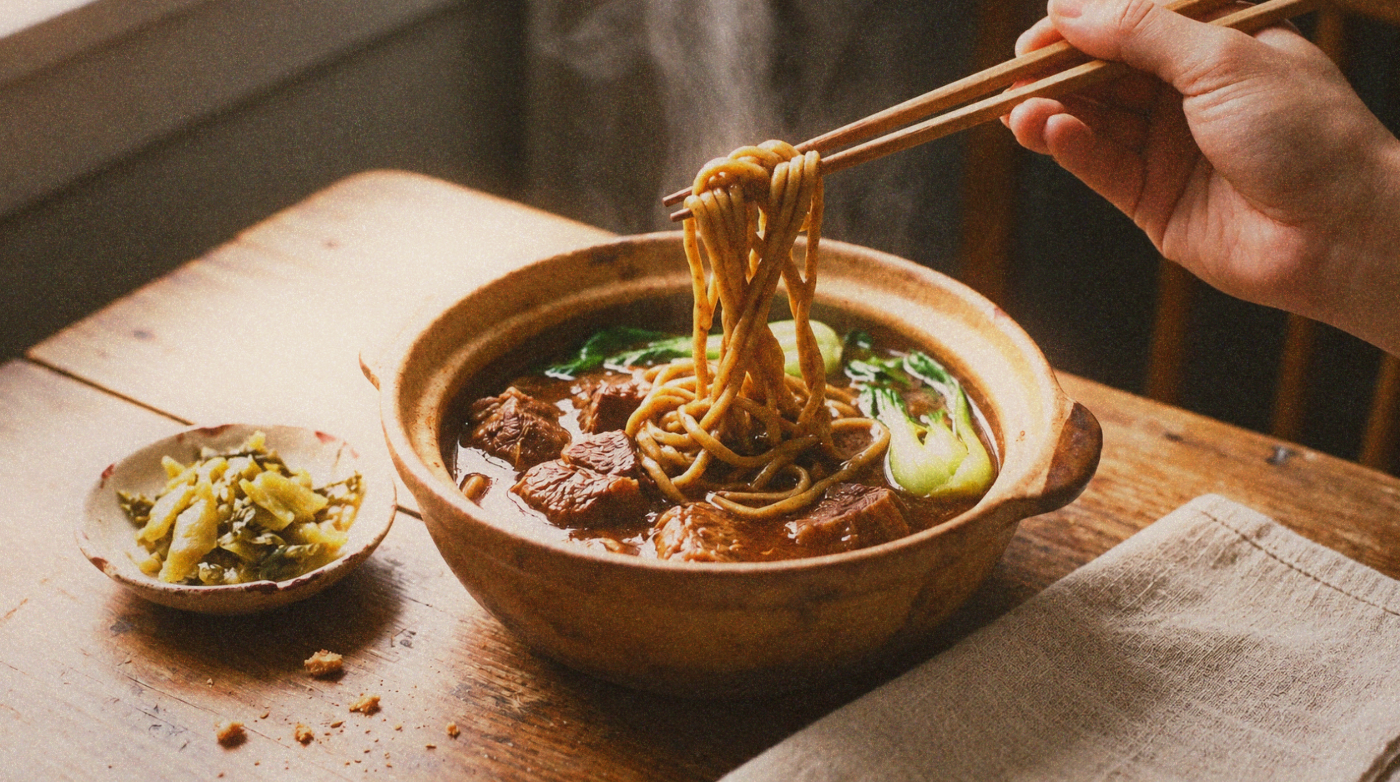
A guide to seven bowls in Taipei that are worth leaving the house for.
Not a ranking. Not a listicle. Seven specific reasons why these shops matter more than fame or awards.
The Problem With Beef Noodle Lists
Every food blog in Taipei has a beef noodle ranking. Most of them feature the same twelve shops in the same order, reshuffled slightly to appear original. They describe every broth as "rich and flavorful." They call every portion "generous." The photos are interchangeable. Someone reading these lists learns nothing except that consensus exists.
The result is that someone visiting Taipei for the first time ends up standing in a forty-minute line at a shop they chose because it appeared on seven different websites, not because anyone explained what makes it worth the wait. They taste something fine, take a photo, and move on. They never understand what they just experienced.
This is not that kind of list.
What follows is a selection of seven bowls, chosen not for fame or awards, but for the specific quality that makes each one hard to forget. Some are well known. Some are not. In every case, the reason to go is precise. You're not getting a generic "it's delicious," you're getting a specific thing the bowl does better than anywhere else.
The History You Should Know
Beef noodle soup in Taiwan has a specific origin: military villages. After 1949, when the Nationalist government relocated to Taiwan, soldiers arrived with their families and regional recipes. Sichuan-style beef noodles, which required dried chilies, fermented bean paste, and slow-braised beef, suddenly had a huge population eager to eat them. By the 1970s, beef noodle soup had become quintessentially Taiwanese, so much so that people forgot it wasn't originally native.
The soup evolved in two directions. Taipei developed heavy, soy-forward broths that prioritized depth and umami. Tainan (different city, different culture) developed lighter, spice-forward broths that emphasized heat and clarity. Neither is objectively better. They're regional interpretations of the same dish.
Understanding this history changes how you taste. When you eat beef noodle soup, you're eating the residue of geopolitical displacement. You're eating what a group of people cooked when they arrived somewhere they didn't expect to stay.
The fact that it became a national dish says something about how deeply people can integrate food into culture in a single generation.
Before You Go: Understanding the Bowl
Beef noodle soup in Taiwan is not one dish. It is a family of dishes, and the differences matter more than similarities.
Red-braised (紅燒), soy-based, often with doubanjiang (fermented chili bean paste), sometimes tomato. This is what most people picture when they think of Taiwan beef noodle soup. The broth is dark, aromatic, and carries heat that ranges from gentle to serious. The darkness comes from the soy reduction and the long braise. A good red-braised broth should taste layered, you taste soy first, then spice, then beef. Each element is distinct, not blurred together. The worst ones taste one-note: just salt, or just spice, or just beef.
Clear-stewed (清燉), no soy darkening. The broth is pale, sometimes almost milky white, and the flavor comes entirely from the bones, herbs, and time. This is harder to make well, because there is nothing to hide behind. Every weakness in the broth becomes apparent. A good clear-stewed broth should taste clean and beefy without any metallic undertone. It should have a body that sits on your palate without coating it. It should taste like you could drink the broth alone as a light soup.
Tomato-based (番茄), a variation that leans on the natural acidity and sweetness of cooked tomatoes. This is less common in Taipei (more common in Sichuan, oddly), but when done well, it produces a broth that is lighter and more refreshing than the red-braised version. The tomato should feel like a supporting actor, not the lead. You're tasting beef first, then brightness.
The noodles matter equally. Most shops offer a choice: thin (細麵), wide and flat (寬麵), or thick Shandong-style hand-pulled (手工粗麵). The wide noodles hold more broth and are ideal if you want every bite to be coated. The thin ones let the broth speak without interference, so you taste the soup's clarity. The thick hand-pulled ones have a springy, almost chewy texture that requires more work to eat. The Shandong style is a performance, eating it is watching someone's craft. There is no wrong answer, but there is a personal answer that changes based on mood, appetite, and what you're trying to taste that day.
1. 劉山東牛肉麵 Liu Shan Dong
What makes it different: The noodles. Thick, round, hand-pulled in Shandong style, you will not find this exact texture at any other shop in the city. The noodles arrive slightly steaming, clearly just pulled. They have a bounce to them that's somewhere between fresh pasta and ramen. When you lift them with chopsticks, they spring back slightly. When you bite, there's resistance before they yield.
This is one of the oldest beef noodle shops in Taipei, open since 1951, tucked into an alley near Taipei Main Station. The space is small and loud. Acoustic insulation wasn't invented when this restaurant opened. You will share a metal table with strangers. The ordering process takes about fifteen seconds. You point. They nod. Five minutes later you're eating.
The clear-stewed version is the one to try first. The broth has a clean, beefy depth that rewards patience. It tastes better as it cools slightly, try a sip at different temperatures. At 80 degrees Celsius it's just heat and beef. At 60 degrees the herbs start revealing themselves. At 40 degrees you can taste the individual components. The red-braised is reliable but not exceptional.
The beef is cut into 2cm chunks and reaches a texture that's soft but maintains integrity. It doesn't dissolve. It doesn't resist.
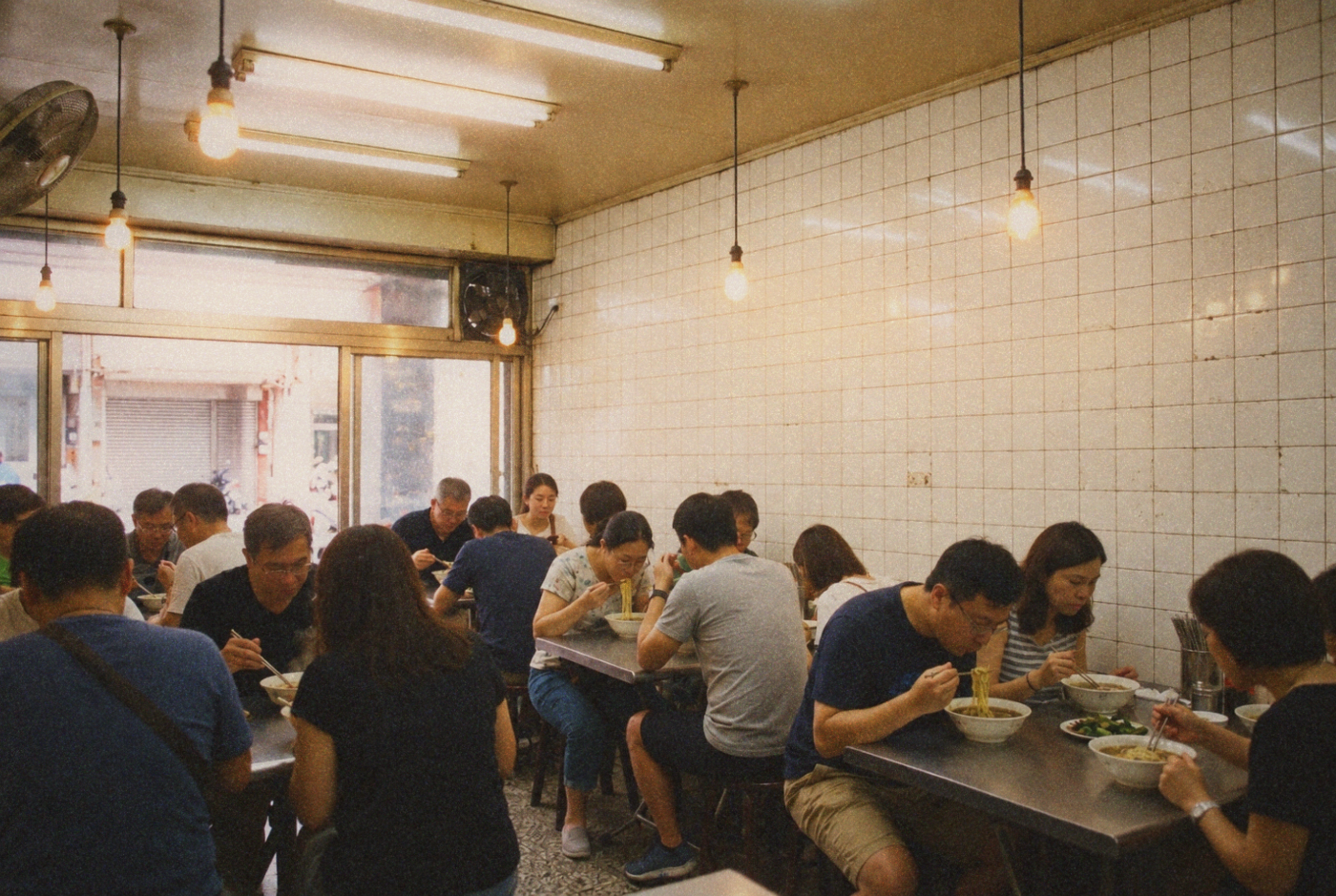
 FIRST SIGHTWEBGLBowls of noodles and shared tables fill a busy neighborhood shop. · Color and grain by First Sight · Gold 200. · First Sight 色彩與顆粒調校 · Gold 200
Order the cold sliced beef tendon as a side. It is the best thing on the menu that nobody writes about. The tendon has been braised for hours until it's silky, then cooled until it congeals slightly. Sliced and served with a soy-sesame dressing, it's a textural and flavor break from the noodles. It's what you eat when you need a moment between bites of soup.
劉山東牛肉麵 No. 2, Lane 14, Section 1, Yanping North Road, Taipei Open: 11am–9pm daily Reservations: None
Best time to visit: Lunch crowd thins at 1:30pm. Dinner crowd starts at 5:30pm. Come at 3pm or 8pm if you want a table to yourself.
2. 老台北牛肉麵 Old Taipei
!Fresh noodles being prepared, the texture of the noodle changes everything about the bowl
Noodle texture matters as much as broth clarity.
What makes it different: The chili oil. Not numbing (like Sichuan peppercorn), but genuinely hot in a way that doesn't build. It just sits on your palate, sharp and clean, like a line you can taste.
Located in a residential building in Daan District, this is not a famous shop. There's no sign outside. You have to know it exists. Inside, twelve seats, everything handwritten on the wall. The owner is probably in his 70s. His wife handles payment. They've been running this the same way for 30 years, and they show no signs of changing.
The space smells intensely of chili oil and beef broth. It's not unpleasant. It's aggressive. You walk in and the smell makes a claim on you immediately.
Order the red-braised with thin noodles. Let the spice travel through the dish, uninterrupted by wide noodles that would soak up too much heat and make it monolithic. With thin noodles, you can vary how much broth and spice you take per bite.
Ask for the tendon on the side. It's cheaper than Liu Shan Dong and equally good, which tells you something about pricing in Taipei, the best tendon is probably the same at every shop, and what you're paying for is the overall context. Here, context is minimalist.
The interior is not trying to be charming. The noodles are not trying to be Instagram-worthy. The owner is not trying to scale this into a chain. This is a shop that exists to feed a specific neighborhood with a specific broth, and the fact that tourists have learned about it is almost incidental.
老台北牛肉麵 No. 45, Lane 289, Daan Road Section 3, Taipei Open: 5pm–10:30pm (closed Mondays) Seating: 12 people max Ordering: Point and hope your Mandarin is sufficient, or bring a translation app
Best time to visit: 6:30pm–7:30pm, when the initial dinner rush has begun but you can still sit.
3. 牛蛙 Beef Frog
What makes it different: The beef. It's hand-cut into thick cubes, not pre-sliced. You can taste the difference in texture, it stays tender but keeps a slight resistance, like good wagyu. Pre-sliced beef, which most shops use for efficiency, separates during braising and loses its structure. Cubed beef maintains integrity even after hours of simmering.
A newer shop (opened 2019) in Xinyi, running counter-service only. Minimal presentation, maximum focus on the bowl itself. Each order is cooked fresh. There's no overhead, no ambiance budget, no fancy plating, every bit of attention goes to the liquid and the beef.
The tomato-braised version is the strongest here. The acidity brightens the beef and cuts through any richness. Wide noodles are the right choice here because the tomato broth is lighter and benefits from more interaction with the noodles. The combination of umami from beef and acidity from tomato creates a broth that's both substantial and refreshing.
The first spoonful will taste slightly tart. By the third bite, your palate adjusts and you realize the tartness was making everything else taste more pronounced. This is why tomato-braised is so good in summer, it feels lighter without being less flavorful.
牛蛙 No. 137, Zhongxiao East Road Section 5, Taipei Open: 11am–9pm daily Ordering: Counter only, cash preferred Seating: 8 seats at counter
Best time to visit: Anytime except 12–1pm and 6–7pm. The counter gets uncomfortably packed during traditional meal hours.
4. 馬祖麵線 Matsu
Specialty: Thin egg noodles (more delicate than ramen but chewier than regular wheat noodles). Red-braised broth with star anise and dried chilies. Heavy on aromatics, light on numbing spice. The broth tastes like what your grandmother would make if your grandmother was from Sichuan. The noodles have a slight eggy quality that you taste most clearly in the last few bites. By the end of the bowl, you've developed a relationship with the noodle texture.
The beef is hand-shredded rather than cubed or sliced. This is a specific choice that allows more surface area for broth absorption. Each strand of beef is coated and has absorbed flavor throughout its structure, not just on the exterior.
馬祖麵線 Taipei Price: NT$120–140
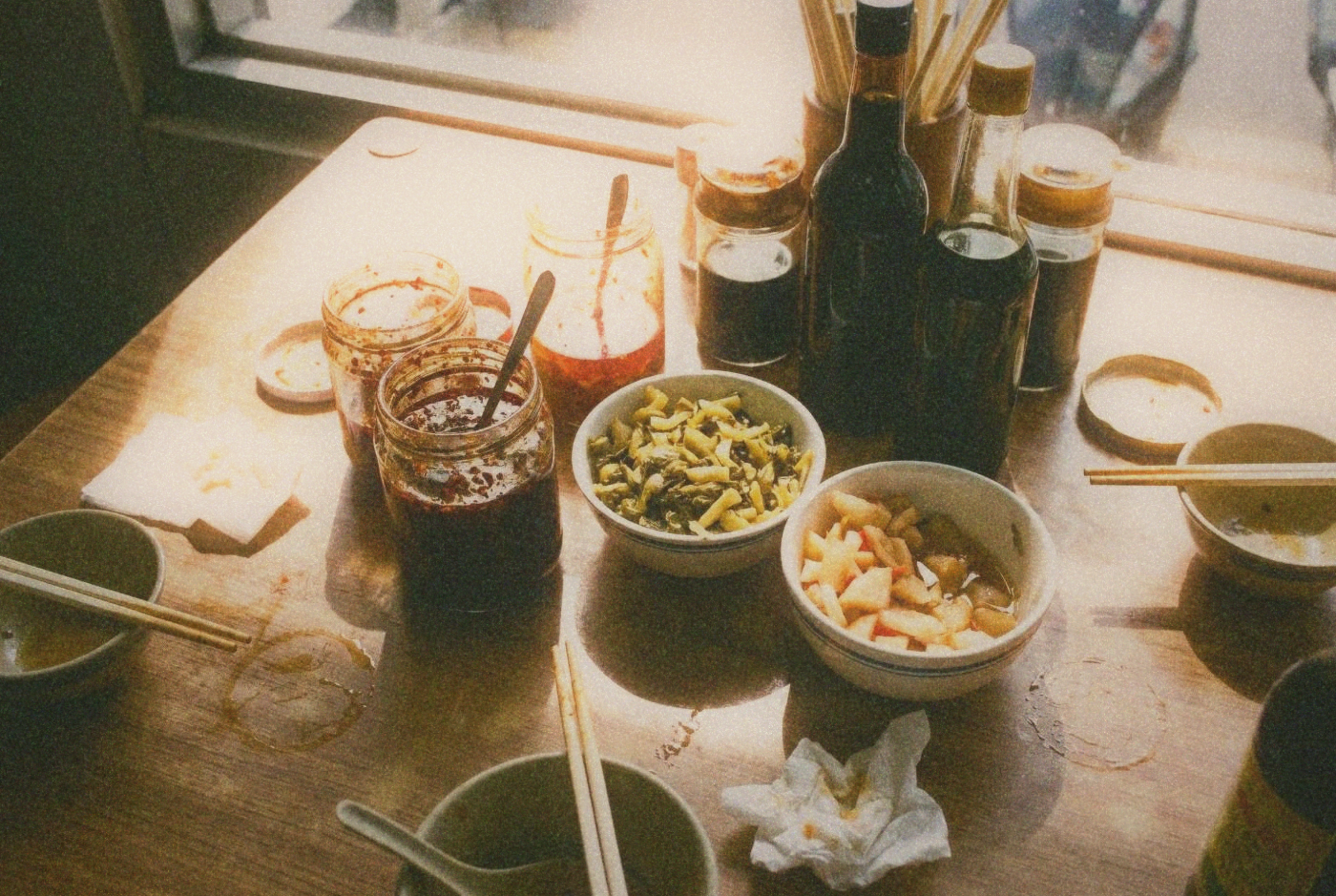 FIRST SIGHTWEBGLClose-up of condiment table at a Taiwanese beef noodle shop. chili oil jar · Color and grain by First Sight · Gold 200. · First Sight 色彩與顆粒調校 · Gold 200
5. 欣欣牛肉麵 Xinxin
Specialty: Clear-stewed version with medicinal herbs (ginseng, goji). The broth is subtle but lasts on your palate long after you swallow. The lingering quality is what separates good clear-stewed from mediocre, you should taste it for 10 seconds after you swallow. If it disappears immediately, the broth is weak. Here, it holds. Silky noodles that pick up the herbal notes without overpowering them.
The ginseng provides a subtle sweetness that's not cloying. The goji adds a hint of dried fruit. Together they create a broth that tastes like it's been constructed rather than just reduced. Someone thought about this recipe.
欣欣牛肉麵 Taipei Price: NT$130–150
6. 大牌檔 Big Sign
Specialty: Spicy, peppery, aggressive. If you like heat, this is the one. The broth coats your mouth and doesn't apologize. The Sichuan peppercorn creates a numbing sensation that lasts even after you've finished eating. Your mouth will tingle for 20 minutes. This is a feature, not a bug. Some people order it specifically for the aftertaste.
The beef here is tender to the point of softness, probably a longer braise than other shops, which means it absorbs more spice. By the time you eat the beef, it's been marinating in heat for hours.
大牌檔 Taipei Price: NT$110–130
7. 林家 Lin's
!Late night scene outside a Taipei noodle shop, the city eats at every hour
Beef noodle soup exists at every hour. Choose the shop that matches your mood.
Specialty: Consistency. Every bowl tastes the same as it did five years ago, which says something remarkable about process control in a small restaurant. Red-braised, traditional, reliable. The noodles are medium and absorbent, they pick up just enough broth to be flavorful without becoming heavy. This is the bowl you come back to when you need certainty. It won't surprise you. It will never disappoint.
The shop has been running for 25+ years. The owner has watched every iteration of Taipei food trends come and go, and has chosen to ignore them all. This is admirable in a city constantly chasing what's next.
林家 Taipei Price: NT$100–140
How to Order
Most shops have pictures on the wall. Just point. Beef noodle soup in Taiwan comes in specific formats:
- One bowl (湯麵), noodles in broth with a few beef pieces. This is the most common. You eat and drink simultaneously.
- Separate bowl (乾麵加湯), noodles dry with sauce mixed in, broth on the side. You can control the ratio of broth to noodles per bite. This is for people who want to taste the noodles' texture without them becoming soft.
- Half-cooked beef (半熟), softer, easier to bite, melts slightly. For people who don't want to chew.
- Well-done beef (全熟), chewier, more mineral flavor, more textural interest. For people who want to work for their bite.
Noodle choices: - Thin (細麵), more surface area, holds less broth per bite - Wide (寬麵), absorbs more broth, feeds more satisfying bites - Thick Shandong-style (手工粗麵), springy, chewy, requires effort
Most bowls cost NT$100–140. Tipping is not necessary. Many shops don't even have a mechanism for tipping.
The Condiment Ritual
Every beef noodle shop will have a small table with condiments. Here's what you're looking at:
- Soy sauce (醬油), for adjusting saltiness
- Chili oil (辣油), for heat
- Black vinegar (黑醋), for brightness
- White vinegar (白醋), for acidity
- Garlic (蒜), sliced or whole, for spice-through
Locals rarely use these. They trust the shop's broth is already balanced. Tourists often pour in chili oil and regret it. My advice: taste the broth first. Add condiments only if you have a specific reason (the broth is too salty, you want more heat, etc.). Most good broth doesn't need intervention.
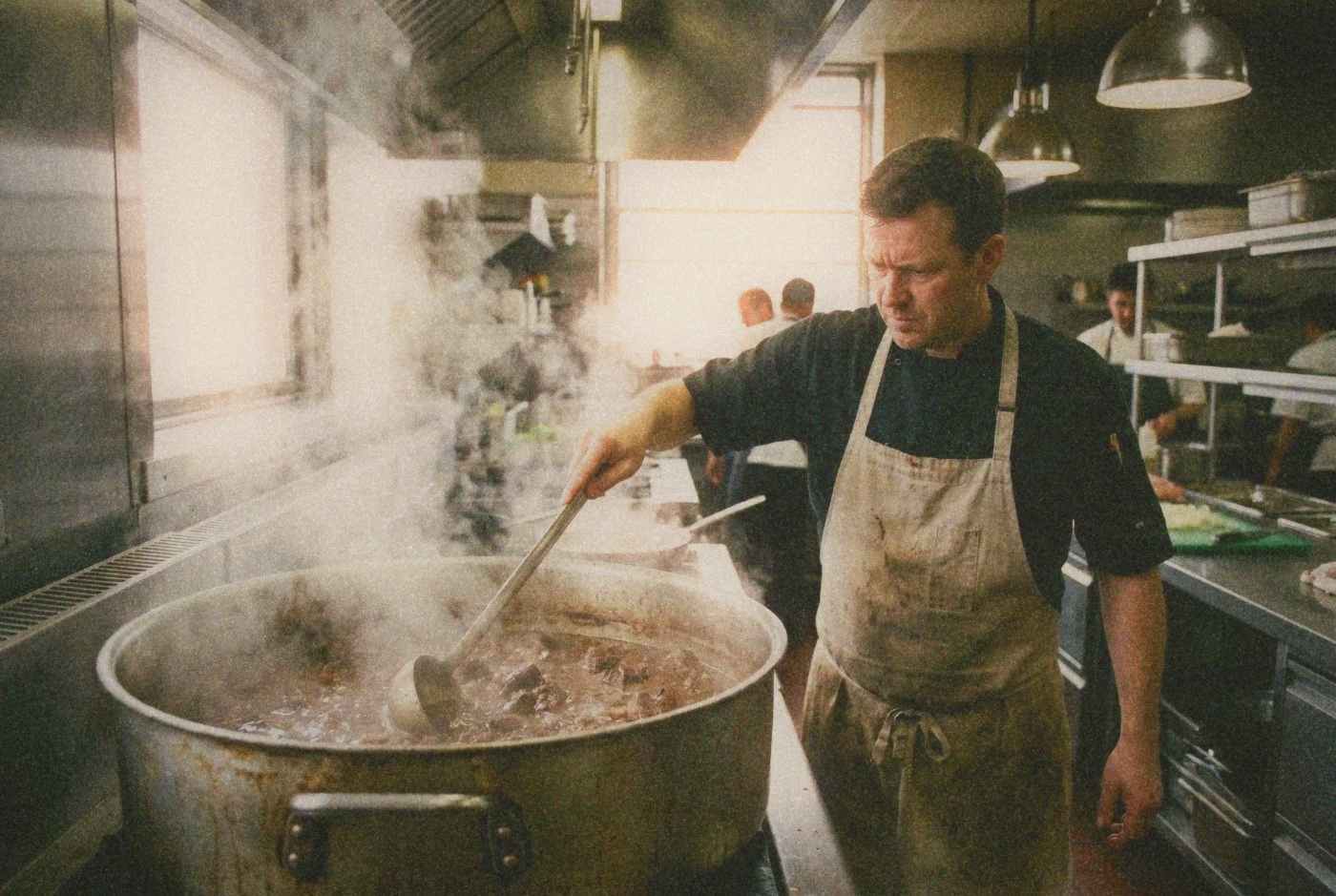 FIRST SIGHTWEBGLCook stirring a massive pot of dark braised beef broth in a commercial kitchen. steam billowing · Color and grain by First Sight · Gold 200. · First Sight 色彩與顆粒調校 · Gold 200
What Locals Order Besides Noodles
Beef Tendon (牛腱), Already mentioned, but specifically: order this cold if available. It's a palate cleanser between soup bites.
Beef Tripe (牛肚), Tender, slightly chewy, absorbs broth well. Some shops have this.
Offal Mix (雜碎), Whatever organs they have. Liver, intestine, etc. Usually NT$30–40. More textural variety per bite.
Pickled Vegetables (泡菜), Provided free at most shops. Eat a piece between soup bites to reset your palate.
FAQ
Is there a best time to go?
Lunch (11am–1pm) and dinner (5:30–8pm) are packed. Go at 2pm or 10pm if you prefer quiet. The soup is equally good at any hour.
Can I get the same thing every time?
Yes. The best beef noodle experience is often repetition, you understand the broth better on the third visit. By the fifth visit, you start noticing seasonal variations in how the spices taste. By the tenth visit, you realize the shop has probably been adjusting the recipe slightly based on what beef is available.
What's the difference between these shops and the famous ones?
Famous shops had one perfect year and have been coasting since. These seven are actively trying to improve, or actively resisting the urge to change. Both approaches require integrity.
How much should I spend per visit?
Expect NT$100–180 for a full bowl with side. If you want to try tendon, add NT$30–40. Budget NT$200 per person if you're trying the bowl plus sides.
Should I try all seven?
Not in one week. You'll sicken yourself on beef. Try one, wait a week, try another. By trying them gradually, you'll actually notice differences. If you try them all in sequence, everything will taste like spice and beef.
Which one first?
Start with Liu Shan Dong for the clear-stewed (if you want a clean reference point) or Big Sign for the spicy (if you want the extreme). Then build outward toward the ones that contrast.
Regional Context
Taipei beef noodle soup is different from Tainan beef soup (lighter, more time-based), different from Kaohsiung beef noodles (spicier), different from military villages' home versions (more herbal). Taipei's version emphasizes depth and spice over delicacy. This is partly because the city attracts people with aggressive palates, partly because the food culture valorizes intensity.
[taiwan-card] Taipei | Depth and spice | Heavy soy-forward broths, aggressive palates, emphasis on intensity Tainan | Clarity and brightness | Lighter broths, spice-forward, time-based cooking Kaohsiung | Heat forward | Spicier renditions, aggressive heat profiles
When you eat beef noodle soup in Taipei, you're eating a working-class food that accidentally became famous. You're eating what soldiers cooked in military villages. You're eating one generation's displacement food become the next generation's national identity.
Keep that context in mind. It makes the bowl taste different.
Related articles: [Tainan Beef Soup, 3 Old-School Shops Worth Waking Up For] · [Taiwanese Noodle Soup Culture: What Each Region Does Best]
Comments (0)
Loading comments...