
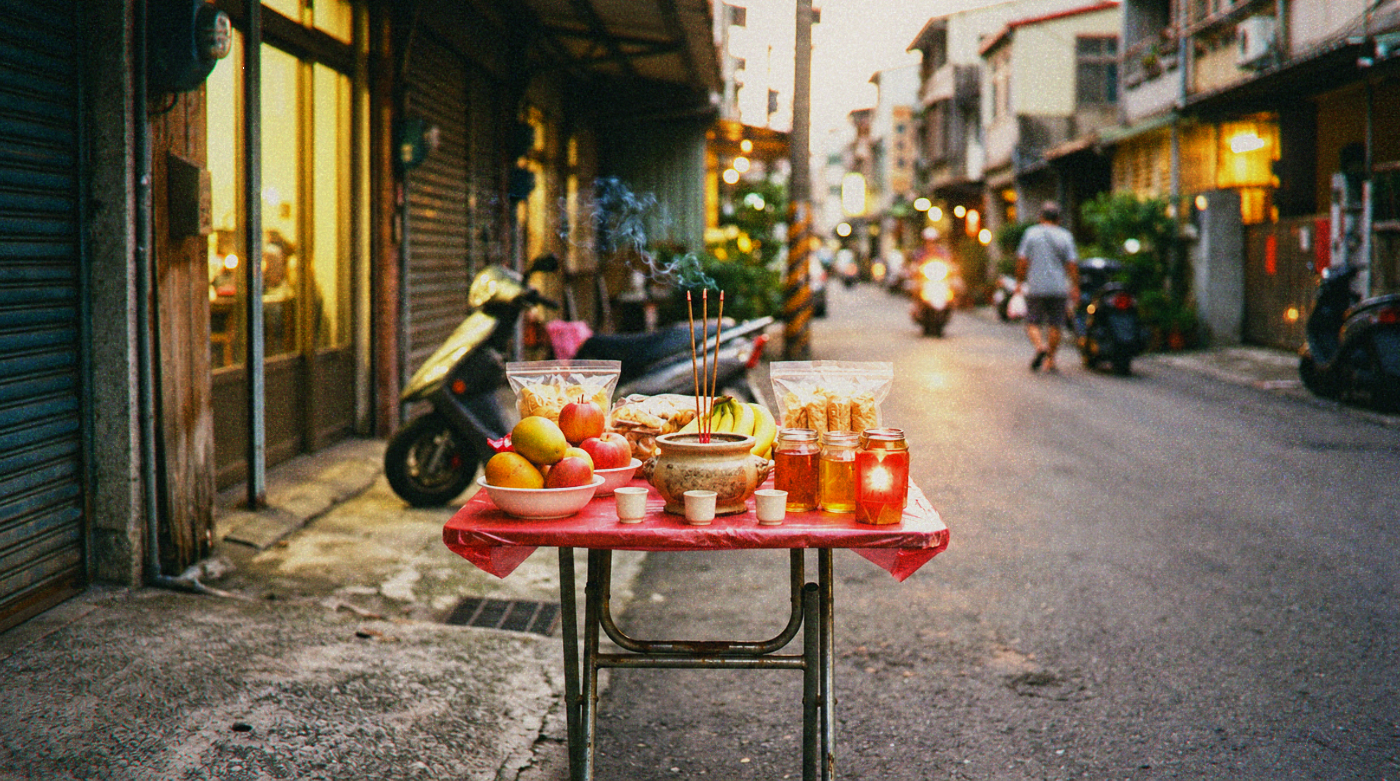
For about a month each year, Taiwan quietly changes character. Small folding tables appear on the pavement outside shops, offices, and apartment doorways, stacked with fruit, snacks, and cans of tea. Thin ribbons of incense smoke rise from doorsteps. After dark, metal bins glow with burning paper money, and the low murmur of temple ceremonies drifts down ordinary streets. This is Ghost Month, the seventh month of the lunar calendar, and for anyone visiting or newly living in Taiwan it is one of the most fascinating windows into the island's culture, provided you know what you are looking at.
When Ghost Month Falls in 2026
Ghost Month follows the lunar calendar, so its dates shift by a couple of weeks every year. In 2026 the seventh lunar month runs from roughly the third week of August into the middle of September. The single most important day, 中元節 (Zhongyuan, the Ghost Festival), falls in early September, on the fifteenth day of the month. If you are planning travel around this window, there is no need to avoid it. A little context turns what can look eerie into something genuinely moving.
Three moments anchor the month. On the first day, temples and families open the gate (開鬼門), welcoming spirits into the world of the living. The midpoint, Zhongyuan, is the great communal festival, when the largest offerings are made. On the last day, the gate closes again (關鬼門) and the spirits return. In between, offerings happen almost daily, most visibly on the first and fifteenth, and again whenever a business holds its own ceremony.
What People Actually Believe
The idea is old and, at heart, simple. During the seventh month the boundary between the world of the living and the world of the dead thins, and the gates of the underworld open. Spirits are free to wander. Many of them are ancestors, welcomed home, seated at the table, and fed the foods they loved in life. This part of the tradition is warm and familial, closer to a reunion than a haunting.
Others have no family left to remember them. These wandering spirits are known, with deliberate courtesy, as 好兄弟, the good brothers. Rather than fear them, the custom is to treat them as guests who deserve hospitality: lay out food, burn spirit money for them to spend, and speak of them respectfully. Much of what can look like superstition to an outsider is really a centuries-old practice of not letting anyone, even the forgotten dead, go uncared for.
What You Will Actually See on the Street
Walk through any Taiwanese neighbourhood in the seventh month and the signs are everywhere. Shopkeepers set out offerings, often an entire spread of biscuits, fruit, instant noodles, and drinks, light incense, and burn folded ghost money in red metal bins at the kerb. Convenience stores stack special offering bundles by the door. The smell of sandalwood smoke becomes part of the evening air.
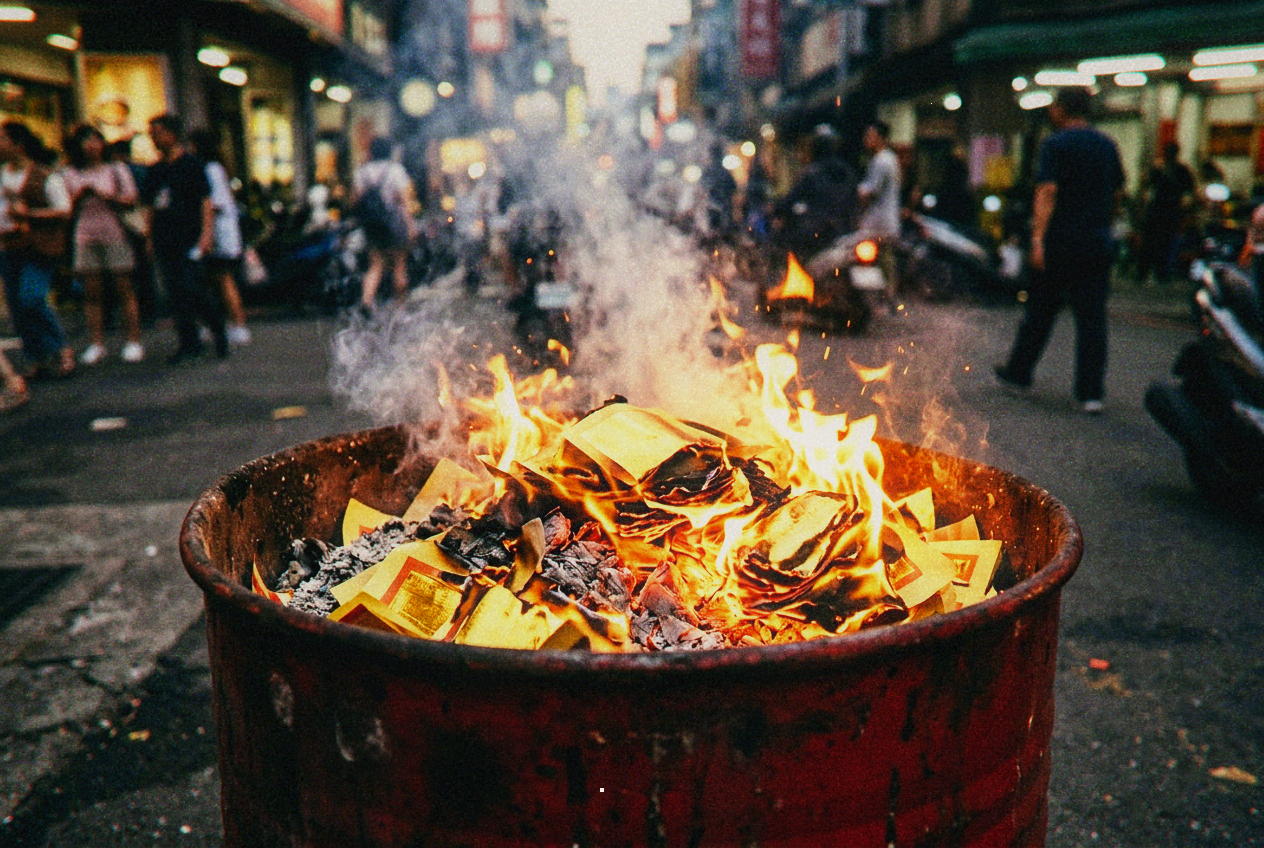
 FIRST SIGHTWEBGLSpirit money burning in a kerbside bin at dusk, a daily sight through the seventh lunar month. · Color and grain by First Sight · Superia. · First Sight 色彩與顆粒調校 · Superia
Temples and whole communities hold 普渡 (Pudu) ceremonies, large collective offerings for the wandering spirits, with long tables of food laid out and blessed. Companies, markets, and even office buildings organise their own. It is common to see a car park or shop forecourt transformed for an afternoon into a field of offerings, tended by staff in ordinary work clothes.
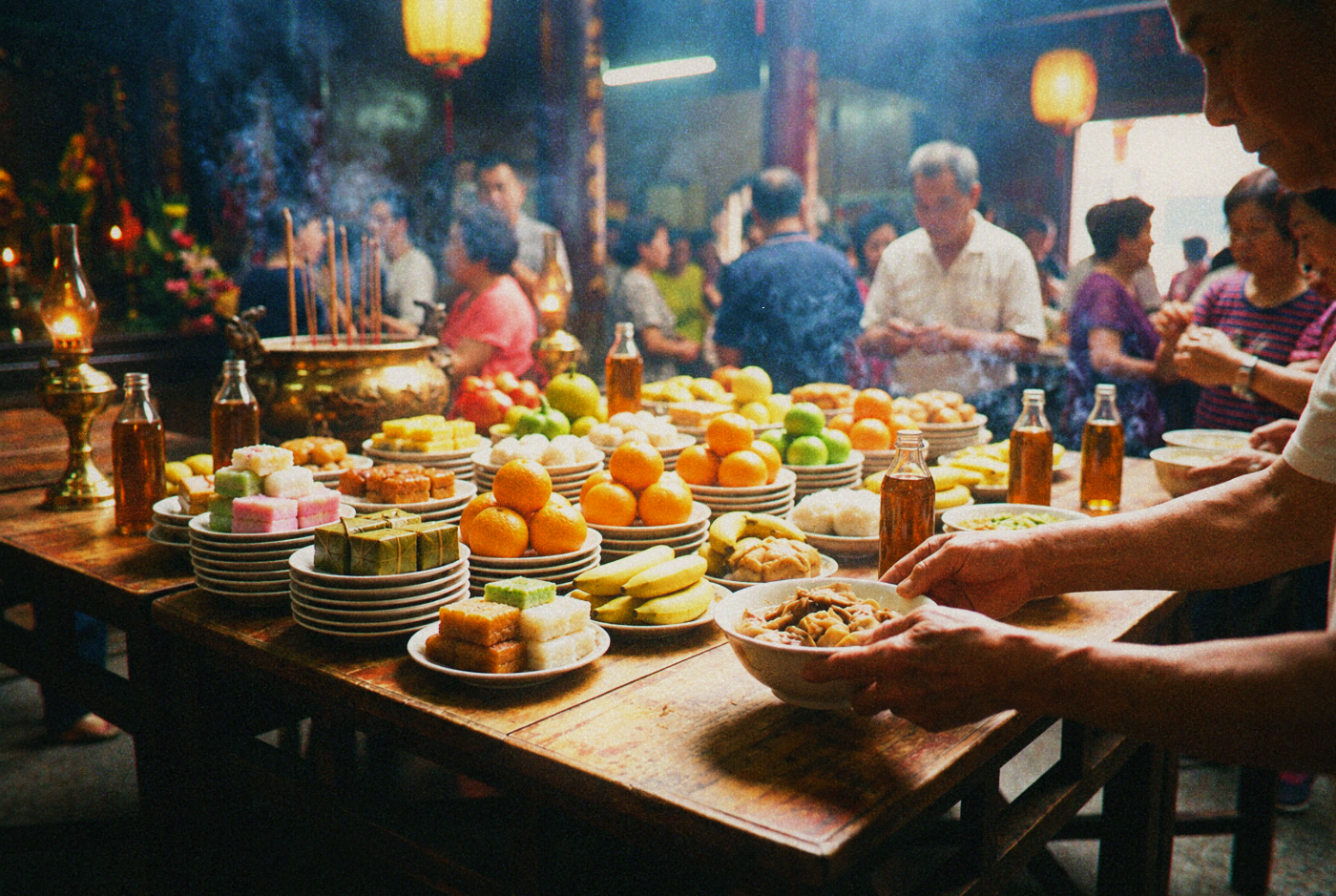 FIRST SIGHTWEBGLA communal Pudu offering, tables of food laid out and blessed for the wandering spirits. · Color and grain by First Sight · Superia. · First Sight 色彩與顆粒調校 · Superia
The most spectacular expression of all is in Keelung, on the north coast, where the Zhongyuan Festival has been staged for more than 150 years. Its highlight is the release of illuminated water lanterns (放水燈), floated out to sea after dark to light the way home for spirits lost at water. Rival clan associations once competed to build the grandest lanterns; today it is one of Taiwan's most photographed cultural events.
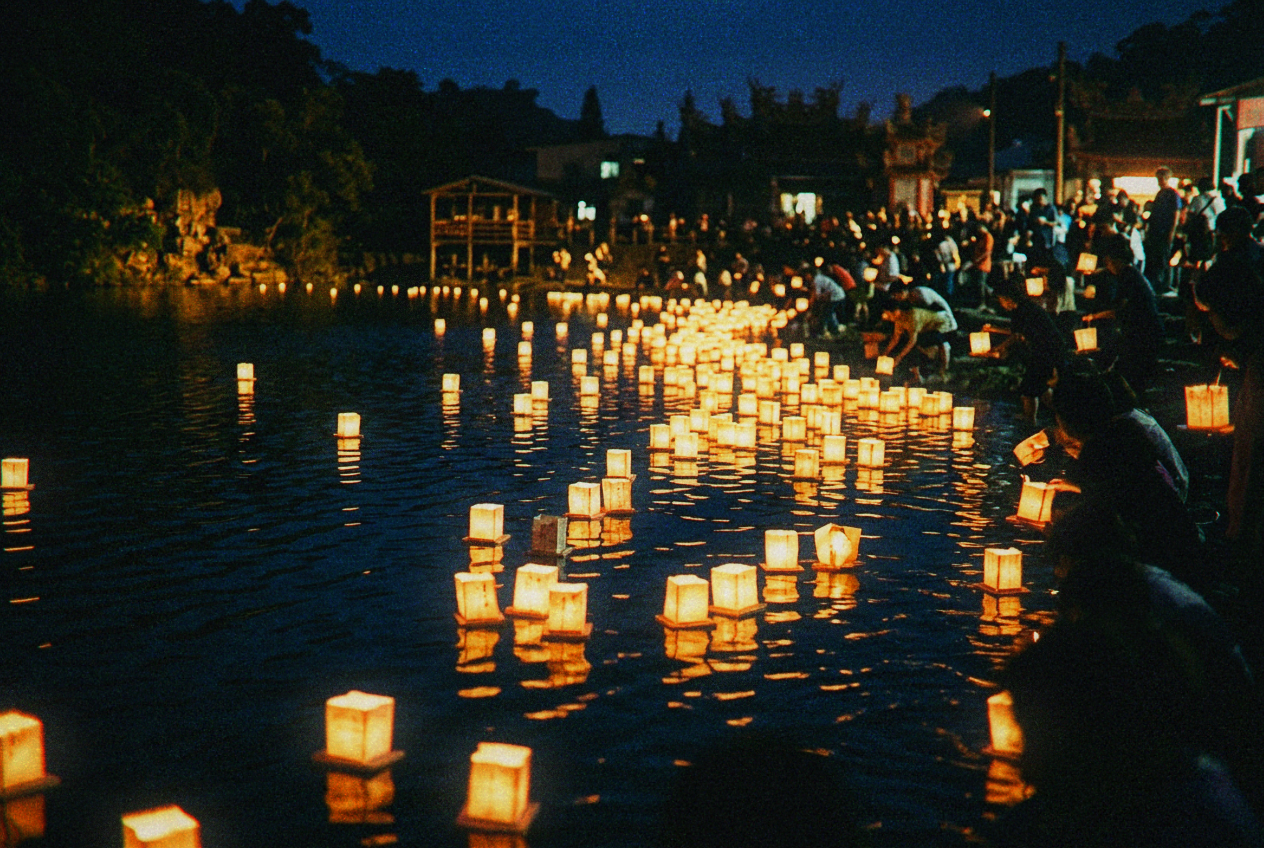 FIRST SIGHTWEBGLWater lanterns released at night in Keelung to guide spirits home, the visual centrepiece of Ghost Month. · Color and grain by First Sight · Superia. · First Sight 色彩與顆粒調校 · Superia
The Etiquette Locals Live By
You will notice people quietly avoiding certain things this month. Big, forward-looking commitments, moving house, opening a business, signing a new lease, holding a wedding, buying a car, are usually pushed to a cleaner month. It is not that anyone expects disaster; it is that the seventh month is simply considered the wrong time to begin something you want to last.
Some avoid swimming in the sea or rivers, since folk belief holds that water spirits look for a living person to take their place. After dark, a handful of small habits persist: not whistling, not hanging washing out overnight, not leaning against walls in dark alleys, and never tapping a stranger on the shoulder from behind. You do not have to believe any of it. But you will fit in, and cause no offence, simply by not making a joke of it.
The most useful etiquette is also the most concrete. Step around a pavement offering rather than over or through it. Do not disturb or photograph someone mid-prayer without a nod of permission. Never kick or knock over a burning bin. And if a shopkeeper hands you a stick of incense at a Pudu, accepting it graciously is the warmest thing you can do.
Should Travellers Change Their Plans?
No, and in some ways it is a quietly good time to come. Because a number of locals postpone travel and big purchases, flights and hotels can run slightly cheaper, and popular spots feel a touch calmer. Nothing about Ghost Month is staged for tourists, which is exactly what makes it worth seeing: you are watching a living tradition go about its business, not a performance.
If you can shape your itinerary at all, aim to be in Keelung for the water lantern parade around Zhongyuan, or simply spend an early evening walking a night market as the incense and offerings thicken the air. Bring curiosity rather than a camera-first mindset, and the month will show you more.
A Few Practical Notes for Visitors
Everyday life runs completely as normal: shops, transport, restaurants, and attractions all stay open, and there is nothing unsafe about being out at night. Beaches and river pools may be quieter, and some tour operators pause water activities, worth checking if a swim or river-trace is on your list. Otherwise, travel exactly as you would any other month, with the bonus of a richer backdrop.
Frequently Asked
The Bottom Line
Ghost Month is not a haunted-house season, and it is not something to be nervous about. It is a month of remembering the dead, feeding the forgotten, and keeping a centuries-old habit of care alive on the most ordinary streets. Come with curiosity and a little respect, and you will see a side of Taiwan that most itineraries walk straight past, one that says a great deal about how the island treats the people, seen and unseen, in its midst.
Comments (0)
Loading comments...