
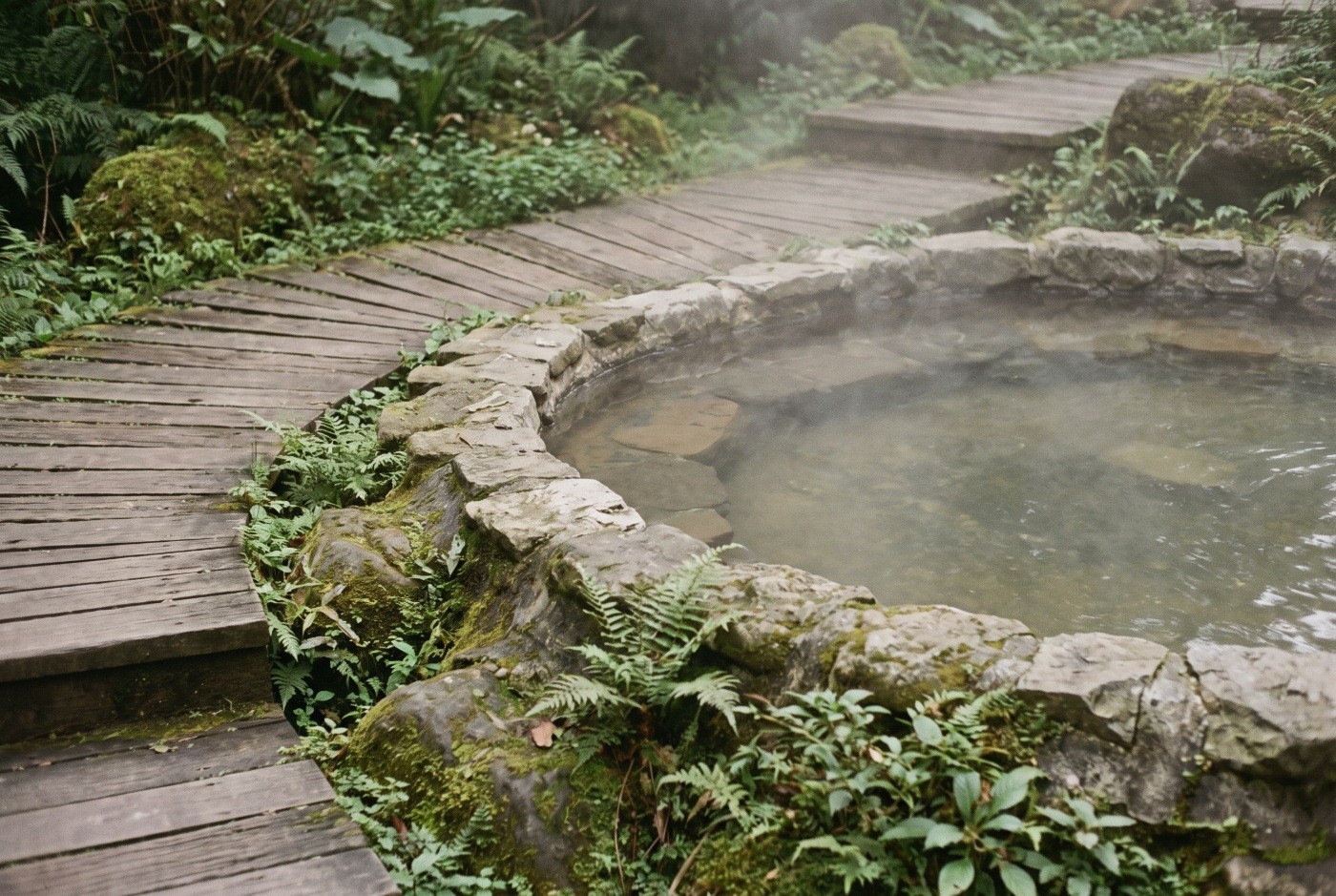
At six in the morning in Beitou, steam rises off the creek and the first bathers are already in the public pools, sitting in 42-degree sulfur water with their eyes closed. Two hundred kilometers south, at a monastery outside Kaohsiung, a wooden board has just been struck to wake the overnight guests. Both groups are doing the same thing, in completely different vocabularies: they've stepped out of their lives for a day to be quiet somewhere.
Taiwan doesn't really do the resort-spa version of wellness — the eucalyptus towel, the cucumber water, the itinerary of treatments. What it has instead is older and cheaper: an island of volcanic geology that produces hot mineral water in every mountain range, and a living Buddhist tradition whose monasteries open their doors to anyone willing to follow the schedule. The two combine into a kind of retreat you can't quite assemble anywhere else.
The hot water side: pick your spring by its water
Most first-timers pick a hot spring town by distance from Taipei. Pick by water instead — the springs differ more than their brochures do.
Beitou (北投), white sulfur. Milky, eggy, dramatic — the water announces itself before you see it. Thirty minutes from Taipei Main on the MRT, which makes it the world's most accessible volcanic spring district and also its busiest. Go on a weekday morning. Our Beitou guide covers the pools, prices, and history.
Wulai (烏來), clear carbonic. Odorless, transparent, gentle on skin — the introvert of Taiwan's springs, in an Atayal township an hour south of the city, folded into a river gorge. The setting does half the work.
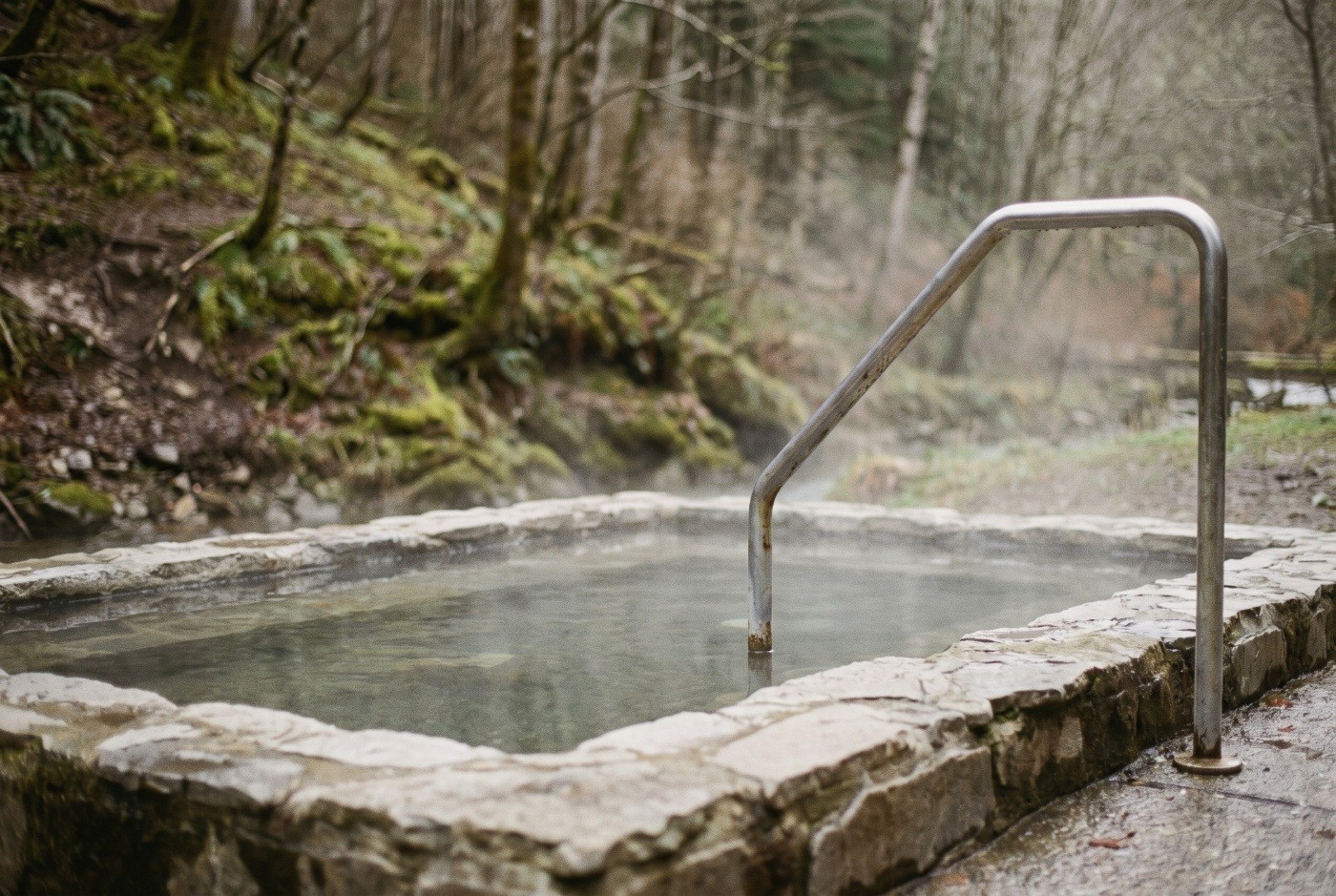
 FIRST SIGHTWEBGLIllustration: An outdoor bath surrounded by trees. · Color and grain by First Sight · Portra 400. · First Sight 色彩與顆粒調校 · Portra 400
Jiaoxi (礁溪), sodium bicarbonate. The "beauty spring" — slightly slippery water that leaves skin noticeably soft. It's also the rare hot spring town on flat land, five minutes' walk from its own train station in Yilan, which means you can do it without a car.
Guguan (谷關) and Zhiben (知本), the far options. Guguan sits in the mountains east of Taichung; Zhiben anchors the southeast near Taitung, with a forest recreation area next door. Both reward the extra travel with what the northern towns can't offer: distance. Nobody day-trips here, and the pools empty out by nine.
Wherever you soak, the etiquette is closer to Japan's than you might expect — wash thoroughly before entering, no towels in the water, nude bathing in the gender-separated public pools. We wrote a full etiquette guide for onsen travel and nearly all of it applies at home.
The temple side: what a stay actually looks like
Taiwan's large Buddhist monasteries run guest programs — not tourism, exactly, but structured hospitality. You sleep in plain dormitory-style rooms, eat vegetarian meals in silence, and follow an early schedule built around meditation, chanting, or simply staying quiet. Nobody tries to convert you. The deal is simpler: their rhythm, your attention.
Dharma Drum Mountain (法鼓山). On the north coast near Jinshan, and the most retreat-oriented of the big institutions — its Chan (Zen) meditation retreats range from beginner weekends to silent multi-day sessions, some offered in English. Expect a wake-up before dawn, sitting and walking meditation, and phones surrendered or silenced. This is the one to choose if what you want is a genuine contemplative reset rather than a look around.
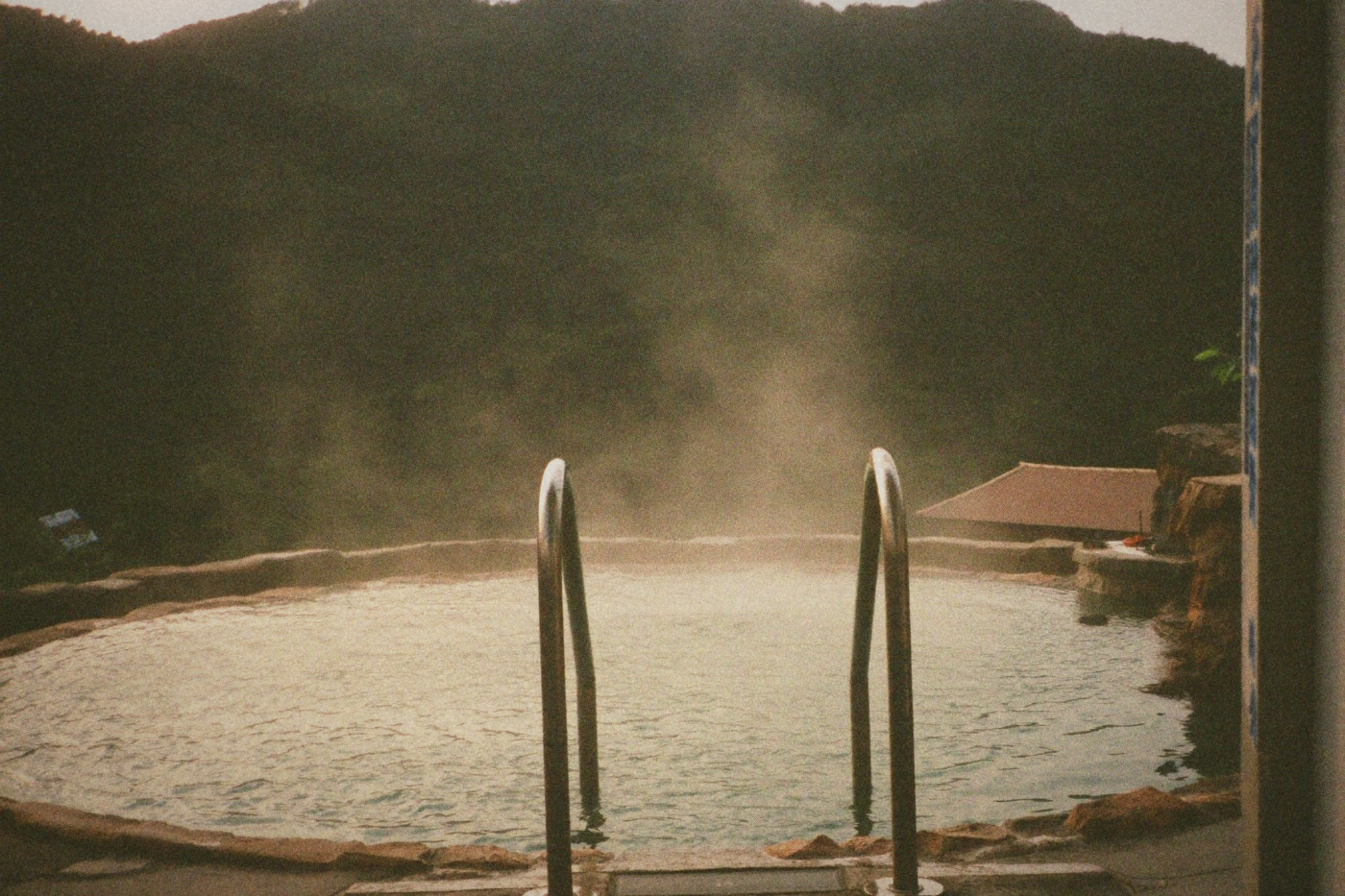 FIRST SIGHTWEBGLSteam, stone, and quiet. · Color and grain by First Sight · Portra 400. · First Sight 色彩與顆粒調校 · Portra 400
Fo Guang Shan (佛光山). Taiwan's largest monastery, outside Kaohsiung, with a pilgrim lodge and an enormous Buddha Museum. The experience is less austere and more accessible — you can join morning chanting at your own level of commitment, walk the grounds for hours, and still be comfortable. Good first temple stay, and the easiest to book as a foreigner.
Chung Tai and the smaller mountain temples. Chung Tai Chan Monastery near Puli runs meditation programs in a building that looks like science fiction; smaller temples across the island take guests informally. The smaller the temple, the more Mandarin you'll need — and the more the stay will feel like being a guest rather than a customer.
Practicalities: book ahead through the monastery's website or phone line — walk-ins are not the norm — and expect to pay a modest fee or donation for room and board, generally in the hundreds of NT dollars rather than thousands. Dress modestly (shoulders and knees covered), keep your voice down in the halls, follow the lead of others at meals, and don't photograph people in prayer. If there's a formal meal ritual, someone will show you; the only real requirement is to move at the temple's speed instead of your own.
Three weekends that combine both
North: Jinshan + Yangmingshan. A meditation weekend at Dharma Drum Mountain, then an hour's bus ride into Yangmingshan's sulfur springs before heading back into Taipei. The volcanic landscape and the monastery share the same quiet mountain weather, and the whole loop works without a car.
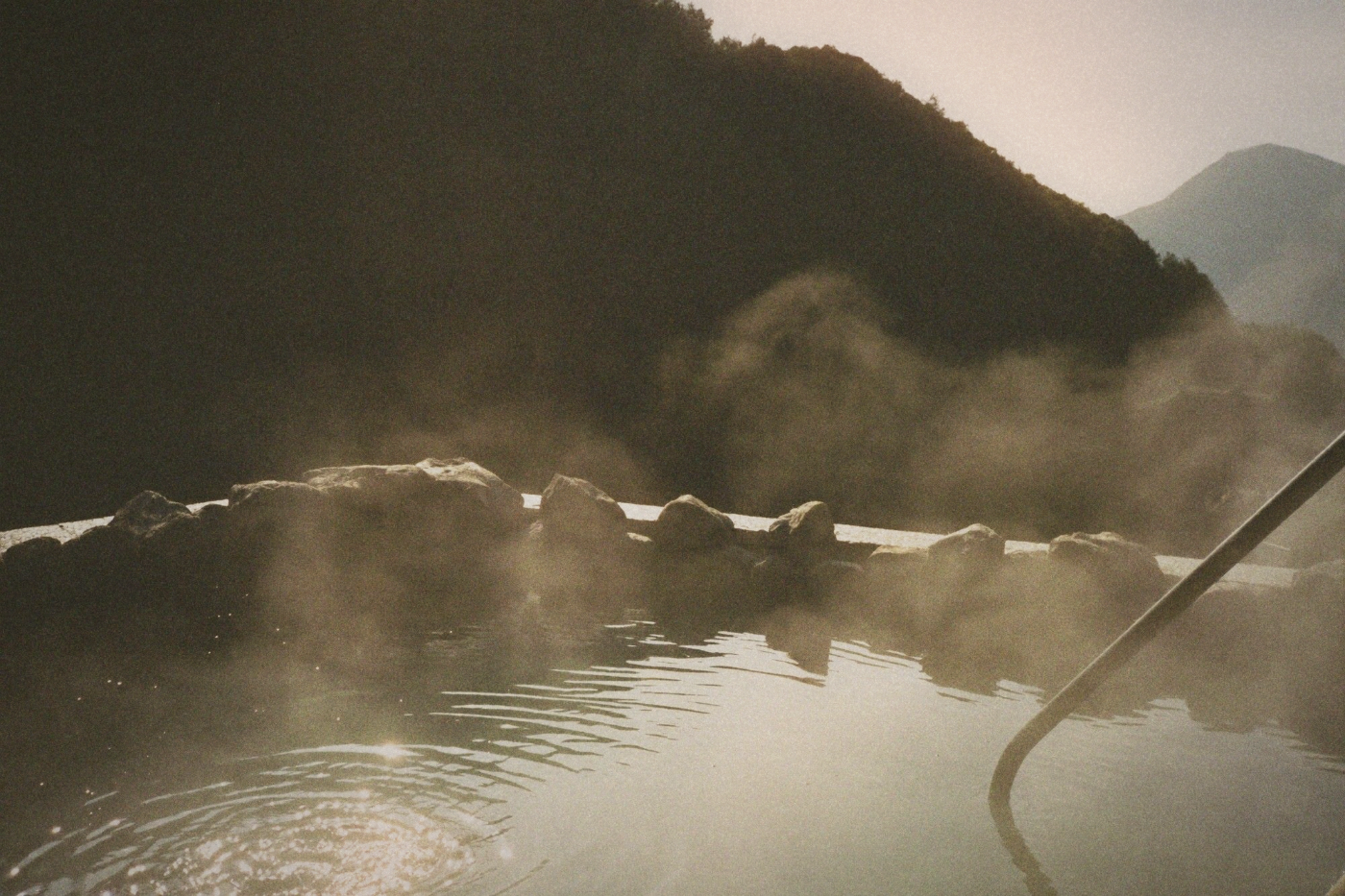 FIRST SIGHTWEBGLSteam, stone, and quiet. · Color and grain by First Sight · Portra 400. · First Sight 色彩與顆粒調校 · Portra 400
South: Fo Guang Shan + the Kaohsiung valleys. A night at the pilgrim lodge, mornings in the Buddha Museum before the tour buses, then east into the mountain valleys toward Baolai's riverside springs. This is the warmest pairing in winter — which is exactly when you want it.
East: Zhiben + the slow coast. Taitung's springs, forest trails, and rice-field valleys already run at retreat pace; add a visit to one of the coast's small temples and you have the least engineered version of this trip. Our Taitung itinerary covers the route.
Which quiet do you need?
The hot spring loosens the body and asks nothing of you. The temple asks a little — an early morning, a silent meal, a phone left face-down — and returns something harder to name. If your exhaustion is physical, start with the water. If it's the scrolling, deadline-shaped kind, start with the temple. And if you can't tell, that's what the combined weekend is for: Taiwan will let you test both hypotheses for less than the price of a city hotel night.
Comments (0)
Loading comments...