
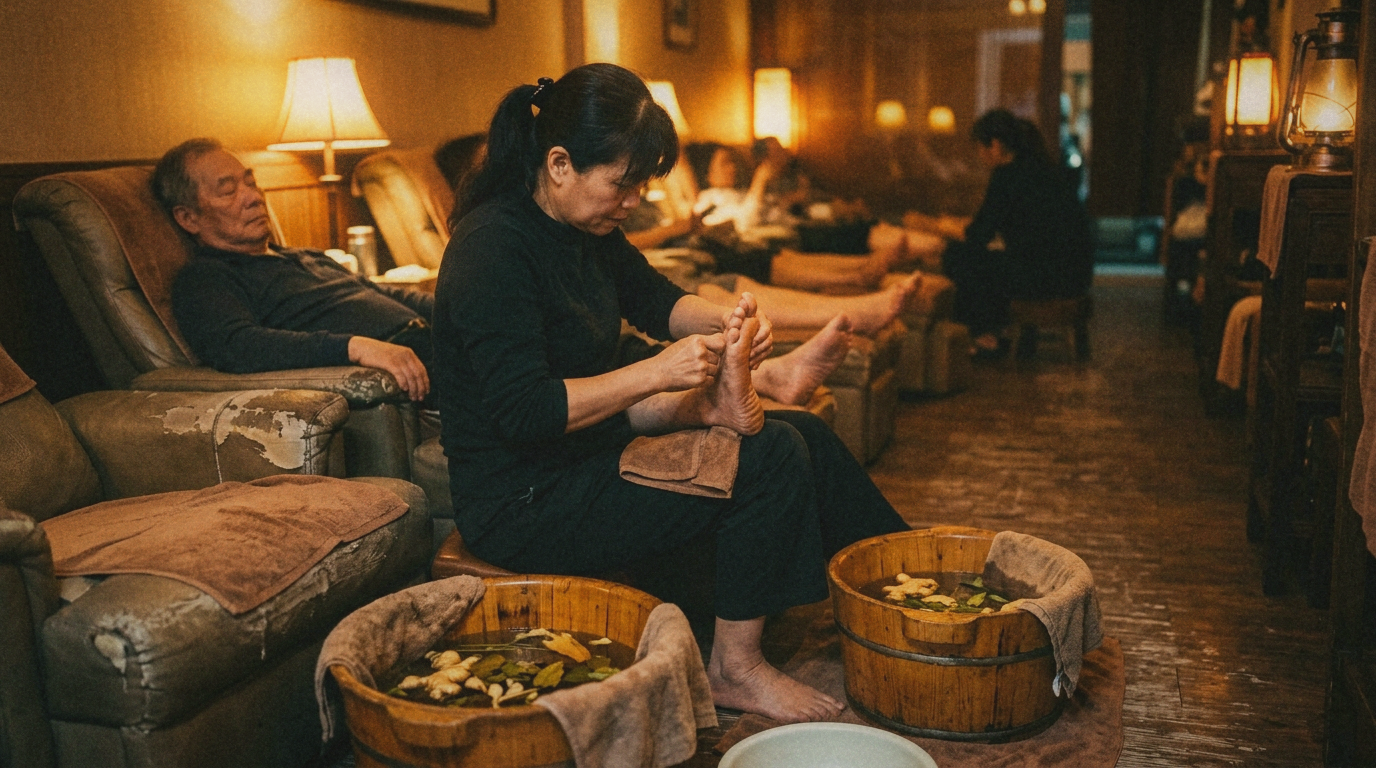
Somewhere on almost every block in Taiwan, usually up a narrow flight of stairs or behind a curtain of bright light, someone is having the knots pressed out of their feet. Massage here is not a rare treat you book weeks ahead for a birthday. It is closer to a utility, a normal, affordable, slightly painful part of taking care of yourself, and once you understand how it works, it becomes one of the best things you can do for a tired body on the island.
The trade comes in a few distinct forms, each with its own room, its own price, and its own idea of what a massage is for. There is foot reflexology under fluorescent lights, deep and serious tui na that treats the body almost medically, the gentle relief of a shoulder-and-neck rub, and the quiet, skilled world of Taiwan's blind masseurs. Knowing which door to walk through is most of the battle.
Foot reflexology: the bright-lit ritual
The most visible form of massage in Taiwan is the foot reflexology shop, and you will spot them everywhere, often lit like a convenience store, with rows of reclining chairs visible from the street. This is not a dim, scented spa. It is bright, practical, and social, and people come in on their way home from work the way they might stop for a bowl of noodles. You sit back, your feet are soaked in warm water, and then a therapist goes to work on your soles with thumbs and knuckles.
Reflexology rests on the old idea that points on the feet map to organs and systems throughout the body, and that working them releases tension and improves circulation. Whether or not you buy the theory, the experience is real. A good practitioner will find spots that are startlingly tender and press them until they release. It can genuinely hurt, in a way that feels like it is doing something, and the loose, light-footed feeling afterwards is the reason people keep coming back.
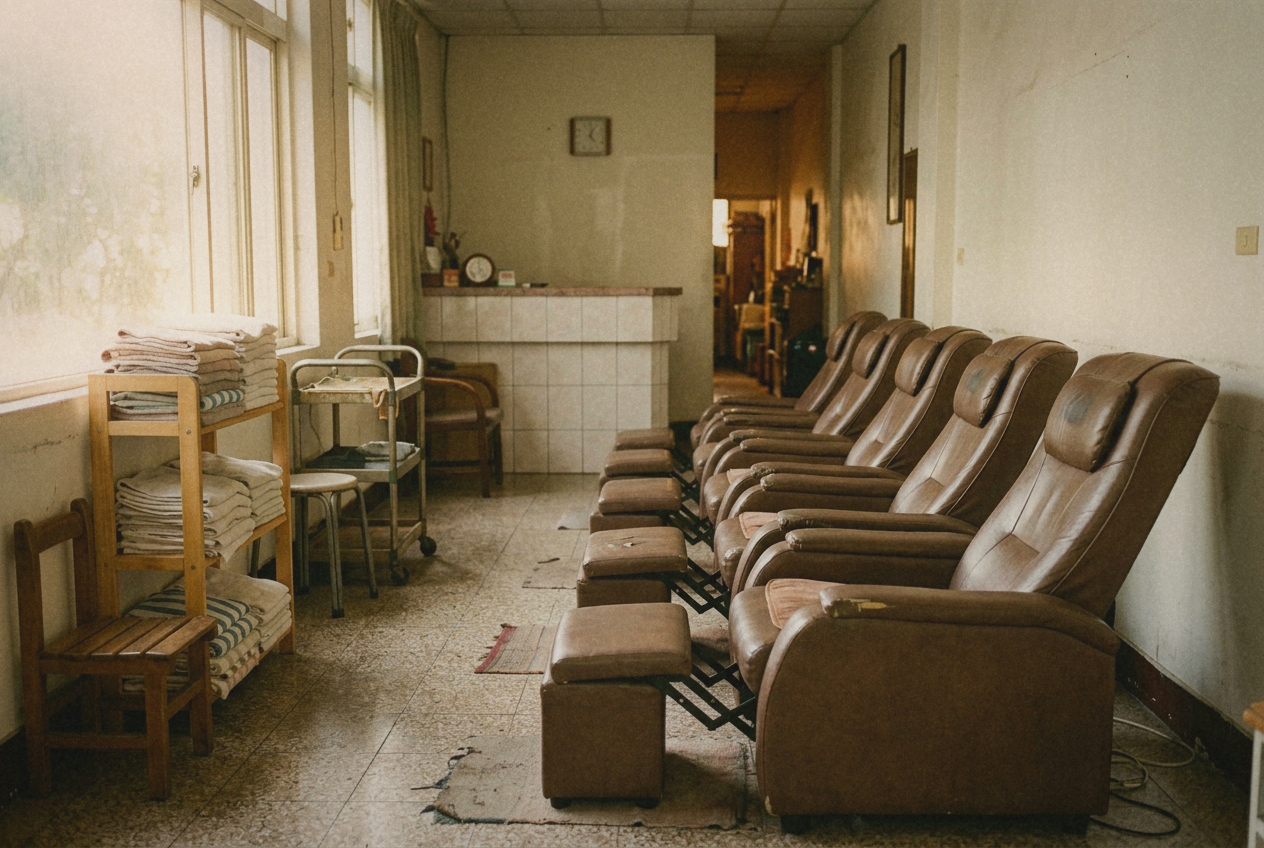
 FIRST SIGHTWEBGLThe reflexology shop is bright, practical and social, closer to a barber than a spa, and open to anyone walking home from work. · Color and grain by First Sight · Portra 400. · First Sight 色彩與顆粒調校 · Portra 400
Tui na: the serious end
If reflexology is the everyday version, tui na is the serious, therapeutic end of the spectrum. It is a form of traditional Chinese bodywork, and it treats the massage less as relaxation and more as repair. A tui na practitioner works on muscles, tendons and joints with a repertoire of pressing, kneading, rolling and stretching, often targeting a specific complaint, a stiff neck, a bad back, a shoulder frozen from a desk. It is frequently found near or inside traditional Chinese medicine clinics, and it can be brisk and clinical rather than soothing.
This is the massage to seek out when something actually hurts. Tell the practitioner where the problem is, and be honest about the pain, because tui na is meant to work at the edge of what you can comfortably take. You may feel worked-over rather than pampered when you leave, and a little sore the next day, but for a genuine knot or a chronic ache it is often more effective than anything gentler.
The blind masseurs of Taiwan
One of the most distinctive parts of the island's massage culture is the tradition of visually-impaired masseurs. For decades, massage was one of the few professions formally open to blind people in Taiwan, and generations of practitioners built a deep, respected craft around it. The result is a network of massage shops, some run as small cooperatives, staffed by therapists with an extraordinary sense of touch.
The reputation is well earned. Many people will tell you that the best deep-tissue massage they have ever had came from a blind masseur who found every knot without being told where to look. These shops tend to be unglamorous, fairly priced, and focused entirely on the work. Seeking one out is not only a good way to get an excellent massage, it supports a livelihood that has mattered to the community for a long time.
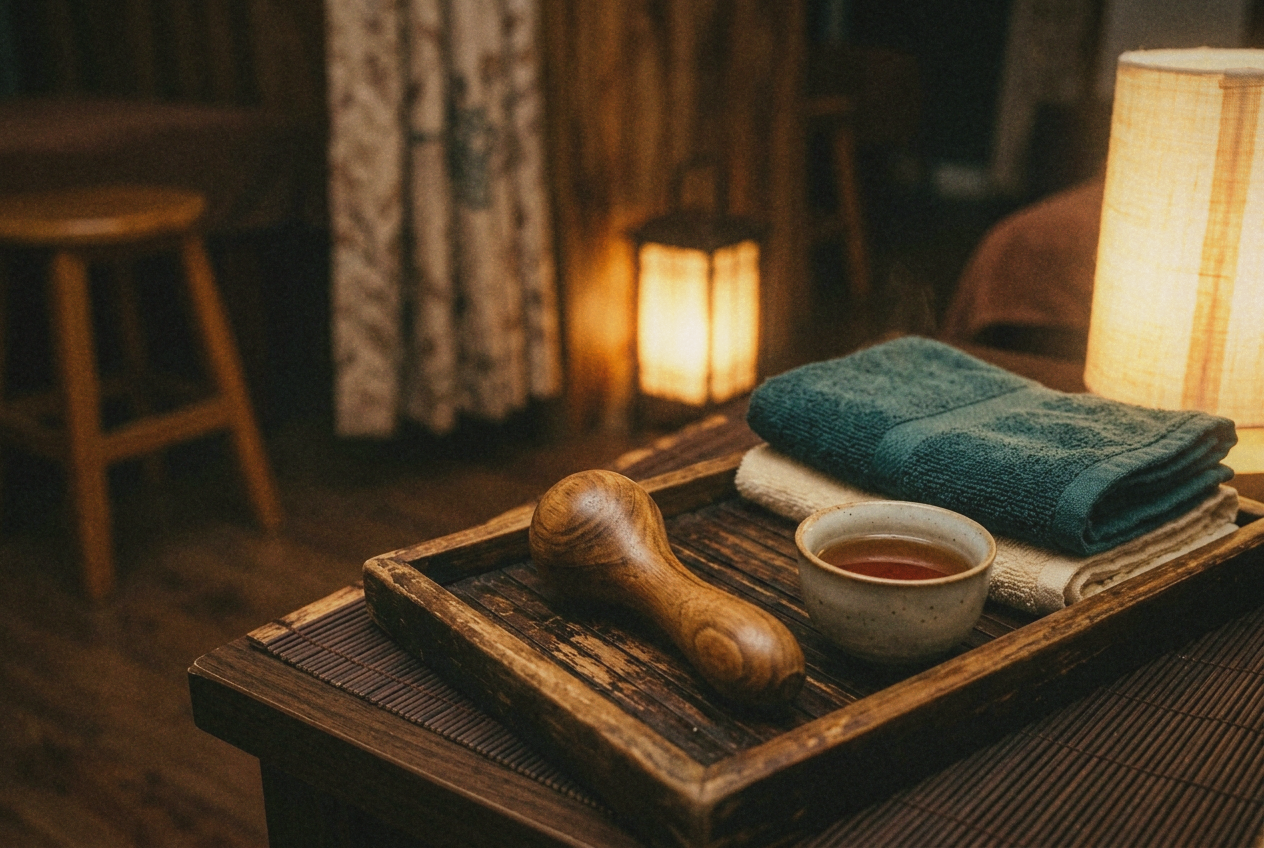 FIRST SIGHTWEBGLWooden tools, warm towels, and a cup of tea: the quiet, unglamorous furniture of a good neighbourhood massage shop. · Color and grain by First Sight · Portra 400. · First Sight 色彩與顆粒調校 · Portra 400
Shoulders, necks, and the quick fix
Between the feet and the full-body treatments sits the everyday shoulder-and-neck massage, and it is the one most people reach for most often. In a country that spends its days hunched over phones, scooters and desks, the upper back takes a beating, and a focused twenty or thirty minutes on the shoulders and neck is a common, cheap reset. Many foot-massage shops offer it as an add-on, and it pairs naturally with a reflexology session if you want the full head-to-toe treatment.
What it costs and how it works
The whole thing is refreshingly simple and affordable. Prices are posted on the wall by time, thirty minutes, sixty minutes, ninety, and there is rarely any pressure to buy a package or a membership. You do not need an appointment for a walk-in foot or shoulder massage, though a specific tui na practitioner may be worth booking. Payment is usually cash, and a tip is not expected in the Western sense, the posted price is the price.
A few small courtesies make it smoother. Wear or bring clothes you can move in, since many treatments are done clothed. Say if you want more or less pressure, the words are qing yi dian for lighter and zhong yi dian for stronger. And if a spot is genuinely too painful, say so, a good therapist will adjust. Silence is fine too, many people simply close their eyes and let the session happen.
How to find a good one
Finding a good massage is mostly about reading the room. Look for a shop that is busy with locals rather than tourists, where the therapists look experienced and the prices are posted plainly. Neighbourhood reflexology shops, tui na clinics attached to traditional medicine practices, and blind-masseur cooperatives are all good bets. Avoid anywhere that is vague about pricing or pushes packages hard. The best places are unpretentious, a little clinical, and full of regulars.
What makes massage in Taiwan so good is that it is ordinary. It is not a luxury sold to visitors, it is part of how people here maintain themselves, woven into the week alongside the night market and the tea and the afternoon coffee. Walk in tired, submit to forty minutes of someone pressing hard on your feet, and walk out lighter. On an island that values small, regular acts of care, it might be the most quietly restorative thing you do.
Comments (0)
Loading comments...