
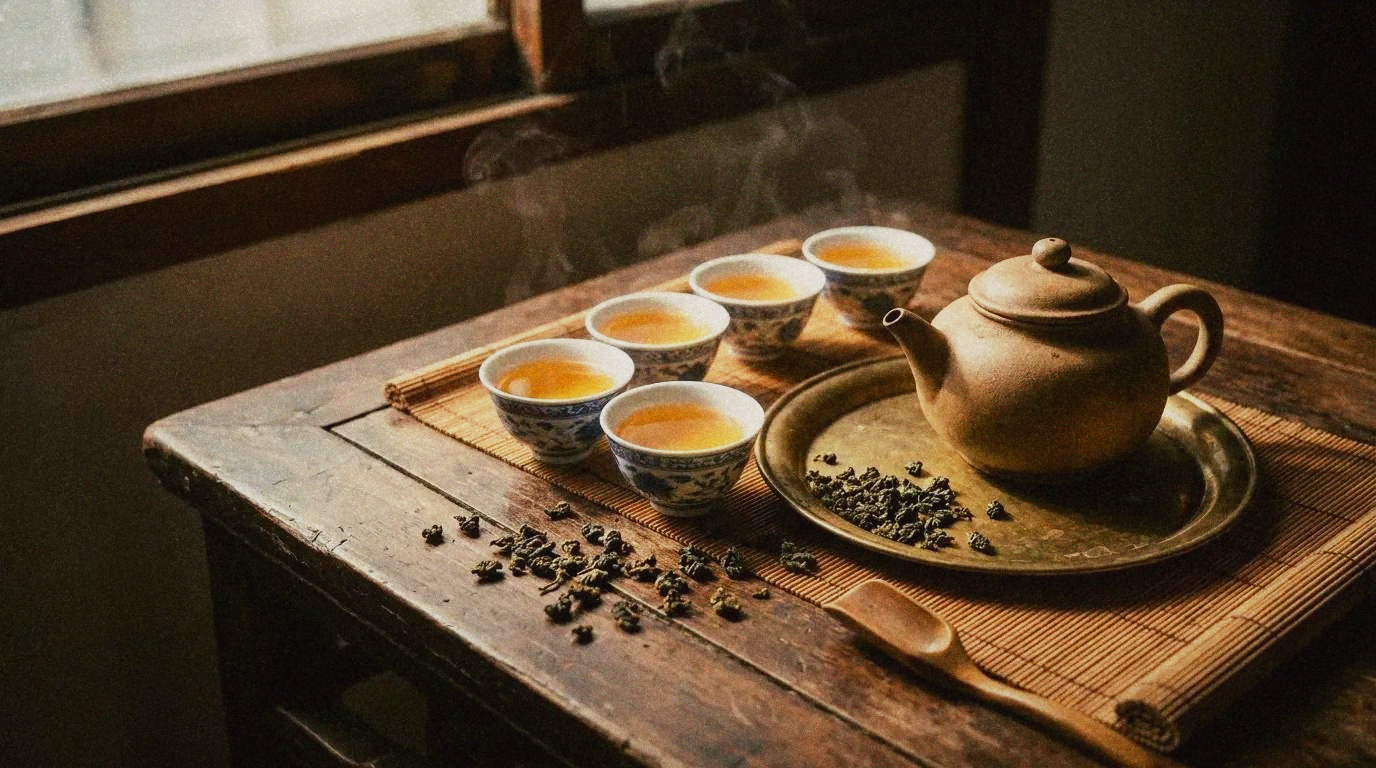
Why Taiwan Oolong Matters
Taiwan produces less than 1% of the world's tea. Yet if you walk into any specialty tea shop in London, Paris, or New York, Taiwanese oolong will have its own shelf. Sometimes its own room.
The reason is simple: Taiwan figured out how to make oolong that tastes like where it grew. The fog, the altitude, the soil, the cultivar — all of it ends up in the cup. A good Alishan high mountain tea doesn't just taste good. It tastes like Alishan. You can drink a tea blind and know whether it came from 800 meters or 1,600 meters. This is not marketing. It's geology and craft.
Taiwan's oolong tradition is relatively young — serious production only began in the 19th century, accelerated by refugees from Fujian who brought their techniques and cultivars. But what Taiwan did with those techniques was distinct. The island's climate, with its sharp altitude changes, reliable fog, and intense UV at elevation, created conditions that don't exist in mainland China. Taiwanese oolong became its own category.
The Four Categories
Taiwanese oolong is usually grouped by oxidation level and roast. These are the four categories you'll encounter:
Green Oolong (清香) — Lightly oxidized (15-25%), unroasted or very lightly baked. The leaves are rolled into tight balls that unfurl dramatically when steeped. The flavor is floral, creamy, sometimes with a distinct orchid note. Think Alishan, Shanlinxi, Lishan. These teas are about freshness and elevation. Drink them within two years of harvest.
Traditional Oolong (傳統) — Medium oxidation (30-40%), medium to heavy roast. Dong Ding is the classic example. The roasting process adds depth, caramel notes, a warming quality. These teas age better than green oolongs and can develop complexity over five to ten years if stored properly. The roast is a craft in itself — too light and the tea lacks body; too heavy and it tastes like ash.
Baozhong (包種) — Very lightly oxidized (8-18%), unroasted, twisted leaves rather than rolled balls. Wen Shan Baozhong from northern Taiwan is the origin. The flavor is bright, vegetal, closer to green tea than oolong but with a sweetness and body that green tea doesn't achieve. This is the everyday tea of Taipei office workers.
Oriental Beauty (東方美人) — Heavily oxidized (60-70%), unroasted, made from leaves bitten by the leafhopper Jacobiasca formosana. The insect bite triggers a chemical response in the plant that creates honey and muscat flavors. No other tea in the world requires insect damage as part of its production. Oriental Beauty is expensive, finicky, and unmistakable.
The Mountain System
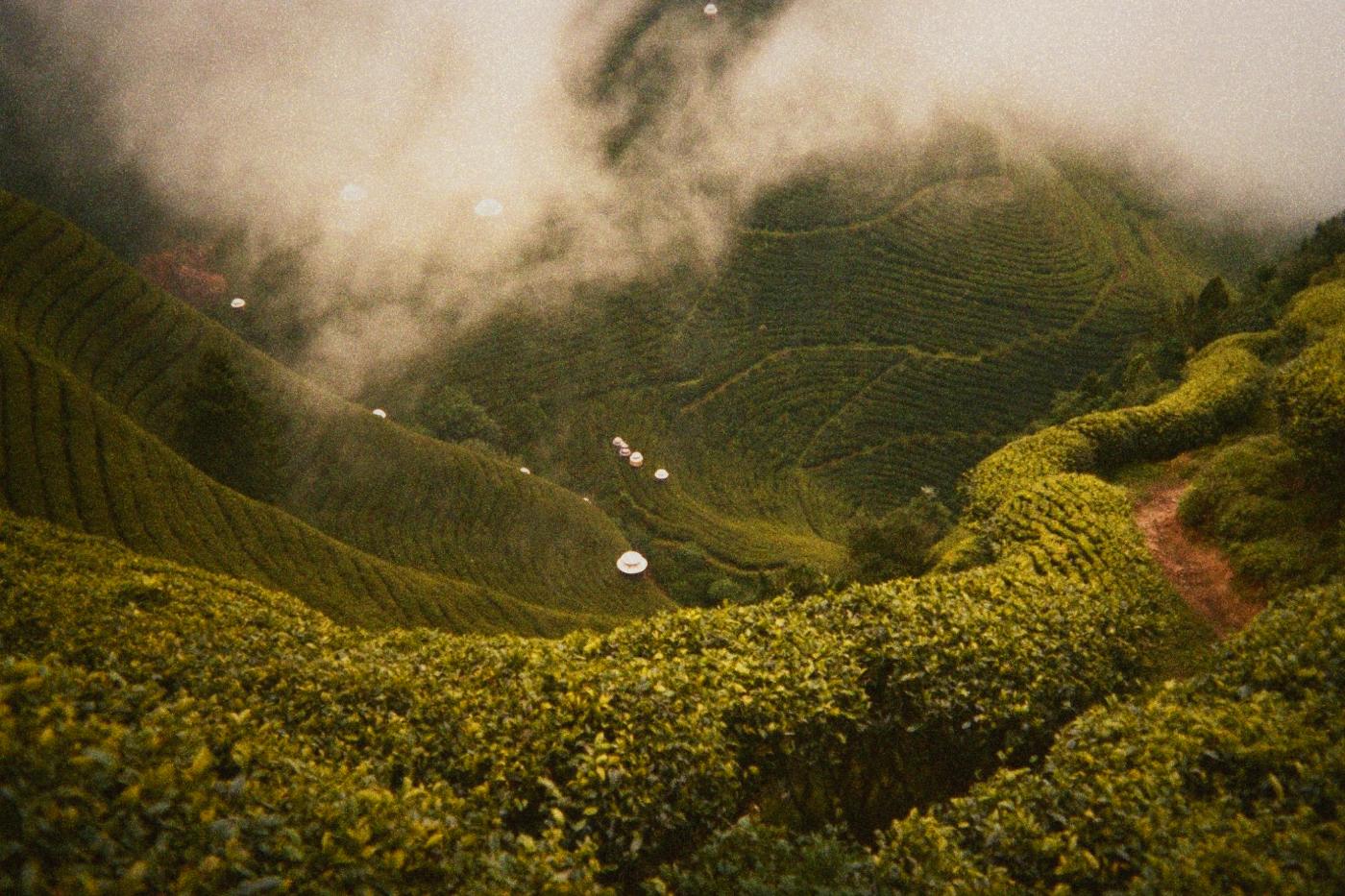
 FIRST SIGHTWEBGLHigh mountain tea grows inside the clouds. · Color and grain by First Sight · Gold 200. · First Sight 色彩與顆粒調校 · Gold 200
Taiwan's oolong geography is organized by elevation. Higher is not always better, but higher is always more expensive, and the market has trained consumers to believe that expensive means better.
Low mountain (under 600m): Mingjian, Zhushan. These areas produce large volumes of decent tea at accessible prices. Much of the "high mountain tea" sold in night markets is actually low mountain tea with a nice label.
Mid mountain (600-1,000m): Nantou, parts of Chiayi. Good value territory. Tea from 800 meters has most of the character of high mountain tea at half the price. Dong Ding, at around 700-800 meters, sits in this range and proves that altitude is not everything.
High mountain (1,000-1,600m): Alishan, Shanlinxi, Lishan, Dayuling. This is where the famous floral, creamy profiles develop. The fog reduces UV stress on the leaves, the cool temperatures slow growth and concentrate flavor, and the diurnal temperature swing (cold nights, warm days) builds complexity. Dayuling, at 2,600 meters, is the extreme — tiny production, astronomical prices, and a flavor that justifies the hype if you can afford it.
Ultra-high mountain (over 1,600m): Dayuling, some sections of Hehuanshan. These teas are status symbols as much as beverages. The production is tiny, the demand is huge, and the counterfeit market is active. If someone offers you Dayuling for NT$1,000 per 150g, it's not Dayuling.
How to Choose
The tea market in Taiwan is full of stories. Every vendor has a cousin who owns a farm in Alishan. Every label says "hand-picked" and "organic" even when neither is true. Here's how to navigate it:
Ignore the packaging. Fancy tins and calligraphy mean nothing. Good tea often comes in simple foil bags from farmers who spend their money on cultivation, not design.
Smell the dry leaves. Good oolong should smell like something — flowers, cream, toast, honey. If it smells like nothing, it is nothing. If it smells musty or off, walk away.
Look at the leaves. Rolled balls should be tight and uniform in size. Twisted leaves (Baozhong) should be whole, not broken. Color varies by type, but consistency matters. A bag of mixed colors and sizes suggests blending or poor sorting.
Buy from farmers when possible. Many Taiwanese tea farmers sell directly at markets, through LINE, or at small shops near their farms. The price is usually better, the provenance is real, and you can often taste before buying. The weekend markets at Maokong and Pinglin are good starting points.
Don't chase famous names. Alishan and Lishan are regions, not guarantees. A well-made tea from an 800-meter farm in Nantou will beat a poorly made tea from a 1,400-meter farm in Alishan. Elevation is one variable among many.
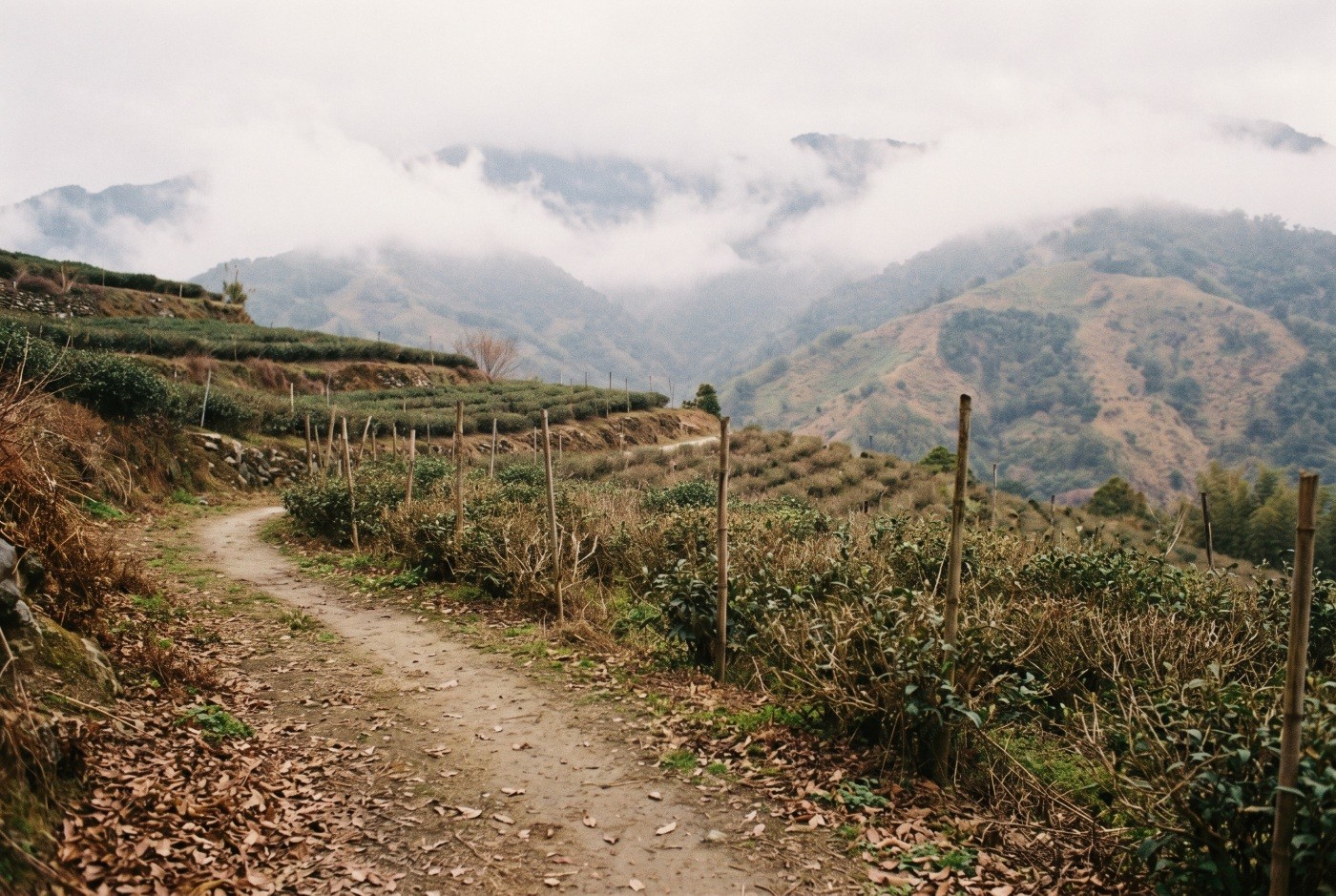 FIRST SIGHTWEBGLIllustration: A footpath through hillside tea fields. · Color and grain by First Sight · Gold 200. · First Sight 色彩與顆粒調校 · Gold 200
How to Brew
Taiwanese oolong is forgiving but rewards attention. The gongfu method — small pot, lots of leaf, short steeps — is the traditional approach and the one that reveals the most about a tea.
The setup: A 120-150ml gaiwan or clay teapot. 5-7 grams of leaf, depending on the tea's density. Water just off boiling (90-95°C for green oolongs, full boiling for roasted). Filtered water if possible — Taipei tap water is chlorinated and will flatten the tea.
The rinse: Pour water over the leaves, immediately discard. This wakes up the leaves and lets you smell the lid — the aroma from a hot gaiwan lid is one of the great pleasures of tea drinking.
First steep: 30-45 seconds. Green oolongs need less time; roasted oolongs can handle more.
Subsequent steeps: Add 5-10 seconds each time. Good oolong will yield 5-8 meaningful steeps. Great oolong will go 10+. The flavor evolves — early steeps show the top notes, later steeps reveal the body and finish.
The lazy method: If gongfu feels like too much, use a large mug with an infuser. 3 grams of leaf, water at 90°C, steep 3 minutes. You'll miss the evolution, but you'll still drink good tea.
Where to Buy in Taipei
Wistaria Tea House (紫藤廬) — The historic tea house near National Taiwan University. Expensive, but the curation is real. Good for understanding what top-tier tea tastes like.
Ten Ren (天仁) — The chain store of Taiwanese tea. Not exciting, but consistent and fairly priced. Their Alishan Jin Xuan is a reliable entry point.
Maokong Gondola area — Take the gondola to the top, walk to the tea houses. Many are tourist traps, but a few still serve tea from their own farms. Look for places that look old and unrenovated.
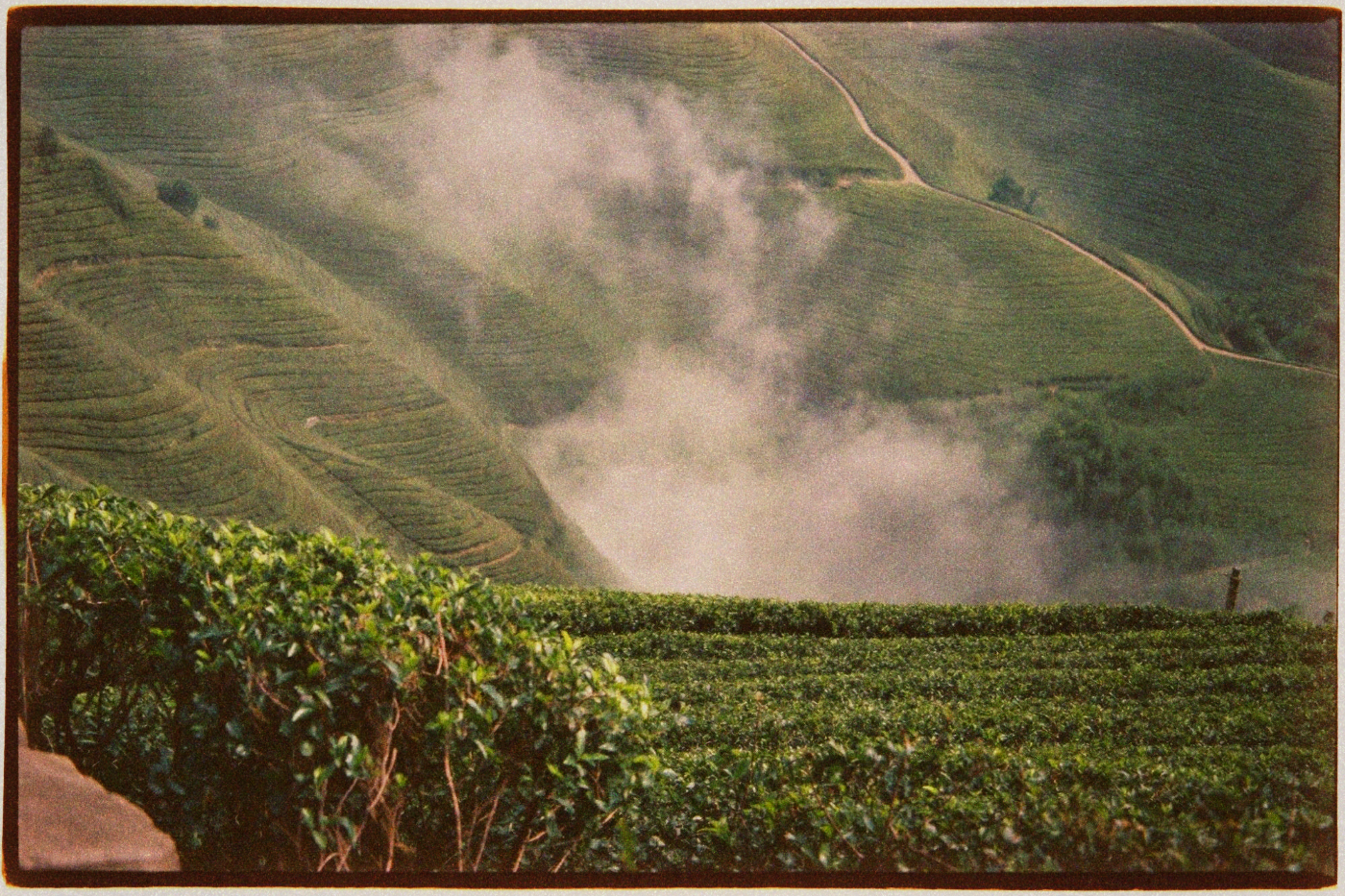 FIRST SIGHTWEBGLHigh mountain tea grows inside the clouds. · Color and grain by First Sight · Gold 200. · First Sight 色彩與顆粒調校 · Gold 200
Pinglin Old Street — The Baozhong capital. An hour from Taipei by bus. The street is full of tea shops, most selling the same thing, but the quality is generally higher than tourist areas because the customers are locals.
Direct from farmers — Many farmers sell through Shopee, Facebook, or LINE. Search for 茶農直營. The best deals and the best tea are here, but you need to know what you're looking for.
The Season Question
Taiwanese oolong has two main harvests: spring (March-May) and winter (October-November). Spring tea is generally more prized — the winter dormancy concentrates nutrients, and the first flush has a brightness that later harvests lack. Winter tea can be excellent too, especially from high mountain farms where the cold slows growth and builds sweetness.
Summer tea exists but is usually avoided. The heat grows the leaves too fast, diluting flavor. Most summer harvest becomes bottled tea or gets blended into lower-grade products.
Buy spring or winter. Store in an airtight container away from light, heat, and strong smells. Green oolongs are best within two years. Roasted oolongs can improve for five years or more.
Final Note
Taiwanese oolong is not a beverage. It's an agricultural product with terroir, a craft product with skill, and a cultural product with history. The cheapest tea in a Taipei supermarket is still real tea made by real people. The most expensive Dayuling is still leaves and water. The difference between them is real, but it's smaller than the marketing suggests.
Start with a mid-range Alishan or Dong Ding from a reputable source. Learn what good tea tastes like. Then decide whether you want to climb the price ladder. Most people find their sweet spot around NT$1,500-3,000 per 150g — good enough to be interesting, not so expensive that you're afraid to drink it.
The best tea is the one you drink regularly, with attention, and enjoy.
Comments (0)
Loading comments...