
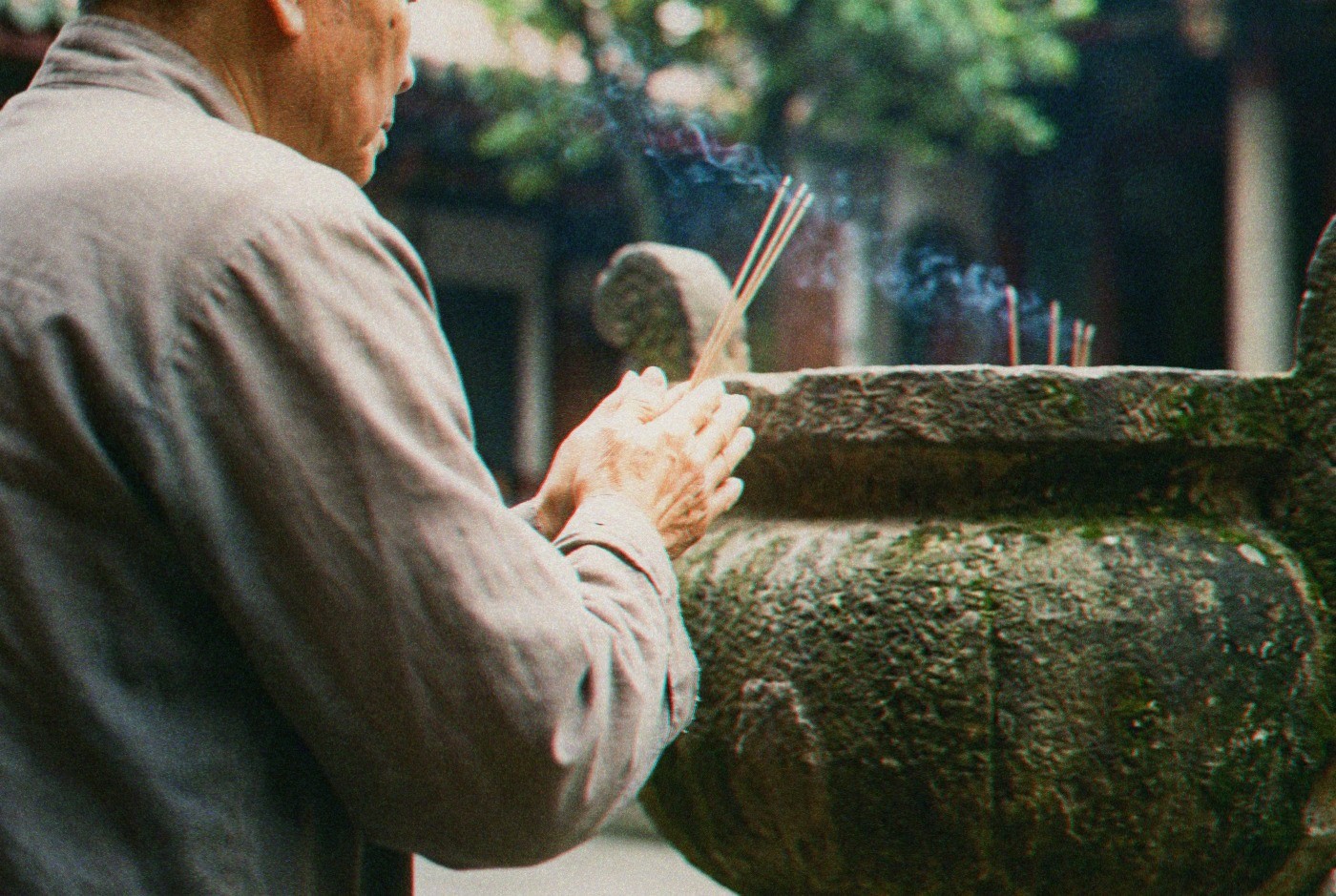
In Taiwan, a temple is not a museum you tiptoe through. It is a working part of the neighbourhood, as ordinary as a market or a bus stop and just as busy. People duck in on the way to work to ask for a good day, grandmothers arrive with bags of fruit, students come before exams, and someone is almost always sweeping, arranging offerings, or feeding sticks of incense into a smoking bronze burner. The doors are open, the gods are at home, and nobody is checking whether you belong.
That openness is exactly what makes a first visit confusing. There is no ticket booth and no printed rulebook, just a set of customs everyone around you seems to know by heart. The good news is that temple etiquette in Taiwan is gentle and forgiving. Locals are far more pleased that you came than bothered by a small mistake. Learn a handful of basics and you can walk into almost any temple on the island and move through it with quiet confidence.
First, what kind of temple is this?
Most of the temples you will pass in Taiwan are folk temples, a warm blend of Taoism, Buddhism, and local belief that has grown together over centuries. Inside, you might find the sea goddess Mazu, watching over fishermen and travellers; Guan Gong, the red-faced general of loyalty and business; Wenchang, the god students petition before exams; or the City God who keeps moral accounts. A single temple often houses many deities in one hall, each with their own altar and their own following.
Alongside these are dedicated Buddhist temples, quieter and often vegetarian, and a smaller number of Confucian temples that feel more like halls of study than places of prayer. You do not need to identify the deity to visit respectfully. The etiquette is broadly the same across folk and Taoist temples, and the one instinct that never fails is simple: watch what the person in front of you does, and follow at half speed.
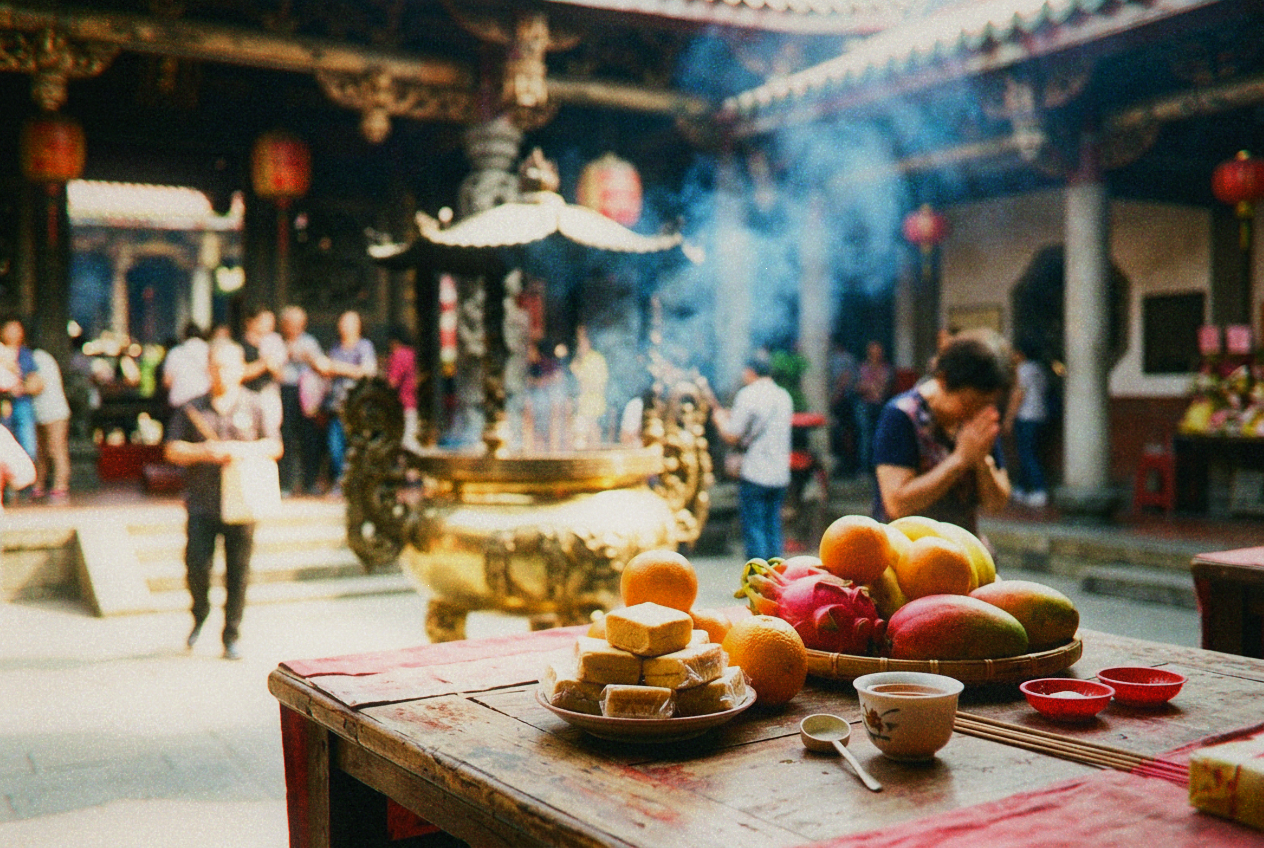
 FIRST SIGHTWEBGLA table of offerings — fruit, pineapple cakes, and tea — laid out before an altar. Food offerings are shared blessings, taken home and eaten after the gods have symbolically enjoyed them. · Color and grain by First Sight · Superia. · First Sight 色彩與顆粒調校 · Superia
Before you go in: the basics
There is no strict dress code, but temples are places of respect, so it is kind to cover your shoulders and avoid very short shorts if you can. You do not usually remove your shoes at folk temples, though some Buddhist halls ask you to. Keep your voice low, silence your phone, and if you take photos, avoid pointing your lens directly into a deity's face or photographing people mid-prayer. Nobody will scold you, but a little discretion goes a long way.
Pay attention to the doors. Larger temples have three entrances along the front. The centre door is the god's door, traditionally reserved for the deities and for temple officials, so ordinary visitors enter through the door on the right, the dragon side, and leave through the door on the left, the tiger side. An easy way to remember it: enter by the dragon, exit by the tiger, and never leave the way you came. And when you cross a threshold, step over the raised wooden beam rather than on it, and try not to tread on it. That beam marks the boundary of a sacred space.
The incense ritual, step by step
The heart of a temple visit is offering incense, called bai bai. Near the entrance you will find bundles of incense sticks, sometimes free, sometimes for a small donation dropped in a box. Take a stick or a small bundle and light it from one of the flames or candles provided. If it catches with a flame, do not blow it out with your mouth — gently wave it or let it settle to a glowing ember with a thread of smoke.
Hold the incense with both hands, near the top of the stick, and raise it to about the level of your forehead. Face the main altar, bow slightly three times, and this is the moment to introduce yourself and speak, silently, to the god. There is a lovely convention to it: tell the deity your name, your birthday, and where you live, as if you are a guest making yourself known, and then share what is on your mind — a wish, a worry, a thank-you. You do not need to be a believer to do this sincerely. Treat it as a moment of focus and good manners.
Then comes the part visitors most often get tangled in: where to put the incense. Many temples ask you to pay respects in a set order, usually starting outside or at the front with the Jade Emperor, the Lord of Heaven, before moving to the main deity inside and then the side altars. Each altar has its own censer, the pot of ash and standing sticks. Place your incense upright in the correct pot after you have bowed at that altar, using one hand or planting it gently so you do not knock the others. If the order feels overwhelming, follow a regular worshipper, or simply offer at the main altar with a full heart. Sincerity matters more than sequence.
Food offerings sit on the tables in front of the altars: stacked fruit, boxes of pineapple cakes, biscuits, sometimes a cup of tea or rice wine. These are shared blessings rather than sacrifices lost forever — after the gods have symbolically enjoyed them, the food is carried home and eaten. If you bring an offering, whole fruit is a safe and welcome choice. Avoid anything considered inauspicious, and as a rule people keep certain fruits, like guava and tomato, off the altar for older superstitions about seeds passing through the body. When in doubt, a bag of apples or oranges is always right.
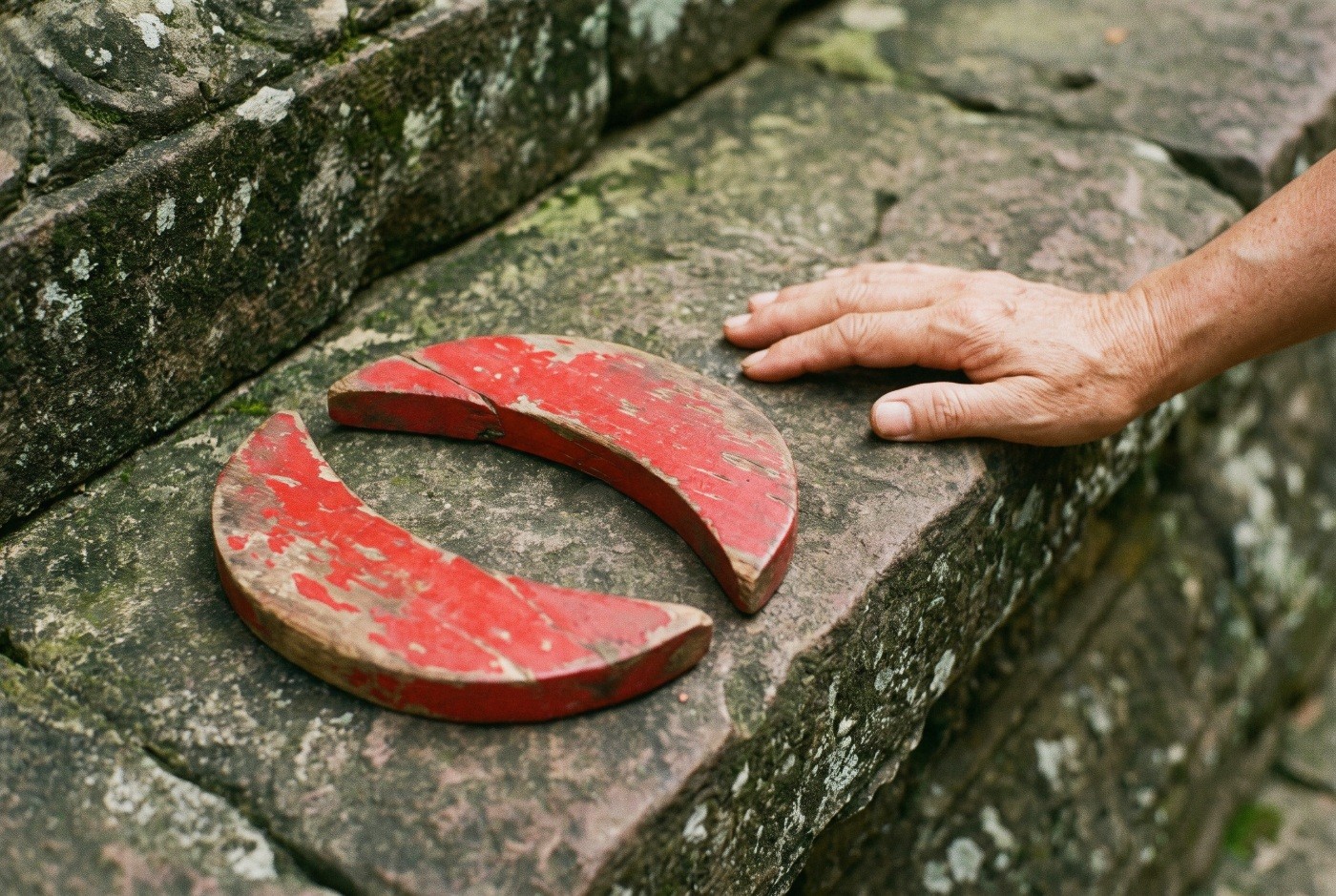 FIRST SIGHTWEBGLIllustration: Worn red divination blocks on a stone ledge. · Color and grain by First Sight · Superia. · First Sight 色彩與顆粒調校 · Superia
Asking the gods a question: jiaobei and lottery poems
If you want more than a blessing — an actual answer — Taiwanese temples give you two beautiful tools. The first is jiaobei, a pair of red crescent-shaped wooden blocks, each with one flat side and one rounded side. You hold them together, tell the god your question in a way that can be answered yes or no, then drop them gently to the floor and read how they land.
One block flat and one rounded, a mismatched pair, is a sheng jiao, a clear yes — the gods agree. Both rounded sides up, so they rock and tumble, is a 'laughing' answer: the question was unclear, or you already know, so try asking again more precisely. Both flat sides up is a 'no', or not yet. For important questions, people throw three times and look for agreement across the throws. It is a quiet, almost conversational way to consult the divine, and the little clatter of wood on stone is one of the most characteristic sounds of a Taiwanese temple.
The second tool is qiuqian, the lottery poems. After winning the gods' permission with jiaobei, you draw a numbered stick from a cylinder, confirm the number with another throw, and collect the matching printed poem from a wall of small drawers. The verses are old and deliberately ambiguous, and temple volunteers or a resident interpreter will often help you make sense of yours. Even if you treat it as poetry rather than prophecy, it is a genuinely moving thing to receive.
Things visitors get wrong (and how to avoid them)
A few habits mark someone out as a first-timer, and all are easy to fix. Do not point at the deity statues with a single finger; if you must gesture, use an open hand. Do not sit or lean on altar tables, thresholds, or the temple's stone lions. Try not to turn your back squarely on the main deity as you leave — locals tend to step back a pace or two before turning. And be a little more mindful during Ghost Month, the seventh lunar month, when customs tighten and it is worth simply following the crowd.
On money: temples run on donations, and there is no expected fee to enter. You will see boxes for offerings, small charges for incense or joss paper, and sometimes a table where you can add oil to the lamps, a symbolic donation for light and blessing. Give what feels right, or nothing at all. No one is watching your wallet, and the temple would rather have your respect than your cash.
A short etiquette you can actually remember
If you forget everything else, keep four things. Enter by the right-hand door and step over the threshold. Offer incense with both hands at forehead height, bow three times, and speak sincerely. Follow the order and pace of the worshippers around you rather than rushing. And leave the way custom asks, quietly and without turning your back on the altar. Do that, and you will not just avoid offence — you will have taken part, however lightly, in one of the oldest and most alive traditions in Taiwan.
Temples reward slow visitors. Come early, when the light is soft and the incense smoke hangs in the air, and give yourself time to stand still. You will notice the carved dragons on the pillars, the painted door gods, the old men reading lottery poems, the steady rhythm of people arriving to ask for something and leaving a little lighter. You came for etiquette. You will leave with a feeling for how Taiwan actually lives.
A few temples worth seeking out
Once you are comfortable with the basics, the temples themselves become a reason to travel. In Taipei, Longshan Temple in the old Wanhua district is the classic first visit, grand and always busy, famous for its shrine to Yue Lao, the god of love, where the hopeful come to ask for a partner. A short walk from Yuanshan MRT, Bao an Temple in Dalongdong is a quieter, award-winning masterpiece of carving and paint. Xingtian Temple, dedicated to Guan Gong, is unusual and lovely: it has done away with incense and meat offerings, so the halls stay clear and calm, and blue-robed volunteers perform a gentle blessing for anyone who queues.
Beyond the capital, the west coast is Mazu country. The Jenn Lann Temple in Dajia, Taichung, and the Chaotian Temple in Beigang, Yunlin, anchor the island most famous pilgrimage, a nine-day procession each spring that draws hundreds of thousands of walkers. The old port town of Lukang packs centuries of temples into a few narrow lanes, and Tainan, Taiwan oldest city, is so thick with historic shrines that you can hardly turn a corner without meeting one. You do not need a plan. Wander, follow the smell of incense, and let the temples find you.
Comments (0)
Loading comments...