
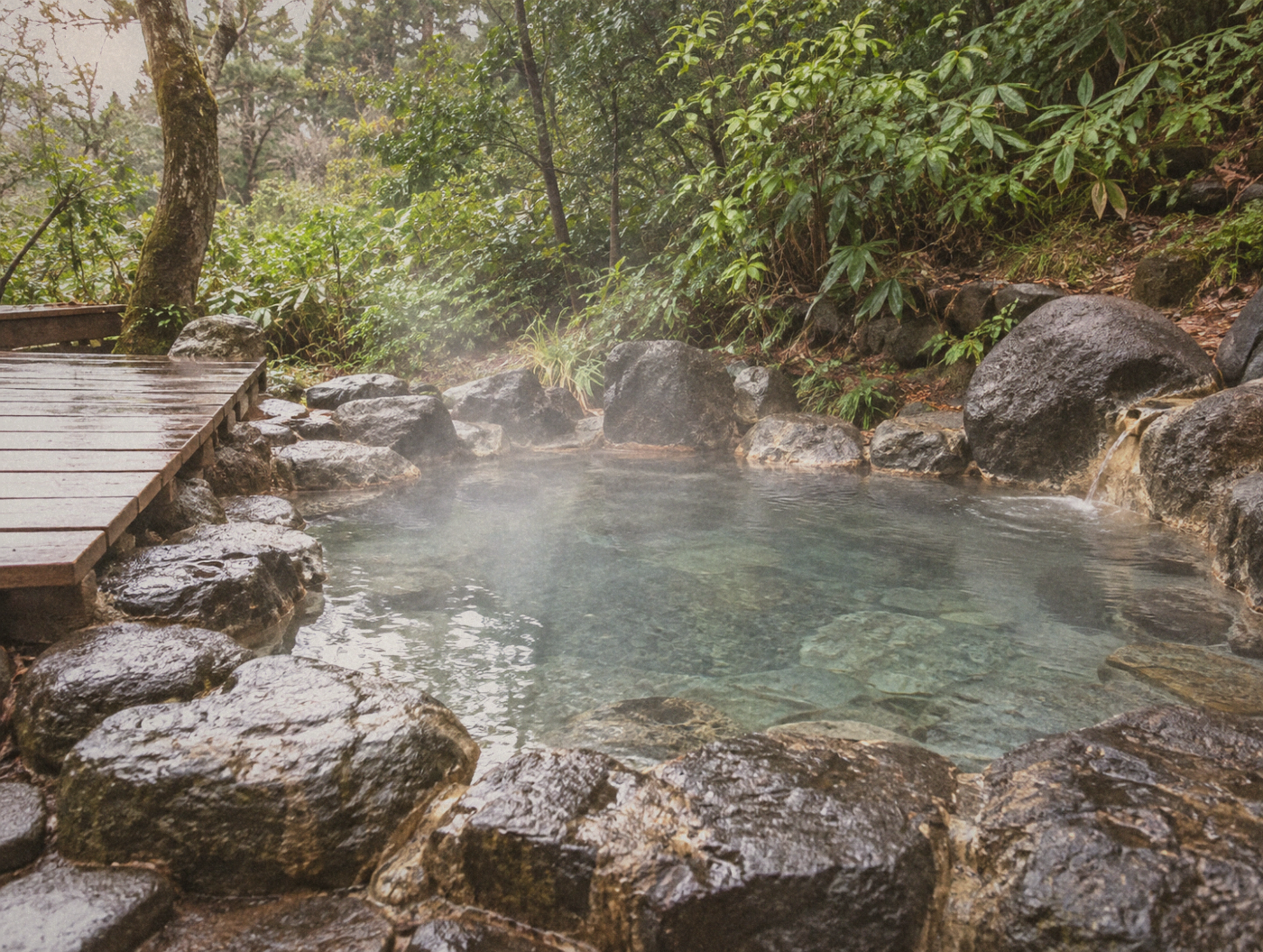
Why Taiwan Is One of Asia's Best Hot Spring Destinations
Taiwan sits on the Pacific Ring of Fire. That geology means more than earthquakes — it means the island holds over 100 natural hot spring sites, fed by volcanic and tectonic activity from the northern tip to the southern coast. Few countries this small pack such variety: sulfur springs that smell like rotten eggs, sodium bicarbonate springs that leave skin impossibly smooth, rare mud springs, and even cold mineral springs that bubble up at a bracing 22°C.
The Japanese colonial period (1895–1945) established Taiwan's bathing culture, and it stuck. Today, hot spring towns dot the island's mountains and coastlines, ranging from free riverside pools where farmers soak after work to five-star resorts with private marble tubs overlooking misty valleys. Whether you want a day trip from Taipei or a week-long wellness retreat on the East Coast, this guide covers every major hot spring region, what to expect, and how to plan your visit.
Understanding Taiwan's Spring Types
Not all hot springs are created equal. Taiwan's geological diversity produces several distinct spring types, each with different mineral compositions, temperatures, and purported health benefits.
Sulfur springs (硫磺泉) are the most iconic, found primarily in the volcanic Yangmingshan area north of Taipei. They come in two varieties: white sulfur (milky, acidic, pH 3–4) and green sulfur (clear, slightly less acidic). The strong sulfuric smell is unmistakable. These springs are traditionally associated with skin conditions and circulation.
Sodium bicarbonate springs (碳酸氫鈉泉) are sometimes called "beauty springs" because the alkaline water (pH 7–8) has a slippery texture that softens skin. Found across eastern Taiwan, particularly in Jiaoxi and Ruisui.
Carbonate springs (碳酸泉) contain dissolved carbon dioxide, creating a gentle fizzing sensation on the skin. Suao's cold springs are the most famous example in Taiwan — one of only two cold carbonate springs in the world.
Mud springs (泥漿溫泉) are exceptionally rare globally. Guanziling in Tainan is one of only three mud hot spring sites worldwide (alongside Kagoshima, Japan and Sicily, Italy). The alkaline mud is rich in minerals and leaves skin feeling remarkably clean.
Sodium chloride springs (氯化鈉泉) resemble diluted seawater and are found in several southern locations, including Zhiben.
Beitou: Taipei's Hot Spring Backyard
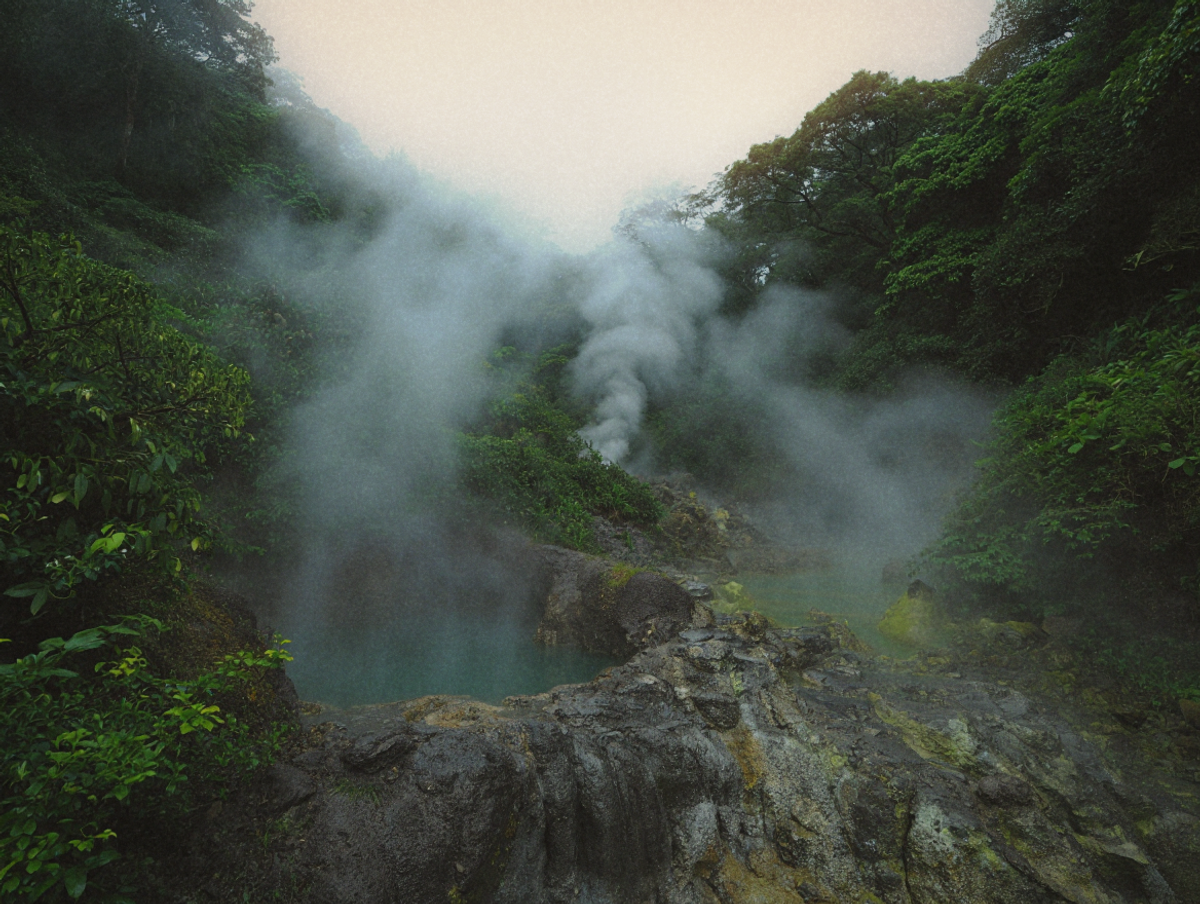
Beitou (北投) is the most accessible hot spring district in Taiwan — 30 minutes by MRT from Taipei Main Station. Originally developed by the Japanese as a resort town, Beitou retains that legacy in its architecture, public bathhouses, and the excellent Beitou Hot Spring Museum (a restored 1913 public bathhouse, free admission).
The springs: Primarily white and green sulfur, with water temperatures reaching 80–100°C at the source in Thermal Valley (地熱谷), a steaming, pale-green crater lake open for viewing but not bathing.
Where to soak:
- Millennium Hot Spring (千禧湯): The best public outdoor bath in Beitou. Six stone pools at varying temperatures, fed by natural spring water. NT$40 per visit. Swimsuits required. Gets crowded on weekends — go before 9 AM or after 8 PM.
- Long Nai Tang (瀧乃湯): One of Taiwan's oldest operating bathhouses, open since 1907. Gender-separated, nude bathing. Bare stone pools with no frills. NT$150. A living relic.
- Villa 32: Beitou's most upscale option. Private rooms start around NT$2,200 per person for 90 minutes. Italian restaurant on-site. The aesthetic is contemporary minimalism against a mountain backdrop.
- Grand View Resort Beitou (北投麗禧): A luxury resort with private in-room spring tubs and outdoor pools overlooking the valley. Rooms from NT$12,000/night on weekdays. Day-use hot spring packages available from NT$1,800.
- Asia Pacific Hotel Beitou (北投亞太飯店): Mid-range option with good spring facilities and family-friendly pools. Rooms from NT$6,000/night.
Getting there: Take the Taipei MRT Tamsui-Xinyi (Red) Line to Beitou Station, then transfer to the Xinbeitou branch line (one stop). The entire hot spring area is walkable from Xinbeitou Station.
Best time: Year-round, but autumn and winter (October–February) offer the best contrast between cool air and hot water. Summer visits are still pleasant in the evening.
Jiaoxi: Yilan's Walkable Onsen Town
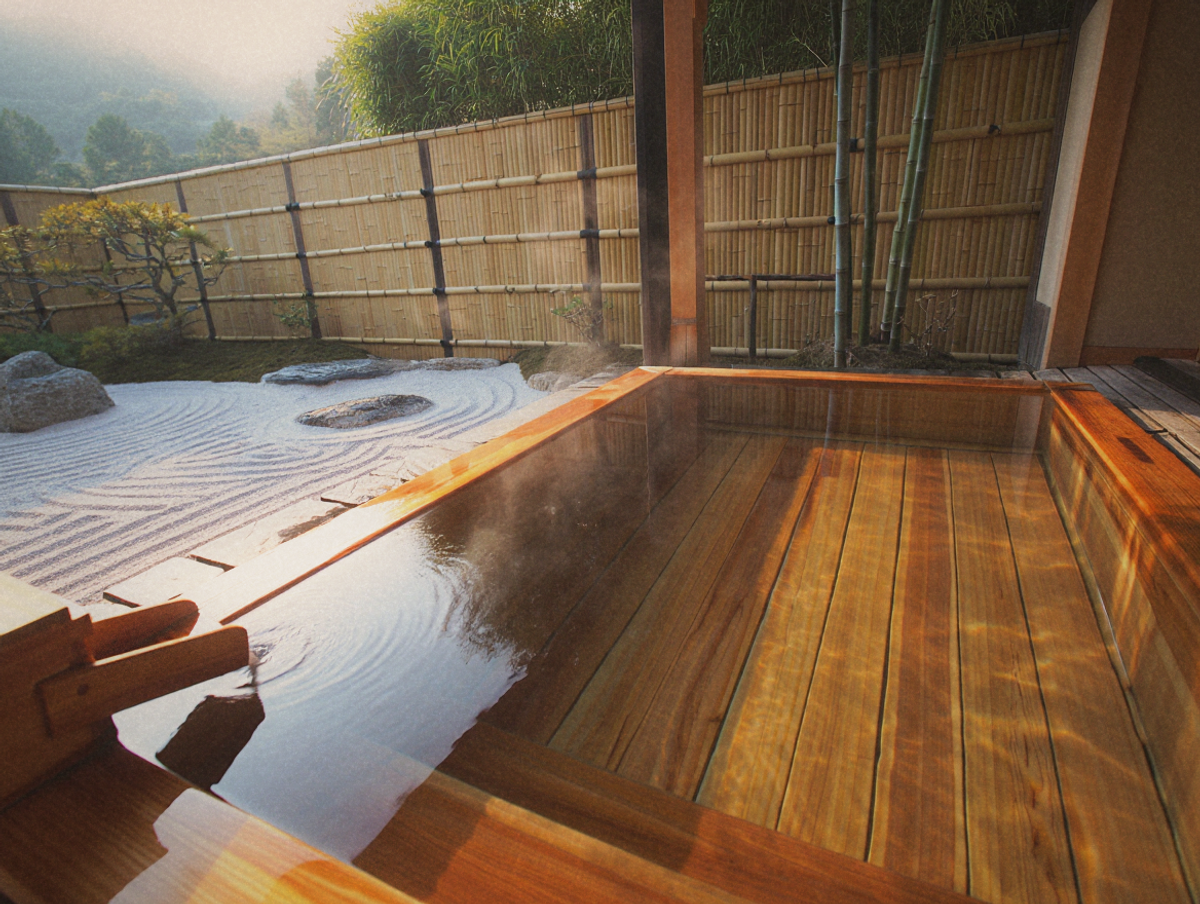
Jiaoxi (礁溪) is arguably Taiwan's most complete hot spring town — a place where hot spring water literally runs through the streets. Located in Yilan County on the northeast coast, it became dramatically more accessible when the Xueshan Tunnel opened in 2006, cutting the drive from Taipei to under an hour.
The springs: Sodium bicarbonate, colorless and odorless, with a silky alkaline quality. Water temperature averages 50–60°C at the source. These are the "beauty springs" — the water genuinely leaves skin softer.
Where to soak:
- Tangweigou Park (湯圍溝公園): A free public foot-soaking area right in the town center. Open until 11 PM. Locals and tourists sit side by side, feet in steaming channels. Bring a small towel.
- Jiaoxi Public Hot Spring (礁溪溫泉公園): Free outdoor foot pools and a paid Japanese-style bathhouse (森林風呂, NT$80). Nude, gender-separated. Clean, well-maintained, and rarely overcrowded on weekdays.
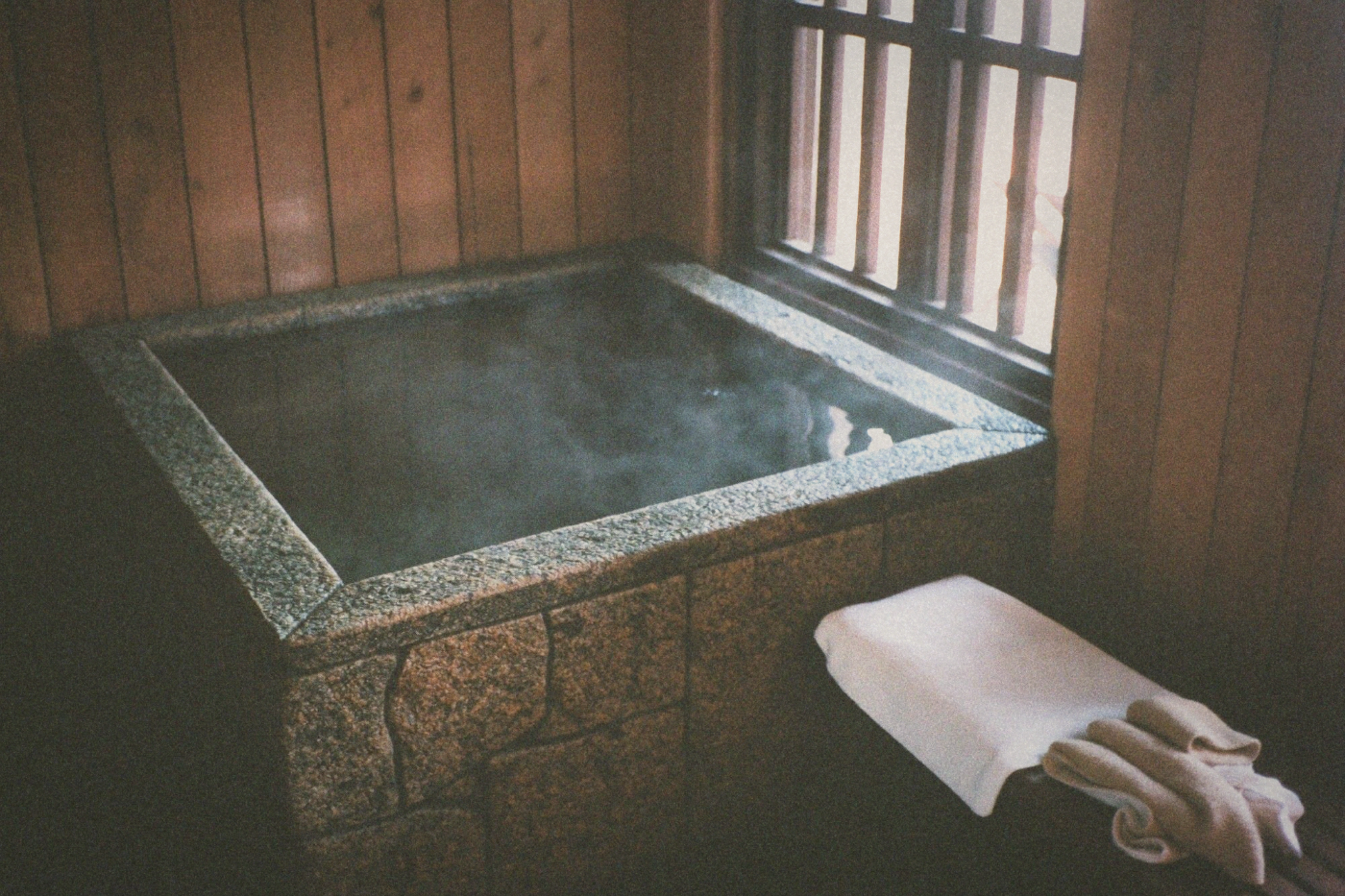
 FIRST SIGHTWEBGLThe bath house holds the morning light. · Color and grain by First Sight · Portra 400. · First Sight 色彩與顆粒調校 · Portra 400
- Mu Jiao Xi Hotel (沐礁溪溫泉): Modern hotel with rooftop infinity pools overlooking rice paddies and mountains. Rooms from NT$5,500/night, all with private spring tubs.
- Evergreen Resort Hotel Jiaosi (長榮鳳凰酒店 礁溪): The town's flagship luxury property. Extensive spa facilities including outdoor pools, SPA treatments, and kids' pool. Rooms from NT$9,000/night. Day-use from NT$1,200.
- Wellspring by Silks (礁溪寒沐酒店): Sleek design hotel from the Silks group. In-room spring tubs, excellent restaurant. Rooms from NT$8,000/night.
- Onsen Papaya (溫泉木瓜): Not a hotel — a Jiaoxi institution. A roadside stand selling papaya milk made with hot spring water. NT$50–70. Try it warm.
Getting there: Trains from Taipei to Jiaoxi take about 70–90 minutes (Tze-Chiang express, ~NT$175). By car via the Xueshan Tunnel, about 50 minutes without traffic (tolls apply). Kamalan bus from Taipei City Hall Bus Station, ~NT$130, approximately 60 minutes.
Best time: October through March for the classic steamy atmosphere. Jiaoxi is also lovely in the spring rice-planting season (March–April) when the paddies turn vivid green.
Guanziling: The Mud Spring Experience
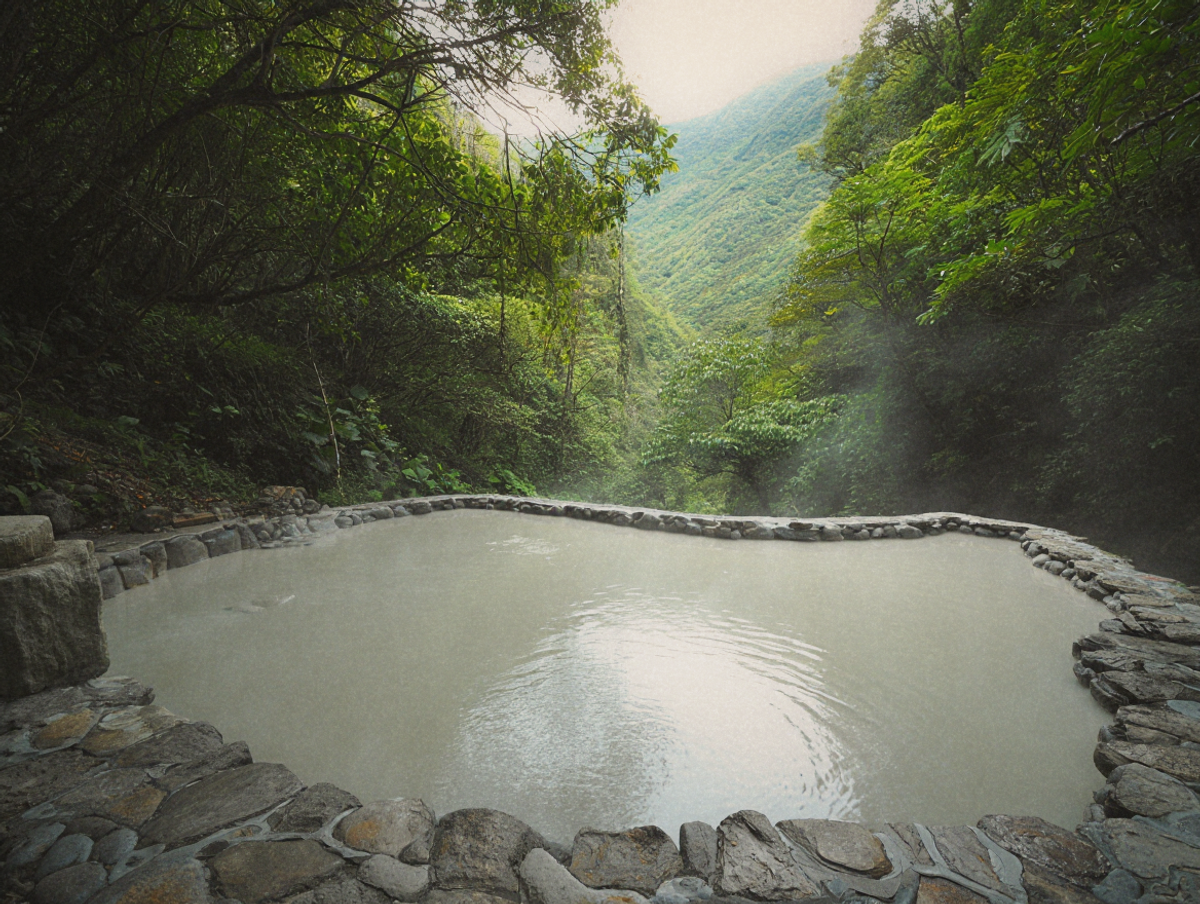
Guanziling (關子嶺) in Tainan's mountain foothills is home to one of the world's rarest spring types: alkaline mud springs. The grayish, opaque water is thick with suspended minerals, and a soak here feels genuinely different from any other hot spring in Taiwan.
The springs: Alkaline mud, pH around 8. The water is grayish-brown and slightly viscous. Temperature around 75°C at source. Rich in sodium carbonate, sulfur, and various minerals. After soaking, skin feels clean and smooth in a way that's hard to describe — like a full-body clay mask.
Where to soak:
- Guanziling Mud Spring Public Baths: Basic public facilities with both nude (gender-separated) and swimsuit areas. NT$80–150. The water is murky and the facilities are simple, but the spring quality is the real draw.
- Jing Le Yuan (景樂園): A popular local resort with outdoor mud spring pools. Reasonably priced, family-friendly.
- Toong Mao Spa Resort (統茂溫泉會館): Mid-range option with private mud spring rooms. Rooms from NT$3,500/night.
- Guanziling Grand Hotel (儷景溫泉會館): Comfortable accommodation with spring-fed tubs. Good base for exploring the area.
What else to do: The annual Guanziling Hot Spring Festival (usually November) features live music, night markets, and fire-and-water shows at the Water Fire Cave (水火同源), a natural gas vent where flames burn on the surface of a spring. It's a striking photo opportunity any time of year. The surrounding Siraya National Scenic Area offers hiking and temple visits.
Getting there: From Tainan city, drive or take the Xinying bus (about 60–80 minutes). Having a car or scooter is strongly recommended — public transit is infrequent. From Chiayi HSR station, taxis or rental cars are the most practical option.
Best time: October through April. Summer can be extremely hot in the Tainan foothills, and the combination of humidity and hot mud springs isn't for everyone.
Guguan: Mountain Springs in Taichung's Highlands
Guguan (谷關) sits at 800 meters elevation in Taichung's mountainous interior, along the Dajia River valley. The drive from Taichung city winds through increasingly dramatic mountain scenery. Once a major stop on the Cross-Island Highway, Guguan today is a quieter, more contemplative hot spring destination.
The springs: Mildly alkaline carbonate springs, clear and nearly odorless. Temperatures around 48–60°C. The mountain setting — steep forested slopes, river gorge, occasional suspension bridges — adds considerably to the experience.
Where to soak:
- Guguan Hot Spring Park: Public foot-soaking area near the old suspension bridge. Free. A good starting point to test the waters.
- Hotel Royal Chihpen... Guguan (虹夕諾雅 谷關): Hoshino Resorts' Taiwan property, opened in 2019. This is among the most upscale hot spring experiences on the island. Private open-air baths attached to each room, surrounded by forest. Rooms from NT$18,000/night. Reservations recommended well in advance.
- Guguan Hot Spring Hotel (谷關溫泉飯店): A reliable mid-range choice with both indoor and outdoor spring pools. Rooms from NT$3,000/night.
Getting there: From Taichung, drive east on Provincial Highway 8, about 90 minutes. Bus 153 runs from Taichung HSR station to Guguan but takes approximately 2.5 hours and runs infrequently. A car is recommended.
Best time: October through April. Winter mornings with mist in the valley are especially atmospheric. The elevation keeps summer temperatures manageable, making Guguan a reasonable warm-weather option too.
Zhiben: Tropical Springs in Taitung
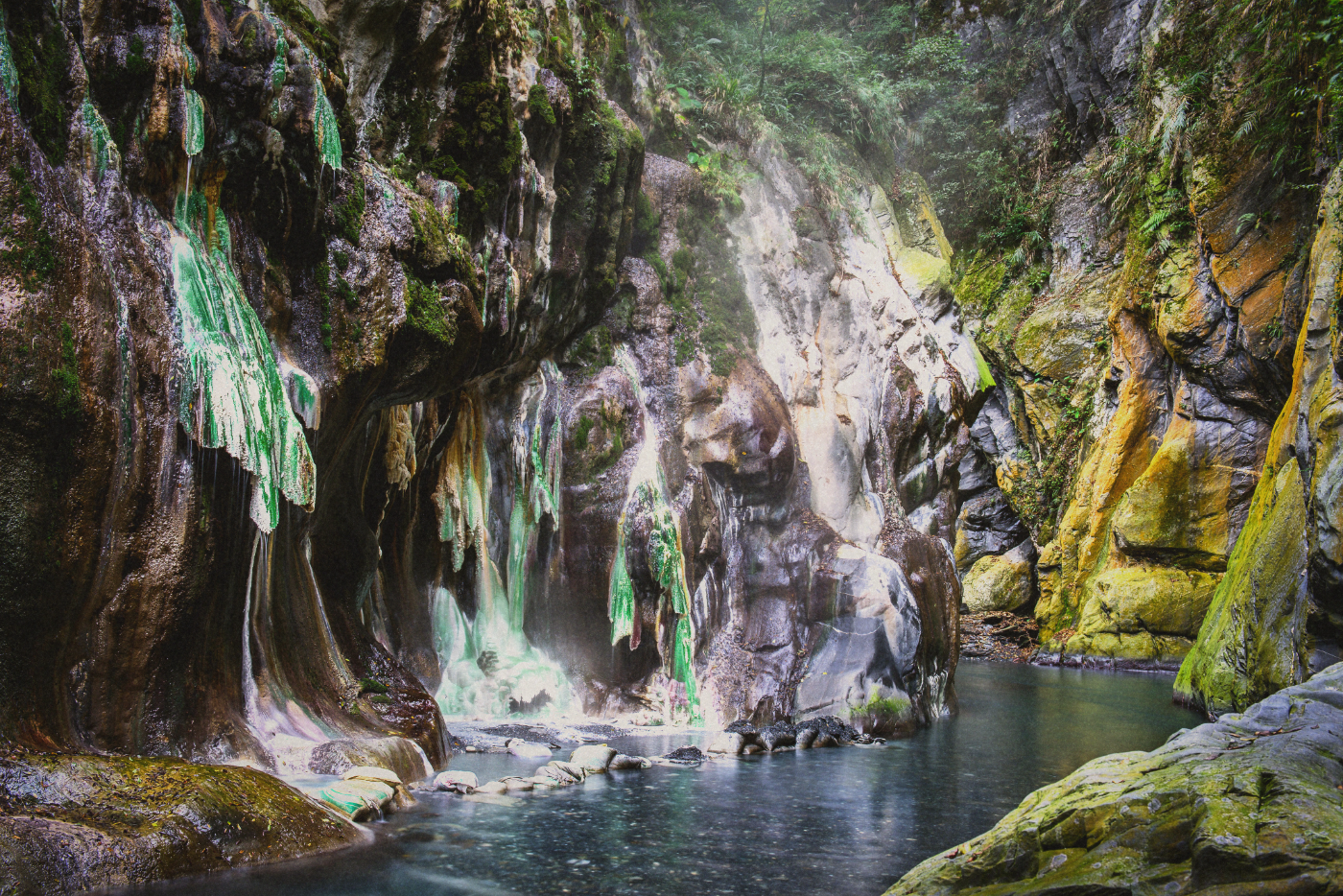 FIRST SIGHTWEBGLMineral-stained rock walls at Lisong Hot Spring, photographed in December 2015. Archival image. · Color and grain by First Sight · Portra 400. · First Sight 色彩與顆粒調校 · Portra 400Pai-Shih Lee · CC BY 2.0 · Color and grain adjusted. · 已調整色彩與顆粒。
Zhiben (知本) in Taitung County offers a distinctly different hot spring atmosphere: tropical. Betel nut palms line the road, the air is warm year-round, and the springs sit at the mouth of a river valley backed by thick forest. This is Taiwan's southeast coast — remote, unhurried, and dramatically beautiful.
The springs: Sodium bicarbonate and sodium chloride springs, mildly alkaline. Clear water, low sulfur smell. Temperatures around 50–95°C depending on the source.
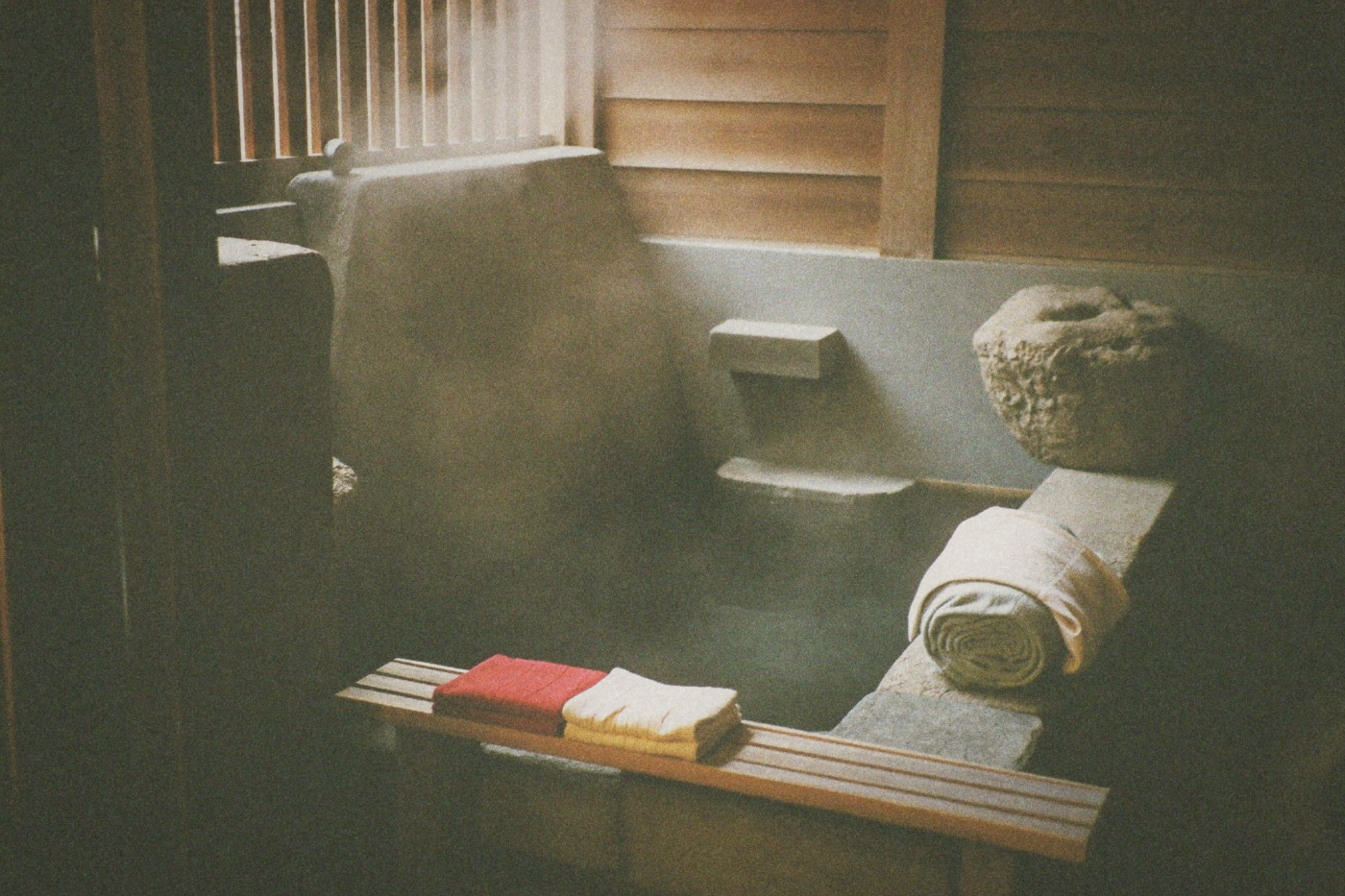 FIRST SIGHTWEBGLThe bath house holds the morning light. · Color and grain by First Sight · Portra 400. · First Sight 色彩與顆粒調校 · Portra 400
Where to soak:
- Zhiben National Forest Recreation Area (知本國家森林遊樂區): Not a hot spring per se, but the adjacent river and forest trails provide excellent context for a spring-focused visit. NT$100 entry. Good bird-watching.
- Hotel Royal Chihpen (知本老爺酒店): The area's premier property. Extensive outdoor hot spring facilities including multiple pools, waterfalls, and a sauna. Set against lush green mountains. Rooms from NT$6,500/night. Day-use from NT$500.
- Toyugi Hot Spring Resort & Spa (東遊季溫泉渡假村): Large resort with water park-style pools alongside traditional spring baths. Good for families. Rooms from NT$3,500/night.
- Dong Tai Hot Spring (東台溫泉): Budget-friendly with bare-bones but genuine spring facilities.
Getting there: Fly to Taitung Airport (domestic flights from Taipei Songshan, ~50 minutes) and drive 20 minutes to Zhiben. By train, Zhiben Station is on the South-Link Line — about 4–5 hours from Taipei by express. The scenery on the South-Link and Taitung coastal lines is spectacular.
Best time: November through April for comfortable temperatures. Taitung summers are hot. That said, a nighttime soak under tropical stars in July has its own appeal.
Ruisui: East Rift Valley Carbonate Springs
Ruisui (瑞穗) sits in Hualien County's East Rift Valley, surrounded by rice paddies, tea plantations, and the Coastal Mountain Range. The town's hot springs are rich in iron and sodium, giving the water a distinctive yellowish tint and leaving mineral deposits on everything they touch.
The springs: Sodium bicarbonate with high iron content. The water often has a golden-amber color. There are also carbonate springs nearby that produce fizzing, mineral-rich water. Temperatures around 48°C.
Where to soak:
- Ruisui Hot Spring Area: Several small, locally-run spring facilities along the Xiuguluan River. Basic but atmospheric. NT$200–400.
- Grand Cosmos Resort Ruisui (瑞穗天合國際觀光酒店): A massive luxury resort opened in 2018 by the Cosmos Hotel Group. European chateau-style architecture (an unusual aesthetic choice for rural Hualien), extensive spring pools, spa, and kids' facilities. Rooms from NT$10,000/night. It's either impressively ambitious or oddly out of place, depending on your perspective.
- Ruisui Spring Resort (瑞穗溫泉山莊): Simple, affordable rooms with spring-fed tubs. The kind of place where the owner might bring you homegrown fruit.
What else to do: Ruisui is the starting point for Xiuguluan River rafting (seasonal, typically April–October). The Tropic of Cancer marker is nearby. Ruisui Ranch (瑞穗牧場) offers fresh dairy products. The area is also known for Honey-Scented Black Tea (蜜香紅茶) — stop at a local tea farm.
Getting there: By train from Taipei, about 3–4 hours on the Tze-Chiang express to Ruisui Station. By car, approximately 4 hours via Suhua Highway (Highway 9). From Hualien city, about 60–90 minutes south by train or car.
Best time: October through March for soaking. The East Rift Valley is beautiful year-round, but summer heat plus hot springs can be overwhelming.
Suao Cold Springs: A Unique Detour
Suao (蘇澳) is the outlier on this list — its famous springs are cold, not hot. At around 22°C, Suao's carbonate springs produce a distinctive fizzing sensation from dissolved CO2. The experience is bracing: you ease into the cool, slightly tingling water, and after the initial shock, it becomes genuinely refreshing. These are one of only two known cold carbonate springs in the world (the other is in Saratoga, Italy).
Where to soak:
- Suao Cold Spring Park (蘇澳冷泉公園): The main public facility. Individual stone tubs in a semi-outdoor setting. NT$70 for adults. The water is piped directly from the spring source. Expect the tub to fizz gently around your skin.
- Cold Spring Foot Soaking Area: Free public pools near the park. Good for a quick dip on a hot day.
A local curiosity: Suao's cold spring water is also used to make a unique marble soda (彈珠汽水) — a carbonated ramune-style drink that's been produced locally for decades. Available at shops near the spring park.
Getting there: Suao is the eastern terminus of the Yilan Line railway. Trains from Taipei take about 2 hours. The town is a short bus or taxi ride from Jiaoxi, making it easy to combine both in a single Yilan trip.
Best time: Summer (June–September). Cold springs in winter are only for the brave.
Hot Spring Etiquette in Taiwan
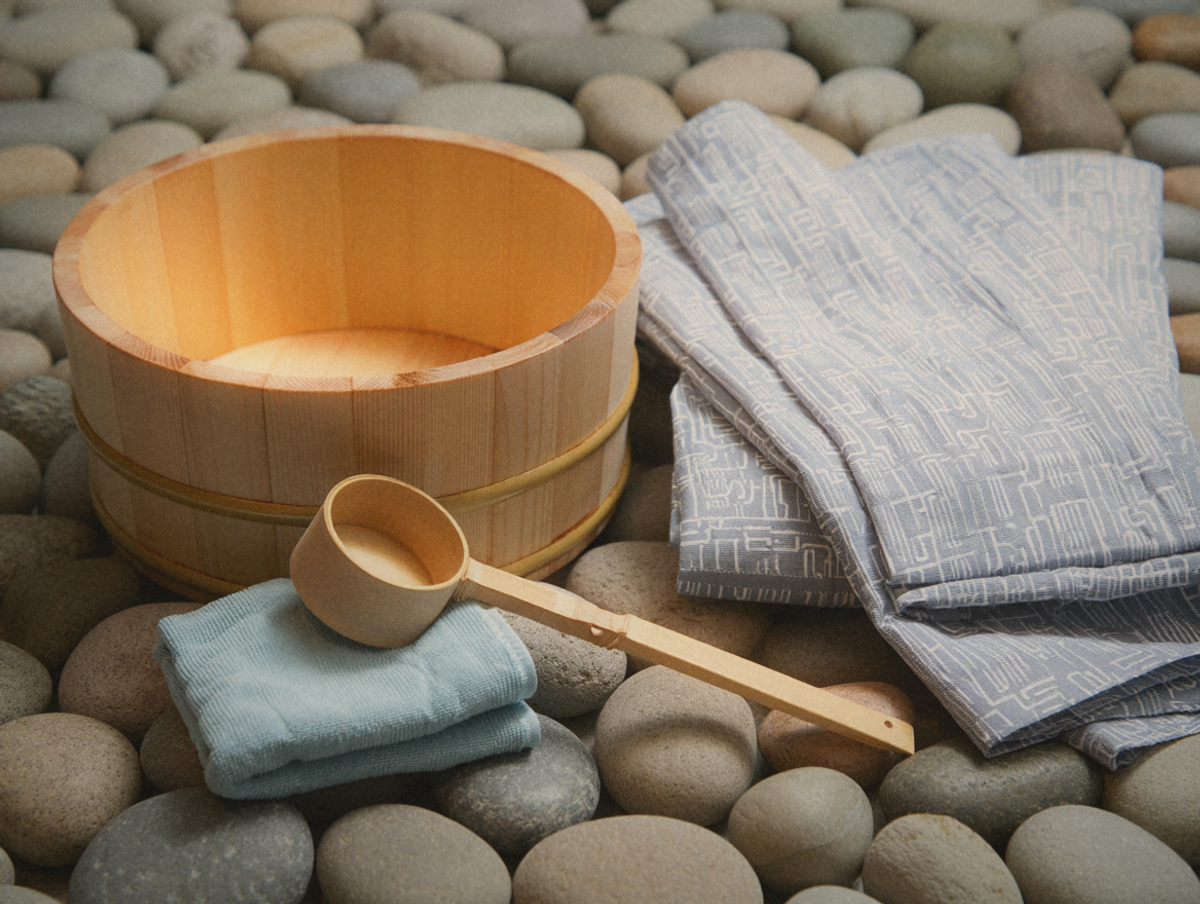
Taiwan's bathing culture borrows heavily from Japan, but with some local variations. Knowing the basics avoids awkwardness.
Public vs. private baths: Most hotels and resorts offer private rooms (個人池 or 湯屋) where you soak alone or with a partner, as well as shared public pools (大眾池). Private rooms typically cost NT$200–800 per session (60–90 minutes). Public pools are cheaper and more social.
Nude vs. swimsuit: This is the most important distinction. Gender-separated public baths (男湯/女湯) are almost always nude — no swimsuits allowed. Mixed-gender outdoor pools always require swimsuits and swim caps. Signs are usually posted, but when in doubt, look at what everyone else is doing.
Before entering a shared pool: Shower thoroughly at the washing stations provided. This is non-negotiable. Wash your body, rinse off all soap, and then enter the pool. Bringing soap, shampoo, or towels into the pool water is a serious faux pas.
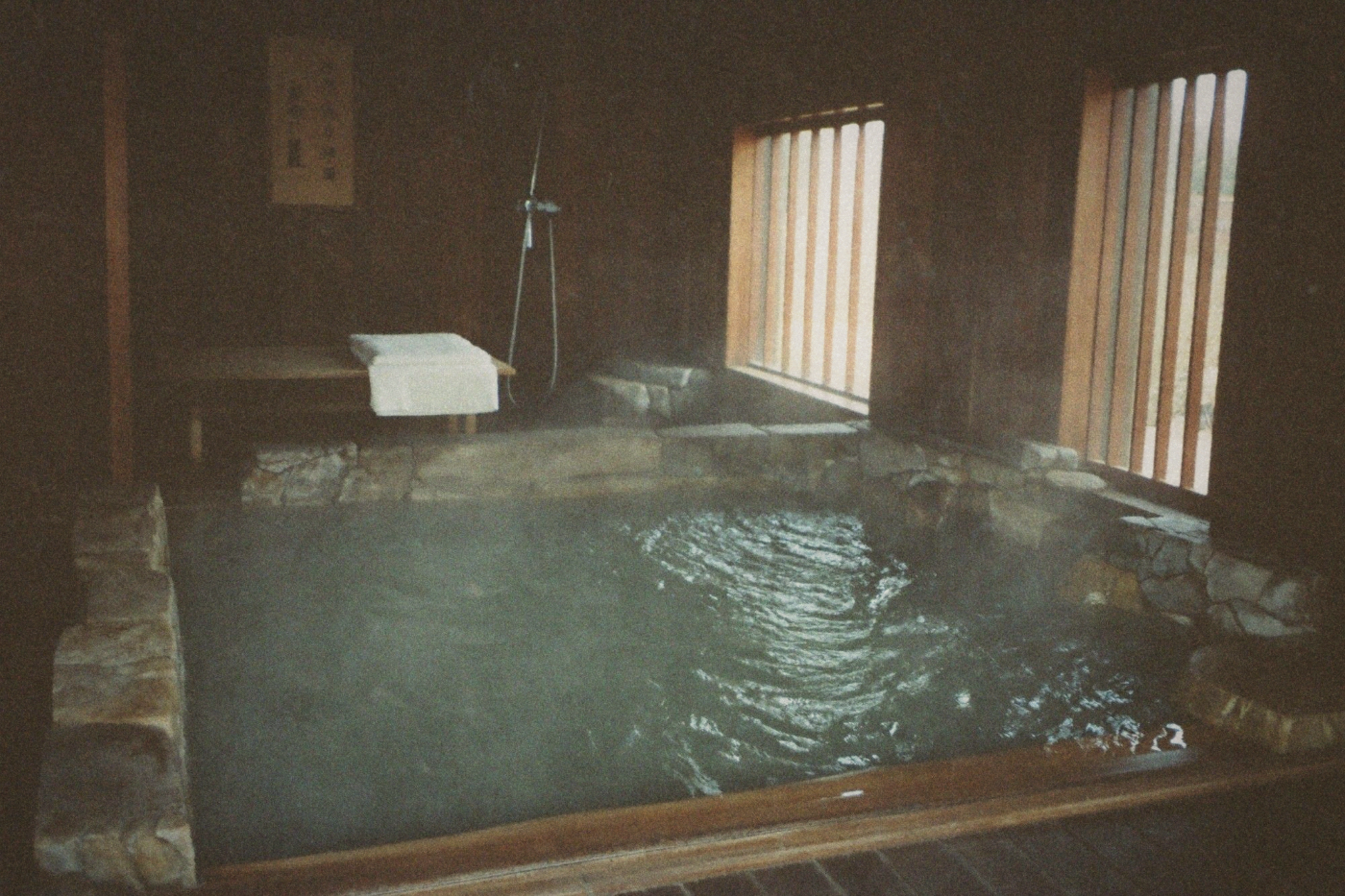 FIRST SIGHTWEBGLThe bath house holds the morning light. · Color and grain by First Sight · Portra 400. · First Sight 色彩與顆粒調校 · Portra 400
Towels: Bring a small towel for modesty while walking around nude areas, but keep it out of the pool water. Most people place it folded on their head while soaking — a practical habit borrowed from Japanese bathing culture.
Tattoos: Unlike Japan, tattoos are generally not an issue at Taiwan's hot springs. Most public baths don't restrict tattooed bathers, though a small number of high-end properties may have policies. This is rarely enforced.
Duration: Start with 10–15 minutes per soak, especially in hotter pools. Take breaks between rounds. Experienced bathers alternate between hot pools, cold plunges, and rest periods.
Health Considerations
Hot springs are generally safe and pleasant, but a few precautions are worth noting.
Stay hydrated. Soaking in hot water causes sweating, even if you don't feel it. Drink water before, during breaks, and after bathing. Many facilities provide drinking water stations.
Avoid soaking if: You have a fever, open wounds, serious heart conditions, or very low blood pressure. Pregnant women should consult a doctor before using hot springs, particularly high-temperature sulfur springs. People with sensitive skin may react to strongly acidic sulfur springs (Beitou's white sulfur springs have pH as low as 1.5 at the source).
Alcohol and hot springs don't mix. Despite the appealing image of sake in a steamy pool, alcohol dilates blood vessels that are already dilated by heat. This can cause dangerous drops in blood pressure, dizziness, or fainting. Save the drinks for after.
Rinse after sulfur springs. The acidic water can irritate skin if left to dry. Shower with clean water after soaking in sulfur-type springs.
Ease into it. Enter hot pools gradually — feet first, then legs, then body. Going straight from cold air into a 42°C pool can cause a sudden spike in blood pressure.
Planning a Hot Spring Wellness Itinerary
For visitors building a trip around hot springs, here are three practical itineraries.
Weekend from Taipei (2 days): Day 1: Train to Jiaoxi. Afternoon soak at the public baths, evening at Tangweigou foot spa. Stay overnight at a spring hotel. Day 2: Morning soak, then bus or taxi to Suao for cold springs and marble soda. Return to Taipei via train.
Southern Circuit (3–4 days): Day 1: HSR to Tainan, drive to Guanziling for mud springs. Stay overnight. Day 2: Explore Siraya National Scenic Area, Water Fire Cave. Drive to Taitung. Day 3: Zhiben hot springs, forest recreation area. Option to visit Taitung city for dinner. Day 4: Return via train (scenic South-Link Line) or domestic flight.
East Coast Deep Dive (5–7 days): Day 1–2: Jiaoxi, with Suao cold springs day trip. Day 3: Train to Hualien, Taroko Gorge. Day 4–5: South to Ruisui for valley springs, rafting, tea farms. Day 6: Continue to Zhiben/Taitung. Forest area, indigenous culture. Day 7: Fly or train back to Taipei.
What to Pack
A few items make hot spring trips significantly more comfortable:
- Swimsuit and swim cap for mixed-gender pools (caps are required at many facilities and can be purchased on-site for NT$50–100)
- Small quick-dry towel for the bath area
- Reusable water bottle — hydration matters
- Flip-flops or sandals for walking between pools
- Moisturizer — mineral water, especially sulfur springs, can dry out skin
- Plastic bag for wet clothes
Costs at a Glance
| Type | Typical Cost | |---|---| | Public foot soak | Free – NT$40 | | Public bathhouse | NT$40 – NT$200 | | Private room (湯屋, 60–90 min) | NT$200 – NT$1,500 | | Mid-range spring hotel (per night) | NT$3,000 – NT$6,000 | | Luxury spring resort (per night) | NT$8,000 – NT$20,000+ | | Day-use spa package | NT$500 – NT$2,000 |
Budget travelers can easily enjoy Taiwan's hot springs for under NT$200 per day using public facilities. At the luxury end, properties like Hoshino Resorts Guguan or Grand View Resort Beitou offer experiences competitive with top Japanese onsen ryokan, at somewhat lower price points.
The Takeaway
Taiwan's hot spring culture is one of the island's most underappreciated assets by international travelers. The variety of spring types, the accessibility from major cities, the range from NT$40 public baths to world-class resorts, and the sheer density of quality options — all of this on an island you can cross in four hours — make Taiwan one of the strongest hot spring destinations in Asia. The only real risk is that once you start planning a hot spring trip, you'll want to visit them all.
Comments (0)
Loading comments...