
 FIRST SIGHTWEBGLColor and grain by First Sight · Portra 400.First Sight 色彩與顆粒調校 · Portra 400
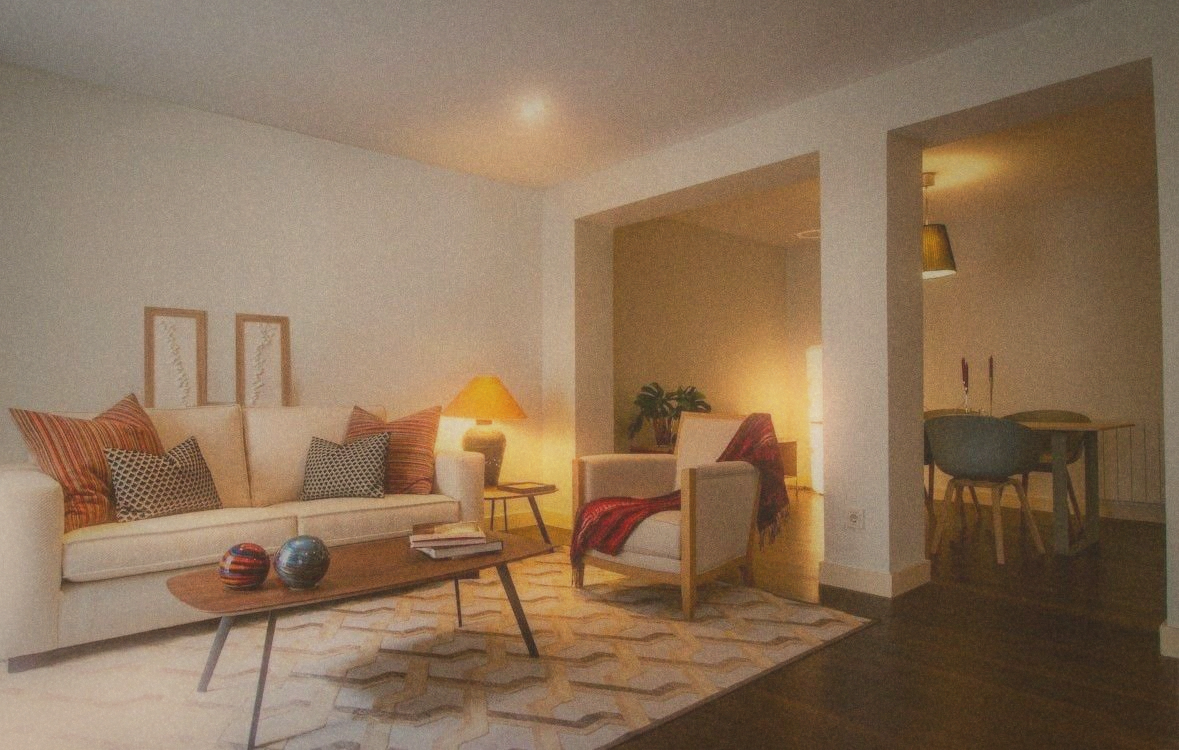
Setting your evening environment: one warm lamp, no overhead lights, no screens. The goal is melatonin production, not brightness.
Most people treat sleep as the last item on the day's to-do list. The research suggests it should be the first one you plan around.*
Sometime around 9pm, a woman in her late forties in Taipei sets her phone face-down on the kitchen counter and goes to make tea. Not chamomile, just a mild roasted oolong, something warm, something that doesn't need to be checked. Her husband thinks this is a small habit. Her doctor, who studies sleep and metabolic health, thinks it might be one of the best decisions she makes all day.
She started doing it because she kept waking up at 3am. Nothing dramatic, no anxiety disorder, no sleep apnea, just a body that would simply come alert in the middle of the night and refuse to go back under. She'd tried melatonin. She'd tried white noise. She'd tried keeping a journal. Nothing held.
What helped was understanding a single fact: her sleep problem wasn't happening at night. It was happening at 6pm.
Why You Wake Up at 3am, The Biology
Here's what nobody tells you about sleep: your brain starts deciding whether tonight will be good or bad several hours before you get into bed.
The mechanism is a hormone called cortisol. You need it in the morning, it's what wakes you up, sharpens your focus, gets you moving. By early evening, cortisol levels should be falling, handing off to melatonin as the light drops. This transition is called the cortisol-melatonin handoff, and it's the part of the sleep cycle most people accidentally sabotage.
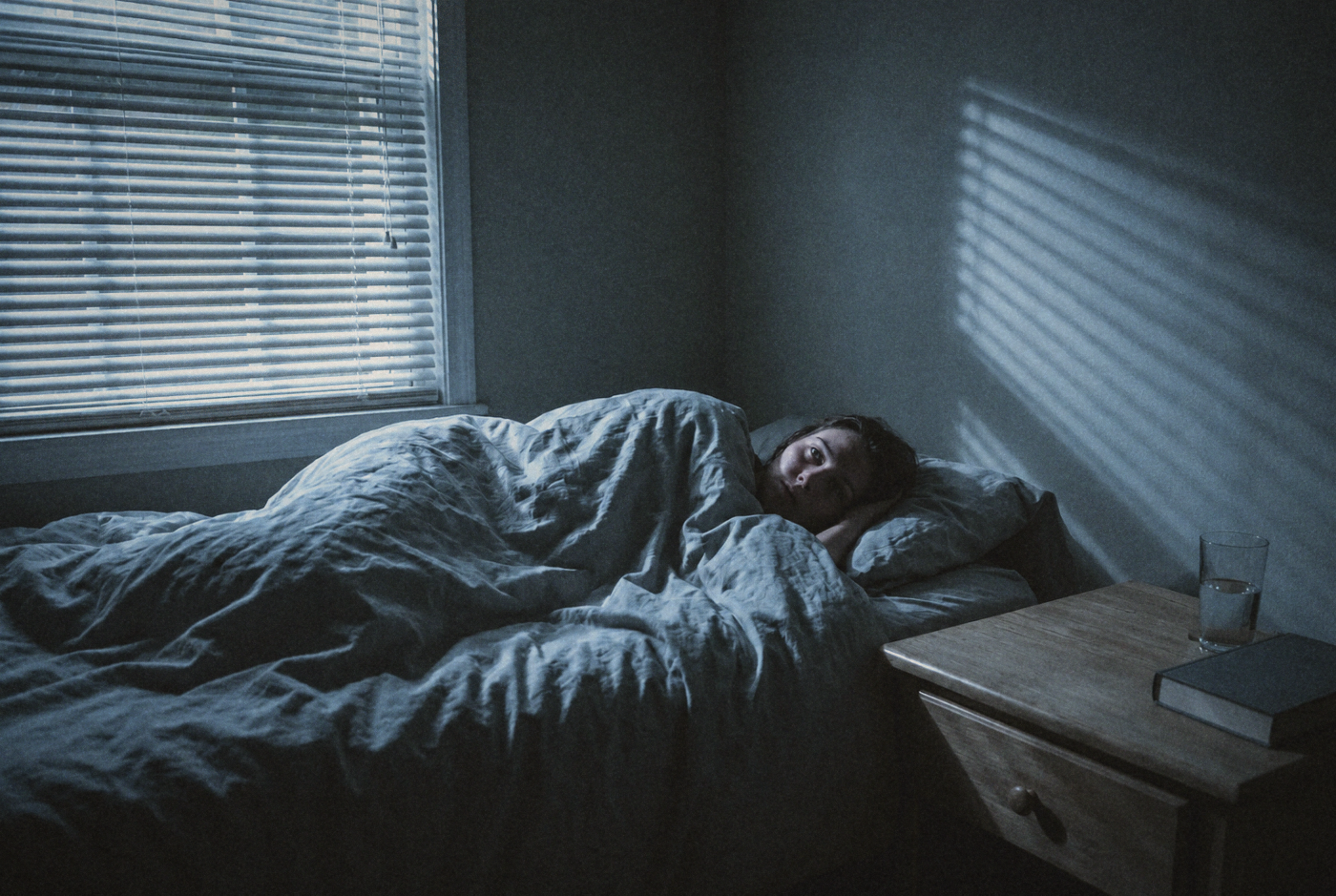
The 3am window specifically. Your body's cortisol naturally begins rising again around 3–4am to prepare for morning arousal. This is normal. But if your baseline stress level is already elevated, if your nervous system has been in a state of mild arousal all evening, that early-morning cortisol surge hits a higher floor. Instead of a gentle rise toward waking at 6am, it crosses the threshold into wakefulness at 3am. You surface. Your eyes open. Your heart rate increases slightly. You can't go back down. You stare at the ceiling for two hours wondering what's wrong with you.
Nothing is wrong with you. Your evenings are wrong.
The sabotage usually isn't dramatic. A stressful email at 8pm. A bright overhead light while you wash dishes. Forty-five minutes of social media before bed. Checking work messages. Each sends a low-grade "stay alert" signal to the nervous system. Your brain interprets blue light and social stimulation the same way it interprets daylight and mild threat: "not yet, not safe, stay awake."
Individually, none of these things should ruin your sleep. One email shouldn't matter. One hour of screen time shouldn't matter. But the research is clear: these don't exist in isolation. They stack. They compound. When you combine elevated baseline stress (from the email), circadian disruption (from the light), nervous system activation (from the content), and temperature elevation (from the warm room), you create a nervous system state that's primed for waking. Your body becomes hypersensitive. When the natural 3–4am cortisol rise happens, your system is already so activated that the slight bump in cortisol pushes you over the edge into wakefulness.
The Cortisol-Blood Sugar Connection
There's a secondary mechanism that makes 3am waking even more common, and it's more direct than you might think.
When you eat late (after 6pm) or eat high-carbohydrate meals in the evening, your blood sugar rises. Your pancreas releases insulin to manage it. Insulin clears glucose, causing your blood sugar to drop, sometimes sharply, between 2–4am. This blood sugar crash triggers a cortisol release to raise blood sugar back up (cortisol is a stress hormone that increases glucose). The cortisol surge wakes you.
This is why people who eat light dinners at 5:30pm often sleep through the night, while people who eat large meals at 8pm wake at 3am consistently. It's not just stress or light. It's also your biochemistry.
The Taiwan evening culture problem: Late dinners (7–8pm or later), heavy meals, sugary desserts, and tea, all common in Taiwanese culture, combine to keep blood sugar elevated into the night and then crash just as you're in deep sleep. This is particularly problematic.
What the Research Actually Says
The clearest evidence comes from sleep research at UC Berkeley, where neuroscientist Matthew Walker and his team documented the relationship between pre-sleep arousal and slow-wave sleep, the deepest, most physically restorative stage.
The finding that matters most for everyday life: slow-wave sleep cannot be forced. You can only create the conditions for it. And those conditions are primarily determined by the two to three hours before you attempt to sleep.
On evening light: Research from Stanford Sleep Medicine Center found that the timing and brightness of evening light exposure is one of the most reliable predictors of how quickly someone falls asleep and how likely they are to have sleep interruptions. Reducing overhead lighting and screen brightness by 50% in the two hours before bed shortened sleep onset time by 20–40 minutes on average and reduced mid-sleep awakenings by 30–50%. That's a massive effect from a 30-second behavioral change.
On temperature: Core body temperature is non-negotiable for sleep quality. Your sleep quality correlates more strongly with bedroom temperature than with almost any other single variable.
On meal timing: The timing of your last meal affects cortisol rhythm more than most people realize. Eating within 2-3 hours of bed elevates insulin and blood sugar, disrupting the natural cortisol decline that should be happening in the evening. This doesn't just affect sleep onset, it directly increases the probability of mid-sleep waking.
Taiwan-Specific Evening Habits That Cause 3am Waking
 FIRST SIGHTWEBGLA person lies awake in a dim bedroom. · Color and grain by First Sight · Portra 400. · First Sight 色彩與顆粒調校 · Portra 400
The biological mechanisms are universal, but Taiwan has specific cultural practices that amplify them:
1. Late dinners (7–9pm is normal)
Work culture doesn't finish until 6pm. Family dinners happen at 7–8pm. Business dinners can start at 9pm. Eating this late means your digestive system is still working at 11pm. Insulin is still being released at midnight. Blood sugar crashes at 3am. Cortisol surges. You wake.
2. Heavy meals in the evening
Taiwanese dinner tradition favors big meals. Fried rice, noodle soups, seafood, calorie-dense, high in carbs. After fasting (if you're doing intermittent fasting) or having a light lunch, a big dinner at 8pm means maximum insulin response at the worst circadian time.
3. Sweet desserts after dinner
Candy, bubble tea, mochi, cakes, common after-dinner customs. Blood sugar spikes. Insulin response. Crash at 3am.
4. Tea and coffee timing
A cup of oolong at 8pm, sounds innocent. Caffeine has an 8-hour half-life. That 8pm tea is still 25% active at 4am. Not enough to keep you from falling asleep initially, but enough to prevent deep sleep and make 3am waking more likely.
5. Phone use while eating or after
Dinner with family but also checking work messages. Scrolling while eating. This combines nervous system activation (from content) with digestive elevation (from eating), creating a state where your parasympathetic nervous system (rest-and-digest) never properly activates.
6. Warm apartments with poor air circulation
Many Taipei apartments are warm, especially if the AC cycles off at night to save money. Core body temperature stays elevated. Sleep quality suffers. You're more prone to waking.
7. Light while preparing for bed
Overhead lights while brushing teeth, washing up, preparing for bed. Bright bathroom lights are especially bad, they're directly overhead, high intensity, and usually cool white.
The Cortisol Rhythm Fix: A Week-by-Week Protocol
If you're waking at 3am consistently, here's a structured protocol to fix it. This isn't about adding supplements. It's about fixing the underlying rhythm.
 FIRST SIGHTWEBGLColor and grain by First Sight · Portra 400.First Sight 色彩與顆粒調校 · Portra 400
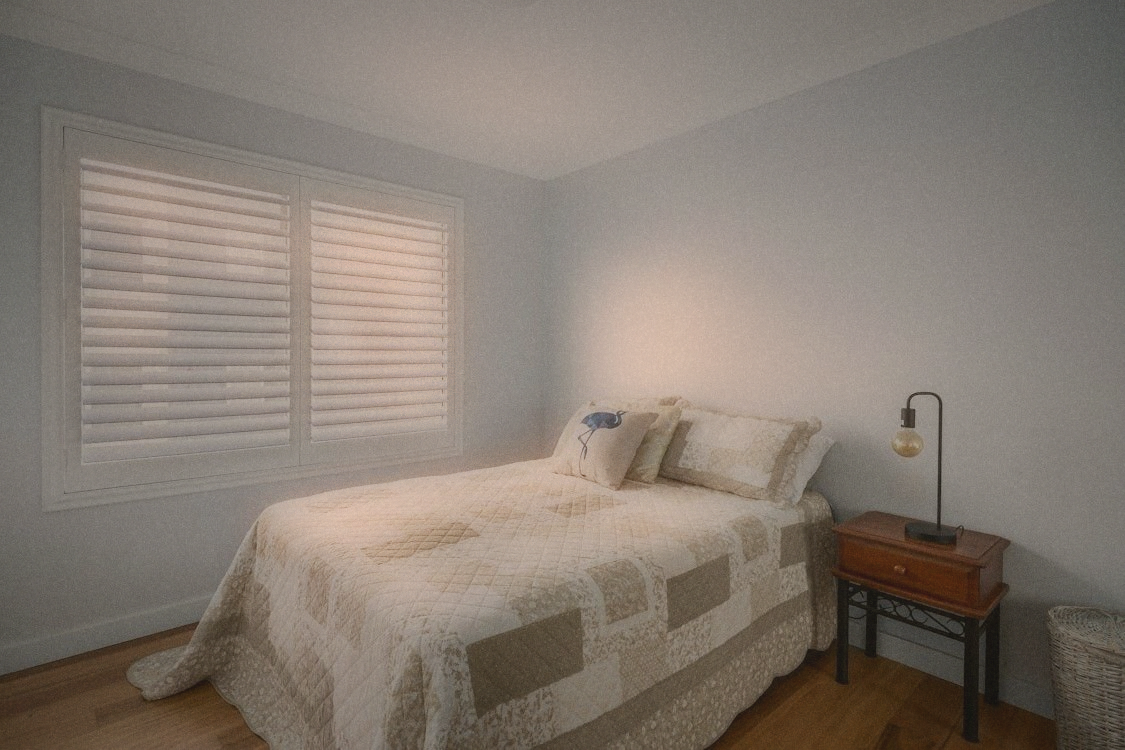
The ideal sleep environment: 18-20°C, minimal light, breathable layers. Temperature matters more than most people realize.
Week 1: Anchor Your Wake Time and Get Morning Light
Monday-Sunday: - Wake at the same time every day, including weekends. Choose a time, say 6:30am. Set your alarm. Get up. - Within 10 minutes of waking, get outside or sit by a window with direct sunlight for 10 minutes. - This recalibrates your circadian rhythm. Your body needs a consistent reference point to set all other rhythms correctly.
What to expect: You might be tired the first few days if you're used to sleeping late on weekends. Push through. By midweek, your body will adjust.
The biology: Morning light synchronizes your master clock (the suprachiasmatic nucleus). This sets the timing for cortisol rise (should happen 30–60 minutes after waking) and melatonin rise (should happen 14–16 hours after waking). Everything downstream follows from this.
Week 2: Control Evening Light
Monday-Sunday (starting after you've anchored wake time): - At 9pm, turn off all overhead lights. - Switch on a single floor lamp (warm light, low intensity). - Set your phone to Night Shift (or warm mode on Android). Make it look orange, not blue. - No ceiling lights for the rest of the evening.
Why 9pm specifically? This is when your body should be starting melatonin production. Overhead LED lights suppress this. A single warm lamp doesn't.
What to expect: The first night feels dim. By the third night, it feels normal. By the end of the week, overhead lights at 9pm feel jarring.
The biology: Melatonin is produced in response to the absence of blue light. Your body evolved in a world where blue light (sunlight) disappeared at sunset. Now you have overhead LEDs (peak blue wavelengths around 460nm) on at 11pm. Your body is confused. Dim warm light lets melatonin production proceed normally.
Week 3: Control Eating and Temperature
Monday-Sunday (continuing everything from weeks 1-2):
Eating: - Last meal (lunch or dinner, whichever is bigger) at 1–2pm. - Light snack if hungry at 4–5pm (fruit, vegetables, small protein). - Nothing after 6pm. If you must eat, keep it under 100 calories and protein-focused (handful of nuts, few pieces of cheese).
This is the hardest part in Taiwan. Family dinners, business meals, social occasions all happen after 6pm. Do your best. If you must eat late, eat light. A small bowl of soup is infinitely better than a full dinner. You're not trying for perfection. You're trying to interrupt the pattern of blood sugar crash at 3am.
Temperature: - Set bedroom to 18–20°C using the AC. - Use light bedding (cotton, minimal layers). - If the room feels too cold, you're at the right temperature. You'll warm under the blankets.
What to expect: Better sleep initiation by the third night. 3am waking may still happen, it takes 3–4 weeks to fully reset, but it should be less frequent.
The biology: Meals spike insulin and blood sugar. Blood sugar crashes 2–4 hours later. Cortisol rises to counter the crash. You wake. Skipping evening eating prevents the crash. Temperature affects your ability to maintain deep sleep, a warm room prevents the core temperature drop needed for slow-wave sleep.
Week 4: Optimize Pre-Bed Routine
Monday-Sunday (continuing everything from weeks 1-3):
90 minutes before bed: - Finish eating if you're eating at all. - If you're exercising, do it now (not within 2 hours of bed). - Warm bath or shower (60–90 minutes before bed, not immediately before). The rapid cooling afterward triggers core temperature drop.
60 minutes before bed: - No more screens. Phone in another room, not on the nightstand. - Read, prepare clothes for tomorrow, light stretching, meditate. - This isn't because of moral purity around screens. It's because your prefrontal cortex (the part that worries) stays active if you have access to a phone. Knowing your phone is in another room lets that part of your brain relax.
30 minutes before bed: - Tea, warm milk, or warm water is fine. Not stimulating. - Continue dim lighting. - Get into bed.
What to expect: By the end of week 4, most people see 70–80% reduction in 3am waking. For some, it's gone entirely. For others, it's down to once per week instead of every night.
Timeline: Four weeks is not arbitrary. Your circadian rhythm takes about 4 weeks to fully reset. The improvement isn't linear, it's usually worse before it's better because your body is adjusting to new signals. Push through.
What to Do When You Actually Wake at 3am
Even after implementing the protocol, you might wake at 3am occasionally. Here's what to do:
Don't check the time. The act of checking your phone (blue light, anxiety about "how long" you've been awake) makes it worse.
Don't try to sleep. Trying harder makes arousal worse. Your nervous system is already activated.
Instead, do this:
1. Stay in bed. Don't get up. This preserves the association between "bed" and "sleep."
2. Breathe slowly. 4-count in, 6-count out. This activates your parasympathetic nervous system and lowers cortisol. Do this for 5 minutes.
3. Progressive muscle relaxation. Tense your toes for 3 seconds, release. Move up the body. This occupies your mind without stimulation.
4. If you're still awake after 20 minutes: Get up, go to another room (dim light only), read something boring (not your phone) for 15 minutes until you feel drowsy, then return to bed.
The goal is to interrupt the "I'm awake and can't sleep" feedback loop. You're not trying to force sleep. You're creating conditions where sleep is possible.
Handling the Taiwan Evening Social Culture
The protocol above assumes you can control your evening. In Taiwan, that's not always realistic. Here's how to adapt without abandoning the fix:
For family dinners: - Eat a proper meal at 5:30pm at home. - Join family at 7:30pm for smaller portions, tea, and conversation. - You've already eaten. You're not eating late.
For business dinners: - Eat a light breakfast and lunch. - Have a small snack (fruit, yogurt) at 4pm. - At the dinner, eat protein and vegetables. Skip the rice and heavy sauces. - You're eating, you're not eating late, you're not eating heavy.
For social bubble tea and desserts: - If it's at 4pm, fine. Caffeine won't affect sleep. - If it's at 8pm, order unsweetened tea or plain milk tea, skip the sugar and toppings.
One key insight: Waking at 3am is solved 80% by your own evening choices, 20% by others' expectations. You have more control than you think. When you explain to family that you're sleeping better because you eat earlier, most people accept it and even respect it.
The Woman Three Months Later
She wakes around 6:30am now without an alarm (her body adapted to consistent wake time). She sleeps through most nights. The occasional 3am waking happens maybe twice a month instead of every night. When it does happen, she's not panicked, she knows it's temporary.
She didn't change her diet dramatically. She didn't add supplements. She moved her phone cutoff to 9pm, dimmed her living room at 9pm, set the bedroom to 19°C, and shifted her last significant meal to 5:30pm. Three structural changes to her evening. > #### 80% reduction
By week 6, the 3am awakenings dropped by roughly 80%.
She told her doctor. He wasn't surprised. "People always want the complicated answer," he said. "They want to blame their brain, their anxiety, their sleep disorder. The biology isn't complicated. We just make the evenings complicated."
Frequently Asked
Some links in this article are affiliate links. If you purchase through them,OQUA may earn a small commission at no extra cost to you. This helps support our editorial work. We only link to products and services we genuinely reference in our writing.
Comments (0)
Loading comments...