
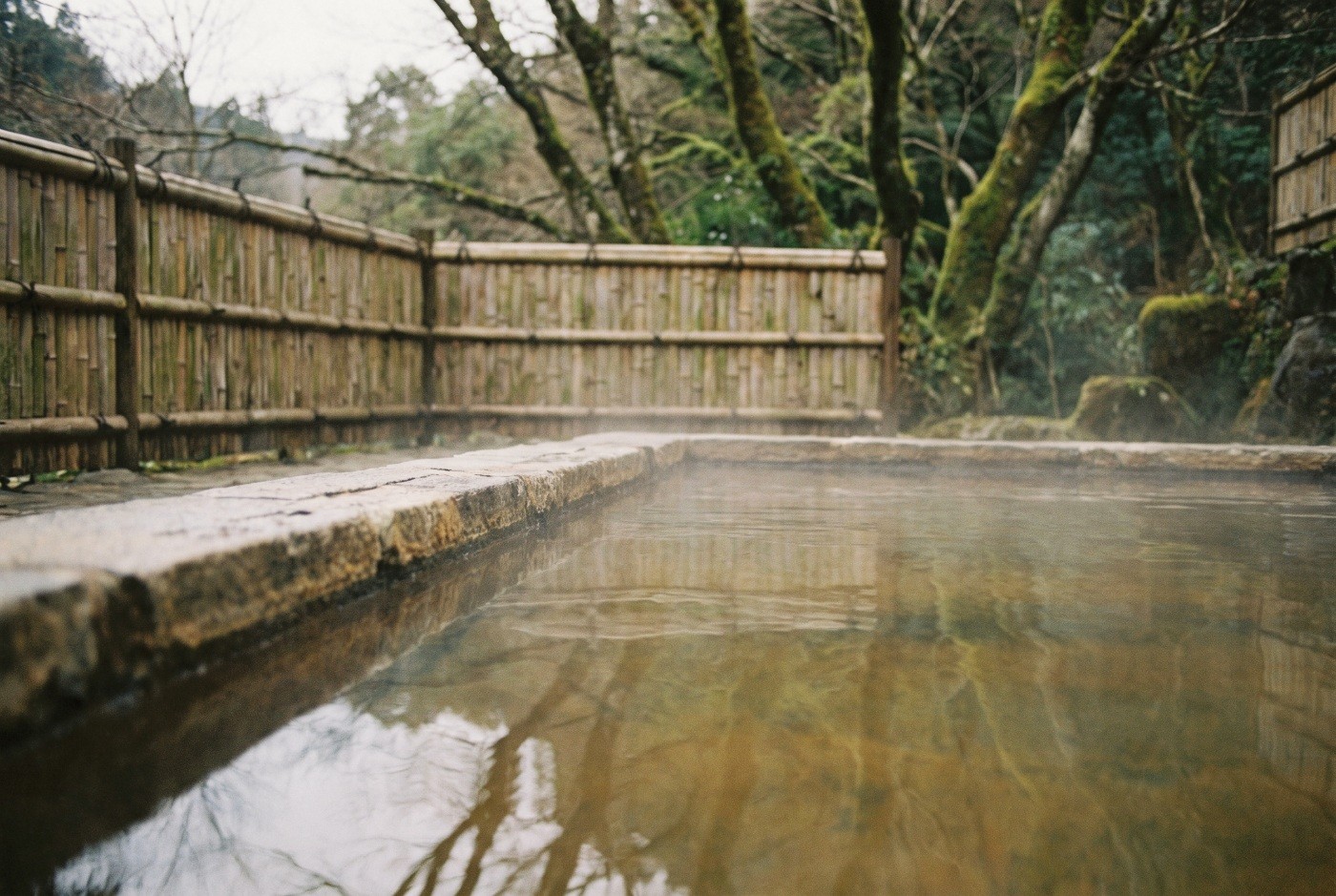
The water was 42 degrees. I knew this because a small wooden sign next to the stone basin said so, in neat vertical kanji I could barely read. What the sign didn't mention was that 42 degrees feels different when you're standing naked in a wooden room with three elderly Japanese men who are already submerged to their chins, looking perfectly comfortable, while you're trying to figure out which tiny stool to sit on and whether the showerhead is the handheld kind or the fixed kind and why everyone has a small white towel folded on top of their head.
That was Hakone, four years ago. I'd been to 北投 plenty of times and 烏來 a handful, so I figured Japanese hot springs couldn't be that different. They are. Not the water (Taiwan's sulfur springs are world-class), but the ritual around it. In Taiwan, you show up in board shorts, soak your feet, eat 滷肉飯 across the street. In Japan, the bathing itself is the point. There's a procedure, and once you learn it, which takes ten minutes, the whole experience opens up.
Everything I wish someone had told me before that first soak.
The procedure, start to finish
Every onsen follows the same sequence. Enter the changing room (脱衣所). Baskets or coin lockers (¥100, returnable). Take off everything, including underwear. Fold your things, take only the small towel into the bathing area. Big towel stays behind.
Find a washing station. Low stool, bucket, showerhead, complimentary soap and shampoo. Sit and wash thoroughly, head to toe. This is the most important rule. Japanese bathers take it seriously and the person next to you will notice if you skip it.
Once clean, walk to the bath and enter slowly. Water runs 40 to 42 degrees, hotter than most Taiwanese public springs. Your small towel never touches the bath water. Fold it on your head or set it on the edge. Soak 10 to 15 minutes, get out, cool down, get back in. Most people do two or three rounds. The whole thing takes about 45 minutes, and most of that is just sitting in hot water thinking about nothing.
Tattoos: the real situation in 2026
This matters more for Taiwanese travelers than for almost anyone else. Tattoo culture in Taiwan is widespread and increasingly casual. A small wrist tattoo, a shoulder piece, a sleeve. Common enough that nobody comments on it. In Japan, tattoos still carry associations with organized crime in some contexts, and many traditional onsen maintain no-tattoo policies.
As of 2026, roughly 20% of onsen welcome tattoos openly, 30% allow entry with adhesive cover patches (¥500 to ¥1,000 at convenience stores and pharmacies), and the rest still refuse. Hoshino Resorts dropped their ban entirely in 2024. Tourist areas like Hakone, Beppu, and Nikko are generally more relaxed. Rural traditional ryokan are stricter.
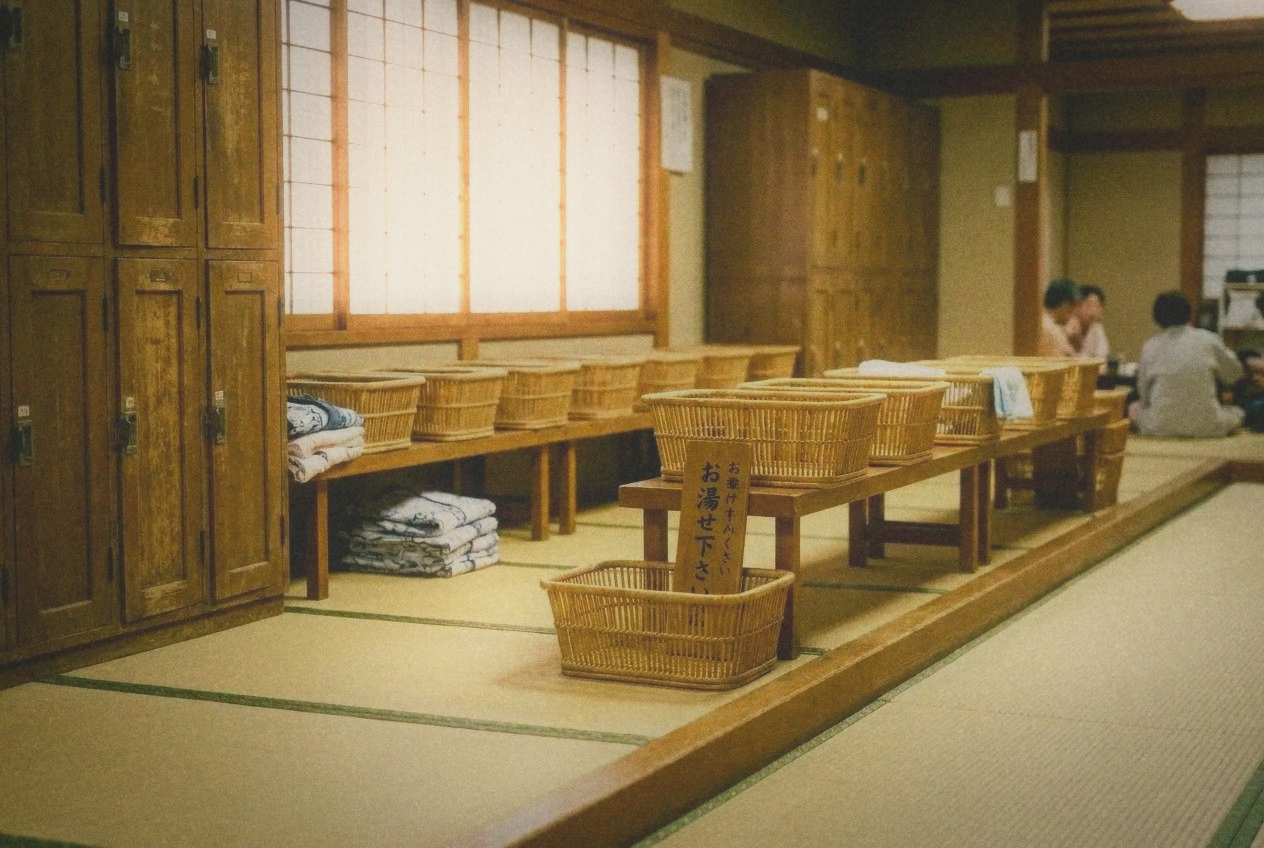
 FIRST SIGHTWEBGLTraditional Japanese onsen changing room with wooden lockers. woven baskets for belongings · Color and grain by First Sight · Portra 400. · First Sight 色彩與顆粒調校 · Portra 400
Check the specific onsen's policy before you go. Google Maps reviews are useful. Search the name plus "tattoo" and you'll usually find a clear answer. When in doubt, book a private bath (貸切風呂). Full experience, zero anxiety.
Private baths, and why they're worth it at least once
貸切風呂 (kashikiri buro) means a bath you reserve for yourself, your partner, or a small group. Day-use sessions typically run 40 to 50 minutes and cost ¥2,000 to ¥4,000 (roughly NT$400 to NT$800). At many ryokan, overnight guests can use private baths for free.
Most Japanese onsen are gender-separated (男 for men, 女 for women, blue and red curtains). If you're traveling with someone of a different gender and want to bathe together, a kashikiri is the answer.
The best ones are outdoor (露天風呂). Stone or cypress tub, open sky, forest or mountain view. Hakone has private rotenburo overlooking the Hayakawa River gorge. Kinosaki has a few facing the willow-lined canal. Beppu's Myoban district has hilltop tubs with views of steam vents across the valley. Not luxury extras. Some of the best travel experiences in Japan, at surprisingly reasonable prices.
The first time I booked a kashikiri at a Hakone ryokan, I thought ¥3,000 for 45 minutes sounded steep. Then I sat in a stone tub the size of a small car, watched mist move through cedar trees for half an hour, and realized it was the cheapest extraordinary experience I'd had in Japan.
Three onsen towns worth building a trip around
!Placeholder for onsen town street scene Evening in an onsen town. The yukata, the wooden geta, the sound of water somewhere nearby. Every onsen town has its own version of this scene, and none of them get old.
Hakone is 90 minutes from Tokyo's Shinjuku by limited express. Crowded but genuine. The town spreads across a volcanic caldera with varied mineral springs. Hakone Yuryo charges ¥1,700 weekdays, ¥2,000 weekends (NT$340 to NT$400) for day-use with indoor and outdoor baths. Tenzan Onsen is more rustic, built along a mountain stream, ¥1,500 (NT$300). Overnight ryokan with meals run ¥15,000 to ¥40,000 per person (NT$3,000 to NT$8,000).
Kinosaki is a 1,300-year-old town 2.5 hours by limited express from Kyoto (¥4,320, roughly NT$860). Seven public bathhouses connected by a willow-lined canal. Stay at any ryokan and your key unlocks all seven. Check in, change into your yukata, slip on wooden geta, and spend the evening bath-hopping. Day visitors buy a yumepa pass for ¥1,500 (NT$300). November through March is Matsuba crab season, and the kaiseki dinners are reason enough to visit. Ryokan from ¥18,700 to ¥33,000 per person (NT$3,740 to NT$6,600) with meals.
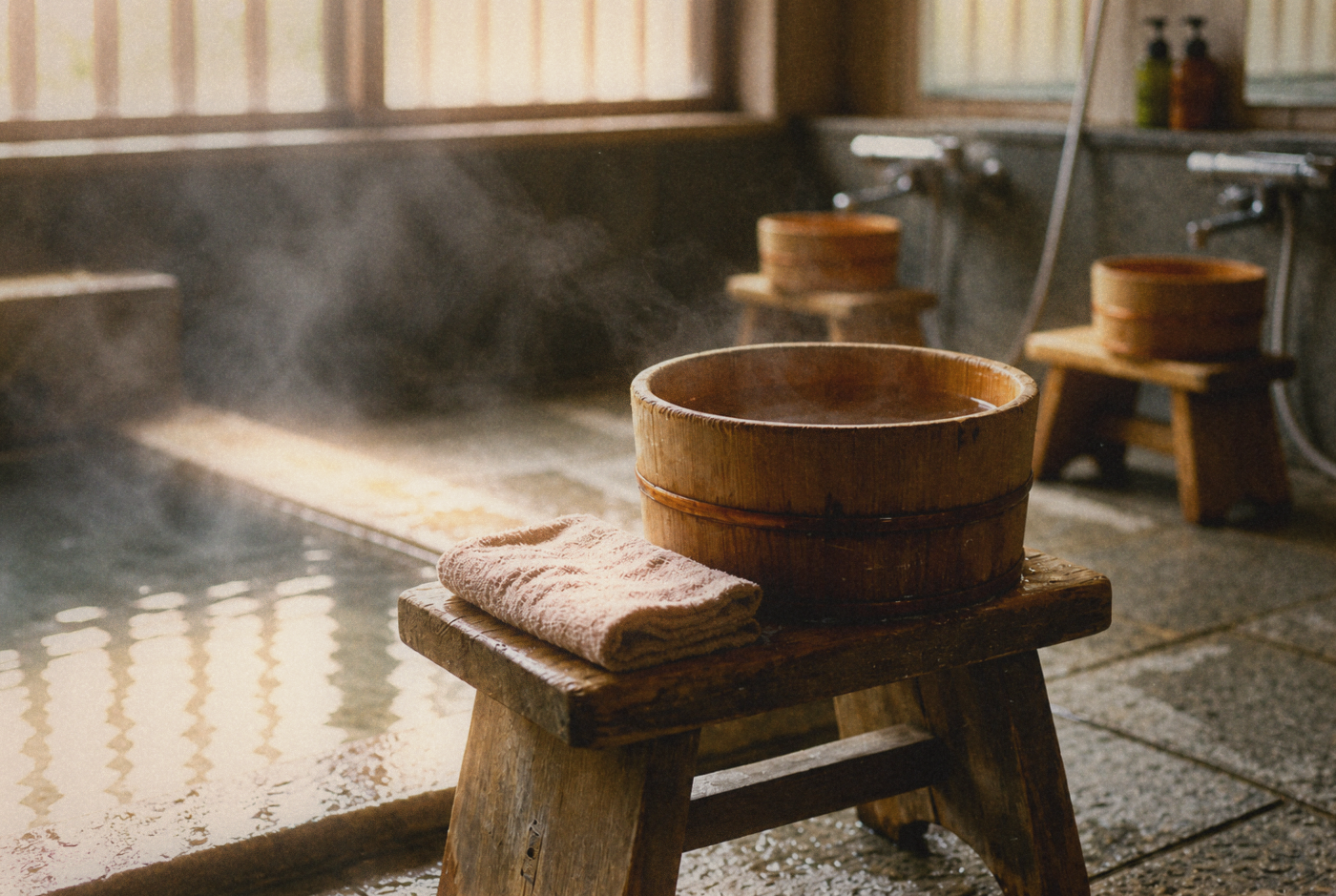 FIRST SIGHTWEBGLClose-up of a wooden bucket and small towel at an onsen washing station. tiled floor · Color and grain by First Sight · Portra 400. · First Sight 色彩與顆粒調校 · Portra 400
Beppu produces over 102,000 liters of hot spring water per minute across eight districts. Two hours from Fukuoka. Takegawara Onsen is the landmark: an Edo-era wooden bathhouse, ¥100 for a regular bath (NT$20), ¥300 for the sand bath (NT$60) where attendants bury you in heated volcanic sand. Hyotan Onsen, Japan's only three-Michelin-star onsen, charges ¥300 (NT$60). The Myoban district has hilltop outdoor baths overlooking steam vents, ¥1,160 (NT$230).
[taiwan-card] Hakone | Closest to Tokyo | 90 minutes from Shinjuku. Volcanic caldera with varied mineral springs. Day-use from ¥1,500 (NT$300). Overnight with meals from ¥15,000 (NT$3,000). Excellent rotenburo along the Hayakawa River gorge. Kinosaki | The onsen-hopping town | 2.5 hours from Kyoto. Seven public baths, one pass. Yukata strolling along a willow-lined canal. Winter crab kaiseki. Overnight from ¥18,700 (NT$3,740) with meals. Beppu | Japan's thermal capital | 2 hours from Fukuoka. Eight onsen districts, sand baths, steam baths. Public baths from ¥100 (NT$20). The most variety of any onsen town in Japan.
How it compares to what you know
If you've soaked at 北投 or 烏來, you already understand the core appeal. The minerals are different (北投 has three spring types including rare radium springs; 烏來's sodium bicarbonate water is famous as a "beauty spring"), but the pleasure of sitting in hot mineral water until your thoughts slow down is the same.
The differences are cultural. Taiwan's hot spring culture is casual. Swimsuits in public pools, mixed-gender facilities, a seamless blend of soaking and eating and wandering. Japanese onsen culture is more ritualized. Full nudity, the washing protocol, quiet, gender separation. None of it is hard once you know what to expect, but the first visit can feel like a lot of unwritten rules.
Price is interesting. 北投's Millennium Hot Spring charges NT$40. Beppu's Takegawara costs ¥100 (NT$20), somehow even cheaper. But a Kinosaki ryokan night with kaiseki dinner starts at ¥25,000 (NT$5,000). Public baths are remarkably cheap. The ryokan experience is where costs climb.
!Placeholder for washing station scene The washing station. Low stool, bucket, handheld shower. In Taiwan, this step exists but is loosely observed. In Japan, it's the non-negotiable part.
When to go, and a few things to know
Winter is the classic. Snow falling on your head while you soak in 42-degree water (雪見風呂, yukimi-buro) sounds like a brochure until you do it. Autumn brings 紅葉, outdoor baths ringed by red maples, late October through mid-November. Spring means cherry blossom petals on the water. Summer is the least popular, which means fewer crowds and lower rates.
Four phrases that help: すみません、初めてです (sumimasen, hajimete desu, "this is my first time") at the front desk gets you a full walkthrough. いいお湯でした (ii oyu deshita, "that was a wonderful bath") when leaving, always gets a smile. 貸切風呂はありますか (kashikiri buro wa arimasu ka, "do you have a private bath?") for tattoos or privacy. お先です (osaki desu, "I'm leaving before you") when you exit the bath first.
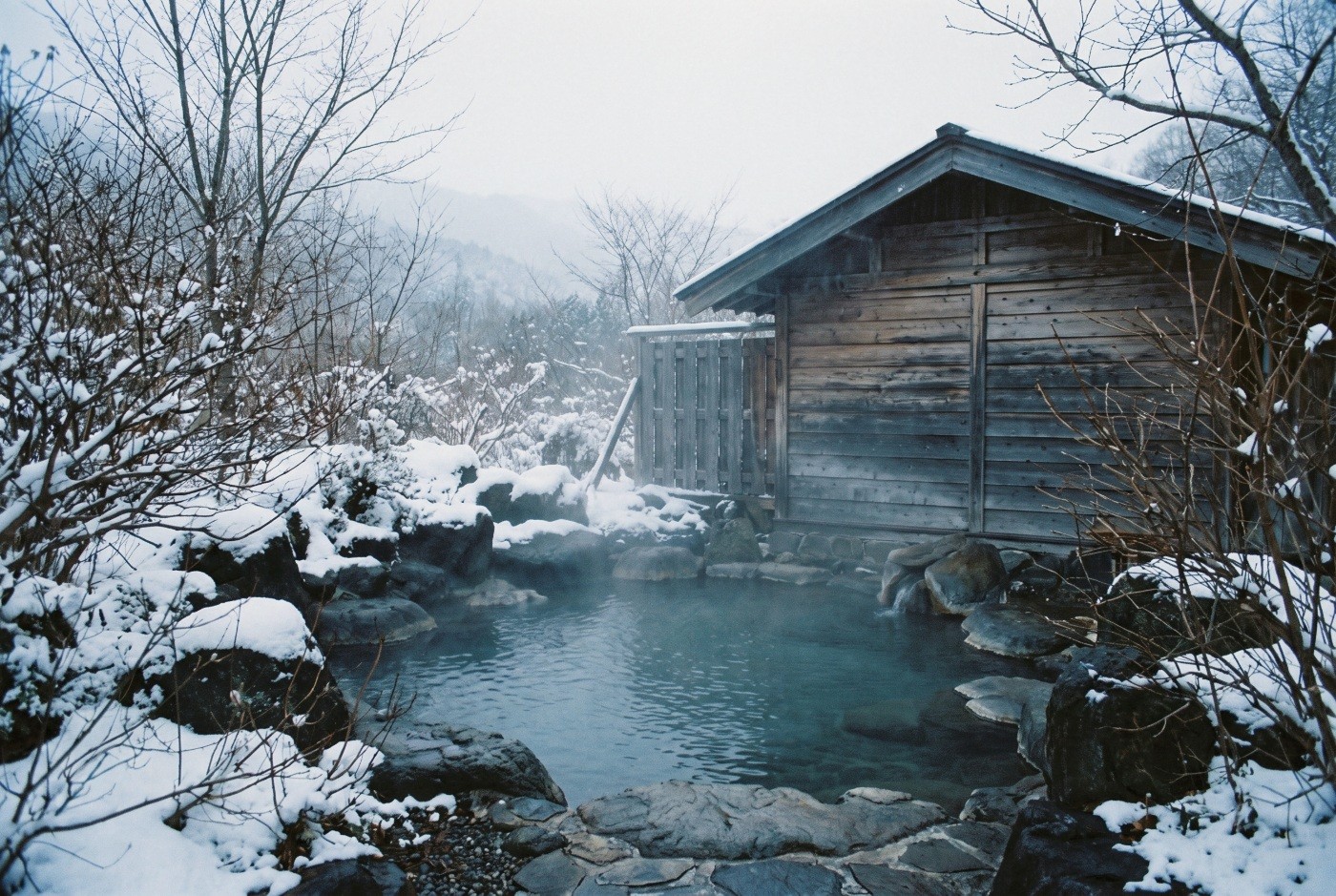 FIRST SIGHTWEBGLIllustration: A steaming outdoor bath in the snow. · Color and grain by First Sight · Superia. · First Sight 色彩與顆粒調校 · Superia
Practical notes: the first minute in the water is the hardest, then your body adjusts. Drink water before and after. The stool in the washing area is not optional. Quiet is the default, phones are prohibited. Most onsen have a rest area with tatami and tea after your soak. Don't rush out.
!Placeholder for outdoor onsen scene Rotenburo (露天風呂). Stone tub, open sky, the sound of water and wind. Worth traveling for.
FAQ
Can I wear a swimsuit? No. Traditional onsen require full nudity. A few modern "super sento" allow swimwear, but that's a different experience. Start with a private bath if nudity feels uncomfortable.
What about tattoos? About 20% allow them openly, 30% with cover patches, the rest refuse. Private baths always work regardless. Check the facility's policy before visiting.
Is it awkward being naked? For about three minutes. Then you realize nobody is looking at you. By your second visit, you won't think about it.
How long should I soak? Ten to fifteen minutes per round, two or three rounds total. If you feel flushed or your heart races, get out and cool down.
Do I need to bring anything? Ryokan provide everything. Public onsen have soap and shampoo but may charge ¥200 to ¥500 for towel rental.
How much does it cost? Public baths: ¥100 to ¥2,000 (NT$20 to NT$400). Private baths: ¥2,000 to ¥4,000 (NT$400 to NT$800). Ryokan overnight with meals: ¥15,000 to ¥35,000 (NT$3,000 to NT$7,000).
Comments (0)
Loading comments...