
The first piece of furniture I bought in Taipei was a fabric sofa in a color the store called oat milk. It lasted one winter. By March, the north-facing wall behind it had grown a faint grey continent of mold, and the underside of the sofa had grown its own. The store didn't lie to me. Nobody had told the sofa about Taiwan.
We've written before about the idea of a slow home, a space that restores you instead of draining you. That piece was the philosophy. This one is the practical sequel: the materials, the light, and the budget lines that survive a Taiwanese apartment, whether you own it or rent it.
Let the humidity pick your materials
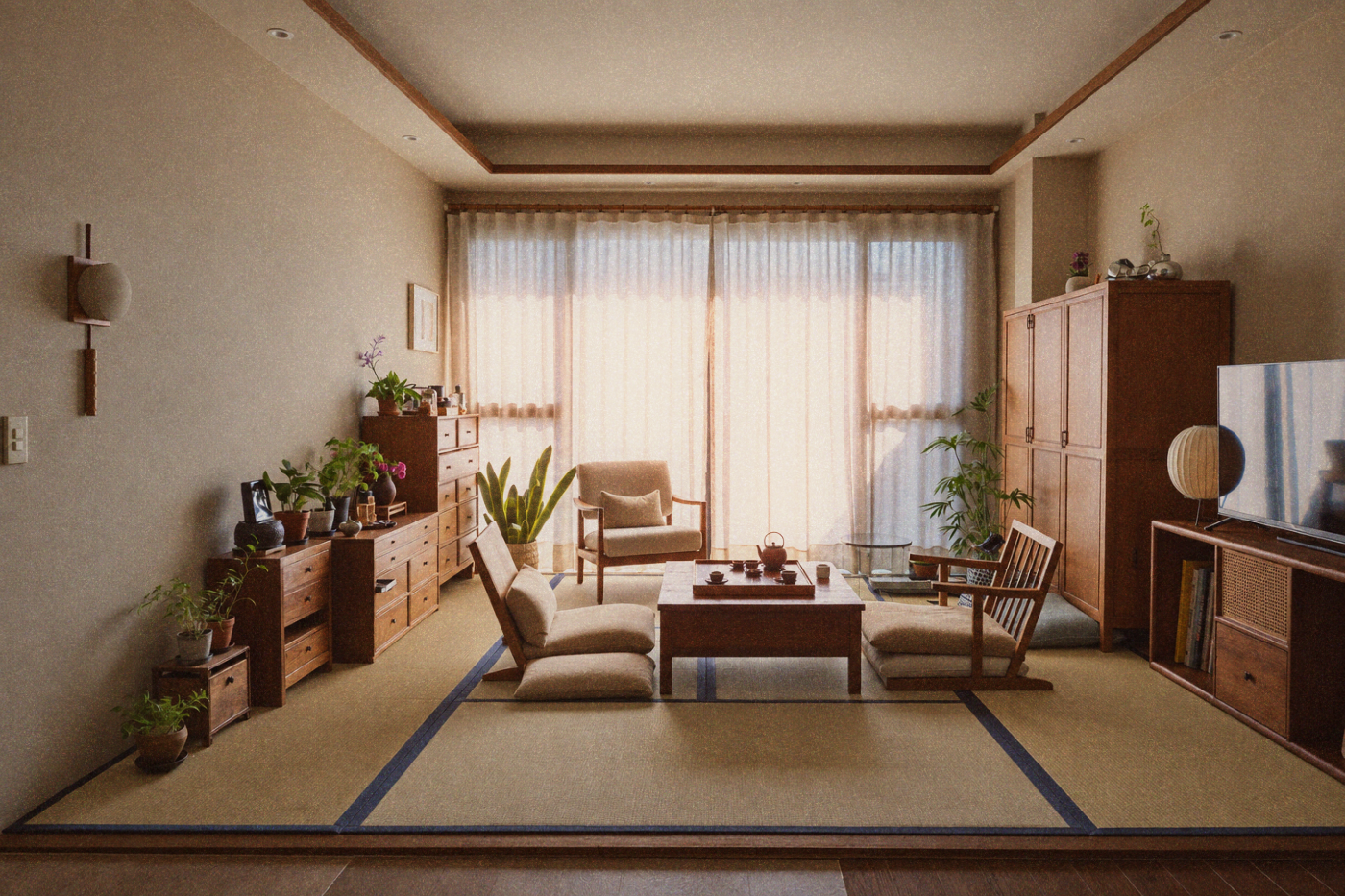
Hard surfaces first. Porcelain tile and stone do most of the work in a Taiwanese home for a reason: they don't absorb water, they don't feed mold, and they stay cool through the summer. Designers here recommend them for exactly this climate. If a material can't be wiped down after a week of plum rains, it's decor, not infrastructure.
Wood, with conditions. Engineered and moisture-treated wood behaves well here. Solid untreated wood is a gamble: my second Taipei purchase was a solid-pine bookshelf that developed a visible lean by autumn, like it was trying to look out the window. If you love wood, buy it engineered, keep it off exterior walls, and give the dehumidifier a fighting chance.
 FIRST SIGHTWEBGLA corner that asks you to slow down. · Color and grain by First Sight · Gold 200. · First Sight 色彩與顆粒調校 · Gold 200
Fabric is a commitment. Leather and tight-weave synthetics shrug off the damp. Loose linen and thick upholstery hold it. The workable compromise is anything with covers you can unzip and wash. Skip wall-to-wall carpet entirely, and only buy rugs you can lift and launder. The oat-milk sofa taught me this at full retail price.
Paint that works for a living. Every hardware store in Taiwan sells anti-mold paint, and the newer mineral-based paints can actually buffer indoor moisture. If one wall of your apartment faces north or hides plumbing, give it the good paint. It costs a few hundred NT more per can and saves you a yearly bleach ritual.
The apartment already knows what works
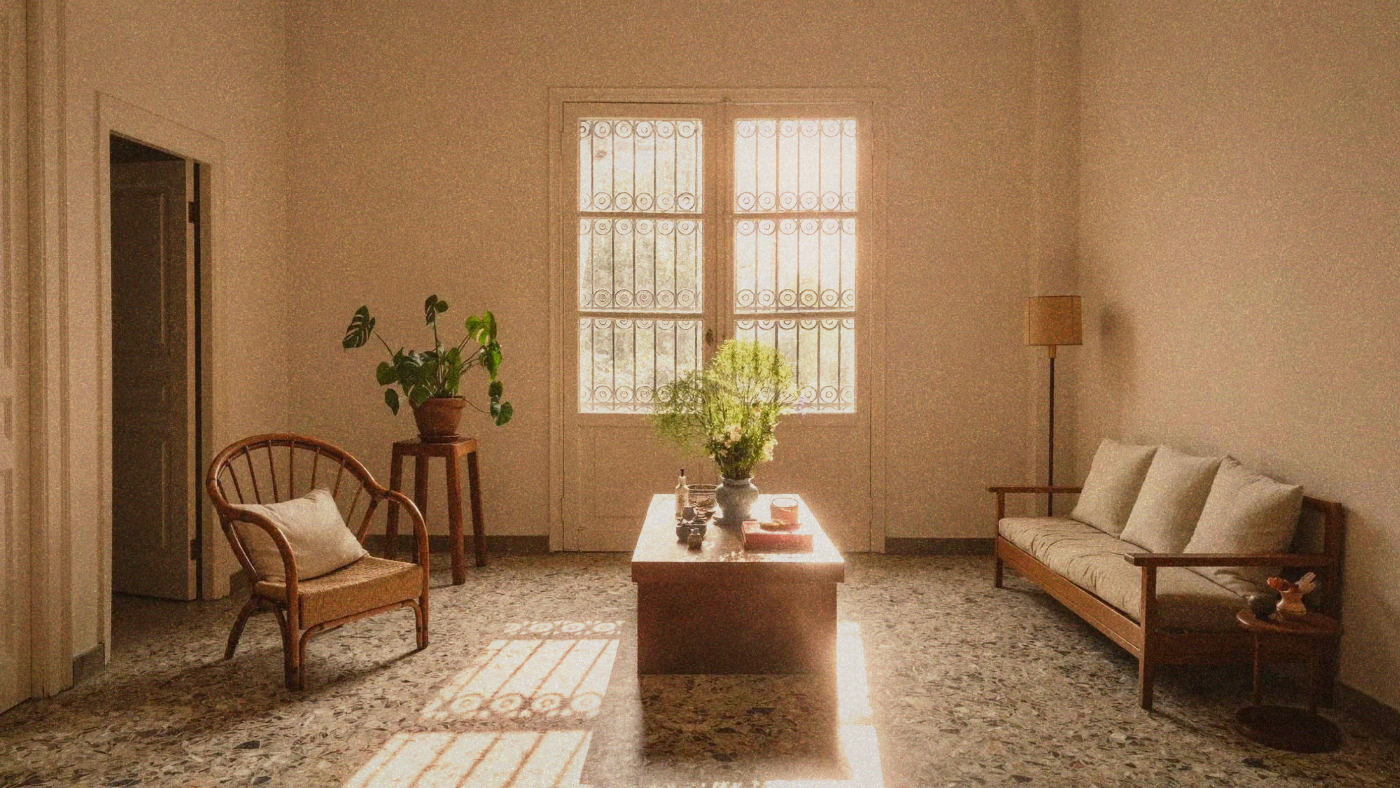
From the 1950s through the 1980s, terrazzo floors were poured in homes, schools, and temples across the island, and they solved the climate problem before anyone called it design: cool underfoot in the heat, immune to condensation in humid weather, and clean again with one pass of a mop after a flood. If your older apartment still has its original terrazzo, you're holding the best flooring money can currently buy. Polish it. Don't bury it under vinyl planks that will curl in three summers.
The same goes for the old decorative iron window grilles, the ones bent into flowers and mountains. A generation treated them as clutter to be torn out. Now people commission reproductions. They filter afternoon light into patterns, they hold a shelf of pots, and they're a piece of Taiwanese craft history you get to live inside. Rust-proof them and leave them alone.
 FIRST SIGHTWEBGLA corner that asks you to slow down. · Color and grain by First Sight · Gold 200. · First Sight 色彩與顆粒調校 · Gold 200
Light is the cheapest renovation
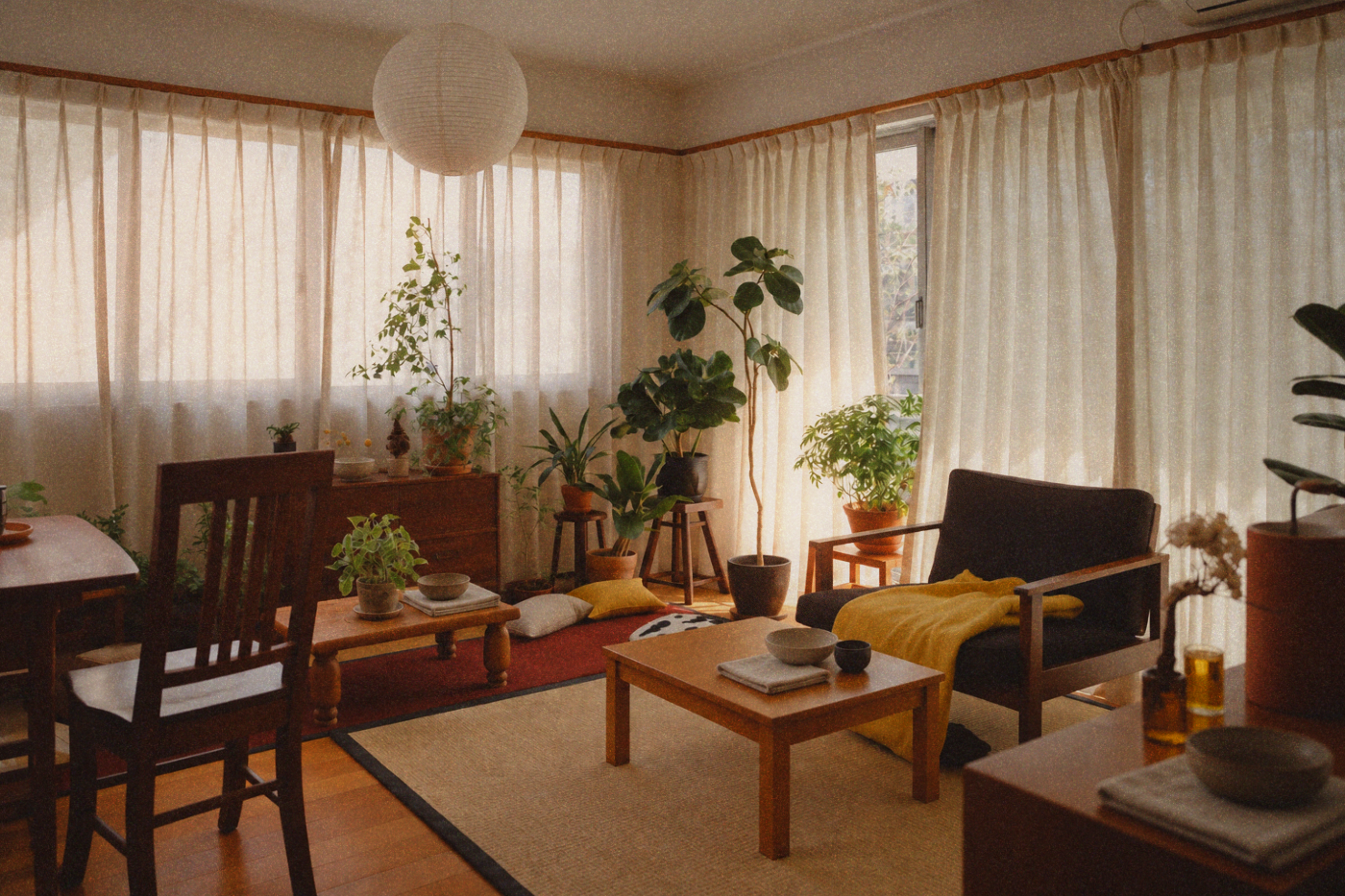
Most Taiwanese apartments are deep and narrow, with all their daylight arriving through one wall. And most of them fight this with a single blazing white ceiling panel that makes eight in the evening feel like a dental appointment. Turning that panel off is the fastest mood upgrade available. Replace it with two or three plug-in lamps at 2700 to 3000K, placed low: a floor lamp by the sofa, a table lamp where you actually sit, something small in the hallway.
During the day, protect the one window wall you have. Keep furniture below its sill line, use sheer curtains instead of blackout in the living areas, and let light walls bounce what little the light-well gives you. A mirror opposite the window is an old trick because it works.
Renting? Design inside the deposit
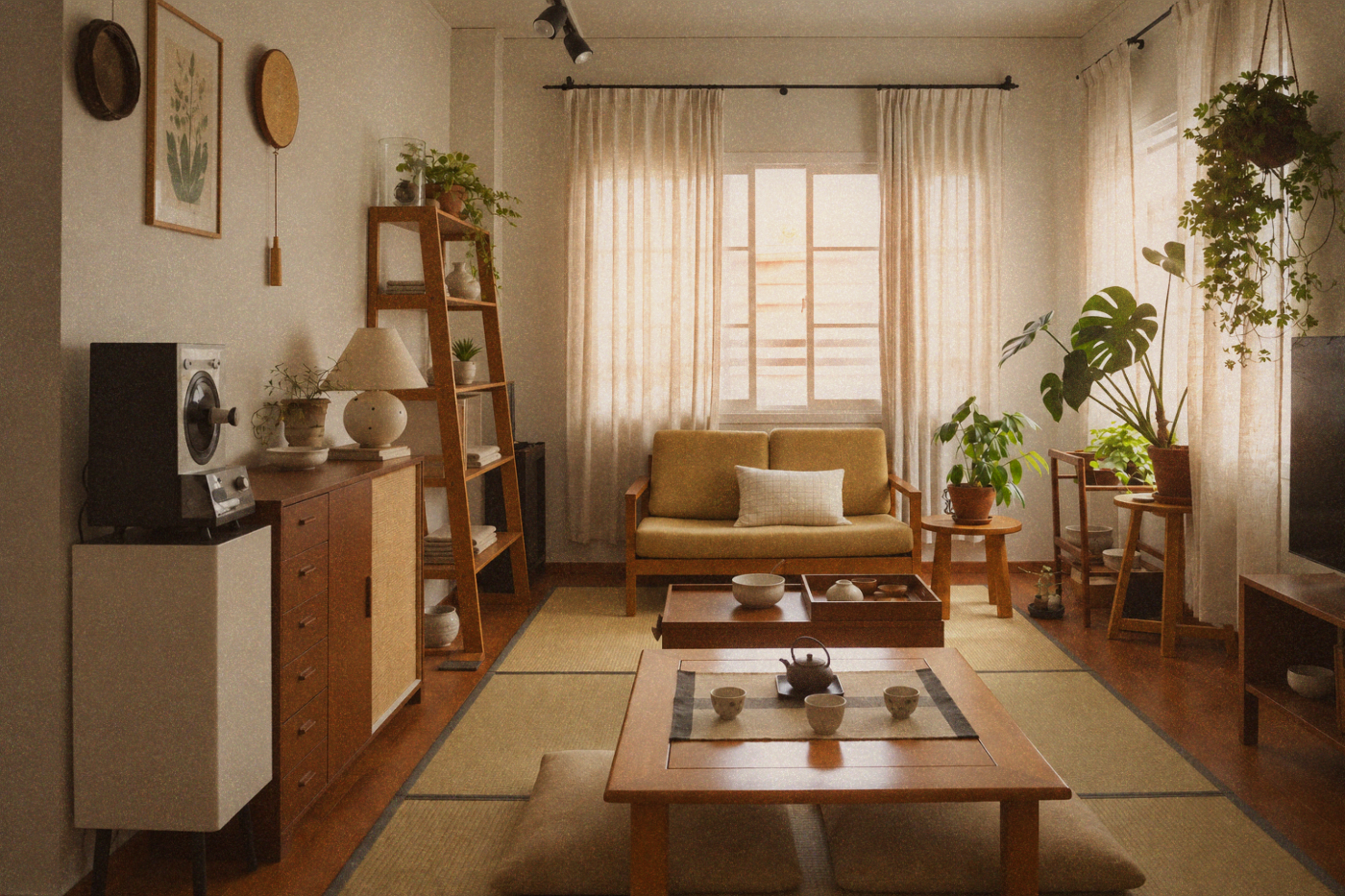
Most Taiwanese leases forbid drilling, and plenty of landlords will inspect the walls at move-out with forensic enthusiasm. So design around it: freestanding shelves instead of mounted ones, tension rods inside closets and doorways, mirrors that lean, lamps that plug in, removable hooks rated honestly. A large washable rug will hide floor tile you didn't choose. Curtains swap in an afternoon and transform a room more than anything else at the price.
 FIRST SIGHTWEBGLA corner that asks you to slow down. · Color and grain by First Sight · Gold 200. · First Sight 色彩與顆粒調校 · Gold 200
The renter's rule of thumb: spend on what moves out with you. Good chairs, good lamps, good bedding, one piece of furniture you genuinely love. Let the landlord keep the beige.
What to skip
Floor-to-ceiling built-in cabinets on exterior walls (they seal in moisture and grow things behind your clothes). Fabric headboards. Open shelving for books you'd be sad to lose. Blackout curtains in rooms where you live rather than sleep. And any material the climate will fight, because the climate has more patience than you do.
The apartments that age well in Taiwan follow the same logic as the people who live well here: they pay attention to the weather, they choose things that can be washed, and they let the light in. Start with the floor you already have. There's a decent chance somebody solved this in 1965.
Comments (0)
Loading comments...