
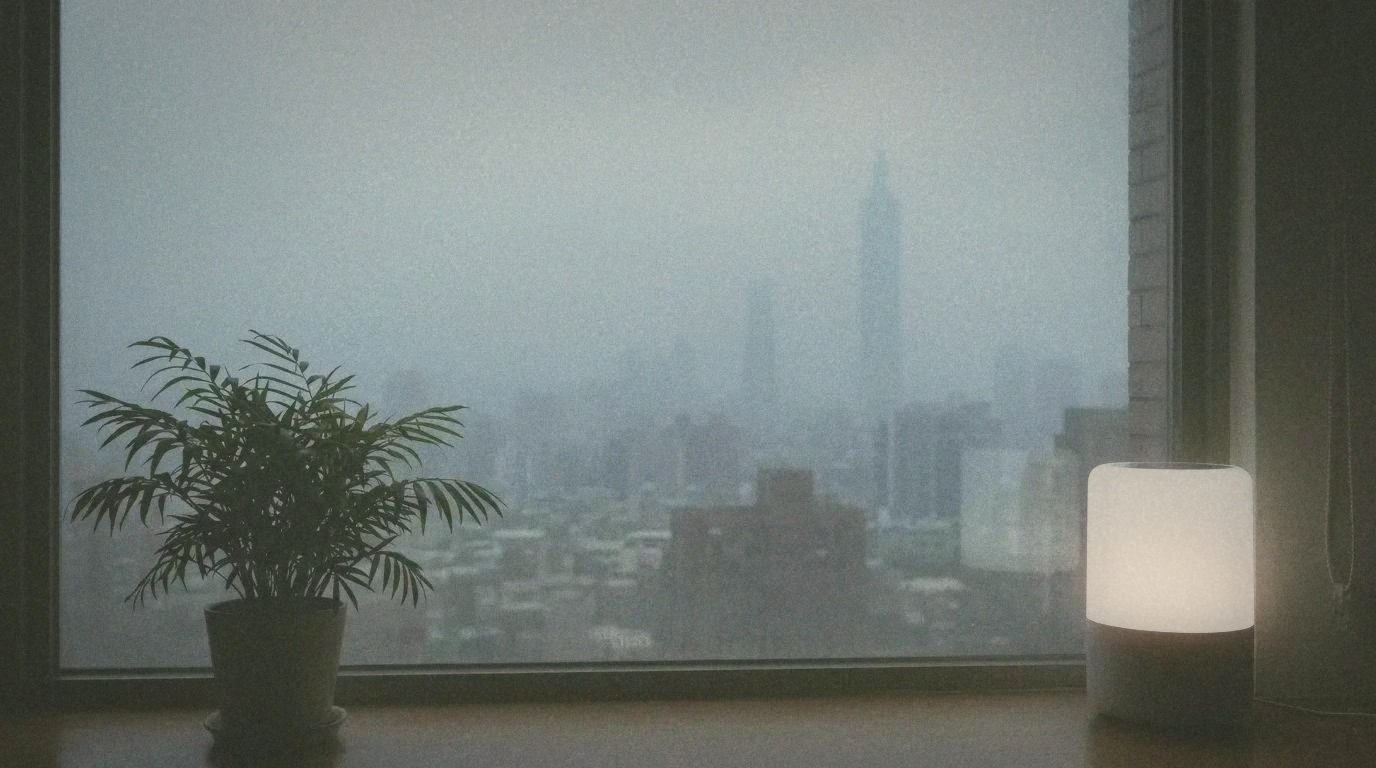
It's a January morning in Taipei and the 101 has disappeared. Not behind clouds — behind something flatter and grayer, a haze that sits on the basin like a lid. Your phone says 21 degrees, dry, a perfect running day. A different app, the one fewer people check, says AQI 142. The runners who looked at the second app stayed home. The ones who didn't are out there doing cardio in particulate matter.
Taiwan's air is neither the disaster that expat forums suggest nor the non-issue that tourism photos imply. It is seasonal, regional, and predictable — which means it can be managed, the way you manage typhoons and humidity. You just need to know how to read it.
How to read the numbers
AQI is the headline number. Taiwan uses a 0–500 Air Quality Index that rolls up six pollutants into one score. The bands: 0–50 green (good), 51–100 yellow (moderate), 101–150 orange (unhealthy for sensitive groups), 151–200 red (unhealthy for everyone), 201–300 purple (very unhealthy). When the map turns purple, Taiwanese media calls it 紫爆 — a "purple explosion" — and that is a stay-indoors day.
PM2.5 is the one that matters most. Fine particles under 2.5 micrometers — small enough to pass through lung tissue into the bloodstream. This is the pollutant behind the long-term cardiovascular and respiratory risk, and the one your mask and purifier decisions should be built around. PM10 (bigger dust) and ozone (a summer afternoon problem) matter too, but if you track one number, track PM2.5.
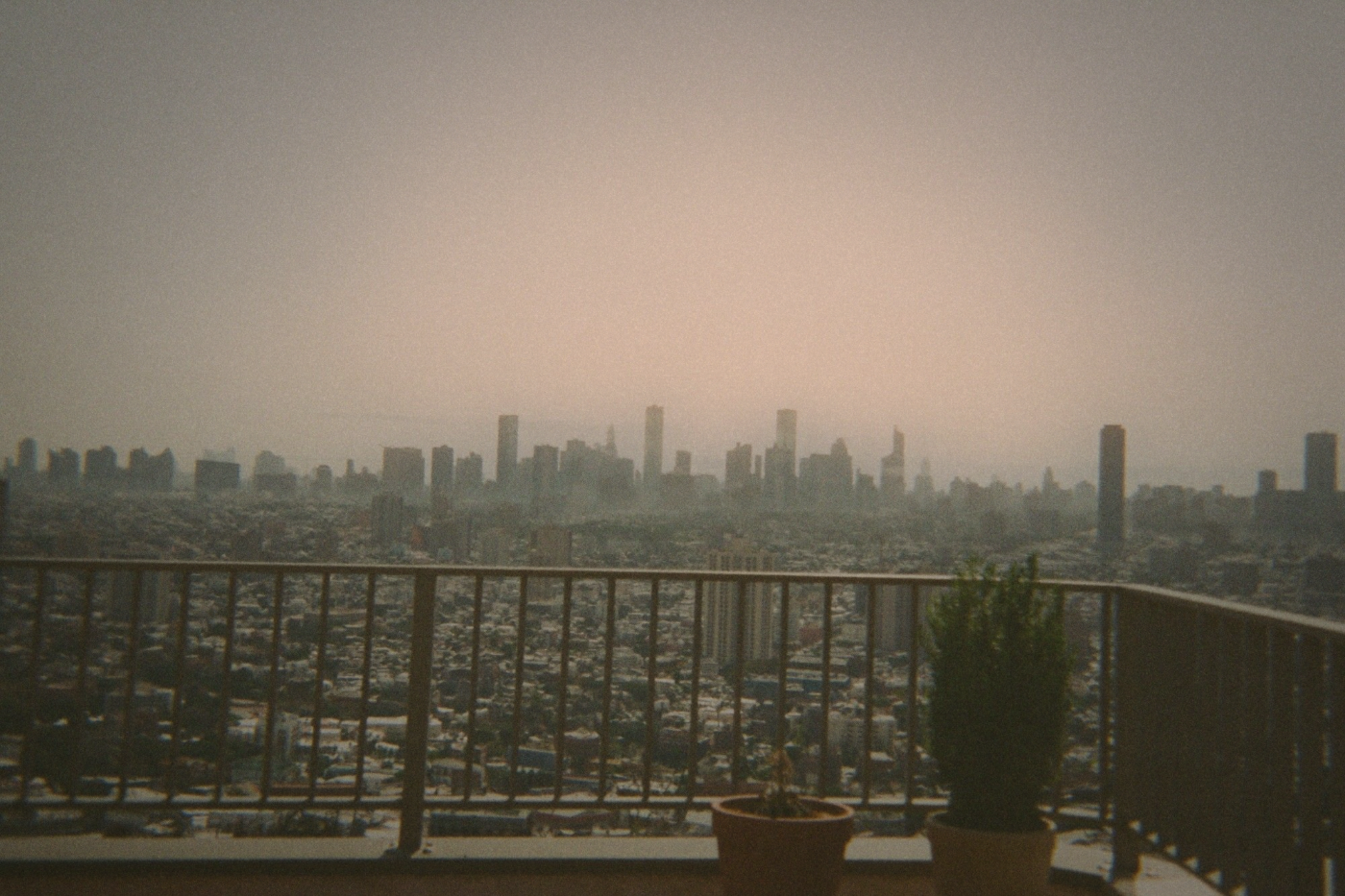
 FIRST SIGHTWEBGLSome days you can see the haze roll in. · Color and grain by First Sight · Portra 400. · First Sight 色彩與顆粒調校 · Portra 400
Where to check. The Ministry of Environment's official site (airtw.moenv.gov.tw) and its app show real-time readings from monitoring stations across the island. IQAir and the Windy app work well if you prefer English. Check the station nearest you, not the city average — the Taipei Basin can vary noticeably between Songshan and Banqiao on the same morning.
Taiwan's air has seasons
October to April is the pollution season. The northeast monsoon does two things at once: it can carry pollution from continental East Asia across the strait, and — more importantly — it creates a wind shadow on the western plain. Air stagnates west of the Central Mountain Range, local emissions from traffic, industry, and power generation accumulate, and PM2.5 builds for days until a front flushes it out.
May to September is the clean season, mostly. Southwest winds and regular rain keep particulates low; after a typhoon passes, Taiwan gets some of its clearest days of the year. The summer caveat is ozone — formed by sunlight cooking exhaust on hot, still afternoons. On a blazing windless day the AQI can go orange from ozone alone while PM2.5 stays low. Morning exercise dodges most of it.
And it has a geography
The Central Mountain Range splits the island into two different atmospheres. The east coast — Yilan, Hualien, Taitung — faces the Pacific and gets rinsed by ocean wind year-round; it records some of the best urban air in Asia. The west coast is where Taiwan lives, works, and pollutes: the Taipei Basin traps its own traffic exhaust but benefits from northern rain, the Taichung area adds a coal-fired power plant and industrial parks, and the Kaohsiung–Pingtung region combines heavy industry, a petrochemical corridor, and the weakest winter wind — which is why it reliably posts the island's worst winter numbers.
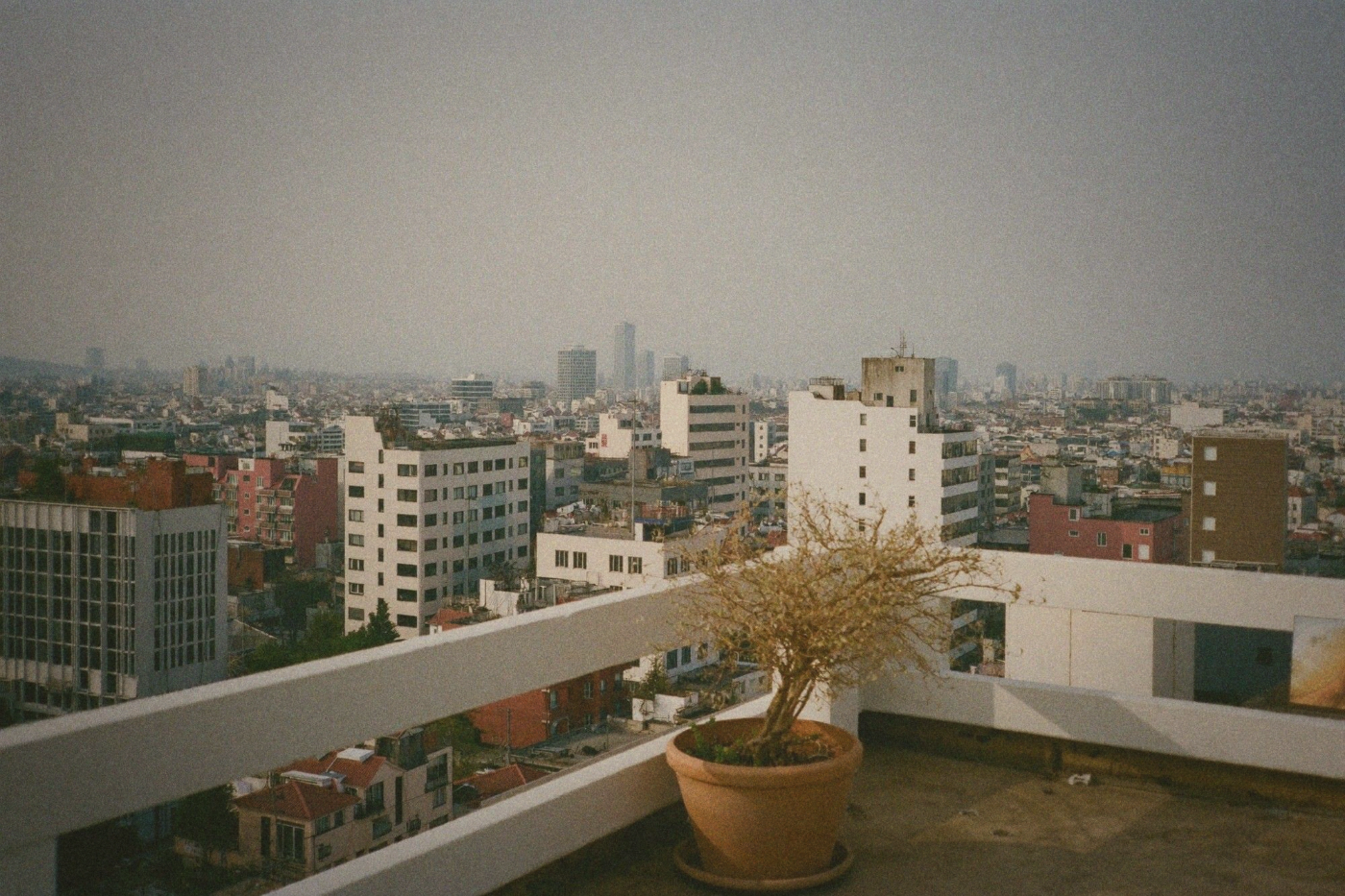 FIRST SIGHTWEBGLSome days you can see the haze roll in. · Color and grain by First Sight · Portra 400. · First Sight 色彩與顆粒調校 · Portra 400
The protection protocol
1. Make the check a habit. Ten seconds with your weather glance, every morning from October through April. Under 100, live normally. 101–150, sensitive groups (asthma, heart conditions, kids, pregnancy, over-65) move workouts indoors. Over 150, everyone trains indoors and windows stay shut. Over 200, minimize time outside, full stop.
2. Wear the right mask, worn right. A surgical mask does almost nothing against PM2.5 — the particles go around the edges. What works is a respirator that seals: N95, KF94, or FFP2, pinched at the nose bridge with no gaps at the cheeks. Taiwan's pharmacies and convenience stores stock them cheaply. If you commute by scooter, this is not optional equipment — you're riding at tailpipe height through the densest air on the road.
3. Fix your indoor air. You spend most of a bad-air day inside, so this is where the biggest gains are. A HEPA purifier sized to your room, run continuously with doors and windows closed, will hold indoor PM2.5 at a fraction of outdoor levels — we've tested the options and prices in our air purifier guide. Skip the "air-purifying plants": the NASA study everyone cites was a sealed-chamber experiment, and in a real apartment you'd need a jungle to match one machine on low.
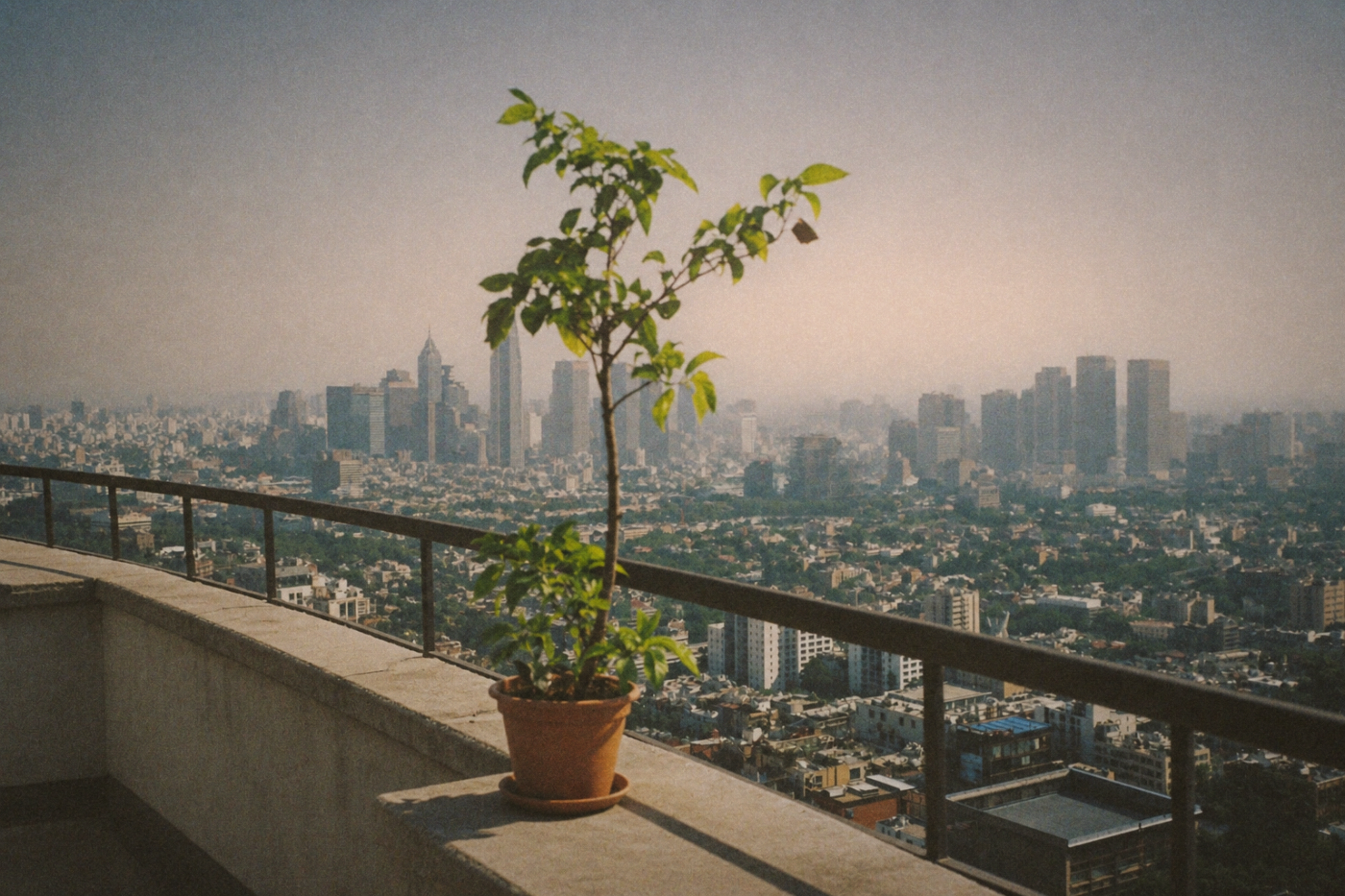 FIRST SIGHTWEBGLA small balcony plant against a hazy city skyline. · Color and grain by First Sight · Portra 400. · First Sight 色彩與顆粒調校 · Portra 400
4. Time your exercise, don't cancel it. The fitness benefits of training outdoors outweigh air-quality risk on moderate days, but intensity multiplies your dose — a hard run means breathing ten times more air than sitting. The rule of thumb: green and yellow days, train anywhere; orange, keep it easy or go indoors; red or worse, the gym earns its membership fee. In summer, run before 9am to duck both ozone and heat.
5. Know your own risk tier. Healthy adults tolerate orange days with little measurable effect. Children breathe faster and lower to the ground; the elderly and anyone with cardiovascular or respiratory conditions feel bad air first. If that's your household, set your action thresholds one band stricter, and if you're here long-term, Taiwan's NHI makes an annual checkup with lung function testing cheap enough to be routine — our healthcare guide covers how.
The honest summary
Taiwan's air is a managed risk, not a hidden one. The government publishes station-level data in real time, the bad season is predictable, the bad regions are known, and the countermeasures — a ten-second morning check, a NT$40 respirator, a purifier that pays for itself in sleep quality — are cheap relative to what they buy you. The island rewards people who pay attention to its weather. Air is weather. Pay attention to it the same way.
Comments (0)
Loading comments...